Buddhist leaders, supported by a general strike in central Vietnam, demanded today that the Government resign. The Buddhist agitation was impeding the organization of a stable government and the resumption of talks with the United States on expanded aid in the war against the Việt Cộng. Anti-government student demonstrators in central Vietnam imposed a general strike on the major cities of Huế and Quảng Trị for the second consecutive day. The strike movement was extended to Đà Nẵng, where only minor disturbances took place yesterday. Đà Nẵng is the site of a major United States air base. A senior military source said that the generals commanding the four corps areas of South Vietnam had arranged to fly to Saigon tomorrow for political discussions with the government, Brigadier General Nguyễn Chánh Thi, commander of the I Corps area, in central Vietnam, was said to be one of the officers favoring the inclusion of Buddhist representatives in an enlarged government under Premier Trần Văn Hương.
Aides to the Premier said he was amenable to a reshuffle that would bring in the Buddhists and other civilians and possibly a number of military men. The Buddhists have had a number of informal contacts with the government. However, a Buddhist leader said his church’s secular organization would not be satisfied with a voice in the government. He said the Buddhists wanted the Hương Government ousted. The Buddhists, who have been agitating for months for increased political power, have accused the Hương Government of persecuting and slandering their co-religionists, especially secular political activists. In Huế, the leading Buddhist stronghold, the student organization that led a demonstration involving more than 4,000 people decided to send a delegation to Saigon tomorrow to meet with the Government.
General Thi, in an interview, said he thought the demonstrations would be suspended, presumably pending the outcome of the Saigon talks. The I Corps commander, a young, ambitious officer who has been sympathetic to the Buddhists, has not used his troops to quell the demonstrations in the same manner as the Saigon security forces. Maxwell D. Taylor, the United States Ambassador, and his Deputy Ambassador, U. Alexis Johnson, conferred with Premier Hương on the turbulent political situation. It was understood that they also discussed the conditions under which it would be possible to renew the discussions on aid. The talks were broken off after the military uprising of December 20, when a group of young generals assumed supreme authority. The armed forces agreed Saturday to restore power to the Hương Government after the United States had held that it could not expand its support without a responsible, stable government to deal with.
American officials said that the United States would wait several days to see how the governmental machinery functioned before acting on the question of expanding the aid program. The current military and civilian program was not interrupted by the December 20 takeover. Premier Hương said at a news conference that United States economic and military aid would be increased. Discussing the crisis, he said in a statement that “Vietnamese-American relations are now, as always, intimate and cordial.”
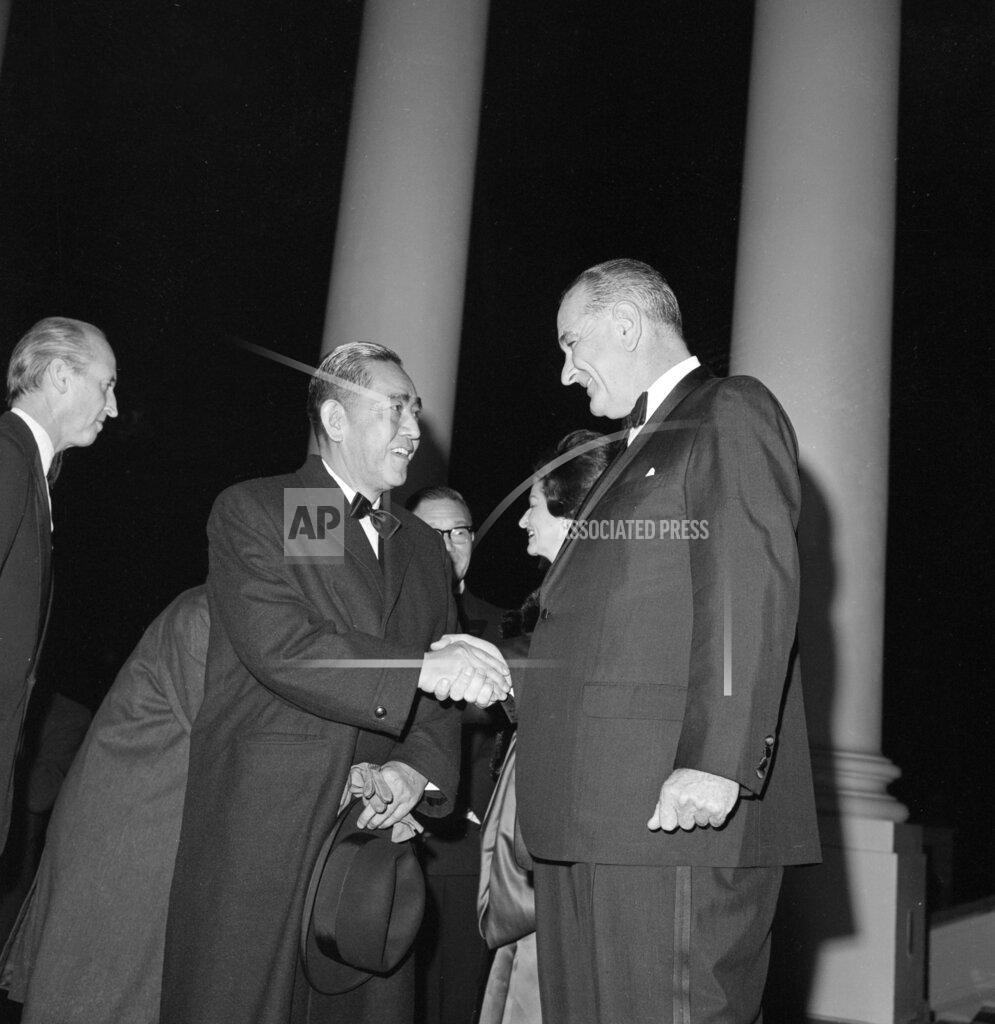
Japanese Prime Minister Sato, addressing the National Press Club in Washington, says that the problems in Vietnam cannot be solved by the ‘rational approach’ of the West but should be left to the Asians themselves. The Premier extended a guarded offer of Japanese assistance in establishing economic and political stability in Vietnam, but he did not suggest a mediator’s role for his country. His basic theme, as he began a two-day visit here with President Johnson, was that Japan should be viewed as a link between East and West in helping to achieve peace and stability in the Orient. It is in line with this concept, he explained, that Japan will continue expanding her trade with Communist China, believing such contacts can lead to peace and stability in Asia. The 63-year-old Premier, who took office in November, outlined his Administration’s foreign policy in a speech and in a news conference at the National Press Club shortly after his first meeting with President Johnson.
Mr. Sato, the first foreign visitor of 1965, was greeted at the White House by Mr. and Mrs. Johnson. Because of a 4-inch weekend snow, the welcoming ceremony was shifted from the south lawn, where foreign dignitaries usually arrive, to the portico of the White House.. The two leaders exchanged pledges of cooperation and partnership between their countries, enemies in World War II. Then they went into the President’s office for a 90-minute private discussion of mutual problems in the postwar period. The abbreviated, hastily arranged visit of Mr. Sato will conclude tomorrow with another talk with Mr. Johnson. Officials said the two leaders would discuss in general such problems as trade and economic relations; the status of Okinawa, which is still under United States administrative control; South Korea, with which Japan has not yet reestablished diplomatic relations, and South Vietnam.
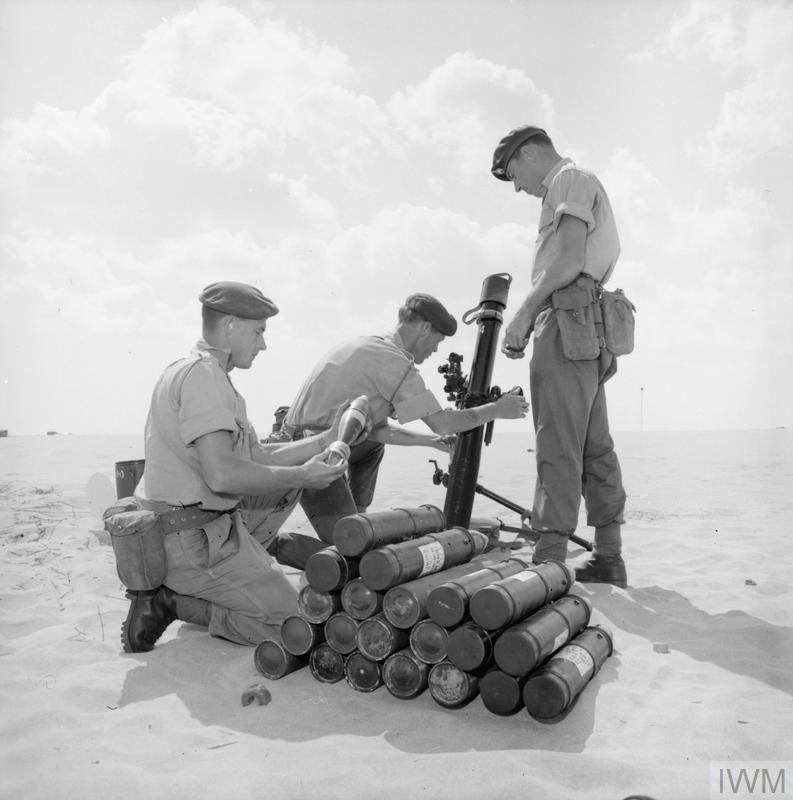
Indonesia accused Britain today of massing military forces in Malaysia with the intention of staging “another Suez.” Ganis Harsono, a Foreign Ministry spokesman, described the concentration of British forces as “unprecedented in peacetime.” “Britain has been accusing Indonesia of planning open war,” he said. “This is a deliberate cover-up for a major military offensive against this country.” The Foreign Ministry spokesman said the British attacked Egypt in 1956 on the pretext of freeing the Suez Canal from Egyptian control. “They will repeat this aggression against Indonesia, using Malaysia as their pretext,” he declared.
President Sukarno has vowed that Indonesia will destroy Malaysia, which he contends is a British puppet state, established to provide bases to encircle Indonesia. He has promised to intensify the guerrilla war his troops have been waging against Malaysia in the last 15 months. Malaysian and British officials recently reported increases in Indonesian troops along the Borneo border and on Sumatran islands. In turn, the British, who are committed by a treaty to defend Malaysia, completed, this week a limited build-up of naval and ground forces in the area. The Indonesian charge that “another Suez” was being prepared followed widespread publication of Prime Minister Harold Wilson’s statement in the House of Commons last Thursday that Britain had a force of more than 50,000 men available for use in Malaysia if Indonesian attacks were to increase. Indonesia’s armed forces, consisting of 400,000 men, greatly outnumber the 15,000 Malaysians and the more than 50,000 British.
Defending Malaysia along the 800-mile Borneo border are two battalions of the Royal Malaysia Regiment, the Royal Malaysian Reconnaissance Squadron and nine British battalions. Forming the strategic reserve at Malacca is the Commonwealth Brigade of British, Australian and New Zealand troops. There also are Australian and New Zealand Air Force units at Butterworth, opposite the island of Penang, and the Royal Air Force maintains three bases at Singapore. British warships, including two aircraft carriers, patrol the waters around Malaysia. They are aided by Malaysian frigates and patrol vessels and by two Australian minesweepers.
In accordance with President Sukarno’s decision to withdraw from the United Nations, his Government formally ordered the world organization to end all its activities in Indonesia.
In Malaysia, Deputy Premier and Defense Minister Abdul Razak said today that Malaysia had successfully contained Indonesia’s aggressive policy of “confrontation” thus far. He expressed confidence of similar success in the future with the aid of the Commonwealth partners.
Britain has agreed to remove most of her 1,500-man army garrison from Libya this year and has begun to prepare for the withdrawal of units from the Tripoli area, reliable sources said today. They said that the British also planned to pull out the Royal Air Force contingent at Tripoli’s commercial airport. For the time being, they added, the British will keep armored cars at the disposal of King Idris in Tobruk, and will want to maintain the important airfield at el-Adm in eastern Libya. The British moves follow pressure that the Libyan Government began to apply last Feb. 22, when President Gamal Abdel Nasser of the United Arab Republic called on Libya to eliminate British and United States bases on her soil.
The British decision to withdraw ground forces, especially those in Tripoli, where opposition to the bases has been strongest, is expected to increase pressure on the United States to set a date for leaving Wheelus Air Force Base on the outskirts of the city. Last fall the United States and Britain agreed to the principle of withdrawal and began negotiations with the Libyan Government. But negotiations on the timetable for closing Wheelus have been put off until Washington can find an adequate substitute.
The United States has formally rejected an African-Asian proposal to resume the General Assembly’s work with normal voting while efforts continue to settle the dispute over assessments. Delegates seemed to feel in general that this deadlock was as firm as when the question first arose last spring. The Assembly is scheduled to resume its general debate on Monday but it cannot carry on normal business. It has managed so far by using a “no objection” procedure on essential matters. Anything that requires a vote would precipitate a showdown; the United States insists that under Article 19 of the Charter, the Soviet Union must be deprived of its right to vote, Article 19 provides that any nation two years in arrears shall have no vote in the General Assembly.
The Soviet Union implied today that the activities of the United Nations Special Fund were of greater help to the Western powers than to the developing nations they were intended to assist.
The Soviet Communist party newspaper Pravda printed today a heavily edited version of a report on the work of the Chinese Communist Government submitted to the National People’s Congress (Parliament) last month by Premier Chou En-lai.
An American delegate to a United Nations meeting on discrimination challenged Moscow today to let the world see for itself whether racial and religious discrimination was being practiced in the Soviet Union, particularly with respect to Jews.
British Prime Minister Harold Wilson today stepped into the controversy over proposals to cancel production of Britain’s newest; military airplane, the TSR-2. He invited the four leading figures in the aircraft industry to dinner Friday at Chequers, the Prime Minister’s country home. He evidently hopes then to calm what has become a furious campaign to “save the industry.” It is all reminiscent of the uproar over the decision by the United States Secretary of Defense, Robert S. McNamara, not to produce the B-70 bomber in numbers. Members of Congress joined labor and industry spokesmen in the unsuccessful battle to reverse that decision. All signs here are that the Defense Ministry, headed by Denis Healey, has decided that the TSR-2 must go the way of the B-70. It is an even harder decision to make, because production of the TSR-2 is much farther along and a far larger proportion of the defense budget is marked for the plane.
Hecklers repeatedly silenced West German Chancellor Ludwig Erhard with catcalls and scuffling at a Christian Democratic. party rally in West Berlin tonight. Grim and red-faced, the 67-year-old Chancellor pressed forward with a speech declaring his determination to make a new start toward closer friendship with France. Several hundred persons, presumably Communists, sat in a crowd of 6,500 assembled in an indoor arena, the Sportspalast, obviously determined to disrupt Chancellor Erhard’s address. The Chancellor and most of the members of the West German Parliament are in West Berlin this week to conduct parliamentary business and hold political talks.
Doors were ripped from hinges today in a Tramore, Ireland courtroom melee when nine men appeared to face charges of fomenting disorder during Princess Margaret’s visit last week. Defendants punched policemen. Policemen replied with some punches of their own. Spectators joined in on behalf of the defendants. That was when the doors of Tramore Assembly Hall were torn from their hinges. Above the thud of fists and the scuffling of feet were loud cries of “This is British imperialism!” and “We’ll guarantee there’ll be no more royal visits!” The policemen prevailed by sheer force of numbers since they were guarding the building inside and out.
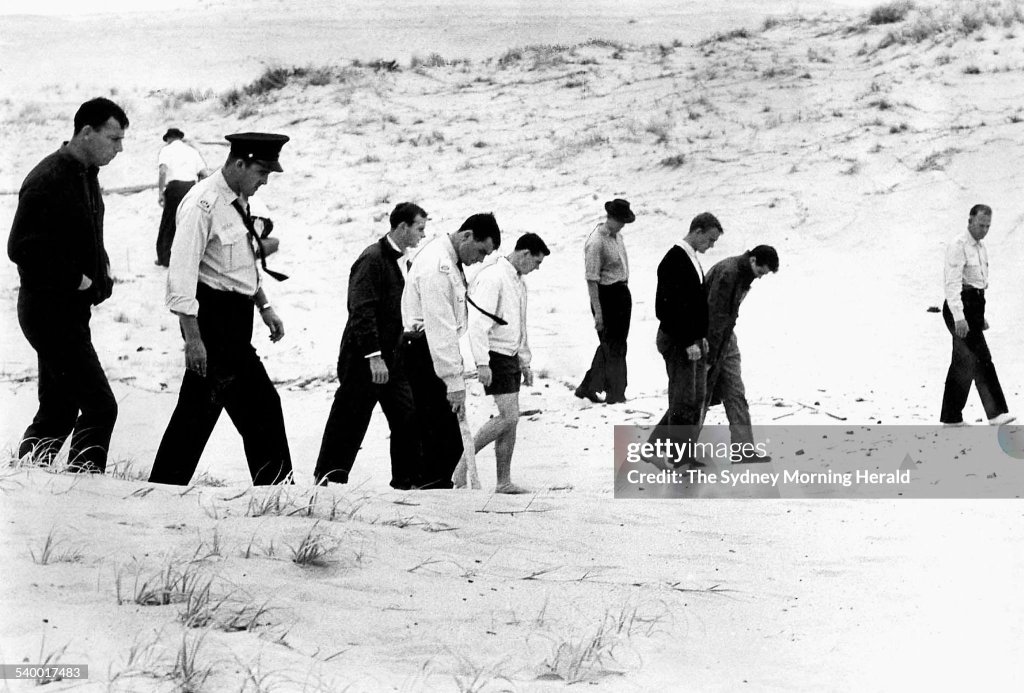
The bodies of two 15-year-olds, Christine Sharrock and Marianne Schmidt, were found at Wanda Beach near Sydney, in a crime that shocked Australians because of the age of the victims and the brutality of their slashing. The crime remains unsolved after more than half a century. The victims were best friends and neighbours from the suburb of West Ryde, and their partially buried bodies were discovered the day after they were murdered. The brutal nature of the slayings and the fact that they occurred on a deserted, windswept beach brought massive publicity to the case. By April 1966, police had interviewed some 7,000 people, making it the largest investigation in Australian history. It remains one of the most infamous unsolved Australian murder cases of the 1960s, and New South Wales’ oldest unsolved homicide case.
Congo’s Premier Moise Tshombe rejected former Premier Cyrille Adoula’s plan for a political solution of the Congo crisis. Mr. Tshombe said the Adoula proposals, outlined this week in the Tunisian magazine Jeune Afrique, which is printed in Paris, were a counsel of “defeatism” and showed “a lack of logic.” “At this grave moment in our country’s history, we would have expected from him frank collaboration and the aid of his experience,” Mr. Tshombe said. “But, alas, we have been disappointed.” Mr. Tshombe made no direct comment on Mr. Adoula’s demand for his removal as Premier and his exclusion from Congolese public affairs.
Thirteen Arabs Premiers announced today that they had agreed on a unified policy against foreign countries that either establish new relations with Israel or “consolidate Israel’s aggressive military efforts.”
The International Commission of Jurists said today that it had new evidence that the “domination and persecution” of the Tibetan people by Communist China were continuing unabated.
Panamanian National Guard policemen used a barrage of tear-gas bombs last night to stop a mob advancing on the Canal Zone.
U.S. President Johnson presented a proposal to Congress for what he called the “national goal of Full Educational Opportunity”, a reform of American education at all levels, “from preschool through graduate study”, with a suggested appropriation of 1.5 billion dollars of federal financial assistance to school districts. Within less than 90 days, the new Congress would pass the Elementary and Secondary Education Act (ESEA), which would be signed into law on April 11 at a one-room schoolhouse where Johnson had been a teacher in the 1930s.
President Johnson proposed an expanded aid-to-education program that encourages public and parochial schools to share facilities. It provides modest sums to be spent on the students of Roman Catholic and other private schools. In a special message to Congress, Mr. Johnson asked for new spending authority of $1.515 billion for the next fiscal year to finance the legislation he requested. He said the new spending authority would bring total outlay on education in his next budget to $4.1 billion — including $2.6 billion to finance already existing programs. “This expenditure is a small price to pay for developing our nation’s most priceless resource,” the message said. It was delivered to both houses of Congress at noon.
“I propose that we declare a national goal of full educational opportunity,” Mr. Johnson said. “The three R’s of our school system,” he went on, “must be supported by the three Ts — teachers who are superior, techniques of instruction that are modern and thinking about education which places it first in all our plans and hopes.” The reaction to the President’s proposal was generally favorable. The Roman Catholic Church gave its qualified support, while officials of the National Education Association pledged to seek widespread support for it. Several members of Congress also praised the plan and pledged to support it.
Dean Burch was forced to resign as Chairman of the Republican National Committee after being blamed for the disastrous Republican Party losses in the 1964 presidential election and the congressional elections. He was replaced by Ray C. Bliss. Burch will resign as Republican National Chairman April 1. The Ohio Republican chairman, Bliss, has agreed to take over the job with the blessing of Barry Goldwater. The move, made in an effort to avoid a party-splitting fight, was announced here today at a news conference by Mr. Goldwater, the party’s 1964 Presidential nominee; William E. Miller, the Vice-Presidential nominee; Mr. Burch and Mr. Bliss. Mr. Burch, who is 37 years old, said he would submit his resignation at a meeting of the Republican National Committee January 22-23 in Chicago. Mr. Bliss, who is 57, said he had consented to become chairman if the National Committee wanted him.
Some Republican leaders promptly hailed the proposed switch as a step that would unify the party. The announcement was made on the same patio of Mr. Goldwater’s hilltop home overlooking Phoenix where the former Arizona Senator announced his candidacy for the Presidency just a little over a year ago. A warm sun beat down as Mr. Goldwater, Mr. Burch, Mr. Bliss and Mr. Miller read statements, then refused to submit to direct questioning. Mr. Goldwater and Mr. Burch indicated that, after extensive polling, they had concluded Mr. Burch could win a vote of confidence from the National Committee at the Chicago meeting but that the margin would be insufficient to constitute a clear mandate.
After the Republicans’ crushing defeat in November, many party leaders began demanding the resignation of Mr. Burch, whom Mr. Goldwater personally chose for the party chairmanship last July. The decision to avoid a showdown in Chicago came after both Mr. Goldwater and Mr. Burch made personal pleas to all members of the National Committee that Mr. Burch be given a chance to show he could unify the party.
The NERVA Program (Nuclear Engine for Rocket Vehicle Application) conducted a test near Los Alamos, New Mexico, to determine the consequences of “the most devastating accident possible” for a nuclear reactor. With measuring instruments, including high-speed cameras to gather data, the U.S. Atomic Energy Commission used a nuclear rocket engine and applied an electrical power surge to make its reactor overheat, in order to simulate “a runaway reactor”. The temperature rose to more than 4,000 °C (over 7,200 °F) before the reactor burst “sending fuel hurtling skyward and glowing every color of the rainbow”. Pieces of radioactive fuel as large as 148 pounds (67 kg) were thrown upward, including a 98-pound (44 kg) portion that landed 400 yards (370 m) away, and a radioactive cloud blew over Los Angeles and out to sea.
The government concluded today the presentation of new evidence in the murder of three civil rights workers near Philadelphia, Mississippi, last summer. But the Federal grand jury that heard the evidence did not disclose whether it had voted to indict the 21 men accused by the Federal Bureau of Investigation in connection with the Neshoba County slayings. The jury need not reveal its findings until it finishes its other work. Besides the civil rights murders, it must consider some 60 other matters, mostly involving moonshining and other minor cases. Federal District Judge William Harold Cox has told the jury to finish its work by Friday night.
Today the jury heard the last of three subpoenaed suspects, Otha Neal Burkes, 71 years old, a Philadelphia policeman, appeared before the 23-member grand jury this morning. Also appearing before the jury today were another Philadelphia patrolman, Richard Andrew Willis, 40, and W. H. Pettis, identified as the operator of a bulldozer used in the construction of the earthen Idam where the bodies of the three victims of the lynch mob were found.
A spokesman for the nation’s major cigarette manufacturers said today that yesterday’s meeting on smoking and health produced “no new scientific data” to support contentions that cigarettes are a major health hazard.
The Senate Commerce Committee approved today President Johnson’s nomination of John T. Connor to succeed Luther H. Hodges as Secretary of Commerce.
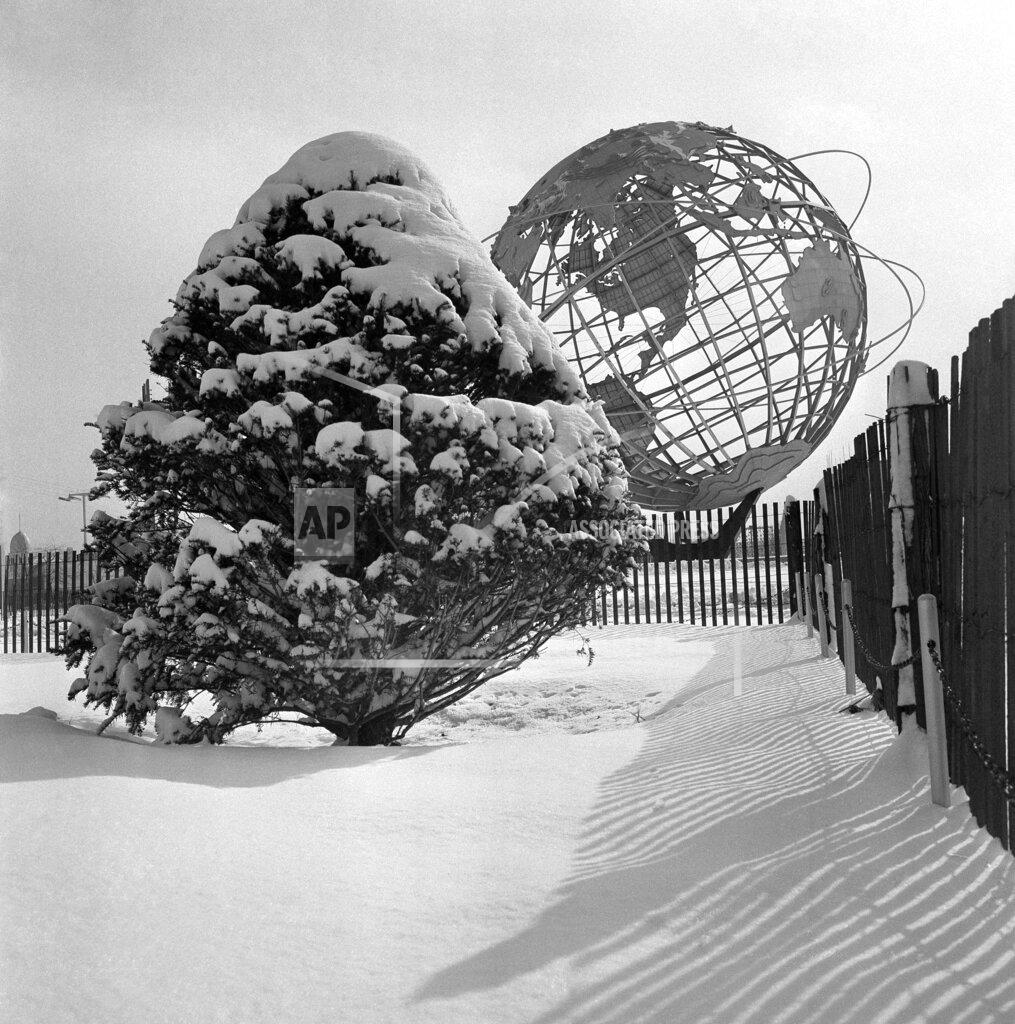
The New York World’s Fair, which has said it will go all out this year to attract people it failed to attract last year, announced yesterday that it was increasing the admission price for adults from $2 to $2.50.
Segregation through racial concentration exists in the public schools of Springfield, Massachusetts, Federal Judge George C. Sweeney said in a ruling last night in Boston. He ordered the school committee to come up with a plan to end it.
Flight tests of the zero-gravity mock-up of the Gemini spacecraft began. The mock-up was installed in a KC-135 aircraft to provide astronauts with the opportunity to practice extravehicular activities under weightless conditions. The Gemini-Titan (GT) 3 flight crew participated in the opening exercises, which were duplicated the next day by the GT-4 flight crew.
The ejection seat system for escape from the Gemini spacecraft was tested for the first time at supersonic speed. It was successfully fired from an F-106 at Mach 1.72 at an altitude of 12,192 meters (40,000 feet), after a test earlier in the day at Mach 0.65 at 4,785 meters (15,700 ft).
San Diego’s blighted downtown area was aglow with diamonds and civic pride this evening with the grand opening of the city’s 3,000-seat Civic Theater.
“Hullabaloo” premieres on NBC-TV.
Lorraine Hansberry, one of the most promising young American playwrights, died of cancer yesterday at University Hospital in New York. She was 34 years old.
Dow Jones Industrial Average: 885.89 (+2.67)
Born:
Rob Zombie [stage name for as Robert B. Cummings], American heavy metal musician and filmmaker; in Haverhill, Massachusetts.
DJ Hurricane [stage name for Wendell T. Fite], American record producer; in Dallas, Texas.
Biram Dah Abeid, Mauritanian politician and slavery abolitionist advocate, in Rosso, Trarza, Mauritania.
Henry Thomas, NFL defensive tackle and nose tackle (Pro Bowl, 1991, 1992; Minnesota Vikings, Detroit Lions, New England Patriots), in Houston, Texas.
Nikolai Borschevsky, Russian (Unified) National Team and NHL right wing (Olumpics, gold medal, 1992; Toronto Maple Leafs, Calgary Flames, Dallas Stars), in Tomsk, Russian SFSR, Soviet Union.
Died:
Lorraine Hansberry, 34, African-American playwright best known for the Broadway play “A Raisin in the Sun”; from pancreatic cancer.
Porcupine, in the National Zoo, dies at 27; oldest known rodent (Washington, D.C.).






 History Diaries