Enraged by the Mechelen Incident, Hitler fired both the commander of 2. Luftflotte, General Helmuth Frey, and the latter’s chief of staff Colonel Josef Kammhuber. It was nevertheless decided to proceed with the German attack on the Low Countries as originally planned, while the Luftwaffe attaché in The Hague Lieutenant-General Ralph Wenninger, and the military attaché in Brussels, Colonel Friedrich Carl Rabe von Pappenheim, would investigate whether the plan had been fatally compromised or not.
Hitler issues Fundamental Order No. 1 about strict handling of military secrets.
The contents of the translated document fragments recovered in the Mechelen Incident confirm earlier warnings from the Italian Count Galeazzo Ciano about a German attack to take place around January 15. It was concluded by one of King Leopold III of Belgium’s key advisors, General Raoul van Overstraeten, that the information was basically correct. That afternoon King Leopold III decided to inform his own Minister of Defense General Henri Denis and the French supreme commander Maurice Gamelin. At 5:15 PM the French liaison officer, Lieutenant-Colonel Hautcoeur, was given a two page abstract of the contents without any explanation of how the information had been obtained. Lord Gort, the commander of the British Expeditionary Force, was warned and Leopold personally phoned the Dutch Princess Juliana and the Grand Duchess of Luxembourg Charlotte telling the first: “Be careful, the weather is dangerous” and the second: “Beware of the flu”, predetermined code phrases indicating the Belgians considered a German attack to be imminent.
Kombrig Vinogradov, Commissar Parkhomenko, and Chief of Staff Volkov of the 44th Rifle Division each are found guilty by a court-martial and sentenced to death. The charges are irrelevant, the outcome was preordained by the military defeat, but they are accused among other things of leaving behind wounded to die. They are executed on 11 January 1940 in Vazhenvaara by firing squad in front of what remains of their troops. The commissar of the Ninth Army, Furt, is appointed the acting commander of the 44th Rifle Division, which must be completely rebuilt.
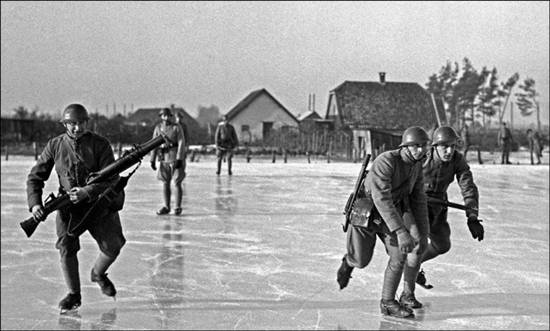
In Ladoga Karelia, the Finnish IV Army Corps launches the second phase of its counteroffensive. Finnish 12th Infantry Division and 13th Infantry Division (Finnish IV Corps) isolate 18th Rifle Division, 168th Rifle Division, and 34th Tank Brigade of Soviet 8th Army north of Lake Ladoga in Finland. This does not precipitate a battle of destruction as happened to Soviet 44th division on Raate Road, but 168th division is immobilized, rendered ineffective and gradually broken into smaller mottis by 4th Jaeger battalion led by Major Matti Aarnio. He becomes famous as “Motti-Matti”.
The Finns beat off reinforcements attempting to break through to the encircled Soviet 168th Division (north of Lake Ladoga). Soviet forces supply the pocket by air.
At Salla, the Soviets try another attack toward the Kemijarvi-Tornio railway but make a little progress.
Two new Soviet attacks, one in the Salla sector of the Eastern Front and one in the Petsamo region of the Far North, have been repulsed, according to tonight’s communique of the Finnish High Command.
In Northern Finland, Group Susi launches its offensive towards Juntusranta.
Germany forbids the passage of volunteers to Finland through German territory.
At the Brenner Pass, Germany has also halted a shipment of war materiel en route from Italy to Finland. The Italian Ambassador has lodged a protest with the German Foreign Ministry. It would seem that Germany must now choose its friend: either Stalin or Mussolini.
The Finnish public are urged to donate all articles which could possibly be useful to the military to a collection being organized by the Civil Guard on behalf of the Defence Forces.
The first refugee train organized by the Finnish Centre for Nordic Aid leaves Helsinki for the Swedish border town of Haparanda carrying almost 400 refugees, 300 of them children.
Foreign Minister Tanner’s congratulatory telegram on the 20th anniversary of the League of Nations attracts positive attention around the world. Tanner also expresses his gratitude for the aid sent to Finland.
An ovation burst from all seats in the Chamber of Deputies and its galleries in Paris today when Edouard Herriot, presiding, read a burning condemnation of the German-Soviet alliance and in eloquent terms exalted the valor of Finland.
William Tuck, a representative of the Finnish Relief Fund established by former United States President Herbert Hoover, arrives in Finland.
Prince Ferdinand of Liechtenstein arrives in Finland and declares his wish to serve as a volunteer on the front.
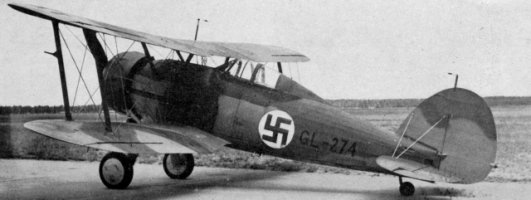
The Swedish volunteer air group, Flygflottilj 19, begins operations from the frozen Lake Kemi, with a dozen obsolete Gladiator Gloster fighters and 4 Hart light bombers. They are a good match for Soviet airplanes, however, which in general are also obsolete by current standards.
The French Government announces that Friday will be a “meatless day” and that no beef, veal or mutton will be sold on Mondays or Tuesdays.
The Women’s Section of the Air Transport Auxiliary delivers its first airplane from factory to depot. This is one more indication of women’s increasing usefulness in the war effort, but not everybody likes it. There has been considerable public protest against the use of women pilots while men are kept idle on the waiting list for the RAF.
Prime Minister Neville Chamberlain was attacked as a political bungler today in an article by John Marchbank, Secretary of the National Union of Railwaymen in The Railway Review, the official publication of the organization, on the forced resignation of Leslie Hore-Belisha, War Secretary.
Germans officially admitted today that French field units, about one company strong, supported by heavy guns, succeeded in penetrating the advanced German lines at Kreuzberg, east of Forbach on French territory, before the Westwall yesterday. But the incursion was short-lived, as the French were soon thrown back, and some were taken prisoner.
A war shortage of coal and a severe cold wave hit Berlin simultaneously today, resulting in the death of one person and extreme discomfort for thousands.
Germany’s standpoint on the question of Great Britain’s confiscation of neutral mail bound for belligerent nations, as expressed today by competent authorities, is that Britain is guilty of a clear violation of international law as laid down both in the eleventh Hague agreement and in the International. Postal Convention.
[Ed: Lol, NOW the Nazis believe in international law. How droll.]
The transfer of Baltic Germans from Estonia and Latvia into the Greater Reich was to all practical purposes concluded Tuesday, it was announced here today.
The possibility of a meeting soon between King Carol and Prince Regent Paul of Yugoslavia was rumored tonight in Bucharest. The report gained credence because they are both at present on shooting trips in the Yugoslav Banat and could easily come together for a talk.
The Sergei Prokofiev ballet Romeo and Juliet made its Russian debut at the Korov Theatre in Leningrad amid wartime blackout conditions.
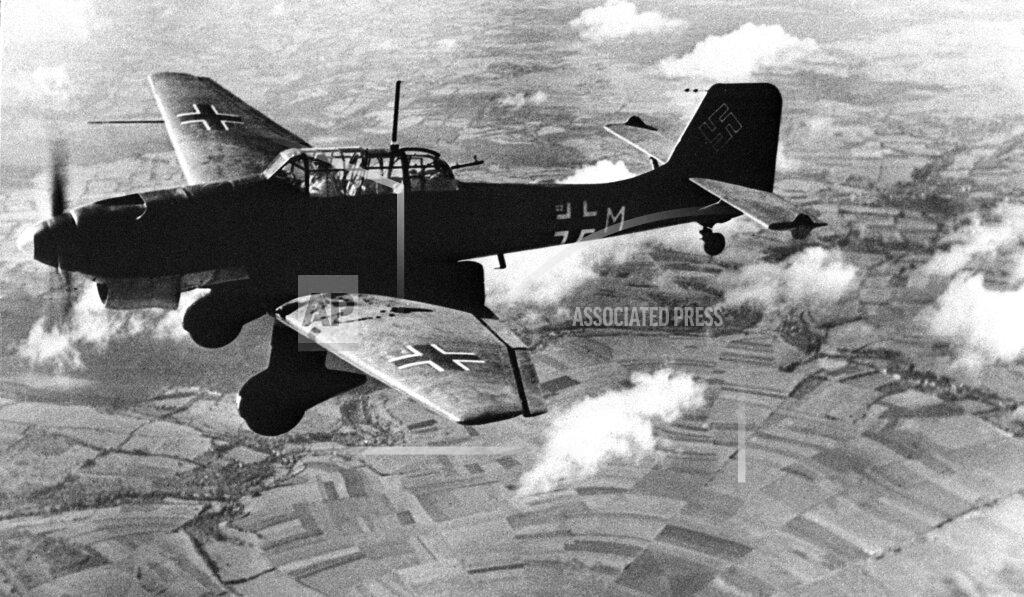
Luftwaffe aircraft performed reconnaissance of East Scotland, Firth of Forth, Humber, South Shields, Newcastle, Thames Estuary. Two trawlers were machine gunned but escaped. Enemy aircraft driven off
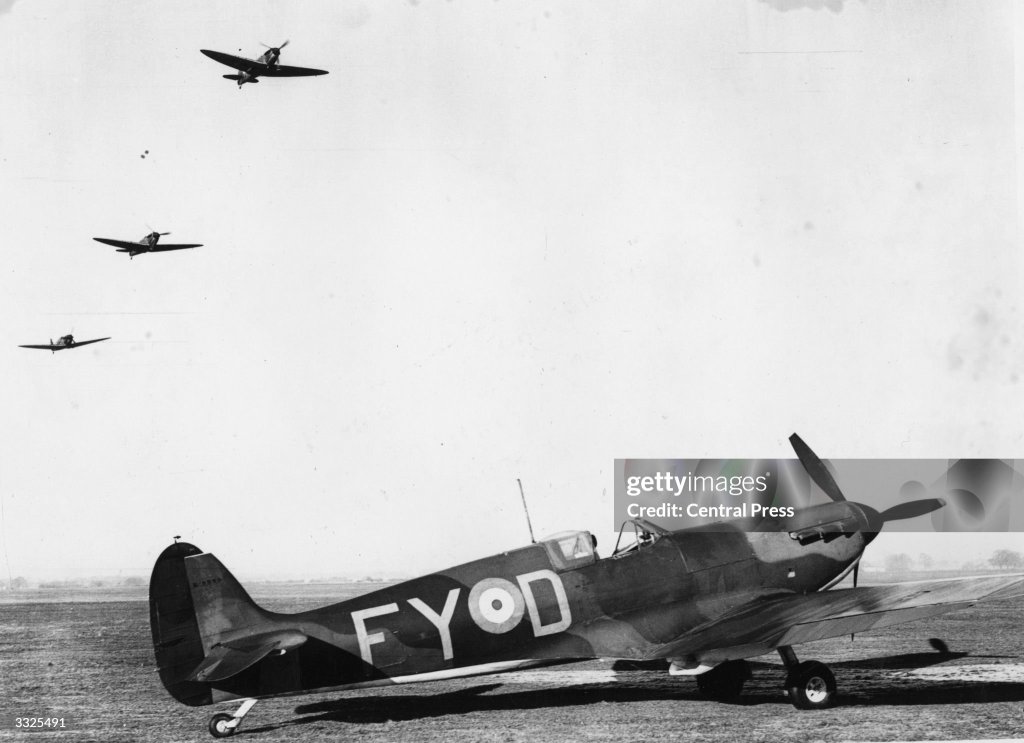
The RAF coastal command attacks three Kriegsmarine destroyers off Jutland, and also protected three British cargo vessels in the same area from Luftwaffe attack.
A Heinkel 111 crashlands in Holland after being shot up by RAF fighters.
The British trawler Croxton was bombed and sunk in the North Sea (53°20′ N 2°40′ E) by aircraft of X Fliegerkorps, Luftwaffe. All nine crew were rescued.
The Royal Navy Armed Yacht HMS Princess collided with the Blairmore (also British) in the Bristol Channel and sank. All crew were rescued by Blairmore.
The British cargo ship Leonard Pearce in Convoy HX.14 also collided with Blairmore and sank in the Bristol Channel off the Bull Point Lighthouse, Devon. All 17 crew were rescued.
The British cargo ship Keynes was bombed and sunk in the North Sea (53°47′ N 0°46′ E) by Luftwaffe aircraft. All 17 crew were rescued.
Three German destroyers are bombed off Horn’s Reef by RAF Coastal Command.
The German trawler Dietrich Hasseldieck struck a mine and sank in the Baltic Sea off Paldiski, Estonia. Two of her seven crew were killed.
At 1100, tanker El Oso in Convoy HX.14B, struck a mine laid on 6 January by U-30 and sank six miles 280° from the Bar Lightship, Liverpool (53° 32’N, 3° 25’W). Three crewmembers were lost. The master and 32 crewmembers were picked up by HMS Walker & landed at Liverpool. Eight injured survivors were taken to a hospital where one of them died of wounds.
At 1632, SS Fredville (enroute to obtain a cargo of coal for Oslo) was torpedoed by U-23 about 100 miles east of the Orkney Islands (58° 25’N, 1° 10’W) and broke in two. The forepart remained afloat and five survivors left their lifeboats several times to go back on board and look for more survivors. Of the ship’s complement, 11 died and 5 survivors were picked up by a Swedish ship and taken to Kopervik, Norway. The 1,150 ton Fredville was carrying ballast and was bound for Methil, Scotland.
The trawler Lucida (251grt) sinks in the minefield off Newcastle, laid by destroyers the previous night, at 55 00N, 00 53W with the loss of one crewman.
The Italian steamer Traviata (5,123grt) sinks in the German destroyer minefield off Cromer, eight miles 135° from Cromer Knoll, but all her crew were rescued.
The British cargo ship Manitowoc was severely damaged by fire at Newcastle upon Tyne, Northumberland. She was subsequently used as a stores hulk.
The British cargo ship Thorpebay was also severely damaged by fire at Newcastle upon Tyne. Subsequently used as a hulk at Scapa Flow.
U.S. freighter Tripp is detained at Gibraltar by British authorities (see 13 January).
Convoy OA.70G departs Southend.
Convoy OB.70 departs Liverpool.
The War at Sea, Thursday, 11 January 1940 (naval-history.net)
Armed merchant cruiser MONTCLARE arrived at Belfast from Northern Patrol.
Destroyer FORTUNE departed Liverpool for Glasgow.
Destroyer KIMBERLEY departed Portland after trials for Greenock, where she arrived on the 12th.
Minesweeping trawler OLYMPIA (Skipper H. C. Hall RNR) and armed patrol trawler VENTURE (Lt A. S. Bennett RNVR) were attacked by German bombers off Haisborough. OLYMPIA had one rating killed, and because of damage from near misses, both trawlers had to be towed in.
Convoy OA.70G departed Southend escorted by destroyers VESPER and VISCOUNT from the 12th to 13th, when they were detached off the Lizard. Destroyers KEITH and ARDENT escorted the convoy from the 13th to 14th. Meanwhile, convoy OB.70G departed Liverpool escorted by destroyer VERSATILE and sloop DEPTFORD. The two convoys merged on the 14th as OG.14 with a total of 48 ships. VERSATILE and DEPTFORD escorted the convoy on the 14th, and then joined HG.14. French destroyers TIGRE and PANTHERE escorted OG.14 from the 14th to 19th, and arrived at Gibraltar on the 19th.
Convoy FN.68 departed Southend, escorted by sloops AUCKLAND and STORK, and arrived in the Tyne on the 12th.
Convoy FS.69 departed the Tyne, escorted by destroyer VIVIEN and sloop PELICAN, and arrived at Southend on the 12th.
Steamer EL OSO (7267grt) of convoy HX.14B was sunk off Mersey Light, six miles 280° from Bar Light Vessel on a mine laid by U-30 on the 9th. Escorting destroyer WALKER was joined by destroyer VIMY and later by destroyers FAULKNOR and FOXHOUND. Shortly after midnight on the 12th, anti-submarine trawler KING SOL (486grt) sighted a submarine on the surface near Bar Light Vessel. She chased the submarine for more than an hour, but lost it in the darkness. Destroyers VIMY, VERSATILE, sloop DEPTFORD, anti-submarine yacht CUTTY SARK and two other anti-submarine trawlers were also patrolling in the area. At 0345, VIMY attacked a submarine contact 12 miles 300° from the Light Vessel. A minelaying submarine was suspected and destroyers FAME, ISIS, FORESIGHT and IMPERIAL patrolled across North Channel to intercept her.
Steamer KEYNES (1706grt) was attacked by German bombers in 53 03N, 01 40E but escaped serious damage. However, later that same day, German bombers sank her in 53 47N, 00 46E, but the entire crew was rescued.
Steamer LEONARD PEARCE (1571grt) was sunk in a collision in Bristol Channel off Bull Point.
Anti-submarine yacht PRINCESS (730grt) and steamer BLAIRMORE (4141grt) collided near Elswell Bay, Bristol Channel. PRINCESS sank, and her crew picked up by BLAIRMORE.
Three British vessels were bombed by aircraft of the German X Air Corps – trawler CROXTON (195grt) was sunk in 53 20N, 02 40E, but her entire crew rescued, trawler FLAVIA (202grt) was damaged 90 miles NE by E of Buchanness, and steamer PITWINES (932grt) was damaged 25 miles SE by E of Flamborough Head.
Note: German X Air Corps flew He111’s of KG26, Ju88’s of KG30, and two reconnaissance squadrons flying He59’s or Do17’s.
U-23 sank Norwegian steamer FREDVILLE (1150grt) in 58 25N, 01 10W. Ten crew were lost and five survivors rescued by trawler MAY (491grt).
German trawler DIETRICH HASSELDIECK (172grt) was lost in the Baltic off Pakdiski on a minefield laid by Finnish submarine VESIHIISI on 27 December.
Light cruiser AJAX, returning to England, arrived at Rio de Janiero.
Midshipman (A) J D W Barr and Leading Airman G E Uren died of injuries after their Skua of 803 Squadron force landed at Tor Ness Point, Stronsay.
Soviet steamer SELENGA (2492grt), carrying a cargo of wolfram from Japan to Germany, was seized shortly after leaving Manila by light cruiser LIVERPOOL, and taken to Hong Kong.
President Roosevelt conferred with Edward O’Neal, president, and the executive committee of the American Farm Bureau Federation; with Bishop Henry St. George Tucker of the Protestant Episcopal Church, and James M. Speers and Emory Ross of the Foreign Missions Conference, and with C. V. Whitney of the PanAmerican Airways board today in Washington.
The Senate approved a bill authorizing payment to Ohio of Social Security funds for October, 1939, approved various nominations, including that of Charles Edison to be Secretary of the Navy, and adjourned at 1:05 PM, until noon on Monday. The Monopoly Committee continued its hearing on investment banking, and the Banking and Currency Committee approved the reappointment of Emil Schram to be chairman and four directors of the Reconstruction Finance Corporation.
The House began consideration of the $267,197,908 emergency defense appropriation bill, received the Presidential report on progress of the National Resources Planning Board and adjourned at 3:29 PM, until noon tomorrow. The Ways and Means Committee began hearings on the Reciprocal Trade Treaty program extension with Secretary Hull as the witness and the Smith Committee continued its inquiry into the National Labor Relations Board.
A U.S. Senate judiciary subcommittee recommended today confirmation of Attorney General Frank Murphy as an Associate Justice of the Supreme Court, after he had voluntarily appeared before the group. The unanimous action came after Mr. Murphy had assured Senators that he opposed use of force “by either side” in labor disputes and that he believed the Supreme Court has the power and duty to invalidate acts of Congress when they contravene the Federal Constitution. Senators Burke, chairman of the subcommittee, Austin, Connally and King all questioned Mr. Murphy about his views of the Constitution and the duties of a Supreme Court justice.
The nomination now must be considered by the full judiciary committee, probably on Monday, and then sent to the Senate. Confirmation is expected. Mr. Murphy’s appointment as Attorney General a year ago was confirmed 78 to 7. Senators McCarran and Borah, members of the subcommittee who were unable to attend the session, sent word that they approved the nomination. The meeting was called by Senator Burke after receipt of some letters of protest, which the chairman said made it necessary to decide whether formal hearings on Mr. Murphy’s qualifications for the position should be held. The subcommittee removed that possibility, however, when it voted in favor of confirmation.
Mr. Murphy would succeed the late Justice Pierce Butler as a member of the Supreme Court. He has served as Attorney General since January, 1939. Judiciary subcommittees already had approved President Roosevelt’s nominations of Robert H. Jackson, now Solicitor General, to succeed Mr. Murphy as Attorney General, and Francis Biddle, now Federal Circuit Court judge, to be Solicitor General. Chairman Burke opened the hearing by explaining that he had examined the protesting letters and telegrams and “nothing calls for any hearing.”
Admiral Harold R. Stark, Chief of Naval Operations, disclosed before the House Naval Affairs Committee today the basic reasons why the Navy Department believes the combatant strength of the navy should be increased immediately by at least 25 percent. He asserted that international dislocations, actual as well as potential coalitions of nations, disregard of treaty obligations by some nations and disregard of neutral rights are among the factors that make imperative a great American Navy such as the department plans provide.
Admiral Stark declared that the United States must take into consideration the possibility of the defeat of the Allies, and “then measure the strength of the powers which might combine for action against the Americas.” The navy, including the combatant strength provided for in the pending Vinson $1,300,000,000 expansion bill, would not be adequate to defend the nation, its possessions and the Monroe Doctrine, against a coalition of Japan, Germany, Italy and Russia, he said. Such a coalition, he explained, “has been mentioned” before the committee. Without attempting to uphold the Monroe Doctrine, however, the fleet could protect our home coasts, the Panama Canal and Hawaii, he believed.
The statement made by Admiral Stark was in answer to a request from Representative Vinson, the committee chairman, who had asked for a statement as to the reasons why the navy thought the pending bill should be enacted and construction started without unnecessary delay. As soon as the committee met this morning Mr. Vinson asked Admiral Stark if he was ready to answer the question.
“Our estimates as to the defense requirement of this country increased as a result of the events in Europe in 1938 culminating in the Munich so-called agreement,” Admiral Stark said in reply. “The events of 1939 which finally resulted in the outbreak of the European war confirmed estimates previously made, and made more urgent the necessity for immediate augmentation of our naval force to meet these defense requirements. The international dislocations, the aggressive line-ups, both actual and potential, the complete and unhesitating disregard to treaties and pacts, the probable disregard of neutral rights in a war-torn world — all familiar to the committee — pointed imperatively to the need for us to be prepared for the contingencies likely to arise — and especially likely to arise in a fashion adverse to ourselves if we were not adequately prepared to meet them. We must face the possibility of an Allied defeat and then measure the strength of the powers which might combine for action against the Americans. If our navy is weaker than the combined strengths of potential enemies, then our navy is too small. It is too small viewed from that angle, so there is just one answer — an increase is necessary.”
The opening of debate today in the House over the $267,197,908 emergency national defense deficiency bill served to start Congressional discussion of the federal budget with leaders of both parties appealing to the House to stay within the $8,424,000,000 estimates for 1941 as the first step toward ending the unbroken series of deficits that began in 1930. The House was admonished by Representatives Woodrum of Virginia and Taber of New York, respectively chairman and ranking minority members of the House Appropriations subcommittee in charge of the bill, that it must pare expenditures to the bone or face the politically unpleasant task of raising taxes and the federal debt limit.
In preparation for a long war Great Britain and France are arranging for the purchase of as many as 12,000 American war planes in the next two years, authoritative sources said tonight.
Senator Borah briefly delayed Senate confirmation of Charles Edison as Secretary of the Navy today while he rebuked the nominee sharply for suggesting that Congress grant to the President the power to commandeer factories, ships and supplies in time of emergency.
The Synagogue Council of America in a statement yesterday issued by Dr. David de Sola Pool, its president, voiced “profound appreciation” of President Roosevelt’s peace message to the Pope and other religious leaders and expressed the hope that it would find “an echo in hearts filled with sorrow because of war.”
Preparations for the homeward voyage of more than five hundred members of the crew of the German liner Columbus, who have been on Ellis Island for more than three weeks, were being carried out quietly yesterday, with authorities determined to prevent further leakage of the plans.
The USN’s Fleet Landing Exercise (FLEX) No. 6 begins at Culebra, Puerto Rico. Lack of transports compels the Navy to substitute combatant ships in that role for purposes of the exercise; an important exception is the prototype high speed transport USS Manley (APD-1), converted from a World War I-emergency program “flush-deck, four-pipe” destroyer, which amply proves her worth.
Gunboat USS Charleston (PG-51) suffers damage when she runs aground at Colon, C.Z.
Benjamin O. Davis, Sr. became the U.S. Army’s first black general; his son would later follow in his footsteps.
The screwball comedy film “His Girl Friday” was released.
Interruption of traffic as a result of Japanese bombing of an important bridge on the French-owned Yunnan Railway is the most serious blow struck since the fall of Canton to Chinese communications with the outside world. Engineers estimate that a minimum of a month and possibly a year will be required to repair the damage done to a bridge, not far from Mengtze, known as the Eighty-three-Kilometer Bridge. Portage arrangements at the site of the bridge in order to permit the continuation of a limited amount of traffic are being studied, but the fact that the bridge spanned a 300-foot gap in the mountains will make such arrangements most difficult.
Meanwhile, the fact that the Japanese are continuing almost daily bombings of the rail line offers a likelihood that other vital bridges, of which there are a number, will be damaged. Pessimists expect the permanent disruption of the line. Since the fall of Canton, this railway is the most important channel for Chinese imports and exports. Its importance increased after the fall of Nanning, through which ran the trunk highway into Indo-China.
The Battle of Kunlun Pass ended with the Chinese holding the pass.
Chinese Winter Offensive: Chinese 4th War Area captures Tsunghua.
“The proposed increase of 25 percent in the United States Navy is designed to maintain America’s superior ratio over the Japanese Navy even after the lapse of the Washington treaty. It is natural that Japan, which pursues a naval policy of non-menace and non-aggression, should feel great concern.” Using the above formula, which had become the Japanese Navy’s standard comment, Captain Okuma, deputized by Rear Admiral Masao Kanazawa, spokesman for the navy, expressed today Japan’s dissatisfaction with the proceedings in the House Naval Affairs Committee in Washington. When asked whether Japan’s policy of refusing to exchange information on building programs was not the contributing cause to the renewal of Japanese-American competition, Captain Okuma said that the Japanese Navy was not in a position to exchange information.
Captain Okuma found Admiral Harold R. Stark’s proposal to construct a breakwater and runway at Guam “rather ungraceful” after Congress’s previous refusal to sanction fortification of Guam. He thought that the Japanese Navy could not be blamed if it supposed the transfer of Guam to the Fourteenth Naval District was part of plans to increase Hawaii’s strength against Japan. The press adopts an aggrieved attitude typified by Yomiuri’s remark that Japan, of her own volition, had decided to reopen the Yangtze and the United States had responded by planning 52,000-ton warships. The spokesman quoted this comment with a jocular remark that 52,000-tonners could not sail the Yangtze. When asked if the date for opening the Yangtze could be named, he answered in the negative, explaining that obstructions and floating mines still had to be cleared away to make the river safe for general shipping.
Nichi Nichi declares that the United States has determined to maintain the “unjustified” 5-3 ratio imposed by the Washington treaty even though that treaty no longer exists. Obviously, says Nichi Nichi, the United States is making its plans on the basis of strength required for transpacific operations. Forgetting for purposes of its argument that the United States faces two oceans, Nichi Nichi contends that as the Japanese Navy is not big enough to attack American territorial waters, the United States should not build a fleet big enough to operate across the Pacific. If the United States seeks to maintain its “unjustifiable” superiority Japan will have to build up its navy to meet the American menace, Nichi Nichi asserts, and asks if America’s provocative program will contribute to peace in the Pacific.
Dow Jones Industrial Average: 148.23 (-1.92)
Born:
Hank Fischer, MLB pitcher (Milwaukee-Atlanta Braves, Cincinnati Reds, Cincinnati Reds), in Yonkers, New York.
Mark DeVoto, American composer (Hodayot; Pavane and Zortzico), and musicologist (Schubert), in Cambridge, Massachusetts.
Naval Construction:
The Royal Navy Bangor-class (Reciprocating engined) minesweeper HMS Blyth (J 15) is laid down by Blyth Shipbuilding & Drydock Co. Ltd. (Blyth, U.K.); completed by Whites M.E.
The Kriegsmarine (German Navy) Type VIIC U-boat U-755 is laid down by Kriegsmarinewerft (KMW), Wilhelmshaven (werk 138).
The American C-3 cargo liner MS Mormacmail is launched by the Sun Shipbuilding and Drydock Co. (Chester, Pennsylvania). She is acquired by the Navy on 6 March 1941, before completion, and converted, becoming the U.S. Navy escort carrier USS Long Island (AVG-1, then ACV-1, then finally CVE-1).

 History Diaries