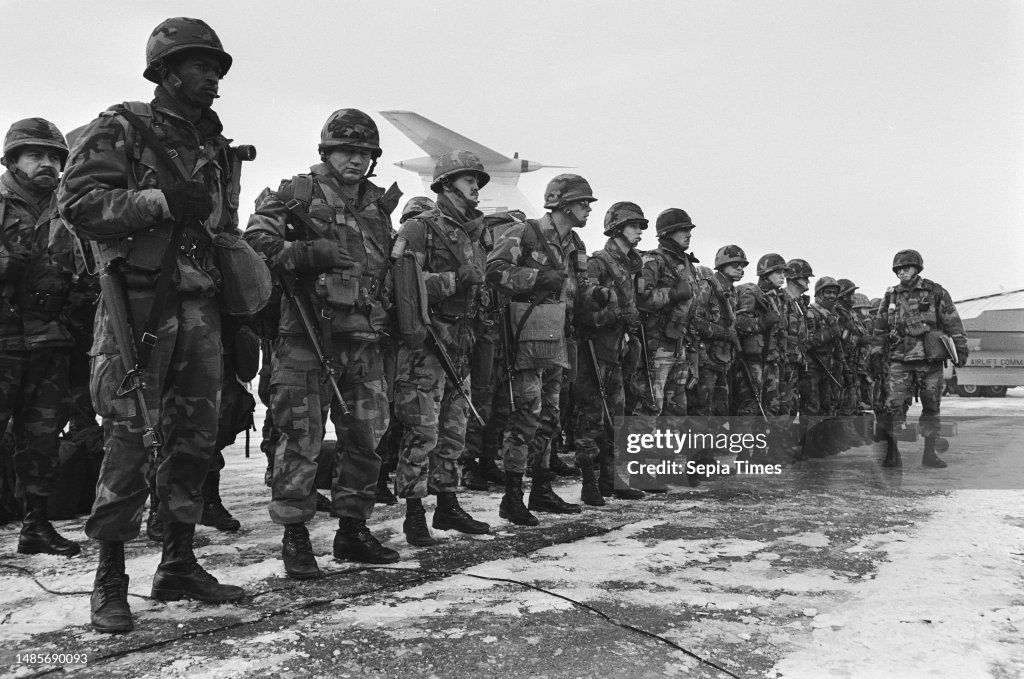
Three American soldiers died and seven others were injured when a solid-fuel motor of an unarmed Pershing 2 missile caught fire and burned in southern Germany, the United States Army announced. The accident was the most serious so far involving the American-built ballistic missiles, and it seemed certain to sharpen West German anxieties over the issue of nuclear weapons stationed in the country. The Pershings were first deployed in late 1983 after heated controversy in West Germany. At a news conference at Heilbronn, Brigadier General Raymond E. Haddock, the commander of the 56th Field Artillery Brigade, said the accident occurred at 2 PM when the first-stage motor of a Pershing missile was being removed from its container after arrival from the United States.
Under aggressive questioning by judges, a formerly senior security policeman charged with abetting the killing of a pro-Solidarity priest said today that he had not passed along information about the crime because he could not accept the fact that security officers were involved. The calmness with which the policeman, Adam Pietruszka, began his testimony in Thursday’s court session evaporated today when Judge Jurand Maciejewski asked him why he had withheld his suspicions about one of his three co-defendants, Grzegorz Piotrowski. The judge said Mr. Pietruszka knew that a car assigned to Mr. Piotrowski’s unit had been spotted in the vicinity of the abduction near the time when the priest was last seen alive. The court has established that Mr. Pietruszka, who lost his colonel’s rank after his arrest on charges of abetting the crime, knew of the car’s location two days after the October killing of the priest, the Rev. Jerzy Popiełuszko. The court has also established that Mr. Pietruszka knew that Mr. Piotrowski, who lost his captain’s rank after his arrest, had been out of town equipped with a special police pass.
Most of the huge cloud of sulfuric acid that leaked from a chemical plant in Karlskoga, Sweden, Thursday had dissipated by tonight, 24 hours after it spewed into the air, authorities said. Life in the central Swedish city was near normal this evening, the authorities said, adding that all but one of about 20 people treated at a hospital for eye and respiratory irritations had been discharged. Roadblocks were lifted and bus service resumed to this city of 35,000 people 150 miles west of Stockholm. Officials at the chemical plant, which is owned by a division of the Bofors arms and chemical group, said the plant was ready to restart. Some 30 tons of the gas leaked at about 7 P.M. Thursday, and residents were told to stay indoors and close doors and windows. Experts said the gas could be fatal in high concentrations.
President Reagan learns from a Swiss newspaper that the U.S. Ambassador to Switzerland John Lodge had been fired.
The question of who is a Jew appeared to be headed for another major political debate in Israel. The situation has raised protests from American Jewish groups that oppose the Orthodox definition that Israeli religious parties are now trying to get Parliament to adopt as law. In the midst of an economic crisis, the arrival of Ethiopian Jews, and a national debate over withdrawing from Lebanon, Israel’s religious parties have decided to again introduce a bill that would amend Israel’s Law of Return and redefine who is a Jew.
An anonymous caller asserted today that the kidnapping of an American Roman Catholic priest here this week was part of a campaign to force all Americans to leave Lebanon. The caller said he represented Islamic Holy War, a shadowy group that had previously claimed responsibility for a series of bombings in Lebanon, including the truck bombings of the American Embassy and the American and French marine barracks. The caller said that if all Americans left Lebanon, the abducted priest, the Rev. Lawrence M. Jenco, would be freed, along with four other Americans who have disappeared here in the last 10 months. Although it had been widely assumed here that at least three missing Americans were being held by what is believed to be a loosely organized cell of Shiite Moslem zealots, this was the first formal assertion by a group that it had carried out the kidnappings.
Iraq said its warplanes attacked two “naval targets” today in the Persian Gulf near the Iranian oil terminal at Kharg Island. There was no immediate word from shipping sources in the gulf of any ships in difficulties today. An Iraqi spokesman said a “large naval target” was hit at 1:44 PM (5:44 AM New York time) and another, described as medium-sized, a minute later. Iraq often uses the term “large naval target” to refer to oil tankers. Iraq says it has hit eight targets in the gulf since January 1. Only two ships have reported being hit, a Panamanian vessel last Monday and a South Korean vessel on Tuesday. Well over 50 ships have been hit by Iraqi or Iranian warplanes since the four-year-old border war expanded into shipping lanes last year.
The Indian coast guard seized a Sri Lanka naval vessel today in the waters separating southern India from its island neighbor. The two Governments gave sharply differing accounts of the incident, which officials here said was the first of its kind between the countries. Indian press reports said the incident began after the Sri Lanka vessel opened fire on a fleet of Indian fishing boats in Indian territorial waters. The Sri Lanka Embassy here disputed this, saying the vessel had been seized while on routine patrol in Sri Lanka waters. The seven-member Sri Lanka crew was reported to have surrendered peacefully, and their ship was towed into port on the Indian mainland. The United News of India said the crew surrendered after a chase through the Gulf of Mannar, the narrow strait separating India and Sri Lanka. An Indian spokesman said New Delhi had strongly protested the incident to a senior Sri Lanka diplomat who was called to the Foreign Ministry.
Last Wednesday India announced that it was increasing coast guard patrols in the strait because Indian fishermen had reported several attacks by Sri Lanka Navy personnel in which at least two people were slain. Sri Lanka has often accused India of harboring and helping Tamil militants conducting a guerrilla campaign in the island’s north and northeast to gain independence. Sri Lanka has also said that powerful, motor-driven fishing vessels were often used by terrorists based in southern India to cross the strait, which is only about 20 miles wide at its narrowest. An Indian spokesman asserted that the Sri Lanka vessel had been intercepted two and a half miles inside Indian waters in the Gulf of Mannar.
A West German parliamentary leader who visited Afghanistan last month has accused the Soviet Union of committing genocide there. The lawmaker, Jürgen Todenhöfer, a member of Bonn’s governing Christian Democratic Party, said here Thursday: “Up until the last moment of 1984, the Soviet Army was using combat aircraft to level civilian villages to the ground. They were crippling Afghan youths physically and mentally with cruel torture. They launch mines that look like butterflies from helicopters, which don’t explode when they touch the ground, but explode when children who think they are toys touch them.” Famine now threatens the land, he said, adding, “The quality of suffering in Afghanistan cannot be expressed in words anymore.”
Son Sann, the former Cambodian Prime Minister whose rebel headquarters were captured this week by Vietnamese soldiers, called today for his forces to return to guerrilla war. “We are not so strong,” Mr. Son Sann, a leader of the non-Communist Khmer People’s National Liberation Front, said at a news conference. “We cannot fight a conventional war against the third strongest army in the world.” The Vietnamese have given several setbacks, including the capture of its main camp, Ampil, to the group, which is part of a coalition battling the Vietnam-backed Cambodian Government. Mr. Son Sann said the fight would now emphasize hit-and-run guerrilla war, not the defense of set positions. He said: “Ampil was our headquarters but it can be anywhere. We will change our tactics and approach.”
North Korea, denouncing planned military exercises by the United States and South Korea as “a grave provocation,” has postponed economic and Red Cross talks with the South scheduled for later this month. The North’s action this week brought expressions of surprise and regret from South Korean officials, and touched off speculation about possible motives. Press reports received here from Washington today quoted a State Department spokesman, Alan Romberg, as urging North Korea to reconsider its decision.
A separatist leader was slain in New Caledonia in a gun battle with the police, authorities said, and a state of emergency was declared in response to the renewed violence. The separatist leader was identified as Eloi Machoro, who had been named minister of internal security in a provisional government established December 1 in the French Pacific territory by Melanesian separatists. Earlier, 1,000 French settlers went on a rampage over the shooting death of a white youth by Melanesian separatists.
The effects of drought in South Africa are most apparent in the hunger and malnourishment in its tribal “homelands.” Much of the problem, relief and medical workers say, stems from a poverty that prevents those transplanted to barren lands from purchasing the produce of the more fertile zones from which they are excluded. It is poverty created, some South Africans believe, by policies of racial separation.
South African Cabinet ministers accused Senator Edward M. Kennedy today of interfering in their country’s affairs, and their criticism seemed to reflect hardening white opposition to his visit here. The Senator, a Massachusetts Democrat, arrived here on Saturday and is to leave on Sunday for Lusaka, Zambia, on what has been termed a fact-finding tour. During his stay, however, he has sought consistently to be seen as an ally of South Africa’s voteless black majority by visiting black townships, squatter camps and resettlement areas. Today he posed with black nationalist figures outside Pollsmoor prison, which houses jailed black activists, including Nelson Mandela, leader of the outlawed African National Congress. “Behind these walls,” he said after aides made sure that television cameras were running, “are men that are deeply committed to the cause of freedom in this land. I firmly believe that the real cause of peace will be served with the freedom of political prisoners.”
CDC MMWR publishes guidelines for screening U.S. blood supply for AIDS antibodies with ELISA test that would be available later that year. The first test was used to screen blood products; it was not yet approved for diagnostic use. [Morb Mortal Wkly Rep 1985 Jan 11;34(1):1-5]
Sixty corporations and individuals representing the military, chemical, banking, transportation and news industries have lent at least $100,000 each to President Reagan’s inaugural committee. The committee raised $8 million in loans to pay for a round of gala events celebrating Mr. Reagan’s second term. The committee raised $1 million more in donations, with some of the same people and concerns making donations as well as loans.
President Reagan travels to Camp David for the weekend.
Inflation continued to decline in December, according to the Producer Price Index for Finished Goods. The leading measure of industrial price changes rose only one-tenth of 1 percent last month, the Labor Department said. The increase put the inflation rate in the producer price area at only 1.8 percent for all of 1984.
The Council of Economic Advisers will remain intact in the second Reagan Administration and will maintain its status within the White House, a senior Administration official said. The White House had been examining the role of the council to determine if it should be abolished or weakened in influence by transfer to the Treasury or Commerce Department.
A.T.& T. is cutting prices on its top-of- the-line telephones to sell off unsuccessful products and to shore up its position in the residential telephone market. The company said it would eliminate some slow-selling telephones as part of a thorough re- examination of its product line. It also said it would close up to 700 of its remaining 900 Phone Center stores within five years. It has already closed 600 of the stores.
A convicted murderer was executed in South Carolina, the first person to be put to death in the state in nearly 23 years. Joseph Carl Shaw went to the electric chair for two murders committed in 1977.
Ariel Sharon’s libel suit against Time magazine was to go to the jury Monday after instructions from Judge Abraham D. Sofaer. Mr. Sharon’s lawyer made his summation to the jury, asserting that its verdict might determine whether history recorded Mr. Sharon as “a great soldier” or “a kind of monster.” The defense made its summation Thursday.
A former convict was indicted today on charges of kidnapping and child molesting in the 1983 abduction of a California boy discovered by the police and reunited with his family this week. A Providence County grand jury indicted the former convict, David R. Collins, 55 years old, on one felony count of kidnapping and eight felony counts of first-degree child molestation-sexual assault against Bobby Smith, 13, of Long Beach, Calif. Bobby, lured from his home on April 10, 1983, was found in Mr. Collins’s apartment Monday by the police.
The Kansas Supreme Court today overturned the manslaughter conviction of a woman who shot her husband after he beat and raped her at a Topeka motel. In a 6-to-1 decision the high court ruled that the woman was a victim of the “battered wife syndrome” and acted in self-defense because she was in “imminent danger.” The decision overturned a conviction by a Shawnee County District Court jury, which found the woman guilty of involuntary manslaughter in the death two years ago. A new trial was ordered. The majority opinion said the lower court had given the jury faulty instructions, describing criminal self-defense using the term “immediate danger” rather than “imminent danger.”
Judge Reuben V. Anderson of the Hinds County Circuit Court was picked today by Governor Bill Allain to fill a vacancy on the Mississippi Supreme Court. He will be the first black to sit on the court since the Reconstruction era that followed the Civil War. Judge Anderson, 42 years old, will replace Justice Francis S. Bowling of Jackson, who is retiring. His appointment runs until the statewide election in 1986. A native of Jackson, Judge Anderson studied at Tougaloo College and the University of Mississippi School of Law. He was appointed a circuit judge in 1982.
Psychiatric testing was ordered today for a Vietnamese man accused of murdering a 9-year-old Texas boy he picked at random. The man, Huy Nhượng Đường, 25 years old, a former mental patient, showed no emotion while a judge accepted his not guilty plea and ordered tests of his mental state. Mr. Đường is accused of attacking Shane Thomas Smith Thursday morning as he waited at a school bus stop. The man is said to have knocked the fourth-grader down and burned him with a cigarette before stabbing him at least 75 times.
A leading advocate of abortion rights said today that abortion clinics had posted armed guards and stocked guns as part of a plan to prevent the bombing of their facilities. The advocate, Bill Baird, who owns an abortion clinic in Boston and two on Long Island, also said that a coalition of abortion rights advocates and clinic owners from around the country had hired a private detective agency to investigate anti-abortion violence. Mr. Baird said he did not know how many organizations were participating in the coalition. “We are in a state of siege, a state of war,” Mr. Baird said. “People are scared to death. Many clinics are folding, many doctors quitting. We are asking our supporters to hold on.”
Faster harvesting of virgin timber in National Forests, which is sought by the Reagan Administration, is opposed by conservationists. Under a policy pressed by John B. Crowell, who is departing after four years as Assistant Secretary of Agriculture in charge of forests, the Forest Service would accelerate the cutting of ancient trees in such virgin stands as those remaining in the Willamette National Forest in Oregon.
It all began as a short news agency dispatch from Maryland this week about a little boy who wanted to attend school. But before it was over hundreds of parents and scores of children in three cities around the country were protesting and staying away from class in fear of a disease: Herpes. The three incidents, in Maryland, Iowa and California, had common ingredients. They were sores on a child’s body and fear in the minds of teachers and parents that mixed with lack of medical knowledge and a nationwide communications system to create an instant outbreak of public concern. “Herpes has become an emotional red flag,” said Donald Berreth, public affairs director for the National Centers for Disease Control in Atlanta.
[Ed: There was a lot of fear about Herpes in the 1980s, for a time, but by 1986 it will largely evaporate, overtaken by a much more intense fear, as Americans begin to realize that AIDS is not just a “Gay plague,” but is starting to affect everyone.]
The U.S. Navy has quietly reversed a decision it announced last month to cancel a $150 million project in antisubmarine warfare. According to Navy officials and sources in Congress, the service has decided to continue an eight-year effort aimed at building a new underwater device for finding Soviet submarines. The Navy announced December 26 that it was halting work on the project. The Navy said in December that the device, a sensor attached to a buoy that can be dropped from airplanes, had suffered “persistent technical problems.” It said a “more robust” surveillance technique was needed because of “changes in the submarines” the device was meant to locate.
A 16-year-old honor student agreed to return a $1,000 prize for a short story that he originally said he had written but that he later admitted was the work of Roger Zelazny, a prize-winning author. The student, Phil Broder, said Thursday, after he was confronted by his father and school officials, that he had lifted his story, “The George Business,” about a lovesick knight and a cynical dragon, from “Universe Variations,” a collection by Mr. Zelazny that was published in 1983. The admission came after story was printed in The Detroit Free Press Thursday and readers called to say it was Mr. Zelazny’s.
Dow Jones Industrial Average: 1218.09.
Born:
Aja Naomi King, American actress (“How to Get Away with Murder”), in Los Angeles, California.
Dennis Dixon, NFL quarterback (Pittsburgh Steelers), in San Leandro, California.
Marcus Smith, NFL special teams gunner and wide receiver (Baltimore Ravens), in San Diego, California.
Josh Tordjman, Canadian NHL goalkeeper (Phoenix Coyotes), in Montreal, Quebec, Canada.
Kazuki Nakajima, Japanese racing driver, in Aichi Prefecture, Japan.
Newton Faulkner, English singer-songwriter, in Surrey, England, United Kingdom.
Died:
Sir William McKell, 93, Premier of New South Wales (1941-1947), Governor-General of Australia (1947-1953).



 History Diaries