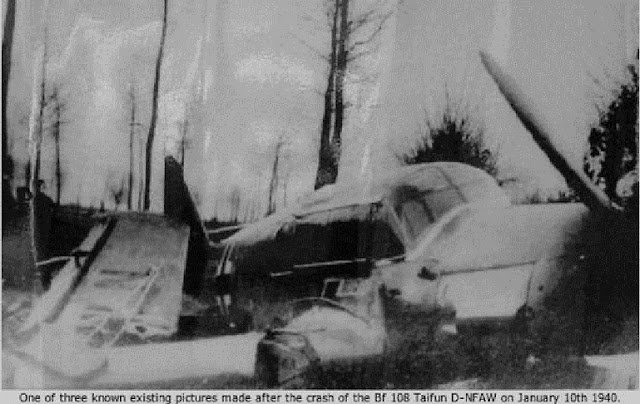
Mechelen incident: A German aircraft with an officer on board carrying plans for Fall Gelb, the German invasion of the Low Countries, crash-landed in neutral Belgium. German Bf 108 liaison aircraft flies, against very strict regulations, on the Belgian side of the border with an officer carrying Fall Gelb (Invasion of France) plans. Major Erich Hoenmanns, the pilot, loses his way while flying from Loddenheide to Cologne due to fog banks. He fails to see the Rhine River, which is frozen over and flies all the way to the River Meuse. He then accidentally cuts off the plane’s fuel supply, and it crash-lands in a Belgian field at Mechelen-sur-Meuse. His passenger, Major Helmuth Reinberger, is a paratrooper carrying plans to the 7th Air Fallschirmjäger (paratrooper) Division in Cologne detailing the dropping of paratroopers at Namur (somewhat ironically, on the Meuse) to seize bridges there. The plans carry the current (much postponed) date for Fall Gelb of 17 January 1940. The plans fell into the hands of Belgian intelligence.
The Bf 108 ‘Taifun’ made a forced landing under foggy conditions near Mechelen-aan-de-Maas in the Belgian Province of Limburg starting what became known as the Mechelen Incident. Piloted by Major Eric Hönmanns, the liaison aircraft also held a passenger, Major Helmuth Reinberger, Adjutant to Colonel Bassenge, Commanding Officer of Dienststelle Fliegerführer 22O, 7. Flieger Division. Reinberger was responsible for organizing the supplying of the unit that was to land paratroopers behind the Belgian lines at Namur on the day of the coming attack. Soon after the crash the two men were arrested by the Belgian Gendarmerie. Reinberger was carrying top-secret documents divulging the invasion plans for the Low Countries. Reinberger attempted several times during his arrest to destroy the documents, however without success. Reinberger attempts to burn the documents but fails. The two men are taken by Belgian border guards to a border guardhouse. Still somehow in possession of the papers, Reinberger tries to stuff them in a burning stove, but one of the border guards seizes them (and badly burns his hands in the process).
News of the Mechelen Incident reached Berlin via press reports about a crashed German plane. In the OKW it caused a general consternation, as it was soon deduced that Reinberger must have had the attack plan with him. The Belgians have the documents recovered in the Mechelen Incident quickly translated by the Deuxième Section (military intelligence) of the general staff in Brussels. Most had indeed been badly damaged by Major Helmuth Reinberger’s consecutive attempts to burn them, but the general outlines of an attack against Belgium and The Netherlands were clear from the remaining passages, though the date of the attack was not mentioned. Hitler’s agents suspect the British and French have learned of the plans for the invasion, scheduled for January 17, and Hitler postpones the invasion. He will use this alleged violation of neutrality by Belgium to justify the invasion of that country in May.
Hitler sets 17 January as date for western offensive into France and the Low Countries. This is before he hears about the Mechelen incident. The generals raise numerous objections to Hitler’s timetable.
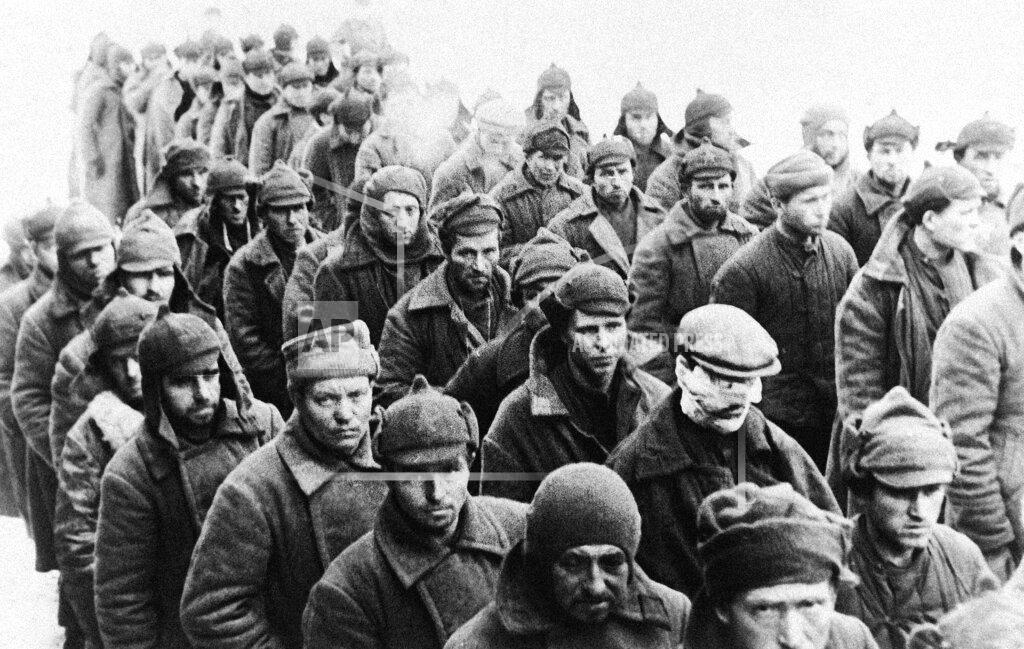
The Soviet command is consumed with recriminations about the defeats suffered to date. It is not a time for grand operations. Much of the rest of January is consumed with court-martials, command changes and replacement of lost troops.
Mikhail M. Kaganovitch, Commissar of Soviet Russia’s aviation industry, has been relieved of his duties and “transferred to another post,” the official Tass news agency announced tonight. His successor is A.I. Shakhurin.
The Russian 122nd division at Salla begins to retreat towards Märkäjärvi.
In Ladoga Karelia, the vanguard of the Finnish IV Army Corps cuts the road connections of the Russian 56th Army in the area of Pitkäranta.
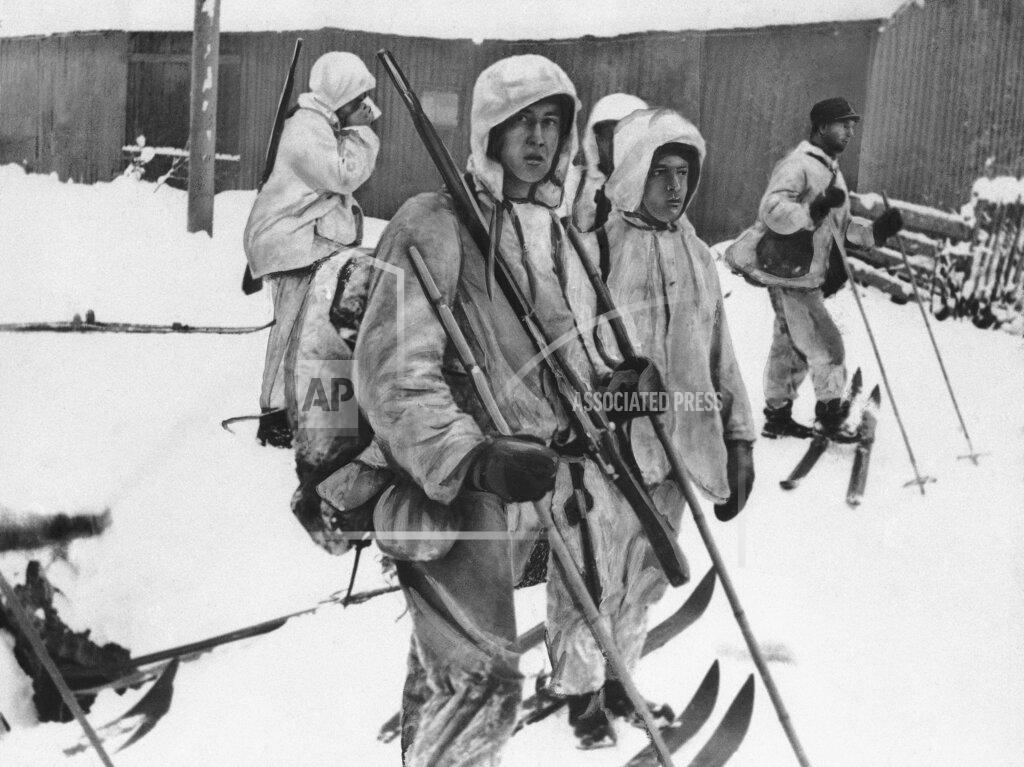
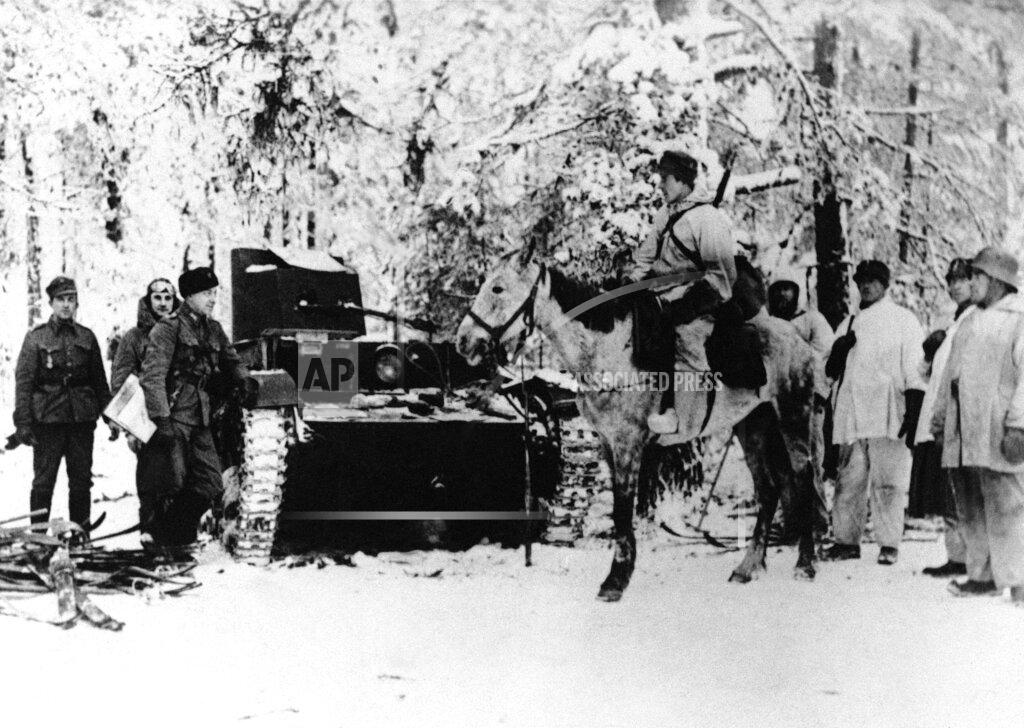
Soviet troops are trapped at Kitelä: the bulk of the enemy’s 56th Army are trapped inside the Kitelä-Syskyjärvi-Koirinoja triangle, giving rise to the great Kitelä ‘motti’.
Military training starts for 350 Hungarian men to fight in Finland (out of 25,000 volunteers). They will ultimately become Hungarian Volunteer Detached Battalion commanded by Lieutenant Imre Kémeri Nagy with 24 officers, 52 NCOs, 2 doctors and 2 padres.
Unofficial peace talks began between the Soviet Union and Finland, but the fighting continued.
The Swedish government rejects the Soviet claim that Sweden is pursuing an “unneutral” policy. (A claim made on January 5th.) The government also passes new laws giving it sweeping authority in the event of an invasion.
The author Hella Wuolijoki travels to Stockholm for unofficial negotiations with Alexandra Kollontai, the Soviet Ambassador in Stockholm.
The German war correspondent Otto von Zwehl enlists as a volunteer in the Finnish Army. Hitler hears of this and strips him of his German citizenship and military rank.
Mabel Bonney, correspondent and photographer for the American Life magazine, arrives in Finland.
Intense patrol activity continued last night and yesterday on the Western Front, the French War Office announced today. Both sides engaged in reconnaissance and there were several small actions. German patrols were said to have been particularly insistent in sectors where they believed British and empire troops to be stationed. The French said all such raids, obviously to take prisoners for information purposes, were repulsed. The French also sent out patrols, one of which, they said, penetrated deep into enemy territory between the Saar and Moselle Rivers.
A bill for the expulsion of all Communist Deputies who have not repudiated their party, which has been dissolved in France, will be introduced in the French Chamber of Deputies tomorrow by Vice Premier Camille Chautemps.
The manner in which the furore over Leslie Hore-Belisha’s resignation died down suddenly suggested today that an understanding had been reached by the Chamberlain government and the Opposition. While the incident will receive its share of attention when Parliament meets Tuesday, it is now believed unlikely that a serious political issue will result unless Mr. Hore-Belisha’s personal statement raises controversial questions.
Widespread complaints about British train delays are excused by the Railway Executive on the grounds of the blackout, which prolongs the loading of goods vans and makes for late starting. It also blames unexpected arrivals at ports of shipments of fresh foods, which have to be distributed hurriedly by commandeering trains. Troops movements are also a factor.
British General Sir Alan Cunningham becomes commander of the 66 Infantry Division.
RAF Bomber Command 4 Group conducts a daylight anti-shipping sweep over the North Sea. 77 Squadron, 2 aircraft. 102 Squadron, 2 aircraft. No enemy shipping sighted.
The RAF mounts a bombing raid on the German seaplane base at Sylt. There is a running battle with Bf 109s over the North Sea that costs each side one plane, with damage to two other German planes.
On the night of 10/11 January, German destroyers Bruno Heinemann, Wolfgang Zenker, Erich Koellner laid a minefield off Cromer. Three merchant ships for 11,155 tons were lost on this minefield.
On the night of the 10th/11th, German destroyers Karl Galster, Anton Schmidt, Richard Beitzen, Friedrich Ihn, escorted by destroyers Wilhelm Heidkamp and Friedrich Eckholdt, laid a minefield off Newcastle. On the return, IHN broke down and was escorted back by Beitzen.
The British freighter Upminster, heavily damaged the day before, sinks.
German steamer Bahia Blanca (8558grt) departed Hamburg pre-war, arrived at Rio de Janiero on 11 September 1939 disguised as a Greek ship, and then on 6 December attempted to run the British blockade back to Germany. On the 10th, evading the blockade, she ran onto the ice pack in the Denmark Strait, sank in 66 09N, 26 20N and her crew was rescued by Icelandic trawler Hafstein (313grt).
Armed merchant cruiser HMS Canton ran aground off Barra Head, Isle of Lewis, in the Hebrides, and armed merchant cruiser HMS California stood by until tugs Englishman and Bandit arrived from Campbeltown and Ardrossan respectively. HMS Canton got off on the 12th without assistance and headed towards the Clyde escorted by destroyers Fame, Isis, Foresight and Imperial. Destroyers Forester, Fortune and Fury came out from the Clyde and met destroyers Faulknor and Foxhound to screen Canton’s passage. On the 12th, Foresight attacked a submarine contact NNW of Inishtrahull. On the 13th, Canton and Bandit arrived in Rothesay Bay en route for the Clyde. On the 17th, at the head of Holy Loch, Canton was intentionally beached when her pumps failed to control the flooding. Later repaired and returned to service.
German trawler Axel (343grt) was sunk in an accidental collision with German patrol yacht Grille (2560grt) in the Baltic. There were no casualties.
The Norwegian cargo ship Hertha collided with a French vessel off the Welsh coast and was beached. She was later repaired and returned to service.
The Rumanian ship Bucuresti (2,499 GRT, 1897) ran aground on Samothrace Islands rocks, in the Aegean Sea (40°13′N 25°20′E. Her crew were rescued. Bucuresti was subsequently towed to a Greek port. She was declared a constructive total loss and scrapped.
U.S. steamship President Van Buren, bound for Genoa, Italy, and New York, is detained at Port Said, Egypt, and subsequently discharges items of cargo, deemed as contraband, at Alexandria, Egypt, before being allowed to proceed
Convoy OG.14F forms at sea for Gibraltar.
The War at Sea, Wednesday, 10 January 1940 (naval-history.net)
Battleship RODNEY, battlecruiser REPULSE and the destroyers that had departed on the 4th arrived back at Greenock. Destroyer FIREDRAKE had been detached on a detail and arrived at Greenock on the 11th.
German steamer BAHIA BLANCA (8558grt) departed Hamburg pre-war, arrived at Rio de Janiero on 11 September 1939 disguised as a Greek ship, and then on 6 December attempted to run the British blockade back to Germany. On the 10th, evading the blockade, she ran onto the ice pack in the Denmark Strait, sank in 66 09N, 26 20N and her crew was rescued by Icelandic trawler HAFSTEIN (313grt). Light cruiser NEWCASTLE, which departed Scapa Flow on the 2nd, was diverted from Northern Patrol to assist and sank the German ship with gunfire. NEWCASTLE arrived back at Scapa Flow on the 14th.
Heavy cruisers BERWICK, NORFOLK, and DEVONSHIRE arrived at Rosyth from Northern Patrol for de-magnetization.
Light cruiser DELHI departed Belfast for Scapa Flow, where she arrived on the 11th.
Armed merchant cruiser CANTON ran aground off Barra Head, Isle of Lewis, in the Hebrides, and armed merchant cruiser CALIFORNIA stood by until tugs ENGLISHMAN and BANDIT arrived from Campbeltown and Ardrossan respectively. CANTON got off on the 12th without assistance and headed towards the Clyde escorted by destroyers FAME, ISIS, FORESIGHT and IMPERIAL. Destroyers FORESTER, FORTUNE and FURY came out from the Clyde and met destroyers FAULKNOR and FOXHOUND to screen CANTON’s passage. On the 12th, FORESIGHT attacked a submarine contact NNW of Inishtrahull. On the 13th, CANTON and BANDIT arrived in Rothesay Bay en route for the Clyde. On the 17th, at the head of Holy Loch, CANTON was intentionally beached when her pumps failed to control the flooding.
Destroyer MATABELE arrived at Plymouth for docking and refitting.
Destroyers SIKH and DUNCAN arrived in the Clyde. Later that day, destroyers IMPERIAL and DUNCAN with destroyers ISIS and IMPULSIVE departed the Clyde for Rosyth. However, ISIS and IMPULSIVE were detached en route to assist armed merchant cruiser CANTON. IMPERIAL, DUNCAN, ISIS and IMPULSIVE arrived at Rosyth on the 12th.
Early on the 10th, destroyers INTREPID and IVANHOE of the 20th Destroyer Flotilla laid small minefield IE 1 in channels through the German minefields in the Heligoland Bight in 54 06N, 05 29E.
Submarine URSULA departed Blyth on patrol.
Convoy BC.22 of steamers BARON CARNEGIE, BATNA, COXWOLD and DAVID LIVINGTONE (Commodore) departed Bristol Channel, escorted by destroyer WESSEX, and safely arrived in the Loire on the 12th.
Convoy AXS 9 of one steamer arrived at Brest from Fowey, escorted by destroyer BROKE.
Convoy FS.68 departed the Tyne, escorted by destroyer WOOLSTON and sloop GRIMSBY, and arrived at Southend on the 11th.
GERMAN DESTROYER MINELAYING OFF NEWCASTLE and CROMER
On the night of the 10th/11th, German destroyers KARL GALSTER, ANTON SCHMIDT, RICHARD BEITZEN, FRIEDRICH IHN, escorted by destroyers WILHELM HEIDKAMP and FRIEDRICH ECKHOLDT, laid a minefield off Newcastle. On the return, IHN broke down and was escorted back by BEITZEN. On the 11th, the minefield claimed its only victim, trawler LUCIDA (251grt) in 55 00N, 00 53W with the loss of one crewman.
On the night of 10/11 January, German destroyers BRUNO HEINEMANN, WOLFGANG ZENKER, ERICH KOELLNER laid a minefield off Cromer. Three merchant ships for 11,155 tons were lost on this minefield:
On the 11th, Italian steamer TRAVIATA (5123grt), eight miles 135° from Cromer Knoll, but all her crew were rescued.
On the 12th, British steamer GRANTA (2719grt), in 53 13N, 01 21E, eleven miles 123° from Cromer Knoll Light Vessel. Twelve crew were lost, and sloop STORK and fishing vessels FULHAM IV and ROBUR VIII rescued the survivors.
On 17 January, Greek steamer ASTERIA (3313grt), 9.5 miles NE of Haisborough Light. Fourteen crew were lost and eleven rescued.
German trawler AXEL (343grt) was sunk in an accidental collision with German patrol yacht GRILLE (2560grt) in the Baltic.
Destroyer DIAMOND departed Gibraltar for Freetown arriving on the 15th for patrol duties.
Light cruiser GALATEA departed Malta and arrived at Alexandria on the 13th, left next day and arrived back at Malta on the 17th.
In Washington, President Roosevelt conferred with the House Democratic steering committee, representatives of the American Medical Association and the Society of Friends, the Church of the Brethren and the Mennonite Church and with Francis Conajera, the Mexican Ambassador, and Eduardo Suarez, the Mexican Finance Minister.
The Senate approved the Harrison joint resolution providing for a joint Congressional committee to study 1941 budget recommendations; received the MoKellar bill authorizing cancellation of Finland’s war debt and the bill of Senator Clark of Missouri prohibiting transfer of American vessels to foreign registry and adjourned at 1:58 PM until noon tomorrow. The Monopoly Committee continued its study of investment banking; the Finance Committee approved the nomination of Daniel W. Bell to be Under-Secretary and John L. Sullivan to be Assistant Secretary of the Treasury and the Foreign Relations Committee approved several diplomatic nominations.
The House passed the Gavagan anti-lynching bill, 251 to 132; received the Fish bill authorizing the appropriation of $20,000,000 for relief for Finland and adjourned at 4:22 PM until noon tomorrow. The Appropriations Committee reported favorably the $267,197,908 Emergency National Defense Bill and adopted a resolution directing its subcommittee not to exceed President Roosevelt’s budget recommendations. The Smith committee continued its investigation of the National Labor Relations Board, and the Naval Affairs Committee continued questioning of Admiral Stark on the $1,300,000 naval expansion bill.
The House Appropriations Committee bound all its subcommittees today to stay within the Bureau of Budget recommendations, and in the Senate the resolution by Senator Harrison to set up à joint Congressional committee to coordinate the activities of the revenue and appropriation groups of both branches was unanimously adopted. On the motion of Representative Woodrum, Democrat of Virginia, Appropriations Committee adopted by a vote of 14 to 11 a resolution which instructed all subcommittees not to report bills carrying figures greater in the aggregate than those recommended by President Roosevelt in his budget message.
This action came after Senators Adams, Democrat of Colorado, and Vandenberg, Republican of Michigan, began a bi-partisan economy campaign with speeches in the Senate, and, in the course of a rather sharp debate, Senators Borah, Republican of Idaho, and Glass, Democrat of Virginia, demanded assurances that the proposed joint committee would undertake its studies with a sincere desire to examine with care all requests for naval expansion.
The House Committee fight was reported to have been directed principally at the Agriculture subcommittee headed by Representative Cannon of Missouri, which last year voted $225,000,000 in farm parity payments not called for by the budget. Authoritative sources said previous votes had indicated that there was a much greater majority in the committee in support of efforts of Representative Woodrum, and Taylor, Democrat of Colorado, who is chairman of the whole committee, to hold all appropriation bills within the $8,424,000,000 budget. It was on the farm benefit payment question that the majority was reduced to three.
One member pointed out that the committee’s action did not prevent any reductions in items, and he predicted that bills coming from the committee would represent a total considerably reduced from the budget figures. The action was taken, it was said, after committee leaders had explored the government’s financial position and had discussed the suggestion that the closest paring of items, plus new taxes and a rise in the $45,000,000,000 debt limit might be necessary to insure sound government finances in the fiscal year 1941.
Henry L. Stimson, former Secretary of State, proposed in a letter to The New York Times yesterday that Congress pass one of the four bills now before it to prohibit the export of arms, munitions or raw materials for arms to Japan. A comparatively small number of individual Americans, he charged, have been aiding Japanese aggression in China for three years. He identified them as “chiefly the merchants who are selling to Japan the ore, steel, and scrap iron indispensable for her bombs, and the large oil producers who are selling to her the even more indispensable aviation gasoline for her planes.” He urged the State Department to extend the “moral embargo” now effective on the export of airplanes and on machinery to manufacture special aviation gasoline, to the export of these additional articles, but said he did not think this would be enough. He said he believed legislation was needed to impress Japan “with the seriousness of the feeling of our people as to this matter.”
The passage of such legislation, he continued, would show “the emphasis we place upon right conduct in international relations and particularly upon the treaty for which we are mainly responsible, undertaking to respect the integrity and independence of China,” and would do more than anything else to impress the Japanese people “with the sincerity of our purpose.” Such an expression of American disapproval, he argued, ultimately would help produce a reversal of the policy of the Japanese Army leaders, without which reversal, he said, “the stable equilibrium of Eastern Asia, in which the United States is so deeply interested and which is now menaced by Japan’s attack upon China, cannot be restored.”
It also would show the whole world, he continued, “that this nation recognizes its responsibility for making efforts toward the restoration of law and order and that wherever its peaceful influence can effectively be thrown it will be thrown on the side of independence and freedom and against militarized aggression.” Mr. Stimson also held that the proposed action would fortify the good effects which followed the act of Congress last year repealing the arms embargo. It would show again that the American people were “not afraid to discriminate between right and wrong,” and would identify us more firmly on the side of the peace-loving nations rather than as “an unwilling ally” of aggressor nations.
It was disclosed before the House Naval Affairs Committee today that the government is planning the construction of an undisclosed number of cruisers which in size, armament and speed will be the superior of any yet built for any navy in the world.
The U.S. House of Representatives passes an anti-lynching bill, after three days of sharp attacks, sending it to the Senate for the second time (it had previously done so in 1937). As in that year, filibusters by Southern Democrats will kill it in the Senate.
A coal mine explosion in West Virginia traps ninety men underground, their fate uncertain; two are laready known to be dead. A revised estimate that ninety men remained unaccounted for after an explosion in Bartley No. 1 mine was made at 1 AM today by R.E. Salvati, vice president of the Pond Creek Pocahontas Coal Corporation.
Nicholas Dozenberg, who became a secret agent for the Soviet Russian Army after helping to organize the Communit party in the United States, admitted in Federal court yesterday that he had practiced fraud in obtaining American passports.
The Associated Gas and Electric Company, top holding concern of the billion-dollar Associated Gas and Electric System, filed a petition yesterday for reorganization under Chapter 10 of the Bankruptcy Law in the Federal District Court in Utica, New York.
The Japanese Navy and the Japanese Army have jointly served notice secretly upon the French authorities in Shanghai to the effect that munitions shipments over the French-owned Haiphong-Yunnan Railway into Kunming must cease within a fortnight, ending January 23, or Japanese aerial bombers will destroy every bridge on the railway between Kunming and the borders of French Indo-China. The French military authorities in Shanghai last week approached the Japanese military authorities here, asking the cessation of destructive bombing of the portion of the railway lying within Chinese borders. After their plea had been referred to Tokyo, the fortnight’s time limit was set at a conference in Shanghai yesterday.
The French are understood to have told the Japanese that there were already landed at French Indo-China ports enough munitions, grenades, artillery, Bren guns, and machine guns to tax the railway’s hauling capacity for the next two months. These materials are all of either Austrian or Czecho-Slovak manufacture, China bought them from Germany under a barter agreement concluded before the outbreak of the European war and therefore they are not subject to French seizure. French representations to the effect that if the Japanese ruined the railway these war supplies would be transshipped to Rangoon and would reach China over the Burma Highway failed to change the Japanese determination.
The Japanese Domei News Agency today reported new clashes between Chungking and Communist forces in Shensi Province and said that both sides had suffered heavy losses. The commander of the Chungking 166th Division was said to have denied the right of the Communist Ninth Route Army to collect certain taxes and to have accused the Communists of violating a pledge not to spread Communist doctrine among the peasants.
China’s northwestern provinces are still tense because of the outbreak of hostilities between National Government and Communist armies in Eastern Kansu late in December. The fighting is reported to have subsided but there has been no settlement
Chinese Winter Offensive: Chinese 4th War Area captures Chingyuan.
Chinese 9th War Area cutting Japanese lines of communications and destroying facilities in Japanese-occupied areas.
Battle of South Kwangsi: Elements of Japanese 18th Infantry Division and Konoye Division moving to reinforce battered 5th Infantry Division in Nanning area.
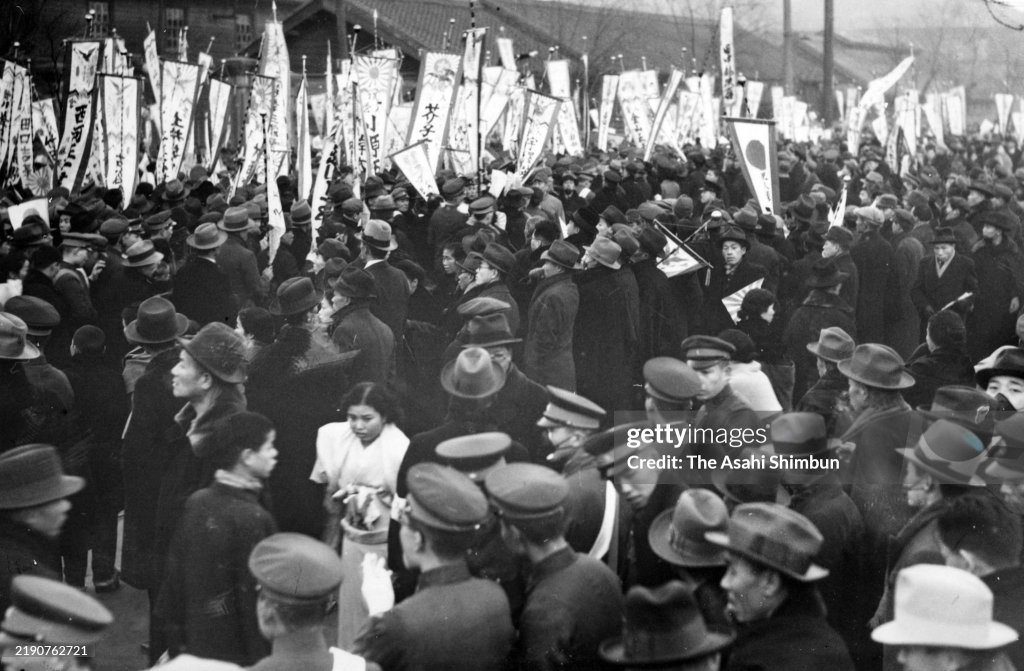
Premier Nobuyuki Abe has evidently decided to resign, but as is the Japanese way the decision will not be announced until the Emperor’s advisers have decided upon his successor.
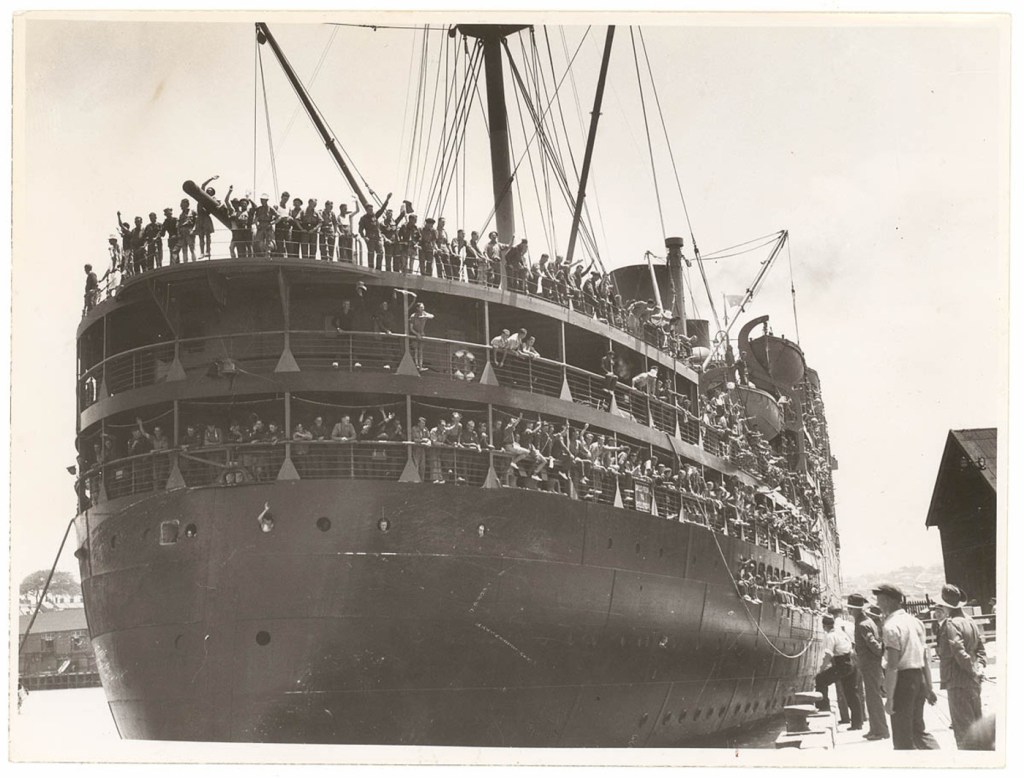
Four passenger liners depart Sydney, New South Wales, carrying the Australian 16th Brigade bound for Egypt. The ships, escorted by the heavy cruiser HMAS Australia, will rendezvous with the convoy carrying the New Zealand 4th Brigade that sailed from Auckland on 6 January. New Zealand and Australian troop convoys join and head for the Suez Canal. The convoy is US.1.
General Freyberg leaves New Zealand by air and proceeds to Egypt in advance of the troop convoy leaving New Zealand and Australia.
Dow Jones Industrial Average: 150.15 (+0.31)
Born:
Guy Chevrette, Québécois politician (Parti Québécois), in Québec, Canada.
Dave Skaugstad, MLB pitcher (Cincinnati Reds), in Algona, Iowa (d. 2023).
Harry Gant, American race car driver, in Taylorsville, North Carolina.
Naval Construction:
The Kriegsmarine (German Navy) Type IID U-boat U-144 is laid down by Deutsche Werke AG, Kiel (werk 273).
The American C2 type motor ship MS Shooting Star is launched by the Tampa Shipbuilding Co. (Tampa, Florida) for American Pioneer Lines. The ship was acquired by the Navy on 15 November 1940, and commissioned four days later as the U.S. Navy ammunition ship USS Lassen (AE-3).
The Royal Australian Navy auxiliary minesweeper HMAS Nambucca is commissioned.
The Royal Navy armed merchant cruiser HMS Wolfe (F 37) is commissioned. Her first commanding officer is Captain (retired) Charles Geoffrey Coleridge Sumner, OBE, RN.
 History Diaries