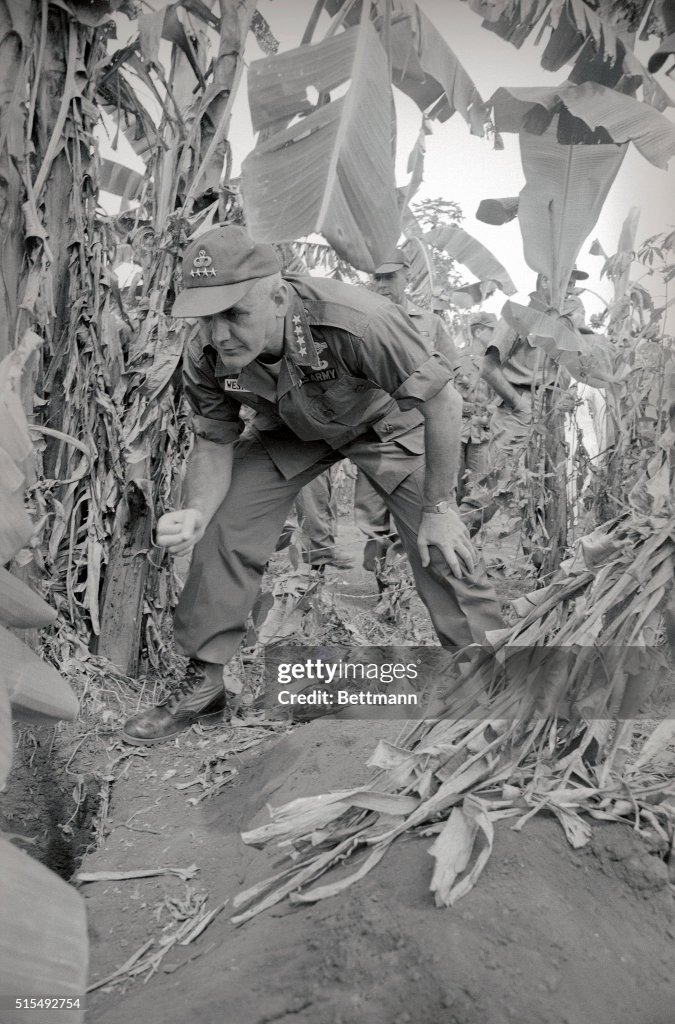
The United States and South Vietnam sought today to restore their close relationship in prosecuting the war against the Việt Cộng insurgents. The daily military communiqué reported United States Army advisers being killed and wounded in combat beside their Vietnamese allies, but confidence still had to be rebuilt between Ambassador Maxwell D. Taylor and the Saigon generals. Informed sources said Premier Trần Văn Hương had drafted a statement that the differences with the United States arising from the military seizure of power on December 20 had been eliminated. It was understood that the statement, framed after consultation with military leaders and United States officials, would be published tomorrow by the Premier’s office.
In a communiqué yesterday, Lieutenant General Nguyễn Khánh, the army commander in chief, and the young generals who had assumed control in Saigon bowed to the civil authority of the Hương Government. The military leaders turned over to the government five arrested members of the National High Council, the provisional civilian legislature that they had dissolved. The council members and almost 50 politicians, students and military officers who were arrested December 20 were flown today from detention in the highlands and released. The reassertion of civilian supremacy and the release of the council members had been required by the United States as the basis for resuming discussions on an increased aid program. The talks, which were broken off after the December 20 seizure of power, were expected to be resumed soon.
“We have made no demands on the government at any point,” Ambassador Taylor said in an interview published here tonight. The interview, with two correspondents of Newsweek magazine, took place Wednesday after Mr. Taylor’s Deputy Ambassador, U. Alexis Johnson, and representatives of military leaders and the government had agreed on the outlines of the compromise that would satisfy the insistence of the United States on the restoration of the legitimacy and authority of the civilian government. Mr. Taylor asserted that the serving of demands on the government by the United States had not been a way to solve the problem. He continued: “But we have emphasized that there should be a single government, not a dual government. If this were not the case, it would be very difficult for the United States to cooperate effectively with Vietnam. There has to be someone to whom you can go for decisions, someone who can make those decisions stick.”
The Ambassador warned that there was “no clean, tidy, immediate solution” in sight for the grinding war against the Việt Cộng guerrillas. “We ought to carry on and never give up because we are frustrated and discouraged,” he said. “It is easy to be pessimistic. We are in the middle of a tough battle with no immediate end in sight. In such a case,” he continued, “you’ve got to believe you’re not going to be licked. This is an important lesson which the American people must bear in mind. The political situation complicates the problem. The essential thing is to get a government which is master in its own house, which can carry out decisions and move toward real stability.”
The United States commitment to South Vietnam, sometimes described as an investment of almost $2 million a day, was illustrated graphically in a single war incident reported today from a locality eight miles southeast of Saigon. A United States Army officer and two enlisted men were accompanying a patrol of 18 South Vietnamese soldiers along. a road when they observed Việt Cộng activity near a cluster of huts. Part of the patrol went to the left, another part to the right, but the officers, apparently alone, charged toward the huts. The officer was killed by a single Việt Cộng bullet. In most clashes it is principally the Vietnamese who do the dying. But this incident illustrated how Americans were broadening their participation and initiative in the war.
Prince Norodom Sihanouk said today that Cambodia had been able to survive threats of Yankee imperialism” to become an independent and progressive state. The chief of state said “Cambodia’s success in both internal and external affairs can be nothing other than a thorn in the side of the [United States] imperialist policies of lies and exploitation.” “Their dollars are less and less able to close the eyes of the world,” he said during inauguration ceremonies of a new college in Kampot Province. “The Enemy No. 1, the United States, and especially its lackeys, must now realize,” he said, “that little, non-Communist Cambodia is capable of surviving freely and even progressively without a single injection of dollars and without the protective umbrella” of United States States military alliances.
The Chinese Communist press stepped up its campaign today in support of Indonesia’s withdrawal from the United Nations. The press published articles attacking the world organization in the bitterest terms since the Korean war. The newspapers also gave prominence to a Chinese Government statement supporting Indonesia’s stand against Malaysia. The government and newspapers said the United Nations should be “thoroughly remolded,” stressing that the 104 million people of Indonesia had joined China’s 650 million outside the United Nations. The United Nations was described as a “paper tiger,” the term previously applied to the nuclear bomb and “United States imperialism.”
The Chinese newspaper Ta Kung Pao said: “All people who ardently love independence and freedom should under no circumstances cherish any illusions” about the United Nations. The Communist party paper, Jenmin Jim Pao, said the United Nations was not the place where African and Asian countries could uphold justice, adding: “The United Nations has never played any positive role in safeguarding world peace.” The editorial called on the people of the world to unite to put an end to “United States control over the United Nations.” “Do the United States and a handful of other big powers regard the United Nations as an international organization or do they intend to turn it into a children’s playground,” the editorial asked.
Pravda, the Soviet party newspaper, said prospects for the United Nations would be “truly hopeful” if the “countries interested in peace rally their forces.” A rebuke to Indonesia appeared to be implied.
Malaysian Security forces searched the swamps and jungles of southern Malaysia today for a crippled force of Indonesian raiders. In the Malaysian part of Borneo, a military build-up continued against the possibility of major Indonesian attacks. A hunt was on in the jungles of southern Johore State for 11 Indonesian guerrillas — remnants of 24 who landed Friday. Thirteen, including a major, have been captured.
Deputy Premier Abdul Razak said in a speech that the Government planned to buy more torpedo boats and minesweepers from Britain. The Malaysians rejected a United States loan because they considered the terms too harsh — seven years at 5 percent annually.
Exactly a month after his last public appearance, former British Prime Minister Winston Churchill suffered a severe stroke that would lead to his death two weeks later. Earlier that evening, Churchill was partaking of his “nightly ritual of brandy and cigars” and remarked to his son-in-law, Christopher Soames, “It has been a grand journey, well worth making… once.” Though he would sometimes regain consciousness and be able to talk, Churchill would remain paralyzed until his passing on January 24.
V. K. Krishna Menon, former Indian Defense Minister and the leader of extreme leftists in India’s ruling Congress party, sharply criticized Prime Minister Lal Bahadur Shastri today. Speaking at the party’s national convention, Mr. Krishna Menon took strong exception to Mr. Shastri’s comment Friday that, though the government’s present policy was not to make an atomic bomb, he could not tell what the future would bring in this context. Mr. Krishna Menon, at the close of a speech in which he argued vigorously that India should never make a bomb and should not look for guarantees from nuclear powers against Communist China, picked up an English-language newspaper and said: “I cannot believe that the report I have read of the Prime Minister’s speech is correct.”
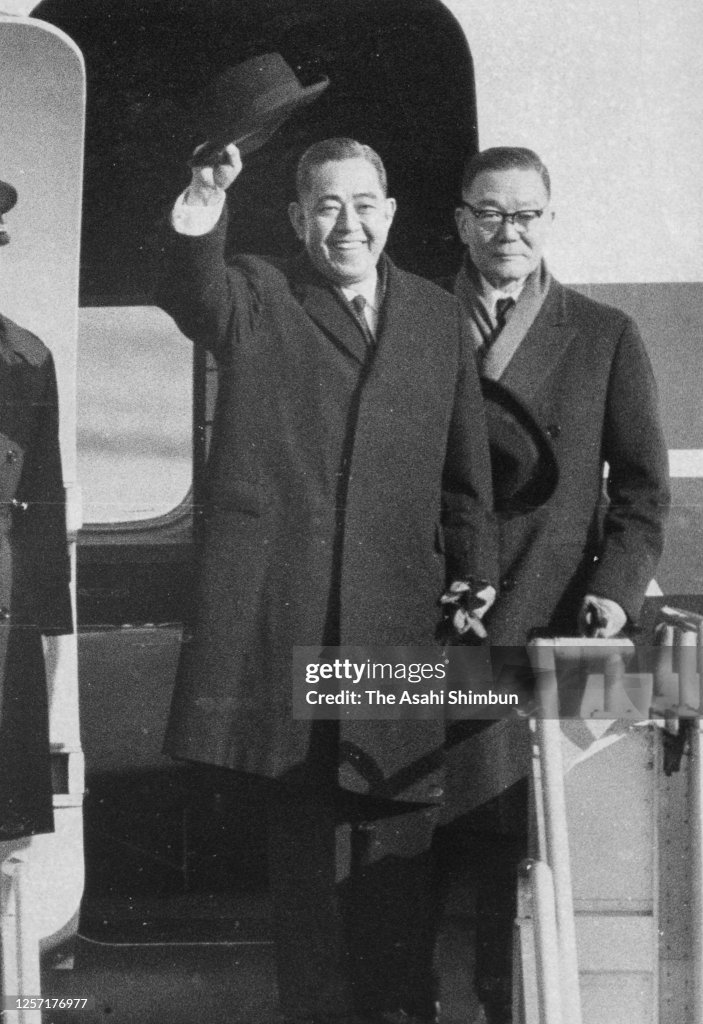
Japanese Premier Eisaku Sato described the United States’ stand on Communist China today as “a rigid one” and said he would discuss this with President Johnson on Tuesday. Mr. Sato, stopping in San Francisco overnight en route to Washington and New York for talks with Mr. Johnson and the United Nations Secretary General, U Thant, said: “While our approach to the Communist China problem may be different, there is no conflict inasmuch as our interests are mutual.” Premier Sato, a 63-year-old economist, took over Japan’s Government two months ago from Premier Hayato Ikeda.
It appears that the United States will not be a loser regardless of which candidate wins the Philippine Presidential election this year. Both President Diosdado Macapagal and his opponent, Ferdinand E. Marcos, the Senate President, favor close ties with Washington. But most political observers in this tropical capital care to predict nothing more in the hard-fought contest. With balloting still 11 months off, both President Macapagal’s Liberal party and the Nationalist party of Senator Marcos are deep in the campaign even before they have announced their respective platforms. The candidates were selected last November, a year in advance of the elections.
Considering President Macapagal’s demonstrated magnetism in rice-paddy hustings and the fact that he can command all the formidable resources of government in his re-election campaign, the unwillingness of forecasters to concede him is more than a “slight edge” at this stage is an indication of the respect accorded his younger opponent. The 47-year-old Senator is an expert campaigner also. Against Mr. Macapagal’s charisma as “a poor boy” who made it to Malacanang Palace Manila’s White House Senator Marcos has a reputation as his country’s most famous living war hero. His enormous financial resources are considered an advantage rather than a handicap by realistic analysts in the Philippines. Far from least among the Senator’s political assets is his vivacious wife, the former Imelda Romualdez, who has an impressive family background and is considered one of most attractive women in the top-level politics of any country.
A barge convoy has reached Stanleyville with the first shipment up the Congo River since the city was liberated in November.
The Panamanian National Guard, alerted this weekend on the anniversary of last year’s anti-United States rioting in the Canal Zone, arrested and released six university-student leaders last night.
Immigration has been a vital element in Australia’s impressive recent development, and officials here intend to keep overseas settlers coming in increasing numbers.
The evidence obtained by the Federal Bureau of Investigation in the slaying of three civil rights workers near Philadelphia, Mississippi, last June includes a second confession, government sources said here today. Existence of the second confession from a witness in the case is part of the new evidence that Justice Department attorneys will lay before a 23-member federal grand jury that reconvenes here tomorrow. This is the same grand jury that had declined by a narrow margin to indict in the triple slaying during a session last September. The government was optimistic today that civil rights indictments would be returned by the jury within three days after the investigating body reconvenes in the Federal Building tomorrow morning.
The Justice Department will be seeking the indictments on conspiracy to violate the Federal Civil Rights Code, employing an 1870 statute that provides a maximum penalty of 10 years in prison and up to $5,000 fine. The state of Mississippi has made no arrests in the case under state charges of murder, which would provide a more severe penalty. The state authorities reportedly are awaiting the convening of the Neshoba County grand jury next month. The murder victims were Michael H. Schwerner and Andrew Goodman, both white and from New York, and James E. Chaney, a Meridian, Mississippi, Black man, who was working with them. Last month when 21 white men were arrested by F.B.I. agents in connection with the murders, Roy Moore, FBI agent in charge of the Jackson office, said. “We have considerably more than we had before.”
The Justice Department has already disclosed one alleged confession by a suspect in the slaying, a statement from Horace Doyle Barnette, 25 years old, a former Meridian truck driver, now living near Shreveport, Louisiana. Reliable sources here said today that the second confession had also been taken from another man before the arrests of the 21 men on December 4. There may be still other statements from witnesses in the conspiracy, the sources also indicated. The Government was hopeful, however, that the grand jury would return indictments without making a full disclosure of all the FBI evidence. One certain witness in the case will be Joe Sullivan, a longtime FBI troubleshooter who has been on the investigating scene in Neshoba County for the last six months.
Mr. Sullivan had been used by the Justice Department to sum up its evidence in the previous session of the grand jury at Biloxi last September. If indictments are returned by the jury, Federal District Judge W. Harold Cox, who recalled the jury to hear the new evidence, is prepared to begin trials before the end of the month, court sources said. It was believed here that the key new evidence in the case, which brought the grand jury back into session to reconsider the slayings, rests upon about six witnesses whom the Justice Department will produce in the grand jury hearings. Indictments are expected to be sought against all 21 men who had been arrested and released last month in connection with the case.
President Johnson will send to Congress this week detailed blueprints for four of his programs — education, immigration, foreign aid and space. Eager to “get the show on the road,” as one Presidential aide put it, Mr. Johnson is speed- ing up his legislative proposals instead of spreading them out as originally planned. The President’s determination for quick action prompted the Senate majority leader, Mike Mansfield of Montana, to predict today that Congress would adjourn by August 1. This would be the earliest adjournment since 1956, when Congress quit on July 27. Congress continued in session until October 3 last year, despite efforts at both the Capitol and the White House to wind up work so that the politicians could go home and campaign. “We haven’t got the roadblocks facing us this year that we did last,” Senator Mansfield noted. He cited particularly the civil rights legislation that tied up the Senate during a 75-day filibuster.
Senator Mansfield said he had alerted committee chairmen to move promptly in getting various holdover bills to the floor by March 9. These include measures, considered last year but not finally acted upon, to aid Appalachia, expand the area-redevelopment program and provide for Presidential succession. These bills automatically died when the last Congress adjourned, but have been reintroduced this year. Since they were considered by the Senate last year, only brief hearings, if any, may be required in Senate committees this year. With no legislation yet on the calendars, the Senate and the House will hold only perfunctory sessions this week. The Senate will meet Tuesday, then recess until Friday. “That will give the committees a chance to get going,” Senator Mansfield said.
Twenty-one lawyers pledged in New York to go to Mississippi starting this week to take depositions in efforts to oust Mississippi’s five present members from the United States House of Representatives.
The Rev. Dr. Martin Luther King Jr. said today that he planned to come to Boston after Easter to discuss racial problems in this area. The Negro integration leader told a news conference that he would talk with “members of the economic and political power structure.”
Allan Dale Kuhn is understood to have let it be known that unless the gems remaining of those stolen from the American Museum of Natural History are returned he will tell the police the names of every person who touched, saw, held or knew about the stolen stones. The threat by the alleged leader of the burglary ring was presumably made at the same time that fences in Miami were informed by District Attorney Frank S. Hogan’s office that if the missing DeLong Star Ruby and other gems are not returned by tomorrow “all deals are off.” The deal was understood to have provided that if all the gems were returned, Kuhn, Jack Roland Murphy — known as Murph the Surf — and Roger Frederic Clark, the suspects in the October 29 burglary, would plead guilty to the crime tomorrow and receive one-year sentences. This agreement hinged on Kuhn’s pledge to Assistant District Attorney Maurice Nadjari that he would get back 15 of the 24 stolen gems.
Treasury Secretary C. Douglas Dillon and five industrial leaders last night forecast a growing national economy in 1965.
Twenty-one African-American players from the American Football League said that they would not play in the league’s all-star game in New Orleans, scheduled for January 16. The night before, players had been refused admittance to the same French Quarter night clubs that their white teammates had gone into, were unable to get taxicabs to stop for them, and had insults shouted at them. The 21 men met at the Roosevelt Hotel, where the East team was staying, and a majority voted not to play, according to Buffalo’s Ernie Warlick, who served as the group’s spokesman. The game would be rescheduled the next day in Houston.
The West all-stars routed the East, 34 — 14, today in the National Football League’s 15th annual Pro Bowl game before 60,598 spectators in Los Angeles Memorial Coliseum. The MVPs were Fran Tarkenton, Minnesota Vikings, quarterback; and Terry Barr, Detroit Lions, split end.
Born:
Butch Hartman, American animator, illustrator, and voice actor known for creating “The Fairly OddParents” and “Danny Phantom”; in Highland Park, Michigan.
James Washington, NFL safety (NFL Champions, Super Bowls 27, 28-Dallas, 1992, 1993; Los Angeles Rams, Dallas Cowboys), in Abilene, Texas.
Mickey Pruitt, NFL linebacker (NFL Champions, Super Bowls 27-Dallas, 1992; Chicago Bears, Dallas Cowboys), in Bamberg, South Carolina.
Nathan Moore, English pop singer (Brother Beyond – “Can You Keep A Secret?”), and actor, in Stamford Hill, London, England, United Kingdom.
Died:
Frederick Fleet, 77, British member of the crew of the RMS Titanic who had been the first to sight the iceberg that ultimately sank the ship in 1912.
Antonín Bečvář, 63, Czech astronomer who created the compilation of star charts that were in international use from 1951 to 1981.


 History Diaries