
North Vietnamese forces captured Phước Bình, a provincial capital, after a week-long siege. The Việt Cộng’s Provisional Revolutionary Government has asserted that the aim of its stepped-up military campaign is to “force” the United States and the Saigon government to carry out the two-year-old Paris peace agreements. The South Vietnamese province of Phước Bình became the first to be captured by Việt Cộng invaders, who led an assault with tanks and three infantry divisions. Out of 5,400 South Vietnamese Army defenders, only 850 survived, and twenty Vietnam Air Force planes were shot down; local officials were summarily executed. U.S. Secretary of State Henry Kissinger would later write, “Phước Bình was the test case” for the North Vietnamese government to decide whether to proceed with trying to conquer South Vietnam, and “If the United States reacted, there was still a chance for Hanoi to withdraw from the brink.”
The town had a population of 26,000, mostly Montagnards mountain tribesmen, and was of little military consequence The loss of a province capital, however, was a significant psychological blow to the Saigon Government. The Communists last captured a province capital during their 1972 spring offensive. But that city, Quảng Trị, was reduced to rubble by American and South Vietnamese bombardments and retaken four and a half months later. There seemed little likelihood that the Government of President Nguyễn Văn Thiệu would run the political and military risks of trying to retake Phước Bình, which is 75 miles north of Saigon. The town, which sits in end of the Sông Bé, 20 miles from Cambodia, is deep in Communist‐controlled territory. Saigon’s armed forces have practically no strategic reserve to speak of. An effort to retake Phước Bình would automatically weaken some other area.
As the news of the capture of Phước Bình trickled into Saigon, another important Government outpost was reported overrun in Tây Ninh Province, 65 miles northwest of the capital. Informed military sources said that Communist troops drove a haggard garrison of regional forces and signalmen off the top of the 3,000‐foot Núi Bà Đen, or Black Lady Mountain, which rises like bowler hat on the plain seven miles northeast of Tây Ninh province capital. The Saigon command said the defenders of the outpost — who numbered 80 men several weeks ago, but whose ranks had been depleted by incessant attacks — had moved to another position on the mountain. But according to other reports the able‐bodied men in the little garrison, which had been without food for five days, fled. Intense antiaircraft fire had prevented the Government from resupplying the mountain outpost, which had been fending off the Communists for almost two months.
The capture of the top of the mountain, which is considered sacred by the dominant Cao Đài sect in Tây Ninh, was both psychological and a military reverse. If the Communists can hold it, they will have a superior forward artillery observation position atop the mountain and, in the opinion of one South Vietnamese staff officer, might shell the city below. “If Bà Đen did fall,” said this officer, “then it’s the beginning of the battle of Tây Ninh.” Yesterday, according to the Saigon command, the Communists fired 68 rounds of rocket and artillery fire into the city of Tây Ninh, which has a population of 250,000.
President Ford was described today as concerned about the increased fighting in South Vietnam and was “watching the situation closely,” according to his press secretary, Ron Nessen. Spokesmen for both the Pentagon and the White House insisted that the sailing of Navy task force from the Philippines last night was “not connected with anything going on in South Vietnam.” William Beecher, acting Assistant Secretary of Defense and a Pentagon spokesman, denied that the task force of six ships that left Subic Bay was headed toward South Vietnam. While acknowledging that the President was concerned, Mr. Nessen said that the Administration had no intention of violating a Congressional ban on American military activity in or near Indochina.
Heavy fighting was reported today near the Mekong River junction town of Neak Luong, in the corridor supplying the Cambodian capital, 28 miles away. Military sources said that Cambodian Government troops suffered considerable losses in battles yesterday with Communist‐led insurgents near the town, a junction for river convoys that are the only means of moving essentials into the capital. Meanwhile, reports from the field said Government infantry had relieved a divisional headquarters 16 miles northwest of the capital after trying for seven days to break through an insurgent cordon. However, there was no immediate official confirmation that the camp, head quarters for the Seventh Division, had been recaptured. Earlier the Cambodian high command said the latest fighting had spread to the area south of the capital that had not seen active operations.
Without an emergency increase in military aid by Congress, the Defense Department probably will run out of funds to buy ammunition for Cambodia this April, Pentagon officials said today. This impending financial squeeze on military aid for Cambodia is posing a difficult policy decision for the Administration — and probably for Congress eventually — on the extent of future American commitments in Southeast Asia. The Administration believes that additional military aid to Cambodia is necessary for the survival of the Lon Nol Government, which is again facing dry‐season offensive by the Communist insurgent forces. But it is far from clear whether the new Congress, particularly the House with its enlarged Democratic majority, would approve additional aid.
The Communist party newspaper Pravda charged today that “defenders of monopoly interests” in the West were resorting to “military blackmail” against the Arab oil‐producing countries by hinting at armed action to bring oil prices into line. The Pravda commentary constituted Moscow’s first direct response to the remarks made by Secretary of State Kissinger in the recent interview with Business Week, in which he said that force might he considered to solve the oil problem in extreme circumstances. Until today, the official Soviet press limited itself to reprinting selected angry reactions from around the world condemning Mr. Kissinger’s remarks. Moscow often uses such a device when it is not willing or ready to give its own reaction. However, Soviet assertions about the possibility of Western military intervention are not new. A month ago Moscow asserted in its Arab‐language broadcasts to the Middle East that the United States had plans to occupy oil regions to help cut prices and stave off Western economic collapse.
Secretary of State Kissinger is considering “a massive effort’ to persuade Congress to give him more flexibility in the day-to-day conduct of foreign affairs, ending what he regards as unwarranted interference, he has told his closest aides. The last Congress, he has complained, severely restricted administration action in crucial areas including the Soviet Union, Indochina, Latin America and the Near East. With Congress still in recess until next week, it was difficult to find legislators for comment on Mr. Kissinger’s plans. Congress cannot register serious dissatisfaction with policy unless it puts limits on the Administration’s freedom of action, one long-time Congressional aide said. For instance, he said, Congress voiced its desire to disengage from Vietnam by limiting aid and its anger at Soviet emigration policies by restricting trade benefits.
The nine members of the European Economic Community agreed in London today to support a plan to invest surplus revenues of oil-producing countries through the International Monetary Fund. It would involve creation of a $10 billion to $12 billion facility which the I.M.F. would guarantee. They showed coolness to a United States proposal to create a $25 billion facility. The American plan would involve only the industrialized consumer countries in setting the lending policy, while the European plan would also involve oil-producing countries and developing nations in the process.
Prospects for a further extension of the Irish Republican Army’s cease‐fire in Northern Ireland faded slightly today when the British Government refused to consider talks with representatives of the illegal guerrilla army. Merlyn Rees, the British Secretary of State for the province, told a delegation led by a for mer Northern Ireland Prime Minister, Brian Faulkner, that the government would speak only to elected representatives, He said that the British response to an ending of violence would come only when it was proved that the cease‐fire was permanent. Mr. Rees’s hard‐line attitude was well received by most Protestants who have expressed resentment of recent unofficial contacts with the I.R.A. But will now be difficult for moderates in the I.R.A. to press for a second extension of the two. week truce, which is scheduled to end on January 16 at midnight. The Irish Republican Army has said it must have direct talks with British officials to press its conditions for a permanent cease‐fire. The demands include an ending of the policy of internment of suspected terrorists without trial and a declaration by the British that they intend to get out of Ulster.
Britain’s Social Services Secretary Barbara Castle plans to meet today with representatives of the nation’s 42,000 National Health Service doctors in an effort to halt the spread of a physicians’ revolt over wages and hours. Mrs. Castle will meet with spokesmen for general practitioners, who had an 18% pay raise vetoed last week, and with junior doctors who want a reduction to 40 from the 80 hours a week they say they are working. Medical specialists are already in a slowdown, described as working to the rulebook.
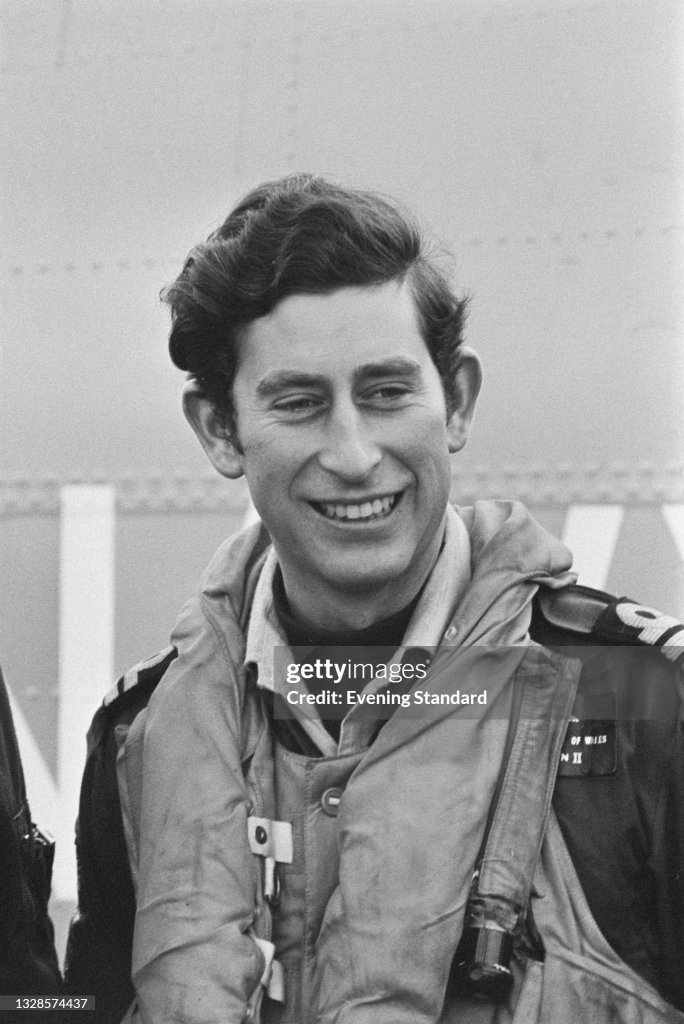
The older I get the more alone I become,” says Briain’s future king. As for marriage, Prince Charles, 26, said in an interview with a London newspaper, he believes the real basis for lifelong happiness is “basically a very strong Friendship’ rather than romantic infatuation. My marriage has to be forever,” he said. “Obviously there are certain people I’ve thought of… but I wouldn’t say anybody in particular at this moment.”
A Soviet dissident writer said he had rejected an official suggestion that he emigrate to Israel and instead had asked for permission to go to the United States. Anatoly T. Marchenko, 38, said he refused the offer because he is not Jewish and the move would lead to the breakup of his family. Emigrants to Israel usually leave for the ostensible reason that they have relatives they wish to join. “I want to go out recognized as a political emigrant,” Marchenko said.
Greek Prime Minister Constantine Caramanlis has presented parliament with a draft constitution that contains several modifications of the existing constitution adopted in 1952 Among the changes are approval of the right to strike under certain conditions and restrictions on political banishment. A special parliamentary committee is expected to spend about three months studying the draft.
Israel would be prepared to give back “most of Sinai,” including the oil fields, to Egypt in return for a true peace, Premier Yitzhak Rabin said in an interview published here today in the conservative newspaper Le Figaro. He said this would include the strategic Mitla and Gidi Passes. But Israel would have to hold Sharm el-Sheik, which controls the entrance to the Strait of Tiran, and to Eilat, Israel’s outlet to the Red Sea, he added. Asked whether he wanted Israeli sovereignty over Sharm el‐Sheik, Mr. Rabin said Israel required “Presence and control, that is to say a land link with Israeli territory.” He said that Israel wanted some changes in the Egyptian frontier, but refused to go into detail. In exchange for a further Sinai withdrawal, he said, Israel would be satisfied with a simple statement of nonbelligerency by Cairo.
Secretary of State Kissinger’s statement on the possibility of military action against the oil-producing countries has embarrassed the Government of President Anwar el-Sadat and made the Secretary’s mediation efforts in the Middle East more difficult, in the view of the Egyptian Government. Ahmed Kamal Abul Magd, the Information Minister, said at news conference today that Mr. Kissinger’s declaration had been “unnecessary, untimely, unacceptaable on its merits and did not serve the cause of American‐Arab relations or the cause of peace in the area.” Egypt, having opened a new page of good relations with the United States, has gone out of her way to refrain from statements that could jeopardize this friendship, Mr. Abul Magd said. He added, “But Mr. Kissinger’s statement does not help improve our relations.” The minister spoke against a background of growing criticism within the Arab world against President Sadat’s connection with the Americans.
The Presidents of Syria and Lebanon met near their common border today and reportedly agreed to cooperate militarily to block any Israeli attempt to occupy southern Lebanon.
Prime Minister Indira Gandhi said today that the assassination of her former aide, Railroad Minister Lalit Narayan Mishra, was part of a “dangerous plan” of which she was the real target.
Thousands of refugees from a major earthquake in Pakistan 10 days ago faced freezing temperatures and snow without the benefit of shelter, blankets, or warm clothing. Relief officials said tents were still the priority need, with 10,000 required and only 530 distributed. Relief supplies reaching the quake zone so far total 20,000 pounds of medical supplies, 100,000 pounds of food, and 21,000 blankets.
Huge oil slicks from the Japanese supertanker Showa Maru dirtied the shores of islands in the western part of the port of Singapore and threatened the port’s western anchorage. The 237,698-ton vessel ran aground Monday in the Singapore Straits and spilled nearly a million gallons of crude oil and the fuel was reported still leaking from three ruptured tanks.
Japanese Foreign Minister Kiichi Miyazawa will fly to Moscow next week for further negotiations on a Soviet-Japanese peace treaty. Miyazawa said in Tokyo he would discuss Japan’s claims to the southern Kurile Islands which have been occupied by the Soviet Union since the end of World War II. Observers believe, however, that the Russians are unlikely to yield to any Japanese territorial claims.
The death toll rose to eight in the collapse of the Tasman Bridge at Hobart, Australia, after it was rammed by a ship. Police feared that as many as six cars could have fallen into the river and released the names of 28 persons they said could have been on the bridge at the time. Meanwhile, the master of the freighter that hit the bridge was quoted as saying the steering gear went haywire shortly before the accident.
President Luis Echeverria Alvarez of Mexico says the military and economic policies of the United States and the Soviet Union are dividiing the world and leading to war.
The Bolivian government said it had foiled a plot by two former government ministers to overthrow the military regime of President Hugo Banzer. The two ex-ministers, Colonels Miguel Ayoroa Montano and his cousin Jose Patino Ayoroa, were reported still at large. The government said the two had plotted to overthrow Banzer by dividing the armed forces.
Two more men have been killed in strike violence at South Africa’s Vaal Reefs gold mine 100 miles south of Johannesburg. Two other men were killed Sunday. The strike began when Basotho tribesmen working in the mine walked out to protest a ruling by their native country, Lesotho, that 60% of their pay must be deposited in Lesotho and kept until their return. Other tribes joined in the strike and the 12,000-man work force walked out. Violence has erupted between tribes and between workers and police.
President Ford’s emerging energy policy will feature higher taxes on crude oil, imported and domestic, to discourage energy consumption and oil imports. This would raise perhaps $15 billion in annual revenue to finance a tax cut without adding significantly to the budget deficit. He has statutory authority to impose a $3-a-barrel tax on imported crude, but Congress would have to enact a parallel tax on domestic production. The tax would add 7 to 10 cents to the price of gasoline. Some administration planners fear the policy will create inflationary shocks, aggravate the recession and provoke high foreign prices.
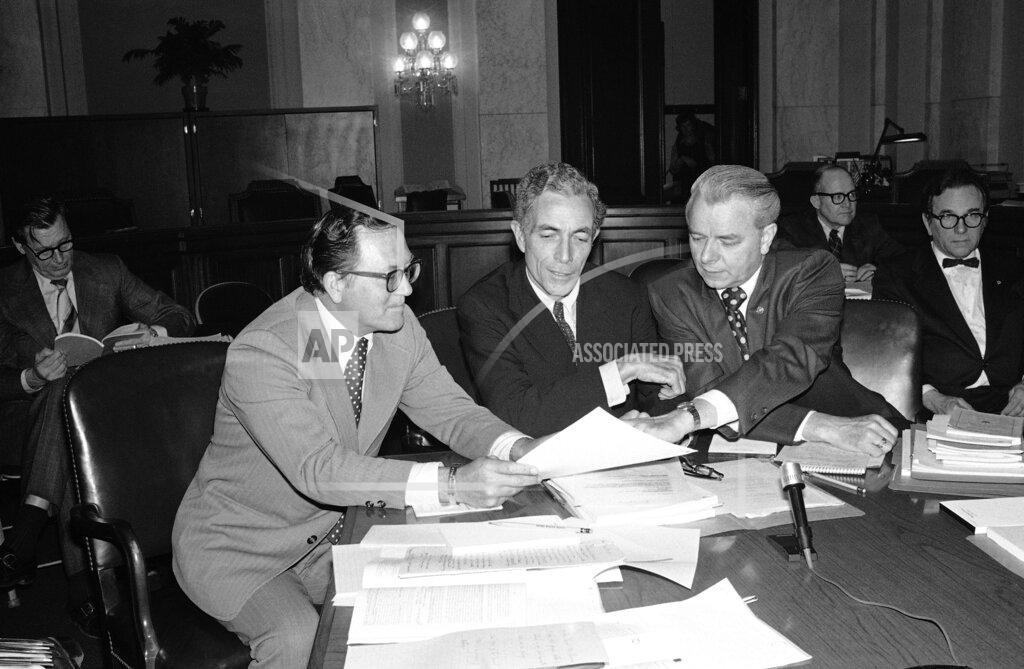
The first meeting of the eight-member Commission on Central Intelligence Activities Within the United States, headed by Vice President Rockefeller, will be held Monday; with the Director of Central Intelligence, William E. Colby, among those scheduled to appear during the daylong closed session.
A multibillion-dollar tax cut is the keystone of the anti-recession effort being planned by a House Democratic emergency economic study group, Representative Richard H. Fulton, Democrat of Tennessee, said today.
The executive director of the American Civil Liberties Union charged today that President Ford had broken his promise to press for strict laws to protect the privacy of citizens.
The Atomic Energy Commission reported three noncompliances of regulations at an Oklahoma plutonium plant where a worker became contaminated and died under mysterious circumstances. The AEC also said it had substantiated, partially or wholly, 20 of 39 allegations of safety hazards made by union members. Jan Strasma, AEC spokesman, said enforcement action would be taken against Kerr-McGee Nuclear Corp. of Crescent but that none of the violations posed a hazard to workers or the public. The plant has been in controversy surrounding the alleged plutonium contamination and auto death of employee Karen Silkwood, 28.
A minimum prison sentence of 140 years has been imposed against a reputed leader of a band of Philadelphia Black Muslims convicted of slaying seven Hanafi Orthodox Muslims in Washington two years ago. Ronald Harvey, 34, was described by a prosecutor as “Mr. Enforcer” who gave the orders to kill the five children victims of the massacre. Two men also died in the incident January 18, 1973. Three other defendants received identical seven consecutive sentences of 20 years to life. A fifth defendant awaits sentencing, a sixth was acquitted.
The U.S. Civil Rights Commission, citing widespread irregularities in the 1974 election for leaders of the Oglala Sioux tribe in South Dakota, has recommended that the tribal council call a new election. The commission said in a report that the February voting was invalid. Should the council fail to order a new election, the commission said, “It will then be incumbent upon the Bureau of Indian Affairs to determine whether the present tribal representatives are entitled to recognition.”
The Menominee Indians who took over a religious order’s unused estate near Gresham, Wisconsin, agreed to a new cease-fire with law enforcement authorities after food, talks with mediators and a pipe-smoking ceremony, a mediator said. Artley Skenandore, an Oneida Indian representing Governor Patrick J. Lucey, said the demonstrators in the estate’s mansion were relieved that national guardsmen had been ordered to replace the deputy sheriffs and said prospects were good for the Indians to resume negotiations today with the Alexian Brothers, the Chicago-based Roman Catholic order that owns the estate. The Indians want the 64-room mansion for use as a medical facility.
Pennwalt Corp. of Philadelphia announced the development of a chemical it said could increase sugar production as much as 25%. The firm said the chemical growth regulator ripenthol would be tested on designated fields in Hawaii under an experimental registration granted by the Environmental Protection Agency. Pennwalt official Thomas F. Spooner said, “We have been testing ripenthol for five years now, quite successfully. The chemical is applied by airplane just before harvest and prevents mature cane from converting sucrose into lower sugars.
A United Steelworkers local in Richmond, Virginia settled for a six month guarantee of work rather than press for wage hikes to end a five-day strike. A union spokesman said that because of the W.O. Grubb Steel Erection Co.’s tight economic situation, the 35 workers agreed to the six-month guarantee with wage talks every 30 days in case the economic climate improved. When the workers went on strike last Thursday the company laid off 25 nonunion employees.
The Chrysler Corporation, in the first significant attempt to stimulate car sales by reducing prices, plans to announce a system of rebates amounting from $200 to $400 for buyers of certain new Chrysler cars. It aims at unloading a 120-day backlog of unsold cars and winning customers from its competitors in the five-week program running from January 12 to February 16.
In keeping with the austerity she has planned for her Democratic administration, Ella T. Grasso took the morning train from suburban Windsor Locks to Hartford to take the oath of office and become the first woman governor ever elected on her own merits. Mrs. Grasso, 55, mother of two, is also Connecticut’s first governor of Italian descent.
Boston Mayor Kevin H. White on the way some politicians are facing up to the local school busing controversy. There is no odor, save death, worse than that of a public official too frightened and fearful to say, above a whisper, what he honestly believes. There are public officials in this city so scared of this issue that they’d attend a rally for their own execution if the crowd were big enough.
A U.S. Labor Department proposal to limit allowable noise levels in industry to 90 decibels during an eight-hour day was criticized by the Environmental Protection Agency as presenting an unnecessary hazard to the hearing of millions of workers. The EPA in Washington issued a counterproposal, limiting the level to 85 decibels. The 85-decibel level would become effective in three years, and an EPA spokesman said further level reductions to 75 decibels might be made later as technology allows. The Labor Department estimated the cost of achieving the 90-decibel limit at $13.5 million, but the EPA said this estimate was too high, though it made no estimate of its own.
His team of 25 experts will demonstrate a new coal gasification process to representatives of American industry next Monday and Tuesday, Dr. Arthur Squires, professor of chemical engineering at the City College of New York, said. “We’re spending a very large sum of money — about $500,000 a year,” he said in an interview in New York. Squires claims his process is about 10 times faster than other processes.
Present technology will not allow the Kaiser Steel plant at Fontana, California to meet new antipollution regulations set by the San Bernardino County Air Pollution Control District, the firm argued before that county’s Board of Supervisors. The regulations seek to control the carbon monoxide emissions from the basic oxygen furnace, the coke ovens and the sinter plant at the Fontana facility. The APCD agreed to a three-year exemption for the furnace but said Kaiser can comply with the oven and sinter plant restrictions. The supervisors continued the hearing until January 28.
Elvis Presley turns 40 today at Graceland. Songwriter and friend Tina Marsh is hanging a big box on the gates of Graceland, the entertainer’s home in Memphis, so drivers can stop by and drop their birthday cards.
Gary Geld and Peter Udell’s musical “Shenandoah”, based on the film of the same name, closes at Alvin Theater, NYC; runs for 1050 performances and wins 2 Tony Awards.
The women’s basketball team of Louisiana Tech, which would go on to win three national championships and more than 80% of its games, played its very first game, and lost, 59–55, to visiting Southeastern Louisiana University. The crowd for the first was about 45 people.
Dow Jones Industrial Average: 641.19 (+3.99, +0.63%)
Born:
Rob Waddell, New Zealand rower (Olympic gold medal, single sculls, 2000; America’s Cup 2003, 2007, 2013, Team NZ), in Cambridge, New Zealand.
Jani Hurme, Finnish National Team and NHL goaltender (Olympics, 2002; Ottawa Senators, Florida Panthers), in Turku, Finland.
Justin Watson, NFL running back (NFL Champions, Super Bowl 34-Rams, 1999; St. Louis Rams), in The Bronx, New York, New York.
Kivuusama Mays, NFL linebacker (Minnesota Vikings, Green Bay Packers), in Anniston, Alabama.




 History Diaries