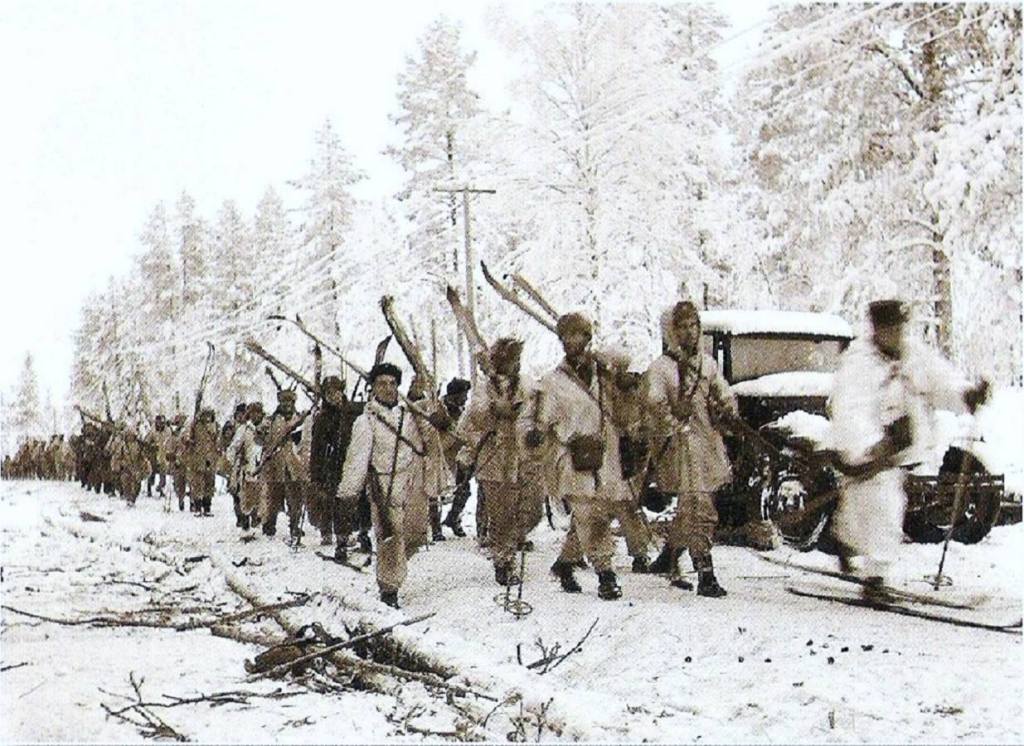
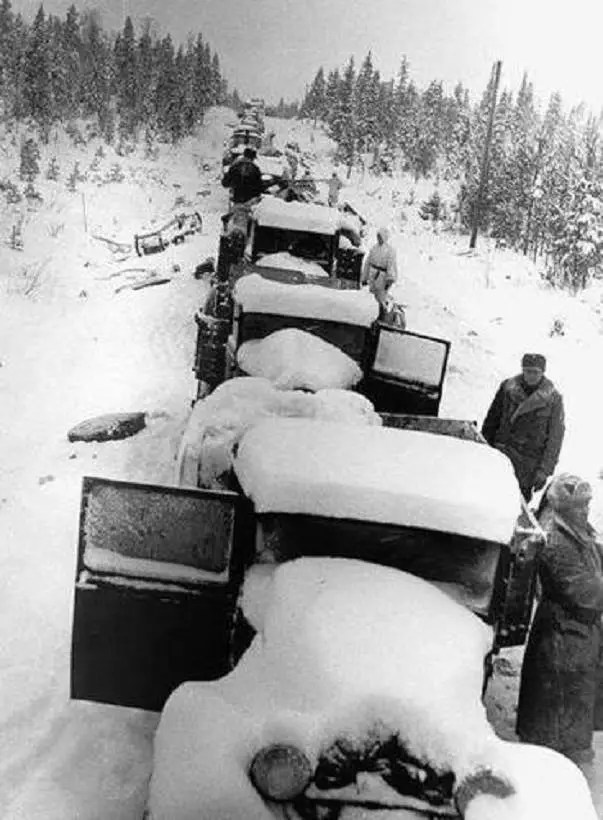
The annihilation of the Soviet 44th division begins. Colonel Siilasvuo’s Finnish 9th division attacks at 0300 hours along the entire 20 mile length of Raate Road. They meet surprisingly strong Soviet resistance and take heavy casualties. Captain Lassila’s battalion, which has been manning a 500 meter roadblock for 3 days, takes 96 casualties (10% of its strength).The Finns only manage to cut the Raate Road once when Task Force Fagernas blows up the strategically important Purasjoki River bridge 5 miles from the border at 10 PM. Equally important, Task Force Fagernas prevents the arrival of NKVD 3rd regiment reinforcements. 44th division is now isolated and cannot move forward or retreat back into USSR. Many Russians suffered frostbite, gangrene, and other effects from the severely cold weather. It’s a bitterly cold night on the Raate road, with a temperature of -40° Celsius. The Finnish force has only one or two tents and the troops have to spend the night in the open air.
In the evening, the Finns destroy the HQ of the 25th Rifle Regiment, which had been leading the way west. They also attack the HQ of the 146th Rifle Regiment, which has been a source of strength in the middle of the column and wipe it out. The commander sends a last radio message, “God help us, we are dying here.” Many of the Soviet men escape through the woods but have nowhere to go.
The Soviet 18th Division is encircled north of Lake Ladoga.
In the Central Isthmus, the troop replenishment at the main defensive position at Summa is successfully completed.
Enemy infantry assaults are successfully repulsed at Summa, Suokanta, Työppölänjoki and Lake Hatjalahti.
Soviet submarine ShCh-311 sank Swedish steamer Fenris (484grt) by gunfire (73 rounds) off Sydost Brottens Light Vessel, near Umeå in the Gulf of Finland. The crew was rescued and the wreck of the steamer drifted ashore NW of Sydost Brotten Light Vessel.
Soviet cruiser Kirov is damaged by Finnish coastal batteries (near misses) and is towed back to the Soviet naval base at Liepāja.
Soviet bombers strike Viipuri, in Finland, killing two civilians.
The Finnish headquarters town of Mikkeli suffers heavy bombing. Due to severe cold the phone lines are down and the anti-aircraft guns are frozen. 40 enemy aircraft take part in the raid which kills 29 people and injures 36.
Finland’s President Kyösti Kallio is donating 100,000 markkaa as basic capital for a fund to assist impoverished relatives of the dead and wounded.
Germany forbade the transport of any form of aide into Finland across German territory.
As the first Norwegian volunteer fighters left Oslo for Finland, the first Swedish volunteers arrived. In light of these events, the Soviet Ambassador in Stockholm, Alexandra Kollontai, protested to the Swedish Government over voluntary recruitment activities and other aid work on behalf of Finland, and also over articles in the Swedish press critical of the Soviet Union. The Soviet Union also sent a similar note to the Norwegian Government. The USSR accuses Norway and Sweden of pursuing “unneutral” policy.
There is a ministerial reshuffle in London. Oliver Stanley replaces Leslie Hore-Belisha at the War Office (i.e., the Army Ministry), Lord Reith becomes Minister of Information and Sir Andrew Duncan comes to the Board of Trade. Hore-Belisha was given the option of having another senior post in the government by Chamberlain, however, he replied that he preferred to leave the government. Hore-Belisha, Secretary of State for War, falls victim to a political purge and resigns. The rap against him is that he is a “warmonger” who cannot get along with the Generals such as Lord Gort, the leader of the BEF. He also feels that the troops should be treated better. There is some opinion that the fact that he is Jewish and thus has an unusual stake in prosecuting the war has led to much of the opposition to him. He is replaced by Oliver Stanley. Lord Macmillan, Minister of Information. Sir John Reith replaces Lord Macmillan. Sir Andrew Duncan joins the Board of Trade.
The first Indian troops start manning the BEF front lines on the Western Front.
There is German artillery shelling along an extended 125-mile section of the front.
Professor Lenz sends a memorandum to Pancke, chief of the RuSHA, entitled: “Remarks on resettlement from the point of view of safeguarding the race.”
The Sovets and Bulgaria conclude a trade treaty.
Anti-submarine trawler HMT Kingston Cornelian (449grt, Skipper W Green RNR) was sunk in accidental collision with French liner Chella (8920grt) east of Gibraltar. One or more depth charges exploded in the water and all hands — one officer and seventeen ratings, were lost. Chella had to go into Gibraltar for repairs.
Steamer Rothesay Castle (7016grt) went ashore off Sanaig Point, Islay. She broke her back and was a total loss. Her crew were rescued by the tug Englishman.
The Italian tanker C. Arrivabene was driven ashore 2 nautical miles (3.7 km) south of Fedala, Morocco. She was consequently scrapped.
The German tanker SS Nordmeer, which sailed from Curacao, Netherlands West Indies, on 9 December 1939, reaches Vigo, Spain.
Convoy OA.67 departs Southend.
Convoy OB.67 departs Liverpool.
Convoy HG.14F departs Gibraltar for Liverpool.
Convoy SL.16F departs Freetown for Liverpool.
The War at Sea, Friday, 5 January 1940 (naval-history.net)
The Northern Patrol from 5th to 18th sighted 48 eastbound ships of which 30 were sent into Kirkwall for inspection.
Heavy cruiser NORFOLK arrived in the Clyde after Northern Patrol.
Light cruiser CERES departed Scapa Flow on Northern Patrol, and left her station on the 11th for Belfast where she arrived on the 13th. There she repaired and refitted until 7 February.
New Zealand light cruiser HMNZS ACHILLES sailed from Buenos Aires on the 5th and British sister ship AJAX from Montevideo after refueling on the same day, and met heavy cruisers DORSETSHIRE and SHROPSHIRE off Rio de la Plata. ACHILLES relieved AJAX as Flagship of the South America Station, and went on to the Falklands, arriving on the 14th. AJAX went to Plymouth arriving on the 31st and on to Chatham for repairs lasting until mid-July 1940.
Battlecruiser HOOD and destroyers AFRIDI, IMPERIAL, MAORI and NUBIAN arrived at Greenock.
Submarine UNITY arrived at Blyth after patrol.
Submarines TRIBUNE departed Rosyth and STARFISH departed Blyth for patrol.
Destroyers ESCAPADE, ECLIPSE, destroyer/escort ship VEGA and sloop LONDONDERRY escorted a MT convoy from Methil to the Tyne. Sloop STORK was to be part of the escort, but fouled the boom at Inchkeith in fog and had to return for repairs. After this duty, the two destroyers proceeded to Immingham to escort minelayer PRINCESS VICTORIA.
Destroyer ECHO and cable ship ROYAL SCOT arrived at Newcastle from the south to repair the cable between Newcastle and Scandinavia.
Armed yacht PRINCESS of the 11th Submarine Striking Force sighted a U-boat on the surface off Bull Point in 51-18.5N, 04-00W. Destroyer VIVACIOUS joined her, but contact was not regained.
Steamer ROTHESAY CASTLE (7016grt) went ashore off Sanaig Point, Islay; the crew were taken off by tug ENGLISHMAN.
Convoy OA.67 departed Southend and dispersed on the 8th. No escorts were listed in the report.
Convoy OB.67 departed Liverpool escorted by destroyers WALPOLE and VERITY until the 9th.
Convoy FS.65 departed the Tyne, escorted by destroyer VALOROUS and sloop FLAMINGO, and arrived at Southend on the 7th.
Destroyers ESCAPADE and ECLIPSE departed Methil with a group of merchant ships for the Tyne.
Soviet submarine ShCh-311 sank Swedish steamer FENRIS (484grt) off Sydost Brottens Light Vessel in the Gulf of Finland. The crew was rescued and the wreck of the steamer drifted ashore NW of Sydost Brotten Light Vessel.
Light cruiser PENELOPE departed Malta, arrived at Gibraltar on the 7th and Portsmouth on the 11th. After refitting, she left Portsmouth on the 29th for duty with the Home Fleet.
Convoy HG.14F departed Gibraltar with 15 ships, escorted by destroyer VIDETTE from the 5th to 8th, sloop BIDEFORD from the 5th to 15th, and sloop ABERDEEN from the 9th to 15th. On the 10th, HG.14F merged with SL.14 as SG.14, and was escorted by sloop LEITH (from SL.14) from the 10th to 12th. On the 11th, destroyers WANDERER and WARWICK joined from convoy OG.14 and remained until the 15th, and WITCH joined on the 11th and remained until the 15th, when the convoy arrived.
Light cruiser NEPTUNE arrived at Dakar.
Anti-submarine trawler KINGSTON CORNELIAN (449grt, Skipper W Green RNR) was sunk in accidental collision with French liner CHELLA (8920grt) east of Gibraltar. One or more depth charges exploded in the water and all hands – one officer and seventeen ratings, were lost. CHELLA had to go into Gibraltar for repairs.
Convoy SLF.15 departed Freetown escorted by armed merchant cruiser PRETORIA CASTLE and submarine CLYDE. On the 14th, the convoy merged with SL.15 and the SLF.15 escorts detached on the 16th. The convoy arrived at Liverpool on the 19th, and CLYDE at Portsmouth on the 21st.
Accepting a direct challenge from President Roosevelt, Senator Robert A. Taft (R-Ohio), offered a five-point program tonight which he said would balance the national budget within two years at a figure of about $7,000,000,000. In his speech Taft set forth five steps which he deems will accomplish the job of balancing the federal budget. The only alternative to a balanced budget, he said, is national bankruptcy through inflation. Taft’s five steps were:
- The President must wish to and be determined to balance the budget. 2. Eliminate bureaus, reduce the number of employees, reorganize.
- Change methods of handling relief, housing, agriculture, government loans.
- End grants for local public works; reduce federal public works; reduce subsidies.
- Play no favorites; subject army and navy estimates to critical analysis.
The Ohioan called the President’s offer to give him a prize if he could show how to turn the trick — an admission that Roosevelt “is unable to get the government or the country back to normal.” The President’s budget message to congress, he said, moved “very gingerly” in the right direction.
Congressional opposition grew today against President Roosevelt’s demand for 460 million dollars in new taxes to finance increased armament expenditures. Meanwhile there was increasing support for the proposal made by Senator Pat Harrison (D-Mississippi), chairman of the Finance Committee, to subject Roosevelt’s entire fiscal program, submitted to congress in his budget message yesterday, to a searching examination by a 24 member joint congressional committee.
The purpose of this inquiry would be the establishment of closer cooperation between the congressional appropriating and revenue raising committees, further reductions wherever possible in the expenditures of 8 billion 424 million dollars recommended by Mr. Roosevelt for the fiscal year 1941, and a determination of the realistic requirements of the national defense. Senator Harrison said the matter of raising 460 million dollars in new taxes was not an easy task. He believes that before undertaking it congress should ascertain for itself whether there is any justification for increasing the armaments expenditures by that amount.
A western U.S. Senator reports a strong tide of regional sentiment for isolationist Senator Burton K. Wheeler (D-Montana) as the Democratic nominee for President in 1940.
Governor Herbert H. Lehman of New York calls for Palestine to become a refuge for Polish Jews.
Colonel Dwight Eisenhower arrives in San Francisco from Philippines aboard liner President Cleveland and is ordered to report for staff duty at headquarters of 4th Army.
FCC hears the 1st transmission of FM radio with clear, static-free signal. Edwin H. Armstrong demonstrated FM radio broadcasting in a long-distance relay network, via five stations in five States. FM radio was assigned the 42 to 50 MHz band of the spectrum in 1940.
Hollywood actors William Powell and Diana Lewis were married on a ranch near Las Vegas, Nevada. The marriage was a surprise to most people as few even knew they were a couple.
Chinese 2nd War Area is engaged in repeated attacks and counterattacks around Yenchang, Hsia Hsien, Wenhsi, and Anyi around this date.
Chinese 2nd War Area captures Hsiushan, Tashan, and Nanchia.
Chinese 4th War Area captures Chingtang and Yingteh.
29th Army Group of Chinese 5th War Area heavily engaged in seesaw battles around Wangchiatien.
Japanese are attacking Southern Honan Army of Chinese 5th War Area around Pingchangkuan.
31st Army Group of Chinese 5th War Area launches new attacks around Hsuchiatien, Hsintien, Yuchiatien, Huashan, Tamiaofan, and Pingchingkuan.
Battle of South Kwangsi: Chinese forces halt in preparation for new attacks.
A Japanese Domei news agency dispatch from Shakowan said today that Japanese columns in Northern Kwangtung had “annihilated” General Yu Han-mou’s combined Chinese Armies, which made a stand, along a line linking Yungyun, Sunfeng, and Yingtak. The agency reiterated previous claims that the Chinese 157th Division had been “wiped out.” Dispatches from Yunnan to Chungking denied Japanese claims that traffic on the railway from French Indo-China to the Yunnan capital had been stopped because of the destruction of bridges by Japanese bombing planes. Traffic on the railway was not interrupted by the Japanese attacks, the Chinese claimed.
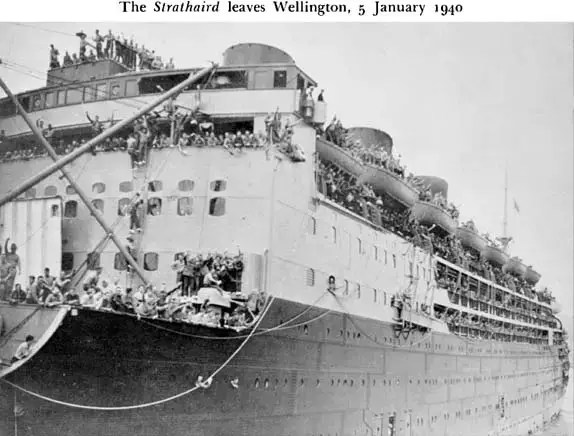
Bernard Freyberg receives his appointment to command the 2nd New Zealand Expeditionary Force. The first liner carrying them, the Straithard, sets sail.
Dow Jones Industrial Average: 151.54 (-0.89)
Born:
Athol Guy, Australian folk-pop bassist and singer (The Seekers – “Georgy Girl”), in Colac, Australia.
Michael O’Donoghue, American writer and performer (“Saturday Night Live”, “Scrooged”), in Sauquoit, New York (d. 1994).
Michael Rose, British army officer, in British India.
Yuri Ershov, Russian mathematician, in Novosibirsk, Russian SFSR, Soviet Union.
Roland Jackson, NFL fullback and linebacker (St. Louis Cardinals).
Naval Construction:
The Kriegsmarine (German Navy) Type VIIC U-boats U-439, U-440, U-441, and U-442 are ordered from F Schichau GmbH, Danzig (werk 1490–1493).
The Kriegsmarine (German Navy) Type VIIC U-boat U-752 is laid down by Kriegsmarinewerft (KMW), Wilhelmshaven (werk 135).
The Вое́нно-морско́й флот СССР (ВМФ) (Soviet Navy) Project 7-class (Gnevny-class) destroyer Rastoropny (Расторопный, “Prompt”) is completed.
The U.S. Navy Sims-class destroyer USS Roe (DD-418) is commissioned. Her first commanding officer was Lieutenant Commander Richard Martin Scruggs, USN.
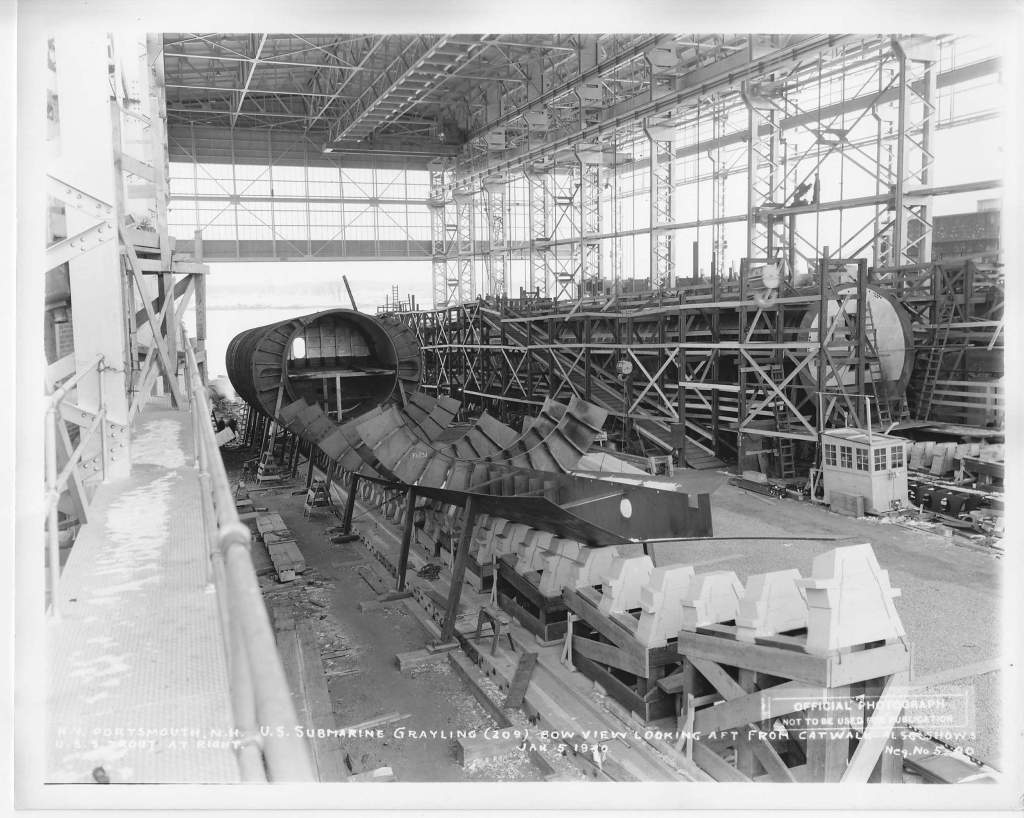
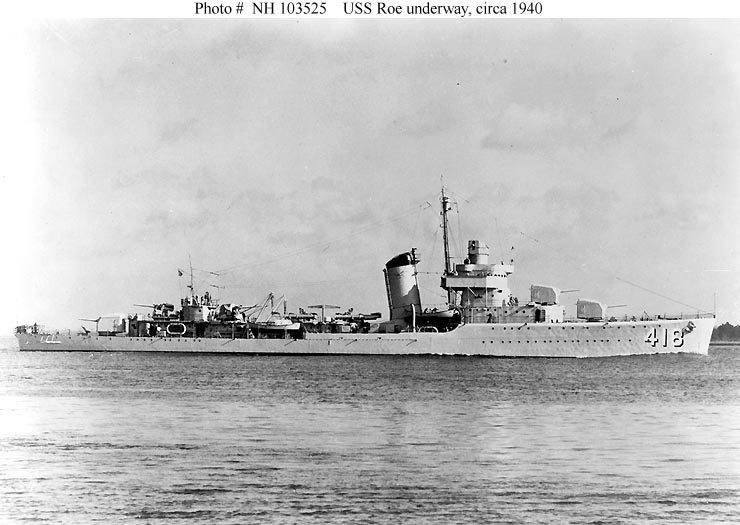
Roe earned six battle stars during World War II.
Decommissioned 30 October 1945. Stricken 16 November 1945. Sold 1 August 1947 and broken up for scrap.
https://www.history.navy.mil/research/histories/ship-histories/danfs/r/roe-ii.html
 History Diaries