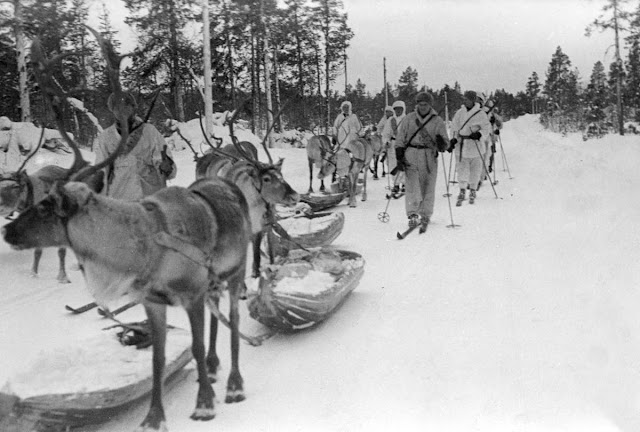
The Battle of the Raate Road begins in earnest. The Soviet 44th division (of 9th Army ) now stretches 30 km, resembling a fallen tree. Siilasvuo’s 9th Finnish division sets about cutting it into mottis (Finnish word for logs), as they can destroy the column more easily by dividing it into isolated elements. At midnight, Captain Lassila’s battalion attacks a 500 meter section of Soviet artillery (parked 5 km East of Mäkinen’s roadblock). 6 Maxim MGs rake each end of the section, while infantry move up the middle and fan out East and West. Soviet gunners cannot fire back as the field guns face up the road and they cannot level antiaircraft MGs down at the Finnish troops. Lassila creates roadblocks at either end of the cleared section with felled trees and land mines. The Soviets counterattack at 07:00, but he manages to bring up 2 Bofors antitank guns. The guns destroy 7 Soviet tanks, which further block the road. The Finns are prepared and have brought tents and ways to heat their food, whereas the Soviets are sitting in steel tanks without fuel to keep warm – or out in the open.
The Battle of Salla is renewed. The Soviets had initially attacked with 122nd Rifle Division. The stalling of the offensive forced the Soviets to reinforce it in late December 1939 with the 88th Rifle Division. Finns make unsuccessful attempts to encircle the Soviet 122nd Rifle Division of 9th Army in the “Waist” of the front. Success earlier here and nearby has greatly relieved pressure on the vital railway line from the port of Oulu to Nurmes/Joensuu.
Heavy Soviet attacks on the Karelian Isthmus are noted. In the Eastern Isthmus, a five-and-a-half-hour artillery barrage ends with the launch of a strong assault by enemy infantry at Kirvesmäki. The Finnish troops hold their ground.
At Lake Ladoga, the 28-year-old speed skating world champion, reserve Second Lieutenant Birger Wasenius, is killed along with nine other Finnish soldiers in fighting on the islands of Lake Ladoga.
Soviet warships conduct minelaying operations off Petsamo.
Soviet submarine S-2 was lost on a mine laid by Finnish minelayer Louhi off Market Island in the Sodra-Kvarken Passage into the Gulf of Bothnia (Sea of Åland). All 50 of her crew are lost.
The Finnish cargo ship Thor was bombed and sunk at Turku, Finland by Soviet Air Force aircraft.
The 44th course of the Finnish Reserve Officer School begins under exceptional circumstances and with an exceptionally large intake.
More than 10,000 Swedish homes have volunteered to receive Finnish mothers and children. To date, 50 mothers and 400 children have been evacuated to Sweden.
With the cold becoming keener and much snow still under foot, activity on the Western Front is best described as relative—very real to the men who must continue to patrol, but virtually insignificant from a military point of view.
Italian Foreign Minister Galeazzo Ciano sent a secret message to Belgium and the Netherlands, warning them of the German invasion plan. The Germans intercepted this message.
Widespread British anti-Soviet activities must be abandoned if Anglo-Soviet relations are to got no worse, Soviet Premier and Foreign Commissar Vyacheslav Molotov told British Ambassador Sir William Seeds in a farewell talk last night, reliable sources reported here tonight.
The blackout in Great Britain is said to have established the importance of Vitamin A for good eyesight in the dark. A survey indicates that one in five persons have had an accident in the blackout. Furthermore, deaths by road accidents in the four months since the blackout began exceed 2000, about 1700 more than the average for the period in peacetime. People are advised to take Cod-liver oil capsules.
The Irish government introduced emergency powers to incarcerate members of the Irish Republican Army without trial. Fear of an organized uprising of outlaw Irish Republican Army extremists who want Loyalist Northern Ireland joined with the rest of the country by a violent coup spurred the Irish Government to set the stage tonight for a mass round-up and internment of I.R.A. suspects.
The next German offensive will be a military not a peace offensive, according to pronouncements from the Foreign Office in Berlin today.
Journalists and officers of the former Czechoslovakian armed forces are rounded up in a new wave of arrests by the Nazis. A new wave of arrests recently swept over the Bohemia-Moravia Protectorate, it is learned from Prague, the victims on this occasion being former officers of the Czecho-Slovak Army, members of the recently established government troop, the office staff of the Skoda works and journalists. Among those arrested were Generals Linhart, Zpevacek, Keclik and Fiala and a large group of former officers living in Moravia. The arrests in the government troop were caused by informants introduced into this small force when it was formed under German supervision last Summer.
The entire staff of the foreign correspondence section of the Skoda works at Pilsen was taken into custody for investigation. Two journalists, Ivan Herden of the Lidove Noviny and Mr. Louda of the Narodni Politika were arrested in their office. The Gestapo raided the headquarters of the illegal newspaper V Doj. Ito arms] and it is believed a number of the editors were killed. The Prague prisons are still full and prison dungeons that used to be shown to tourists as examples of medieval barbarism are now in use.
Adolf Hitler’s traditional New Year’s reception of the diplomatic corps in the Reich Chancellory was canceled due to the war.
The Danube freezes over and stops barge imports to Germany.
Floods swept western Turkey today as new earthquakes added to destruction, suffering and death, in both the west and the east. Thirty-two villages in Geyve Valley, 100 miles southeast of Ankara were reported flooded and dispatches said many people had taken refuge in treetops awaiting rescue. Six hundred persons were reported missing at Kemal Pasha, a town of 50,000 people. The village of Azbali disappeared, it was said, and even the highest trees there were submerged. It was believed that all communication between Istanbu and Ankara, the capital, had been severed.
King Ibn Saud of Saudi Arabia announces a reorganization of his military and establishment of an air base at Riyadh.
Neutral Norway reports it has lost 24 ships sunk and 99 mariners killed in the first three months of the war.
Three RAF bombers are attacked by a dozen Luftwaffe fighters near the German coast. Losses are about equal, two RAF planes lost and 1-3 Luftwaffe fighters.
Luftwaffe reconnaissance over the Shetland Islands.
The War at Sea, Tuesday, 2 January 1939 (naval-history.net)
NORTHERN PATROL
Light cruiser NEWCASTLE departed Scapa Flow for Northern Patrol. Shortly after leaving, she reported a submarine contact in 59-13N, 3-59W, which destroyers FURY and FEARLESS, aided by Walrus aircraft, searched for. Destroyers ISIS and IMPULSIVE also joined in, while destroyer FAME kept watch on the outer patrol. The search was discontinued on the 3rd when FEARLESS returned to Scapa Flow to refuel and FURY was ordered to the Clyde.
Armed merchant cruiser CHITRAL arrived in the Clyde after Northern Patrol.
Armed merchant cruiser CORFU departed the Clyde on Northern Patrol.
Light cruiser DUNEDIN departed Scapa Flow on Northern Patrol, and arrived back on the 9th.
Cruiser HAWKINS completed her refit and ran trials on 2nd, 4th, 5th, 6th and 8th from Portland. She left on the 9th for Freetown, arriving on the 16th, left on the 17th, arrived off Rio de la Plata on the 29th and then spent February in the Falklands carrying out further refitting.
Destroyers IVANHOE and INTREPID departed Immingham to countermine a German minefield in the Heligoland Bight in operation EW. Seven destroyers of the 1st Destroyer Flotilla from Harwich were nearby in support.
Destroyers ESCORT and ELECTRA arrived at Invergordon.
Destroyer ECHO departed Rosyth for escort duties between Invergordon and the Tyne.
Convoy BC.21 of steamer BARON GRAHAM departed Bristol Channel escorted by destroyer MONTROSE, and arrived in the Loire on the 4th. The convoy returned with BARON GRAHAM, departing on the 12th and arriving in Bristol Channel on the 14th.
Soviet submarine S-2 was lost on a mine laid by Finnish minelayer LOUHI off Market Island in the Sodra-Kvarken Passage into the Gulf of Bothnia.
Submarine OTWAY, escorted by anti-submarine trawlers AMBER and JADE, departed Malta for Gibraltar. After anti-submarine practice and docking, she was to proceed to the UK in February.
Heavy cruiser CORNWALL departed Simonstown on patrol, and arrived back at Capetown on the 11th.
Light cruiser ORION departed Kingston for Bermuda where she arrived on the 5th for docking and refit, completed on 3 February.
The U.S. Congress will reconvene tomorrow for what Administration leaders fear may be one of the most controversial sessions in recent years, despite their efforts to subdue the probable disputes in the interest of a short and peaceful session and a united Democratic party in an election year. The session will begin officially at noon, with separate meetings of the House and Senate. The two branches will convene in the House chamber at 2 PM to receive personally from President Roosevelt his annual message, which, according to those who saw parts of the manuscript today, will deal chiefly with international questions and will be singularly free of controversial discussions of domestic subjects.
The annual budget message, in which it is reported that the President will call for expenditures of above $8,000,000,000 for the fiscal year 1941, and suggest additional taxes and other means for decreasing the heavy deficits, will be sent to the Capitol on Thursday. The Executive reviewed his plans and hopes for the third session of the Seventy-sixth Congress at an hour’s conference with Vice President Garner, Speaker Bankhead, Senator Barkley of Kentucky, the majority leader of the Senate, and Representative Rayburn of Texas, majority leader of the House. It was the first meeting between the President and the Vice President since the latter announced his candidacy for the Democratic Presidential nomination.
The leaders left the White House with a strong impression of the non-controversial character of the President’s message and plans, so far as they affect the domestic situation. They were convinced that he would seek no major new social and economic legislation; that he would confine his part of the legislative program largely to measures for national defense, and that his major domestic task would be to bring about a budgetary adjustment, either in the form of new taxes or new bookkeeping, that would lighten the deficits. These Congressional veterans were not persuaded, however, that the President’s disinclination to provoke further controversy with and within the legislative branch would suffice to assure a peaceful session. They realized that Congress was meeting in the growing heat of national politics, with the country looking forward to the elections later in the year, with partisan feeling running higher and higher, and with no less than six aspirants for the presidency sitting in the halls of Congress itself.
They were aware, also, that two highly controversial measures are awaiting the reconvening of Congress. One is the Anti-Lynching Bill, which its sponsors plan to force to the floor of the House as early as next Monday, and the Reciprocal Trade Agreements Act, the renewal of which the President will seek before it expires by its own terms on June 12. Numerous other issues are expected to come up, including suggested amendments to the National Labor Relations and Wage-Hour Acts, and the Social Security Law, but few will be more bitterly contested than the lynching and trade treaties issues.
Attorney General Frank Murphy, whose appointment to the Supreme Court to succeed the late Pierce Butler is expected to go to the Senate tomorrow or Thursday, sat with President Roosevelt during the press conference at the White House today.
President Roosevelt asserted at his press conference today that he expected to fill vacancies in the diplomatic corps and the judiciary in the near future. He said that he hoped most of the nominations would be cleaned up in a few days. He declined to comment when reporters sought to pin him down to a discussion of specific vacancies.
A Gallup poll shows that 78% of registered Democrats favor a third term for President Roosevelt. Despite political maneuvering, President Roosevelt remains the first choice among Democratic voters as the Presidential candidate this year, according to a survey of the American Institute of Public Opinion.
The seven members of the Dies committee composed their differences today over the report to be submitted to Congress tomorrow on un-American activities and all signed it.
The U.S. Supreme Court upholds the authority of the National Labor Relations Board. The Supreme Court held that a Board order in certification proceedings under 9 is not “a final order” and therefore is not subject to judicial review except as it may be drawn in question by a petition for enforcement or review of an order, made under 10 (c) of the Act, restraining an unfair labor practice.
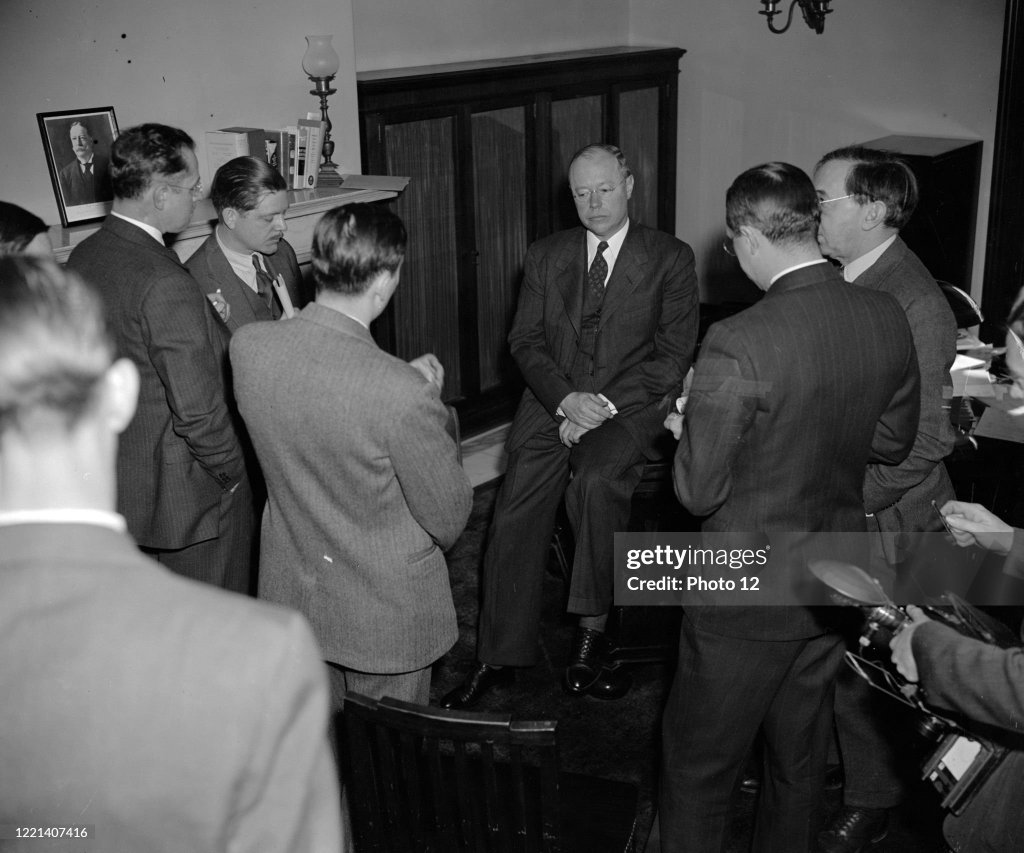
The security zone around North and South America cannot be enforced short of war, declared Senator Robert A. Taft today. He characterized the plan as a “joke,” as “perfectly indefensible” and ridiculous, tending to involve us in “disputes with other States that might conceivably lead to war.”
The NAACP announces it will not support Vice President John Nance Garner in his race for the Presidency in 1940.
Secretary of State Cordell Hull denies any aspirations to the presidency. Secretary Hull stated today that he had no Presidential ambitions and denied all knowledge of reports that President Roosevelt had indicated him as the White House choice for the Democratic nomination.
Senators McNary and Austin and Representative Joseph W. Martin Jr., Republican leaders in Congress, declined today the invitations to join the Democrats in the Jackson Day dinner on January 8.
Charles Edison of New Jersey is sworn in as Secretary of the Navy; he had been Acting Secretary since the death of Claude A. Swanson on 7 July 1939. Substantial acceleration of the navy’s building program, in view of world developments, was forecast today by Edison, son of the inventor, in taking office.
President Roosevelt appointed Alvin J. Wirtz of Austin, Texas, today as Undersecretary of the Department of the Interior. His name will be sent to the Senate for confirmation soon after Congress convenes tomorrow.
Louis (Lepke) Buchalter was sentenced yesterday in federal court in New York to fourteen years in jail, ten years of probation and a fine of $2,500, and a few hours later Attorney General Frank Murphy, in Washington, agreed to turn him over to District Attorney Thomas E. Dewey for trial on racketeering charges in New York County.
The United Press reports that some 300 Americans died in automobile accidents over the three-day New Year’s holiday weekend.
The State Department issues a press release stating that it issued a “vigorous protest” on 27 December 1939 to the British regarding their seizure of US mail: “It cannot admit the right of the British authorities to interfere with American mails on American or other neutral ships on the high seas nor can it admit the right of the British Government to censor mail on ships which have involuntarily entered British ports…”
Lou Gehrig, former baseball star of the New York Yankees, began his official duties as a member of the New York Parole Commission yesterday with the declaration that he would not “spout” about his ideas on crime and criminals until he had had at least a year’s experience in his new work.
The Texas A&M Aggies win the national college football championship after a perfect 11-0 season capped by defeating Tulane University 14-13 in the Sugar Bowl. The Aggies recorded six shutouts and surrendered only 31 points to opponents all season.
British officials announce that the Yangtze River patrol flotilla in China will be cut from 13 to 3 ships. Hong Kong harbor is temporarily closed as a defense measure.
Chinese Winter Offensive: Chinese 1st War Area ends operations and gradually withdraws to its original defensive positions.
Chinese 4th War Area captures Wongyuan.
In Tokyo, War Minister General Shunroku Hata stated today that 70,000 Japanese had been killed in action in China since the outbreak of hostilities on July 7, 1937. In his New Year message to the troops, General Hata said that an early conclusion of the Japanese campaign in China could not be expected and he urged the nation to prepare for new sacrifices. General Hata extended “deep sympathy for the sick and wounded soldiers” of the China campaign and he extended sympathy to the families and relatives of the “70,000 men killed in action since outbreak of the China affair.”
Dow Jones Industrial Average: 151.43 (+1.19)
Born:
Jim Bakker, televangelist, in Muskegon, Michigan.
Pat Fischer, NFL cornerback (Pro Bowl 1964, 1965, 1969; St. Louis Cardinals, Washington Redskins), in St. Edward, Nebraska (d. 2024).
Horst Mühlmann, German AFL and NFL kicker (Cincinnati Bengals, Philadelphia Eagles), in Dortmund, North Rhine-Westphalia, Germany (d. 1991).
Saud bin Faisal bin Abdulaziz Al Saud, Saudi royal and foreign minister, in Ta’if, Saudi Arabia (d. 2015).
Naval Construction:
The Kriegsmarine (German Navy) Type VIIC U-boats U-555 and U-556 are laid down by Blohm & Voss, Hamburg (werk 531 and 532).
The Kriegsmarine (German Navy) Type VIIC U-boat U-751 is laid down by Kriegsmarinewerft (KMW), Wilhelmshaven (werk 134).
The Royal Navy armed merchant cruiser HMS Patroclus is commissioned. Her first and only commanding officer is Captain (retired) Gerald Charles Wynter, DSO, RN.
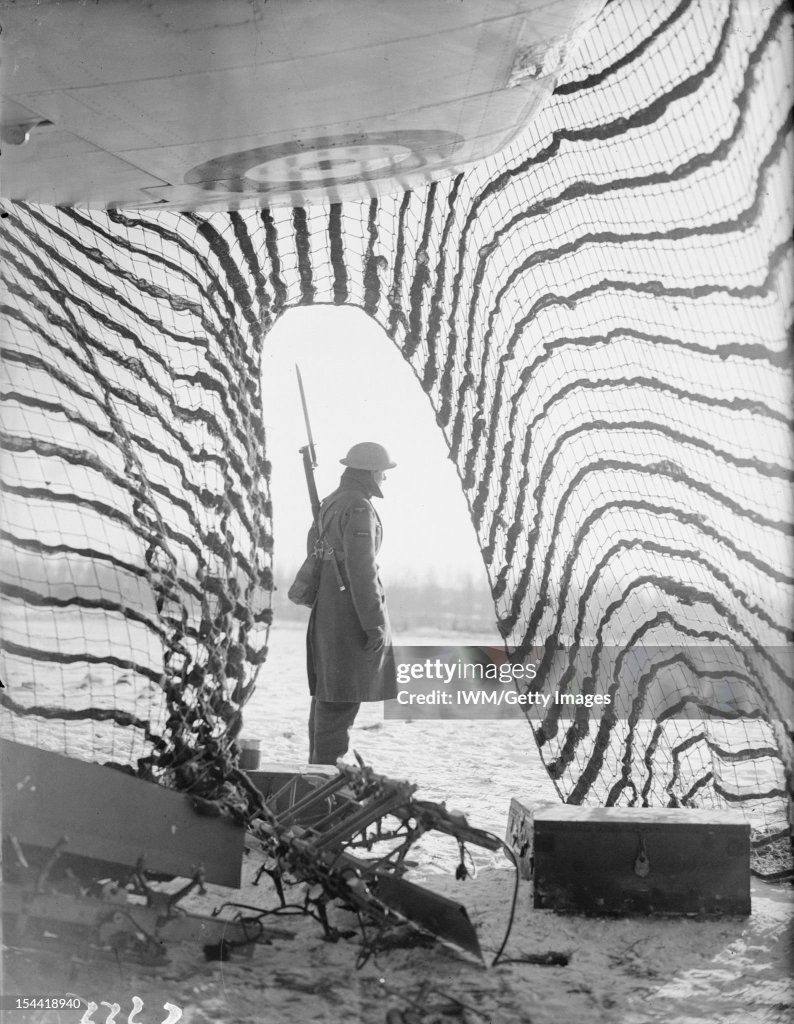
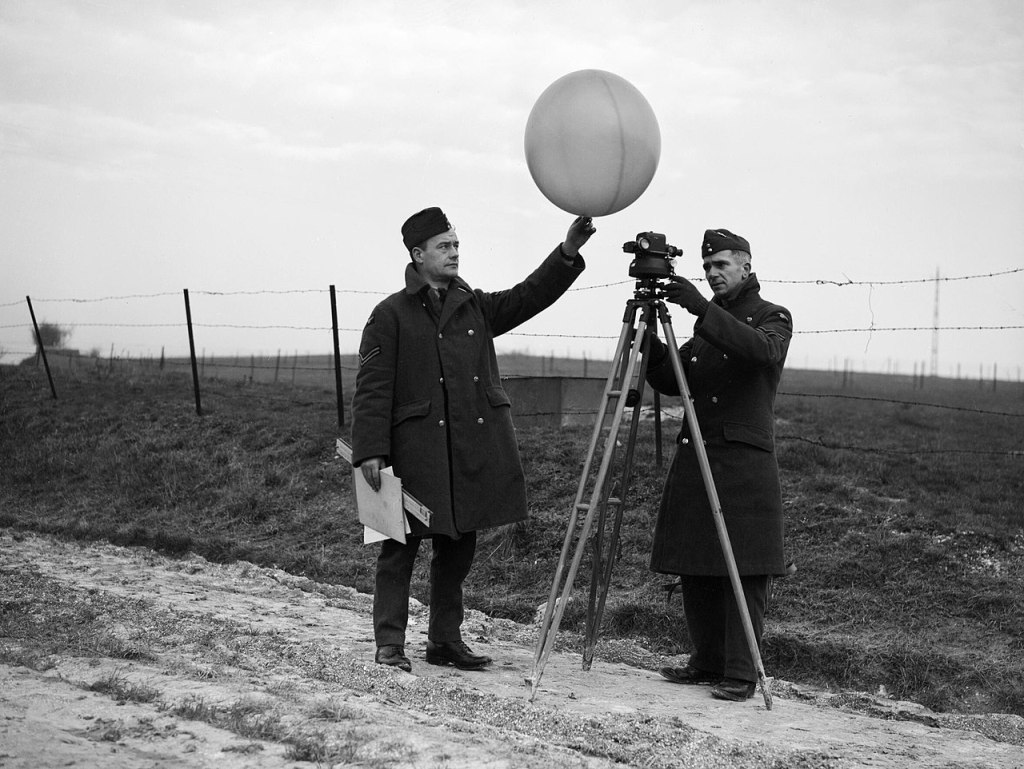


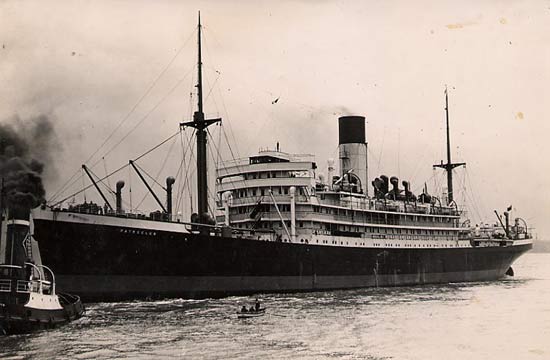
Lost 4 November 1940.
At 21.40 hours on 3 November 1940, U-99 torpedoed the unescorted Casanare west of Bloody Foreland. Her distress messages brought the armed merchant cruisers HMS Laurentic (Capt. E.P. Vivian) and HMS Patroclus (Capt. G.C. Wynter) to the scene and the U-boat began a dramatic battle at 22.50 hours when the first torpedo struck the engine room of HMS Laurentic from a distance of 1500 metres. At 23.28 hours, a second torpedo hit the vessel, but did not explode. A third torpedo was fired at 23.37 hours from a distance of 250 meters into the hole opened by the first torpedo, at this time the lookouts spotted the U-boat on the surface and Kretschmer had a hard time in evading the gunfire. In the meantime, HMS Patroclus began picking up survivors instead of participating in the fight against the U-boat and her lookouts did not see U-99 only 300 metres away. A first torpedo struck the ship at 00.02 hours, a second at 00.22 hours and a third at 00.44 hours. 14 minutes later, the U-boat opened fire with the deck gun and hit with two of the four fired rounds, before Kretschmer had again to evade the gunfire and hit her with a fourth torpedo at 01.18 hours. After that, U-99 searched for the Casanare to give the crew time for reloading the torpedo tubes, but only found two lifeboats at her position and questioned the survivors, the vessel had foundered in the meantime. At 02.39 hours, a Sunderland flying boat suddenly appeared over the U-boat, which had to dive, but no bombs were dropped. At 04.04 hours, the U-boat surfaced after reloading the torpedoes, went back to the auxiliary cruisers at high speed and fired at 04.53 hours a coup de grâce from a distance of 250 meters at the HMS Laurentic. The torpedo struck the stern and ignited the depth charges stored there, causing the ship to sink by the stern within minutes. Around this time a destroyer was spotted and Kretschmer had to sink the HMS Patroclus in a short time. A fifth torpedo at 05.16 hours had no significant effect, but the sixth torpedo at 05.25 hours broke the ship in two, the stern capsized and the bow sank slowly in position 53º43’N, 14º41’W. After that, U-99 was attacked by HMS Hesperus (Lt.Cdr. D.G.F.W. Macintyre, RN), but the destroyer soon left the U-boat to pick up the survivors from HMS Laurentic (F 51). The survivors from HMS Patroclus were picked up by the HMS Beagle (Lt. C.R.H. Wright) and landed at Greenock.
 History Diaries