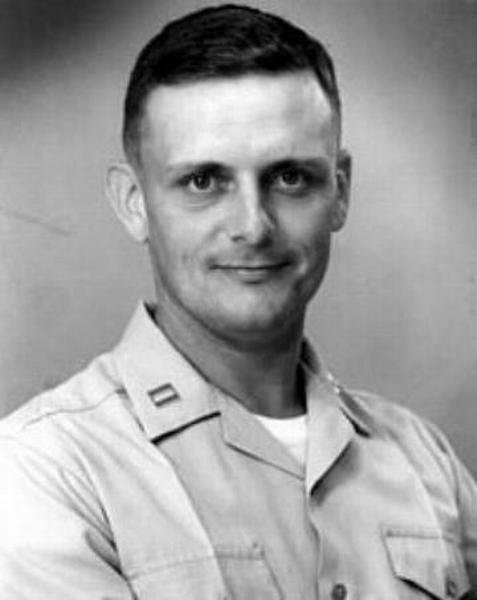
Medal of Honor (posthumous)
Awarded for actions during the Vietnam War
The President of the United States of America, in the name of Congress, takes pride in presenting the Medal of Honor (Posthumously) to Colonel [then Captain] Donald Gilbert Cook (MCSN: 0-72794), United States Marine Corps, for conspicuous gallantry and intrepidity at the risk of his life above and beyond the call of duty while serving with the Naval Advisor Group, Military Assistance Command, while interned as a Prisoner of War by the Việt Cộng in the vicinity of Bình Giã, Phước Tuy Province, Republic of Vietnam during the period 31 December 1964 to 8 December 1967. Despite the fact that by so doing he would bring about harsher treatment for himself, Colonel Cook established himself as the senior prisoner, even though in actuality he was not. Repeatedly assuming more than his share of their health, Colonel Cook willingly and unselfishly put the interests of his comrades before that of his own well-being and, eventually, his life. Giving more needy men his medicine and drug allowance while constantly nursing them, he risked infection from contagious diseases while in a rapidly deteriorating state of health. This unselfish and exemplary conduct, coupled with his refusal to stray even the slightest from the Code of Conduct, earned him the deepest respect from not only his fellow prisoners, but his captors as well. Rather than negotiate for his own release or better treatment, he steadfastly frustrated attempts by the Việt Cộng to break his indomitable spirit, and passed this same resolve on to the men whose well-being he so closely associated himself. Knowing his refusals would prevent his release prior to the end of the war, and also knowing his chances for prolonged survival would be small in the event of continued refusal, he chose nevertheless to adhere to a Code of Conduct far above that which could be expected. His personal valor and exceptional spirit of loyalty in the face of almost certain death reflected the highest credit upon Colonel Cook, the Marine Corps, and the United States Naval Service.
Donald has a military stone in his memory at Arlington National Cemetery. He is honored on the Wall at Panel 1E, line 80.
The Battle of Bình Giã concludes. Fresh graves believed to contain the bodies of four United States Army helicopter crewmen were the bait for a Việt Cộng ambush near Bình Giã this New Year’s Eve. The U.S. Marines Advisory Group sent a team of four personnel, led by Captain Donald Cook, to Bình Giã to observe conditions on the battlefield. At the same time, the 4th Marine Battalion was ordered to locate the crashed helicopter and recover the bodies of the dead American crewmen. Acting against the advice of his American advisor, Major Nguyễn Văn Nho, commander of the 4th Marine Battalion, sent his 2/4th Marine Battalion company out to the Quảng Giao rubber plantation. Unknown to the 4th Marine Battalion, the Việt Cộng 271st Regiment had assembled in the plantation. About one hour after they had departed from the village of Bình Giã, the commander of the 2/4th Marine Battalion reported via radio that his troops had found the helicopter wreckage, and the bodies of four American crewmen. Shortly afterwards, the Việt Cộng opened fire and the 2/4th Marine Battalion was forced to pull back. In an attempt to save the 2nd Company, the entire 4th Marine Battalion was sent out to confront the Việt Cộng. As the lead element of the 4th Marine Battalion closed in on the Quảng Giao plantation, they were hit by accurate Việt Cộng artillery fire, which was soon followed by repeated human wave attacks. Having absorbed heavy casualties from the Việt Cộng’s ambush, the 2/4th Marine Battalion had to fight their way out of the plantation with their bayonets fixed. During the entire ordeal, the company did not receive artillery support because the plantation was beyond the range of 105mm artillery guns based in Phước Tuy and Bà Rịa. They however escaped with the crucial support of the U.S. aircraft and helicopters whose rocket attacks forced the enemy to pull back and halted their attempt at pursuit.
In the morning of December 31, the 4th Marine Battalion returned to the crash site with the entire force and the American graves were located and their corpses were dug up. At about 3 pm, a single U.S. helicopter arrived on the battlefield to evacuate the casualties, but they only picked up the bodies of the four American crewmen, while South Vietnamese casualties were forced to wait for another helicopter to arrive. At 4 pm, Major Nguyễn Văn Nho ordered the 4th Marine Battalion to carry their casualties back to the village, instead of continuing to wait for the helicopters. As the 4th Marine Battalion began their return march, three Việt Cộng battalions, with artillery support, suddenly attacked them from three directions. The battalion’s commanding and executive officers were immediately killed and air support was not available. Two Marine companies managed to fight their way out of the ambush and back to Bình Giã, but the third was overrun and almost completely wiped out. The fourth company desperately held out at a hilltop against Việt Cộng artillery barrages and large infantry charges, before slipping out through the enemy positions at dawn. The 4th Marine Battalion of 426 men lost a total of 117 soldiers killed, 71 wounded and 13 missing. Among the casualties were 35 officers of the 4th Marine Battalion killed in action, and the four American advisers attached to the unit were also wounded. Backed by U.S. Air Force bombers, on January 1 three battalions of ARVN Airborne reinforcements arrived, they were too late as most of the Việt Cộng had already withdrawn from the battlefield.
Lieutenant General Nguyễn Khánh, commander in chief of South Vietnam’s armed forces, met with civilian leaders in Saigon today amid indications that a compromise solution to the political crisis in Saigon had been reached. The ARVN generals who met in Vũng Tàu until late yesterday were reported to have agreed to propose the establishment of a consultative council to advise Phan Khắc Sửu on legislative matters and hasten the convening of the National Congress. They handed over legislative powers to Mr. Sửu when they ousted the High National Council. Reliable sources said the generals had reaffirmed support for General Khánh at their meeting but had underlined the need for repairing the strained relations with the United States Embassy here. General Khánh was recently critical of Ambassador Maxwell D. Taylor’s attempts to have the High National Council restored and its members released. It was understood that Ambassador Taylor had toned down his demands in the last few days.
The increasingly difficult military and political predicament confronting the United States in Vietnam is evoking sympathy and bafflement from Washington’s allies in Western Europe. They favor the goal of keeping South Vietnam from Communist domination. But they oppose extending the war in any form to North Vietnam, and they are not prepared to translate their moral support into military support. A survey by correspondents of The New York Times showed that, except for France, the allies did not profess to know what the United States can or should do to prevent a collapse in South Vietnam.
Paris continues to urge efforts to neutralize not only Vietnam but also Cambodia and Laos, the other components of France’s lost Indochinese empire. Government officials decline to talk for publication on Vietnam because they do not want to embarrass the United States. Increasing support for France’s ideas is apparent, however, provided that neutralization can work rather than cloak a Communist take-over. The allies in Western Europe are convinced that no military solution favoring the United States is possible in Vietnam. But Britain, for one, seems to be coming around to the belief that neither neutralization nor a Communist victory need have the long-feared “falling domino” effect on the other nations of Southeast Asia.
Some British officials believe that the use of seapower in the Indian Ocean by Britain and the United States can be more effective than the use of land forces to guarantee the independence of Thailand and Burma or even the neutrality of Vietnam. The deterioration of the situation, in the opinion of many officials, makes a negotiated settlement in Vietnam inevitable. These officials no longer see much point in the argument that the United States would be negotiating from weakness: in their opinion, the weakness only increases with time.
President Sukarno declared tonight that Indonesia will withdraw from the United Nations if Malaysia takes her seat on the Security Council. Sukarno has repeatedly called for the destruction of Malaysia, calling it an artifact of British colonialism.
The United Nations has only $8 million in the bank and will probably have to borrow to meet its payroll and other expenses between now and the adoption of its budget for 1965. Reliable sources said today that the immediate cause of the organization’s unsatisfactory cash position was the General Assembly’s failure to vote assessments for the coming year. The long-range problem raised by the refusal of the Soviet Union and other members to pay their assessments for peace-keeping is only an indirect factor, it was explained.
President Gamal Abdel Nasser can expect little if any food from the Soviet Union if the United States cuts off its multimillion-dollar food aid program to the United Arab Republic sources close to the Russians said today.
President Chiang Kai-shek pledged today to destroy Communist China’s nuclear installations to block the development of a delivery system to “speed devastation to all parts of the world.”
President de Gaulle called on the French people tonight to work harder to hold off American economic penetration and keep France independent of a United States hegemony. The President emphasized a double theme of progress at home and independence and standing in the world as he wished his fellow citizens a happy New Year over radio and television. It was a confident President who was heard in millions of French homes brushing aside the “nostalgia, bitterness and demagogy” of those who tried to throw doubt upon the progress of the country and its individual citizens. He predicted for 1965 further national prosperity “unless there are grave upsets at home or elsewhere.”
He also appeared a determined man as he issued a call, to work and to battle. Life is a battle, he said, “for a nation as for a man.” The President cited “the pressure of American economic power” felt in France as one of the reasons that the French need “to produce more and better, save and invest constantly and more, and push relentlessly our scientific and technical research.” Otherwise, he said, the country may sink into “utter mediocrity and be colonized by foreign participation, inventions, and capabilities.”
West Berliners streamed through the Communist wall today to greet the New Year with their relatives in East Berlin.
Syrians and Israelis exchanged gunfire in the upper Jordan River valley today, despite an announcement by United Nations observers that a cease-fire had been arranged. An Israeli Army spokesman said Syrians opened fire from four positions on Israeli farmers plowing in the Huleh reclamation area near Ashmorah — about 15 miles north of the northern Sea of Galilee shore. Armor-plated tractors were brought in and Israeli forces began returning the fire, the spokesman said. One Israeli civilian, wounded in the opening clash, died later in the day. United Nations observers ordered a 12:30 PM cease-fire. Firing actually stopped 50 minutes before that time, but it broke out again at 1:50 PM and lasted 45 minutes. No new casualties were reported.
A Syrian Army communiqué issued in Damascus said the Israelis violated the central demilitarized sector of the frontier by sending three armored bulldozers into the no-man’s land. The Syrians said they issued a warning for the bulldozers to leave, but were met with intensive fire from machine guns, recoilless guns, tank guns and mortars. Only then did the Syrian side open fire, the Syrians said. The Syrian statement noted that a cease-fire had been called for by the U.N. force and said: “But the enemy seized the opportunity of the cease-fire and attempted to carry on the illegal plowing. Our forces had to intervene and force the enemy to pull the bulldozers out of the sector.”
Fatah, a Palestinian nationalist organization, launched its first attempt at paramilitary action against Israel with an unsuccessful attempt to sabotage the plant of the National Water Carrier of Israel.
The U.S. agreed to give India 50,000 more tons of rice to ease the current Indian food shortage.
Japan’s Premier Eisaku Sato has voiced confidence that he will find in Washington complete understanding of his desire to expand relations between Japan and Communist China.
Congo’s President Joseph Kasavubu indicated tonight that the Congolese Government would reject the “national reconciliation” called for yesterday by the United Nations Security Council. In an apparent reply to the U.N. Security Council’s call for a cease-fire, the Congolese President declared, “The government has decided to pursue the pacification of the country, whatever it may cost.” This was regarded here as. an indication that the government would not agree to a cease-fire until it controlled all Congolese territory. Informed sources here said that both Premier Moïse Tshombe and President Kasavubu had indicated privately that they could not accept a cease-fire that would leave the rebels in control of a foot of Congolese soil. In his broadcast, Mr. Kasavubu also warned other African countries to stop interfering in the Congo’s internal affairs. He mentioned no countries by name. But the inference clearly was to Algeria and Nasser’s United Arab Republic.
The President and the Prime Minister of Nigeria were headed for a showdown tonight as turmoil mounted after yesterday’s election.
President Johnson ended 1964 with one of his few quiet days of the year. The sunburned President, who is spending the holiday period at his ranch west of here, passed the morning signing papers and working on his State of the Union message. He will deliver the message to a joint session of Congress Monday at 9 PM in Washington. It will outline his program for 1965.. He warned earlier this week that it would not be a “complete or final summation” of his plans for a “great society.” It will, instead, emphasize “some of the immediate — repeat immediate — recommendations we would like to see promptly acted upon.”
Mr. Johnson has been at the ranch since December 20. He has entertained a steady stream of official callers from the Cabinet and the heads of agencies to put together his budget for the fiscal year 1966. Mr. Johnson’s plans for returning to Washington have not been announced, but he will probably have to leave before Sunday to make final preparations for the speech Monday.
One day short of his 70th birthday, John Edgar Hoover seems as healthy and determined as he was the day he took over the Federal Bureau of Investigation more than 40 years ago to make it — and himself — something close to legends. Most men are retired at 70, and some newspaper editorials suggested recently that Mr. Hoover might well join their ranks. But he said today: “My health is good, the President has expressed confidence in me, I enjoy my work and feel completely competent to carry out all the demands of my job — why should I think about retirement? I intend to continue to serve my country as director of the FBI as long as my health and the confidence of the President and the American people will permit.”
[Ed: And long as those blackmail files on everyone in Washington make him untouchable.]
It would be a foolhardy bookie who would give odds on the election of a Senate Democratic whip to succeed Vice President-elect Hubert H. Humphrey. The successor will be chosen next Monday, just before the 89th Congress convenes, by secret ballot of the Senate Democratic Conference. The three declared vigorously campaigning candidates are:
- Russell B. Long Louisiana, 46 years old, the affable, round-faced. boyish-looking son of Huey P. Long (“The Kingfish”); a voluble, arm swinging opponent of the civil rights bill, and capable manager of the tax reduction bill last year.
- John O. Pastore of Rhode Island. 57, son of Italian immigrants, who had the additional good political fortune to be born on St. Patrick’s Day; the shortest member of the Senate (5 feet 4) with the lowest boiling point (32 degrees Fahrenheit), a leading figure in the passage of the nuclear test treaty and civil rights bill.
- A. S. (for Almer Stillwell) Mike Monroney of Oklahoma. 62, son of a furniture merchant, a one-time newspaperman, who became a kind of “Mr. Smith Goes to Washington” when he proposed, and put through in 1946, the first Congressional reorganization bill in more than 50 years; the Hill’s expert on civil aviation, and creator of the Federal Aviation Agency.
Senator Mike Mansfield of Montana, the majority leader, is a peace-loving man. He does not want to drag out Monday’s proceedings for fear of arousing hard feelings that could later be vented against Administration bills. He has therefore proposed a “sudden-death” election procedure, with the progressive elimination of the low man on each ballot. This would give an immediate advantage to Mr. Long, who is believed to have about 30 of the 35 votes needed for a majority of the 68 Democrats, if all are present and voting.
Budget Bureau pressure forced the Department of Agriculture today into some research cutbacks and the reorganization of some functions. The changes, prompted by President Johnson’s effort to reduce the Federal farm budget. were announced by Secretary of Agriculture Orville L. Freeman. He estimated that the research reductions would bring an annual saving of about $5 million. The changes appeared certain to anger some farm state Congressmen and to touch off a fight with the meat industry. Twenty small research stations will be closed and complete lines of research in 28 other stations will be terminated. In addition to the savings from research cutbacks, savings will result from the reorganization plans. No estimate, however, was available.
Justice Arthur J. Goldberg, who seems to view fights as a personal challenge to his mediation skills, was the middle man in the resolution of a dispute between W. Willard Wirtz, Secretary of Labor, and George Meany, president of the American Federation of Labor and Congress of Industrial Organizations. Justice Goldberg, acting as a friend of the parties, invited the two men to his Supreme Court chambers on Tuesday morning. The meeting “didn’t last very long,” as one source put it. It ended with an understanding that Secretary Wirtz would withhold his demand for the resignation of his chief subordinate, Under Secretary John F. Henning. The AFL-CIO regards Mr. Henning as labor’s chief spokesman in government, and Mr. Meany resisted Secretary Wirtz’s attempt to move him to another federal agency.
A letter from Dean Burch, explaining to members of the Republican National Committee why he thinks he should remain their National Chairman, was mailed tonight.
The Rev. Dr. Martin Luther King Jr. has sent letters to Congressmen asking them to support an attempt to challenge the seating of Mississippi’s Congressional delegation. Dr. King, president of the Southern Christian Leadership Conference, asked the Congressmen to support a “fairness resolution” that he said would be introduced at the opening session of Congress by Representative William Fitts Ryan of Manhattan. The resolution will ask the five Mississippi Congressmen to step aside while the House decides on the challenge offered by Mississippi’s Freedom Democratic party, a predominantly Black group. The party said that the five Congressmen should not be seated because Blacks were denied the right to vote in Mississippi’s election.
The proposal by the New York Superintendent of Schools to establish a system of four-year, comprehensive high schools received qualified support yesterday from the National Association for the Advancement of Colored People. But local civil rights groups suspect an evasion and continue to plan protests.
The Justice Department today moved to dismiss two of four criminal contempt counts against former Governor Ross R. Barnett of Mississippi and the present Governor Paul B. Johnson Jr. Acting Attorney General Nicholas deB. Katzenbach explained that a trial of the two counts would greatly extend “the length and complexity” of the case “without furthering the interest of justice.” The four-count contempt action was the result of the attempt in September of 1962 to register and enroll James H. Meredith, a Black man, at the University of Mississippi in Oxford. The motion to dismiss two of the criminal counts was filed today in New Orleans with the United States Court of Appeals for the Fifth Circuit. The two other counts still are pending. Each of the four counts of the criminal contempt action charged Mr. Barnett and Mr. Johnson with willful disregard and defiance of Appeals Court orders forbidding them to interfere with Mr. Meredith’s admission to the university. The first two counts remain to be tried before the Appeals Court.
President Johnson, who turned out the lights inside the White House as an economy measure, is considering plans to bathe it in exterior illumination that would look like moonlight and might cost as much as $175,000.
The Johnson-for-President Committee collected and spent more than $700,000 in the Presidential election campaign this year, a report filed with the clerk of the House of Representatives showed today.
The Bracero Program, established in the United States in 1942 in order to allow migrant workers from Mexico to cross into the U.S. to work, “was quietly allowed to expire” after the U.S. Congress declined to renew it for another term. “As the New Year dawned,” an author would later note, “braceros began returning to Mexico by the thousands.”
The Mafia group headed by the missing Joseph Bonanno is more numerous and rules over a larger empire of crime than had been previously known, a Federal grand jury has been told.
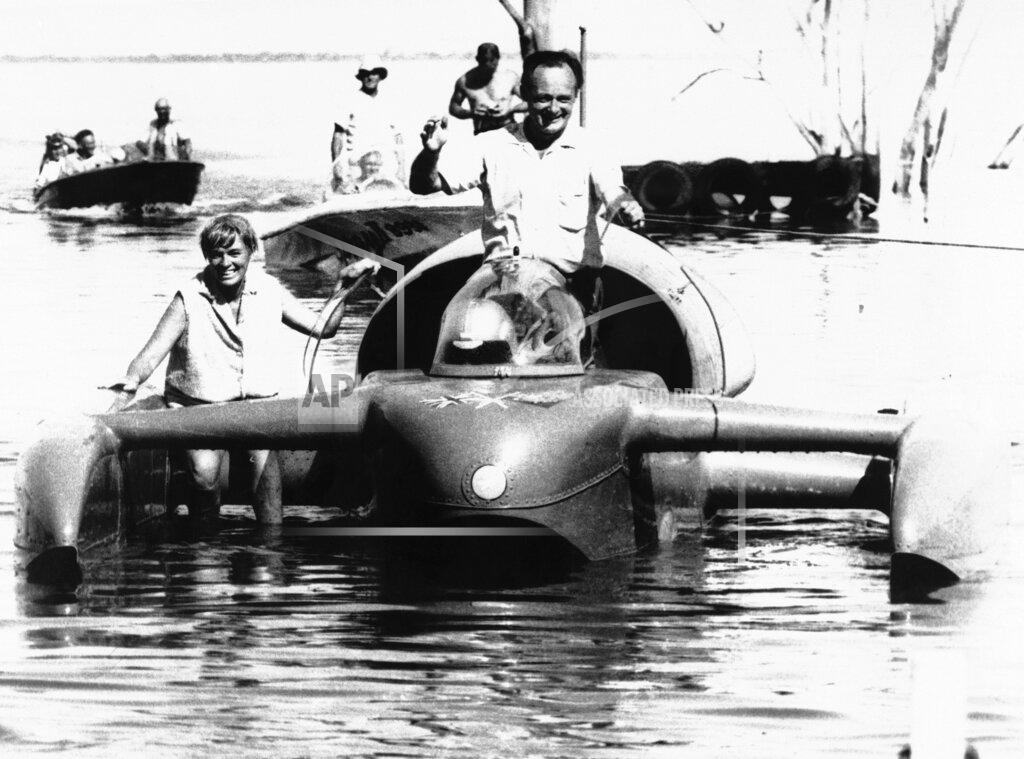
Donald Campbell (UK) sets world water speed record (276.33 mph).
Dow Jones Industrial Average: 874.13 (+5.44)
Born:
Michael McDonald, American actor-comedian (“MADtv”), in St. Louis, Missouri.
Lowri Turner, British TV presenter, in London, England, United Kingdom.
Brad Beckman, NFL tight end (New York Giants, Atlanta Falcons), in Gwinnett County, Georgia (d. 1989, in an automobile accident).
Arrike James, NFL running back (Houston Oilers), in Dumas, Arkansas.
Died:
British Army Field Marshal Henry Maitland Wilson, 83. He saw active service in the Second Boer War and then during the First World War on the Somme and at Passchendaele. During the Second World War he served as General Officer Commanding-in-Chief (GOC-in-C) British Troops in Egypt, in which role he launched Operation Compass, attacking Italian forces with considerable success, in December 1940. He went on to be Military Governor of Cyrenaica in February 1941, commanding a Commonwealth expeditionary force to Greece in April 1941 and General Officer Commanding (GOC) British Forces in Palestine and Trans-Jordan in May 1941. Wilson became GOC Ninth Army in Syria and Palestine in October 1941, GOC Persia and Iraq Command in August 1942 and GOC Middle East Command in February 1943. He was Supreme Allied Commander in the Mediterranean from January 1944 and Chief of the British Joint Staff Mission in Washington D. C. from January 1945 until 1947.
Ólafur Thors, 72, former Prime Minister of Iceland (5 times between 1942–1963).
Gertrude Michael, 53, American actress (“Cleopatra”, “Menace”, “Club Havana”, “Caged”), due to alcoholism.
Ronald Fairbairn, 75, Scottish psychoanalyst who formulated the object relations theory.
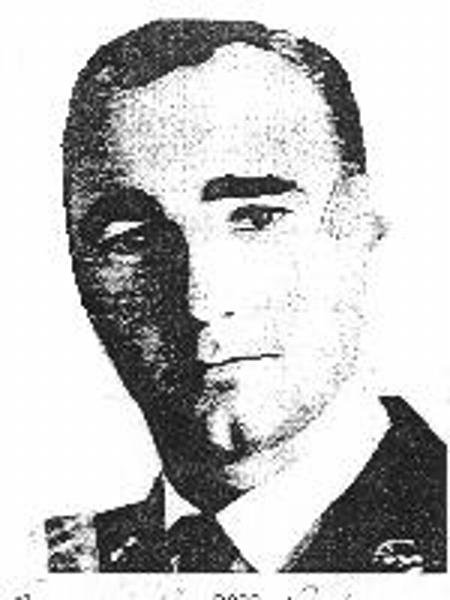
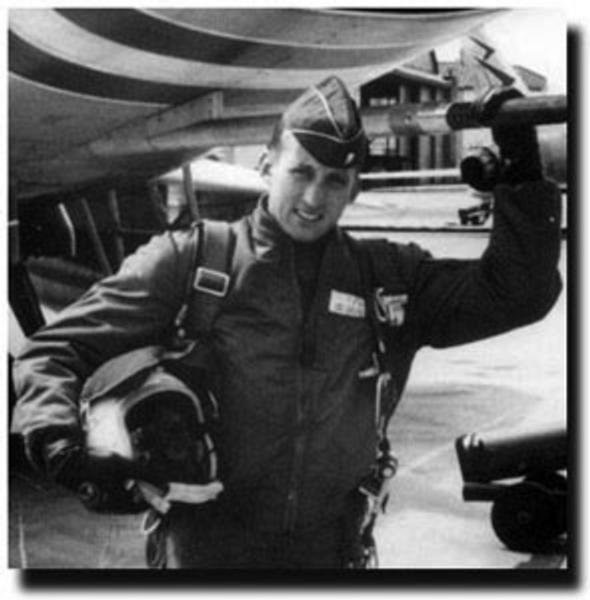
SFC Edward R. Dodge was based at Đà Nẵng with Detachment C-1 of the 5th Special Forces Group. On December 31, 1964, Dodge served as observer on an O-1F aircraft flown by U.S. Air Force CAPT Kurt C. McDonald. Dodge and McDonald were one of two O-1’s launched that day on similar flight paths. The other aircraft was flown by WO1 George B. Mundis. The two aircraft took off at about 0815 hours in marginal weather conditions. Their flight would take them to Camp A Shau, a Special Forces camp in the lower end of the A Sầu (A Shau) Valley garrisoned by Detachment A-102. McDonald’s flight was intended for a delivery to the camp. Camp A Shau was a triangular shaped camp located in triple canopy jungle, and surrounded by elephant grass twice as high as a man. In just over a year from the day Dodge and McDonald were due to fly over the camp, it would be overrun by the enemy. Mundis and McDonald flew together until they reached Hill 3350, whereupon both aircraft made a 180 degree turn. WO1 Mundis lost sight of McDonald’s plane, which entered some bad weather, with clouds completely obscuring the ridge to the north and extending down to make a ragged roof above the triple canopy jungle. Mundis never saw the aircraft again.
Both Edward and Kurt are honored on the Wall at Panel 1E, line 80.


 History Diaries