
After being trapped and constantly attacked in Suomussalmi for 22 days, Soviet 163rd division evacuates on an ice road ice over Lake Kiantajärvi. 2000 men, 48 trucks, 20 field guns and 6 tanks head 20 km northeast towards their own lines in a 4 km long column. Finnish 9th Division overpower the remaining Soviets at Suomussalmi. They capture 11 tanks, 25 guns and 150 trucks. The Finns kill the stragglers in the town and send some men to pursue the ones who left on the ice. Soon the Finnish troops turn complete attention to the doomed Soviet 44th Rifle Division on the Ratte road leading into the town. Overnight, the Finns start to chase the slowly-moving column.
The 44th Rifle Division could probably still get away; at least large portions of it. However, its orders are to stay put. This is despite the fact that it no longer has a mission, as the troops it was sent to relieve have now left by another route. Stalin is exercising his command style, which is to condemn unsuccessful formations to their doom regardless of less-destructive alternatives. There are many more where they came from in the vast Soviet Union.
In the Karelian Isthmus, Soviet pressure is maintained; 9 divisions are now deployed. Russian reconnaissance probes are successfully repulsed both at Summa and at Kelja in the Taipale sector.
Stalin endorses Chief of the Staff Shaposhnikov’s plan for a massed attack on the Karelian Isthmus towards Viipuri and Helsinki. Commander of Kiev Military District Semyon Timoshenko volunteers to lead the new operation. Kirill Meretskov, his all-frontier plan having failed, is demoted from overall command to lead 7th Army on the Isthmus. Meretskov survives this humiliation and finds glory defending Leningrad and, ironically, fighting Germans in Finland. He will become a Marshal of the Soviet Union.
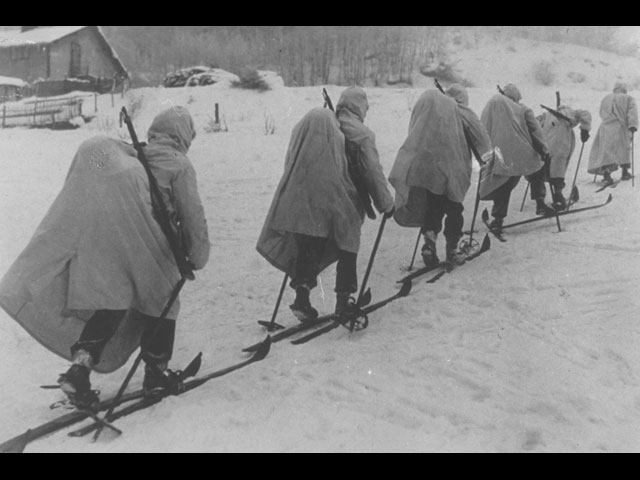
Finnish ‘Suicide Company’ of 250 picked ski troops first sent forward to attack a railway well inside the Soviet Union, were reported to have penetrated as far as Kandalasksha, an important Russian base on arm of White Sea. The Detachment of Finnish troops reached and damaged the vital Lenningrad-Murmansk railway at three points.
Soviet troops at Salla, which have been under relentless Soviet pressure for weeks, are refusing to follow orders to perform what they consider to be suicide missions. This is not the first time this has happened during the Winter War.
In Ladoga Karelia, troops from Detachment Pajari take Viitavaara on the River Aittojoki and enemy troops launch a counterattack.
Soviet aircraft bomb Käkisalmi, Jyväskylä and Vaasa killing six people.
The Finns lodge a diplomatic protest with the Estonian government about the presence there of Soviet destroyers. They are there pursuant to the recent Soviet/Estonian basing agreement.
In Sweden, a nationwide collection in aid of Finland has attracted major donations totalling 800,000 krona. Altogether, almost 6 million krona was collected.
Stockholm’s footplate men donate a day’s pay from December as a New Year present for Finland.
The Danish paper Berlingske Tidende publishes an article in praise of Finnish women.
The Вое́нно-морско́й флот СССР (ВМФ) (Soviet Navy) submarine ShCh-311 sank Finnish steamer Wilpas (775 GRT) by gunfire off Vasa, Finland.
A starvation threat faces thousands in the Turkish quake zone. Shattered communications, snow, and ice hinder efforts. More than 30,000 casualties, mostly killed, is today’s minimum estimate of the havoc wrought in the great Anatolian earthquake. First reports from the stricken zone say that the area of 60,000 square miles that took the full force of the shocks resembles a huge open-air hospital and grotesque cemetery.
Responding to Fritz Thyssen’s critical comments about Hitler in Switzerland, the Reich police issue a warrant for Thyssen’s arrest. Of course, it cannot be executed, as Thyssen is in Switzerland – for now.
A passenger train and a troop train collided in Naples, killing about 40.
An article written by Hermann Göring appeared in the Völkischer Beobachter warning that as soon as Hitler ordered the Luftwaffe to attack Britain “it will make an assault such as world history never has experienced.”
A starvation threat faces thousands in the Turkish quake zone. Shattered communications, snow, and ice hinder efforts.
The British accelerate war weapons output, speeding up to three to five times the starting rate.
The British Government, it was learned today, virtually has concluded three important trade agreements with Turkey, Yugoslavia and Spain—agreements that not only assure vital war materials for the Allies but seriously reduce Germany’s supply of these same commodities.
Despite a heavy snowstorm last night, which in Paris at least covered the ground several inches deep, this evening’s communique reported considerable action on the Western Front. Patrols on the Western Front track each other by footprints in the snow.
Alarmed over increased activities of the outlawed Irish Republican Army, the Government of Ireland today summoned the Dail (Parliament) to meet on Wednesday to pass on a request for extraordinary powers.
At 03.30 an explosion, probably a mine or a torpedo, damaged the sea wall and some property at Sandsend near Whitby. Apart from the sea wall and a house roof, the damage was mainly broken windows at the Sandsend Hotel and the Beach Hotel. There were no casualties.
The Spanish cargo liner Cabo San Antonio caught fire in the Atlantic Ocean 400 nautical miles (740 km) west of Conakry, French Guinea (10°01′N 21°00′W) and was abandoned with the loss of five passengers. Survivors were rescued by the French Navy destroyer Cassard. Cabo San Antonio was scuttled by the French warship as she was a danger to navigation.
The German coaster Neptun ran aground in the Kattegat off Varberg, Halland County, Sweden and was wrecked.
Convoy HG.13F departs Gibraltar for Liverpool.
Convoy HX.14 departs Halifax for Liverpool.
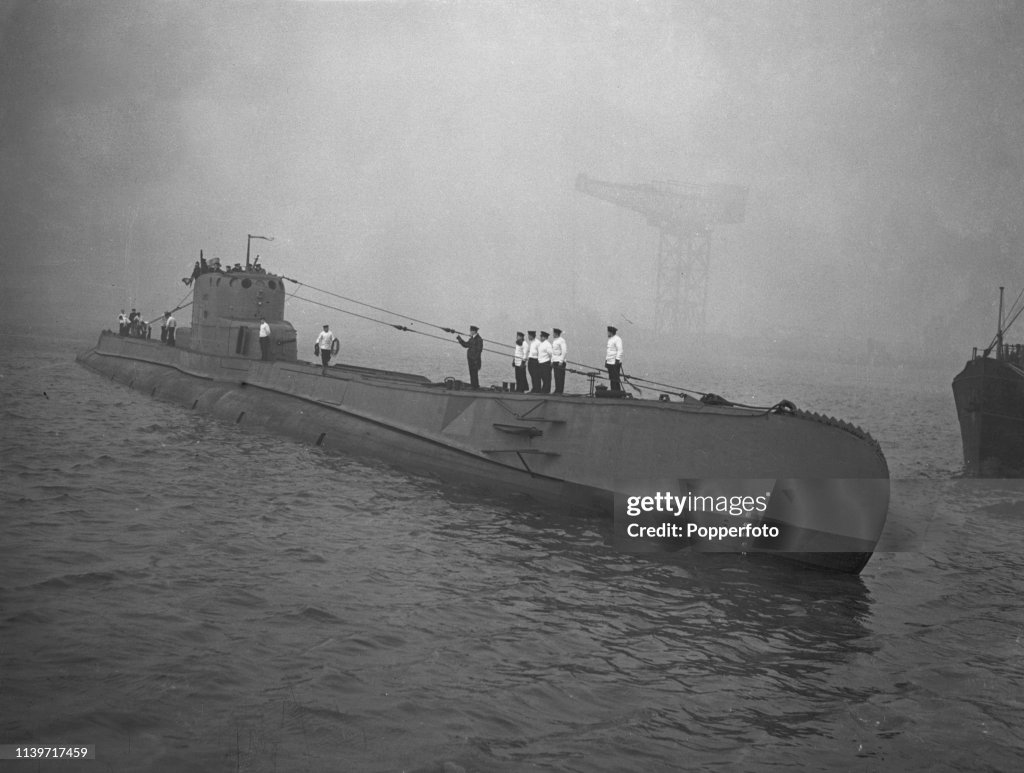
Submarine HMS Narwhal departed Halifax as escort for Convoy HX.14.
U.S. steamship President Adams is detained at Port Said, Egypt, by British authorities. Cargo suspected of being contraband is discharged at Alexandria, Egypt.
The War at Sea, Friday, 29 December 1939 (naval-history.net)
On Northern Patrol, one cruiser and one AMCs were in the Denmark Strait, two cruisers and seven AMCs between Iceland the Faroes, and one cruiser between the Faroes and the Orkneys. Armed merchant cruiser DERBYSHIRE arrived in the Clyde.
Submarine L.23 arrived at Rosyth after patrol. She was supposed to go to Blyth, but that port was closed due to mining. She was able to proceed to Blyth next day and arrived on the 31st.
Some sources suggest submarine SEAHORSE, which departed Blyth on patrol on the 26th, was sunk on a mine on this date in 55 26N, 07 02E. However, it appears that the 7 January attack on a submarine was more likely the cause of SEAHORSE’s loss (see entry for 7 January).
PASSAGE OF CONVOY ON.6
Convoy ON.6 of three British and three Finnish ships was due to depart Methil, but was held up until the next day. The convoy departed Methil on the 29th escorted by destroyers EXMOUTH, ECLIPSE, ENCOUNTER, ESCAPADE and Polish submarine ORP ORZEL.
On the 29th, minelayer RINGDOVE and British steamer HIGHLANDER (1216grt) left the convoy near Aberdeen and proceeded to Scapa Flow. Destroyer ECLIPSE and anti-submarine trawler ARCTIC EXPLORER (501grt) also detached on the 29th.
Close cover was provided by light cruisers EDINBURGH and GLASGOW which departed Rosyth on the 30th.
Heavy support was supplied by battlecruiser HOOD and destroyers MAORI, NUBIAN and AFRIDI operating southeast of the Faroes. Destroyer ILEX after refueling at Scapa Flow joined the HOOD screen.
ON.6 arrived safely at Bergen on 1 January.
Steamer HIGHLAND PATRIOT (14,172grt) was attacked by French submarine FRESNEL off the Canary Islands, believing her to be a German blockade runner. FRESNEL was driven off by gunfire and neither vessels was damaged.
Light cruiser AJAX and heavy cruiser DORSETSHIRE departed the Falklands for patrol off Rio de la Plata. DORSETSHIRE set off for Simonstown searching for German tanker ALTMARK en route, and arrived back at the Falklands on 18 January. Sister ship CUMBERLAND departed Port William, Falklands on the 29th for Simonstown, via Tristan da Cunha. She arrived at Simonstown on 11 January for docking and refit completed on 10 February, and was ready for sea on the 13th.
Convoy HX.14 departed Halifax at 0900 escorted by Canadian destroyers HMCS SAGUENAY and HMCS SKEENA, which detached on the 30th. The destroyers arrived back at Halifax on the 31st. Light cruiser EFFINGHAM and submarine CACHALOT departed Halifax with HX.14 as the ocean escort, EFFINGHAM detaching on 9 January. Destroyers WHITSHED, WALKER, VIMY and ANTELOPE escorted the convoy from 9 to 12 January, when it arrived at Liverpool. On the convoy’s arrival, the use of submarine escorts with HX convoys was suspended. EFFINGHAM reached Portsmouth on the 10th to refit, completed on 13 April 1940.
Convoy HGF.13 departed Gibraltar with ten ships, escorted by destroyers WISHART and ACTIVE from 29 December to 3 January, and WANDERER and VETERAN from convoy OGF.13 on 3 January. VETERAN was detached the same day, but WANDERER remained until the 5th when the convoy arrived.
French heavy cruiser SUFFREN arrived at Trincomalee at 0200, and at 0950, departed with British aircraft carrier GLORIOUS and armed merchant cruiser CATHAY.
Latvian steamer VENTA (1886grt) was seized in the Baltic by a German warship, and later renamed UNDINE for German use.
German steamer NEPTUN (727grt) was lost by stranding on the Swedish coast near Varberg in the Kattegat.
President Roosevelt finishes his $8 Billion budget. President Roosevelt determined finally today upon the budget figure for the fiscal year beginning next July 1, and set himself to work in earnest preparing two messages, one of which he plans to deliver personally to a joint session of Congress next Wednesday afternoon. The annual message “on the state of the Union” is the one he proposes to read personally to the legislators, while the outline of the government’s finances will likely be delivered by messenger and read by reading clerks of the House and Senate on Thursday.
Besides anticipating expenditures for the next fiscal year of around $8,000,000,000, a figure almost $1,000,000,000 less than expenditures estimated last January for the current fiscal year, the President’s budget message is expected to anticipate a net deficit for the new fiscal period at around $2,000,000,000. This latter figure would be $1,326,000,000 less than the deficit forecast last January for the current fiscal year, and the reduced deficiency would be accounted for, according to unofficial calculations, by both the expected reduction in expenditures and an anticipated increase in tax yields.
The whole new fiscal picture is understood to be based upon the expectation of more than $6,000,000,000 in income from present taxes, as against $5,669,000,000 estimated in January for the present year. The President declined to give any budget figures when correspondents questioned him at his press conference this morning. He simply said that the figure he has fixed upon to present to Congress was a good one.
He said he doubted there would be any specific recommendations on taxes or on outlays for parity payments under the farm-aid program. He intimated that studies on taxes, Secretary Wallace’s “certificate” plan to finance extraordinary agricultural benefits, and matters of that sort would be sent to the Capitol without specific suggestions from him. In fact, he seemed to confirm oft-repeated reports that he would lay the whole fiscal problem on the doorstep of Congress, leaving it to the legislative branch to say whether there shall be new taxes, a drastic reduction in Federal expenditures, or an increase in the statutory debt limit to allow more deficit borrowing, or a combination of any two, or all of these.
James M. Landis, Harvard Law School dean acting as a special Labor Department examiner, submitted to Secretary Perkins today a finding that Harry Bridges, West Coast C.I.O. leader, is neither a member of nor affiliated with the Communist party.
[Ed: Proving that Harvard Law produces some of the most idiotic smart people in America. Bridges was ABSOLUTELY a communist.]
The American Student Union today rejected by 322 to 49 an amendment to a peace resolution which would have held Russia the aggressor in the war with Finland.
Three members of the Silver Shirt League of America, anti-Semitic and anti-Communist organization, were sentenced to one to ten years in the penitentiary by Judge John S.B. Arbaro in the Criminal Court today.
The Democrats prepare to set the date of their party convention. On February 5, 10 days before the Republicans meet, the Democratic National Committee will convene in Washington to choose a date and a site for the convention. Late July is thought to be most likely.
U.S. Home building was up 37 percent from 1938 to 1939, and 1940 figures are expected to be even higher.
The prototype Consolidated XB-24 Liberator heavy (four-engine) bomber makes a 17-minute first flight from Lindbergh Field in San Diego, California. Consolidated Aircraft Corporation’s chief test pilot, William B. (“Bill”) Wheatley, made the first flight of the XB-24, 39-556. The flight crew included George Newman, co-pilot, and flight engineers Jack Kline and Bob Keith. The flight lasted just 17 minutes. This airplane (the company designation was Model 32) was the prototype of the B-24 Liberator bomber. The U.S. Army Air Corps had approached Consolidated to set up a second production line for Boeing’s B-17 Flying Fortress four-engine heavy bomber. After looking at Boeing’s Seattle operation, Consolidated’s chief executive, Reuben H. Fleet, told the Air Corps that they could build a better, more modern bomber.
The XB-24 was 38 miles per hour (61 kilometers per hour) slower than the Air Corps specification. A number of changes were made, including replacing the supercharged R-1830-33 engines with turbocharged Pratt & Whitney Twin Wasp TSC4-G (R-1830-41) engines. With the addition of the turbochargers, the R-1830-41s were able to maintain 1,200 horsepower up to 25,000 feet (7,620 meters). The propeller gear reduction ratio remained 2:1. At the same time, the round engine cowlings were changed to an elliptical shape that became a characteristic of the B-24. The modified prototype was redesignated XB-24B. In the new configuration, the bomber was able to reach 310 miles per hour (499 kilometers per hour), just 1 mile per hour under the Army’s requirement.
18,482 B-24 Liberators—more than any other Allied aircraft type—were built during World War II by Consolidated at San Diego, California and Fort Worth, Texas; by North American Aviation at Dallas, Texas; by Douglas Aircraft at Tulsa, Oklahoma. More than half of the total production was built by the Ford Motor Company at Willow Run. During World War II, the B-24 served in every combat theater. In U.S. Navy service, it was designated PB4Y-1 Privateer. It was faster, had a longer range, and could carry a heavier bomb load than the Boeing B-17, but was thought to be less survivable to combat damage. As the war came to an end, hundreds of brand new B-24s were accepted by the Air Corps, but sent immediately to be scrapped rather than placed in service
The historical drama film “The Hunchback of Notre Dame” was released in the United States.
Uruguayan government gives German freighter Tacoma 24 hours to leave the port of Montevideo, deeming the ship an auxiliary war vessel since she had assisted various maneuvers of armored ship Admiral Graf Spee and embarked her crew when that warship was scuttled.
Japan and Russia agree on rail debt. Tokyo will make a final payment on the Chinese eastern line, long demanded by the Soviet Union. The Japanese Government decided yesterday to meet the Soviet Union’s demands for the final payment on the Chinese-Eastern Railway in Manchukuo, and instructions have been sent to Shigenori Togo, the Ambassador to Moscow, which he is expected to submit to Vyacheslav M. Molotov, Soviet Premier and Foreign Commissar, today. In his four-hour conversation with Mr. Togo on Wednesday Mr. Molotov intimated that if the railroad installment question was settled to Russia’s satisfaction she would be ready to arrange a temporary modus vivendi for next season’s fishing and negotiate a new permanent treaty.
Wang Ching-Wei and Japanese officials sign documents to establish new relations between Japan and China.
The Chinese report they are checking a new Japanese drive into Northern Kwangtung Province, where the invaders are hurling three divisions along three routes north of Canton. One division is pushing along the Canton-Hankow Railway, another along the highway through Tsungfa and another eastward on the highway through Lungmoon, on what evidently is intended as a wide flanking movement. The military spokesman said the Japanese columns had been checked sixty miles north of Canton after taking Pakiangkow, Liangkow and Lungmoon. North of these points the Japanese face difficult mountain terrain.
The Chinese reported a severe setback to the Japanese ten miles northwest of Liangkow. There, the Chinese reported, they swooped down from the hills as a Japanese column advanced through a narrow valley and repulsed the invaders. with an enemy loss of 2,000 killed. On the Nanning front representatives of the Japanese Anti-War Alliance, headed by Wataru Kaji, Chinese-Japanese writer, have arrived in the Chinese line to win over Japanese soldiers by loud-speaker addresses to enemy troops. Heavy fighting is reported at Kunlungkuan Pass, northeast of Nanning, where the Japanese are still contesting Chinese control. The spokesman said that on the Kwangtung front the Japanese had recently added two divisions from Japan, one an Imperial Guard division. He declared two more divisions from Japan had recently arrived in Central China and one more in Shansi Province.
He asserted the recent concerted Chinese counter-attacks were timed to harass the Japanese while the shifting of forces accompanying the arrival of the new troops was being carried out. He said the Japanese had planned to send home a number of badly shattered, war-weary divisions that had been in China for a year but that the Chinese attacks had forced retention of these units in the war zones. The arrival of five new divisions in China means an increase of approximately 150,000 men.
The Japanese drive in Northern Kwangtung is believed to be designed to take advantage of the weakening of Chinese forces in Kwangtung for the attack on Japanese-held Nanning. It is doubted that a push into Hunan Province is contemplated. The Japanese Infantry and cavalry which recently raided Lungchow and Nankwan on the border of French Indo-China were said to be pushing south toward the seacoast. Reports that cannot be verified because of the disruption of communications with Lanchow say many districts of the Kansu city were destroyed by airplane bombings in recent days by armadas of ninety to 100 planes.
Dow Jones Industrial Average: 149.99 (+0.51)
Born:
Mike Lucci, NFL linebacker (NFL Champions-Browns, 1964; Pro Bowl, 1971; Cleveland Browns, Detroit Lions), in Ambridge, Pennsylvania (d. 2021).
(William Edwin) “Ed” Bruce, American country singer (“Mammas Don’t Let Your Babies Grow Up to Be Cowboys”), in Keiser, Arkansas (d. 2021).
Died:
Robert Edwin Bush, 84, English cricketer and explorer.
Kelly Miller, 76, African-American mathematician, sociologist and writer.
Madeleine Pelletier, 65, French physician, feminist and activist.
Naval Construction:
The U.S. Navy motor torpedo boat USS PT-8, first of her class of 2, is laid down by the Philadelphia Navy Yard (Philadelphia, Pennsylvania, U.S.A.).




 History Diaries