In the Winter War, Soviet casualties to date are estimated to be 30,000. International aid continues to pour into Finland, and Britain and France ask the Swedes for permission to ship it in through their territory. The port of Narvik is a handy entry point due to the rail line that runs from it, through Sweden, directly to Helsinki.
The Battles of Kelja and Taipale ended in Finnish victories. At Kelja, the Finns are counterattacking the Soviet beachhead relentlessly after receiving reinforcements from the Western Isthmus. Late in the day, with artillery support, they manage to infiltrate the sketchy Soviet positions along the shore of the frozen lake. After dark, the Finns clear out the entire beachhead. The Finns capture 12 anti-tank guns, 140 machine guns, 200 light machine guns and 1500 rifles, but their own losses in manpower are not insignificant. The Russians lose 2,000 men in the fighting at Lake Suvanto while 516 Finnish soldiers are killed.
The Soviet 4th Division rushed several groups of men across the frozen Suvanto River in the darkness to reinforce the bridgehead on the far bank, but the attempts were detected by Finnish forces, which attacked them with artillery and machine guns, killing many; after dawn, Finnish forces successfully eliminated all Soviet bridgeheads on the Finnish side of the Suvanto River, ending the Battle of Kelja by 1800 hours.
Troop transfers from elsewhere weaken the front because there is no manpower to spare anywhere. By expanding the board, even with horrendous losses, the Soviets are slowly draining the Finns of their scarce manpower. The Finns cannot win a battle of attrition.
The Soviet 13th Army ended its attacks on the north end of the Mannerheim Line.
The Soviets are still giving ground at Salla.
Finnish troops in Group Talvela are pursuing the Soviet 75th Rifle Division and 139th Rifle Division to Lake Ruua in Soviet territory.
In Northern Finland at Hulkonniemi in Suomussalmi, troops of the Finnish 9th Division launch their decisive assault to destroy the enemy’s 163rd Division. Finnish 9th division, supported by the newly-arrived four 1902 76-millimeter cannon and two Bofors 37-millimeter anti-tank guns, began to assault the encircled Soviet 163rd Division (9th Army). The Finnish troops around Suomussalmi receive two new regiments and go on the attack. The Ninth Division advances to within about 15 miles of the border and also advance on the village of Suomussalmi itself. The Soviet commander of the 163rd Rifle Division in the village, Kombrig Zelentsov, finally receives permission to evacuate the town. He prepares to sneak out the next morning.
General Siilasvuo decides to attack the Soviet 81st Mountain Rifle Regiment in Hulkoniemi. Four Finnish battalions break through the regiment’s line. There is a wild scramble as the Soviets flee to their command post, and every man in the unit is defending his own square yard of ground. They and the 759th Rifle Regiment also receive permission to withdraw. Basically, all of the Soviet advance units in the area are bugging out, leaving the stranded “relief” force on the Ratte road, the 44th Rifle Division, in the lurch.
Colonel Siilasvuo receives word that the entire Russian 44th Division is concentrated along the Raate road.
In Ladoga Karelia, combat detachments of IV Army Corps commanded by Major-General Hägglund launch a broad counteroffensive which lays the basis for January’s ‘motti’ battles. In Lieksa, the Finnish troops attacking in the region of Kivivaara reach the Russian border and take up defensive positions.
Finns using guerrilla-like tactics and their ability at cross-country skiing inflict a series of defeats on the Soviets over the next ten days. Although their supply lines are cut, the Soviets receive supplies by air.
Finnish government evacuates civilians from Viipuri (Vyborg). Viipuri civilians are evacuated as Soviet shells from long-range artillery rain down and Soviet bombing missions continue.
The bombing of Viipuri misses objectives, as the railway remains unscathed. Soviet bombers drop more leaflets over Helsinki and bombs on other cities.
Finland’s civil defence chief urges the public to make greater use of camouflage and other forms of protection: cars should be painted white and people should also carry with them white camouflage clothing.
The Allies lobby Sweden and Norway for permission to ship unofficial aid to Finland through Sweden. The delays and vacillation have cost them time which cannot be recouped.
A vital need of the Finnish Army in its struggle against invading Soviet armies is modern anti-aircraft and anti-tank artillery and Finland has appealed to the United States to let her have sizable numbers of the latest American types of these weapons.
Soviet leader Joseph Stalin expresses his appreciation to Otto Wille Kuusinen and his ‘Finnish People’s Government’ for their 60th birthday greetings, and wishes them victory in their struggle.
In a radio lecture, Professor V.A. Koskenniemi likens Finland’s fight to the struggle of the ancient Greeks against the great powers of the ancient world.
Adolf Hitler postponed the decision to invade France to a later date.
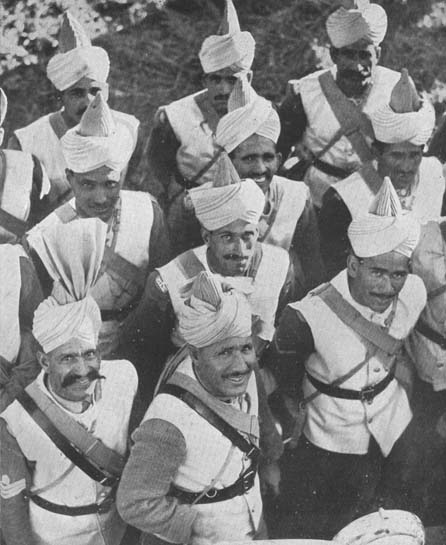
The First Indian army troops join the British Expeditionary Force in France.
The British Government announced today that Sweden and the United Kingdom had signed a war-trade agreement designed to adapt the existing British-Swedish trade agreement to wartime conditions.
The Reich gets Soviet goods, receiving the first shipment of oils, minerals, and grains.
Germany has protested to the Rumanian Government for allowing Ignacy Mościcki, former President of Poland, to leave the country, charging that his illness was only a pretext to escape internment.
Thousands die in Turkey in the major earthquake and its aftershocks. Successive shocks take a heavy toll on life and property. The powerful earthquake is estimated to have killed 32,000 people, thousands more are made homeless, in bitter winter weather conditions. The regions of Tokat and the Black Sea tobacco-growing centers of Samsun and Ordu are among the worst hit.
For the first time since 1870, when Italian troops captured Rome, thousands of Italian and Papal flags appeared in the streets today on the eve of Pope Pius’s visit to King Victor Emmanuel. Wooden pillars decorated with the Italian and Papal colors were being erected with feverish haste late tonight along the itinerary from the Vatican to the Quirinal Palace.
German destroyers and patrol boats attacked off German coast by RAF Coastal Command. Royal Air Force coastal command forces attack shipping, including two destroyers and eleven patrol vessels, in the North Sea, disabling a German patrol boat.
The British cargo ship Stanholme struck a mine and sank in the North Sea off the coast of Norway with the loss of 14 of her 25 crew. The survivors were rescued by a Norwegian ship.
U.S. Consul General in Hamburg Keblinger reports that German prize control authorities have released all but seven neutral vessels detained in German ports for the evaluation of cargo deemed contraband.
U.S. freighter Oakwood, en route from Gibraltar to Genoa, is intercepted by French naval vessel and diverted to Villefranche after boarding officer mistakes notation in log as an order to proceed to Marseilles. Once the mistake is realized, the ship is released to proceed on her way within a few hours.
The British Government announces that it seized just under 7,000 tons of contraband in the preceding week.
The American government protests the British seizure of U.S. mail en route to Europe. The State Department sends a “vigorous protest” to the Court of St. James regarding the seizure of American mail bound for the Continent by the British.
The US Consul General in Hamburg states that the German authorities there have released all but 7 neutral vessels previously seized. At one time, there were estimated to be about 125 ships there.
Convoy OA.61 departs Southend.
Convoy SL.14F departs Freetown for Liverpool.
Convoy HXF.14 departs Halifax for Liverpool.
The War at Sea, Wednesday, 27 December 1939 (naval-history.net)
On Northern Patrol, one cruiser and one AMC were in the Denmark Strait, two cruisers and AMCs between the Faroes and Iceland, and one cruiser between the Orkneys and the Faroes.
Light cruiser MANCHESTER relieved sister ship SHEFFIELD on Northern Patrol.
Battlecruiser HOOD and destroyers MAORI, NUBIAN and AFRIDI departed the Clyde to relieve battleship BARHAM and battlecruiser REPULSE on patrol NE of the Shetlands. AFRIDI and MAORI had just arrived in the Clyde that morning. Destroyer ILEX was to join after she re fueled at Scapa Flow.
Destroyer JACKAL escorted tanker BEDALE H (493grt) from Killingholm to Middlesborough, and sister ship JUNO joined at sunset.
Submarine TRIDENT departed Rosyth to establish a patrol off Murmansk to observe German activities from that port.
Convoy OA.61 departed Southend escorted by destroyers VESPER and VISCOUNT from the 27th to 29th, when they detached to join SL.14. Destroyers BROKE and ARDENT escorted the convoy from the 29th to 30th, when the convoy dispersed. Convoy OB.61 did not sail.
Destroyer WREN and WITCH were ordered to attack a submarine contact reported in the English Channel.
Destroyers VENETIA and VOLUNTEER attacked a submarine contact in 49-58N, 12-56W.
Convoy HXF.14 departed Halifax at 0900 escorted by Canadian destroyers HMCS SAGUENAY and HMCS SKEENA, which detached on the 29th. The ocean escort was armed merchant cruiser ASCANIA, which left on 5 January. Destroyer VERSATILE and sloop DEPTFORD from convoy OB.64 joined HXF.14 from 5 to 8 January, when the convoy arrived at Liverpool.
Force K arrived at Montevideo. Since 18 November, the Force had been at sea almost constantly and ARK ROYAL had spent only 36 hours in port.
Convoy SLF.14 departed Freetown escorted by armed merchant cruiser CARNARVON CASTLE until the 8 January. Aircraft carrier HERMES accompanied the convoy on the 1st, and destroyers ACASTA from the 4th to 8th, VESPER from the 8th to 9th, and WINDSOR from the 9th. The convoy arrived on the 11th.
Light cruiser ORION departed Kingston on patrol.
Light cruiser BIRMINGHAM arrived at Hong Kong for repairs to her 17 December collision damage and to replace a propeller. She was undocked two days later and was able to depart on 3 January for her return to UK.
President Roosevelt received today a foretaste of Congressional resistance to drastic curtailment of some federal expenditures as reports of budgetary reductions, which he is expected to send to the Capitol next week, increased on every hand. In response to published rumors of slashes already made in budget estimates, Senator Bankhead of Alabama called upon the President to insist that he maintain parity payments to farmers. Senator O’Mahoney of Wyoming made just as urgent a plea opposing a reduction in expenditures for the reclamation service.
Reports were that the new budget would contain no specific estimate for parity payments and that the amount for reclamation, now aggregating close to $50,000,000 annually, would be cut nearly in half. Neither Senator appeared to be encouraged so far as the budget for 1940-41 was concerned. Senator Bankhead tacitly confirmed the rumor that no recommendation would be included for parity payments which, although unbudgeted at the outset, were provided by Congress to the extent of $225,000,000 for 1939-40. The Senator insisted, however, that the President did not intend abandoning the principle of parity payments.
“As a result of our discussion I am in a position to say that there is no thought or intention of abandoning the principle of parity payments,” Senator Bankhead said.. “At this time it is not sufficiently known what money, if any, will be needed to carry out that principle because we don’t know what the farm prices will be.” He recalled that when Congress appropriated $225,000,000 last Spring, disregarding the demand of President Roosevelt that new taxes be levied to cover it, it was after several months of the session had elapsed.
“It is the view of the Administration that because of war conditions it will not definitely be known what the prices of farm commodities will be and it may be that we won’t need any new appropriation,” he added. He said that current prices of wheat were nearly three-fourths of parity and that cotton, selling at around 10 cents a pound, was within a similar striking distance of the basic price. He noted similar improvements in the prices of tobacco and rice.
Reissuance of licenses for the export of American arms, ammunition and implements of war to belligerents in the European war put the total of licenses issued in November at a new high. They amounted to $119,841,835, but most of them represented reinstatement of previous export authorizations, State Department officials said in making public the monthly report today.
Secretary Woodring said in his War Department report, made public today, that to underestimate the potentialities of air power “might result in the extinguishment of a nation’s existence.”
A plan to balance the federal budget will be outlined by Senator Robert A. Taft of Ohio, in a speech in Chicago, January 5, before the Chicago Bar Association. The talk will be over a network of the National Broadcasting Company.
Members of the Dies Committee to Investigate Un-American Activities were reported today to be in disagreement over the report which must be made to Congress January 3. The report’s reference to Communist activities in Hollywood is stirring dissension.
Two Russian citizens, officers of Bookniga, Inc., a Soviet propaganda agency, were fined in Federal district court in Washington today after pleading guilty to willful omission of material information from a registration statement filed with the State Department under the Foreign Agent Registration Act.
England has not given up its plan of making peace with Germany, provided that as the price of peace Germany starts a war with Soviet Russia, Earl Browder, secretary of the Communist party, said in a speech tonight to delegates attending a convention of the American Student Union in Madison, Wisconsin.
A temperature of 11.9 degrees sets a new record low in New York. A biting northerly wind, driving gray, snow-laden clouds before it, brought to New York yesterday its coldest day of the Winter. Shortly before 10 AM the mercury dropped to 11.9 degrees above zero, and in the early afternoon snow flurries deposited about a quarter-inch of dry, powdery snow throughout the metropolitan area.
Ticket scalpers ask $10 for a Rose Bowl seat. The University of Tennessee football delegation welcomed news today that the battle with Southern California’s Trojans in the Rose Bowl probably would be played under ideal conditions. Weather experts predicted that New Year’s Day would be clear.
The first American skimobiles are used in North Conway, New Hampshire.
Martha Graham, dancing superbly, made her first appearance of the season last night in the Holiday Dance Festival at the St. James Theatre. The program was graced by two new works, a solo called “Columbiad” and a group composition called “Every Soul Is a Circus…”
The New York Giants obtain infielder Mickey Witek from the Newark Bears for $40,000 and infielder Alex Kampouris and catcher Tommy Padden. New York has high hopes for Witek, the 1939 MVP in the International League.
The Chicago Cubs trade Gene Lillard, Steve Mesner and cash to the St. Louis Cardinals for minor league blue chipper Ken Raffensberger. Raffy won 15 games at Rochester in each of the past 2 seasons.
The Argentine Government announced tonight rejection of a German protest against internment of the crew of the scuttled Nazi pocket battleship Admiral Graf Spee.
Japanese planes raided Lanchow (today Lanzhou), the capital of Kansu Province and a key station on the munitions highway to Russia, on Tuesday and destroyed the big Lanchow airdrome, one of the most important in China, a Japanese army spokesman said. Chungking confirmed reports of the Lanchow raid but made no mention of damage to the airdrome or other military establishments. The Chinese version was that 101 Japanese planes in four flights dropped demolition and incendiary. bombs on Lanchow, causing widespread damage. The Chinese said four Japanese planes were shot down. Missions and other foreign establishments in Lanchow were not hit.
In the Battle of South Kwangsi, in the last gasps of the Winter Offensive, the Chinese are still attacking the Japanese 5th Infantry Division.
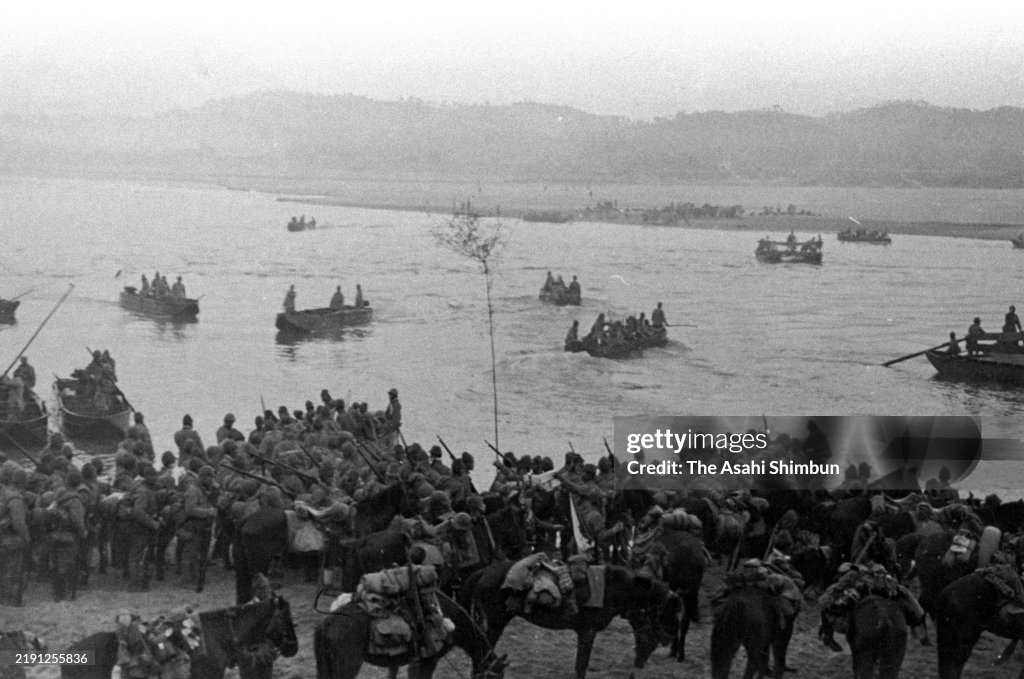
Japanese 21st Army crosses Lien River with minimal resistance from Chinese 4th War Area.
Japanese column counterattacks Chinese 5th War Area around Chunghsiang.
Premier Nobuyuki Abe today will receive the petition signed by 240 of the 466 members of the lower house of Parliament expressing non-confidence in the government and suggesting its resignation. The petition, adopted at a secret meeting yesterday, declares that the government’s program has been “unsatisfactory” and blames the Cabinet for the recent rice and fuel shortages and its failure to regulate prices in the interest of the common people.
Tokyo renews attacks on the United States. The press shifts from optimism on the possibility of a treaty to complaints of American coercion. Japanese dissatisfaction with Washington’s cool response to Ambassador Kensuke Horinouchi’s overtures for a new trade treaty finds expression in the Japanese press this morning. The earlier optimism regarding the future course of Japan’s relations with the United States is replaced by bitter complaints that America is creating a situation in which Washington will have Japan at its mercy.
The popular newspaper Yomiuri declares that without a new and permanent treaty Japan is bound to be subordinate to America. Yomiuri suggests that the United States is supporting a comeback of Generalissimo Chiang Kai-shek and predicts that Wang Ching-wei, who has been groomed for the puppet State, may be forced to withdraw from the scene under Anglo-American pressure. The only remedy that Yomiuri can suggest is a spectacular reorientation of Japan’s foreign policy. This means, in other words, that unless Washington comes forward with a trade treaty Japan will join the Nazi-Communist bloc.
The more moderate Asahi states that Washington has moved to avoid a treaty-less situation, but complains it has not mentioned the Japanese right of residence, the right to maintain consulates or to enjoy patents and trademark protection. Asahi recalls that the United States has twice advised American exporters to impose a moral embargo on exports of war material to Japan. It also reminds Japanese readers that the United States demands that Japan discontinue her exchange control and monopolistic activities in China when peace is restored.
Dow Jones Industrial Average: 148.52 (-0.75)
Born:
John Amos, American actor (“Good Times”; “Roots”; “Coming to America”; “The West Wing”), in Newark, New Jersey (d. 2024).
Theresa Randle, American actress (“Malcolm X”, “Beverly Hills Cop III”, “Space Jam”), in Atlanta, Georgia.
Andrew Parker Bowles, British Army officer; first husband of Queen Camilla, in Surrey, England, United Kingdom.
Mel Nowell, NBA and ABA point guard and shooting guard (NBA: Chicago Zephyrs; ABA: New Jersey Americans), in Columbus, Ohio.
Died:
Rinaldo Cuneo, 62, American painter.
Naval Construction:
The Royal Navy Assurance class rescue tug HMS Diligent (W 18) is laid down by Cochrane & Sons Shipbuilders Ltd. (Selby, U.K.).
The Kriegsmarine (German Navy) Type IXB U-boat U-108 is laid down by AG Weser, Bremen (werk 971).
The U.S. Navy submarine USS Gar (SS-206), lead boat of her class of 6, is laid down by the Electric Boat Co. (Groton, Connecticut, U.S.A.).
The Royal Navy Flower-class corvette HMS Jonquil (K 68) is laid down by Fleming & Ferguson Ltd. (Paisley, Scotland).
The Kriegsmarine (German Navy) Type 1936A destroyer Z27 is laid down by AG Weser (Deschimag), Bremen (werk 961).
The Royal Navy Tree-class minesweeping trawler HMT Hazel (T 108) is launched by Henry Robb Ltd. (Leith, U.K.); completed by Whites M.E.
The Вое́нно-морско́й флот СССР (ВМФ) (Soviet Navy) Project 38 (Minsk-class) class destroyer (flotilla leader) Baku is commissioned.





 History Diaries