
Although outnumbered, ARVN troops in a two-day battle capture a Việt Cộng headquarters, seize a record cache of enemy arms, and claim to kill 85 guerrillas; ARVN casualties include 19 dead and 49 wounded, and eight Americans are wounded.
Seventeen Americans were wounded in four attacks over the weekend in the Mekong Delta south of Saigon. A United States military spokesman said eight United States Army helicopter crewmen were wounded by Communist ground fire while flying a battalion of Vietnamese Rangers to the aid of a government unit pinned down by the Việt Cộng. One of the helicopters was shot down near the village of Đại Ngãi, 90 miles southwest of Saigon.
Five more Americans, four soldiers and a civilian college student on a working vacation, were wounded by a grenade tossed by a terrorist into a restaurant in Mỏ Cày, 50 miles south of Saigon. A 12‐year‐old Vietnamese girl was killed in the explosion. Two more helicopter crewmen were wounded in the rescue of a wounded American officer who was advising Vietnamese ground forces in the same area. All three were evacuated. A United States Air Force sergeant was injured when his Jeep hit a mine about 60 miles southwest of Saigon. Nine of the wounded were removed to the United States Military Hospital in Saigon. The eight others were treated at military dispensaries in the Mekong Delta. The civilian was identified as Van D. Bucher, an undergraduate student at Wagner College on Staten Island. The student’s parents, Mr. and Mrs. Jules N. Bucher, are government employes assigned to South Vietnam. The son, accredited as a free‐lance photographer, was on a trip through the Mekong Delta when he was wounded.
Farther south in An Xuyên Province, Communist guerrillas shot down a United States Army HU‐1B turbojet helicopter and peppered several others with automatic‐weapons fire. A spokesman said at least four Army helicopter crewmen — two officer pilots and two crew chiefs — were wounded.
The United States was reported today to be contemplating the reversal of a decision made last month to increase aid to South Vietnam by $60 to $70 million in the next fiscal year. The reversal was said to be proposed unless full civilian rule is restored in Saigon. Authoritative sources said nearly half the money had been earmarked for urban development. It was understood, however, that the Johnson Administration was not pinning itself down at this time to any final decision as it sought to exercise leverage upon the Vietnamese. The new aid commitments were approved when the United States Ambassador to South Vietnam, Maxwell D. Taylor, conferred with President Johnson early this month. Plans to hold them back began to emerge last Thursday, partly as a result of the attacks by Vietnamese military leaders on Mr. Taylor.
The United States has been hinting for some time that it would have to reappraise its foreign aid commitments if poltical unity was not restored in South Vietnam. For example, at his news conference last week Secretary of State Dean Rusk said that “there are certain kinds of assistance that are simply not feasible” unless a duly constituted government could be restored. The Secretary did not go into detail. Only today did it become clear that the additional aid agreed‐upon last month was among the most likely targets of United States impatience. The increase in United States aid programs during the fiscal year 1966, which begins next July 1, was one of the chief results of Mr. Taylor’s talks here. Of this total, between $20 and $30 million was to be earmarked for the so‐called urban impact projects in Saigon and other Vietnamese cities.
The balance of the increase was to be in military items, presumably in additional equipment rather than merely to replace lost or destroyed weapons. Total United States aid to South Vietnam this fiscal year is expected to reach about $575 million, though the precise figures are classified. Economic aid, which includes the huge commodity import program as well as funds for civic action efforts under the overall counterinsurgency campaign, is estimated at about $300 million. Officials emphasized that as of now the possible holdback on the additional aid was not to include the economic and military assistance already programmed for this fiscal year. However, they said, restrictions on existing aid programs cannot be excluded altogether if the military leaders in Saigon do not respond to the United States’ pressure for the restoration of some form of civilian government following last Sunday’s ouster of the High National Council by the younger commanders.
Soviet First Deputy Prime Minister Alexandr N. Shelepin, former head of the KGB, said today that the Soviet Union “will give aid to the Vietnamese until they are totally rid of the imperialists.” “The Soviet Union will not stand by with its arms folded while Vietnam is subjected to agression,” he said in the National Assembly.
Rescue ships picked up today three United States Navy airmen who parachuted late yesterday from their burning jet plane into the South China Sea between Vietnam and the Philippines. An air and sea search continued for the missing fourth crewman of the A-3D Douglas Skywarrior. One crewman was rescued by the merchant ship West River, a navy spokesman said. The other two were taken from their life raft by the Chepachet, a chartered Navy merchant ship. The three fliers are being returned to their ship, the carrier USS Hancock of the Seventh Fleet.
Lieutenant General Nguyễn Khánh, commander of the Vietnamese armed forces, issued today a holiday message of warm thanks for the United States forces in South Vietnam. In his message, addressed to General William C. Westmoreland, commander of United States forces here, General Khánh said: “If this Christmas is not adorned with the comforts of home, it will at. least bring them [American servicemen] the comforting thought that, whatever hardships they may have to endure, it is for a worthy cause and that their sacrifices are much appreciated by their Vietnamese friends. On behalf of all the members of the Republic of Vietnam’s armed forces I bring to our American comrades in arms our warmest season’s greetings and our grateful appreciation for what they have been, are and will be doing to assist us in our struggle for the defense of freedom.”
The New York Times opines:
“Senator Frank Church, in his interview with the liberal Catholic magazine Ramparts, has said publicly what many United States officials are saying privately about Vietnam. Mr. Church argues that the United States should never have got in in the first place and, while there is no immediate way out, the ground should be laid for ultimate extrication.”
The neutralist leaders of Laos are faced with a need to devise a foolproof system for holding a national election or a constitutional argument for deferring it. The choice must be made promptly, and the Communists are known to be waiting to turn the government’s decision to their propaganda advantage. Under the Laotian Constitution, an election is to be held in April for seats in the National Assembly. Some Western officials say they would like to see the election postponed indefinitely. They contend that to let the pro‐Communists present candidates would give them an opening into government‐held territory in this war‐torn kingdom. There is general agreement that non‐Communist candidates would not be likely to win a hearing in the Communist‐held areas in any case. “Can you go through the Berlin wall?” a Laotian official asked rhetorically. “It would be the same with an election in Communist areas.”
The British Broadcasting Corporation, quoting the Phnom Penh radio, said today that Communist China had agreed to supply heavy artillery and other equipment for 20,000 Cambodian troops. Prince Norodom Sihanouk was reported to have made the disclosure in a speech before the 18th National Congress.
Bob Hope was in the Philippines today to bring cheer to American servicemen. He arrived with his troupe from South Vietnam last night, flying to the Subic Bay Naval Station from Đà Nẵng.
Attempts will be renewed tomorrow to end the United Nations deadlock over financing, which for nearly a month has impaired the functioning of the General Assembly and is threatening the work of the Security Council. The Assembly will meet again Tuesday morning after a brief Christmas recess. A move is expected then — unless a way out of the United States‐Soviet impasse is found tomorrow — that would bring a confrontation on the question of whether the Soviet Union should be deprived of its vote.
In the Security Council, Jordan and Mali are rivals for a seat that becomes vacant when Morocco’s term expires at the end of the year. Both agree that the successor must be chosen this week if the Council is to continue to function as prescribed in the Charter. Jordan, unlike Mali, has been willing to go along with any informal arrangements on a single candidate worked out between the Assembly President, Alex Quaison‐Sackey of Ghana, and the African and Asian countries.
This would enable the Assembly to elect the new Security Council member on a basis of acclamation. It would make unnecessary the polling of members and would block challenges to the votes of members more than two years in arrears on assessments. Under Article 19 of the Charter, such members are liable to loss of vote in the Assembly. The Soviet Union, which owes $52.6 million for United Nations peace‐keeping operations in the Congo and the Middle East, is subject to Article 19, and the United States is pressing for enforcement. The Russians contend the assessments are illegal since they were imposed by the General Assembly, not the Security Council. Efforts to break the financial deadlock have come to a standstill over the holiday weekend. The Soviet Union was reported to be stiffening its objection to a compromise formula that the other parties were said to have accepted.
Deputy Premier Aleksandr N. Shelepin of the Soviet Union said today that Moscow’s friendship for President Gamal Abdel Nasser was “stronger than ever.” Mr. Shelepin, who is heading a 10‐man Soviet parliamentary delegation, said in a speech to the National Assembly of the United Arab Republic tonight that the Soviet Government and people “always were and are standing by you.” Without mentioning former Premier Nikita S. Khrushchev by name, he asserted that the Kremlin’s policy “does not change with individuals.”
Speaking of the Aswan High Dam, the Deputy Premier said the new Soviet leadership would stand by previous commitments to finance and work for the completion of the dam by 1967, as Mr. Khrushchev promised. Since Mr. Khrushchev’s removal last October there has been uneasiness among high Egyptian authorities about Cairo’s relations with the new leaders of the Kremlin. Mr. Nasser and other Egyptian officials have credited Mr. Khrushchev personally with the decision to supply large quantities of military aid and largescale economic loans to the United Arab Republic.
The Soviet Deputy Premier also picked up two themes from the “Victory Day” speech by President Nasser at Port Said just before Christmas. In that speech the Egyptian leader criticized Premier Moïse Tshombe of the Congo as an imperialist stooge and accused the United States of an attempt to “dominate” Egyptian policies through the huge American economic aid program. Mr. Shelepin is the highest ranking Soviet official to visit the United Arab Republic since Mr. Khrushchev’s fall from power. Top Egyptians regard him as one of the key officials in the Soviet hierarchy.
Italy’s feuding political parties failed today, for the 19th time in 12 days, to choose a President. The four‐party governing coalition, headed by Premier Aldo Moro, a Christian Democrat, remained unable to settle on a common candidate. If the coalition were united, it could easily muster the necessary 482-vote majority. Instead, most of the 963 voting Senators, Deputies and regional representatives were split between two members of the Cabinet. They were Deputy Premier Pietro Nenni, 73‐year‐old Socialist, and Foreign Minister Giuseppe Saragat, 66, Democratic Socialist. Mr. Nenni, with about 285 Communist and Proletarian Socialist votes and most of his party’s 95, led on the 19th ballot with 377 votes. Mr. Saragat, backed by his party and nominally by the big Christian Democratic bloc, trailed with 342.
The Congo has charged that officers from Algeria and the United Arab Republic are leading Congolese rebels on the country’s northeastern border. In a letter to the President of the United Nations Security Council, Premier Moïse Tshombe said the Congo considered this a “veritable declaration of war.” Mr. Tshombe also said the Congo had “irrefutable evidence” that the Congolese rebels were using military matériel provided by Algeria and the United Arab Republic. The Premier asked that these “new elements” be added to the dossier of the complaint against Algeria, the United Arab Republic and the Sudan that the Congo laid before the Security Council December 8.
Although the supplying of arms to the rebels has become increasingly clear in recent weeks, observers here were surprised by Mr. Tshombe’s assertion that Algerian and Egyptian officers were serving with the rebel forces. President Ahmed Ben Bella of Algeria has announced his intention to send personnel as well as arms to the rebels, but Western intelligence agencies and diplomatic observers have found no evidence that Algerians or Egyptians are serving with the rebels. Two weeks ago, 40 men who were said to look like Algerians were reported to have stepped off a Soviet‐made AN‐12 transport at Juba, a Sudanese town about 150 miles from the Congolese border.
However, no one is sure just who the men were. General Joseph D. Mobutu, the Congolese Army commander, said at a news conference that they might have been instructors, technicians or medical men. None of them has yet been sighted with the rebels in the northeastern Congo. In his letter, Mr. Tshombe was somewhat vague as to where the Egyptians and Algerians were serving.
Israeli Premier Levi Eshkol’s Cabinet today swept the 10‐year‐old “Lavon affair” under the carpet. Former Premier David Ben-Gurion’s demand for the reexamination of a 1960 decision clearing Pinhas Lavon of having ordered a reckless security operation when he was Defense Minister was formally rejected. The vote represented a major political victory for Mr. Eshkol, who became Premier 18 months ago when Mr. Ben‐Gurion retired. However, Mr. Ben‐Gurion has served notice that he will ferret out the issue at the coming national convention of Mapai, Israel’s ruling party, scheduled to open February 16. The party’s leadership has decided against including it in the agenda, but Mr. Ben‐Gurion has said he will raise the issue from the floor.
At least one woman was killed, scores of persons were injured and many shops and homes were looted in Karachi, Pakistan today as mounting pre‐election tensions erupted into violence at scattered points throughout Pakistan’s biggest city. Nearly all the injuries and damage appeared to have resulted from attacks on supporters of the Opposition candidate, Miss Fatima Jinnah. Opposition spokesmen charged that the attacks had been organized by backers of the incumbent President, Mohammad Ayub Khan, because they had lost hope of victory in the election, which is scheduled for Saturday. The spokesmen said the governing Muslim League was trying to create conditions that would justify the imposition of martial law and the postponement or cancellation of the election.
Nigeria’s first national election campaign since she became independent in 1960 is approaching its climax amid mounting violence and talk of secession and civil war. With more and more newly independent African, states adopting one‐party systems, Nigeria has becme one of the last symbols of democracy. The question being asked by both foreign observers and Nigerians is: Can democracy work here? The campaigning has severely strained the tenuous ties that hold together Nigeria’s population of 55.6 million — the largest in Africa. Many candidates for Parliament roam their districts benind a phalanx of armed thugs. Clashes between rivals are frequent. Political headquarters have been stoned and shot at, cars have been burned and opponents brutally beaten. Several politicians have been killed.
The American cargo ship Smith Voyager sank under tow in the South Atlantic, having been disabled on 21 December following a shift in her cargo of grain. She foundered due to the rupturing of a seam. Four crew drowned, the remaining crew were rescued by a United States Coast Guard cutter.
President Johnson may replace 15 to 20 United States Ambassadors. The Federal Bureau of Investigation is compiling security reports on the men Mr. Johnson is considering for diplomatic appointments, and these reports are being sent to the LBJ Ranch. This week the President will begin making decisions that could lead to the replacement of as many as 20 ambassadors. These appointments are viewed as part of Mr. Johnson’s desire to place his own stamp on the new Administration and to signal the end of the New Frontier and the start of the Great Society. These additional elements of the President’s thinking became known today:
- In the new budget, federal spending on education will be significantly increased. Mr. Johnson may raise current levels of spending of $700 million to as high as $3 billion.
- There will also be a substantial budget increase for the anti-poverty campaign, possibly doubling the present level of spending, which is $787 million for the current fiscal year.
- He will hold some new legislative proposals in reserve, to be presented to Congress if the economy begins to stagnate and stimulation is believed to be necessary.
- Partly for this reason, he will probably ask in the new budget for the fiscal year 1966 that the President’s contingency fund be increased from the present $500 million to between $700 million and $1 billion.
- Mr. Johnson expects to meet in Washington in 1965 with an average of two foreign heads of state or government every month. He is scheduling many of these visits now. There are tentative plans for visits to Washington by India’s Prime Minister, Lal Bahadur Shastri; Pakistan’s President, Mohammad Ayub Khan; Japan’s Premier, Eisaku Sato, and other leaders.
President Johnson will be named TIME magazine’s Man of the Year today for scoring “the biggest election triumph in history” and “surpassing almost all his Presidential predecessors in first‐year accomplishments.” The weekly news magazine said that Mr. Johnson also suffered “stalemates and setbacks,” but never met with a reverse beyond redemption. “‘Being himself’ meant an enormous change in style, habits, thought, and operation of the White House,” the magazine said. “It wasn’t always comfortable for those in close proximity, and it wasn’t always neat and nice when the stories leaked out. There were imprecations at foes and friends. In some, he seemed perilously impetuous. But never, so far as anyone knows, when the national interest was really at stake.”
President Johnson has an almost unparalleled opportunity in the forthcoming Congress to push through an imaginative legislative program, in the view of the National Committee for an Effective Congress. In a special report released today, the nonpartisan politicalaction group forecast a session in which there would be substantial reforms in Congressional procedure and a number of innovations in legislative attacks on the nation’s needs. “It may be expected that Lyndon Johnson’s legislative record will be as stunning in 1965 and 1966 as it was in the year just completed,” the report says. “Lyndon Johnson knows his Congress very well, and it would not be in character for him to ask Congress for much that he is not sure he can get.”
But the President, the report continues, will have to be both bold and imaginative in what he asks of the new Congress. “President Johnson’s ‘in’ box is virtually empty,” the report says. “The leftover housekeeping problems from the last year of Eisenhower and the unfinished domestic program of the Kennedy Administration have been substantially dealt with in Johnson’s first, spectacular year. Lyndon Johnson now stands before a vast horizon on which he, more than any other individual in the world, can determine where the road should go.”
A Presidential committee suggested today that “immediate and, if necessary, drastic action” be taken to end off‐base discrimination against Black troops serving abroad. The President’s Committee on Equal Opportunity in the Armed Forces also said that if voluntary means failed to end discrimination in National Guard units at home, Title VI of the Civil Rights Act of 1964 should be invoked. This section of the act prohibits discrimination “under any program or activity receiving federal financial assistance” and provides that federal funds can be withheld. Generally, however, the committee found that considerable voluntary progress had been made in advancing equality in the National Guard, even in Southern states.
On the other hand, it reported that military commanders of United States bases overseas had seldom exercised authority given to them last year to take action against discrimination in off‐base housing and recreational facilities. President Johnson, who is spending the holidays at his LBJ Ranch, said in a letter to Secretary of Defense Robert S. McNamara that the recommendations “obviously warrant prompt and thorough consideration.” He expressed the hope that progress “would continue until every vestige of the problem has been eliminated.” The President appeared to be suggesting that he would prefer to rely on voluntary means to integrate National Guard units in the South. He called progress made in this field “encouraging.”
A group of “Carpenters for Christmas” began putting a roof today on their present to the Black community in the rural area of Ripley, Mississippi — a new church to replace one destroyed by fire. Dr. David Jewell, a spokesman for the group from Oberlin College in Ohio, said the work was progressing calmly despite a weekend scare from fireworks and possibly gunfire. The church was burned to the ground in October, shortly after a civil rights meeting was held there.
Sheriff Wayne Mauney said an investigation showed there had been widespread firing of fireworks Christmas night but that he had found no evidence of gunfire. Dr. Jewell, an associate professor of Christian education, said last night had passed without incident. The students and three professors gave up their holiday vacation to help rebuild the church. They arrived here last Sunday and began working with local. Blacks and other volunteers to finish the rebuilding by next Saturday.
The City Commission on Human Rights warned New York’s taxi drivers yesterday that they must stop refusing to accept Negro and Puerto Rican passengers. In a letter to the taxi owners and their drivers, the commission charged that members of minority groups were being denied hack service because of their “race, color, and national origin.” The agency pointed out that such discriminatory practices were illegal and that drivers could lose their hack licenses if they were found guilty. The commission noted that the Police Hack Bureau had promised to take prompt action to suspend or revoke a driver’s license if citizen complaints were made against him.
Heavy snowfall and blustery winds hit the northern California mountain areas today, bringing more hardship to hundreds of persons already isolated in communities near the Oregon border by flooding rivers. The sudden change from rain to snow checked the river floods in northern California and Oregon, areas hardest hit in the flooding that began more than a week ago. But the new snow slowed relief work and increased danger for scores of helicopter pilots flying rescue missions. William Sowie, civil defense chief at Yreka, 20 miles south of the Oregon border and 75 miles inland, reported two feet of snow had fallen in the area up to tonight.
Between 400 and 500 persons were still stranded in the region, he said, in towns along the Klamath and Salmon Rivers. “Where we’ve reached these people we’ve found they’re beginning to run tremendously short of food,” Mr. Sowie said. As the rivers receded in Oregon and northern California thousands of refugees began moving back to their homes. Oregon and California were hardest hit by the week of rainstorms, but the muddy fingers of the Christmas floods also stretched into Washington, Idaho and Nevada. The latest counts from the five states showed 48 persons dead, including four lost in a California rescue helicopter crash. Some 17,000 persons were homeless. The damage was still unassessed, but estimates placed it close to $1 billion.
Three persons were attacked early yesterday in two separate incidents on New York City subway trains. No one was seriously injured. Shortly before 1 AM a passenger on a Sixth Avenue IND train was attacked by five youths. The man, William Green, 45 years old, of 38 Clinton Street, told the police he was beaten and kicked. Five youths, one of whom had a razor, were captured in the 34th Street station. The police said the youths became boisterous on the northbound train, began to frighten passengers, and ultimately attacked Mr. Green. Three were charged with assault and disorderly conduct. The two others, under 16 years of age, were held for Children’s Court.
New York Governor Rockefeller proposed yesterday a $1.7 billion program to purify New York’s polluted lakes, streams and rivers. In the greatest departure he has yet made from his often proclaimed “pay‐as‐you‐go policy,” the Governor called for a $1 billion state bond issue to help finance the six‐year undertaking. “Everyone has a stake in ending the pollution of our lakes and streams,” he said in a report. “Farmers, housewives, sportsmen, workers, businessmen, children—all want pure waters.”
A Freedom House report challenged yesterday what it called claims by extremist groups that the 26 million voters who cast ballots for Senator Barry Goldwater, the defeated Republican Presidential candidate, represented “hard-core” extremist supporters.
Mrs. John F. Kennedy and her children began their skiing holiday in Aspen, Colorado today. The widow of President Kennedy took ski lessons on 7,900-foot Buttermilk Mountain, where there is more than two feet of snow.
A special state commission recommended today a $123 million master plan to provide long-term development of public education in Massachusetts.
National Football League Championship Game:
Baltimore Colts 0, Cleveland Browns 27
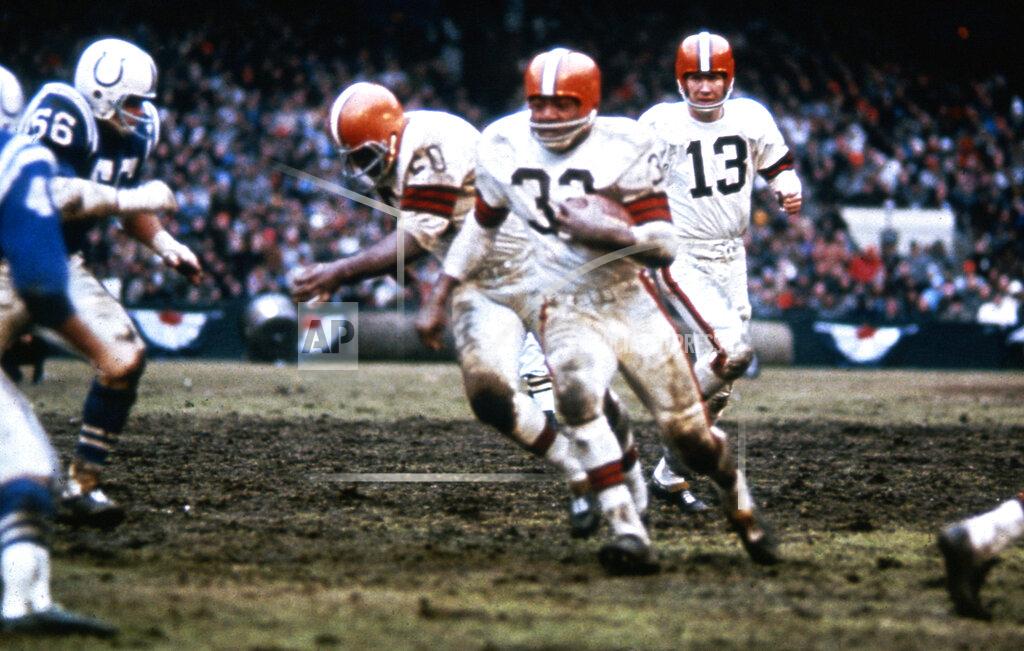
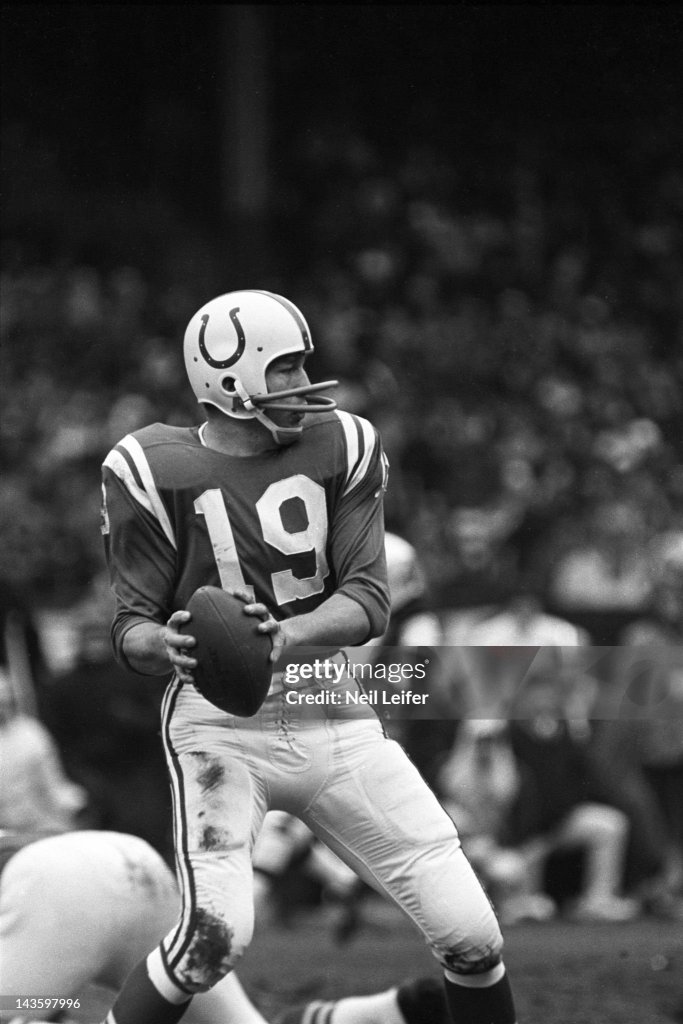
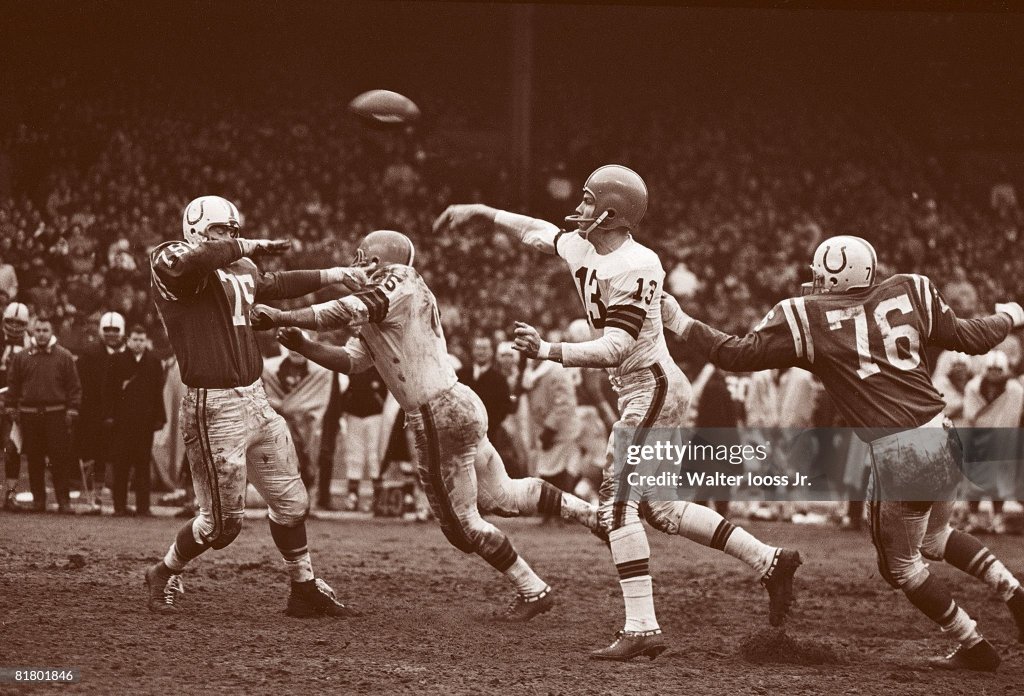
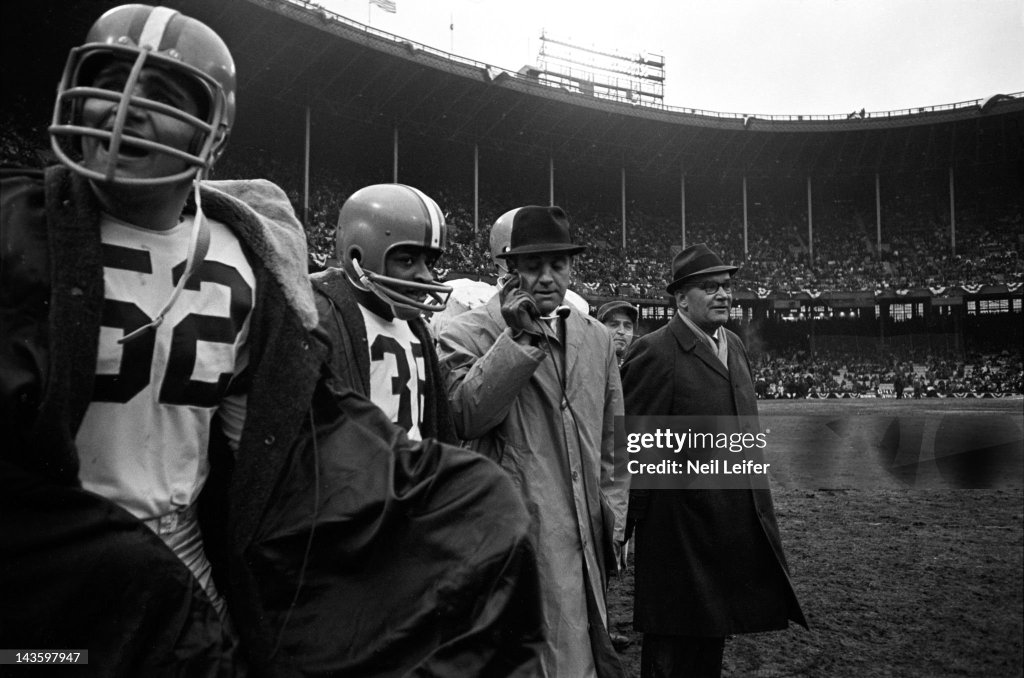
The Cleveland Browns shut out the visiting Baltimore Colts, 27 to 0, to win the National Football League championship game. It is the last championship win by a major-league pro sports team from Cleveland until the 2016 NBA Cavaliers. The first half went scoreless, as both teams struggled to move the ball with a light snow and driving wind hampering their efforts. Baltimore drove to midfield but lost the ball on a fumble by fullback Jerry Hill. The Browns then moved to the Colt 35 but Paul Warfield slipped going for a Ryan pass and the ball was intercepted by Colt linebacker Don Shinnick. As the second quarter began, Baltimore had moved deep into Browns territory. The Colts attempted a 27-yard field goal by Lou Michaels, but holder Bobby Boyd had to reach for the snap from center and was hauled down behind the line of scrimmage. Near the end of the first half, Unitas got another drive going into Cleveland territory. However, from the Brown 46 he threw slightly behind tight end John Mackey, who could only deflect the pass; it was intercepted by Vince Costello. The scoreless first half ended after Ryan missed on a long pass to Warfield.
Having held their own with Baltimore in the first half, the Browns changed their offensive and defensive tactics. With the wind at his back, Browns’ kicker Lou Groza booted the second half kickoff well beyond the end zone. The Cleveland rush put pressure on Unitas and the Colts had to punt into the wind. With good field position at the Colt 48, the Browns got a first down on a screen pass to running back Jim Brown. The Colt defense stiffened and Groza kicked a field goal from the 43. Baltimore could not move and the Browns went on the attack again. From the Cleveland 36, Brown took a pitchout around the left side and nearly went all the way. Safety Jerry Logan finally hauled him down from behind at the Colt 18. Ryan dropped back and fired a pass between the goalposts to the leaping Gary Collins for the game’s first touchdown and a 10–0 lead. The momentum had clearly swung to home underdog Cleveland.
Baltimore’s Tony Lorick made the bad decision to run the kickoff out of the end zone and was tackled at the Baltimore 11. A clipping penalty moved the Colts back further and they soon had to punt again into the stiff wind. The kick went out of bounds on the Baltimore 39 and Ryan went right back to work. The Browns lost yardage on a broken reverse play, but Ryan dropped back from the 42 and found Collins all alone down the middle at the five; the big flanker waltzed into the end zone and the Browns were up 17–0.
Unitas finally got the Colts across midfield against the aroused Browns defense, but running back Lenny Moore fumbled a handoff at the Cleveland 47 and the Browns recovered. Brown rumbled 23 yards with another pitchout to the Colt 14 as the third quarter ended. Ryan hit Warfield at the one-yard line but the Colts then held. Groza hit a short field goal from a sharp angle to the right to make the score 20–0. Baltimore’s troubles continued as Unitas threw deep to Jimmy Orr on the sidelines at the Cleveland 15, but Orr could not get the ball under control before he fell out of bounds, and they had to punt again. The Browns moved to their 49 and Ryan threw deep to Collins. With defensive back Boyd all over him, Collins made the catch at the Colt 10, kept his balance, and scored for the third time. As the fourth quarter wound down and with the Browns on the move again, the game was halted with 27 seconds remaining, as thousands of fans surged onto the field.
The Browns dominated the statistics over the favored Colts. Unitas completed 12 of 20 passes for only 95 yards with two interceptions. The Colts managed only 92 yards rushing. Ryan hit on 11 of 18 tosses for 206 yards and three TDs. The Browns’ Collins set a title game record with three touchdown catches in one game, and grabbed five passes for 130 yards total. Groza kicked field goals of 42 and 10 yards, and Brown carried the ball 27 times for 114 yards.
Born:
Steve Wallace, NFL tackle (NFL Champions, Super Bowl XXIII, XXIV, XXIX-49ers, 1988, 1989, 1994; Pro Bowl 1992; San Francisco 49ers, Kansas City Chiefs), in Atlanta, Georgia.
Randy Kirk, NFL special teams long snapper and linebacker (San Diego Chargers, Phoenix-Arizona Cardinals, Washington Redskins, Cleveland Browns, Cincinnati Bengals, San Francisco 49ers), in San Jose, California.
Rob Rose, NBA shooting guard (Los Angeles Clippers), in Rochester, New York.
Ian Gomez, American actor (“Cougar Town”), in New York, New York.
Died:
Francesco Spoto, 40, Italian Roman Catholic priest and missionary to the Congo, died of injuries sustained while he was held hostage by the Simba rebels



 History Diaries