The Red Army continued to attack the north end of the Mannerheim Line with little success.
In the Taipale sector of the Mannerheim Line, Finnish and Soviet (13th Army) troops fought near the village of Kelja at the Suvanto River; Finnish artillery and batteries at Kekinniemi fort stopped Russian advances, but two Finnish attempts at advancing were similarly stopped. The Soviets send reinforcements across the ice to the men at Kelja who crossed on the 25th. The Finns attempt several counterattacks starting early in the morning, but they fail. The Soviets continue sending over more men in the teeth of Finnish artillery and shore batteries at the Kekinniemi fort which has a clear field of fire over the ice. It is a brutal battle, with nowhere to hide and shells raining down everywhere. The lake “is littered with piles of bodies” according to one onlooker. The day ends with the situation relatively unchanged, which is a defeat for the Finns because the Soviets have consolidated their position.
The North Karelian Group completes its offensive in the Pielisjärvi sector after two days, having forced the opposing Russian regiment back across the border.
Finnish forces hold their positions on the outskirts of Salla.
Finnish 9th Division received artillery support and began bombarding the Soviet 163rd Division trapped in Suomussalmi, Finland. The Soviet 163rd Rifle Division has no escape route, and the 44th Rifle Division remains trapped on the Ratte road.
In Ladoga Karelia, the railway junction at Elisenvaara in the municipality of Kurkijoki is subjected to intensive bombing. One of the bombs kills 29 civilians who had taken refuge in a sewage ditch.
On the south coast of Finland, the Soviets bombed Kotka; four people are killed.
Uruguay announces it is to send material aid to Finland.
Mexico also promises to send Finland whatever assistance it can afford.
The Pope today followed his scathing condemnation of Russia’s invasion of Finland last Sunday by announcing he had sent a “substantial” sum to Finnish Catholics.
Relief organizations in Finland have begun to spend $200,000 sent from here for food, clothing and shelter for the victims of the Russian invasion, according to a report received yesterday by the Finnish Relief Fund, Inc., which collected the money from American sympathizers.
Wawer massacre: 107 Polish civilians murdered by the German occupiers in Wawer, suburb of Warsaw on the night of 26 to 27 December 1939. The execution was a response to the killing of two German soldiers in a shootout by two petty criminals. On the evening of 26 December, two known Polish criminals, Marian Prasuła and Stanisław Dąbek, killed two German non-commissioned officers from Baubataillon 538. After learning of it, the acting commander of the Ordnungspolizei in Warsaw, colonel Max Daume ordered an immediate reprisal, consisting of a series of arrests of random Polish males, aged 16 to 70, found in the region where the killings occurred (in Wawer and the neighboring Anin villages), and, as a result, 120 men, who were unrelated to the shootout, were gathered, and a show trial was hastily organized. After a kangaroo court presided over by Major General Friedrich Wilhelm Wenzel, 114 of the 120 people arrested — who had no knowledge of the recent killings, many of whom were roused from their beds – were sentenced to death, the others were spared to bury the dead. In total, 107 were killed and 7 survived, as they withstood the gunfire and were not finished off later. It is considered to be one of the first large scale massacres of Polish civilians by Nazi Germany in occupied Poland. The dead included one professional military officer, one journalist, two Polish-American citizens and a 12-year-old boy. 34 victims were under the age of 18. Both Jews and Christians were massacred along with some Russians. Some of the executed were not locals, but merely visiting their families for Christmas.
Soon after the massacre, a Polish youth resistance organization, “Wawer”, was created. It was part of the Szare Szeregi (the underground Polish Scouting Association), and its first act was to create a series of graffiti in Warsaw around the Christmas of 1940, commemorating the massacre. Members of the AK Wawer “Small Sabotage” unit painted “Pomścimy Wawer” (“We’ll avenge Wawer”) on Warsaw walls. At first, they painted the whole text, then to save time they shortened it to two letters, P and W. Later they invented Kotwica – “Anchor” – the symbol, a combination of these 2 letters, was easy and fast to paint. Next kotwica gained more meanings – Polska Walcząca (“Fighting Poland”). It also stands for Wojsko Polskie (“Polish Army”) and Powstanie Warszawskie (“Warsaw Uprising”). Finally “Kotwica” became a patriotic symbol of defiance against the occupiers and was painted on building walls everywhere.
On 3 March 1947, the Polish Supreme National Tribunal for the Trial of War Criminals (Najwyższy Trybunał Narodowy) sentenced Max Daume to death. Wilhelm Wenzel was extradited to Poland by the Soviets in 1950 and executed in November 1951. There is now a monument in Wawer commemorating the massacre.
Brisk skirmishes take place on the western front. The new intensity of fighting is thought to portend heavier drives soon. In that No Man’s Land between the Maginot Line and the Westwall, what looked like a Christmas truce but may have been due only to the weather, did not last long.
Hitler sets foot on French soil, visiting an advanced German patrol. On Christmas Eve Chancellor Hitler set foot on French soil for the first time since 1918, when, as an unknown soldier, he fought on the side of the German Army in France.
The Reich will transfer 80,000 Galician Jews. The group is to be exchanged for Germans in Soviet Poland.
Military reservists are called up in Sweden.
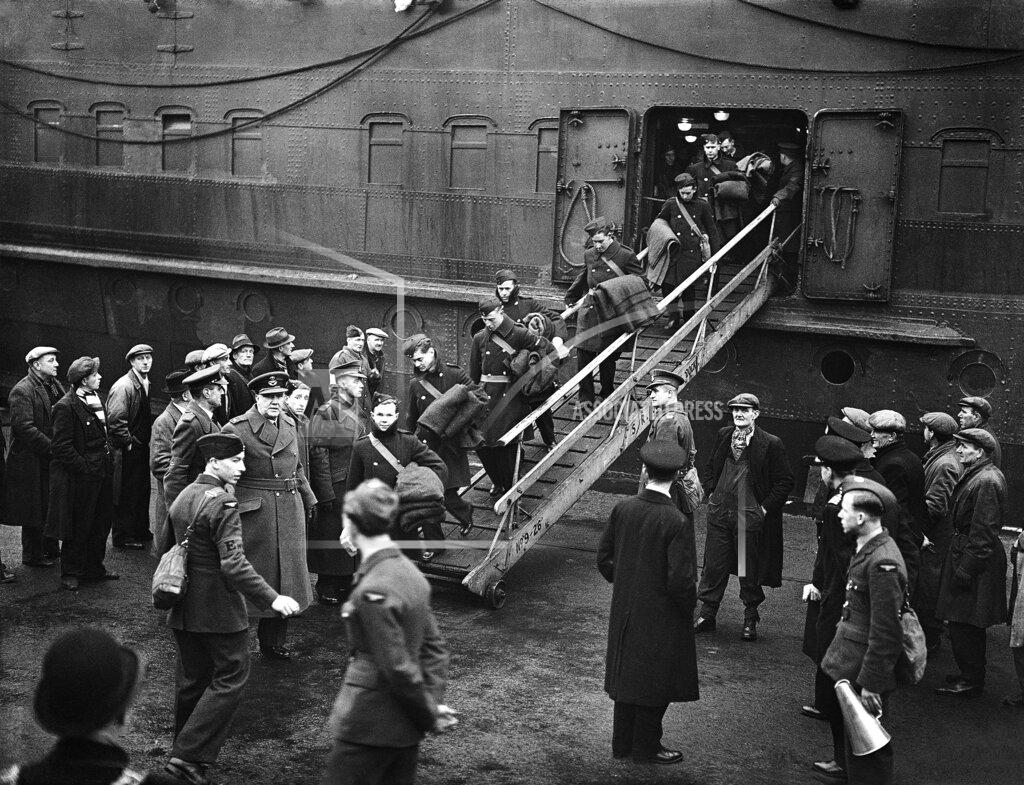
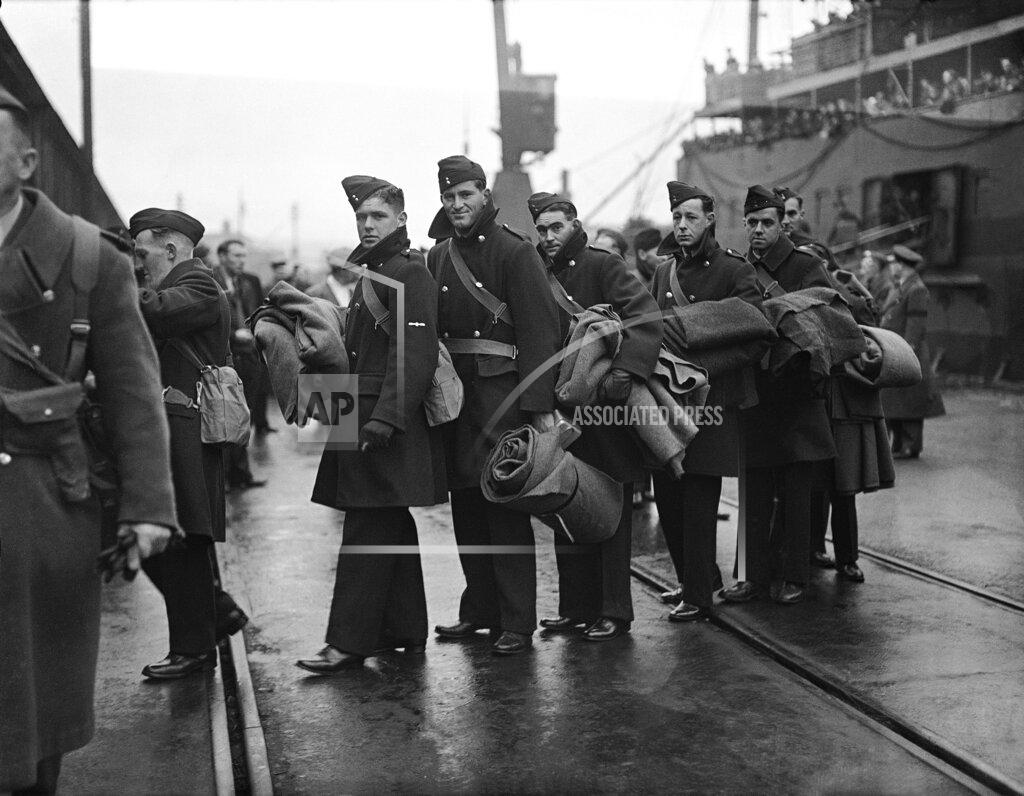
The first Royal Australian Air Force squadron, No. 10 Squadron RAAF, arrived in the UK at Pembroke, Wales. They will fly Sunderland flying boats with No. 10 Squadron (Coastal Command).
The dislocation not only of peoples but of whole populations driven from their homes and now on the move back and forth over a distracted continent was characterized today by Ernest J. Swift, vice chairman of the American Red Cross, as the present major problem of the European war.
Erzinona, Turkey suffers a 7.8 earthquake. The Turkish earthquake of December 26, 1939, was one of the largest shocks ever recorded on Anatolia. The earthquake occurred at 23:57:16 GMT according to Richter, 1958 (1:57:23 am on 27 December local time). The epicenter was in Turkey near latitude 39.5 N, longitude 39.5 E, between Erzincan and Erzuruffi, which is about 160 km from the coast of the Black Sea. The focal depth of the earthquake was 27 km. The main shock had a magnitude of 7.9 – 8 on the Richter scale. The intensity near the epicenter was between 11-12 degrees on the Mercal1i-Cancani scale. Many other rather strong, intermittent shocks and aftershocks occurred in the week following the main shock. The earthquake caused a small tsunami in the Black Sea. The earthquake in Anatolia killed over 32,000 people, injured about 100,000, and destroyed perhaps 120,000 dwellings; based on 1940 replacement values the damage amounted to about £10 million.
A squadron of completely trained Royal Australian Air Force personnel disembarked at Pembroke, Wales, for service with the RAF Coastal Command. Number 10 Squadron is equipped with Sunderland flying boats. They are the first Dominion air force unit to be committed to active service in the European war.
The Royal Navy starts laying a mine barrier from the Moray Firth to the Thames Estuary.
All vessels of the Royal Australian Navy have been placed under British orders since the start of the war.
The Royal Navy submarine HMS Triumph is damaged by mine in the North Sea. She was severely damaged, losing 18 feet (5.5 m) of her bow. Repairs took until 27 September 1940 to complete.
The German cargo ship Glücksberg was intercepted by the Royal Navy destroyer HMS Wishart and deliberately ran aground by her crew near the (Spanish) Chipiona Lightship at Sanlúcar de Barrameda, Spain. All crew were rescued by the Spanish fishing boat Ciudad de Melilla. Glücksberg broke up on 4 January 1940, a total loss.
Convoy OA.60G departs Southend.
Convoy OB.60 departs Liverpool.
Convoy SL.14 departs Freetown for Liverpool.
The War at Sea, Tuesday, 26 December 1939 (naval-history.net)
On Northern Patrol, one cruiser and one armed merchant cruiser were in the Denmark Strait, two cruisers and eight AMCs between the Faroes and Iceland, and two cruisers between the Faroes and the Orkneys. Armed merchant cruiser CANTON departed the Clyde on Northern Patrol.
Submarine TRIUMPH (Lt Cdr J W McCoy) departed Rosyth on patrol on the 26th. In the Skagerrak 250 miles east of Rosyth in 56 44N, 5 00E, she struck a mine which left her badly damaged, unable to submerge and with 18 feet of her bow blown away. There were no casualties. Submarine TRUANT joined TRIUMPH to assist, while destroyers EXMOUTH, ELECTRA, ESCAPADE, ENCOUNTER and ECHO were dispatched from Rosyth and joined TRIUMPH on the 27th. TRIUMPH and her escorts arrived safely off May Island in the Firth of Forth at 0700/28th. She was taken to Chatham for repairs lasting until 27 September 1940. On arrival at Rosyth, ELECTRA entered the dock at Rosyth for repairs and refit.
Destroyer JACKAL arrived in the Humber.
Submarine SEAHORSE departed Blyth on patrol.
Polish submarine ORP WILK departed Rosyth on patrol.
After a submarine was reported in the English Channel, destroyer MALCOLM and sloop FOXGLOVE commenced to search.
A submarine was sighted on the surface in 49-46N, 13-11W by destroyer VENETIA, escorting an outward bound convoy with destroyer VOLUNTEER. VENETIA made an attack on the contact 180 miles SW of Berehaven. Destroyers WREN and WITCH in the area were advised of the sighting.
Tanker ADELLEN (7984grt) was badly damaged on a mine 16 miles NE of North Foreland in 51 30N, 01 43E. She entered the Thames next morning for repair.
Convoy SA.23 of two steamers departed Southampton, escorted by sloops FOXGLOVE and ROSEMARY, and arrived at Brest on the 27th.
Convoy FN.59 departed Southend, escorted by destroyer WOOLSTON and sloops FLEETWOOD and GRIMSBY, and arrived in the Tyne on the 28th.
German steamer GLUCKSBURG (2680grt), which had departed Cadiz on the 25th, was intercepted by destroyer WISHART off Chipiona Light, Spain. She turned into Spanish waters pursued by WISHART which was warned off by Spanish gunboat LAURIA. However GLUCKSBURG went aground at San Luca de Barrameda and was lost; her hull broke up in the surf on 4 January 1940. The crew was picked up by Spanish fishing boat CUIDAD DE MELILLA.
Convoy SL.14 departed Freetown escorted by sloop LEITH until 12 January. On 28 December, aircraft carrier HERMES, French heavy cruisers FOCH and DUPLEIX, and French destroyers MILAN and CASSARD departed Freetown and joined on the 30th. On 10 January, convoy HG.14F was merged with SL.14. Sloop BIDEFORD joined on 10 January, and on the 11th, the convoys split with the northbound portion becoming SG.14B. On the same day, destroyers WANDERER, WITCH and WARWICK joined SG.14B. LEITH arrived at Penarth for refitting on the 13th, while the convoy arrived on the 15th.
Sloop SCARBOROUGH departed Malta for UK for duty in Home Waters.
Light cruiser GLOUCESTER departed Mauritius and arrived at Port Victoria, Seychilles, on the 29th.
President Roosevelt virtually completed today his preliminary study of the U.S. federal budget for the fiscal year 1940-41 and planned to begin at once the drafting of a message in which he is expected to put squarely up to Congress the choice of cutting expenditures, continuing heavy borrowing or levying taxes necessary to put the government’s financial affairs in better shape. Reports that the President himself would recommend expense cutting, and would request expenditures totaling much less than the $9,000,000,000 originally requested for the current fiscal year, were going the rounds.
The President told his press conference this afternoon that he might get to the business of preparing his message tonight. He was reported to have made heavy slashes during his preliminary studies in some of the largest categories of expenditures, including agricultural benefits, reclamation, relief and others of the “recovery” classification, and to have decided to ask Congress to defer outlays for others, particularly in rivers and harbors improvements.
Expenditures for national defense are said to have been reexamined at the President’s request, with the view to planning them to put the minimum strain on the new budget. Recommendations in excess of last year’s army and navy budgets are expected to be largely authorizations, to be financed on a pay-as-you-go basis. A few persons with whom Mr. Roosevelt has discussed the budget have become convinced that he will attempt to keep total estimates down to the point where the requirements for new borrowing will not exceed the present statutory limit of $45,000,000,000, provided Congress appropriates within the estimates.
This would allow for a deficit in the new budget of perhaps less than $2,000,000,000, inasmuch as the debt stood today at about $42,000,000,000, with six months still to go in the current fiscal year. The budget to be sent to Congress next week will carry estimates for the fiscal period running from July 1, 1940, to June 30, 1941. Various reports have been circulated among the departments likely to be affected as to the extent of reductions which the President will recommend. One story had it that the item for work relief would be cut sharply from the $1,400,000,000 requested for the present fiscal year. The new goal is said to be around $1,000,000,000. The President is not expected to name the final amount for relief for 1940-41 until Spring, so his estimate may have the full advantage of the business situation. He is expected to give some approximation, however, in his message next week.
Secretary Hull will welcome a thorough Congressional investigation of the reciprocal trade agreements program, he said today. In view of this statement and the demands for an investigation previously made by opponents of the policy, it is highly probable that there will be an inquiry before Congress votes on the question of extending the authority of the President to conclude these agreements. The right will expire by limitation in June, unless renewed. Secretary Hull declared that “the more comprehensive and searching an examination is made, the more pleasing it will be to the friends and supporters” of the program. He qualified his statement, however, by saying that the investigation should not be entrusted “exclusively to those who supported and voted for the Hawley-Smoot embargo policy.”
Senator Vandenberg of Michigan, one of the leaders of the opposition to the trade agreements, voted for the Smoot-Hawley Tariff Bill. Mr. Hull read his statement at a press conference. It was prompted by a press report that opponents of the reciprocal trade agreements were insisting on an investigation and Senator Vandenberg was expecting that the finance committee, of which he is a member, would make an investigation before Congress acted on the question of extending the authority.
A tiny popularity gain is shown for President Roosevelt; 63 percent favor him now as compared to 62 percent at the 1936 election. Franklin D. Roosevelt continues to hold popular support as President today, the American Institute of Public Opinion’s December survey of Presidential popularity shows. In it 63.5 per cent of voters signified aproval of him, Dr. George Gallup, the institute’s director, writes.
A confident prediction that President Roosevelt would not be a candidate for a third term was made today by Senator Burke of Nebraska, a Democrat, who sometimes opposes Roosevelt policies.
Senator Norris of Nebraska said today that he would retire from public office when his term expires in 1943, when he will have completed forty years in Congress.
Social agencies tell of ravages in Cleveland, saying hunger causes and aggravates disease. Fred W. Ramsey, City Welfare Director, is planning an extensive investigation of the damage done by Cleveland’s recent relief crisis. This is the result of a report from social workers that disease, mental breakdowns and threatened suicides had resulted from undernourishment of 56,000 relief clients.
Ninety thousand bids were filed for 2,000 city jobs in New York. The filing of applications for $2,000 Sanitation Department jobs closed at 7 o’clock tonight with 17,000 just today in the office of the Municipal Civil Service Commission, the largest total for a single day.
The Appalachian Coal Conference mine shutdown of last Spring was not a strike and the miners involved are therefore entitled to unemployment insurance for the period, Common Pleas Judge Joy Seth Hurd ruled today.
An explosion in an over-heated oil stove in a pool room adjoining the Lido Theatre in Brooklyn, caused the brick wall between the two buildings to collapse shortly before 6 o’clock tonight, resulting in minor injuries to eleven patrons of the movie house and a fireman.
One thousand police officers have been assigned to Times Square for New Year’s celebrations. The Police Department yesterday began to make plans for handling the throng of merrymakers which is expected to be on the streets New Year’s Eve. There are three main points of congestion for the celebration—Times Square, Harlem and the Borough Hall section of Brooklyn. Times Square alone wil have 1,000 officers on duty between 10 PM and 1 AM, with somewhat increased numbers there from 4 in the afternoon until 6 the next morning.
Sixty patrolmen were assigned to special duty at the motion picture theatres in the Times Square area today to assist ushers and other theatre attendants in handling the record holiday crowds that filled the show houses to capacity and left thousands waiting in line in the streets.
A gain of 8.8 percent in sales by service and limited-function wholesalers during 1939 compared with 1938 was estimated today by the Department of Commerce.
More U.S. patents were granted in 1939 than any other year since 1934.
Al Jolson was divorced today by his third wife, Ruby Keeler, who said he called her “stupid” and would keep her up all night calling her names.
Japanese dispatches reported tonight that 13,000 Chinese had been killed in coordinated Japanese offensives in the South China Provinces of Kwangtung and Kwangsi.
The Japanese 21st Army crosses North River with minimal resistance from Chinese 4th War Area.
Chinese 5th War Area forces are attacking around Hsinyang.
Elements of Japanese 5th Infantry Division are under attack around Kunlunkuan.
An informal meeting of a majority of all political parties in the Japanese House of Representatives held tonight, agreed to sink all party differences in criticizing the Cabinet of Premier Nobuyuki Abe, and adopted a resolution inviting that Cabinet “to consider proper steps regarding resignation.” Last night’s meeting was not organized. It was a spontaneous expression of feeling by members freshly returned from their constituencies. Party leaders, on the other hand, conferring separately, agreed that they would not deliberately seek the government’s downfall but would not shield it from criticism.
As the actual debates will not begin until the end of January these expressions of feeling at present are manoeuvres presumably intended to recover public confidence and to rehabilitate the parties in the public esteem rather than a serious operation to overthrow the government. Today’s gathering, although it called on the Cabinet to resign, refrained from discussing practical measures that would force such a result. It did not threaten to defeat the budget or to introduce votes of non-confidence.
Politicians attending the opening of the Diet today observed that though the Emperor used the customary classical and abstract language his speech sounded two keynotes of pleasure at the pace of improvement of foreign relations — clearly a reference to the Grew-Nomura talks — and an exhortation to work for the early stabilization of East Asia. The signs that the coming session would be stormy, however, broke out immediately after the formal ceremony.
Dow Jones Industrial Average: 149.27 (-0.58)
Born:
Phil Spector, record producer (“Wall of Sound”), and convicted murderer, in the Bronx, New York, New York (d. 2021).
Lynn Martin, American politician, (Secretary of Labor, 1991-1993; US Congress, 1981-1991), in Evanston, Illinois.
John Braun, MLB pitcher (Milwaukee Braves), in Madison, Wisconsin (d. 2011).
Naval Construction:
The Royal Navy “P”-class destroyers HMS Porcupine (G 93), HMS Petard (G 56), and HMS Penn (G 77) are laid down by Vickers Armstrong (Newcastle-on-Tyne, U.K.); completed by Vickers Armstrong (Barrow-in-Furness, U.K.).
The Royal Navy “L”-class destroyer HMS Legion (G 74) is launched by Hawthorn Leslie & Co. (Hebburn-on-Tyne, U.K.).
 History Diaries