
The Armed Forces Council orders paratroops into Saigon and extends martial law primarily to signal Buddhists and any other potential resisters that the military will not allow opposition to its control.
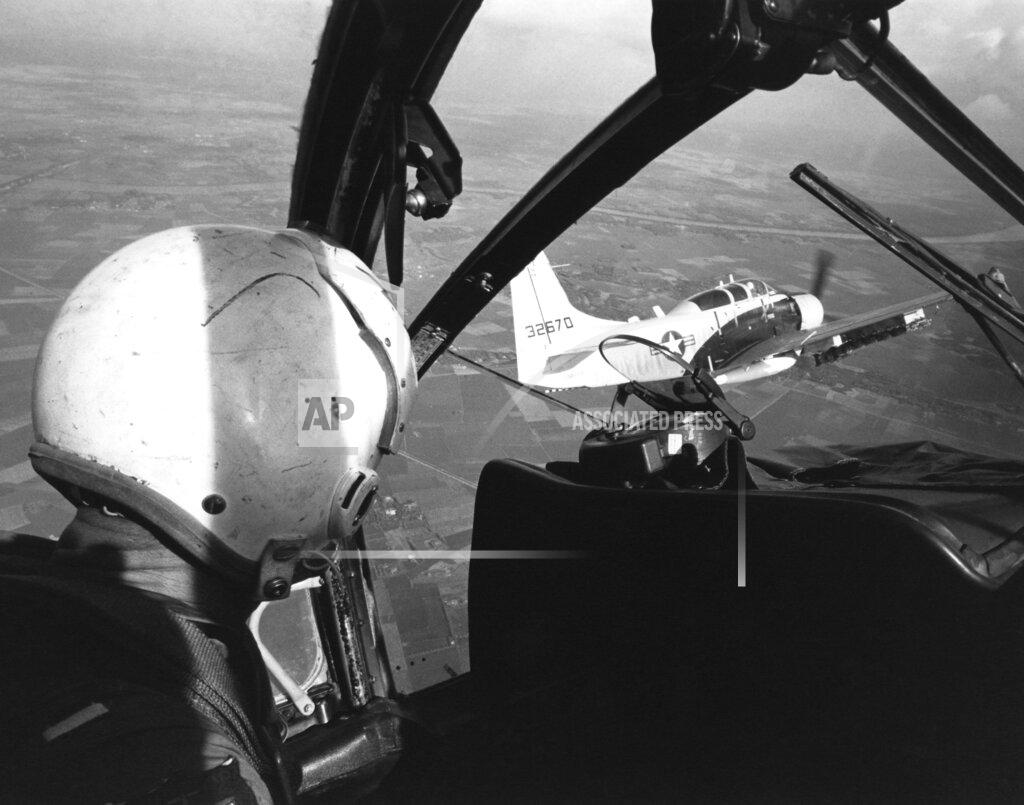
A report from Saigon says that the United States has suspended participation in advanced planning of non-routine operations until the status of U.S. aid is clarified, which in turn has been linked to restoration of the constitutional civilian government. Deliveries of major military supplies, even if previously programed, are not to be guaranteed. The restraining order was a concrete step to back up Ambassador Maxwell D. Taylor’s warning that the American commitment in the Vietnam war would be subject to review if a clear constitutional structure is not restored to the Government following last Sunday’s military uprising. Day‐to‐day operations will not be affected immediately, the sources said, but any long‐range planning involving American participation has been halted.
The question of delivery of major supplies has not yet been forced because the schedule of material now in the pipeline does not call for significant deliveries for two or three weeks. Routine shipments of commodities for such economic aid as grains or cement have not been held up, officials said. Major items that are due to arrive next month are said to include replacement fighter aircraft and armored vehicles, supplies that would normally be turned over to the Vietnamese armed forces as a matter of routine because they merely replace similar items destroyed or in need of overhaul and repair. Qualified officials said the decision about turning over this already programed aid would not have to be made until the goods actually arrive in Vietnam. However, their delivery could not be considered automatic, they said.
High‐level discussions toward increasing American aid for new programs, including measures to reduce infiltration from Communist‐controlled sections of Laos and North Vietnam, were suspended immediately after the armed forces summarily dissolved the High National Council and arrested leading opposition politicians last Sunday morning. The new aid had been authorized by President Johnson during Mr. Taylor’s visit to Washington earlier this month. The Ambassador was conferring here on details of new programs when the military action brought the new political crisis to Vietnam. The United States promptly oposed the action by the Vietnamese generals, which American officials said imperiled the whole constitutional structure painstakingly built up during the last four months. From the American point of view, the military initiative set up the armed forces as a sort of super‐government competent to intervene in the political process whenever they were lispleased with what the politicians were trying to do.
The generals insisted that their action was directed only against the council, which had been bogged down in factional rivalries for weeks. The armed forces pledged to support the civilian Premier, Trần Văn Hương, and the chief of state, Phan Khắc Sửu. Mr. Taylor’s opposition to the action of the generals stirred strong reaction from the commander in chief of the armed forces, Lieutenant General Nguyễn Khánh, who promptly denounced Ambassador Taylor for intervening in Vietnamese affairs. The confrontation brought the most serious crisis in Vietnamese‐American relations since the last months of the regime of the late President Ngô Đình Diệm in the autumn of 1963. General Khánh, whose own position inside the military organization had weakened since he stepped down as Premier in October, apparently turned to an anti‐American campaign as a means of reasserting his leadership.
United States military officials today challenged critical statements made by an American army officer before he was killed in action December 12 against the Communist Việt Cộng. The officer, Captain John King, 32 years old, of Bradenton, Florida, said in a letter made public by his parents that his immediate superior had refused to forward his evaluation of the Vietnamese battalion to which he was attached. The report said the Vietnamese battalion commander and his unit were ineffective. An army spokesman said Captain King’s criticism of his unit — the Third Battalion of the 31st Regiment of the 21st Division — “was no new revelation” He said the unit had been rated “combat ineffective” in September and added that the captain had been informed of the status of the men and equipment before he was assigned there October 20.
Communist China chortled delightedly this week over the hassle in Saigon between Vietnamese generals and United States officials. The political confusion was cited as proof that a Communist victory in South Vietnam was inevitable. From the outpourings of Radio Peking it is possible to detect the outlines of Chinese Communist strategy in Vietnam. Broadly speaking, the strategy turns on deterring any extension of the confllct that would involve a direct confrontation between Communist China and the United States. Meanwhile, the Việt Cộng guerrilla campaign is to be pressed and political dissolution in Saigon spurred until the United States retires from the scene, out‐maneuvered and psychologically exhausted.
The exasperated excnanges between United States officials and Lieutenant General Nguyễn Khánh, leader of the generals who dissolved the civilian National High Council, suggested that Machiavelli would have been proud of his pupils in Peking. Earlier in the week, before the Saigon imbroglio developed, Peking had been more intent on discouraging the United States from extending the war in South Vietnam. This had been in response to hints nn Washington and Saigon that the United States might strike at Việt Cộng supply bases in North Vietnam or at the Hồ Chí Minh Trail. The trail, which is a complex of roads and jungle tracks through Southern Laos, is the main avenue by which North Vietnam has been sending fighting cadres and supplies to the Việt Cộng. “Should the United states attack North Vietnam, the Chinese people will not sit idly by! Aggression against North Vietnam is aggression against China!”
Senator Frank Church has called for major changes in United States policy on Asia. The Idaho Democrat, a member of the Senate Foreign Relations Committee, said that the United States should not have intervened in Vietnam following the French defeat there in 1954. He recommended neutralization of Southeast Asia as a proper objective for the United States and suggested that a role be found for the United Nations as a guarantor of national boundaries in that area. Senator Church said that he hoped that the United States would never be forced to withdraw, but that if it came to that“we must be prepared for that possibility.”
“Neutrality for all of Southeast Asia, for the whole of that great peninsula, is a proper objective, providing that it is not a camouflage for a Communist takeover,” he said. Senator Church opposed proposals for extending the Vietnamese war to North Vietnam. He said it was “folly” to believe that escalation of the war to the north would save the situation in the south. In addition, he expressed the belief that expansion of hostilities to the north would inevitably bring the Chinese Communists into the war.
Phoumi Nosavan, the Laotian Deputy Premier, told South Vietnamese officials during a visit here this week that Laotian air strikes against Communist supply routes to South Vietnam had begun, reliable sources said today. These sources quoted General Phoumi Nosavan as having said that Laotian planes were making fairly frequent bombing flights over the Hồ Chí Minh Trail, which cuts through southern Laos from North Vietnam. The general is reported to have said that immediate results could not be expected because of the rough terrain and the difficulty in spotting Communist guerrillas along the trail, which is named after the leader of Communist North Vietnam. The Laotian general, who heads the right‐wing faction of his country’s coalition government, refused to comment on the possibility of joint Vietnamese‐Laotian air strikes on the trail at a news conference yesterday before departing for Vientiane, the capital of Laos.
Hsinhua, the Chinese Communist press agency, said today that Tchepone, a town on the Hồ Chí Minh Trail in southern Laos, was strafed and bombed December 21. Hsinhua said that six T‐28 planes “dispatched by the United States and its lackeys” inflicted property losses. Tchepone is in Savannakhet Province. The agency also broadcast a charge by the pro‐Communist Pathet Lao forces that United States and allied aircraft had bombed and raided its Xiangkhouang Province in north central Laos more than 100 times since December 1, wrecking temples, schools and houses.
The two nervous days that have followed the arrest of a newspaper editor in Vientiane have underscored again the widening rift between the Laotian police force and the right‐wing army. High‐ranking Laotians spent an anxious Christmas Eve and holiday yesterday awaiting a showdown. Many were not in their own homes last night, one informed observer said of officials who were in hiding from enemies real or imagined. By late today, the air of tension was passing, but the rift between General Kouprasith Abhay and General Siho Lamphouthacoul, who staged a coup last April, was still deep. They in turn symbolized the more bitter rivalry between General Phoumi Nosavan, the Deputy Premier and Finance Minister, and the influential Sananikone family.
The episode began at 10 AM Thursday with the arrest of Sophal Bouphasiry, editor of Sieng Mahason. He had written an editorial charging that the police were not only negligent in reacting to a crime wave but also were actively involved in widespread thievery. The newspaper is controlled by Oun Sananikone, the most outspoken and most right‐wing of three brothers who hold important government posts. As head of the Laotian police forces, 29‐year‐old General Siho Lamphouthacoul ordered the editor arrested and taken to police headquarters at Phone Kheng.
Cambodia charged today that a Thai police vessel violated her territorial waters in the Gulf of Siam and seized a small boat carrying four men, forcing it to enter Thai territory. The Foreign Ministry sent a protest to Bangkok through the Indonesian Embassy, which handles Cambodian affairs in the Thai capital. It demanded that the men be released immediately.
A military source said a band of Free Cambodia raiders based in Thailand attacked the village of Thkem Romeas in Siem Reap Province on the Thai border Wednesday night. Two soldiers and a provincial guard were said to have been killed, three others wounded and seven kidnapped. The Cambodians have long charged that the Free Cambodia radio, which broadcasts anti ‐Government statements, operates from South Vietnam with United States backing.
British jet fighter planes strafed the Pontian marshes of Johore state in Malay-a today. The area is believed to be the hide-out of Indonesian infiltrators.
“The prospect of Red China’s domination of the world, in time, is good if relations continue bad between this country and Russia.” This is Arnold Toynbee’s view. The British historian, nearly 76 but looking younger, was relaxed in slacks and house slippers as his pronouncements fell, one by one. General de Gaulle is “a very annoying man,” in some respects “almost childish.” President Johnson is a master politician, with the chance for a significant place in history. On Gamal Abdel Nasser, President of the United Arab Republic: “I myself rather like and admire him.”
Dr. Toynbee came to Colorado in September as visiting professor in history at the University of Denver, and lives in an apartment near the campus. With quick interest — almost before an interviewer could finish his question — Dr. Toynbee started his answer with “Yes, yes, yes,” and a peppering of “Isn’t it?” and “Don’t you think?” “China by the year 2000 should be able to match the technology of, say, Japan,” he said. “The Chinese have a world state viewpoint in their tradition.”
Last week, when the General Assembly was ready to accept a vague compromise on the Soviet Union’s $52.6 million debt to the United Nations, which would have saved face for all, the Soviet Union suddenly stepped up its demands. As a result the crisis over enforcement of Article 19 of the Charter, which bars members two years in arrears from voting in the Assembly, has again reached a critical stage. Unless another ingenious compromise‐within‐a‐compromise can be arranged, the United States and other members seeking to enforce Article 19 are now confronted with a disagreeable choice. Either they must drop their campaign in return for Moscow’s promise to donate an undisclosed amount at an unknown time, or they must go ahead with the showdown that was narrowly averted when the 1964 session opened a month ago.
The compromise resolution that Alex Quaison‐Sackey of Ghana, the president of the Assembly, intended to submit last Wednesday, has been accepted by the United States despite several important changes made to meet objections by the Soviet Union. Basically, it was an appeal for volunteer contributions by all members, whether they have paid their assessments for the United Nations Congo and Middle Eastern peace‐keeping forces or not, as a means of getting around Article 19. The resolution was also to constitute an agreement between the United States and the Soviet Union for negotiations on the constitutional problem which is at the heart of the matter — whether the Security Council or the General Assembly, or both together, will have jurisdiction over future peacekeeping forces. Despite its fuzziness the Quaison-Sackey plan offered some sort of safeguard against the possibility that the Soviet Union might evade the penalty by paying only a fraction of what it owes.
Representative Richard S. Schweiker, Republican of Pennsylvania, proposed steps today that he said both the United Nations and President Johnson could take in connection with the “persecution and deprivation” of Jews in the Soviet Union. In a letter to Secretary of State Dean Rusk, he suggested that the United States request an investigation by the United Nations Subcommittee on the Persecution and the Protection of Minorities. He also urged that Mr. Johnson seriously consider including in his State of the Union message an expression of how Jews are treated in the Soviet union.
A growing reversal of the policies of former Premier Nikita S. Khrushchev, especially in agriculture, was‐extended today to the field of literary criticism. The literary‐union newspaper Literaturnaya Gazeta published a laudatory review of Yefim Dorosh’s essay “Half Rain, Half Sunshine,” which gives what is widely regarded as a realistic depiction of the countryside of central European Russia. The essay, published last summer in the liberal literary monthly Novy Mir, was violently attacked in the Soviet press just before Mr. Khrushchev’s overthrow in October as misrepresenting life in rural areas.
Bandits wielding knives and guns killed a security policeman in a violent Soviet courtroom battle recently, the military newspaper Krasnaya Zvezda reported today. It said 15 men staged an attack on the court in an attempt to free two men who were on trial on murder charges. The paper did not say when or where the clash took place, but its report indicated it was somewhere in Soviet Central Asia, probably in Kirghizia, close to the Chinese border. The newspaper said Tursun Rustamov, 21‐year‐old member of the internal security forces, was shot while trying to save the four other members of the courtroom guard. The bandits were reported to have rushed the judge’s dais on the 18th day of the trial and attacked the guards. The newspaper said the guards had been unable to open fire because the courtroomm was crowded with spectators.
Official reports published in Karachi today said the Indian army committed 11 ceasefire violations in Pakistan‐held Kashmir Tuesday and Wednesday. Two Indian soldiers were said to have been killed and a Pakistani civilian wounded.
Pakistan’s armed forces were on the alert today to guard against disturbances as election tension continued to mount. The 17‐year‐old nation will hold its first Presidential election a week from today. Two principal candidates are vying for the Presidency of the world’s most populous Moslem country. They are the incumbent, Field Marshal Mohammad Ayub Khan, and Miss Fatima Jinnah, a 71‐year‐old spinster. Miss Jinnah is a sister of Mohammed Ali Jinnah, the founder of Pakistan. Though relatively few of Pakistan’s 110 million people will have a direct voice in choosing the President, people everywhere are wearing partisan symbols — a flower for President Ayub or a tag with a picture of a kerosene lantern for Miss Jinnah. Clashes between “lanterns” and “flowers” have been reported with increasing frequency throughout the country.
Under the indirect system of elections instituted by President Ayub, the voting next Saturday will be done by only 80, 000 persons. These are Presidential Electors, chosen in nationwide balloting last month. Each elector represent a constituency averaging fewer than 300 families. One of Miss Jinnah’s campaign promises is to end the indirect system of voting and abolish most of the President’s powers. She wants to restore the parllamentary form of government that prevailed before Field Marshal Ayub took power in a military coup in 1958. President Ayub has charged that if Miss Jinnah wins Pakistan will again face chaotic conditions and recurrent crises of successively weaker coalition governments, as occurred before he took power. The President’s position is that most Pakistanis, 85 per cent of whom are illiterate, do not want parliamentary debates but do want a strong central government and stability.
Italy’s presidential electors appeared to be in total disarray and renewed deadlock tonight after 18 attempts to elect a new President of the republic. An effort to promote Foreign Minister Giuseppe Saragat, a moderate proWestern leftist, as a compromise candidate failed. Mr. Saragat’s candidacy foundered because neither the Christian Democratic party, the dominant partner of the present center‐left coalition government, nor the coalition itself could achieve unity behind him. Only about 270 of the 390 Christian Democratic presidential electors‐Senators, Deputies and regional representatives — followed the decision of the party leaders to support the 66‐year‐old Democratic Socialist Foreign Minister. Mr. Saragat’s own party electors voted solidly for him, but he won only 311 votes, 71 short of the majority of 482 required for election in the 963‐member National Assembly.
Lesley Ann Downey, 10, was abducted by “Moors murderers” Ian Brady and Myra Hindley in Manchester. They murdered her that evening and buried her body in a shallow grave on Saddleworth Moor the following morning. Brady and Hindley visited a funfair in Ancoats on 26 December 1964 and noticed that 10-year-old Lesley Ann Downey was apparently alone. They approached her and deliberately dropped some shopping they were carrying, then asked her for help in taking the packages to their car, and then to Wardle Brook Avenue. At the house, Downey was undressed, gagged and forcibly posed for photographs before being raped and killed, perhaps strangled with a piece of string. The attack was recorded on a reel-to-reel audio tape, with both Brady and Hindley’s voices appearing, as their victim screamed and begged for mercy. Hindley later maintained that she went to run a bath for Downey and found the victim dead when she returned; Brady claimed that Hindley committed the murder. The following morning Brady and Hindley drove Downey’s body to Saddleworth Moor and buried her — naked with her clothes at her feet — in a shallow grave.
France’s National Assembly voted unanimously to approve Law No. 64-1326 on Crimes against Humanity, declaring that there was no statute of limitations on crimes against humanity and war crimes. This law replaced a previous law that had a 10-year statute of limitations for crimes against humanity. The French Supreme Court ruled that the new law was consistent with the principle that civilized nations recognize that crimes against humanity are never extinct.
The Interior Minister, Godefroid Munongo, said today that he had mustered the support of 200 tribal chiefs against the Communist‐backed Congo revolt. Mr. Munongo, who arrived by plane this afternoon on an inspection of East and North Katanga Provinces, also said he would impose a state of emergency in some Congo areas in a drive against the rebel forces. He had just concluded a meeting with 200 tribal chiefs who answered his appeal a week ago for support against the rebellion.
Leaders of the southern Sudan’s black African population said today that they were opposed to the use of Sudanese territory for aid to the rebels in the neighboring Congo. Algerian, Egyptian and Ghanaian arms shipments to the Congo rebels have been landed at the Sudanese city of Juba. There the arms are turned over to Congolese rebels who have crossed into Sudanese territory.
The United States appears to be unwilling to prosecute a high‐ranking foreign official in Miami and a number of other persons for allegedly smuggling war materials. The case involves the reported transfer to Haiti last September of two T‐28 warplanes — single‐engine craft adaptable for patrol and anti-guerrilla operations. The reluctance to prosecute is said to result from a fear that a trial might expose techniques of the Central Intelligence Agency. The prosecution of Rudolph Baboun, Haiti’s consul‐general in Miami, is also being prevented by what was described as the State Department’s concern that his possible conviction and expulsion might lead to reprisals against members of the United States Embassy in Haiti.
President Johnson worked today on passages of his State of the Union Message. Four of his special assistants arrived at the LBJ Ranch to work with him on “various staff problems, various Federal personnel problems and the State of the Union,” said Malcolm Kilduff, associate White House press secretary. They were Horace Busby, Bill D. Moyers, Jack J. Valenti and Richard N. Goodwin. Mr. Goodwin and Mr. Busby often help write important speeches for the President. However, Mr Johnson’s assistants all wear many hats and any staff member may contribute work on major messages. Mr. Goodwin’s arrival was viewed as a sign that work on the State of the Union Message was well along and that Mr. Johnson would probably be polishing and altering passages of it.
The President will deliver the message at 9 PM Monday, January 4, the day the 89th Congress convenes. He is expected to outline his “Great Society” legislatiye proposais in the speech. He will call for greater effort and expenditure to improve education and for increased effort in the antipoverty program. He will call again for a program of medical care for the aged and will ask for a reduction in excise taxes.
Mr. Johnson will be the first President to deliver a State of the Union Message at night since Franklin D. Roosevelt, one of his political idols, did so in 1936. The time will assure him of a wider television audience. The President, who arrived at the ranch last Sunday, is as tanned as one of his ranch hands after four days of outdoor work on his new Federal budget with Cabinet members and heads of Federal agencies. Officials have disclosed that he has cut billions of dollars from departments’requests. By law the budget is to be submitted 15 days after Congress convenes. The next day Mr. Johnson is scheduled to submit his annual Economic Message.
There is a familiar ring about the news from Texas, where President Johnson is going through the annual process of making the major decisions on the forthcoming budget and trying to keep total spending from going into the stratosphere. But this year there is a dif ference. For the basic budgetary decisions, both those on spending and those on taxation are being taken not with a view to balancing expenditures and receipts but with a view to providing just the right amount of stimulus to the national economy next year — stimulus that requires a planned deficit in the budget. This is a major breakthrough for American economic policy — a breakthrough that began with the enactment of the historic $14 billion tax cut early this year even though the budget was already in deficit. The President defined the new era recently when he said his Administration had adopted “an over‐all budget policy that promotes balance between purchasing power and productive capacity.”
A belated Christmas present is coming up for thousands of businessmen: a ruling that will result in tax savings of $200 million to $400 million. It will come about mid‐January so that company officials can make plans for the returns they file in July. Treasury sources said today the ruling, which will involve changes in the way companies report deductions on equipment, previously was scheduled before December 1. Lack of data on some aspects of the ruling caused the delay. Treasury officials have met with scores of representatives of companies and industry organizations over the last few months to discuss a tax deadline, which falls next July for most companies. The ruling grew out of the depreciation regulation of 1962 which permitted businessmen more liberal deductions.
The crest of a huge swell of water rolled down the Columbia River today after posing the threat of a major flood disaster in the Portland‐Vancouver, Washington, area. Forecasters and the Army Corps of Engineers said the Willamette River and the Columbia, which flow together in the Portland ‐ Vancouver area, were dropping at the rate of more than one inch an hour. The dikes, which held back the Columbia from lowlands in the North Portland area, were holding fast. “We’re going to get through,” a spokesman for the Army Engineers said. The Willamette fell below the sandbagged seawall that held back the water from downtown Portland on Christmas Day. There was considerable damage to riverside property, particularly in Portland suburbs.
Floodwaters were subsiding elsewhere throughout Oregon and the West today. But thousands were homeless. The unusual weather combination that had left more than 40 dead did millions of dollars of property damage in the West Coast states. The floods began last Tuesday after an unusually heavy and wet snowfall smothered much of Oregon and Washington. The weather then warmed rapidly and heavy rains began to fall. Up to three inches fell in a 24‐hour perior in some coastal areas. The rain and the rapid melting of snow sent small tributaries over their banks. The situation was further complicated for coastal communities by the highest tides of the year, which backed up streams emptying into the Pacific.
Northern California was braced today for more rain that was expected to hamper rescue and clean‐up operations in scores of devastated communities. More than 14,000 persons were homeless and property damage was estimated in the millions of dollars in the Far West’s five‐state floods. Floodwaters were receding in some California areas. But colder temperatures were forecast, promising more discomfort for about 7,000 flood refugees. Mountain areas, especially the Sierra on the Nevada‐California border, refroze, reducing flood threats from melting snow.
Northern college students who are rebuilding a burned‐out Black church in Ripley, Mississippi said today that a pistol was fired at one of them during the night by white men who had been tossing fire crackers from a car. No one was hurt during the incident, but before it ended one of the students was arrested for traffic violations and fined $57. The 29 students, most of them from Oberlin College in Ohio, are spending their Christmas vacation rebuilding the Antioch Baptist Church in this rural town. The church was burned to the ground last October. Last night’s excitement erupted in an atmosphere of quiet anxiety that has prevailed here since the “Carpenters for Christmas,” as they call themselves, began arriving a week ago.
Shortly after midnight, three or four white men began driving back and forth past the construction site, throwing cherry bombs from the car windows. Several of the big firecrackers landed near an abandoned store across the road, where four of the students were standing guard duty. As the harassment continued, one of the young men left the store on foot for a nearby house to telephone the Tippah County Sheriff, Wayne Mauney. Prof, David W. Jewell of the School of Theology at Oberlin gave this account of what hapened next:
Another of the four student sentries, Jerry von Korff of Minneapolis, became concerned about his companion who had gone to telephone. Mr. von Korff got into an automobile owned by one of the students and drove off in search of his friend. The firecracker throwers took off in pursuit of Mr. von Korff, who soon decided to turn around and return to the guard post across from the church. He swung the car into a driveway, but before he could back into the road again, the pursuing car pulled to a stop, partly blocking the exit. One of the men stepped from the chase car, brandishing a pistol. Mr. von Korff shifted into reverse, spun the wheel and backed into the road past the other car. As he headed for the church the man with the pistol fired at least one shot at his car.
Meanwhile, another of the students in the store, Dick Cooper of Cleveland, became worried about Mr. von Korff and set out looking for him in another car. Professor Jewell continued: As Mr. Cooper drove toward downtown Ripley, he stopped a passing automobile to ask whether its occupants had seen two cars driving in the area. These people said they had not, but promptly turned their car around and chased Mr. Cooper as he resumed his search. Mr. Cooper’s car lost its tail pipe and muffler during this chase, and as he approached a stop sign in Ripley his brakes failed and he crossed the intersection without stopping. The men in the pursuing car jumped out and grabbed Mr. Cooper when he stopped at the sheriff’s office. They made a citizens’ arrest, charging him with running the stop sign, speeding, reckless driving and driving an unsafe vehicle.
A deputy sheriff took Mr. Cooper before a justice of the peace, who fined him $57. The student was allowed to make one phone call. He called the pastor of the Antioch church, the Rev. John R. McDonald, who shortly afterward appeared at the sheriff’s office with money to pay the fine. At this point Sheriff Mauney walked into his office and breathed a sigh of relief when he saw Mr. Cooper. The sheriff had been searching the area for him since being alerted by other students. “I’ve been looking for this boy all around,” the sheriff said, “and here I find him in my own jail.” Professor Jewell said Sheriff Mauney had been “very cooperative.” “I don’t think he’s wild about our being here,” the professor said “but he’s doing his best to prevent troubie.”
Police officials in McComb, Mississippi denied today that the home of a Black woman was bombed Christmas night. Officers said some youths had been shooting firecrackers near the house. Civil rights workers asserted that an explosion had blown a small hole in the metal awning of the home of Mrs. Charity Brown.
Blacks are edging slowly into better jobs in scattered parts of the South. Plant visits and interviews with some 20 leading businessmen in several Southern states show that the economic forces of integration are shaping gradual changes in management attitudes. “We’ve integrated our rest rooms tor employes without any fuss,” says a bank president in Arkansas. “If I would find a qualified Black teller today, I think I’d hire him. It’s coming.” Job improvement for the Black still presents a highly erratic pattern. It depends on the location of the plant, the labor supply, the type of business and the thinking of management, among other factors.
For the first tame in the 75 years of North Dakota’s statehood, the Democrats will control one house when the Legislature convenes in Bismarck on January 5.
Hawaii Governor John A. Burns’s tax advisory committee has proposed a new tax program to produce an additional $34 million in revenue.
Mrs. John F. Kennedy and her two children were among a large contingent of the late President Kennedy’s family who arrived here today for a skiing vacation. The President’s widow, wearing a white cloth coat, and her children, Caroline, 7 years old, and John Jr., 4, were met by a crowd that a Stapleton International Airport official estimated at from 500 to 600. Secret Servicemen and policemen escorted them from the plane, which had been delayed briefly by rain and fog in takeoff from New York. Accommpanying Mrs. Kennedy were two of the President’s sisters, Mrs. Stephen Smith and Mrs. Peter Lawford. Also aboard were Mr. Smith and the couple’s child and Mrs. Lawford’s two children. A few minutes earlier, a plane arrived from Washingon with Senator‐elect Robert F. Kennedy of New York and five of his eight children. A chartered plane was standing by to take them to Aspen, a resort high in the Rocky Mountains west of Denver, but the flight was canceled because of a snowstorm. The Kennedys then chartered a bus and rode to Aspen.
Two persons were killed and six injured early today by a tornado that destroyed four house trailers at a trailer camp just south of Gray on U. S. 129 in middle Georgia.
Beatles single “I Feel Fine” goes #1 & stays #1 for 3 weeks
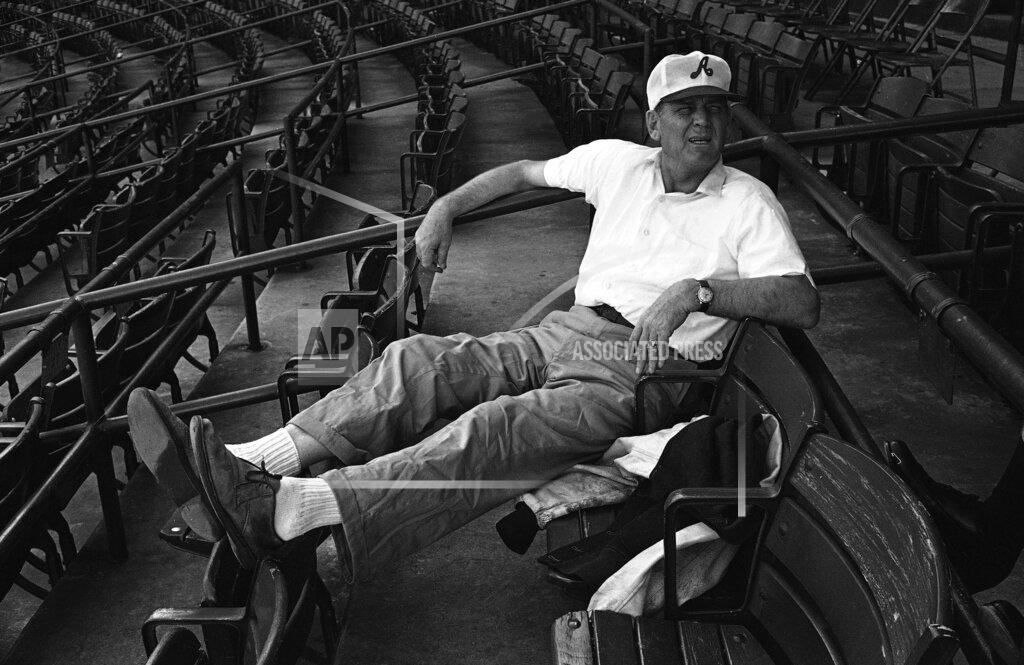
Bob Lemon is named manager of the Seattle Angels of the Pacific Coast League.
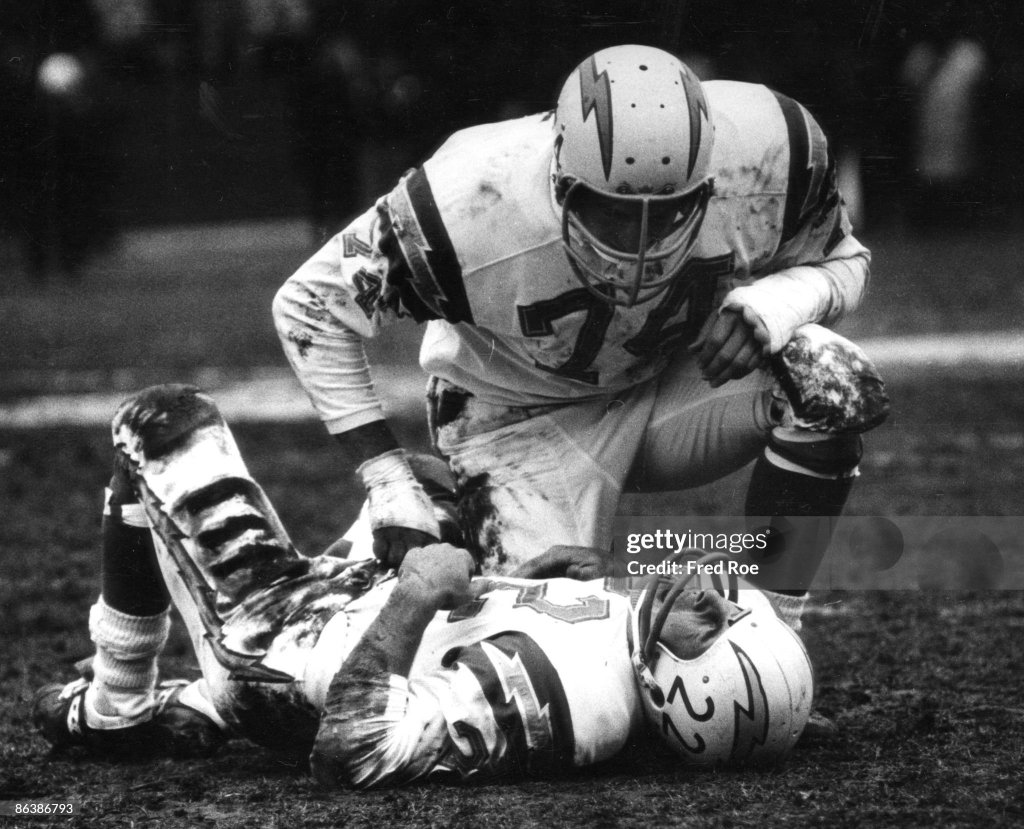
American Football League Championship Game:
San Diego Chargers 7, Buffalo Bills 20
The Buffalo Bills defeated the visiting San Diego Chargers, 20 to 7, to win the American Football League championship. San Diego opened the game with an 80-yard drive in four plays, but it was their only score as the Bills won for their first league championship. Combined with the next season, the Bills’ consecutive AFL titles are the only two championships ever won by a major league team based in Buffalo. One of the game’s most iconic plays was one known as the “hit heard ’round the world,” when Bills linebacker Mike Stratton laid a particularly hard hit on Chargers running back Keith Lincoln that broke a rib and forced him out of the game midway through the first quarter. Lincoln had over 330 yards of offense in the previous year’s title game and had already rushed for 47 yards, caught a pass for 11 yards, and kicked an extra point (as the reserve placekicker) in the first 6½ minutes. Without Lincoln and Alworth, the San Diego offensive attack was severely hindered. Bills’ fullback Cookie Gilchrist rushed for 122 yards on sixteen carries, while quarterback Jack Kemp completed ten of twenty passes for 188 yards and scored a fourth quarter touchdown on a sneak. Rookie kicker Pete Gogolak added two field goals in the first half. War Memorial Stadium was filled with a sellout attendance of 40,242.
Born:
Jeff King, MLB third baseman, first baseman, and seocnd baseeman (Pittsburgh Pirates, Kansas City Royals), in Marion, Indiana.
Scott Curtis, NFL linebacker (Phialdelphia Eagles, Denver Broncos), in Burlington, Vermont.
Elizabeth Kostova, American author (“The Historian”), in New London, Connecticut.
Colleen Dion-Scotti, American actress (“Search for Tomorrow”), in Newburgh, New York.





 History Diaries