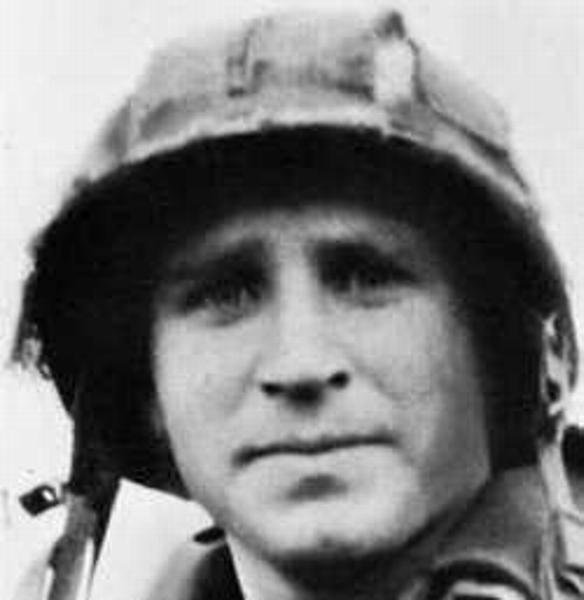
Silver Star
Citation:
The President of the United States of America, authorized by Act of Congress, July 8, 1918 (amended by act of July 25, 1963), takes pride in presenting the Silver Star (Posthumously) to Sergeant Emmett Harvey Horn, United States Army, for gallantry in action while engaged in military operations in the Republic of Vietnam, while serving as a Heavy Weapons Leader, Detachment A-113, 5th Special Forces Group (Airborne), 1st Special Forces, in action on 23 December 1964, in the vicinity of A Sầu (A Shau), Republic of Vietnam. On that date, Sergeant Horn was accompanying a combat patrol of the Army of the Republic of Vietnam on a military mission through enemy controlled territory when the friendly element was ambushed by the Việt Cộng. Despite the vulnerable position of the patrol as it was passing through a valley with the enemy positioned in the surrounding hills, Sergeant Horn bravely exposed himself to the heavy Việt Cộng automatic weapons fire by placing himself in a forward position and directing the patrol’s move from the defile in which they were ambushed to terrain more suitable for defense. Then, with fortitude and determination, he moved from position to position to establish a defense perimeter, to direct the fire of the friendly troops, and to administer first aid to the wounded members of the patrol. When one of the friendly mortar crews encountered difficulty in directing their fire, he personally employed the 60-mm. mortar in direct fire against Việt Cộng troop concentrations to dislodge them. After the successful defense was established, he continued to display his courageous actions and, while moving from his command post to the position of the Vietnamese leader to recommend the next movement of the patrol, he was mortally wounded by enemy gun fire. Sergeant Horn’s conspicuous gallantry is in the highest traditions of the United States Army and reflects great credit upon himself and the military services.
Emmett is buried in Granger Cemetery, Orange County, Texas. He is honored on the Wall at Panel 1E, line 78.
A United States Army adviser, Sergeant Emmett H. Horn, was killed today by Việt Cộng fire and another American was reported missing. The American slain was an enlisted, man. He was accompanying a patrol that ran into a Việt Cộng platoon of about 40 men at A Sầu (A Shau) near the North Vietnamese border. He was shot in the head and died in a helicopter that was evacuating him, military sources said. He was the 239th American to die in combat in Vietnam since December, 1961
United States efforts to restore a constitutional facade to South Vietnam’s Government were stalled today as Ambassador Maxwell D. Taylor was accused of interference in the country’s internal affairs. Backed by a specific though brief statement of support from the State Department, Mr. Taylor met Premier Trần Văn Hương and other government leaders and again insisted that American aid to Vietnam was predicated on a promise of governmental stability and orderly political evolution. He emphasized that a change of the power basis such as occurred Sunday, when the armed forces abruptly dissolved the civilian legislature and arrested opposition politicians, was not consistent with the United States purpose in aiding Saigon against the Communist insurgency. The American stand brought the most direct clash with Vietnamese leaders since the veiled threats leveled against the regime of Ngô Đình Diệm before it was overthrown last. year. Foreign observers believe that the United States is more prepared now to back up its warnings with a reduction of support commitment than it was last year. Many Vietnamese believed, however, that the United States would back down when faced with an apparent fait accompli.
The most extreme expression of this view came yesterday from the armed forces Commander in Chief, Lieutenant General Nguyễn Khánh, who issued a public declaration of independence from what he implied was foreign manipulation. In private, he was more specifically anti‐American. According to informed sources, General Khánh, a former Premier, proposed a positive anti‐American campaign to the Armed Forces Council, a newly formed body of leading military commanders. The sources said General Khánh had asserted that American aid was not necessary to the Vietnamese people. He urged that United States policy be criticized openly and repeatedly, proposing further that the military assist in the preparation of anti‐American demonstrations in the streets of Saigon. Pursuing this personal policy, General Khánh gave a correspondent of The NewYork Herald Tribune a series of outspoken condemnations of Ambassador Taylor, whom he denounced for alleged meddling in Vietnamese politics.
General Khánh’s reported remarks brought an immediate response from a United States Embassy spokesman: “Ambassador Taylor has undertaken no activities which can be considered improper in any way in view of the United States involvement and commitinent in this country,” said the spokesman, Barry Zorthian. All his activities are designed to serve the best interests of both Vietnam and the United States.” The two key questions were General Khánh’s motives for taking this tack and whether other military commanders, particularly the so‐called Young Turk group of officers, supported his stand. The motivation seemed to be a desire to reassert the influential position General Khánh had held, with fullest United States support from late January to August. He seized power January 30 and dominated the Government as Premier, later President, until Buddhist‐led agitation in Saigon forced him out of office.
Secretary of State Dean Rusk suggested today that the United States would be forced to curtail its aid to South Vietnam if a unified government were not re‐established in Saigon. Mr. Rusk appealed to the factions in the Southeast Asian nation to put aside “personal rivalries” for the sake of maintaining the strength and unity of the country. “Unity,” he declared, “would be worth many, many divisions.” He called it a “primary requirement” for establishing the security and independence of South Vietnam against the Communist insurgents. Mr. Rusk discussed the deteriorating political situation in South Vietnam in cautious, general terms during a news conference at the State Department.
The conference was arranged before the South Vietnamese military forces had provoked the crisis by challenging the authority of the civilian government, and Mr. Rusk appeared to take pains not to worsen the crisis by saying anything too openly critical of the military. He returned repeatedly to the theme of the need for unity between civilian and military authorities in South Vietnam. Only obliquely, and then in conciliatory tones, did he suggest that the initiative for restoring unity must come from the military and, in particular, Lieutenant General Khánh, Commander in Chief of the South Vietnamese armed forces. Mr. Rusk observed that it was the military that took the initiative last summer, when General Khánh was Premier, in creating the civilian government, with the understanding that the military would restrict its own activities to the war against the Việt Cộng.
President Johnson told the more than 22,000 Americans serving in South Vietnam today that “your sacrifices are known and honored” in the United States. In a special Christmas message to the American mission, Mr. Johnson said that “in every generation the burden of protecting liberty has fallen to a few stouthearted men.” His message is to be posted on bulletin boards or read to the Americans in the war‐torn country: the helicopter crews, the military advisers serving with Vietnamese troops, the supply pilots, the aid employes who work in the provinces, the diplomats and the wives and children. As of today, 239 Americans have been killed in combat‐associated incidents in Vietnam and many hundreds wounded. Mr. Johnson’s message expressed “warmest Christmas greetings.” He said Americans celebrating Christmas at home were mindful of and grateful to “you who toil today where there is no peace. Future generations in many lands will spend Christmas Days in freedom because there are men everywhere who are equal to this grim challenge in our time.”
Bob Hope and his Christmas troupe arrived in Vietnam today. Their airplane landed at an undisclosed base to prevent possible Communist attack and they staged their first performance for the G.I.’s at once.
The new United States Ambassador to Laos, William H. Sullivan, presented his credentials today to King Savang Vathana along with a promise for continued assistance to the Laotian Government in its war against Communism. But while the ceremony was taking place at the royal capital, Luang Prabang, this morning, the attention of most Laotians continued to focus on Saigon. Speaking of Laos, one French diplomat said, “This is a country afraid of its own shadow.” “For Laos,” he added, “that shadow is South Vietnam.” This week’s military coup in Saigon has distressed both Western and Laotian Government officials.
“There’s no point in kidding ourselves,” one high‐ranking American said. “We can have military victories and the most enlightened aid program here, and it doesn’t mean a thing if South Vietnam falls.” Western military sources have estimated that the combined forces of the Pathet Lao and North Vietnamese Communists could overun the country in 10 days to two weeks. Stopping them at present, according to current analyses, are the demands made in North Vietnam by the war in the South and the threat of direct intervention by the United States.
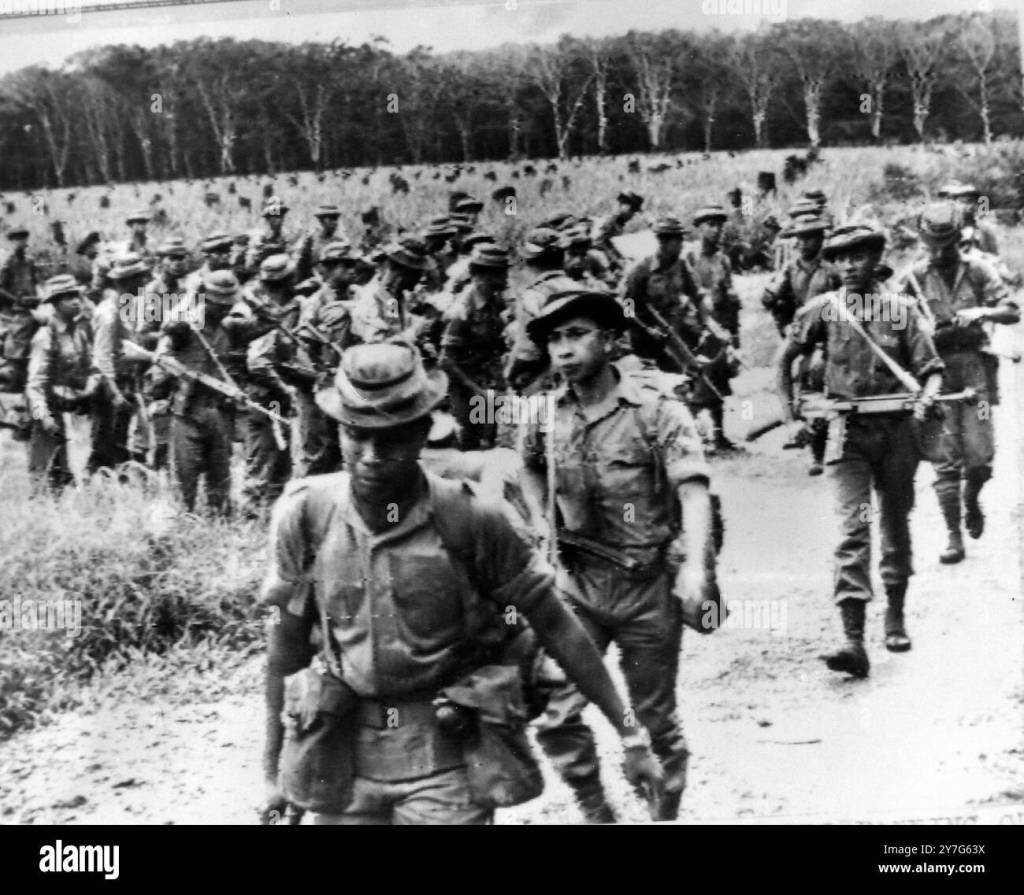
New units of Indonesian troops have been moved into Kalimantan, the Indonesian part of Borneo, opposite Sarawak in the last few weeks in what may be preparation for an increase in guerrilla raids along this section of the Malaysian border, official sources said here today. it was not yet clear whether these troops were replacing units engaged in guerrilla warfare or whether operations on a larger scale were planned. Military activity along the 800‐mile border Malaysia shares with Indonesia on the island of Borneo has dropped in recent weeks to the lowest level since Indonesia began her campaign to “crush” Malaysia 15 months ago. But with the presence of new units in the area opposite Kuching in Sarawak, Malaysian and British security officers were watching for a sudden reversal of this trend.
If the Indonesians choose to step up border attacks, it is expected that they will send in units of 300 to 500 men on probing raids, a Malaysian official said. About 10,000 British troops and Royal Air Force personnel are posted along the border in the Malaysian states of Sarawak and Sabah (formerly North Borneo). They are reinforced by units of Malaysia’s small armed forces. At the recent level of Indonesian activity, these troops have been able to seal the border, an official source contended. Britain and Malaysia have warned Indonesia that there is a “threshold” as yet not officially defined beyond which Indonesia cannot go without expecting retaliation. Britain is committed by military agreement to protect Malaysia. Intelligence estimates in the last week have expressed the belief that President Sukarno of Indonesia would not risk escalated war by crossing this threshold.
A cyclone in the Palk Strait between India and Sri Lanka killed 1,800 people in the two nations. Hardest hit was the Indian town of Dhanushkodi, on Rameswaram Island. Located in the Tamil Nadu state, Dhanushkodi had 2,000 residents and had been “a bustling coastal town with pilgrims, travellers, fishermen, tourists and others” and the site of the Hindu temple of Vinayaka; it would remain abandoned more than 50 years later. The dead included 115 people who had been riding on a six-car passenger train from Pamban to Dhanushkodi when the wave struck. More than 42 years later, on July 27, 2017, Dhanushkodi would be connected to its neighbors again with the opening of National Highway 87 in a ceremony presided over by India’s Prime Minister, Narendra Modi.
Prime Minister Harold Wilson rejected today a Chinese Communist proposal for a world summit conference to ban nuclear weapons. Replying to a note from Chou En‐lai, the Chinese Premier, Mr. Wilson said he did not believe that a conference of the leaders by all countries was the best way to make progress under the present circumstances. Detailed discussion and negotiation would be needed before a disarmament agreement could he achieved, Mr. Wilson said. The Chinese note was sent to Britain October 17.
New Soviet demands jeopardized today a plan under which the United Nations would try to resolve its financial difficulties by soliciting donations from the entire membership. Alex Quaison‐Sackey, the president of the General Assembly, canceled the meeting at which he was scheduled to submit his plan to the General Assembly. In essence, the Soviet Union demanded that the question of taking away its Assembly vote because it is $52.6 million in arrears be dropped in exchange for a Soviet promise to donate an unspecified sum to the organization. United States sources had termed any such arrangement “buying a pig in a poke.”
Under the conditions fixed by Moscow, the Assembly would resume normal voting procedure immediately after the adoption of Mr. QuaisonSackey’s proposal for raising funds. This plan would shelve indefinitely the question of taking away the vote of the Soviet Union and other members that have refused to pay assessments for the United Nations Congo and Middle Eastern forces, as demanded by the United States. Mr. Quaison‐Sackey canceled the Assembly meeting scheduled for today and called one for tomorrow as soon as he had been informed of the new Soviet demands. But later, after he had met for two hours with representatives of the United States, the Soviet Union and other countries, he put off the meeting until Tuesday.
President Gamal Abdel Nasser lashed back tonight at American criticism and delays on economic aid. He told the United States in Egyptian slang to “jump in the lake” if Washington disapproved of Cairo’s recent behavior. He also declared that the Egyptian people were ready to “cut our rations” and do without $140 million in American aid rather than let the United States dictate Egyptian policy. The President was replying to expressions of American irritation over the burning of the United States Embassy library in Cairo last month and the downing of an American oil company plane by Egyptian jets four days ago. The Egyptian leader accused the United States and Belgium of aggression in the Congo and rejected an appeal, reported to have been sent to him by President Johnson through diplomatic channels, that Egypt stop sending arms to the Congolese rebels. “Our policy is clear and we say it openly,” Mr. Nasser told a cheering crowd at Victory Day celebrations at Port Said. “We say that we sent arms to the Congolese people and we shall keep on sending arms to the Congo.”
Three Israeli border policemen were wounded today in the first shooting incident in eight years between Israeli and Jordanian forces on Mount Scopus in the Jordanian sector of Jerusalem. Israel holds an enclave that includes the old Hadassah Hospital and Hebrew University buildings on Mount Scopus. The acre is entirely surrounded by Jordanian territory and is supplied at agreed regular intervals. Today’s incident occurred after pickers had finished harvesting olives in a grove that the Israelis maintain is in their enclave, but which the United Nations Truce Supervision Organization says is in a contested area.
The United Nations had worked out an agreement under which the three Israeli policemen would oversee from a pre‐determined spot the harvesting of the olives by Jordanian peasants. According to the Israelis, after the olive pickers had left the grove, Jordanian forces opened fire with machine guns and rifles on the three Israeli policemen, wounding one seriously.
A grenade lobbed into a party of teen‐agers here tonight killed a 16‐year‐old British schoolgirl who had flown to join her parents in Aden for Christmas. A British High Commission spokesman identified the girl as Julia Sidey. He said four other persons had been injured. A series of bomb explosions in Aden earlier this month killed two British servicemen and injured 19 others. Aden is the hub of a group of British protectorates in southern Arabia, most of them linked in the Federation of South Arabia. Two Arabs were arrested after one recent incident on suspicion of activities for the National Front for the Liberation of Occupied South Yemen. Foes of the protectorates refer to them as “occupied South Yemen.”
The Foreign Minister of the former French Congo charged in the Security Council today that the United Nations was ruled by “the law of the jungle” and that small nations couldexpect only to be devoured. The official, Charles‐David Ganao, centered his attack on the United States and Belgium, but also lashed out at all speakers in the Council meetings who had not attacked the United States‐Belgian rescue mission to the former Belgian Congo. The Congo Republic, which Mr. Ganao represents, is a neighbor of the former Belgian Congo, where the Government of Premier Moise Tshombe, with the help of white mercenaries, is fighting externally assisted rebels.
Major Ernesto “Che” Guevara, Cuba’s Minister of Industry, said today his surprise visit here was only a prelude to a tour of “a certain number” of other African countries. In an interview published in Revolution Africaine, an official Algerian weekly, Major Guevara did not say what other African countries he planned to visit. However, Western sources have expressed belief that the Cuban, a specialist in guerrilla warfare, was in fact discussing Cuban participation in the Soviet‐backed Algerian program of helping the Congolese rebels. Other sources said Major Guevara’s incomplete itinerary included Tanzania, the Sudan, Mali, Guinea and Ghana.
“Wonderful Radio London”, a pirate radio station, commenced transmissions with American top 40 format broadcasting, from a ship anchored off the south coast of England.
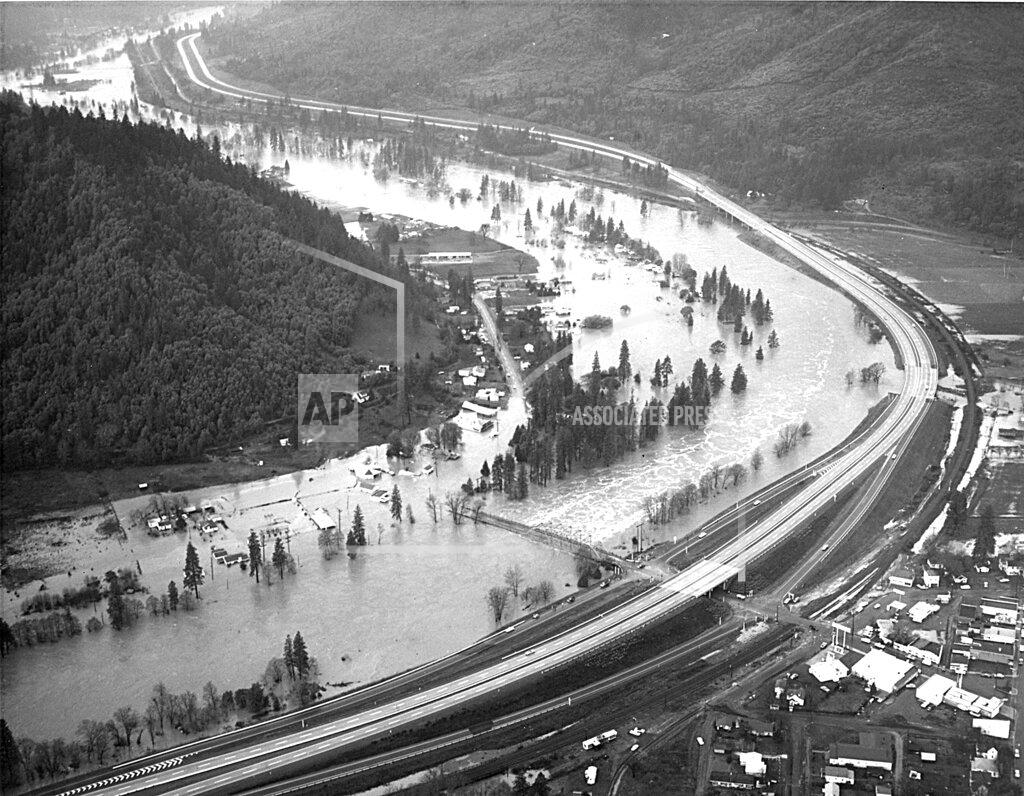
The worst floods in years swamped the Far West today, leaving thousands homeless or stranded. Debris‐filled flood waters receded in some places, but other areas braced for possible further disaster. At least 11 persons have died in two days of wind and rain in Northern California, Oregon and Idaho. The storm, spawned by a rare, warm tropical air mass moving in from Hawaii, came on the heels of a blizzard that raced across the Northern prairies last week. “In terms of totality and involvement of the entire state, this is the greatest disaster ever to hit Oregon,” Goernor Mark O. Hatfield said. New weather bulletins predicting less rain brought optimism to some areas, but elsewhere, especially in Oregon, rising rivers and streams caused increasing concern. “At this time, it appears that the worst is over in California, but the picture could change at any time,” said George Deatherage of the California Department of Water Resources. “If we get another heavy storm, we could be in more trouble.”
In Oregon the Willamette River continued to rise over the flood level, threatening about 4,200 homes in the Salem suburb of Keizer, where evacuations began today. State officials warned that food was in short supply in some areas and asked residents to buy no more than was absolutely necessary. Officers in Cassia County, Idaho, said the Dewey Dam had broken near Declo and was threatening the town with a 25‐foot wall of water. The earthfill dam is six miles east of the town of Marsh Creek. The town has a population of 700 persons. All are being evacuated. High waters and slides marooned two passenger trains, dozens of bridges were washed away and road and railway travel in many portions of the three states was at a standstill. A Coast Guard helicopter that disappeared last night during a rescue mission on the northern California coast was sighted late today near U.S. Highway 101, 20 miles north of Eureka. There was no immediate word on the fate of the three crewmen.
Governors Hatfield, Edmund G. Brown of California and Robert E. Smylie of Idaho dispatched National Guardsmen into flooded areas with orders to aid in evacuations, build defenses against further flooding and prevent looting. More than 6,000 persons fled their homes in a score of communities. Ga1e‐whipped rains that had soaked Northern California steadily for more than 48 hours gave way intermittently to sunshine today. A weather forecaster, L. B. Rasey, said a new storm was heading toward the coast from the Pacific but added, “It is not likely to be as strong as previous storms.” Lighter rains were also predicted for Oregon, but a spokesman for Governor Hatfield declared, “We are not yet prepared to say the worst is over.”
President Johnson was reported today to be planning cuts in foreign aid and Agriculture Department expenditures but considering a new pay rise for Government employes. It was also reported, after a third day of budget conferences at the President’s ranch, that Mr. Johnson would offer legislation calling for modest increases in second- and third-class postal rates and a law requiring businesses to sort first-class mail by zip code number. Budget Director Kermit Gordon said that in the budgetary meetings this week the requests of Government departments, which had totaled $108.5 billion, had been “very, very substantially” cut by Mr. Johnson. Mr. Gordon said that the President was “over the hump” in the process of preparing a budget for the fiscal year 1966, starting next July 1, but that some decisions still had to be made.
The President conferred today at his LBJ Ranch, 65 miles west of Austin, with Foreign Aid Adiministrator David E. Bell, Secretary of Agriculture Orville L. Freeman and Postmaster General John A. Gronouski. Mr. Johnson has no appointments for tomorrow. He plans to exchange gifts with his family on Christmas Eve. In a series of news conferences by Administration leaders this week, it has been learned that the budgets for the Defense Department, the Agriculture Department and Mr. Bell’s Agency for International Development — which are now spending $59 billion, or more than 60 percent of Government expenditures — will be down in the next fiscal year. In light of this, it appeared that the President had a fair chance of holding the new budget under $100 billion unless massive sums are requested for “Great Society” legislation.
At 2 AM on December 10, the night attendant at the Billups service station in Ferriday, Louisiana was startled by an explosion and fire in Frank’s shoeshop. An instant later the shop owner, Frank Morris, a 51year‐old Black, ran from the building, his clothing afire. The attendant put out the flames. Before he died in Concordia Parish Hospital from burns over 90 per cent of his body, Mr. Morris said that he had found two white men in the shop pouring gasoline about. When he tried to flee, he said, one of the men forced him back inside with a shotgun. The fire followed. The Federal Bureau of Investigation is said to have his story on a tape recording. Mr. Morris, who lived in a small annex at the rear of the shop, apparently went into the shop after being awakened by a noise.
Mr. Morris gave his account to a Ferriday white citizen who visited him in the hospital, where Mr. Morris died four days after the explosion and fire. Despite the reported tape in the hands of the FBI, local authorities will not concede that foul play was involved. “Don’t call it arson,” Mayor L. W. Davis said. “That has not been determined.” Mr. Morris was a man of varied interests and it is possible he could have acquired enemies in the course of his business. However, the crime has aroused suspicions because it occurred in an area of unusual racial tensions and because it fit the pattern of terror that has been carried out only a few miles away in southern Mississippi. The FBI, the chief investigator of racial violence in the South, has shown considerable interest in the case.
In Washington, seventeen liberal Democrats joined today in supporting a plan to bar the seating of all five members of Mississippi’s delegation to the House of Representatives on January 4. Representative William Fitts Ryan of Manhattan, spokesman for the group, announced that a resolution to that end would be offered on the opening of the new Congress. The resolution, if adopted, would prevent the Mississippians from taking their seats pending the settlement of challenges filed earlier this month by the Freedom Democratic party. The Freedom Democratic’ party, a predominantly Black Mississippi organization, contends that the elections were illegal because many Negroes were not permitted to register and vote. “Few Americans can doubt,” Mr. Ryan said, “that Mississippi has systematically, through unconstitutional laws, illegal administration and violence, denied American citizens the right of vote.”
The National Association for the Advancement of Colored People extended last night its campaign of economic pressure against the State of Mississippi to include consumer products. In a bulletin mailed to the 1,800 units of the association, its executive director, Roy Wilkins, included a list of more than 80 products manufactured or processed in the state. “Members and friends” of the association were invited to use their “right of free choice” on the products. A spokesman last night said this language was a “circumlocution” for what would generally be considered a boycott against Mississippi products.
National headquarters of the association said it had compiled the list of finished products and parts in carrying out a resolution of the national convention, held last June in Washington. “The convention resolution calls for a genuine concerted effort in every branch to see that the economic protest against Mississippi‐ism is widespread and effective,” Mr. Wilkins told the chapters. The drive against general consumer products is a new step in a series of moves made by the civil rights organization to put pressure on Mississippi to improve the lot of Blacks in that state.
The Rev. Dr. Martin Luther King Jr., the American civil rights leader and Nobel Peace Prize winner, said in a television interview tonight that the United States might have a Black President within 25 years. In the interview, filmed December 5 when Dr. King stopped here on his way to Oslo to receive the Nobel Prize, he said that many Blacks would now be qualified for the office of President, though social prejudices would make the election of a Black difficult. “However, I am very optimistic about the future,” he said. “Frankly I have seen certain changes in the United States over the past two years that surprised me.”
Dick Gregory arrived aboard a silvery cargo plane from Chicago today with 6,000 pounds of Christmas turkeys needy Blacks, whites and Indians in Mississippi. The purpose of the “turkey lift,” the Black comedian said, was not to emphasize poverty in Mississippi, but “to call attention to poverty in America. Period.” The first turkey went to a white man in Winston County.
Treasury agents and Muncie, Indiana policemen seized a cache of submachine guns and ammunition yesterday and arrested the man at whose home the weapons were found. Wallace R. Chrich, 27 years old, of Muncie, was arraigned today before the United States Commissioner. He was charged with illegal possession of machine guns in violation of the National Firearms Act. He was released on $2,500 bond. In some instances, these weapons may be owned legally. Two Treasury agents and two Muncie detectives called on Mr. Chrich yesterday with a search warrant. They asked if he had any automatic weapons.
Lenny Bruce, the comedian sentenced to four months in jail in Criminal Court for giving obscene performances, obtained a certificate of reasonable doubt yesterday in Supreme Court and was released in $50 bail pending appeal.
Dow Jones Industrial Average: 868.02 (-2.34)
Born:
Eddie Vedder, American singer and guitarist for Pearl Jam (Pearl Jam – Ten; “Jeremy”, “Black”; “Daughter”), in Evanston, Illinois.
Andy Gabel, American short track skater (Olympics 1994), in Chicago, Illinois.
Petr Klíma, Czech NHL right wing, 1985-99 (NHL Champions, Stanley Cup-Oilers, 1990; Detroit Red Wings; Edmonton Oilers, Tampa Bay Lightning, Los Angeles Kings, Pittsburgh Penguins), in Chomutov, Czech Republic (d. 2023)
Tony Roper, American NASCAR driver (killed in auto race, 2000).
Died:
Arrigo Pedrollo, 86, Italian composer.



 History Diaries