The foreign leaders who have met with President Ford in recent months say they have been impressed with his honesty, his personal warmth and his grasp of issues. A survey by correspondents of the New York Times in West Germany, Canada, Israel, Japan, the Soviet Union and France shows that the impression Mr. Ford left with the leaders of these countries is generally more favorable than the one reflected in the American press and publications in Europe.
Spain’s chief of state, General Francisco Franco, put into law his plan to allow Spaniards limited political activity for the first time since the civil war ended in 1939. The decree permitting the formation of “political associations” is criticized as being written so as to exclude about 70% of Spain’s 35 million people from political involvement. The decree declares the political activity must be respectful of Spain’s laws. It leaves in the hands of the National Movement, Franco’s rightist supporters, the power to decide who can form associations, effectively excluding the Left.
Londoners are reacting to the bombings in this normally peaceful capital with unease and defiance. It is not a city gripped by fear. Indeed, given the spontaneous singing over holiday drinks in many pubs and the throngs of shoppers walking past damaged shops on Oxford Street, the bombings would superficially appear to have had little impact. The Provisionals’ cease‐fire, which began in Britain and Northern Ireland last night and is due to continue over the Christmas holidays, has helped calm some of the disquiet. There were no incidents in Britain today. Edward Heath, the leader of the Opposition and former Prime Minister, whose home was bombed last night, flew off to Belfast on an inspection trip. But there is a growing sense of concern over the random nature of the bombs, which have gone off in pubs, stores, automobiles and mailboxes. They have had an effect on the daily life of many.
Ingrid Brueckmann, 18, who fled from East Berlin to West Berlin in 1973 and told police there that she had beaten her father to death with a hammer because he had sexually mistreated her, was found guilty of the slaying by a West Berlin court and sentenced to 2½ years in jail. The court took into account the girl’s 18 months in pretrial detention and set her free on probation. East German authorities had demanded that she be returned to them for trial, but West Berlin officials decided to try the girl there.
A report that the United States would not automatically be granted military transport facilities to Israel should that country engage in a preventive war with the Arabs was neither confirmed nor denied by the West German Foreign Ministry. The report, quoting an adviser to Chancellor Helmut Schmidt, appeared in the weekly news magazine Der Spiegel. It said the cabinet had taken a secret decision December 4 on emergency procedures should another Mideast war break out, and that there was agreement that approval for American military supplies through bases in West Germany would not be automatic.
In the English Channel, an explosion in the boiler room of the Argentine warship Cándido de Lasala killed 2 sailors and injured 3. There was no immediate in Idication of the cause of the blast, which occurred as the ship was anchored seven and a half miles off the south coast of England. A Royal Air Force helicopter ferried the injured men to hospital in Hastings. After they were evacuated, the ship headed for Portsmouth to assess the damages, the Coast Guard said. The Candido de Lasala, dock landing ship, was built in Oakland, California, in 1943 for the United States Navy, and was named the Gunston Hall. It was transferred to Argentina in 1970 and normally carries a crew of 326.
The infectious year‐end holiday spirit among Russians is being tempered by official admonitions about a perennial problem — the illegal cutting of fir trees around Moscow and other Soviet cities. The fir trees are used to help usher in the New Year, since the Soviet Union, as an atheist state, does not officially observe Christmas and, in any case, Russian Orthodox believers celebrate their Christmas on January 7, according to the Julian callender. The New Year’s tree does not differ from the Christmas tree and is decked out with the traditional shiny ornaments, tinsel and strings of colored lights. The trees are sold legally at official fixed prices according to height and fullness. Customers bundled up against the winter cold queue up patiently to select their tree and measure it against a graduated stick to determine the price, which begins at a couple of dollars for a three‐footer. But many Russians prefer to chop their own tree, despite stiff fines and vigilante patrols. More serious, organized gangs of poachers descend on the woodland to turn a quick profit by cutting and smuggling loads of fir trees for easy disposal to city customers who do not want to wait in line for hours only to end up buying a scrawny tree. The youth newspaper Komsomolskaya Pravda said recently that the battle against fir‐tree poaching was like “scooping up the sea with a teaspoon.”
[Ed: Welcome to capitalism, you filthhy Commie bastards.]
U.S. President Gerald Ford, in a conversation/interview with James Alsop, declared that a new war in the Middle East and a world crisis were likely to occur in 1975, following the economic breakdown of a “European country, allied to the United States” (the United Kingdom or Italy).
Foreign Minister Jean Sauvagnargues, of France has ended a visit here with public warnings to Arab countries that they must‐recognize Israel’s right to exist just as Israel must recognize that the Palestinians have a right to a national home. French diplomats said the minister was saying in effect that, no member of the international community, no matter how much it might favor the Arab cause, would sacrifice the existence of Israel. France is the Western power most favorably inclined to the Arabs. The diplomats said one of the Foreign Minister’s objectives was to try to prevent the increasing apprehensions in Isreal from leading the Israelis to resort to pre‐emptive war. Mr. Sauvagnargues made his declaration in a telecast to the Arab world over the state‐run Egyptian television nework, in an address to a meeting at the Arab League headquarters attended by a delegation of the Palestine Liberation Organization, and again today in a news conference. He left Cairo after the news conference.
Syria has put her armed forces on a maximum alert as is precaution against any Israeli attack during the Moslem feast of Al Adha and the Christmas holiday, the Beirut newpaper Al Liwa reported today. Quoting travelers from Damascus, it said the measures were taken after the Syrian authorities had received reports that Israel might launch a fullscale attack on Syria during the holidays, which begin tomorrow. The paper said that all leaves had been canceled and that an alert prevails in Government offices. It added that there was also a marked increase in patrols of Syrian airspace.
Ethiopian soldiers fought two sharp gun battles with rebels in the northern cities of Asmara and Assab, Western diplomats said. Details were lacking, but hospital officials in Asmara said at least 11 persons — six soldiers and five civilians — were killed and more than 50 wounded. Diplomats reported rifle and machine-gun fire in Asmara and said insurgents destroyed at least three trucks in Assab and attacked public buildings with grenades.
Burmese martial‐law authorities today announced the release of 250 persons arrested during riots that broke out here two weeks ago when students seized the body of U Thant, the Secretary General of the United Nations. Special courts have so far sentenced 196 persons to prison terms ranging from three to five years for participation in the demonstrations.
By dusk Rangoon is a silent capital. Birds swirl around the golden‐roofed pagodas and mongrels howl but the streets are empty and eerie. A curfew starts nightly at 10 o’clock and ends at 4 AM. “Everyone is scared,” a Chinese businessman said. “The tension is here,” an Asian diplomat commented, “and it will remain. Something will happen — in one year, two years, whenever. It can’t go on like this.” A Burmese, sitting in his home, said: “Three years ago no one would have dared to protest or talk against the government. Now everyone is resentful and grumbling among themselves. Prices have doubled in the last year. The only way to survive is to buy and sell on the black market. People are bitter.”
The Saigon command today announced the fall of district capital in Phước Long Province, whose isolated capital appears to be the next target of Communist attacks. The command said that Bo Duc, five miles southeast of Phước Bình, the provincial capital, had been overrun after heavy shelling and ground attacks. The town, which carries the name of a district capital on the Cambodian border that was overrun in the spring offensive in 1972, had a population of several thousand montagnards and was defended by 300 members of the regional forces. Colonel Lê Trung Hiền, the command spokesman, said about half of the defenders had retreated successfully to Phước Bình.
Guerrillas rolled a pickup truck loaded with explosives into a car escorting the federal police chief of Argentina tonight, killing a corporal and wounding two officers. The chief, Luis Margaride, was unhurt. He was appointed November 4 after leftist assassins killed his predecessor, Alberto Villar, in an explosion on Mr. Villar’s boat. Mr. Margaride was driving through a residential neighborhood in Buenos Aires in a police car escorted by security officers and surrounded by motorcycles. Suddenly a small truck with no driver struck one of the security cars and exploded. A gunfight followed the attack. It was not immediately known if any of the guerrillas were captured in what group attacked Mr. Margaride, who leads the Government’s fight against guerrillas and terrorism.
An uneasy calm prevailed at the Crown gold mine in the western suburbs of Johannesburg, South Africa, after black miners clashed in a riot quelled by police using tear gas. The miners fought among themselves and hurled stones at the policemen but no one was injured seriously in the clash, the latest in a series of such frays in a few of South Africa’s gold mines. At issue at the Crown was the refusal of some of the miners to go down into the workings, saying they wanted to go home.
President Ford ordered William Colby, the director of Central Intelligence, to report “within a matter of days” on published allegations of C.I.A. spying on American citizens. Ron Nessen, the White House press secretary, said that the President had ordered Mr. Colby to submit his report through the National Security Council, headed by Secretary of State Kissinger. The chairmen of three major congressional committees announced that they would begin extensive hearings into the C.I.A. soon after Congress convenes next month.
President Ford signed legislation that is intended to strengthen the national antitrust laws and give the government more authority to act against companies with inflationary policies. Mr. Ford hailed the new Antitrust Procedures and Penalties Act as the first major reform of the nation’s antitrust laws in almost 20 years. The legislation changes some antitrust violations such as price fixing from misdemeanors to felonies. It increases the maximum sentence from one to three years. It raises maximum allowable fines from $50,000 to $1 million for corporations and from $50,000 to $100,00 for individuals. “The time is long overdue for making violations of the Sherman Act a serious crime, because of the extremely adverse effect which they have on the country and its economy,” Mr. Ford said.
President Ford vetoed two more bills passed by the 93rd Congress both because they infringed on his concept of fiscal responsibility. The two bills, the 17th and 18th he has vetoed during his 4½ months in office, would have authorized $2.3 billion in support of health delivery services and would have permitted the Tennessee Valley Authority to write off up to $430 million of its federal debt as an offset for pollution control expenditures.
A federal appeals court in Washington set aside an Environmental Protection Agency ruling that would have required the nation’s oil companies to reduce the amount of lead in gasoline after January 1. The court gave no reason for its ruling, saying opinions explaining the decision would be issued later. The court action does not affect the EPA’s ruling requiring service stations to offer non-leaded gasoline for 1975-model cars, but is aimed at another ruling that would have reduced the amount of lead in leaded gasoline used in older cars.
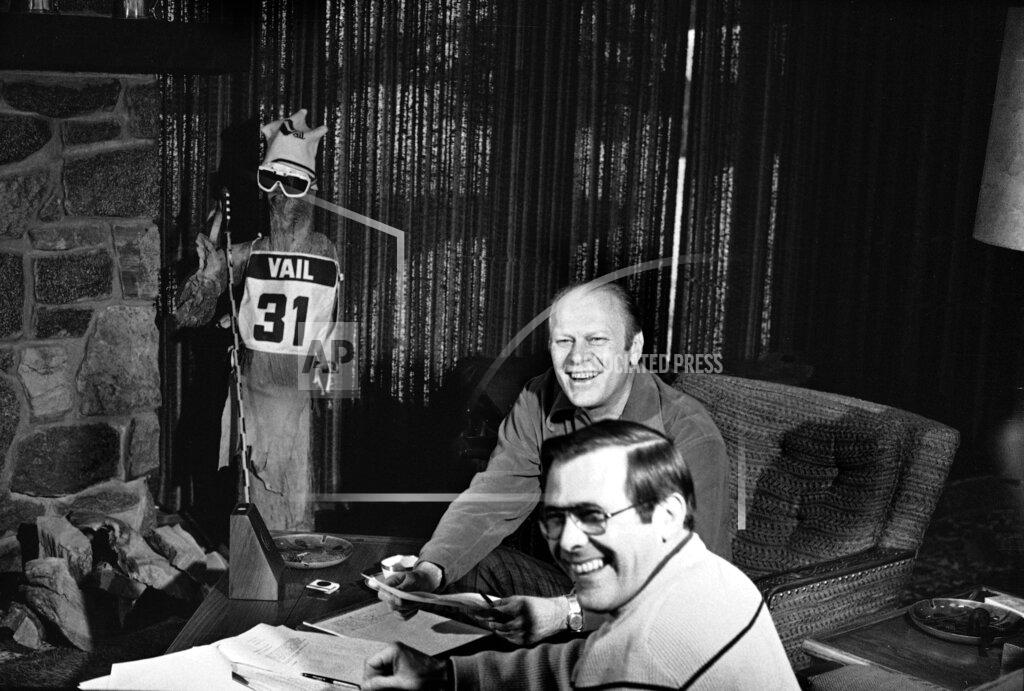
President Ford signed a bill to establish an 8,900-acre tract on the west slope of Oregon’s Coast Range known as Cascade Head as a scenic-research area. The tract, where the Salmon River flows into the Pacific Ocean, includes an estuary, ocean headlands and surrounding forests which “are rich in wildlife and are known for their scenic beauty,” the White House said in a statement from Vail, Colorado, where the President is vacationing. The area would be administered by the secretary of agriculture, who would be authorized up to $1.5 million to acquire such private lands as needed over a five-year period.
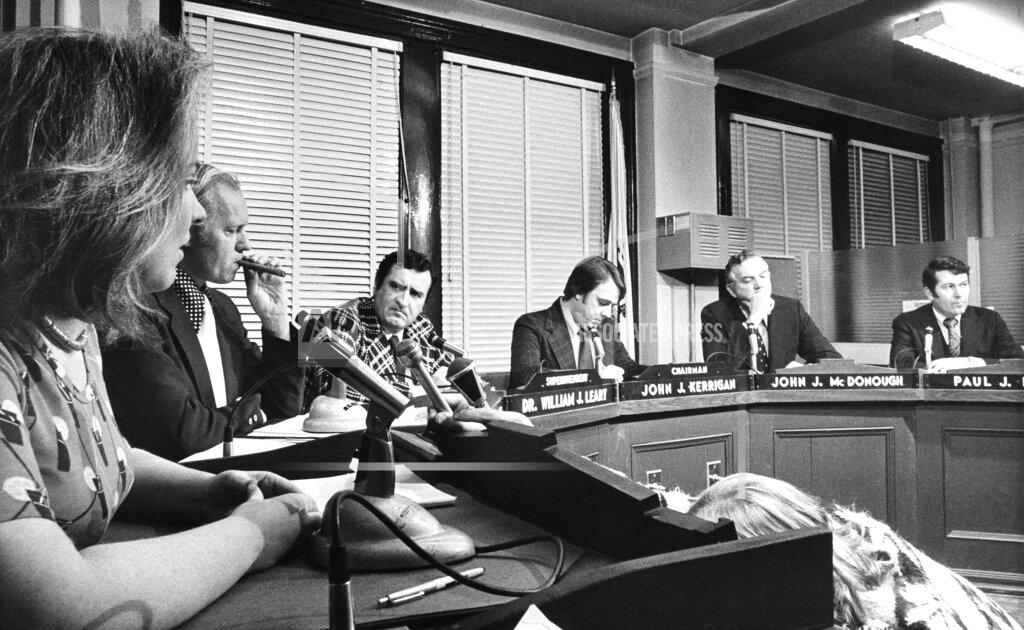
The Boston School Committee voted unanimously to appeal to the U.S. Supreme Court a federal judge’s school desegregation order, later upheld by an appeals court, that has sparked racial turbulence in the city since last fall. Demonstrations and violence surrounding the desegregation orders have disrupted education in the predominantly white south Boston and Hyde Park areas since September. The plan is to be expanded next fall to involve a second phase which is aimed at complete desegregation of all public schools.
The New Hampshire Ballot Law Commission has completed its review of the state’s disputed U.S. Senate race and an unofficial tabulation shows Republican Rep. Louis C. Wyman the winner by two votes. The decision concluded 11 days of deliberations which saw Democrat John A. Durkin lose his 10-vote recount victory after wresting the lead from Wyman who was 542 votes ahead entering the recount. Unless the commission’s finding is set aside in a state court challenge it probably will be up to the U.S. Senate to decide which man is seated. Under the Constitution the Senate is the final judge of whom it will seat.
The United States Steel Corporation unexpectedly announced that it was reducing by about 20 percent price increases that it announced a week ago. The increases had been challenged by the Ford administration. The price cut came soon after two other major steel makers raised prices on a wide variety of steel products to the levels previously announced by U.S. Steel. The partial rollback was not regarded as a great victory for the administration because U.S. Steel has already arranged a new series of substantially higher prices on its products.
The Supreme Court made a ruling in favor of a Pennsylvania electric company that could have wide impact on the many people all over the country who may have their telephone, electric power and gas service cut off without warning. The Court, in a 6 to 3 decision, said that private utility companies had no constitutional obligation to give customers notice or a hearing before cutting off service. It said the Pennsylvania company was not closely enough related to the state government to enable consumers to invoke due process guarantees that protect them against abrupt and arbitrary action by public agencies.
Lawyers for both John Mitchell and John Ehrlichman suggested to the jury in the final arguments at the Watergate cover-up trial that former President Richard Nixon had been the “maestro” and the “orchestra leader” of the Watergate cover-up. Federal Judge John Sirica brushed aside these suggestions in an argument out of the jury’s presence. He said that if the defendants had committed the crimes they were accused of, then whether or not they had done so at Mr. Nixon’s orders was irrelevant. He also said that the pardoning of Mr. Nixon was irrelevant to the trial.
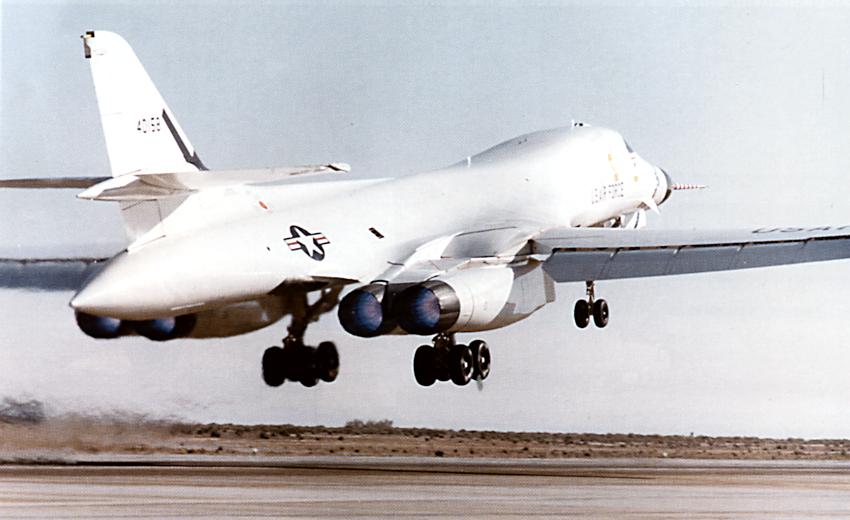
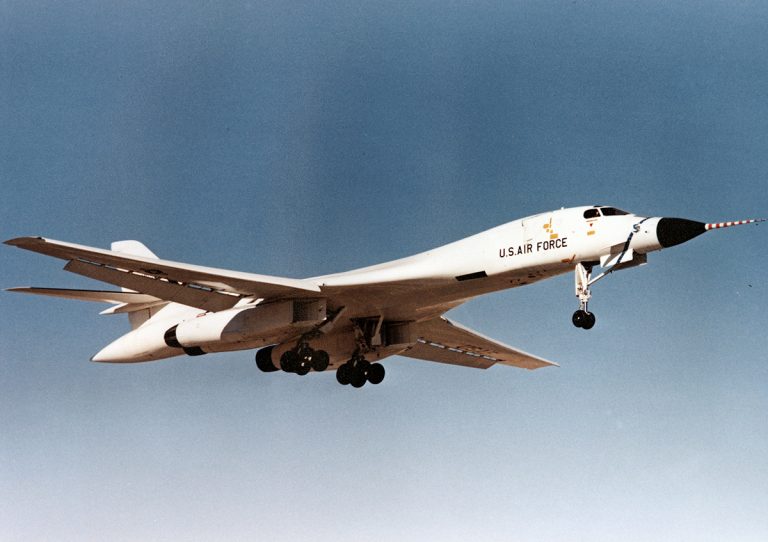
The Rockwell B-1 Lancer intercontinental bomber made its first flight, flown from Palmdale, California, to Edwards Air Force Base. The first of four prototype Rockwell B-1A Lancer Mach 2.2 strategic bombers, serial number 74-0158, made its first flight from Air Force Plant 42, Palmdale, California. The aircraft commander was company test pilot Charles C. Bock, Jr. (Colonel, U.S. Air Force, retired) with pilot Colonel Emil Sturmthal, U.S. Air Force, and flight test engineer Richard Abrams. After basic flight evaluation, the B-1A landed at Edwards Air Force Base, about 22 miles (35 kilometers) to the northeast of Palmdale.
Three girls from Fort Worth, Texas – Mary Rachel Trlica, Lisa Renee Wilson and Julie Ann Moseley – disappeared during a shopping trip to the Seminary South Shopping Center. They have never been found and no suspects in the disappearance have been identified.
An executive secretary with the Playboy Foundation, part of publisher Hugh Hefner’s empire, was arrested in Chicago and charged with possession of marijuana, police said. Authorities said Suzanne Stern, 41, was charged with possession of marijuana after a quarter-pound package of it was found in the trunk of her car during a search. A federal investigation of alleged drug abuses at the Playboy mansions in Chicago and on the West Coast is under way. On November 26, Bobbie Arnstein, Hefner’s 32-year-old social secretary, received a 15-year prison sentence for conspiring to distribute cocaine.
The nation’s 120,000 soft coal miners were back on the job in full strength for the first time in six weeks after mine construction workers ratified a three-year contract. Picketing by the 4,500 construction workers had closed mines in several states for the last two weeks and idled up to 50,000 miners.
The first big snowstorm of winter blasted the southern Rockies and swept eastward along a wide front from southern Utah to Arizona. Early morning temperatures dipped much below zero and winds whipped up to 40 mph. Hervy snow warnings were out for the southern mountains of Colorado and travel advisories were posted for northern Arizona and New Mexico because of blowing snow.
Revival of Ray Henderson, B.G. DeSylva, and Lew Brown’s musical “Good News” opens at St James Theater, NYC; runs for 16 performances.
Dmitri Shostakovich’ son cycle “Suite on Verses of Michelangelo Buonarroti” premieres in Leningrad.
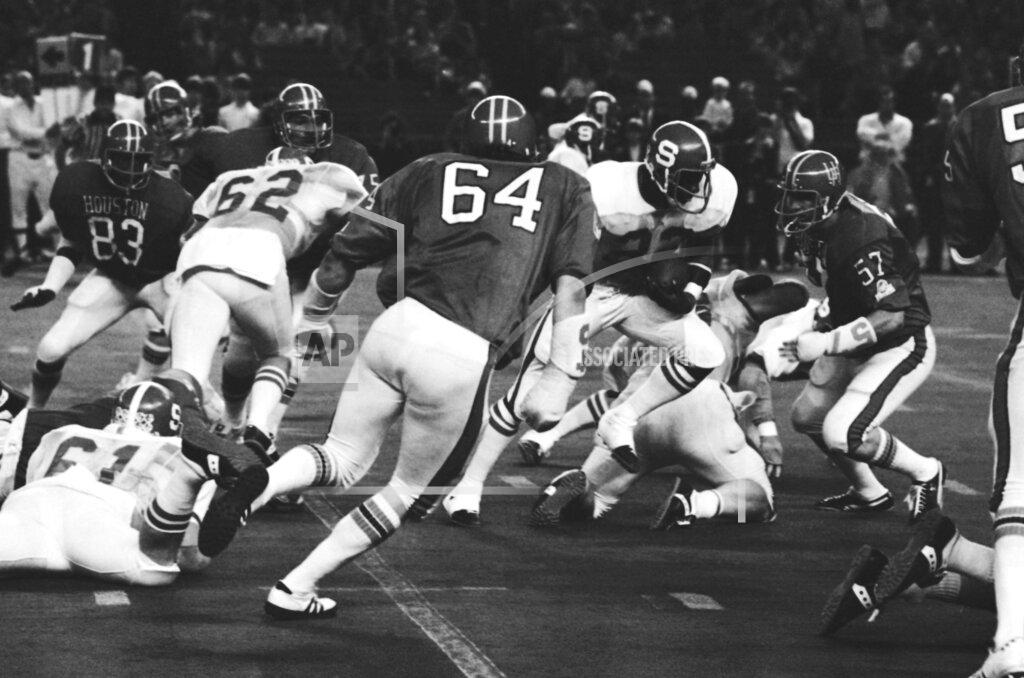
The North Carolina State Wolfpack and the Houston Cougars played to a 31–31 tie in the 1974 Astro-Bluebonnet Bowl, held at the Astrodome in Houston, Texas.
Dow Jones Industrial Average: 589.64 (-8.84, -1.48%).
Born:
Joe Jurevicius, NFL wide receiver (NFL Champions, Super Bowl 37-Tampa, 2002; New York Giants, Tampa Bay Buccaneers, Seattle Seahawks, Cleveland Browns), in Cleveland, Ohio.
Pascual Matos, Dominican MLB catcher and pinch hitter (Atlanta Braves), in Barahona, Dominican Republic.
Died:
Peter A. Quinn, 70, former member of the U.S. House of Representatives from New York and justice of the New York Supreme Court, of cancer.
Elizabeth Julia Reid, 59, Australian journalist and Roman Catholic lay leader in the Grail movement, of cancer.
Jules Rykovich, 51, Croatian-born National Football League player, of cancer.
Karl Brushaber, 37, fell to his death while descending Mount Washington.


 History Diaries