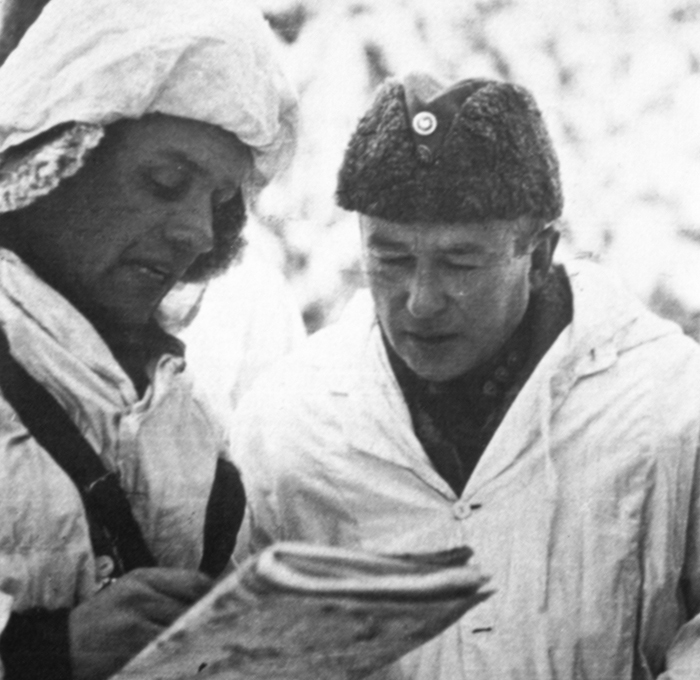
In the face of strong Finnish resistance, the Soviet Union halted large-scale operations in order to bring in more resources before attempting a new offensive. Ground operations are at a tipping point. The Soviet impetus has been stopped — the original plan had been to be in Helsinki by now, Stalin’s birthday. The Finns already have proven their mettle, but now is when they start moving toward actually eviscerating some of the over-extended and ill-prepared Soviet troops.
Finnish General Hugo Österman presented a plan for counterattack to Field Marshal Mannerheim; the plan was prepared by Österman’s subordinate General Harald Öhqvist of the II Corps. Field Marshal Mannerheim has a good relationship with his subordinates and approves the plan.
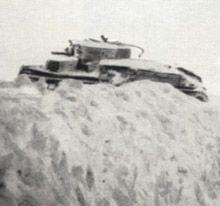
The Soviet 7th Army attack against the Mannerheim Line in the area of Summa comes to a halt, after the Soviet 13th and 138th divisions suffer heavy casualties. The Soviet tank attacks continue to result in no lasting gains and are winding down. The field is littered with abandoned Soviet tanks. The Soviet infantry is refusing to participate in frontal assaults on the well dug-in Finnish soldiers.
Finnish forces stage a successful counterattack at Kemijarvi, driving Soviet forces back some 20 miles. Soviet 122nd Division was halted at the villages of Pelkosenniemi and Kemijärvi in Lapland, Finland.
The Soviet 8th Army retreats and takes heavy casualties north of Lake Ladoga. Finnish troops in the Tolvajärvi sector launch an assault in the evening to retake the village of Ägläjärvi. The determined assaults by the Finnish strike force of five battalions overcome the main force of the Russian division. Major General Paavo Talvela is counterattacking the Soviet 139th Rifle Division around Ägläjärvi, which is about 20 km from Tolvajärvi. The Soviets are giving ground. The Soviet 75th Rifle Division is not doing much to help its sister formation but is in contact with the Finns.
At Salla, the Soviet troops on the north fork are still under pressure and have been pushed back to Savukoski. The Soviets on the south fork are also under pressure but are less overstretched.
At Suomossalmi, the Soviet 163rd and 44th Rifle Divisions are both trapped, the one in the town, the other stretched out along the road. Both are now to some extent dependent upon the other remaining in action, else the Finns can concentrate all their men on one of the units.
The Soviet 14th Army’s advance toward Rovaniemi is halted near Nautsi. In the far north, the Soviet 14th Army once again advances to Nautsi, but then stops. The 14th Army can only become a strategic threat to Finland if it can advance south and take the key road junction of Rovaniemi and points further south, potentially hooking up with the Soviet 9th Army. The Finns are executing a form of guerilla warfare in the treeless, windy, endless dark, cutting supply lines and launching harassing attacks.
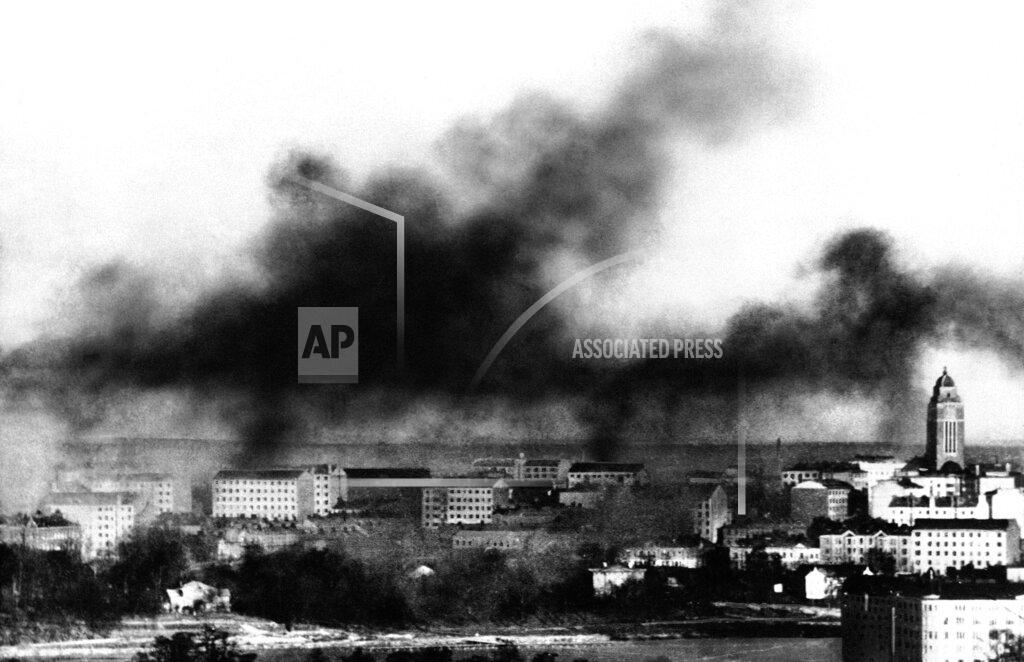
Heavy Soviet air raids hit many cities in Finland. Soviet fliers bomb Finnish civilians in waves, destroying a hospital area and attacking refugees.
Civil defence officials point out that lighting restrictions also apply to Christmas lights. This means, for example, that candles must not be placed beside graves this year, and outdoor Christmas trees must not be illuminated. People should also remember to stay off the streets during air-raid warnings.
Swedish volunteers cross over to Finland to help in the Winter War.
At Terijoki, in honour of Stalin’s birthday, Otto Wille Kuusinen’s ‘Finnish People’s Government’ holds a meeting and a parade of the ‘Finnish People’s Army’. The meeting sends a telegram congratulating Stalin on his birthday. At the same time, enemy aircraft bomb two passenger trains in southern Finland.
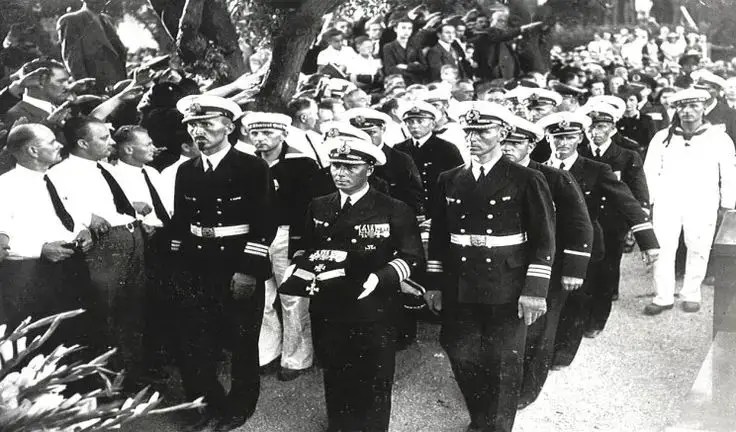
Captain Langsdorff is buried in Buenos Aires as his men from the Admiral Graf Spee go into internment there.
The German Government today sent a “sharp protest” to Argentina against the internment of the members of the crew of the German pocket battleship Admiral Graf Spee, which was sunk Sunday at Chancellor Hitler’s command off the coast of Uruguay.
Russia celebrated Joseph Stalin’s 60th official birthday. His actual birthday is 18 December 1878, but was changed to 21 December 1879 after he came to power in 1922. The first head of state who wishes him a happy birthday, is Adolf Hitler. Also Otto Ville Kuusinen, from the puppet government of the People’s Republic of Finland, sends happy birthday wishes to “Comrade Stalin”.
Adolf Hitler sends greetings to Josef Stalin on his 60th birthday. The telegram reads: “To Josef Stalin: Best wishes for your personal well-being as well as for the prosperous future of the peoples of the friendly Soviet Union. Adolf Hitler.”
Hitler is working very hard to become “friendly” with Stalin. He has ulterior motives for this which will not be known until later.
Stalin responds to the message sent by Hitler: “To the Chancellor of the German Reich, A Hitler. The friendship of the peoples of Germany and the Soviet Union, cemented by blood, has every reason to be lasting and firm.”
[Ed: LOL. For another 18 months.]
Adolf Hitler names Adolf Eichmann leader of “Referat IV B”, responsible for evictions and Jewish immigration.
The cantata “Zdravitsa (A Toast!)” by Sergei Prokofiev was performed for the first time in Moscow.
The Italian sovereigns, King Victor Emmanuel and Queen Elena, attended by the noblemen and ladies of their court, and high dignitaries of the government, paid a solemn visit to Pope Pius XII this morning.
The French government Yellow Book is published, dealing with prewar diplomacy.
British government states that it has seized 870,000 tons of goods destined for Germany since the war began.
The Canadian 1st Division conducts its first ceremonial parade at Aldershot in England.
RAF Bomber Command sends 42 aircraft to attack German shipping without success, with two bombers mistakenly shot down by RAF Spitfires while returning.
The British RAF Bomber Command issued Operational Instruction 21, which in part noted the following that reflected the reluctance to end daylight bombing missions despite of the heavy losses sustained thus far: “With the intention of combining useful training and operations, sweeps will continue to be carried out…. If enemy aircraft are encountered, gunners will be able to practise shooting at real targets instead of drogues.”
There also are some interceptions along the French border, but no engagements. Clear, frosty weather permitted today what the official communique describes as “a marked recrudescence of activity in the air over both Lorraine and Alsace.”
Commander s.g. F. H. Kjøllsen is appointed the 1st Danish Naval Attaché at the Royal Danish Legation in Berlin, Germany.
The boom defense vessel HMS Bayonet struck a mine and sank in the Firth of Forth, off Leith, Midlothian, Scotland. Of the ship’s complement, 3 died.
The Swedish steam merchant Mars was torpedoed and sunk by the U-21, commanded by Kapitänleutnant Fritz Frauenheim, off the Isle of May (57° 00’N, 0° 17’E). At 06.50 hours, U-21 spotted two steamers with lights set but saw no national markings. At 07.25 hours, the first ship, the Mars, was hit by one torpedo and sank within 90 seconds east-northeast of May Island. Of the ship’s complement, 18 died and 1 survivor was picked up by the Norwegian Steam merchant Hop the next day. The 1,475-ton Mars was carrying coal and was bound for Stockholm, Sweden. This is apparently not the same ship sunk on the previous day — there were two Swedish vessels of this name, with different tonnages, lost on successive days.
The Swedish steam merchant Carl Henckel was torpedoed and sunk by the U-21, commanded by Kapitänleutnant Fritz Frauenheim, off the Isle of May off the coast of Scotland in the North Sea (57° 00’N, 0° 17’E). At 06.50 hours, U-21 spotted two steamers with lights set but saw no national markings. At 07.42 hours, the second ship, the Carl Henckel (Master Karl Martin Eklund), was hit by one torpedo and stopped, but remained afloat and sank immediately following a coup de grâce at 10.16 hours. Of the ship’s complement, 10 died and 7 survivors were picked up by the Norwegian Steam merchant Hop the next day. The 1,352-ton Carl Henckel was carrying coal and was bound for Stockholm, Sweden.
The Norwegian steam merchant Rudolf was torpedoed and sunk by the U-46, commanded by Herbert Sohler, approximately 110 miles east-northeast of Rattray Head, Scotland in the North Sea (58° 07’N, 1° 32’E). At 04.40 hours the Rudolf (Master T. Bøtger) was hit in the aft part by one torpedo from U-46 and settled quickly by the stern while the crew abandoned ship in two lifeboats. The ship had been hit by a dud about 10 minutes earlier. Six men in one boat were picked up by Biarritz after sailing 150 miles and landed at Antwerp. Nine survivors in the other boat were picked up by the Norwegian steam merchant Bjerka (Master Thorolf Christensen) and taken to Kopervik. The 924-ton Rudolf was carrying ballast and was bound for the United Kingdom.
The Italian cargo ship Comitas struck a mine and was damaged in the North Sea off the coast of Belgium. She was beached off Vlissingen, Zeeland, Netherlands. She later broke in two, a total loss.
The British tug Danube IV collided with the British ship Southern Prince in the Clyde and sank. The Southern Prince was beached. She was refloated on 23 December, repaired and returned to service.
Destroyer USS Twiggs (DD-127), on neutrality patrol in Yucatan Channel, continues trailing British RFA tanker Patella.
Convoy OG.11 forms at sea for Gibraltar.
The War at Sea, Friday, 22 December 1939 (naval-history.net)
On Northern Patrol, two cruisers were between the Orkneys and Faroes, one cruiser and five AMCs between the Faroes and Iceland, and two cruisers and one AMC in the Denmark Strait. In addition, one additional cruiser and two AMCs were en route for the patrol line between the Faroes and Iceland.
Heavy cruiser DEVONSHIRE arrived at Scapa Flow from Northern Patrol, refueled, and left again that same day for the Patrol.
The Northern Patrol from 22 December to 4 January 1940 sighted 43 eastbound ships of which 35 were sent into Kirkwall for inspection.
Light cruiser GLASGOW arrived at Rosyth from Fair Isle Patrol.
Light cruiser MANCHESTER departed Portsmouth for the Scapa Flow, arriving on the 24th.
Destroyers FOXHOUND, FIREDRAKE, FAME and FEARLESS with the 1st Minesweeping Flotilla arrived at Loch Ewe.
Destroyer KIPLING (Lt Cdr A. St Clair-Ford) was completed. Following working up, she joined the 5th Destroyer Flotilla operating with the Home Fleet, on 18 January 1940. KIPLING was to have been completed in September, but turbine problems required the gears to be re-cut.
Convoy OA.58 departed Southend escorted by destroyer BROKE and sloop ABERDEEN. The destroyer was detached on the 24th, and the sloop on the 25th, when the convoy dispersed.
Convoy OB.58 departed Liverpool escorted by destroyer WINCHELSEA and sloop DEPTFORD to the 25th, when the convoy dispersed.
U-22 laid mines off Blyth, on which one merchant ship and one trawler were sunk.
Steamer GRYFEVALE (4434grt) was badly damaged three miles east of the Tyne Piers, off Whitby Bay on a mine laid by U-61 on the 2nd. She was towed into the Tyne and beached to prevent her sinking.
Canadian troop convoy TC.2 departed Halifax with troopships BATORY (14,287grt), ANDES (25,689grt), ORMONDE (14,982grt), ALMANZORA (15,510grt), ORAMA (19,840grt), CHROBRY (11,442grt) and REINA DEL PACIFICO (17,702grt) carrying 806, 1358, 1269, 1284, 935, 1045 and 1455 troops, respectively. The convoy was escorted from Halifax by Canadian destroyers HMCS OTTAWA, HMCS FRASER, HMCS RESTIGOUCHE, HMCS ST LAURENT and the British HUNTER. Battleship REVENGE (Vice Admiral Holland aboard returning to England to assume post on Admiralty-Air Ministry staff), French battleship DUNKERQUE and light cruiser GLOIRE were ocean escort.
Heavy cruiser CORNWALL and light cruiser GLOUCESTER departed Durban. CORNWALL arrived at Simonstown on the 26th, while GLOUCESTER proceeded to Mauritius.
President Roosevelt let it be known through an aide today that he would prevent starvation in Ohio, if it became necessary, just as he did in the Ohio River flood disaster two years ago when he sent army soup kitchens into the region. The White House position was announced soon after John Owens, president of the Ohio unit of the C.I.O., had emerged from a conference with the President. Mr. Owens stated that the Chief Executive had said that, if necessary, he would send a “non-fighting” army, equipped with soup kitchens, into every part of Ohio to see that none starved.
A short time later Colonel F. C. Harrington, WPA Administrator, told a press conference that the blame for the Ohio relief situation rested within that State, since he had authorized 156,000 WPA jobs. and only 140,799 of them were filled. on December 13. Colonel Harrington termed “rubbish” the statement of Governor Bricker that Ohio was being “punished” because it had gone Republican in the last election.
While the relief situation in Ohio has not been met, Colonel Harrington said, the situation had improved to some degree lately. At Cleveland, he stated, the unemployed were receiving food, as against two weeks ago when they were getting none. “Ohio has had the greatest industrial improvement of any State” this year, he added, “because it had been farthest down the list.” Upon leaving the White House, Mr. Owens made a statement calling upon Governor Bricker and the Ohio Legislature to provide for the unemployed and declared if that was not done, the President had informed him he would send into the State a “non-fighting army” with soup kitchens.
Stephen T. Early, Presidential secretary, later represented Mr. Roosevelt as having told Mr. Owens that it was the policy of the government to prevent starvation anywhere in the country as it had done in the Ohio flood, and to provide work for men and women on relief who could work. Mr. Owens distributed as a statement a résumé of what he said to the President. In addition, he told reporters that “More money is appropriated in some communities in Ohio for dog pounds than for starving people.” He said he had told Mr. Roosevelt of what he termed Governor Bricker’s “unhumanity,” and declared the relief problem in Ohio was not solved.
U.S. Secretary of State Cordell Hull endorses a parley of liberals for the 1940 election. He depicts peril to the country if a conservative is chosen as president. A conference of Liberals was suggested today by Secretary Ickes to support a Liberal candidate for the Presidency regardiess of party. If neither party nominated a Liberal, he went on, liberalism might be forced to a “sacrifice hit.” Mr. Ickes said that the proposed conference had been discussed informally with Senators La Follette and Norris. Calling the gathering, he said, might depend on events in the next few months, such as the trend in early primaries, the attitude of President Roosevelt and the activity of Liberals within the Democratic party. A similar pronouncement in behalf of liberalism came from Mayor La Guardia after a call on the President. He said he told Mr. Roosevelt that the people should have a chance to vote on “the real issues” if the Democrats and Republicans named Conservative candidates.
Attorney General Murphy said he agreed “whole-heartedly” with Secretary Ickes on the need for cementing the liberal forces of the country but he insisted that it should be done within the Democratic party and with the leadership of President Roosevelt. He was cool to the proposition of a third-party movement. John D. M. Hamilton, Chairman of the Republican National Committee, described the proposed meeting of progressives as a move to promote President Roosevelt for a third term. James A. Farley, Chairman of the Democratic National Committee, would not comment upon Mr. Ickes’s remarks.
“I am profoundly convinced that we will be facing economic and social shoals if a liberal candidate for President is not nominated and elected,” Secretary Ickes said. “If there is danger of both parties nominating a conservative, a ‘sacrifice hit’ might be called for on the part of liberals.” A progressive conference might be instrumental in bringing about a coalition of forces, the Secretary added. He thought, however, that It might be a powerful force if held at the right time to prod the major parties into keeping faith with liberalism.
This country is liberal,” he continued. “It calls for a liberal President and unless we have as the head of government for the next four years a man whose chief concern is the preservation of human rights we may run into an internal situation that would be as disastrous as the things that have happened in the democratic nations of Europe.” The project of a progressive conference, the Secretary said, had not been discussed with the President. “The liberals of this country hold the balance of power,” he said. “It seems to be generally conceded that no one can hope to be elected. President next year who does not appeal to the liberal voters.”
President Roosevelt has quietly removed Paul V. McNutt, Federal Security Administrator, from leadership in the work for a national health program, it was learned on high authority today. He did so by reviving the interdeparmental committee to coordinate health and welfare activities, and persuading Miss Josephine Roche to withdraw her resignation as chairman. The President argued with Miss Roche that the health program would be jeopardized if its leadership was vested in one man who is a candidate for President. This would throw the health question into politics, he is said to have told Miss Roche. Mr. McNutt, as head. of the agency which would administer a health program if enacted by Congress, would be the obvious key man, outside Congress, in the campaign for enactment of a health bill.
Representative Ramspeck, Democrat of Georgia, called today for the resignations of J. Warren Madden and Edwin S. Smith from the National Labor Relations Board and also proposed two major amendments to the Wagner Labor Act.
Three murderers were put to death in the electric chair at Sing Sing Prison tonight, the first electrocutions here in four months.
The motion picture reviewer of “The Daily Worker” loses his job because he refuses to attack “Gone with the Wind” in accordance with the paper’s Communist beliefs. Howard Rushmore, motion picture reviewer of The Daily Worker, was out of a job yesterday because. he refused to mold his criticism of “Gone With the Wind” to fit snugly on the Communist party line. Mr. Rushmore said he had been ordered by the Communist daily’s editorial board to “blister” the film. When he viewed it recently, however, he was surprised to find it not so bad as The Daily Worker had described it in advance denunciations.
Knowing his review would not be published unless he made concessions to ideology, Mr. Rushmore said, he characterized the epic film. of the Old South as a “magnificent bore.” His piece, as he showed it. yesterday, seemed to balance praise of technical achievement, “thematic sweep” and acting with condemnation of the film for depicting a congenial, feudal Southland and anti-Negro sequences. The editorial board, and particularly Ben Davis, its Negro member, said Rushmore, directed him to rewrite his review, to turn it into a 100 per cent attack, and to call on the readers to boycott the $4,000,000 movie.
Mr. Rushmore, a tenth generation American whose forebears fought in the War of Independence and whose grandfather was a Confederate soldier, related that his mother had told him stories about the War Between the States which made him feel that the picture in the main was historically true. “I’m not anti-Negro, neither do I weep tears for the fallen Southern aristocracy,” continued Mr. Rushmore. “As a compromise I asked Mr. Davis if I could at least praise the producing and acting. His reply was that we praise nothing about this picture and that the most I could say was that Vivien Leigh and other stars were forced to appear in such a reactionary picture.”
So Mr. Rushmore quit his job, which has paid him nothing since a shortage of funds which coincided with the signing of the Stalin-Hitler pact. Before that he got $25 a week, his duties for three years having included various editorial positions besides motion-picture reviewing. Mr. Rushmore showed his Communist party membership book, with the last dues payment made last February. This meant that he had been dropped. He deliberately stopped paying dues, said Mr. Rushmore, when he realized that the party was dropping its “Americanism” policy and that control was in Moscow, not New York. Now, Mr. Rushmore said he would go back to old-fashioned American Americanism.
A sharp earthquake is felt in Costa Rica. The whole republic is rocked by the most severe tremor since 1923.
In China, the Winter Offensive continues. The Chinese retain the initiative but are getting bogged down now.
Chinese 3rd War Area raids Nanchang.
The 35th Army and 81st Army of Chinese 8th War Area are fighting street-by-street in Paotou.
Chinese 9th War Area attacking into Chingan and destroying Japanese warehouses and continuing to cut lines of communications.
Battle of South Kwangsi: Heavy fighting around Kunlunkuan. Elements of the Japanese 5th Infantry Division take Lungchow as Chinese defenders withdraw.
Evidence is multiplying that the proposed reopening of the Yangtze River as far as Nanking is based upon a genuine Japanese desire to restore trade and show that previous promises were not empty words. Continuing reticence on the details of the restrictions and permit systems are not based upon reluctance to make definite commitments but upon the fact that the reopening was announced before the navy and army received an opportunity to consider the details of the essential military requirements. It has been pointed out in influential Japanese official circles in Shanghai that there will not be favorable foreign reaction if the restrictions over the import trade of third-power nationals are more stringent than existing restrictions over Japanese civilian traders, who at present are operating a great number of stores, shops and distributing houses at ports on the Yangtze. But if third-power traders obtain an opportunity to compete on an equal basis with the already firmly entrenched Japanese traders there will be no complaints.
Dow Jones Industrial Average: 149.10 (-0.03)
Born:
Lloyd Axworthy, Canadian Liberal Party politician (Member of Parliament, 1979–2000; Minister of Foreign Affairs, 1996–2000), in North Battleford, Saskatchewan, Canada.
Naval Construction:
The Kriegsmarine (German Navy) Type VIIC U-boat U-71 is laid down by F. Krupp Germaniawerft AG, Kiel (werk 618).
The Royal Navy Flower-class corvette HMS Acanthus (K 01) is laid down by Ailsa Shipbuilding Co. Ltd. (Troon, Scotland). Transferred to the Royal Norwegian Navy before commissioning.
The Royal Navy Hunt-class (Type II) escort destroyer HMS Lauderdale (L 95) is laid down by Thornycroft (Southampton, U.K.).
The Royal Navy Bellona-class light cruiser HMS Spartan (95) is laid down by Vickers Armstrong (Barrow-in-Furness, U.K.).
The Вое́нно-морско́й флот СССР (ВМФ) (Soviet Navy) Project 23 (Sovetsky Soyuz-class) battleship Sovetskaya Belorussiya (Советская Белоруссия) is laid down by Shipyard No. 402 (Severodvinsk, Russia, USSR). She is never complated; construction was suspended in mid-1940 when it was discovered that 70,000 rivets used in her hull plating were of inferior quality.
BPB 70 feet-type motor Anti-Submarine Boat HMS MA/SB 6 is commissioned. Her first commander is N A Brittain, RNVR.
The Kriegsmarine (German Navy) Type IIC U-boat U-62 is commissioned. Her first commanding officer is Oberleutnant zur See Hans-Bernhard Michalowski.
The Royal Navy “K”-class destroyer HMS Kimberley (F 50) is commissioned. Her first commanding officer is Lieutenant Commander Richard George Kirby Knowling, RN.

 History Diaries