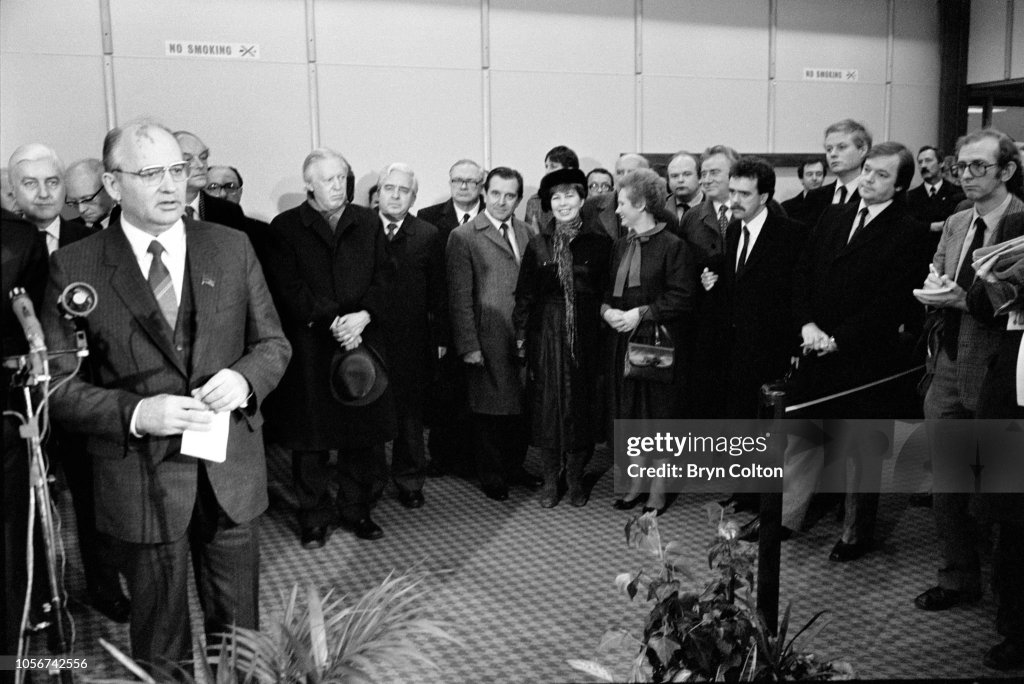
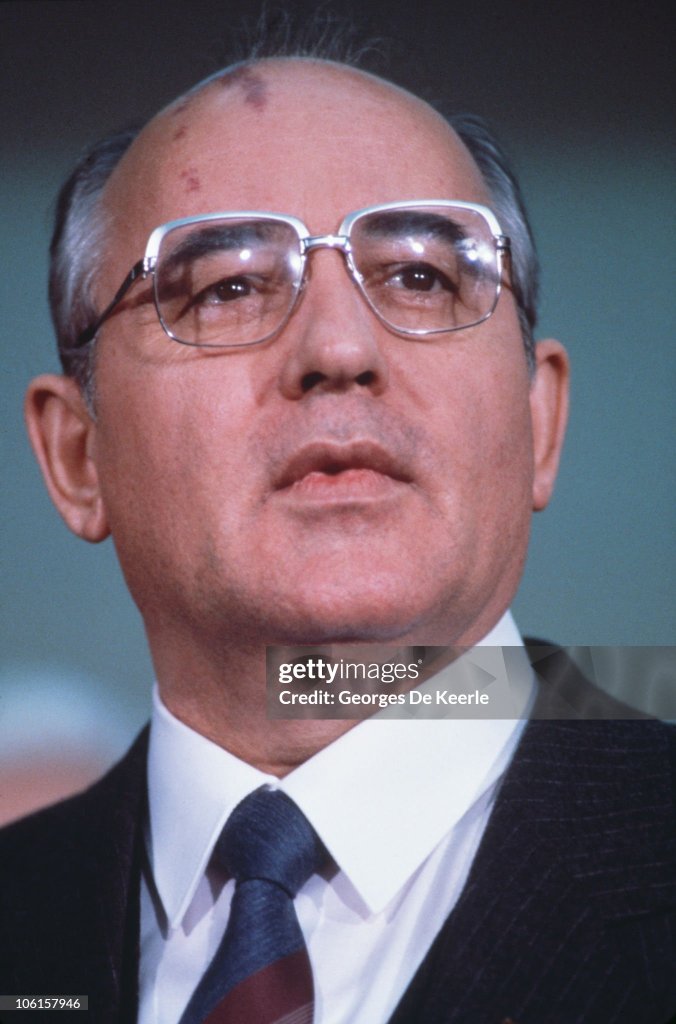
Marshal Dmitri F. Ustinov, the Soviet Union’s Defense Minister, died Thursday after a two-month illness, the official Soviet press agency Tass announced. He was a designer of the Soviet Union’s military machine and one of the most powerful officials in its hierarchy. No successor was immediately named, and the chief question was whether the Kremlin would return the Defense Ministry to a professional military man or name a civilian like Marshal Ustinov. In a break with precedent, Marshal Ustinov’s death was announced first not by Tass but by Mikhail S. Gorbachev, widely presumed to be the second-ranking Politburo member, who was in Britain. Diplomats in Moscow surmised that Mr. Gorbachev was compelled to make the announcement to explain why he was cutting short a trip of considerable importance to the Kremlin. But the announcement also seemed to underscore Mr. Gorbachev’s authority and his greater freedom from the constraints of ponderous Kremlin practice.
Marshal Ustinov’s successor as Defense Minister could be Grigory V. Romanov, the former Leningrad party leader, United States Government officials believe. They said Mr. Romanov appears to be the leading candidate and that if the Kremlin follows its usual practice, his appointment as Defense Minister would remove him from consideration as the successor to Konstantin U. Chernenko, the Soviet leader, and leave Mikhail S. Gorbachev as the seemingly undisputed heir apparent. This is because Mr. Romanov would be expected to give up his post as a national Communist Party secretary, leaving only Mr. Chernenko and Mr. Gorbachev with those positions. No Soviet leader has taken power without also having been a party secretary.
When she came to the United Nations in 1981, says Jeane J. Kirkpatrick, who has announced that she intends to resign as chief American delegate at the end of the year, “the radical nations within the third world had achieved a dominant voice in the debates and decisions.” In the face of constant attacks, there was “silence and retreat by the West,” she recalls, adding, “The general understanding was that the third world was letting off steam and that it was ‘bad taste’ to notice it.” As activities at the United Nations wound down this week, Dr. Kirkpatrick took an hour to reflect on her efforts during her four years as chief American delegate to “restore the United States to a position of influence within the United Nations.” In an interview at her office at the United States Mission, she took credit for reducing the level of polemics by third world countries against the United States and Israel. “Israel has not been expelled, and the obsessive anti-Israeli attacks have significantly diminished,” she said. “Most countries no longer attack the United States at all in debates.”
West German Foreign Ministry officials said today that the Government had told UNESCO that West Germany might withdraw from the United Nations agency if changes were not made. They said Foreign Minister Hans- Dietrich Genscher, in a letter sent this week to Unesco’s general secretary, Amadou Mahtar M’Bow, said West Germany would remain a member of the United Nations Educational, Scientific and Cultural Organization for at least another year. But it said the government would review its membership in 12 months and might withdraw if the agency did not become less ideological and more efficient, the officials said. On Wednesday, the United States announced it would leave UNESCO December 31. It had filed a notice of intention to withdraw a year ago after accusing the organization of being too political and mismanaging its funds. Britain has announced it will quit the agency at the end of 1985 if it does not accept reforms. Mr. Genscher’s letter to Mr. M’Bow, a Senegalese, demanded an end to Unesco’s “useless ideological debate” over regulating Western news coverage of the developing world and called for a freeze on membership fees, according to the Foreign Ministry officials. They also said the American withdrawal should prompt the organization to make changes.
West Germany said today that the three-month-old standoff in its embassy in Prague was “easing” and that more East Germans seeking asylum had abandoned their sit-in. The chief Government spokesman, Jürgen Sudhoff, did not reveal the number of refugees who have recently left the embassy in the Czechoslovak capital. He said more were expected to do so before Christmas. Officials in Bonn privately confirmed that about 40 refugees remained inside the embassy. They are reportedly maintaining a hunger strike they began December 14 to press the authorities to allow them to emigrate.
Israel’s request for emergency aid will not be acted on until it adopts a much tougher austerity program, the State Department said. After two days of talks with an Israeli delegation, the department promised to recommend to Congress “continued substantial levels of economic and military aid” for the fiscal year that begins October 1, 1985. Other officials said this would be at about the same levels that Israel was now receiving. For the 1985 fiscal year ending next September 30, Israel has received a total of $2.6 billion in direct grant aid, of which $1.2 billion is economic assistance and $1.4 billion military aid.
An American diplomat said Thursday that six people had been arrested for plotting to attack the United States Embassy in Tel Aviv. News reports in the United States this week said Israeli security forces foiled a planned attack on the embassy and Israeli Government buildings in Tel Aviv three weeks ago when they arrested six Palestinians from the occupied Gaza Strip who were carrying grenades. The reports said the six were in an Israeli jail. The American diplomat declined to discuss details of the case.
A spokesman for the police in Tel Aviv declined to comment, saying a court order banned publication of any information about the case. The Israeli radio reported Thursday that United States officials were considering moving the embassy to another building as part of a worldwide improvement of security arrangements. The American diplomat declined to confirm that report but said, “As anyone can see, there is considerable construction going on around the embassy of a security nature.” The embassy is on the Mediterranean beachfront and in recent weeks a concrete wall facing the sea has been heightened. Workers have also built a new wall about four feet high on the other side of the embassy, which faces a busy street.
Libya offered today to contribute $1 million to UNESCO to replace part of the contribution the United States was making until it decided to withdraw from the organization, sources at an Islamic conference said today. Washington has been paying 25 percent of Unesco’s annual budget of about $187 million. Libya’s Foreign Minister, Ali Abdel Salam Turayki, made the offer during a debate on UNESCO at a conference of foreign ministers of the 45-member Islamic Conference Organization here, the sources said. The foreign ministers endorsed a Libyan-sponsored resolution expressing confidence in the management and political impartiality of Mr. M’Bow, UNESCO’s Director General.
Iraq said its jet fighters attacked two “large naval targets” in the Persian Gulf today, and shipping sources confirmed that a Norwegian supertanker and Liberian tanker were hit. Two crewmen were reported killed on the Liberian tanker Magnolia, 30 miles south of Kharg Island. The Norwegian supertanker Thorshavet, carrying Iranian crude oil to Japan, was reportedly set ablaze by a missile 60 miles south of Kharg.
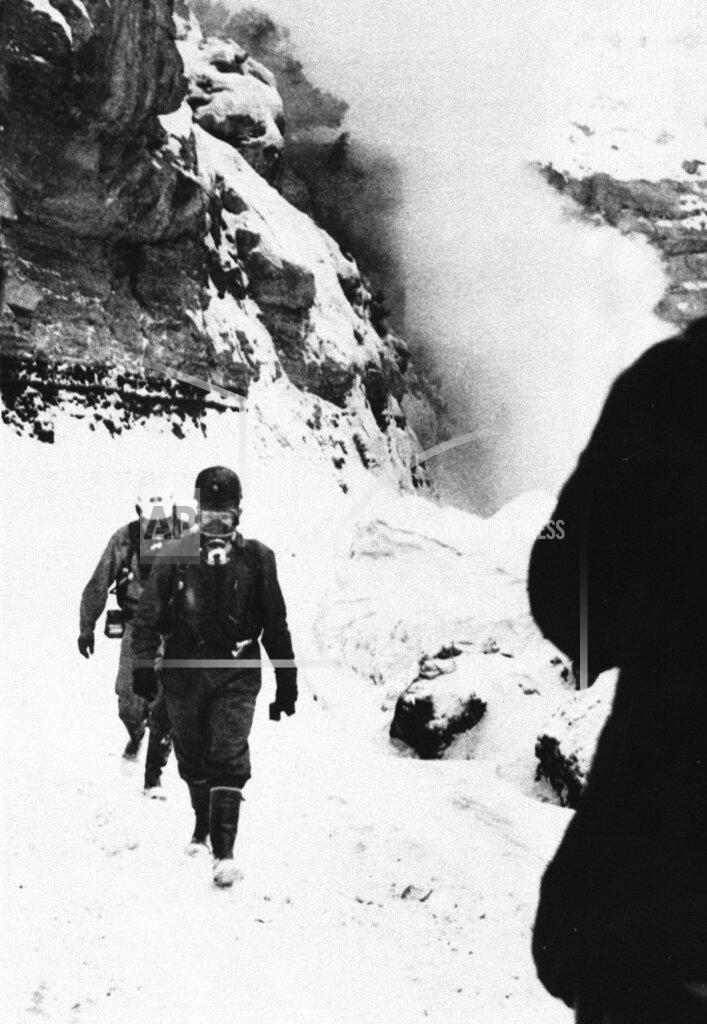
Technicians trying to eliminate the remaining lethal gas at the Union Carbide plant in Bhopal, India found more of the gas today, and it appeared their task would not be completed until Saturday. Nevertheless, apparently convinced that all danger had passed, thousands of Bhopal residents who had fled in fear returned today. The streets of Bhopal, which resembled a ghost town only Thursday, were humming with activity today. As of this afternoon, 22 tons of the methyl isocyanate gas, which killed more than 2,000 people in this central Indian city after a gas leak December 3, had been safely converted into pesticide, according to Indian officials.
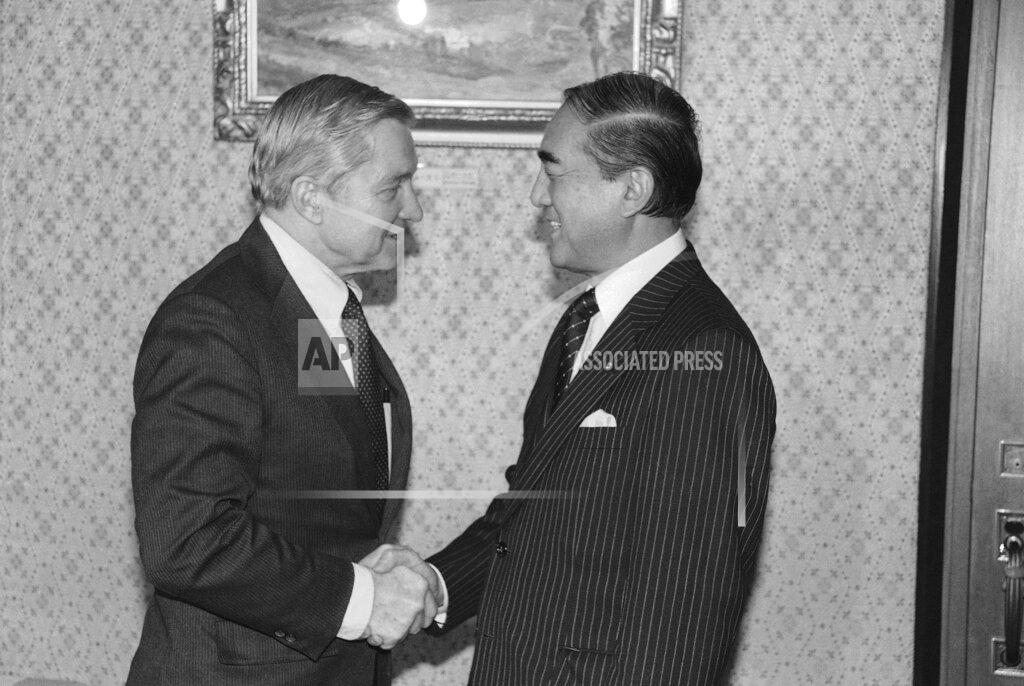
China received its highest-ranking Soviet visitor in 15 years today when Ivan V. Arkhipov, a First Deputy Prime Minister, arrived for talks that both sides had said would concentrate on commercial and economic issues. Mr. Arkhipov was met at the Peking airport by Yao Yilin, a Deputy Prime Minister, who, like Mr. Arkhipov, specializes in economic matters.
The Chinese Communist Party newspaper People’s Daily today published its second front-page editorial in two weeks challenging the universal validity of Marxist dogma. To drive the point home, the newspaper dug into the speeches and writings of leading Communist theoreticians from Marx to Stalin to Mao Zedong himself to show that they had no patience with “phrase-mongers,” reliance on “empty talk” or those who “do nothing else except copy” from earlier thinkers, as the editorial put it.
The editor of the Nicaraguan opposition daily newspaper, La Prensa, said today that he had gone into exile and would make his home in neighboring Costa Rica until press censorship was lifted in Nicaragua. “If the censorship ends, I’ll go back,” the editor, Pedro Joaquin Chamorro Barrios, said in a telephone interview from the Costa Rican capital, San Jose. “That could be one day, two days or 20 years.” “I was no longer fulfilled fighting with censors,” Mr. Chamorro Barrios said. “My passion wore out. I didn’t want to stay there and work just to fill up files at the censorship office.” Mr. Chamorro Barrios said he would work against the Sandinistas by traveling and writing.
The Chilean police forced 21 exiles back into Argentina after they tried to enter Chile, a spokesman for the exiles said today. The spokesman said the police stopped the exiles’ bus Thursday night in a mountain tunnel connecting the two countries and ordered it to return to Argentina. The exiles got off the bus, but the police took them and dropped them in Argentine territory. The spokesman said the exiles were planning another attempt to return. The exiles are labor leaders, politicians, educators and artists who left Chile after President Augusto Pinochet took power in a 1973 military coup.
President Reagan today defended his space weapons program and said hewould be able to convince Prime Minister Margaret Thatcher of Britain and other Western allies of the importance of the proposed missile defense system in outer space. Speaking with reporters before leaving for Camp David, Maryland, Mr. Reagan was asked about Soviet criticism of the new United States plans, in particular those voiced in London by Mikhail S. Gorbachev, the No. 2 Kremlin official. Mr. Reagan is scheduled to meet with Mrs. Thatcher on Saturday. Mr. Reagan said Mr. Gorbachev “doesn’t understand exactly what it is we are researching.”
The President and First Lady receive an eight-foot Christmas Card from the mayor and people of Johnstown PA, with 50,000 signatures on it.
The President and First Lady leave the White House for Camp David.
The President and First Lady watch the movie “Mass Appeal.”
Banking credit was further eased by the Federal Reserve Board, which cut the rate it charges on loans to financial institutions by one-half point, to 8 percent. The reduction brought the so-called discount rate to its lowest level in more than six years. The closely watched rate is the most visible reflection of central bank policy. The vote was 5 to 1, the dissent coming from Lyle E. Gramley, the central bank governor who has appeared most optimistic that the economy already has enough momentum to rebound smartly early next year from its current lackluster growth. The seventh governor, Martha R. Seger, was not present.
The bodies of 13 miners were found in a mile-deep coal mine in Huntington, Utah, victims of the smoke and flames that trapped them Wednesday night. Fourteen other miners were still missing. Nine bodies were found at dawn. The four others were found at night by rescuers as they slowly made their way down the tunnel toward the area where it was hoped that the trapped miners had sought refuge. Fourteen other miners were still missing. The discovery of the bodies shattered earlier optimism that a round-the- clock rescue effort and the drilling of two emergency air shafts into the Wilberg Mine might succeed in bringing all the miners out alive.
William J. Schroeder walked small distances in his hospital room, exercised with weights to build up his strength and tossed a small balloon to improve his coordination, officials of the hospital in Louisville said. Doctors completed a radioisotope test they hoped would determine the source of the strokes the recipient of an artificial heart had eight days ago. Doctors at Humana Hospital-Audubon used a standard nuclear medicine scintillation camera this afternoonto record where tiny, radioactive blood fragments settled in Mr. Schroeder’s body three days after they were injected into one of his veins. By studying the tracks of these radioactive platelets make in Mr. Schroeder’s body, the physicians might be able to determine if there are any recently formed clots in his blood system.
An engineer charged with trying to sell technical secrets about the Stealth bomber to Federal agents posing as Soviet spies was ordered held without bail today by a Federal magistrate. Thomas Patrick Cavanagh, 40 years old, of Downey, California, was arrested Tuesday in Los Angeles by agents of the Federal Bureau of Investigation who said he passed them a briefcase containing secret documents in exchange for $25,000. The Justice Department said the papers involved the Stealth bomber, which is being designed to escape radar detection. Mr. Cavanagh, who worked for the Northrop Corporation, could be sentenced to life in prison if convicted.
The Union Carbide Corporation, which is planning to process thousands of gallons of its poisonous methyl isocyanate into finished pesticide products, hit a snag today when the Governor of Georgia asked Federal authorities to order the company to stop processing the chemical at its plant in Georgia. He said processing should be halted until the authorities can show that it is safe. Shutting the Georgia plant would leave the company with 128 fifty-five- gallon drums of the chemical in Woodbine, Ga., according to Georgia state officials. Union Carbide also has smaller quantities of the chemical on ships that were bound for its plants in France and Brazil but were turned back by those nations after the gas leak on December 3 at the Union Carbide plant in Bhopal, India, in which more than 2,000 people died.
Student loans would be cut off for any family with an annual income of more than $30,000 under the Reagan Administration’s budget proposals for the next fiscal year. In addition to the guaranteed loans, certain education grants would also cut off to such families. There is no income limit under current law; financial need has been the qualifying factor. The change’s main purpose would be to focus more on low-income families and less on the middle class, officials said.
A Federal agency’s negligence was responsible for the deaths of three Massachusetts lobstermen lost at sea in November 1980, a Federal judge in Boston ruled. He held the National Oceanic and Atmospheric Administration liable for the deaths because the agency failed to repair a weather buoy that could have provided an accurate forecast of a storm at sea that produced 60-foot waves and winds of 100 miles an hour.
Moscow is not leading the U.S. in space-based weapons technology, according to testimony given before a Senate panel last March by the Pentagon’s chief of advanced research. But when he was questioned further, he told Senators that Pentagon scientists see a need for a decade of accelerated funding if the United States is to reach a position of parity with the Soviet Union.
The Environmental Protection Agency today announced new rules that it said would prevent such environmental disasters as the contamination of an entire town with hazardous dioxin compounds. The agency issued a two-part regulatory package that extended regulations on hazardous wastes to cover many new materials and processes and defined all dioxins as hazardous wastes. The extension of the rules will become effective in 90 days and the rules covering dioxins will become effective in six months.
Governor Edwin Edwards refused today to free a prisoner who became an award-winning journalist after spending 11 years on death row for murder. The Louisiana Pardon Board voted 4 to 0 on Wednesday to recommend that Governor Edwards commute the sentence of the prisoner, Wilbert Rideau, sentence to time served. Mr. Rideau’s death sentence was set aside in 1973 after the United States Supreme Court threw out the death penalty. Asserting that the sentence would be valid under Louisiana’s new death penalty law, and “in view of the nature of the crime,” the Governor said, “I will not sign the commutation.” Mr. Rideau, 42 years old, has served nearly 24 years for the 1961 robbery of a Lake Charles bank in which one person was killed. He and Billy Sinclair, another inmate, edit The Angolite, the prison magazine.
A county judge in Pennsylvania today ordered supporters of the Rev. D. Douglas Roth to end their occupation of Trinity Lutheran Church, where he was once pastor. Judge Emil Narick of Allegheny County Common Pleas Court ruled that officials of the Lutheran Church in America were within their rights to dismiss Mr. Roth as pastor and temporarily disband his congregation.
A California State appellate court today refused to reduce 12 felony counts of perjury against Mayor Roger Hedgecock. The ruling handed down by the Fourth District Court of Appeal will allow the Mayor’s trial to resume January 2. It had been interrupted while the appellate court considered Mr. Hedgecock’s petition that he had been improperly charged in his indictment. Mr. Hedgecock was indicted with three others on one count of conspiracy and multiple perjury counts in connection with his 1983 mayoral campaign and two personal financial transactions. He was re-elected last month. A three-member panel of the court denied petition without comment.
A former leader of Italy’s Mafia was arraigned in secret in Queens on heroin-trafficking charges. Tommaso Buscetta, 56-years-old, was flown from Italy in United States Government planes in “extraordinary security precautions,” a United States official said.
The U.S. Navy announced today that one-fifth of its force of A-6E attack jets would have to be grounded because their wings might last only half as long as had been expected. The service said it had grounding 64 of its 344 A-6E’s and imposed flight restrictions on 112 more of the carrier- based bombers. The planes will need new wings, the Navy said.
Winter opened today with a mixture of rain and snow that moved swiftly from the eastern Great Plains to New England and caused flooding in Arkansas and icy roads across the Middle West. Meanwhile, an unusual December hurricane loitered in the Atlantic. Winter officially began at 11:23 AM, Eastern standard time. In the Northwest, northern Oregon was blanketed with snow and ice before melting began later in the day. Travelers’ advisories warning of rain, sleet and snow were posted from Pennsylvania into New England. In Florida meteorologists said Hurricane Lili, the fourth December hurricane in 100 years, would probably not threaten land.
The USSR launches the Vega 2 probe for a fly-by of Venus and later, Halley’s Comet. Soviet television showed the Vega 2 blasting off into bright blue skies above the Baikonur space center in Kazakhstan. A display in the space center’s mission control room showed the path of Vega 1, leading the way, as a small blinking light headed out into the solar system.
Judith Raskin, the lyric soprano, died of cancer at a New York hospital. Famed for her voice and musicianship, Miss Raskin was a leading singer with the New York City Opera and the Metropolitan Opera.
Brigham Young University (BYU) beats Michigan, 24–17 in the Holiday Bowl at Jack Murphy Stadium, San Diego to remain undefeated and secure their first ever NCAA Division I-A football title
Dow Jones Industrial Average: 1198.98 (-4.31)
Born:
Michael McDowell, American professional stock car racing driver (Daytona 500, 2021), in Phoenix, Arizona.
Eddie Gamboa, MLB pitcher (Tampa Bay Rays), in Merced, California.
Died:
Judith Raskin, 56, American soprano (Susanna-“Le Nozze di Figaro”), of cancer.



[Ed: I did not like the way that Samantha was used for political purposes. But it breaks my heart to know she has only eight months to live.]




 History Diaries