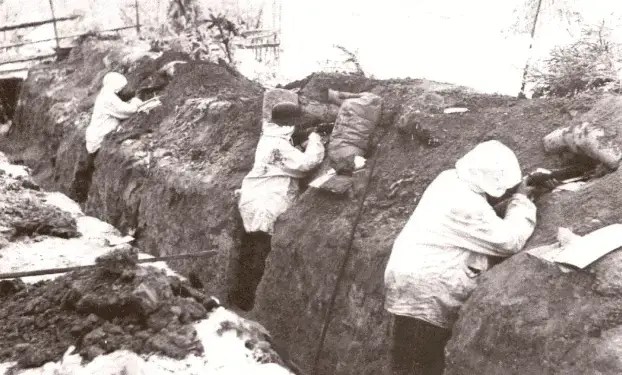
The Soviet 7th Army conducts the heaviest attacks yet against the Mannerheim Line in the Summa sector. The Finns continue to hold. The Soviets can manage only temporary breakthroughs. By evening the Soviet infantry has been repulsed and around 20 of the 100 tanks used in the offensive have been destroyed. The Finns use Molotov Cocktails, satchel charges, and anything else at hand to destroy the isolated Soviet tanks at night. However, the Finnish troops are unable to retake the village of Oinala.
At Suomussalmi, the Finns are building a hidden ice road parallel to the Ratte road on a nearby lake to ease their hit-and-run attacks on the Soviets stuck on the road.
Saarenpää Fortress and a Russian naval detachment led by the battleship Marat begin an artillery exchange at 12.15. Combat is broken off at 13.04. Soviet battleships Oktyabrskaya Revolutsiya and Marat and escorting warships bombard Fort Saarenpää. However, the defenders claimed at least one artillery hit on Marat and the ship was forced to retreat with damage.
Finnish forces attack Soviet 8th Army positions north of Lake Ladoga.
Finnish troops in the Tolvajärvi sector launch a new offensive to retake Ägläjärvi. At Ägläjärvi, the Finns surround the Soviet 75th Division.
Finnish troops from Detachment Roininen attack the flank of the Soviet 122nd Division from the south at Joutsijärvi and inflict considerable losses in men and materials. Finnish losses are 22 dead and 29 wounded.
At Petsamo in the far north, the Soviet advance to the south reaches Nautsi. They can get no further. Partly as a result of Finnish resistance and partly because of supply difficulties in the extremely cold weather, the Russians retire from Nautsi to a point about twenty miles north. The temperatures take a sudden drop to 25 degrees below zero, Fahrenheit, in mid-December.
The Merivoimat (Finnish Navy) minelayer/naval tug Voima was lost by grounding.
The Soviet Air Force bombs the city of Turku for the first time. Soviet aircraft also hit Hanko, Helsinki, Viipuri, Jänisjärvi and other targets.
Ilmari Juutilainen of the Finnish Air Force gets his first victory. He flies a Fokker D.XXI and shoots down an Ilyushin DB-3 bomber. His brother Captain Aarne Juutilainen is fighting with distinction on the ground in the Battle of Kollaa.
The renowned Finnish composer Jean Sibelius’ appeal to the American people is published in a number of daily newspapers in the USA. Sibelius emphasizes that the fate of the Finnish people lies primarily in their own hands, although it will also depend to some extent on the actions of other freedom-loving peoples.
The Soviet Union portrays profit as the U.S. aim in Finland.
Heydrich places SS officer Adolf Eichmann in charge of organizing deportations of Jewish populations in occupied territories.
Captain Langsdorff of the Admiral Graf Spee commits suicide this evening in Buenos Aires by shooting himself in bed, draped in a German flag. He writes, “for a captain with a sense of honor… his personal fate cannot be separated from that of his ship.” An honorable commander, he made irreversible mistakes at crucial junctures that doomed his ship. However, his ship accomplished much more to aid the German war effort than most historians give him credit for.
New Japanese ambassador Saburo Kurusu meets with Hitler.
The British 5th Infantry Division begins moving to France.
The fourth meeting of the Allied Supreme War Council takes place in Paris. The Anglo-French Supreme War Council met for the fourth time and decided to send help to Finland if requested, against the wishes of the neutral Scandinavian nations, who fear it will widen the conflict there. Prime Minister Chamberlain then returns to London.
Admiralty scientists led by Dr. C. F. Goodeve and Dr. E. C. Bullard have found a way to defeat the magnetic mine threat. Since the mines are detonated by a ship’s magnetic field, a system of canceling this out has been developed. Ships will be fitted with electric cables passed round the hulls and connected to the generators. Known as “degaussing,” this will create a magnetic field exactly opposite to the ships. Methods have also been found for sweeping for these mines. Experiments using wooden trawlers towing sweeps made up of energized electrical cables have proved successful in detonating them. A Vickers Wellington IA (P2518), was taken off the production line at Weybridge and fitted with a large magnetic coil 48 feet in diameter attached to the underside of the nose, tail and outer planes. Fed with electrical power from a 35kW Maudesley generator driven by a Ford V8 engine the aircraft still had to fly as low as 60 feet above the water to ensure detonation.
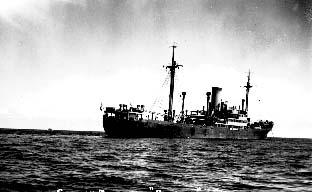
The German liner Columbus, closely trailed by the U.S. heavy cruiser USS Tuscaloosa (CA-37), is scuttled some 300 miles from the American coast (38°01′N 65°41′W), to avoid capture by the approaching British destroyer HMS Hyperion. Destroyer HMS Hyperion intercepts the German passenger liner SS Columbus 450 miles east of Cape May, New Jersey; the latter is scuttled to prevent capture. Two crewmen perish in the abandonment. The heavy cruiser Tuscaloosa rescues Columbus’s survivors (567 men and 9 women stewardesses) and sets course for New York City, the only U.S. port that can handle such a large and sudden influx of aliens. The American warship has been trailing the German liner since its departure from Vera Cruz, Mexico and has been constantly reporting the position of the Columbus by radio for any and all ships to hear. The actions taken by the USS Tuscaloosa make the official US position of neutrality highly suspect, but Berlin never protests the incident.
British light cruiser HMS Orion intercepts German freighter Arauca off Miami, Florida; the latter puts in to Port Everglades to avoid capture. Destroyer USS Truxtun (DD-229) has trailed the merchantman at one point; destroyer USS Philip (DD-76) is present when Arauca reaches sanctuary. USAAC B-18 (21st Reconnaissance Squadron), however, witnesses the shot that HMS Orion fires over Arauca’s bow (in the attempt to force the latter to heave-to) splashing inside American territorial waters off Hialeah, Florida. Learning of this incident, Secretary of State Cordell Hull instructs U.S. Ambassador to the Court of St. James Joseph P. Kennedy to remind the British Foreign Office that, as neutrals, the American republics are entitled to have their waters “free from the commission of any hostile act by any non-American belligerent nation.” SS Arauca is interned by the U.S. government and is acquired by the U.S. Navy from the Maritime Commission on 20 April 1942 and eventually commissions Arauca as refrigerated storeship Saturn (AF-40) the same day.
The British steam merchant City of Kobe struck a mine and sank near Cross Sand Buoy, Great Yarmouth off the eastern coast of England in the North Sea (52° 35’N, 1° 59’E). At 03.35 hours the City of Kobe (Master William Scott Craig) in convoy FS.56 struck a mine, laid on 15 December by U-60 and sank near Cross Sand Buoy, Great Yarmouth. One crew member was lost. The master and 29 crew members were picked up by HMS Tumby (FY 850) (Skipper J.W. Greengrass) and the British coasters Corinia and Faxfleet. The 4,373-ton City of Kobe was carrying general cargo and coal and was bound for India.
The British trawler Daneden was bombed and sunk in the North Sea east south east of the Shetland Islands by aircraft of X Fliegerkorps, Luftwaffe.
The Danish cargo ship Jytte struck a mine and sank in the North Sea 18 nautical miles (33 km) off Souter Point, Northumberland, United Kingdom with the loss of ten of her 18 crew. Survivors were rescued by the Danish ship Avance.
The British trawler River Earn was bombed and sunk in the North Sea east north east of Kinnaird Head (58°30′ N, 2°01′ E) by aircraft of X Fliegerkorps, Luftwaffe. All on board were rescued by the Norwegian ship Rogaland.
The Finnish coaster Uko was bombed and sunk in the North Sea 80 nautical miles (150 km) south of Utsire, Rogaland, Norway by Luftwaffe aircraft. All on board were rescued by the Swedish ship Sir Ernest Cassel.
U.S. freighter Nishmaha is free to sail from Marseilles to continue her voyage, but port conditions and weather prevent her from sailing as scheduled.
Convoy OA.56 departs Southend.
Convoy OB.55 departs Liverpool.
Convoy OB.56 departs Liverpool.
Convoy SL.13F departs Freetown for Liverpool.
Convoy HXF.13 departs Halifax for Liverpool.
The War at Sea, Tuesday, 19 December 1939 (naval-history.net)
HOME FLEET OPERATIONS
On 19 December at 1430 Admiral Forbes departed the Clyde with battleship BARHAM, battlecruiser REPULSE and destroyers INGLEFIELD, IMOGEN, ICARUS, ISIS and KHARTOUM to cover convoys HN.5 and NV.2.
At 55-30N, 5-02W off Holy Island at 1700, KHARTOUM reported a torpedo was fired at her. ISIS attacked a submarine contact, and KHARTOUM made three attacks at 1700.
KHARTOUM, in company with anti-submarine trawler LORD SNOWDEN (444grt), made a submarine attack in 55 30N, 05 00W off Arran at 0725/20th. Patrol sloops MALLARD and PUFFIN assisted, but the attack was unsuccessful.
Destroyers IMPULSIVE, MATABELE, MASHONA, BEDOUIN and ESKIMO departed Greenock to assist in the submarine hunt. MATABELE joined ISIS and also made attacks. KHARTOUM rejoined the BARHAM screen.
The search continued until liners AQUITANIA and EMPRESS OF BRITAIN passed the area southbound.
IMOGEN and KHARTOUM refueled at Sullom Voe on the 23rd, while MASHONA arrived at Loch Ewe on the 24th with defects.
ICARUS and ISIS refueled at Sullom Voe on the 25th. During this time, the Germans launched another air raid against Sullom Voe and the destroyers assisted anti-aircraft cruiser COVENTRY in driving off the attack.
INGLEFIELD refueled at Sullom Voe on the 27th.
MATABELE, BEDOUIN, and ESKIMO returned to the Clyde in time for convoy TC.2 escort.
On Northern Patrol, two cruisers were between the Orkneys and the Faroes, two cruisers and four armed merchant cruisers between the Faroes and Iceland, and heavy cruiser BERWICK and one armed merchant cruiser in the Denmark Strait. Armed merchant cruisers ASTURIAS and WORCESTERSHIRE departed the Clyde on Northern Patrol duties.
Submarine TRITON arrived at Rosyth after patrol.
Destroyers WITHERINGTON and VIMY attacked a submarine contact in the Western Approaches. They rejoined their convoy the next morning when relieved by destroyer VOLUNTEER.
Destroyer DUNCAN attacked a submarine contact in 50-05N, 3-16W.
Destroyer HAVANT (Lt Cdr A F Burnell-Nugent DSC) was completed. After working up at Portland, she was the first unit of the 9th Destroyer Flotilla and operated with the Home Fleet.
Destroyer GRAFTON on patrol in 51-50N, 1-46E reported a large number of floating mines.
Light cruiser CARDIFF arrived in the Clyde.
Convoy FN.56 departed Southend, escorted by destroyer WOOLSTON and sloop GRIMSBY. The convoy had been delayed 24 hours, and arrived in the Tyne on the 20th.
U-48 passed Fair Isle Channel and returned to Germany, leaving no U-boats operating in the Atlantic at this time.
Finnish steamer UKO (757grt) was sunk by German bombing 80 miles south of Utsire; three crew and two passengers were wounded. Survivors were picked up by Swedish steamer SIR ERNEST CASSEL (7739grt) and landed at Kopervik.
Steamer CITY OF KOBE (4373grt) in convoy FS.56 was sunk off Cross Sands in 52 35N, 01 59E on a mine laid by U-60 on the 17th; one crewman was lost, and 18 survivors rescued.
Convoy OA.56 departed Southend, escorted by destroyers WHITEHALL and WIVERN from the 19th to 21st, and joined by destroyer VESPER on the 21st, when the convoy dispersed.
Convoy OB.56 departed Liverpool escorted by destroyers VIMY and WITHERINGTON to the 21st, when the convoy dispersed.
Light cruiser EMERALD arrived at Halifax after escorting troop convoy TC.1.
Convoy HXF.13 departed Halifax at 0900 escorted by Canadian destroyers HMCS SAGUENAY and HMCS SKEENA, which detached on the 20th. Light cruiser ENTERPRISE departed Halifax as the ocean escort on the 19th, detached on the 28th and arrived at Portsmouth on the 29th. Destroyer WREN escorted the convoy from the 28th to 30th, when it arrived at Liverpool.
Convoy SLF.13 departed Freetown escorted by sloop EGRET until 2 January when she was relieved by destroyers ARDENT and BROKE. The convoy arrived on the 3rd.
Submarine REGENT departed Singapore for patrol in the Java Sea off Saband and Mentawei. On the 24th, she bottomed off Pulo Simalar and was badly damaged with damage to her hydroplanes. She was ordered to return to Singapore on the 25th and arrived back, repairing until 28 February. REGENT then proceeded to Hong Kong, arriving on 18 March, for a refit completed on 19 June.
U.S. Secretary of State Cordell Hull instructs his Ambassador to the Court of St. James, Joseph Kennedy, to tell the British that they need to cease hostile acts in the territorial waters of neutral nations such as the United States. This is in reference to the Arauca Incident.
In an unusually severe attack for a high official of one government to make against another, Sumner Welles, Under-Secretary of State, denounced last night the Russian invasion of Finland and ridiculed a recent statement by V. M. Molotov, Soviet Premier and Foreign Commissar, that Cuba was not free and independent of the United States.
As guest of honor at the annual dinner of the Cuban Chamber of Commerce in the United States at the Hotel Waldorf-Astoria, Mr. Welles characterized Premier Molotov’s statement as an “extraordinary address.” He suggested sarcastically that M. Molotovf overlooked the fact that the government and people of Cuba were as free and independent as any in the world because he was “so engrossed with the efforts which his government was then undertaking in order to insure — in the present Soviet manner — the freedom and political independence of Finland.”
Mr. Welles also forecast prompt action by the twenty-one American republics, including the United States, which recently adopted a declaration against hostile acts by belligerents in American waters to prevent the recurrence of such events as the Admiral Graf Spee incident at Montevideo. He expressed confidence the action taken would make “very much less likely in the future such disregard for their legitimate requirements and for their inalienable right of self protection.”
“Certainly,” Mr. Welles added, “the policy of the United States toward her neighbor Cuba, in order to insure the freedom and political independence of the latter, has not been a policy which has manifested itself in ruthless military invasion of that neighbor, nor in the slaughter of helpless civilians through bombardment from the air.”
President Roosevelt will renew his demand upon Congress in January that it provide for taxes to raise at least $550,000,000 additional revenue with which to cover the amounts it appropriated in excess of budget estimates for farm benefits during the last two years. The President made this known at his press conference this afternoon as he confirmed reports that his fiscal experts were studying Secretary Wallace’s certificate plan for financing farm aid and relieving the strain on the Federal budget. This proposal has been presented as capable of raising upward of $250,000,000, and in essence is considered a sort of “streamlined” version of the processing tax which the Supreme Court outlawed in the celebrated Hoosac Mills case in 1935.
The President did not express any certainty that the Wallace certificate plan would be adopted — it is understood to be opposed by Secretary Morgenthau — but he emphasized his contention that Congress owed the Treasury $550,000,000 in additional revenue on account of excess farm benefit appropriations. By laughingly acknowledging a correspondent’s analogy between this obligation of Congress to the Treasury and the inter-Allied war debts, the President made it apparent to those present that he had his doubts that Congress would do much about making up the deficiency.
Senator Burton K. Wheeler of Montana, his backers said today, will enter the primary in New Hampshire on March 12 as a Democratic candidate for President, if President Roosevelt does not run for a third term. Wheeler declares he will not run in opposition to Roosevelt.
Secretary of the Army Woodring said today that the army would concentrate almost all its tanks at Fort Benning, Georgia, on or before January 10 for use in late Winter and Spring mass maneuvers. Nearly 260 tanks will participate in the four months of open field training there, Mr. Woodring said. This is the largest quantity of mechanized equipment ever assembled in this country, he said. All regular tank units except the Third Tank Company at Fort Lewis, Washington, and the Eleventh Tank Company at Schofield Barracks, Hawaii, will participate. The tanks will be taken to Fort Benning by rail and truck. Mr. Woodring explained that no tank units were included in the new streamlined infantry division which would take part in the war games. Tank companies formerly assigned to the old style infantry divisions would be grouped in new organizations known as headquarters troops, he added.
The National Labor Relations Board was in a dispute with one of the largest banking systems in the world in San Francisco today, when charges were made and challenged that the Labor Board had brought an unfair labor practice proceeding against the Bank of America, “to bring banking institutions of the United States under the control and domination of the C.I.O.”
Two members of a House investigating committee charged today that in the early days of the “Little Steel” strike of 1937, officials of the National Labor Relations Board had tried to “entrap” the Inland Steel Company into a position in which a C.I.O. union could bring Wagner Act charges against it. They based their accusation on evidence that, before the board had taken any formal jurisdiction, Nathan Witt, secretary of the board, flew to Pittsburgh to consult with C.I.O. officials on their preparations for filing the allegations of Wagner Act violations. Mr. Witt confirmed that he had made the trip, but stoutly denied the accusation, made by Representatives Halleck, Republican, of Indiana, and Routzohn, Republican, of Ohio.
A youthful third-rate prize fighter was on his way from Toronto to New York last night in custody of New York police who reported to their superiors here that he had confessed the murder on December 5 of Dr. Walter Engelberg, secretary attached to the German Consulate. The prisoner is Ernest Kehler, known in the ring as Ernie Haas, who is 24 years old, according to police information and 21 years old according to his mother, Mrs. Lillian Kehler, of Winnipeg. He is expected to arrive at 8:30 this morning by train. The arrest and the statements reported by police to have been made by Kehler disposed wholly of the theory, held by some investigators when the murder was discovered, that espionage or a quarrel over international politics had anything to do with it. It was a crime that resulted from the abnormal behavior of the two men. [Ed: Delicate 1930s allusion to homosexuality.]
A review declares the United States can meet war demands without any dislocation and with no chemical shortages.
The government posts the final crop results for the year. Production is 4 percent higher than 1923–32, but 1 percent less than last year’s production.
Explorer Admiral Richard Byrd wires the story of the Pitcairn plight, relating how the North Star gave food and medicine to war-hit islanders. Nearly two months without a visit left the mutineers’ descendants nearly starved
Storming Japanese strongholds around Nanning, despite heavy losses, Chinese troops today recaptured Takofengyi, a strategic mountain pass fifteen miles north of Nanning, and the town of Kaotien, thirty miles to the northeast. These successes came on the second day of an offensive that the leaders of the Chinese troops in Southwest China hope will soon deliver Nanning back into Chinese control.
The Chinese yesterday retook Kunlung Mountain, twenty-five miles northeast of Nanning. This and Takofengyi are said to be the key points for the control of the city itself. Meanwhile the Chinese assert that they continue to hold points on the roads between Nanning and the sea, thus effectively isolating the Japanese garrison in Nanning. Simultaneously with the Nanning drive, the Chinese continued their attack in the Nanchang sector, but no major developments are reported in the operations around the latter city.
Paralleling the Nanchang and Nanning assaults, guerrilla activity flared along the Lung-Hai railway, far to the north in Honan province. The official Central News Agency quotes refugees from Kaifeng as saying that Chinese units have broken into the former Honan capital, long in Japanese hands, have burned Japanese warehouses and are now engaging the enemy in street fighting in the suburbs.
Japanese troops captured Kunlun Pass 59 kilometers northeast of Nanning, Guangxi Province, China.
Chinese 2nd War Area troops advance toward Yicheng.
Chinese 3rd War Area attempts to interdict Japanese boat traffic on the Yangtze River with anti-tank guns.
The Japanese 104th Infantry Division is engaged with elements of Chinese 4th War Area around Yinchanao.
The 35th Army and 81st Army of Chinese 8th War Area make attacks into Paotou overnight.
Elements of Japanese 33rd Infantry Division and 40th Infantry Division withdrawing from Shihmen and Shihpihu as Chinese 9th War Area conducts attacks around Hsintanpu, Tungshan, and Ninlinchiao.
Chinese North Route Force captures Kaofengyi.
Elements of Japanese 5th Infantry Division are under attack and isolated around Kunlunkuan.
Japan is optimistic about a pact with the United States. The foreign minister says progress is being made. Admiral Kichisaburo Nomura, the Foreign Minister, told the Japanese Cabinet today that his conversations with Joseph C. Grew, the United States Ambassador, had opened brighter prospects for renewal of the trade. treaty with the United States, which expires January 26 in accordance with denunciation by Washington. Even before the end of the year Mr. Grew is expected to seek a fourth interview which the newspaper Asahi predicts will be devoted primarily to plans for revision of the trade treaty and secondarily to a restatement of the United States conception of the new situation in China. The newspaper Kokumin says Admiral Nomura expects to receive a reply regarding the treaty before Christmas.
Dow Jones Industrial Average: 148.93 (-0.29)
Born:
Erika Heinicke, East German speed skater (Olympics, 1964), in Bad Frankenhausen, Germany.
Died:
Rear Admiral Reginald F. Nicholson, 87, American naval officer, American Civil War and Spanish–American War, was Commander-in-Chief of the United States Asiatic Fleet, and came out of retirement during World War I to serve as the first U.S. naval attaché to Ecuador and Peru.
Eric Fogg, 36, English composer, dies under a train.
Karl Wagenfeld, 70, Low German writer (“Lucifer, Death & Devil”).
Willem Benoy, 57, Flemish actor and director (“The White”).
Naval Construction:
Liner SS Prince David is purchased from Canadian National Steamship Lines for conversion to AMC HMCS Prince David. Armed merchant cruisers were used to supplement the escort of convoys against large enemy surface warships. The RN was unable to provide either battleships or cruisers to act as escort for all convoys and resorted to using converted liners instead.
The Kriegsmarine (German Navy) Type VIIC U-boat U-70 is laid down by F. Krupp Germaniawerft AG, Kiel (werk 604).
The Marine Nationale (French Navy) Le Hardi-class torpilleur d’escadre (squadron destroyer) Le Flibustier is launched by Forges et Chantiers de la Méditerranée, La Seyne-sur-Mer, France. (Some sources say 14 December)
The Royal Navy Thornycroft 73-foot type torpedo boat HMS MTB 24 is commissioned.
The German freighter Goldenfels is commissioned into the Kriegsmarine as Schiff 16. Her commander is 40-year-old, newly-promoted Captain, Bernhard Rogge. The newly converted ship is armed with six rapid-fire 150mm L/45 C/16 guns, one 75mm cannon, two 37mm flak guns, four 20mm flak guns, four 53.3cm torpedo tubes, with 24 torpedoes, two Heinkel He-114 A-2 seaplanes, and carried 92 sea-mines. As it was the privilege of each raider captain to name his ship, Rogge informed his 346 hand-picked officers and crew that he would be naming her the Atlantis.
The Royal Navy destroyer HMS Havant (H 32), launched as the Brazilian Javary, and lead ship of her class of 6, is commissioned. Her first commander is Lieutenant Commander Anthony Frank Burnell-Nugent, RN. She was requisitioned by the Royal Navy on 4 September 1939 while being built for the Brazilian Navy.

 History Diaries