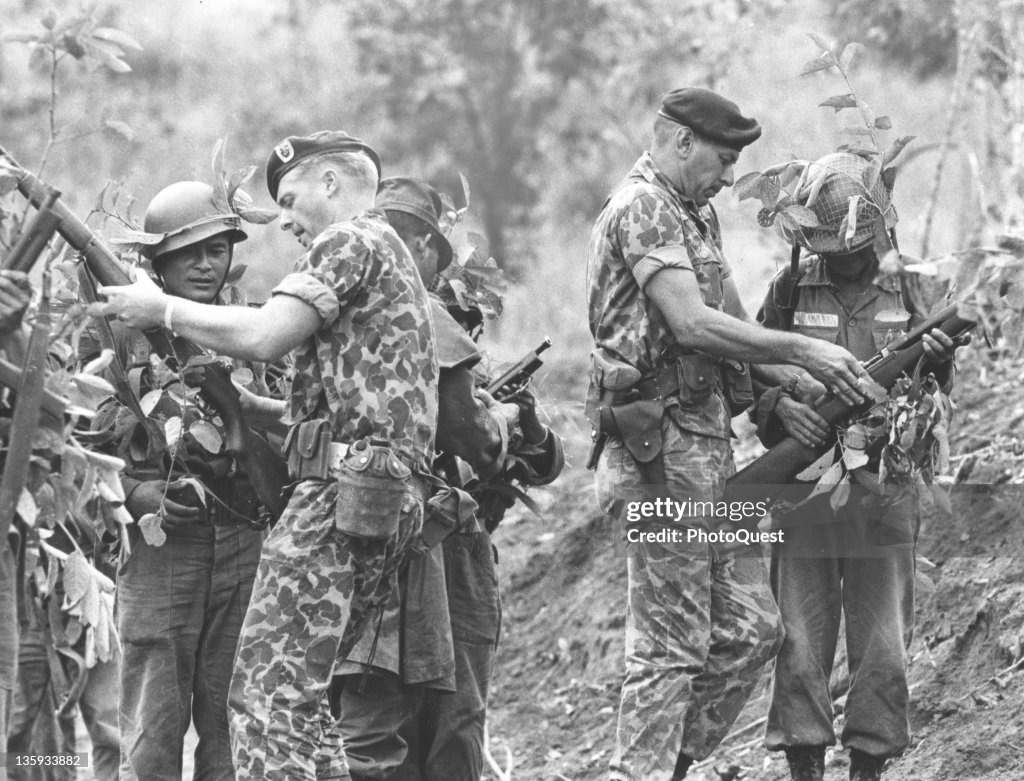
In a military coup, the ruling military junta of South Vietnam, led by Lieutenant General Nguyễn Khánh, dissolved the High National Council and arrested some of its members. The next day, General Khánh announced that an Armed Forces Council would rule the nation. General Khánh and some younger generals led by Air Commodore Nguyễn Cao Kỳ and General Nguyễn Văn Thiệu stage another bloodless coup by arresting about three dozen high officers and civilian officials. The generals announce on the 20th the High National Council, which has been serving as a temporary legislature, is dissolved but that an Armed Forces Council will support the civilian government of Phan Khắc Sửu and Trần Văn Hương while working to ‘act as a mediator to achieve national unity’ among the nation’s feuding political groups. This move seems primarily aimed to stemming the Buddhists’ growing demands.
When Ambassador Taylor summons the leaders of the coup to the U.S. Embassy, Kỳ and Thiệu appear but Khánh does not; Taylor then proceeds to scold them: “I told you all clearly … we Americans were tired of coups. Apparently, I wasted my words… Now you have made a real mess. We cannot carry you forever if you do things like this.”
Leaders of the Vietnamese armed forces carried out a swift purge tonight, dissolving the High National Council, Vietnam’s provisional legislature, and arresting many political figures. The purge was not aimed either at the chief of state, Phan Khắc Sửu, or at Premier Trần Văn Hương. The entire civilian Cabinet will apparently stay in office. But in carrying out the purge, the newly formed Military Council has clearly emerged as the major force in the South Vietnamese Government. Creation of this council was announced Friday. It was to advise on major decisions concerning military matters. A military communiqué read over the Saigon radio at 7 AM Sunday, Saigon time (7 PM tonight, New York time), said: “Special action has been taken because we trust the Prime Minister and chief of state and we do not trust the High National Council.”
Seven of the nine active members of the council were arrested and paratroopers were searching for another member. Among the council members arrested was South Vietnam’s leading Buddhist layman, Mai Tho Tiryen, who was appointed vice president of the World Buddhist Association at a meeting in India last week. The Military High Command headquarters in Saigon remained heavily fortified through the night. Troops did not appear in Saigon streets, but teams of policemen swiftly carried out the arrests.
The streets of Saigon remained calm and normal this morning. Several thousand Buddhists gathered at their headquarters for a continuation of their protest demonstration against the Government. The purge was clearly aimed at the Buddhist political uprising. Buddhist leaders said that they were extremely angry at the developments. The High National Council was formed last fall to prepare the way for a return to civilian government after a year of government dominated by the military. Politicians on the council became angered when Premier Hương, who was named to head the new civilian regime, selected senior civil servants to his Cabinet instead of political leaders. The Military Council formed Friday had been urged by commanders of key fighting units to exercise some control over the commander in chief, Lieutenant General Nguyễn Khánh.
The purge came on a day that authorities had expected to bring trouble from both the Buddhists and the Việt Cộng guerrillas. It was the fourth anniversary of the founding of the National Liberation Front of South Vietnam — the political arm of the Communist guerrillas. The police and the army had been on alert for some stroke of terrorism to mark the anniversary. The Buddhists meanwhile planned to dramatize their campaign to topple the government by a mass rally. Some Buddhist sources said a monk might commit suicide by fire. Americans in Saigon, if at all possible, remained indoors. United States officials feared the Communists might strike directly against some Americans.
Tentative contacts between the government and its Buddhist adversaries had been made earlier today in an effort to ease the political crisis of the last week in South Vietnam. The chief political spokesman for the Buddhists’ secular organization, Thích Tâm Châu, called on the chief of state, Mr. Sửu. Sources in Saigon said the object was to explore what government concessions could be expected in return for a reduction in the anti‐government pressure. Moves toward mediation have been urged by United States diplomats in recent conversations with both sides. Vietnamese with access to both the Buddhists and the government have been moving quietly back and forth. There was still no overt indication that a satisfactory settlement could be found.
The Vietnamese Government donated the trees for American military personnel based in isolated outposts in the war against the Communist guerrillas. Turkeys and cans of cranberry sauce are also being parachuted “to the Americans, along with letters from home. In Saigon the Americans, many of whom are spending their first Christmas away from home, are organizing celebrations of their own and are sending gifts to friends and relatives in the United States.
A new pattern of Indonesian military pressure, on a smaller scale and with less ambitious objectives, appears to be developing against Malaysia. Authoritative sources here believe that the long border between Indonesian and Malaysian Borneo has been effectively sealed. “Malaysian and British troops have established military superiority here, at least for the time being,” one source said. Efforts to send large groups of Indonesian guerrillas led by regular Indonesian troops into peninsular Malaya have halted.
Instead of landing groups of up to 100 heavily equipped men with the objective of establishing jungle bases, the Indonesians are sending in parties of 10 or fewer. These have been only lightly armed and carry simple explosive devices. During the last month there have been five attempts by small parties to penetrate Malaya. The invaders have been killed or captured or have slipped back to their bases on Indonesian islands that lie only a few miles across the Strait of Malacca.
Until a month ago large units of Indonesian guerrillas, most of them regular troops, were moving across the Borneo border and attempting to penetrate sparsely settled areas. “Now we have had only hit-and-run raids,” the source said. “None of these groups seems willing to attempt anything except a night crossing, returning to Indonesian territory before daylight.” The border is more than 800 miles long, but the security forces have been effectively harassing the Indonesians, the source said. They have added small artillery units that fire along escape trails. Officials here are now claiming higher Indonesian casualties than have been officially estimated. There are said to be more than 500 killed, wounded or captured since the guerrilla action began 16 months ago.
The Pravda announcement that the International Communist conference originally scheduled for last Tuesday has been postponed to March 1 appears to mark the opening of a major new phase in the internal conflict rending world Communism. In effect, the announcement represented implicit admission that the attempt made in the weeks following former Premier Nikita S. Khrushchev’s ouster to patch up Moscow’s differences with Peking had failed. It was also equivalent to confession that as of this time Moscow is not strong enough to carry through the projected meeting of 26 Communist parties so that it would become a demonstration of overwhelming international Communist support of the Soviet Union.
Clearly Moscow’s objective over the next two and a half months must be to improve its position among the world’s Communist parties so that when — and if — the March 1 meeting is held it will be a demonstration of Soviet strength rather than of weakness. Is the Soviet Union’s new Brezhnev‐Kosygin leadership likely to be able to accomplish this objective in the 10 weeks ahead? Any attempt to answer that question must rest upon a survey of the present state of world Communism some two months after Mr. Khrushchev’s ouster. Superficially, the ouster has had two public effects. One was that it made possible Chinese Communist Premier Chou En‐lai’s visit to Moscow last month and the negotiations carried on then. There has been no indication, however, that these talks resulted in any significant agreement. The second effect has been a marked decline in the violence of the Sine‐Soviet dispute’s language.
The United States, Britain and France have told the Soviet Union they are ready to establish informal four‐power contacts in Berlin with a view to discussing matters concerning the whole of the city, a spokesman announced today. The move by the Western powers came in reaction to a suggestion for four‐power talks made by diplomats of the Soviet Embassy in East Berlin two weeks ago. The governments in Washington, London and Paris, after consultations, decided to follow up the proposal speedily to sound out Russian intentions on Berlin and Germany. In their reply the Western Allies made it clear, however, that they would reject Russian attempts to confine the talks to issues pertaining only to West Berlin. The Soviet officials in initiating the project had left this question open, referring only to “matters of mutual interest” that could be discussed.
The Secretary General, U Thant, began personal efforts today to eliminate remaining differences between the United States and the Soviet Union in the crisis over unpaid United Nations assessments. The latest compromise formula, suggested yesterday by Alex Quaison‐Sackey of Ghana, seems to have aroused more hope for a settlement than have any earlier proposals. Mr. Quaison‐Sackey, the General Assembly president, suggested that all member nations be asked for “adequate and substantial” contributions or pledges, to be made voluntarily to a fund to stabilize United Nations finances. Mr. Thant discussed the plea separately with Adlai E. Stevenson, the United States delegate, and Dr. Nikolai T. Fedorenko of the Soviet Union.
Secretary of State Dean Rusk and Foreign Minister Andrei A. Gromyko also met today. Over luncheon in Mr. Rusk’s suite in the Waldorf‐Astoria Hotel, they agreed that it should be left for Mr. Thant to discuss the Quaison‐Sackey proposals with interested member nations. Before the luncheon, United States sources said the arrears question was not on the agenda. They noted that Dr. Fedorenko was not present. Afterward, a spokesman for Mr. Rusk said Dr. Fedorenko had come into the meeting after lunch and that in the course of “wide‐ranging” discussion of East‐West issues, the financing question had been “briefly touched upon.”
Negotiations between the United States and Panama on the status of the Panama Canal and the possibility of digging a sea‐level waterway through Panamanian territory will open in earnest early next month, officials said today. The talks, between two special teams of negotiators, were actually initiated in a preliminary meeting December 2. Yesterday the United States notified Panama that it intended to proceed with the building of a new canal in Central America or northern Colombia, and to renegotiate the 1903 canal treaty. Washington will be the scene of what promises to be an arduous and complex United States diplomatic undertaking. United States‐Panamanian relations have been unsettled for some time and were broken for three months at the beginning of the year.
Congolese rebel forces were reported today to have recaptured parts of the African section of the northeastern city of Paulis. The Government forces there, about 200 Congolese soldiers and 47 mercenaries, were said to be in firm control of only the airport, the main hotel and the mission compound. Reports tonight said T‐28 fighter planes and B‐26’s of the Congolese Air Force were strafing and bombing the rebels around the town, which is the capital of Uele Province. The Government forces have been boxed up there for more than a week by rebel attacks.
Rebel attacks were also under way at Bunia, the capital of Kibali‐Ituri Province. The government forces there, made up of about 60 mercenaries and 200 Congolese, had been reported to be bogged down about 40 miles to the north. However, the day’s reports of rebel action at Bunia, near the eastern border, indicated that the government column might have been forced to retreat there.
In the fighting at Paulis, the mercenaries were disclosed to have captured Soviet‐made weapons, which officials believe were shipped into the country within the last few weeks. The weapons, which had barely been used, still carried heavy smears of cosmoline, a preservative grease in which arms are packed for shipment. “These things couldn’t have been out of the packing case more than a couple of days when they were captured,” one United States officer said after having examined the arms. The weapons were captured Wednesday during a rebel assault on Paulis.
The Greek Government plans to act to halt the mass emigration that is draining the cream of the labor force from this country of 8.5 million population. About 120,000 Greeks settled abroad this year. They swelled the ranks of Greek expatriates since 1959 to a total of 450,000. Nearly 250,000 of them found work in West Germany and 50,000 in other West European countries; 55,000 settled in Australia, 40,000 in North America and 55,000 elsewhere. The consequence has been striking. Emigration more than offset Greece’s population growth in the last two years and left her with fewer inhabitants. On the other hand, savings sent home by expatriate Greek workers in Western Europe soared to $60 million — a 50 percent rise over last year — helping Greece to close a widening trade deficit, or excess of imports over exports.
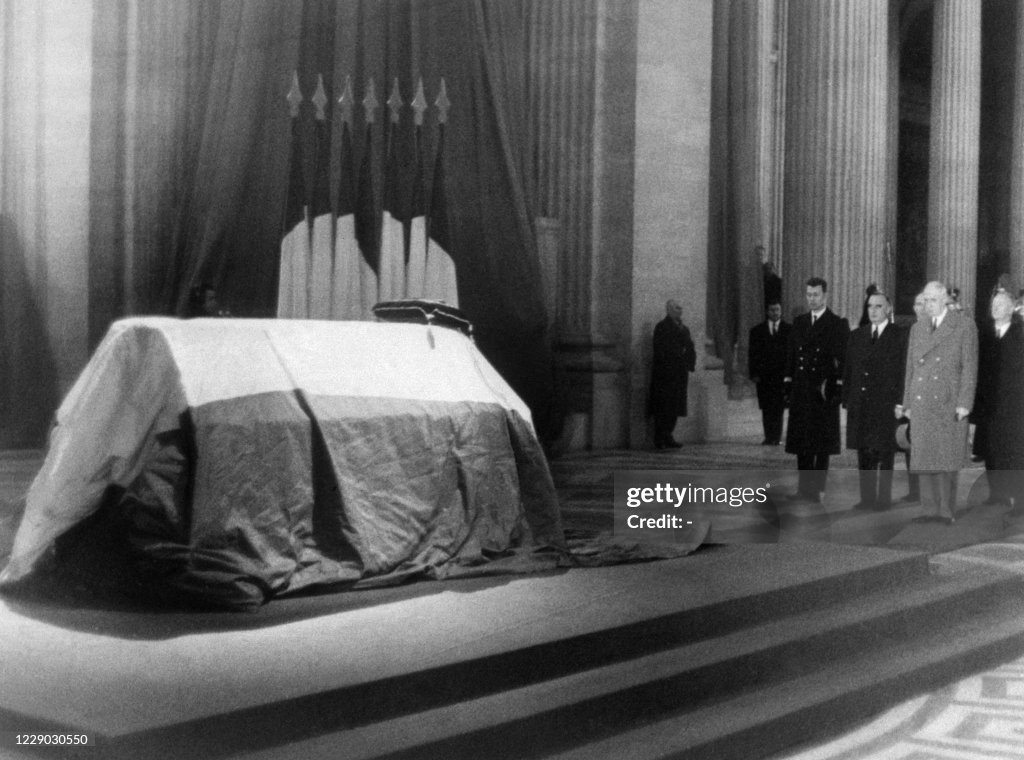
Led by President de Gaulle, France returned a moment today to the days of her wartime resistance to the Germans and honored one of its major leaders, Jean Moulin. At ceremonies during which political adversaries of today stood side by side as they did during World War II, the ashes of Moulin, who united the various factions that fought inside France, were placed in the Panthéon in the Left Bank Latin Quarter, where many of the country’s great men are buried. General de Gaulle stood with members of his Government, the diplomatic corps and the public in the square in front of the Panthéon while André Malraux, Minister of Cultural Affairs, delivered a eulogy of the clandestine leader of the National Council of the Resistance, whom he called “the chief of a people of night.” Tortured for days after he had fallen into a Gestapo trap, Moulin refused to talk and died of his injuries at the age of 44.
Revolutionary forces fighting as guerrilla units in the Caribbean area of Guatemala are taking advantage of the political indecisiveness here to step up their activities against the military government of Colonel Enrique Peralta Azurdia. The well‐equipped, welltrained groups in the mountain and jungle areas in the Department of Izabal are estimated at 150 to 300. They are said to have more then 1,000 adherents in the urban areas, particularly in the capital.
U.S. Congressman Gerald R. Ford of Michigan announced his intention to challenge minority leader Charles A. Halleck in January when Republican Party members of the U.S. House of Representatives would vote on their leader. With both candidates classified as conservatives, party philosophy is not at issue and most liberal Republicans were not interested in the outcome. Ford would narrowly win the vote on January 4, by a margin of 73 to 67, and would remain in the position until 1973, when he would be selected as the new Vice President of the United States and, ultimately, the nation’s President upon the resignation of U.S. President Richard M. Nixon.
Faced with departmental requests that already total $108.5 billion, President Johnson plans to perform intensive budgetary surgery on a holiday visit to his Texas ranch. Mr. and Mrs. Johnson will leave Washington for the LBJ Ranch tomorrow afternoon or evening, the White House announced today. They will be accompanied by the Director of the Budget, Kermit Gordon, who is taking along a foot locker and two cardboard boxes full of budget documents.
A source in the Budget Bureau said that Mr. Johnson would have to resolve 10 appeals by department and agency chiefs who were protesting cuts recommended by the Budget Bureau. “Significant amounts and quite important agencies are involved,” the source reported. One budget decision made by the Administration, partly for economy reasons, has been to delay construction of the Air Force’s manned orbiting laboratory.
The Administration wants to try to mesh the military space project with a civilian project, a move that could end the Air Fore’s ambitions for an independent manned space program. This decision is not one of those being appealed to the President. Some members of the Cabinet will go to Texas with Mr. Johnson, George E. Reedy, White House press secretary, said. He could not name them this afternoon. Other Cabinet officers and heads of Government agencies will be visiting the President at the ranch “on a rather constant basis,’’ Mr. Reedy said. Mr. Johnson is expected to stay there through New Year’s Day.
President Johnson approaches his inauguration in excellent health and with a very good chance of weathering the next four years, says one of his personal physicians. “There is no health reason why he should not continue an active, vigorous life for many years,” Dr. James W. Cain said in a phone interview. Dr. Cain, who is with the Mayo Clinic of Rochester, Minnesota, said that he had examined Mr. Johnson in the White House within the last two weeks. The 56‐year‐old President not only shows no adverse effects from the recent, rigorous political campaign, but also “I think he’s in better health than I’ve seen him in years,” Dr. Cain said.
Asked especially about the health outlook for Mr. Johnson during the next four years, Dr. Cain said of the man who suffered a severe heart attack in 1955: “I see no reason why he should not stand it very well. His job is very demanding — physically and mentally — but I see no reason why it should be any more dangerous in his case than in that of anyone else. His heart is doing very, very well. All signs of the old heart attack are gone.”
Mississippi is beginning to feel an economic pinch as the result of racial violence in the state during recent months. State tax revenues have fallen below the anticipated volume and as a result the state government is operating on a hand‐to‐mouth basis. The 3.5 percent state sales tax produced less revenue in November than a 3 percent levy brought in during November of 1963. The state has borrowed $8 million since last March in order to pay current expenses. Another bond issue for current expenses was contemplated earlier this month, but this was avoided by waiting a few days to pay bills. State officials say much of the financial problem is due to an increase in the state budget, but some of them say privately that business is down because of the racial situation.
Tourist business on the Gulf Coast, a resort area, dropped 50 percent after three civil rights workers were killed in Neshoba County in June, according to a reliable source. A few days ago a Chamber of Commerce representative from the coast said at a meeting of public relations, specialists in Jackson that hotel and motel occupancy in the Gulfport‐Biloxi area was only 8 percent. It has been a custom for many years for Sugar Bowl football teams to train in Biloxi during December. This year Syracuse University chose Pensacola, Florida, instead. “They were honest with us,” a Biloxi spokesman said. “They said they were afraid for the safety of their Black players if they came to Mississippi.” Travel agents in other parts of the country had asked, “Is it really safe to send our people to Mississippi?”
A factory in the southern part of the state moved a few miles across the border into Louisiana so that it would not have a Mississippi mailing address. “Actually,” one official said, “we are coasting along pretty well on the gains that were made before this year. But we are now beginning to feel the pinch.” There is deep concern here over reports of a national boy cott against Mississippi products by civil rights groups. State officials do not believe that financiers will join in the boycott as the result of any resentment against Mississippi. But there is concern that their faith in the economic future of the state will be shaken and they will be reluctant to risk their money here. There has been much talk about the need to improve the state’s image. A number of officials have suggested a public relations campaign to accomplish this, but this costs money that is not now available.
In 1963, when Robert F. Kennedy, then Attorney General, was pleading with Congress for passage of a public accommodations bill, he cited the plight of the widow of a Black serviceman. She could see her husband buried in Arlington National Cemetery with full military honors, he pointed out, but on the journey from and to her home in Mississippi she and her children would be turned away from motels, restaurants — even service station rest rooms. Today, because of the new Civil Rights Law, she would find the vast majority of those doors open to her, although it might require considerable courage to try them.
The Supreme Court decision upholding the public accommodations section of the 1964 act was received so quietly in the South this week that one might wonder what all the uproar had been about. In contrast to earlier predictions that the law would be detrimental to both commerce and race relations, the unanimous decision was met with a degree of detachment in many areas. “Nobody has to like this law,” The Raleigh News and Observer said in an editorial. “But the time of resistance is clearly past. The time for as painless adjustment to it as possible has arrived. Its existence may mean little to the multitude of American Negroes. It may prove much less disturbing than many American white people feared.”
“The law is here,” the paper concluded. “That fact may be far less disruptive than the fears.” Where there was opposition it was generally mild and in some areas the decision was accepted with a degree of relief.
Seven Democratic members of the Massachusetts House of Representatives said this week that they would support a resolution asking the United States House of Representatives to block the seating of five “unconstitutionally elected” Representatives from Mississippi. Representative Royal L. Bolling said that similar resolutions would be offered in 1965 in about 25 state legislatures. He expressed confidence that the Massachusetts resolution would pass. However, he said it would not be binding on the 12 Massachusetts Representatives in the national House. The Mississippi Freedom Democratic party unsuccessfully challenged that state’s delegation to the National Democratic Convention last August in Atlantic City. The group contends that 450,000 Black citizens were “systematically and deliberately prevented from registering and voting” in this year’s election in Mississippi.
A new organization has been formed by students of Columbia and Barnard Colleges to combat apathy toward the civil rights movement among Black students. “There is a great deal of apathy among educated, or so-called Ivy League, Blacks to our race’s continuing struggle,” said Hilton Clark, a Columbia junior. “They are losing identification with the masses of Blacks who are far below them educationally and economically.” Mr. Clark is the chairman of the new group, which calls itself the Student Afro‐American Society. There are 60 members in the organization, 50 of them Black. By contrast, the university chapter of the Congress of Racial Equality has 70 active members, not one of them a Black.
Flames swept through the Neiman-Marcus department store in downtown Dallas for five hours early today, causing damage that may total $10 million. More than 400 firemen fought the fire in 30‐degree weather. Twenty fire trucks were at the scene.
The American Conservative Union (ACU), the oldest lobbying organization for conservative political action in the United States, was founded at a meeting by about 100 conservative leaders in Washington, D.C. Outgoing U.S. Congressman Donald C. Bruce was elected as the first Chairman of the organization.
A total lunar eclipse afforded astrophysicist J. M. Saari the opportunity to make infrared pyrometric scans of the lunar surface with improved equipment, following up on Richard W. Shorthill’s discovery of “hot spots” in the Tycho carter during the March 13, 1960 eclipse. Saari carried out his observations from the Helwan Observatory in Egypt. The eclipse began at 0059 UTC (Friday evening in North and South America) and was visible from Western Europe and Africa as well.
“Gertrud”, Danish film directed by Carl Theodor Dreyer, starring Nina Pens Rode, Bendt Rothe and Ebbe Rode, is released in France.
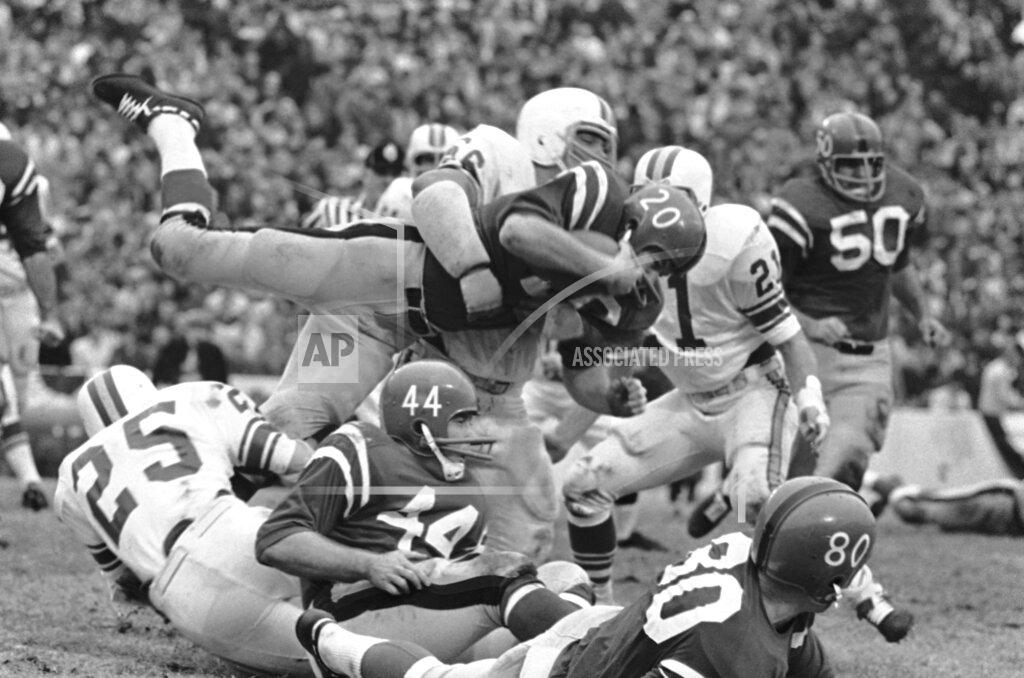
In the Bluebonnet Bowl in Houston, Texas, the Tulsa Golden Hurricane beat the Ole Miss Rebels, 14–7. Tulsa’s Jerry Rhome went 22-of-36 for 252 yards and rushed for 29 yards on 22 carries, scoring both Tulsa touchdowns. This was Tulsa’s first bowl win since 1944.
Born:
Arvydas Sabonis, Lithuanian National Team, Soviet Team, and NBA center (Pro Basketball Hall of Fame, inducted 2011; FIBA Hall of Fame in Madrid, 2010; Olympic gold medal, USSR, 1988; Olympic bronze medal, Lithuania, 1992, 1996; NBA: Portland Trailblazers), in Kaunas, Lithuanian SSR, Soviet Union.
Winston Garland, NBA point guard (Golden State Warriors, Los Angeles Clippers, Denver Nuggets, Houston Rockets, Minnesota Timberwolves), in Gary, Indiana.
Randall McDaniel, NFL guard (Pro Football Hall of Fame, inducted 2009; Pro Bowl, 1989–2000; Minnesota Vikings, Tampa Bay Buccaneers), in Phoenix, Arizona.
John Talley, NFL wide receiver (Cleveland Browns), in Cleveland, Ohio.
Greg Johnson, NFL tackle (Miami Dolphins), in Oklahoma City, Oklahoma.
Mike Fetters, MLB pitcher (California Angels, Milwaukee Brewers, Oakland A’s, Baltimore Orioles, Los Angeles Dodgers, Pittsburgh Pirates, Arizona Diamondbacks, Minnesota Twins), in Van Nuys, California.
Mikael Lindholm, Swedish NHL centre (Los Angeles Kings), in Gavle, Sweden.
Lorie Kane, Canadian golfer (4 x LPGA Tour titles; Canadian Golf HOF), in Charlottetown, Prince Edward Island, Canada.
Béatrice Dalle (née Cabarrou), French actress (“Betty Blue”; “Chimère”; “Night on Earth”), in Brest, France.



 History Diaries