The creation of a South Vietnamese armed forces council to advise on major decisions concerning military matters in South Vietnam was announced today. The council’s formation had been urged by commanders of key fighting units as a means of exercising some control over the Vietnamese Commander in Chief Lieutenant General Nguyễn Khánh. The official announcement said the council would be the voice of the armed forces and the aims would include improvement of the discipline and fighting spirit of the armed forces. It also would seek to prevent what the announcement described as abuses in the armed forces by some individuals for personal prestige or political ambition.
In the Mekong River delta, 70 miles southwest of Saigon, a United States helicopter was shot down today, but its four American crewmen were rescued after they had held off an attack by the Việt Cộng.
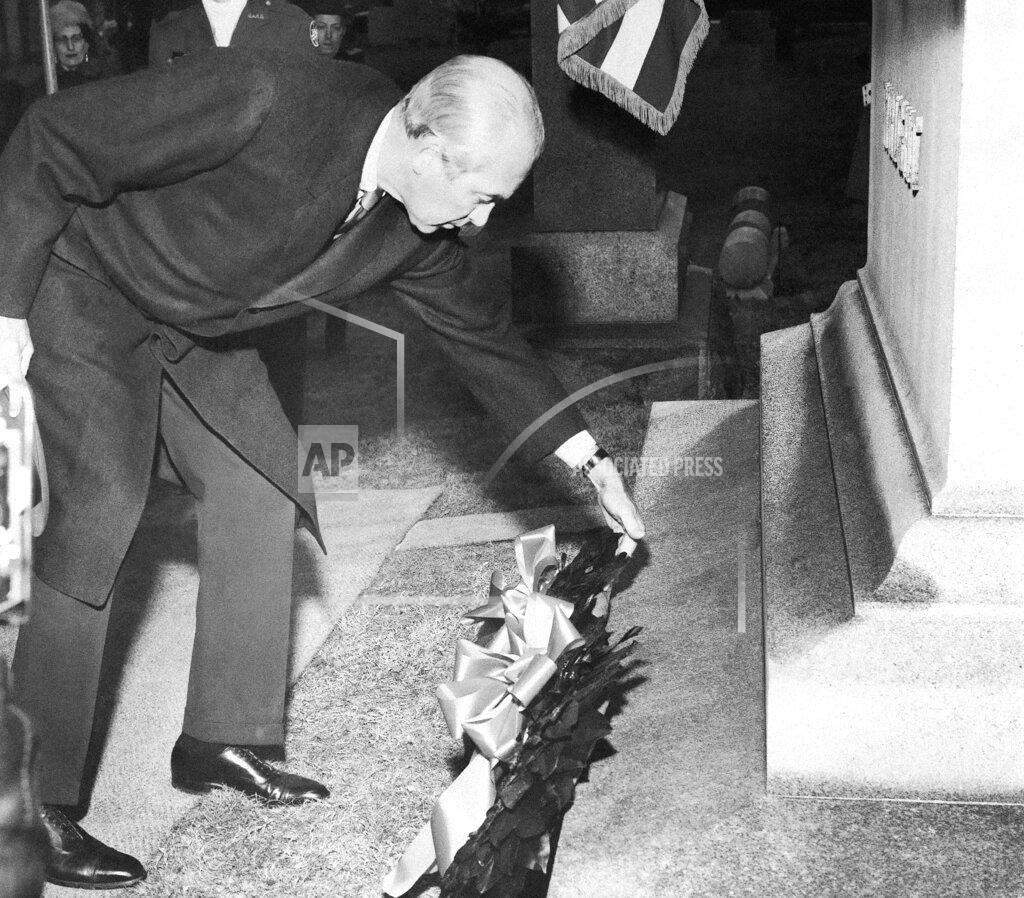
Defense officials have agreed to pay the cost of inscribing “Vietnam” on all Government headstones and markers on graves of United States military personnel who died during the Vietnamese war, Senator John G. Tower, Republican of Texas, announced today.
Military reviews by Western and Laotian officers agree that the Laotian Government forces have scored a net gain over pro-Communist troops in 1964. The margin of success was slim, however, and the loss of the Plaine des Jarres by the neutralists last spring has had a psychological impact on the country out of proportion to its military importance. A recent show of resistance by the pro‐Red Pathet Lao force in the southern province of Savaimakhet has persuaded some right‐wing units that their Communist adversaries will not be subdued in the foreseeable future.
The 1965 forecast is for a continuation of the stalemate with increased government attempts to block the supply trails in eastern Laos that have permitted North Vietnam to equip both Laotian and South Vietnamese Communist troops. Six months ago the Government would hardly have credited predictions that it would end the year in a strengthened position. Nineteen sixty‐four began disastrously. With the end of the rainy season in the previous December, the right‐wing army tried to capture the junction town of Lacsao in hostile Khainmouane Province. An American officer recently described the attempt as “like sticking a pitchfork into a tiger’s open cage.” The Pathet Lao, aided by troops from North Vietnam, beat back the attackers in January.
In May the neutralist army, allied under Government control with the 55,000 right‐wing troops, lost the Plaine des Jarres in north‐central Laos. The Communists’ victory helped them secure entries to the supply routes, which are called the Hồ Chí Minh Trail after North Vietnam’s Communist leader. Western military leaders have since said that the 7,000 to 8,000 neutralists, led by General Kong Le, had been overextended while holding the plain. They suffered heavily from defections and loss of armor as they regrouped at Moung Soui. At Phou Kout, a five‐neaked mountainous ridge west of the plain, a continued struggle has been waged for control. The strategic area has changed hands a score of times this year. Apart from suffering two major military reverses, the Government, led by neutralist Prince Souvanna Phouma, was overthrown in April by rightwing forces. Firm intervention by the United States and other signatories of the 1962 Geneva accords led to the Prince’s restoration as Premier. A major result of the turmoil and defeats of the first five months was the United States’ decision to increase its reliance on air power in Laos.
The Laotian Army’s fortunes began improving in late July when a carefully planned rightwing and neutralist offensive, called Operation Three Arrows, cleared the major north‐south road in central Laos of Pathet Lao from Vientiane to the royal capital of Luang Prabang. Named because of its use of pincer movements to cut off pockets of Pathet Lao resistance, Operation Three Arrows was led by General Kouprasith Abhay, one of the May coup leaders. The Pathet Lao retaliated in the central province of Xiengkhouang by pushing south on Route 4 and taking the town of Tha Thom. In September the Government launched a counterattack, retaking Tha Thom. The successful offensive improved the morale of the government soldiers. Some Western military sources have since regretted the sudden increase in confidence. “The Lao are a bunch of pendulum‐swingers, always going from top to bottom,” one officer said. “By last month the government army had decided to go to Tchepone and wring the Viets by the neck.”
The resulting operation in Savannakhet Province in November turned out less dramatically than that. Observers here have suggested that Government commanders in the south were resentful of the acclaim given to General Kouprasith’s Operation Three Arrows. They mounted their own offensive, which they called Victorious Arrow. To dubious Westerners in Vientiane it soon became “Broken Arrow.” The initial object had been to clear Communist guerrillas out of rice‐growing areas during the harvest season. After some early successes, the Government forces pressed on toward Tchepone, considered an important supply base on the Hồ Chí Minh Trail. The operation, however, gave the rice farmers in the western sector of the province the breathing space they had sought. Military leaders here expressed hope that the government units in the region might renew their offensive in the new year after laying more careful plans.
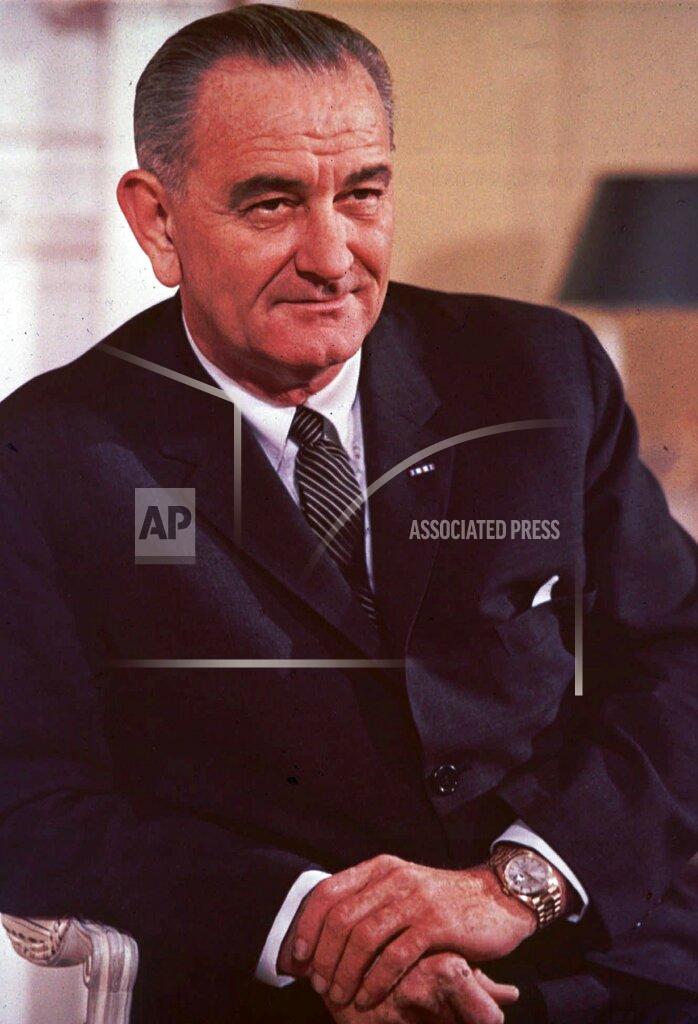
U.S. President Johnson announced at a press conference that he would seek to replace the 1903 Hay–Bunau-Varilla Treaty that gave the U.S. sovereignty over the Panama Canal, noting that “I have decided to propose to the government of Panama the negotiation of an entirely new treaty.” Johnson noted that the new agreement would allow the U.S. to operate and protect the canal during a transitional period, with sovereignty of the Canal Zone being eventually turned over to Panama. In addition, said Johnson, he would start negotiations with Panama, Nicaragua, Costa Rica and Colombia for the rights to build a new sea level canal.
President Johnson announced today that the United States had decided to proceed with plans to build a new sea‐level canal in Central America or northern Colombia linking the Atlantic and the Pacific. In the light of this decision, Mr. Johnson said in a surprise White House statement, the United States will propose to Panama “the negotiation of an entirely new treaty on the existing Panama Canal.” Administration officials said later that no decision had been made thus far as to whether the sea‐level canal would be built by nuclear or conventional means, whether it would be controlled by the United States alone or through an international arrangement, or whether the financing would be undertaken by this country alone or through some form of international consortium. All these points are being left open pending future negotiations, the officials said. Technical experts said the nuclear method would be preferable from the standpoint of economy.
While the President indicated that there were four possible sites for the new canal — two in Panama, one in Colombia and one along the Nicaragua-Costa Rica border — the impression here was that the United States would prefer to have the sea‐level waterway on the site of the present Panama Canal. Officials said it would be feasible to rebuild the present canal, which is operated on a system of locks, into a sealevel waterway, with major work concentrated only in the area of the Gaillard Cut, formerly known as the Culebra Cut. They said that it would be possible to complete this task by closing the present canal to traffic for only 12 days. However, officials emphasized that approximately four years would elapse before engineering surveys at the four sites could be completed. Only then could the United States make a technical decision as to where the new waterway would be situated, they added.
Panamanians and their leaders reacted with pleasure today to President Johnson’s offer of a renegotiated Canal treaty. President Marco A. Robles, in a radio and television address to the nation, welcomed “a historic day.” He said President Johnson’s statement would “create a favorable atmosphere for negotiations” in which Panama would make “basic demands” for change. Humberto Calamari, who has represented Panama in negotiations over the bitter issue of Canal Zone sovereignty, said of the new Washington offer, “This is exactly what we have been hoping for.” President Robles’s speech reflected Panamanians’ distaste for the 1903 treaty giving the United States control over the Canal Zone “in perpetuity”—a distaste that led last winter to rioting, shooting and a temporary break in Washington‐Panama relations. “In his important statement,” Mr. Robles said, “President Johnson has accepted the proposal to negotiate an entirely new treaty that would replace the 1903 accord, with its amendments. This will virtually abrogate this accursed instrument.”
What was defined last year as Rumania’s battle against economic exploitation by her Communist allies has now become also a quest for “spiritual” accommodation with erstwhile ideological adversaries in the West. What until recently was billed as the defense of national interests is coming very close to the promotion of even territorial national ambitions. Although Rumania has won her battle to resist economic integration with the other European Communist nations, her leaders show no inclination to tone down the campaign of selfassertion. It is now candidly described as a campaign for cooperation and commerce with everyone and against unprofitable dealings with anyone.
The fall of Nikita S. Khrushchev seems to have put new vigor into the effort. The Rumanians have kicked up their heels at Moscow in recent weeks, either because they see new opportunity in the ouster of the Soviet Premier or because they wish to discourage his successors from any effort to reverse the trend. They have for the first time fomented trouble for Moscow in the international Communist-front organizations. They have indirectly laid the basis for a claim to Bessarabia, which now is Soviet territory. They have defended Communist China’s right to test nuclear weapons. They have also developed a noticeable lack of interest in ideological polemics against capitalism.
Karl Marx, it develops, once had some unflattering things to say about Russians and Hungarians that turn out to be of pertinence and value to the Rumanians today.The Soviet Union partially reversed a policy of discouraging private individuals from owning their own farms. Gosbank, the national bank of the U.S.S.R., was authorized to make loans to collective farm workers to purchase livestock for their own use.
The Ministerial Committee of the Council of Europe met today to discuss means of furthering European unity and cooperation with the United States. Members of the 17‐nation council expressed a belief that unity had been stimulated by the agreement on grain prices reached earlier this week by the European Common Market. Qualified sources were in agreement that relations between Europe and the United States remained a serious problem. One reason for their concern was the conviction that the split between France and the United States had not been mended by the meeting of the North Atlantic Treaty Organization this week.
This was reinforced by the newspaper Le Monde in an editorial. It argued that the positions of France and the United States on an allied nuclear force were incompatible and that the inconclusive meeting of the NATO ministers had merely suspended NATO’s death sentence. “And on many other points,” the editorial said, “from Southeast Asia to the settlement of back dues at the United Nations, the position of France is already closer to that of the Soviet Union than to that of the United States.”
Chancellor Ludwig Erhard is undertaking to patch West Germany’s tattered relations with its special treaty partner, France. A Government spokesman said today that the Chancellor would seek in his semi‐annual consultation with President de Gaulle next month to clear up “misunderstandings” that arose between the two allies during the North Atlantic Treaty Coucil meeting in Paris this week. Specifically, Dr. Erhard will try to win French support for a Western initiative toward the reunification of Germany, the spokesman said. France’s refusal to go along with Bonn’s ideas on this issue brought relations between diplomats of the two allies to a rare point of tension in Paris. This squabble, aggravated by an alarmed public reaction to a suddenly revealed plan to emplace atomic explosives underground near West Germany’s eastern border, have made these trying days for Dr. Erhard.
The Atomic Energy Commission disclosed today that it had cautioned manufacturers against selling other countries equipment that could be used in the development or testing of atomic weapons. The specific object of the commission warning was France, which has refused to sign the treaty for a limited test ban and is now preparing for atmospheric tests of hydrogen bombs near Tahiti in the South Pacific. The commission, in response, to inquiries, made public today, two letters sent by its San Francisco operations office in October. The letters warned manufacturers of the United States obligation under the treaty not to assist any country in the testing of atomic weapons in the atmosphere. The letters went to companies that had supplied equipment to the Lawrence Radiation Laboratory, a weapons laboratory at Livermore, California, and therefore were in a position to furnish equipment “which could be of interest to France in its nuclear weapons program.”
The United Nations peace‐keeping force on Cyprus was extended today for three more months by the Security Council. The 11‐member Council voted unanimously to continue the force until March 26 while the United Nations mediator, Gal Plaza Lasso of Ecuador, continued to work for a long‐term solution of the conflict between Greek and Turkish Cypriots. Accusations were exchanged before the vote. However, all speakers agreed that the United Nations had succeeded in reducing the violence that erupted just before last Christmas and was working toward peace. Spyros Kyprianou, Foreign Minister of Cyprus, spoke first. He accused the Turkish Cypriots of being rebels “acting on the directives of the Turkish Government.” He charged that they were trying to “further the political aims of the Turkish Government for partition” of Cyprus, “or what they prefer to call ‘federation’.”
Turkey’s permanent representative, Orhan Eraip, asserted that federation could not be considered tantamount to partition because it meant the opposite. He said that a policy of federation could result in partition only if the Greek Cypriot areas chose later to be united with Greece. Dimitri S. Bitsios of Greece said the major element of the last three months had been restoration of calm on Cyprus. Therefore, he declared, attention could be focused on the political problem. He accused Turkish Cypriot leaders of putting legal points above the welfare of their people. The resolution adopted today affirmed resolutions of the Council since March 4 and called on all United Nations members to comply with them. These set up the peacekeeping force and called for peace. The new resolution then extended the life of the force for three months from its projected expiration date of December 26.
Alex Quaison‐Sackey of Ghana, President of the General Assembly, has stepped into the deadlocked United Nations financial negotiations with a plan of his own. United States officials viewed the plan as positive and one that could enable the stalled Assembly to get on with its business. In essence, the proposal appeals to all member states for “adequate and substantial contributions,” or pledges, to be made to a voluntary fund. It asks the Secretary General, U Thant, to report by January 15 on the contributions or pledges received to restore the United Nations to a “stable and solvent basis.” Mr. Quaison‐Sackey’s plan contains no specific mention of the controversy over enforcement of Article 19 of the United Nations Charter, under which the Soviet‐bloc countries would lose their Assembly votes for excessive arrears on assessments.
The Organization of African Unity adopted late today a resolution that African delegates said appealed to the Security Council to condemn alleged Western military intervention in the Congo. The resolution, approved by 20 of the 35 nations in the organization, also expressed the O.A.U.’s own disapproval of the United States‐Belgian mission that rescued white hostages of the Congolese rebels last month, the delegates said. A spokesman for the organization, Mohammed Sahmoun of Algeria, said the text of the resolution would not be made public until Monday. The section of the resolution appealing to the Security Council does not specifically use the word “Western,” according to the delegates, but merely employs the term “foreign.” They added, however, that the phraseology left no doubt that the resolution referred to the alleged Western military intervention in the Congo and not to arms and supplies that some African nations have been shipping to the Congolese rebels.
The Jordanian‐Israeli Mixed Armistice Commission condemned Israel last night for a violation of the truce agreement and the integrity of Jordanian territory, a Jordanian commission source said here. The statement was made after an emergency meeting of the commission to discuss an exchange of fire in the Tulkarm area December 8 that resulted in the death of an Israeli soldier.
The deadly Christmas flood of 1964, that would kill 47 people during the holiday season, began with a powerful Pacific Ocean storm that brought record snowfalls in northern California, Oregon and Washington, with accumulations of up to ten feet in Oregon’s Cascade Mountains. As warmer temperatures arrived from another front, the snowstorm “changed over to a torrential warm rain, with two months’ worth falling in just five days and melting the snow at even the highest elevations” and swelling the Willamette River and the Umpqua River and their tributaries.
Fourteen leading businessmen spent three hours and five minutes with President Johnson today and came away convinced they had a “wise” friend in the White House. The businessmen expressed general confidence about the economic climate and said that their confidence would be bolstered if the budget could be kept to less than $100 billion. But the real importance of the meeting was as much political as economic. Mr. Johnson, in a demonstration of his politics of consensus, seemed to have charmed the businessmen as much as he had a group of labor leaders a day earlier. The businessmen’s spokesman, Frederick R. Kappel, chairman of American Telephone and Telegraph Company, said the President “is being extremely wise in his thoughtful evaluation” of business and economic problems. Leading officials of the American Federation of Labor and Congress of Industrial Organizations who met with the President yesterday were similarly pleased with the open‐minded and friendly bearing of Mr. Johnson.
The flow of cash income to American families and individuals in November exceeded an annual rate of $500 billion for the first time, President Johnson announced today. This was hailed by the President as “a tremendous achievement for the American people, and for our free enterprise system.” The personal income figure for November was rated at $502 billion for the year. This represents the flow of income in the month, adjusted for normal seasonal changes and converted into an annual rate. Thus the actual cash received in November was about onetwelfth of the $502 billion figure. Federal income is the measure of the nation’s consumer purchasing power. The more it grows, the more consumers spend and the more the economy grows. “Never before in our history or in the history of any other country,” the President said, “has there been such an outpouring of the means to buy the good things of life. And never before have so many people shared in this wealth.”
Although the normal detailed income breakdown was not released by the White House today, the announcement said that $340 billion of the $502 billion income total had come from wages and salaries. This was $2.8 billion higher than in October. The rest of the income came from a variety of sources — interest, dividends, rents, small business profits, farmers’ revenues and cash payments from the government. Personal income has been rising strongly all year with the general boom in the economy. The rise nearly halted in October because of the strike against the General Motors Corporation, but the end of this strike gave added impetus to the November figure. Of the total rise of $3.3 billion in the rate of income in November, Commerce Department sources attributed $1.5 billion to the resumption of work at General Motors. The rest, $1.8 billion, was about in line with the average monthly growth that has prevailed throughout the year. The President pointed out that both total personal income and the key wage‐and‐salary component were up by 25 percent from the level of 1960, a very large rise in four years. The growth in take‐home pay has been even greater because of the big tax cut enacted this year.
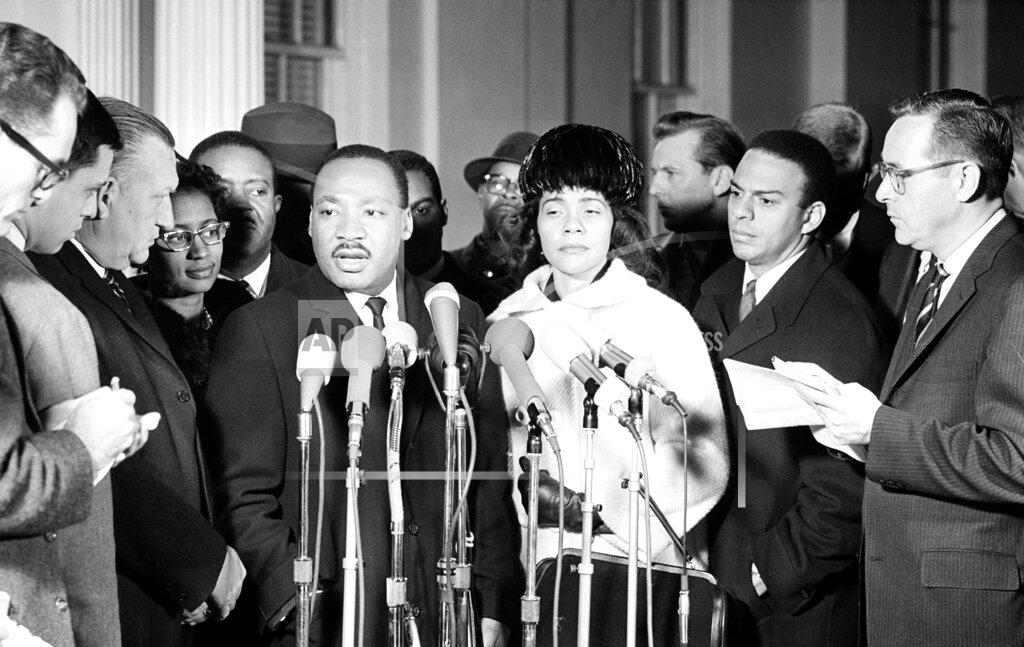
The Rev. Dr. Martin Luther King Jr., winner of the 1964 Nobel Peace Prize, urged President Johnson today to give Blacks a voice in the leadership of the Administration’s antipoverty campaign. The Black leader, who was given a tumultuous welcome home in New York City yesterday on his return from Norway, met with Mr. Johnson today for what he called a “very fruitful and friendly” discussion. Dr. King said that a major topic discussed was the role of the Black in the antipoverty program approved by Congress. He said he had told Mr. Johnson that Blacks wanted to be part of the antipoverty campaign and he hoped they would be given roles of leadership. He said he had told the President that Blacks were very much concerned about the problem of judges who “use and misabuse” their power in dealing with civil rights cases.
Dr. King said he believed the Civil Rights Act of 1964 must be implemented in its totality, largely by the Justice Department. He made the statement when asked to comment on a remark by Assistant Attorney General Burke Marshall, who said in his letter of resignation today that the civil rights movement would now be a matter of litigation in the courts. “It must be the department’s overall responsibility,” Dr. King said. Asked if he had discussed with Mr. Johnson his dispute with the director of the Federal Bureau of Investigation, J. Edgar Hoover, Dr. King said he had not. He said that this was a “dead issue” and that any disagreement he had with Mr. Hoover was “a matter of the past.” Dr. King and Mr. Hoover had been involved in a dispute over the FBI’s handling of civil rights cases in the South.
Burke Marshall resigned today as Assistant Attorney General in charge of the Civil Rights Division. President Johnson announced he would name Mr. Marshall’s deputy, John Doar, to replace him. Mr. Doar, 43 years old, has been engaged in the civil rights work of the Justice Department for more than four years. In his letter of resignation Mr. Marshall said he would like to “state my belief that my present job can best be done by someone else.” He also wrote that “the policy focus of federal civil rights efforts in general,” and particularly those efforts involving employment and the nondiscriminatory use of federal funds, “should not in my judgment any longer rest in the Department of Justice.” Sources explained Mr. Marshall believed that over‐all civil rights policy must now be coordinated under Vice President-elect Hubert H. Humphrey, as President Johnson has requested.
The Labor Department authorized grants of $458,000 today to help support a massive effort being developed by Black leaders in Philadelphia to train congenitally unemployed, uneducated men and women to hold jobs. The self‐help project, which is attracting increasing attention from Black leaders in other communities, grew out of the successful selective patronage program that Blacks in Philadelphia conducted from 1961 to 1963. Selective patronage involved boycotting the products of concerns to force them to hire more Blacks. The boycotts produced more job offers than the Black leaders could find qualified workers to fill. Eleven months ago, they set up Opportunities Industrialization Center to train Blacks for jobs.
The civil rights picture in Georgia’s larger cities is encouraging, the State Council on Human Relations said today. Compliance with the new civil rights law has been relatively trouble‐free in Albany, Athens, Atlanta, Brunswick, Columbus, Macon, Savannah and Warner Robins, the council said.
A white civil rights worker once accused of fomenting insurrection in Georgia said today he planned to marry a Black girl and return to the South. John Perdew, 22 year‐old, of Denver, said he would marry Amanda Bowen, 19, in Denver Wednesday. He said they would return to Georgia to continue work for the Student Nonviolent Coordinating Committee. Laws against interracial marriage are under attack in the courts but the United States Supreme Court has not yet ruled on the matter. Colorado had such a law, but it was repealed in 1957. Georgia and 18 other states have such statutes. Mr. Perdew, a Harvard University student, was arrested in Americus, Georgia, on Aug. 8, 1963, with three others and charged with several counts, including inciting to insurrection, a capital crime. The insurrection statute was held unconstitutional after Mr. Perdew spent four months in jail without bond.
A resolution urging St. Louis residents to refrain from purchasing or using products manufactured or processed in Mississippi was adopted today at a stormy session of the Board of Aldermen. Donald Gunn, board president, who introduced the resolution, said “justice has been denied to some of the citizens of Mississippi… St. Louisans consider human values more important than property values,” the resolution said. “They wish to be on the side of justice and against oppressors.”
The National Labor Relations Board imposed today the most severe penalty it had set in a case involving a union local found guilty of engaging in racial discrimination. For the first time, the board ordered a local to propose to an employer contract provisions to prohibit discrimination in terms and conditions of employment, and further to bargain in good faith to obtain them. The 3‐to‐2 board decision involved Local 12 of the United Rubber Workers of America at the Goodyear Tire and Rubber Company plant at Gadsden, Alabama. Eight Black members of the local, aided by Robert L. Carter, general counsel of the National Association for the Advancement of Colored People, filed charges with the board in 1962 asserting that the local had refused to handle their grievances. The workers had sought to desegregate company facilities, such as restrooms, a cafeteria and the company golf course. They also sought pay for a period during which they were laid off while white workers with less seniority continued to work.
President Johnson lighted the nation’s Christmas tree tonight and hailed a new age of peace in a world where “man has made war unthinkable” by his own inventions. The President pushed a button on the grassy ellipse south of the White House and set ablaze 7,500 red and white lights and a white cross that surmounted the 72‐foot Adirondack white spruce, a gift from the State of New York. It was the largest tree used in a ceremony that dates back 40 years.
The U.S. performs a nuclear test at the Nevada Test Site.
During funeral service held for soul singer Sam Cooke, fans cause damage to funeral home.
Filming is completed for “Star Trek” pilot “The Cage”; cast includes Jeffrey Hunter, Susan Oliver, Leonard Nimoy, and Majel Barret; although it never airs, some footage re-used in “Menagerie” episode of the series.
“The Pink Panther” cartoon series premieres (“Pink Phink”).
Dow Jones Industrial Average: 868.73 (+5.16)
Born:
“Stone Cold Steve Austin” [as Steven James Anderson], American professional wrestler, in Austin, Texas.
Don Beebe, NFL wide receiver and kick returner (NFL Champions, Super Bowl 31-Packers, 1996; Buffalo Bills, Carolina Panthers, Green Bay Packers), in Aurora, Illinois.
Barry Bowman, NFL punter (Seattle Sehawks), in Port Arthur, Texas.
Pierre Nkurunziza, President of Burundi (2005-2020), in Ngozi, Burundi (d. 2020).
Robson Green, British actor (“Soldier Soldier”) and singer-songwriter (Robson & Jerome), in Hexham, England, United Kingdom.



[Ed: GAH. Get that girl a box of cheeseburgers, Stat!]
 History Diaries