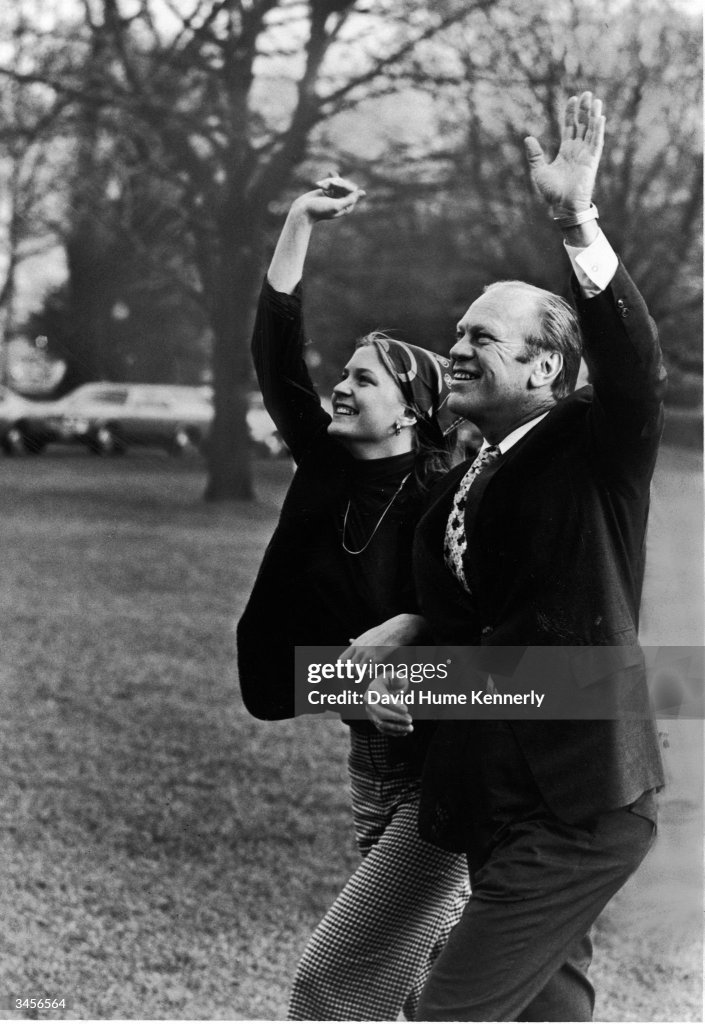
President Ford and President Valery Giscard d’Estaing of France announced in a communique at the end of their two days of talks in Martinique that they had reached a compromise agreement to coordinate their energy policies. Under the agreement, the United States will take part in a French-proposed conference of oil-producing nations, major oil importers and probably developing countries in an effort to bring order to the world market.
The United States Senate unanimously (93 to 0) ratified the Geneva Protocol, officially the “Protocol for the Prohibition of the Use in War of Asphyxiating, Poisonous or other Gases, and of Bacteriological Methods of Warfare”, almost 50 years after it had first been signed. U.S. President Ford signed the ratification on January 22, 1975. The agreement had been signed in Switzerland on June 17, 1925, and became effective on February 28, 1928.
The U.S. Senate approved a $3 billion military construction bill, but in a turnabout cut out funds for enlarging the U.S. Navy facility on the Indian Ocean island of Diego Garcia. The vote was 85 to 0. The House version of the measure had earmarked $18.1 million for the base, which the Navy and Pentagon claim is needed to counter increasing Soviet influence in the area. The Administration had been asking for a total of $32.3 million to improve the island’s runway and military facilities. The bill now goes to a House-Senate conference, where it is possible that some funds might be restored.
Greece’s interim president would be simply a figurehead under a draft law introduced in parliament. The interim president would remain a figurehead until a new constitution is approved by two-thirds of the 300-seat house. Premier Konstantine Karamanlis, 67, known to be a candidate for the post, has said the constitution — to be presented this week — will give the president extensive powers. The first president will be elected by parliament to avoid another general election, although in the future presidents are to be elected directly by the people.
The 20-year prison sentence of convicted Soviet spy Igor Ivanov was dismissed at the request of the State Department, which said that bringing him back from Russia might strain foreign relations. The U.S. District Court in Newark, New Jersey, vacated the sentence. Ivanov had been allowed to return to Russia in 1971 pending a decision on appeal of his sentence.
Pope Paul VI denounced clerics who challenge his authority and called on all Roman Catholics to take an active part in reconciling dissidents “with God and with their brethren.” He expressed sorrow over priests who renounced the priesthood. But he criticized dissidents who remain within the church to undermine its unity from within and to oppose the hierarchy. Meanwhile, the late Popes Pius XII and John XXIII came one step nearer to being declared saints when Rome diocesan authorities presented assessments of their work to the Vatican.
Administration officials in Washington doubt seriously that the United States will be able to make good its offer to provide Egypt and Israel with large atomic power plants because of Israel’s lack of interest. She has informed Washington that she is not interested in an atomic plant at this time. The officials believe the reason is Israel’s reservations about placing her atomic facilities under international inspection.
Egyptian President Anwar Sadat, in an interview with Iranian publisher Farhad Massoudi, has warned that the Middle East is a bomb ready to explode and that definite progress toward a settlement must be achieved if Secretary of State Henry A. Kissinger wants to continue his negotiations. “If the Americans through their step-by-step approach can achieve any progress or success, I welcome it,” Sadat said. If not, he added, Egypt favors resumption of the Geneva peace talks.
Iraq said today that two of her fighter planes had been shot down over the northern part of the country near the border with Iran. A statement by the Iraqi Army Command, broadcast by Baghdad Radio, said both aircraft were hit by American-made surface‐to‐air Hawk missiles. One was shot down Saturday, and the second yesterday, the statement said. The type of aircraft involved was not reported.
Special military tribunals today sentenced 24 more people to three years’ imprisonment, for their part in mob violence in Rangoon, Burma last week, bringing to 87 the total convicted so far. The government introduced martial law in Rangoon last Wednesday after looting and destruction followed a predawn raid by troops on the university campus, where students had carried the body of U Thant, the former United Nations Secretary General. A group of students took the body as it was about to be buried in a public cemetery 11 days ago and hastily built a mausoleum on the university grounds. They said, the former Secretary General should have a more fitting funeral and monument than was planned by officials. The body was retrieved by troops and buried, at a family mausoleum near Rangoon’s Shwedigon Pagoda.
The South Korean Navy towed a badly damaged vessel thought to be a North Korean spy craft to Inchon harbor and said all its crewmen were believed dead. The vessel, about 60 tons and carrying more than 250 rounds of machine-gun ammunition, was captured in the Yellow Sea after an explosion that might have been set off by its crew. The body of one North Korean was spotted in the sea but there was no sign of other crewmen.
A woman was reported to have been killed and 24 people wounded by falling shrapnel in downtown Seoul last night when South Korean antiaircraft gunners fired thousands of rounds at what was apparently a Korean Air Lines jet approaching the city’s airport. There were no known injuries aboard the plane, which I accidentally strayed into a heavily defended prohibited zone around the, capital. But pedestrians, people on buses and others in their houses were hit by spent shells from the batteries of antiaircraft guns on the mountains that ring Seoul. According to the police, 11 persons were wounded at one busy intersection near the United States Embassy and the South Korean capitol building. The incident was the fourth and most serious this year in which Korean gunners have fired at aircraft flying over the city. Two United States Army helicopters were shot down and another Korean Air Lines plane was fired upon in the previous incidents.
In part, the shootings stem from Seoul’s vulnerable position only 35 miles from the demilitarized zone that separates North Korea from South Korea. But they also reflect the nervousness of President Park Chung Hee’s Government cause of growing criticism of the President’s tough one‐man rule and the assassination of Mrs. Park last August. Last night’s shooting began shortly after 6 o’clock as many of Seoul’s six million residents were hurrying home from work in cold weather. Suddenly popping noises like firecrackers broke out and the dark sky was crisscrossed with red streaks from tracer bullets.
The plane was apparently thought to be flying over the center of the city, because batteries on the mountains around Seoul aimed at a point directly above the downtown, section. From one vantage point a halfdozen batteries of guns could be seen firing for three minutes. Bursting star shells and searchlights illuminated the sky. In its only comment on the incident, the Ministry of Defense said in a two‐sentence statement: “An aircraft of undetermined specification attempted, to intrude into the flight control zone in Seoul, eliciting antiaircraft ground fire.” The Defense Ministry added that the shooting was being investigated. However, well‐informed Koreans and Western diplomats said the aircraft had been a Korean Air Lines plane flying in a holding pattern before landing at Kimpo International Airport, about, 15 miles west of Seoul. A spokesman for Korean Air Lines denied that any their planes had been involved.
Needy seven years ago, a leading Chinese military figure, Yang Cheng‐wu, was reviled as a “counterrevolutionary double‐dealer” and “reptile” and was purged as acting chief of staff of the army. Now he may have been restored to the same post — the top operational command in the Chinese Army — as part of an effort to reshape the military leadership to make it more responsive to orders issued by the Communist party in the name of its chairman, Mao Tse‐tung. Mr. Yang, who was a general before military ranks were formally abolished in China, was publicly rehabilitated only last summer.
Chairman Mao Tse‐tung has declared that it is time for China to “settle down” after the Cultural Revolution, according to usually reliable sources here. A new saying attributed to the chairman has been reported posted in public places outside Peking, calling for unity in the party and the armed forces. A Chinese official is reported to have confirmed the authenticity of the quotation. The reported text of the message says: “The Cultural Revolution has been going on for eight years. It is time to settle down. The entire party and army should unite.” The reports of a new instruction by Chairman Mao coincide with increasing speculation about economic and administrative difficulties in China. The National Peoples’ Congress, widely forecast by officials for the near future, is now said to have been postponed at least until next month.
[Ed: You Asshole, the whole thing was your damned fault! Hope they buried you with marshmallows.]
ANZUK, a military unit created in 1971 by agreement of Australia, New Zealand and the United Kingdom, was disbanded after slightly more than two years.
Secretary of State Henry A. Kissinger may go to Brazil, Argentina and Peru next month, according to a senior U.S. official, Latin American leaders have been critical of what they consider U.S. neglect.
In central Africa, the army of the Republic of Mali invaded the Republic of Upper Volta (now Burkina Faso) in a border conflict over water rights that would last until 1985.
Reliable sources in Rhodesia said that Prime Minister John Vorster of South Africa has suggested a plan to settle the prolonged Rhodesian crisis that, if carried out, would appear certain to bring black rule to Rhodesia within a few years. In the meantime, the plan would give blacks a powerful voice in an interim Parliament elected next year, the sources said.
The USSR performs a nuclear test at Eastern Kazakh, Semipalitinsk.
The Safe Drinking Water Act was signed into law, setting standards for drinking water quality for all public water systems in the United States. This law focuses on all waters actually or potentially designed for drinking use, whether from above ground or underground sources. The SDWA applies to every public water system (PWS) in the United States. There are currently over 148,000 public water systems providing water to almost all Americans at some time in their lives. The Act does not cover private wells (in 2020, 13% of US households were served by private wells).
Congress finally resolved its four-month battle over school desegregation when the House followed the Senate and nullified an anti-busing amendment to an education appropriations bill and sent the measure on to President Ford. The antibusing amendment — which did not specifically mention busing—had been put into the $8.6‐billion appropriations bill by the House two months ago, but was deleted last Saturday by the Senate after a filibuster threat was narrowly defeated. The amendment, introduced by Representative Marjorie S. Holt, Republican of Maryland, was viewed by its opponents as means of subverting the terms of the 1964 Civil Rights Act, which gave the Department of Health, Education and Welfare the authority to enforce school desegregation.
The Supreme Court, voting 7 to 2, upheld the 1973 railroad reorganization plan that Congress enacted to rescue eight bankrupt carriers in the Northeast and Middle West and merge them into a single private self-sustaining system. The decision overruled a three-judge special federal panel, which had found that parts of the reorganization plan unconstitutional.
Federal mediators entered the stalled contract talks for 4,400 United Mine Workers construction employes today, while pickets made idle nearly half the nation’s 120,000 coal miners. A meeting in Washington tomorrow between negotiators for the union and the Association of Bituminous Contractors was called by the Federal Office of Mediation Services. The two sides have met only once, on Friday, since the U.M.W.’s Bargaining Council rejected a tentative contract last Wednesday. L. William Hobgood, director of the Federal office, said that he and other Federal mediators would participate in the talks to try to deal with issues that he said were still unclear. Spokesmen for coal mining concerns said, meanwhile, that they were considering legal action against the pickets.
Political favoritism played a major role in hiring practices of the Department of Housing and Urban Development during President Richard M. Nixon’s administration, according to a study by the Civil Service Commission. The study said that department officials violated civil service regulations by keeping extensive political files on employees and job seekers and that a patronage unit was apparently set up for the sole purpose of making sure persons with the right political connections got department posts.
Federal mediators entered the stalled contract talks for 4,400 United Mine Workers construction employees. Pickets idled nearly half the nation’s 120,000 coal miners, more than at any other time since the full UMW strike that ended December 9. Coal industry spokesmen estimated that 24,000 miners were out in West Virginia, 20,000 in Pennsylvania, 7,000 in Illinois, 2,500 in Indiana, 2,000 in Virginia and 1,000 in Ohio.
Previously unpublished documents obtained by Daniel Ellsberg disclose another instance in which the public was misled about the progress of the Vietnam war, Rep. William S. Moorhead (D-Pennsylvania), chairman of the House subcommittee which has the documents, said. Ellsberg, reached at his home in Mill Valley, California, said that Moorhead was referring to a cable of October, 1967, which contained “a reference to a very elaborate program by the embassy and the military in Vietnam to convince the press and the public that ‘we are making solid progress and are not in a stalemate.’”
A pilot who was held in Havana for two days until his company paid $500 in charges to Cuban airport officials returned to Miami in his hijacked plane. The pilot, Frank Haigney, 30, of Tampa, flew his twin-engine Piper Seneca into Miami International Airport where FBI agents immediately began questioning him. Authorities said the hijacker used the name Robin Harrison.
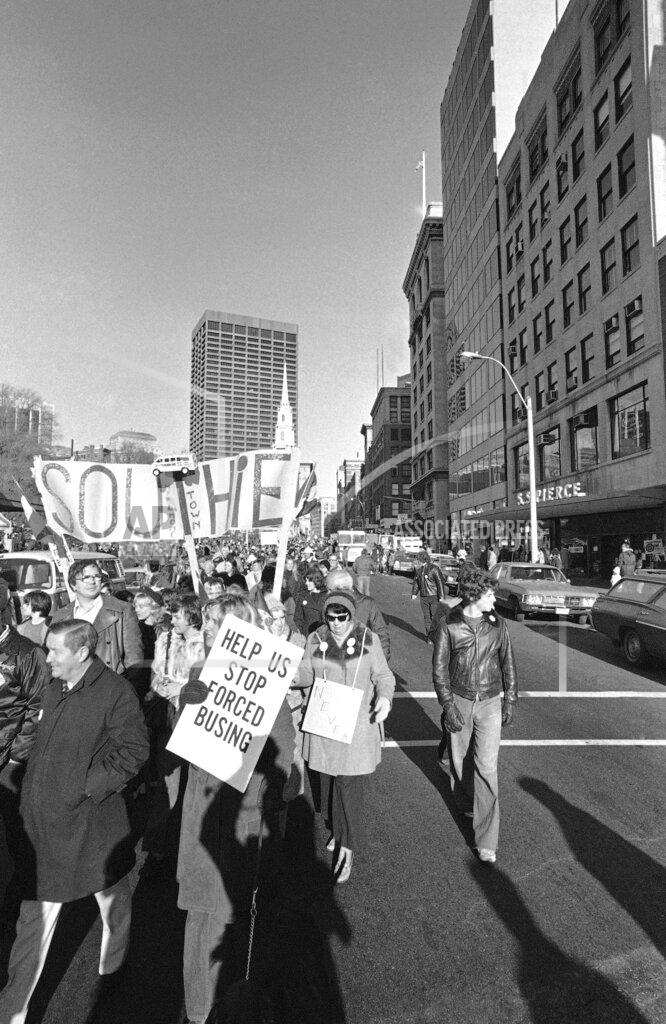
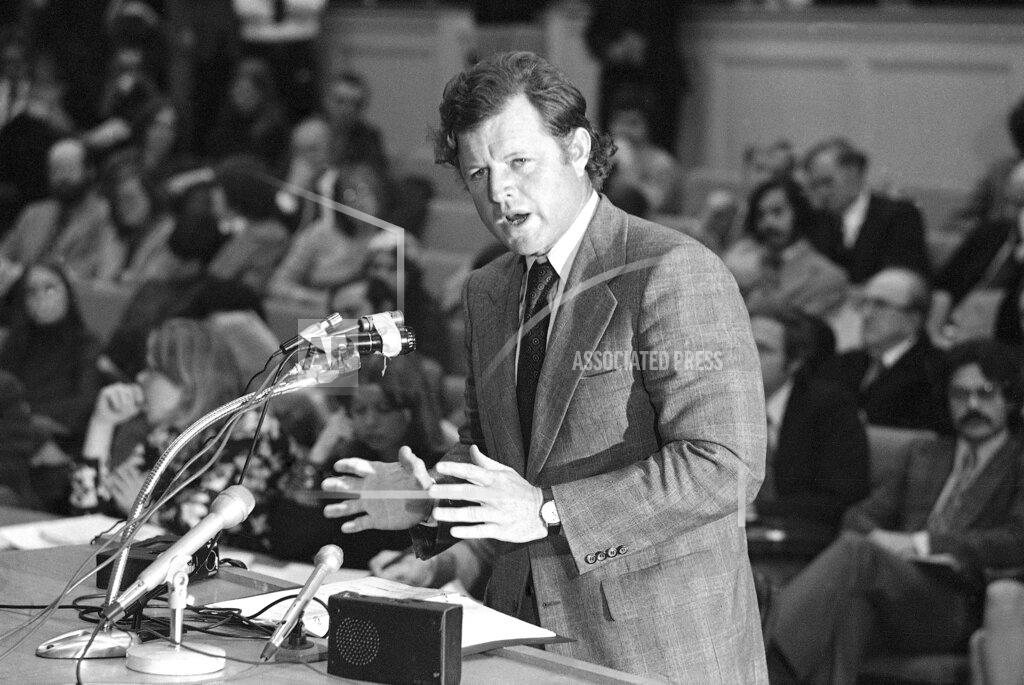
The Boston School Committee, defying a federal court order, refused to approve a new city-wide school busing plan that was scheduled to take effect next fall. A few minutes before the plan was to have been submitted to federal Judge Arthur Garrity, members of the committee denounced the current court-ordered busing plan as having brought bloodshed and racial hatred to the city and voted 3 to 2 not to approve the plan that had been prepared by the committee’s staff. Judge Garrity, who, on October 31 ordered the committee to draw up, “approve” and submit a citywide plan by noon today, took no action on the defiance this afternoon. He has a hearing scheduled on the school case on Wednesday. For the last decade, politicians here have sought and won seats on the School Committee, which is elected at large, with antibusing appeals to white neighborhoods. The committee is all white and of Irish extraction.
For the second time this year, and for the third time in New Jersey’s legislative history, the Senate Democratic majority rejected a state income tax. This appeared to kill any hope of the legislature approving a new system of financing public schools by December 31, a deadline set by the state Supreme Court.
The New Hampshire Supreme Court ruled that Governor Meldrim Thomson Jr. and the state Executive Council have no authority to declare a special election in the state’s disputed U.S. Senate race. In the latest recount, Republican Rep. Louis C. Wyman held a two-vote lead over Democrat John A. Durkin. Thomson and the council had asked the court if the outcome could be declared a “virtual tie” and a runoff election ordered. The court said that was possible only in the case of an actual tie.
A widely hailed experiment which had indicated that immunity from disease could be transferred from one animal to another may not be valid, one of the researchers who announced the findings said. The scientist, Dr. David H. Dressler of Harvard University, issued the tentative retraction after an undergraduate member of the research team was forced to leave school because he forged recommendation letters. Although the team had isolated the “transfer factor” 20 times between the summer of 1973 and last April, Dressler said it has been unable to duplicate the results since. The undergraduate was quoted in the Harvard student newspaper as saying that although he admitted forging the letters he denied tampering with the Dressler experiment.
Ohio’s air pollution standards for electric generating plants — considered among the toughest in the nation — were reduced by the state Environmental Protection Agency. Ira L. Whitman, agency director, announced he was canceling a state order that required electric utilities to install expensive smokestack scrubbing equipment before mid-1975. He also said the state would not enforce the standard of 60 micrograms of sulfur oxide per cubic meter of air, which was adopted in 1972. The federal level is 80 micrograms.
Nevada geothermal sites are going up for auction. The state Bureau of Land Management announced that 30,000 acres of national resource lands in Lander, Eureka and Churchill counties will be put on the block Wednesday. The center of attention is expected to be the Beowawe Known Geothermal Resource Area, which has recorded well temperatures of more than 400 degrees Fahrenheit. Two of 12 wells drilled in the area have been blowing uncontrolled steam “far more than five years without any apparent reduction of steam pressure,” one spokesman said. The sale begins at 11 AM in the federal building in Reno.
Trademark No. 1,000,000 will be registered by the Patent Office tomorrow in the name of the Cumberland Packing Corporation of Brooklyn. It will give protection against unauthorized use of part of the company’s existing trademark for “Sweet’n Low,” a well‐known calory sugar substitute.
The Bali tiger, one of the smallest of the eight subspecies of tiger, may be extinct, the World Wildlife Fund reported. According to the Switzerland-based group, two Indonesian zoologists reported that their recent search in central and western Java yielded no sign of the tiger, although villagers said one had been seen last year.
“The Last Testament of Lucky Luciano,” which will be published in January, has already earned more than $1 million. The book’s success is based on the assertion that it is the life story of Lucky Luciano as dictated by the Mafia boss himself. However, an examination of the book, research of papers and documents relating to the gangster and numerous interviews have produced information that questions the publisher’s assertion.
The U.S. performs a nuclear test at the Nevada Test Site.
The American disaster film “The Towering Inferno,” directed by John Guillermin and produced by Irwin Allen, received its world premiere in Los Angeles.
In the 1974 Liberty Bowl, played at Memphis Memorial Stadium in Memphis, Tennessee, the Tennessee Volunteers defeated the Maryland Terrapins by a score of 7–3.
Dow Jones Industrial Average: 586.83 (-5.94, -1.00%).
Born:
Frida Hallgren, Swedish actress (“As it is in Heaven”), in Stockholm, Sweden.
Died:
Helen Hicks, 63, American golfer (Western Open 1937, Titleholders Championship 1940), of throat cancer.
R. F. C. Hull, 61, British translator of The Collected Works of C. G. Jung.
Edward A. Pierce, 100, American businessman and stockbroker.



 History Diaries