The Soviet Union was expelled from the League of Nations after it was declared the aggressor in the war with Finland. Of the main powers on the world stage Britain and France were now the only ones left in the League, since Germany, Italy and Japan had already quit and the United States never joined.The Council suspended operations at the end of the session and never convened again. The Soviets refuse to recognize League of Nations intervention in the Finland aggression. England and France continue to maintain diplomatic relations with Russia.
The League of Nations at Geneva is unanimous; not one voice is raised in defense of the Soviet Union. The Allies promise to aid Finland.
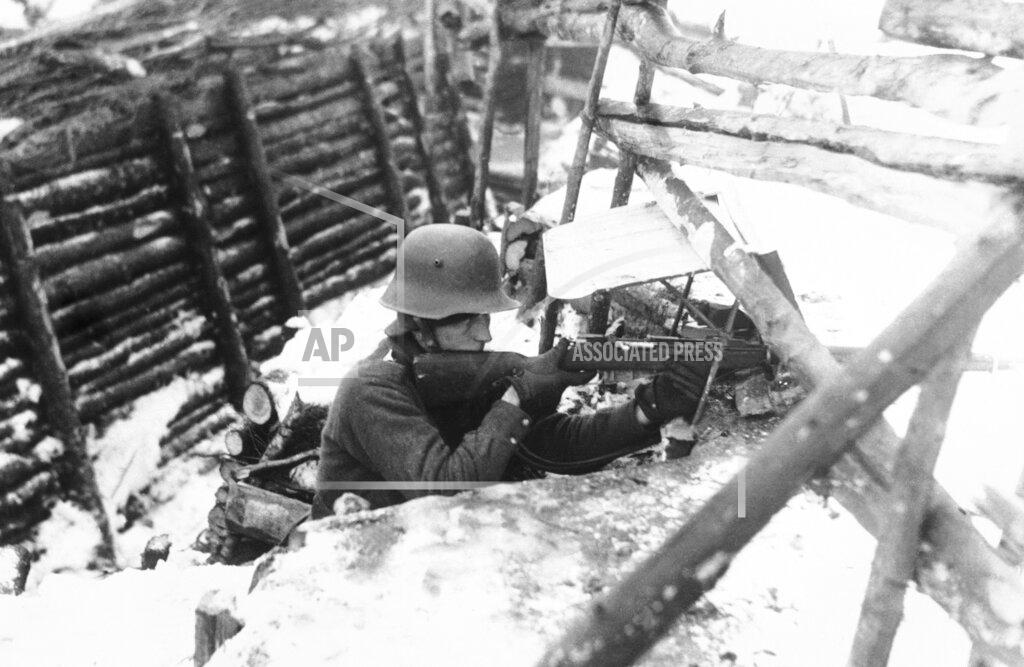
The Soviet 8th Army continues withdrawing under Finnish pressure north of Lake Ladoga.
The Finns continue a series of attacks on the Soviet 8th Army.
Soviet troops launch an offensive on the northern flank of the River Kollaanjoki line.
In the Tolvajärvi sector, Detachment Pajari reaches Ristisalmi.
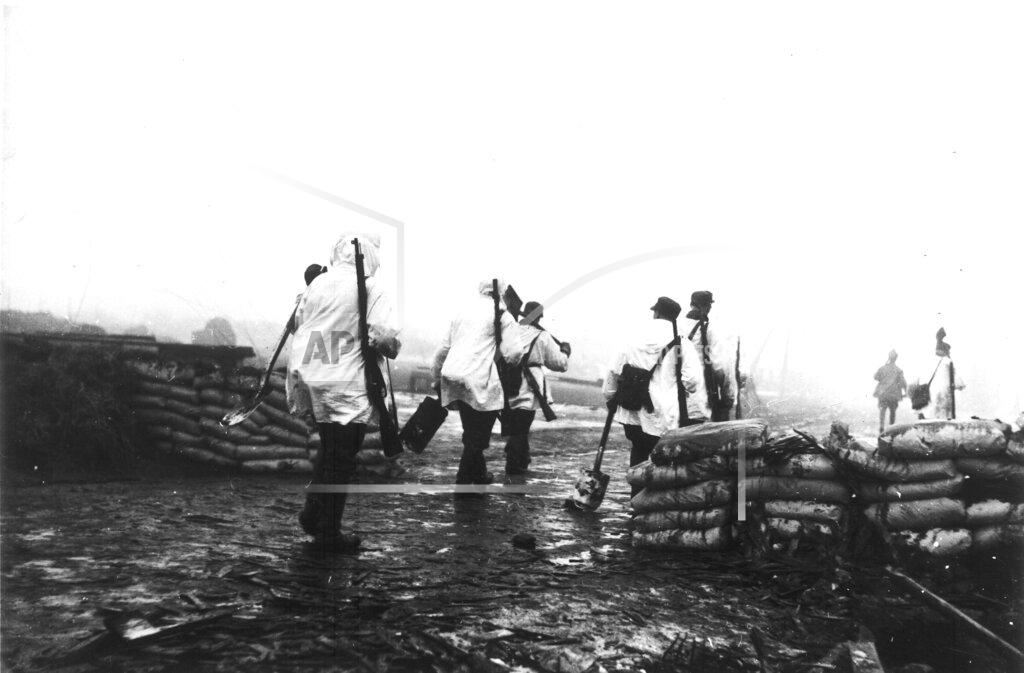
In the Central Isthmus at Summa, the Soviet artillery continues its bombardment of the main Finnish positions with increasing ferocity. Enemy tank and infantry attacks are successfully repulsed.
In the Turku Archipelago, Soviet destroyers Gnevny and Grozyashtchi engage a Finnish shore battery on Utö Island. Finnish coastal artillery opened fire and after a short fight the destroyers withdrew with the help of a smoke screen. Poor visibility and the thick smoke initially convinced the Finns that one of the destroyers had been sunk by the coastal artillery fire.
Soviet forces launch a new drive near Petsamo in the far north.
The Soviet 273rd Infantry Regiment crosses the River Kemijoki at Savukoski. The Finns fall back past Savukoski to the crossroads at Lunkkaus without engaging the enemy.
On the Swedish border, the first foreign volunteers cross the border at Haaparanta and arrive at the reception centre in Tornio.
Hitler orders his Supreme Command to prepare plans for Weserubung [Exercise Weser], the invasion of Norway, to protect the crucial supply of iron ore from northern Sweden. The only way to export iron ore from the Swedish Mines, for much of the year, is through the Norwegian port of Narvik.
The Norwegian pro-Nazi politician Vidkun Quisling met with Hitler and high-ranking members of the German military in Berlin as the Nazis investigated ways to go about occupying Norway. Quisling is a minor Norwegian politician who is pro-German, pro-defense and also a huge anti-Semite. A friend of explorer Fridtjof Nansen, Quisling among other things had been made a Commander of the Order of the British Empire (CBE) for his services to Britain in the Soviet Union (there are rumors he was a spy), given the Romanian Crown Order and also the Yugoslav Order of St. Sava for humanitarian efforts. More recently, he had become the “Fører” of his Nasjonal Samling, the Norwegian equivalent of the NSDAP. He has an awesome resume, particular with the kinds of international contacts that Hitler envies — the one catch is that he isn’t very popular in Norway, seen as more of a quaint quack than a national leader.
At the Hitler meeting, Quisling is like a Hitler dream. He asks for help with a pro-German coup that would open the huge Norwegian coastline to the U-boat fleet and save them days of transit to their Atlantic stations. Thereafter, he — as leader of Norway — would help to broker an Anglo/German settlement. Hitler is polite and promises to fund Quisling’s party, but he is enough of a realist to see many of Quisling’s promises as puffery, “broker’s talk.” His financial and moral encouragement of Quisling does not dissuade Hitler in the slightest from continuing to plan the invasion of Norway, which is not really what Quisling has in mind, and in fact, encourages it. Basically, Hitler sees Quisling as a potentially useful tool for managing a conquered nation, while Quisling sees himself as a future potentate.
The main result of the meeting is that Hitler orders the OKW (military high command) to begin a preliminary study on invading Norway. The first operational name for the project is “Studie Nord.” The eventual code name is Weserubung (“Weser Exercise,” because it is planned for April 9, which is the little-known holiday “Weser River Day” in Germany).
At just about the same time Russia was excluded from the League of Nations, ratification of the documents fixing the Russo-German frontier and of the amity treaty of September 28 were exchanged in Berlin today. This step, in the German view, places the stamp of international legality on the division of Poland.
Neville Chamberlain and General Ismay inspect British Expeditionary Force in France.
Premier Daladier summarizes the results of the first three months of the year in a communiqué, stating that 2,100 French soldiers had lost their lives. He rather incongruously contrasts this with 2,975 road deaths in Great Britain during the same period — road deaths having increased dramatically due to the blackout.
“If France were to come under the sway of either Hitler or Stalin I would not consent to live here another second,” declared Albert Sarraut, Minister of the Interior, today while the whole French Chamber applauded.
Belgium asks for aid, wanting help in caring for thousands of Jewish refugees.
Britain is jubilant on the victory against the German Graf Spee; it is the cause of the greatest rejoicing so far in the conflict.
Prime Minister Chamberlain names Nazis as the foremost foe; Britain does not want to fight Russia. Some aid will be given to Finland. Declaring that Great Britain would give what help she could spare to Finland, Prime Minister Neville Chamberlain warned the House of Commons today that sympathy for the victim of Russian aggression must not be allowed to divert the British from their primary objective of “attacking the evil at its root” by defeating Nazi Germany.
Finnish writer Frans Emil Sillanpää receives the Nobel Prize for Literature.
Police in Belgrade, Yugoslavia were stoned by Communist demonstrators proesting the “Imperialist War” this evening. Many demonstrators were injured, two seriously, and sixty were arrested and summarily sentenced to thirty days in jail.
RAF Bomber Command sends 42 aircraft to attack German shipping without success . Twelve British Wellington bombers of No. 99 Squadron attacked a German convoy north of Wilhelmshaven, Germany during daylight. Within 30 minutes of the attack, six of them were lost to flak and German fighters, including two that collided in mid-air during the fight.
Submarine HMS Ursula was on patrol in the estuary of the Elbe and through her periscope her captain, Lieutenant Cdr. GC Phillips, sighted a German Köln-class cruiser, the Leipzig, escorted by six destroyers. Though the waters of the Elbe estuary are shallow and to dive deep is a dangerous undertaking involving the risk of getting stuck on a sandbank, Phillips had either to take the risk or to miss his attack. His decision was instantaneous and he took the Ursula down to dive beneath the destroyer screen and get within range of the cruiser. They were anxious moments, but fortunately the depth of water was just enough. On coming up again to periscope depth, Phillips found himself within point-blank range of the cruiser. He fired a salvo of six torpedoes and the two resulting explosions were so close that the Ursula herself was badly shaken. A quick glance through the periscope showed no sign of the cruiser that had been attacked, but it did reveal four of her escorting destroyers closing in at high speed to attack. The cruiser had in fact been missed, but one small escort, the German escort ship F-9, had been hit and was sinking. Once again, risking the sandbanks, the Ursula went deep and by skillful manipulation of his boat, Phillips managed to evade the inevitable depth charges. 15 survivors of the F-9 were rescued by the Kriegsmarine destroyer Richard Beitzen. 120 crewmen were lost. Lieutenant Cdr. Phillips was awarded the DSO and promoted.
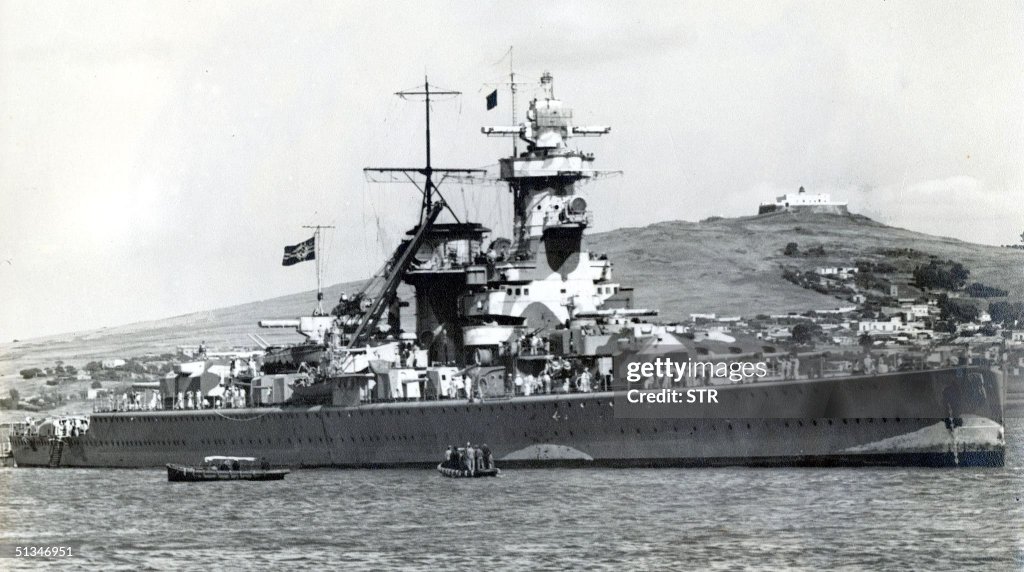
German armored ship Admiral Graf Spee puts in to Montevideo, Uruguay, for repairs. British light cruiser HMS Ajax and New Zealand light cruiser HMNZS Achilles maintain patrol off the 120-mile wide River Plate estuary. British heavy cruiser HMS Cumberland reinforces Ajax and Achilles that night.
Admiral Graf Spee is given 48 hours to leave Montevideo port or be seized by the government after Captain Langsdorff requests two weeks. The British through their naval attaché Henry McCall are all over the Uruguayans and force this decision, though the authorities give the ship an extra day more than required (or allowed) by international law. Commodore Harwood of Force G, meanwhile, is lurking outside the estuary – 120 miles wide – with his battered ships, pondering what might happen in another action against the pocket battleship.
The Royal Navy minesweeping trawler HMT James Ludford is sunk by a mine in the North Sea off Newcastle-upon-Tyne, Northumberland (55°02′30″ N, 01°16′15″ W) with the loss of 17 of her 18 crew.
The Royal Navy “K”-class destroyer HMS Kelly is badly damaged by a German mine laid by German destroyers off the Tyne. Repairs took until 28 February 1940 to complete.
The British tanker Inverlane, in convoy FN.54, was mined and abandoned in the North Sea off Sunderland, County Durham (55°05′00″N 01°07′00″W) with the loss of four of her crew. She subsequently washed ashore at Seaburn, County Durham. The bow section was salvaged and used as a blockship at Scapa Flow.
The U.S. government challenged the Royal Navy blockade plan whereby neutral ships were diverted to British and French control bases for inspection for contraband. This practice violated the “freedom of the seas,” an important theme in U.S. foreign policy since the early 19th century.
Heavy cruiser USS Vincennes (CA-44) and destroyers USS Evans (DD-78) and USS Twiggs (DD-127) (the latter destroyer having shadowed British destroyer HMS Hereward a short time before) trail Australian light cruiser HMAS Perth which is prowling the Gulf of Yucatan waiting for the emergence of 32,354-ton North German Lloyd Line passenger liner SS Columbus. The liner was on a Caribbean cruise when the war started. The ship disembarked her passengers at Havana, Cuba, and spent the next several months making quick dashes between various Central and South American ports to avoid the Royal Navy amidst much speculation as to her intended use. The Americans maintain such a close and persistent surveillance of the Australian warship that Perth’s commanding officer, Captain Harold B. Farncomb RAN, is said to have remarked in exasperation, “Queer idea of neutrality these Americans have!” German freighter Arauca departs Vera Cruz, Mexico, followed subsequently by passenger liner Columbus, the third largest ship in Germany’s merchant marine. Destroyer USS Benham (DD-397), soon joined by destroyer USS Lang (DD-399), trails Columbus. A succession of U.S. ships will, over ensuing days, send out plain-language position reports.
U.S. freighter Extavia, detained at Gibraltar by British authorities since 29 November, is released.
Convoy OA.53 departs Southend.
Convoy OB.53 departs Liverpool.
The War at Sea, Thursday, 14 December (naval-history.net)
At 1131, six miles SW of Heligoland, submarine URSULA made contact with the German cruiser force which SALMON had attacked and damaged the day before. URSULA fired four torpedoes at light cruiser LEIPZIG which missed and hit escort ship F.9 sinking her with heavy casualties. Destroyer RICHARD BEITZEN rescued fifteen survivors. Submarine SHARK was ordered into the Bight and at 1045/14th, sighted a light cruiser and four destroyers in 54-01N, 7-46E, but was unable to attack. A further attempt was made on the 18th when RAF Coastal Command bombers were sent to attack German warships in the Heligoland Bight and around Schillig Roads and Wilhelmshaven. However nothing was accomplished and the bomber force suffered heavy losses.
Heavy cruiser SUFFOLK arrived at the Clyde.
The 20th Destroyer Flotilla was formed with destroyer EXPRESS (SO), ESK, IVANHOE, INTREPID, IMPULSIVE and ICARUS.
Destroyers EXMOUTH, ECHO and ECLIPSE arrived at Rosyth.
Anti-submarine trawler LORD WAKEFIELD (418grt) attacked a submarine contact off Swansea.
Convoy OA.53 departed Southend escorted by sloop ENCHANTRESS from the 14th to 16th when it dispersed. Destroyer WHITEHALL from convoy SL.11 joined from the 15th to 16th.
Convoy OB.53 departed Liverpool escorted by destroyers WINCHELSEA and VANOC until the 17th, when the convoy dispersed.
Destroyers WINCHELSEA and VANOC attacked a submarine contact five miles NW of Holyhead. Destroyer WARWICK joined the search at 0400/15th.
Destroyer GRENADE attacked a submarine contact 12 miles 172° from Portland Bill. Destroyers VEGA and WHITSHED joined to assist.
Armed merchant cruiser CALIFORNIA went ashore at Farland Point.
Minelayer PRINCESS VICTORIA departed Portsmouth at 2100/14th for minelaying Operation GF (a line 6.1 miles long in a direction of 009° from 51-48.8N, 2-19.1E) escorted by destroyers EXPRESS and ESK. They were joined off Dover by destroyers BASILISK and BOREAS and the field was laid at 1130/15th. PRINCESS VICTORIA, EXPRESS and ESK, escorted by destroyers CODRINGTON and BRAZEN laid another line on the 22nd.
German torpedo boats JAGUAR and SEEADLER operated in the Skagerrak from the 14th to 16th, and captured six merchant ships carrying contraband before returning to port.
British Force I, consisting of aircraft carrier EAGLE, heavy cruiser CORNWALL and light cruiser GLOUCESTER which had arrived at Durban on the 12th, put to sea on the 14th when it was reported that pocket battleship ADMIRAL GRAF SPEE was in Montevideo harbor. However, after a few hours steaming, the force was recalled for escort duty in the Indian Ocean and arrived back at Durban on the 15th.
Heavy cruiser CUMBERLAND (Captain W H G Fallowfield), cutting short a refit in the Falkland Islands, joined cruisers AJAX and HMNZS ACHILLES off Montevideo at 2200/14th.
French Force Z of battleship LORRAINE, light cruisers JEAN DE VIENNE and MARSEILLAISE, departed Halifax escorting French steamers INDOCHINOIS (6500grt), LOUIS L D (5795grt), JEAN L D (5795grt), and British CITY OF PRETORIA (8046grt) carrying aircraft for France. Destroyers MAILLÉ BRÉZÉ, KERSAINT, VAUBAN and BISON departed Casablanca and joined the convoy at 1050/22nd, and TEMPÊTE, TYPHON and TORNADE, also from Casablanca joined at 0815/23rd. At 0650/24th, Force Z escorted by MAILLÉ BRÉZÉ, KERSAINT, VAUBAN and ALBATROS left the convoy to the other destroyers, which accompanied it to Casablanca, and then proceeded to Oran arriving at 1000/25th. Force Z reached Toulon at 0800/27th.
Australian light cruiser HMAS PERTH departed Kingston on patrol duties, and arrived back on the 31st.
DESTRUCTION OF GERMAN LINER COLUMBUS
German liner COLUMBUS (32,581grt) departed Vera Cruz, Mexico. American destroyers BENHAM (DD-397), LANG (DD-399), JOUETT (DD-396) and BAGLEY (DD-386) were stationed off Vera Cruz to watch for German merchant ships there. When COLUMBUS set out, LANG and JOUETT immediately began screening her. Meanwhile Australian light cruiser HMAS PERTH was stationed in the Yucatan Channel screened by American heavy cruiser VINCENNES (CA-44) and destroyers EVANS (DD-78) and TWIGGS (DD-127) of the 64th Destroyer Division.
On the 16th, destroyers PHILIP (DD-76, LCDR E F Crowe) and LEA (DD-118, LCDR Franklin W Slavin, LEA was the flagship of Commander Destroyer Squadron 32) relieved JOUETT and LANG as COLUMBUS sailed north along the US coast.
On the 17th, destroyers COLE (DD-155, LCDR P F Dugan) and ELLIS (DD-154, LCDR T G Peyton) of the 60th Destroyer Division relieved PHILIP and LEA. At 2000/17th, French tanker SHEHERAZADE (13,467grt) reported COLUMBUS in 30-25N, 79-31W steering course 040°.
On the 18th, American destroyers UPSHUR (DD-144) and GREER (DD-145) of the 61st Destroyer Division relieved COLE and ELLIS.
On the 19th, American heavy cruiser TUSCALOOSA (CA-37, CAPT H A Badt) and destroyer BABBITT (DD-128) of the 53rd Destroyer Division, which had departed Norfolk on the 16th, relieved UPSHUR and GREER.
On the 19th, off Cape May, off the southeast tip of New Jersey in 40-17N, 71-05W, COLUMBUS was challenged by British destroyer HYPERION which had departed Bermuda and was led to COLUMBUS by plain language radio reports from the US ships. She scuttled herself and the 597-man crew was picked up by TUSCALOOSA and BABBITT. HYPERION left the rescue to the American ships and arrived back at Bermuda on the 22nd.
On the 14th, German steamer ARAUCA (4354grt) departed Vera Cruz. She was trailed by American destroyer TRUXTON (DD-229) of the 56th Destroyer Division, making plain language reports which alerted French warships in the area. Also alerted by three American naval patrol aircraft, light cruiser ORION, which had departed Bermuda on the 9th and had been patrolling near Nassau, intercepted her at 1056/20th off Oakland, Florida. However, ARAUCA reached American waters and that afternoon, a boarding party from American destroyer PHILIP (DD-76, LCDR E F Crowe) of the 64th Destroyer Division went aboard and checked her. Later that day, ARAUCA moored in Port Everglades. ORION, joined by destroyer HEREWARD, patrolled for a time offshore, but ARAUCA never sailed again under the German flag. She was taken over by the American authorities in August 1941 and on 20 April 1942, was commissioned as USS SATURN (AF-40).
After a series of conferences, including a discussion with Sumner Welles, Under Secretary of State, about the transfer of Ambassador Davies from Brussels to Washington, President Roosevelt left the White House tonight on a weekend trip to his mother’s home at Hyde Park where he plans to remain until Sunday afternoon. After talking with the President during the day, Mr. Welles said that Mr. Davies’s transfer from Brussels to Washington would be the subject of an official announcement next week. He said that the President had also discussed the matter with Secretary Hull and that the shift was still under consideration. Earlier in the day the White House denied that the resignation of the Ambassador was “on the President’s desk.”
Explaining that no decision had been reached on Mr. Davies’ resignation, Secretary Early said that the reason why the President and Secretary Hull felt it might be desirable to have him remain in Washington in an advisory capacity was due to his excellent background of European affairs gained while serving in diplomatic posts, including Moscow and Brussels. “While Brussels is not the most powerful or influential capital in the world,” said Mr. Early, “it has always been regarded as one of the best informational posts in the European diplomatic service. While serving in his post there Mr. Davies has, therefore, been able to keep. himself closely and well informed. on European developments.
“Since Belgium is not at war, the President and Secretary Hull feel that Mr. Davies might be spared from his post in Brussels at this time. They also feel that neither William C. Bullitt, at Paris, nor Joseph B. Kennedy, at London, could very well be taken from his diplomatic post at this time. Hence the feeling that Mr. Davies would be valuable in an advisory capacity here.” Mr. Early said of the recently returned Ambassador that he was entirely willing to fill any post in which the President thought he would be of the greatest value. While at Hyde Park the President plans to inspect progress made on the new Franklin D. Roosevelt Library now being built in the North Field of the family estate. He laid the cornerstone of the structure on his last visit to the family estate.
With records taken from the files of the National Labor Relations Board, counsel for a House investigating committee attempted today to show that Edwin S. Smith, a member of the board, assisted a union in promoting a boycott against a Pennsylvania hosiery mill. Mr. Smith, in a statement tonight, asserted that this “implication” was “completely untrue.” Edmund M. Toland, attorney for the committee investigating operations of the Wagner act, brought the subject up while questioning an aide, Roger Robb, about what he found in examining sixty file cabinets filled with board documents.
At the outset Mr. Toland read a statement by Mr. Robb, saying that the American Federation of Hosiery Workers called a strike at the Berkshire Knitting Mills, Reading, Pennsylvania, in the Fall of 1936, although the union’s membership included fewer than 500 of the company’s 6,000 workers. Did the board’s files show, the attorney then asked, whether Mr. Smith had assisted the union in attempting to persuade customers of the mills to boycott them? Mr. Robb said he had found correspondence between Mr. Smith and John Edelman, an officer of the union, in which Mr Edelman advised that a boycott would be undertaken.
Two business agents of the Dressmakers Union, Local 22, of the International Ladies Garment Workers Union, who had refused to follow the new “line” of the Communist party because they believed it would disrupt the work of the union, were expelled from membership in the party yesterday. Five other Communist officials of the local union, which has 30,000 members, announced their withdrawal from the party as soon as the expulsion order became known.
The two who were ousted were Ben Gerjoy and Sol Lipnack. The New York State committee of the Communist party, through its chairman, Israel Amter, explained their removal in a statement in which it declared that, “whenever the going became tough, they wavered, doubted and otherwise deserted the struggle.” Mr. Gerjoy and Mr. Lipnack were accused in the manifesto of having gone over to “the camp of the Lovestoneites, Trotskyites and Social Democrats, the pre-war, Red-baiting stooges of the bosses and the Dies committee against the best interests of the working class.”
[Ed: Fish gotta swim, Commies gotta purge. Same as it Ever Was…]
Despite recent criticism of the Dies committee by President and Mrs. Roosevelt, resulting in a slight decline in sentiment for continuing the committee, a large majority — 75 percent — of voters favor keeping the investigation in operation, according to a survey by the American Institute of Public Opinion.
Machine-tool purchases totaling between twenty and sixty million francs will be made in the United States by a French company in the next three months, it was disclosed today with the arrival of the Atlantic Clipper from Lisbon.
Assuming personal command of the war relief drive of the Finnish Relief Fund, Inc., former President Herbert Hoover said yesterday he hoped to have an experienced relief administrator in Finland within twenty-four hours.
Boston asks to host the 1940 Democratic National Convention.
Speaking in a Cambridge, Massachusetts lecture hall not completely freed of the rank odor of a stench bomb, Earl Browder, the Communist leader, told more than 600 Massachusetts Institute of Technology students today that the League of Nations had “risen from the tomb” only because its action meant “preparation for the ‘Holy War’” against Russia.
Although Communists constitute “but the smallest fraction of the total membership” of the American Federation of Teachers, they have been able to achieve a “precarious temporary control” over locals in some communities, the union president says.
E.B. Germany, co-chairman of the Garner-for-President Committee, said tonight in a nation-wide radio broadcast that Vice President Garner would be a candidate and would, at the proper time, make known “his willingness to accept the nomination for President.”
Mayor LaGuardia of New York opens war on drunk drivers and he instructs police to watch cars closely during the cocktail hour. Mayor La Guardia, in awarding safety plaques to five precinct commanders at City Hall yesterday, told police officials not to give a drunken driver a break. The awards were made in the interprecinct safely competition of the Police Department.
The Federal Power Commission approved today a sale of electric utility properties of the Mississippi Power Company to the Tennessee Valley Authority, which will extend the government agency’s holding into a large part of Mississippi.
In New York, film star Greta Garbo gives 5,000 dollars to the Finnish aid fund..
Interior Department motorship North Star (U.S. Antarctic Service), with the permission of the British government, visits Pitcairn Island to take on water and discovers the islanders in need of certain foodstuffs and medical supplies, which she provides. The provisions include flour, sugar, potatoes, matches, lard, gasoline and lubricating oil. The supplies will be replaced in New Zealand with funds turned over to Rear Admiral Byrd by the Chief Magistrate.
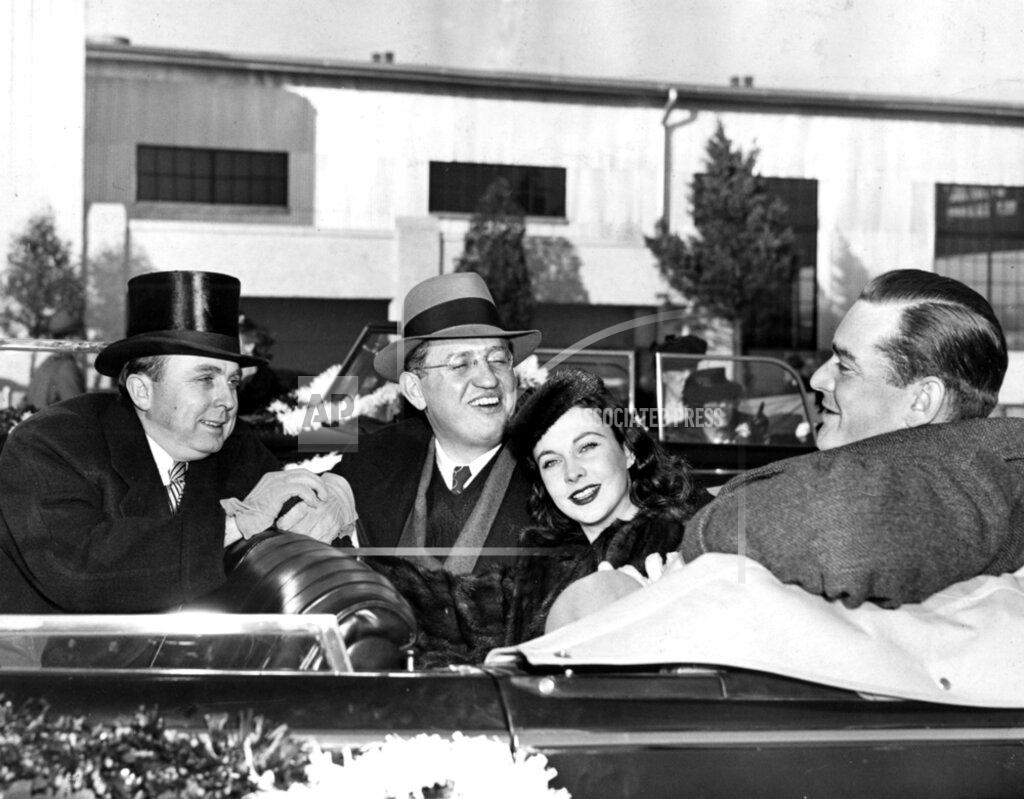
At least half of Atlanta’s 300,000 population fought for places of vantage on Macon Highway and along the narrow sidewalks of Peachtree street at twilight today to see the parade of the stars of “Gone With the Wind.”
Closing in along the route between Nanning and the seacoast, the Chinese today claimed to have occupied half a dozen points on the Nanning-Yanchow and Nanning-Fancheng roads, effectively severing Japanese communications with the sea.
40th Army and 27th Army of Chinese 2nd War Area is encircling Japanese 36th Infantry Division at Changtze and Tunliu.
In Hupei province, River North Army of Chinese 5th War Area reports crossing the Han River.
Elements of Japanese 33rd Infantry Division and 40th Infantry Division are unsuccessfully counterattacking 19th Army Group of Chinese 9th War Area around Yuchiafan, Lungkang, and Dafan.
Chinese Nationalist forces occupy the town of Ningxian after a bitter clash with Chinese Communist forces.
Tokyo envisages an anti-Red front, believing that almost all nations except Germany would join.
Dow Jones Industrial Average: 148.93 (-0.01)
Born:
Ernie Davis, American college football player (Syracuse University; Heisman Trophy, 1961; died before his first NFL game of leukemia), in New Salem-Buffington, Pennsylvania (d. 1963).
Dave Edwards, NFL linebacker (NFL Champions, Super Bowl VI-Cowboys, 1971; Dallas Cowboys), in Columbia, Alabama (d. 2016).
Frank St. Marseille, Canadian NHL right wing and centre (NHL All-Star, 1970; St. Louis Blues, Los Angeles Kings), in Levack, Ontario, Canada.
Marilyn Cooper, American actress (“Broadway Bound”, “Survivors”), in New York, New York.
Naval Construction:
The Nihon Kaigun (Imperial Japanese Navy) auxiliary minelayer and gunboat HIJMS Magane Maru (まがね丸) is laid down by Harima Zosensho (Aioi, Japan).
The Moore-McCormack Lines C3 type cargo ship Mormacland, later the Royal Navy Long Island/Archer-class escort carrier HMS Archer (d 78), is launched by the Sun Shipbuilding & Drydock Co. (Chester, Pennsylvania, U.S.A.).
The Marine Nationale (French Navy) Le Hardi-class torpilleur d’escadre (squadron destroyer) Le Flibustier is launched by F.&Ch de la Mediterranee (La Seyne, France).
The U.S. Navy Benson-class destroyer USS Hilary P Jones (DD-427) is launched by the Charleston Navy Yard (Charleston, South Carolina, U.S.A.).
The Royal Navy Tree-class minesweeping trawler HMS Rowan (T 119) is commissioned. Her first commander is Chief Skipper William Richard Settlefield, RNR.
 History Diaries