McGeorge Bundy, the Presidential adviser, said today that the United States had no intention of giving up the anti-Communist struggle in South Vietnam or of engaging in “reckless adventure” that might lead to a big war. Mr. Bundy, President Johnson’s Special Assistant for National Security Affairs, would not say whether possible United States strikes at Communist staging areas in neighboring Laos would be regarded as “reckless adventure.” But he said it would not be be “responsible activity” to anticipate “actions in fields that may involve danger to the soldiers of friendly forces in Vietnam — possible danger to some Americans.” Mr. Bundy made the statements in a television interviews on the American Broadcasting Company’s program “Issues and Answers.”
[Ed: LMAO. Sadly.]
The Việt Cộng suffered heavy casualties in a battle with Government forces yesterday three miles outside the city of Huế in Central Vietnam, 400 miles north of Saigon, it was reported today. The Communists left 70 bodies on the battlefield and reports indicated a possible 100 other casualties were carried away. A government battalion with armored vehicles in support launched the operation following intelligence reports and engaged the Communist force, estimated at two companies. One American military adviser, not immediately identified, was killed by small arms fire in the opening clash and the government side lost 11 others killed and 39 wounded.
A United States Army enlisted man on an operation 25 miles south of the North Vietnamese border was killed in action against the Việt Cộng today, a military source reported. He was the 12th United States serviceman to die in combat since last Monday, making the last week one of the worst for Americans in South Vietnam.
The recent crash of a troop transport plane gave hints today of secret military sabotage missions against Communist North Vietnam. A senior American spokesman confirmed that an unidentified C‐123 aircraft on an unannounced mission crashed three days ago shortly after takeoff from the Danang air base, the northernmost strategic base of the United States Air Force in South Vietnam. None of those on board survived, the spokesman said. Two Americans were listed as casualties, an Air Force major identified as an instructor pilot and an Army enlisted man called an observer. The Defense Department identified the Americans as Major Woodrow W. Vanden of Clarksville, Tennessee, and Sgt. 1st Class Dominick Sansone of Wolcott, Connecticut. Reliable sources said six Vietnamese crewmen and 30 Vietnamese Special Forces troops — specialists in guerrilla operations — were also killed when the plane crashed into Sontra Mountain, a promontory on the South China Sea just north of the air base.
The North Vietnamese regime has announced periodically the capture and trial of sabotage teams of South Vietnamese frogmen and other troops. American and Vietnamese spokesmen have declined to comment on the announcements as broadcast by the Hanoi radio. Asked if United States personnel were assisting Vietnamese forces on any military operations outside South Vietnam, the spokesman said, “No comment.” The circumstances of the crash and the way the news came out gave rise to strong suspicion that the aircraft either had been embarking on some secret sabotage mission or at least had been conducting a test run for a future secret mission. There had been no announcement on the crash until the Defense Department in Washington issued a brief statement giving the names of the Americans killed. The official spokesman in Saigon declined to give details of the crash, to confirm the number of Vietnamese on board or to explain the exact mission.
U.S. and Cambodian representatives meet in New Delhi, India, this week in an effort to work out such issues as the border raids and alleged support for the Việt Cộng, but the talks quickly break down. Five demands made by Cambodia at the United States‐Cambodian reconciliation talks now going on in New Delhi were published in Phnom Penh today by the Khmer (Cambodian) press agency. The agency said Som Sann of Cambodia had voiced the demands at the opening of the talks last Tuesday. The Cambodian delegation asked that the five points be included on the agenda. Mr. Sann demanded an end of what he denounced as “aggression” by the United States and South Vietnam against Cambodian frontier villages. He said the United States must pay compensation for human and material losses suffered. He said the United States and its allies, notably Thailand and South Vietnam, should not “unjustly and slanderously”. charge that Communist Việt Cộng troops and arms were passing through Cambodia while allegedly refusing to give the International Control Commission the necessary means to carry out adequate control. He demanded also that radio broadcasts by Khmers Serei, an expatriate Cambodian opposition organization, must end and that Cambodians “arbitrarily” arrested by South Vietnam must be freed.
An Australian Navy minesweeper traded fire with two Indonesian raider boats off Singapore last night and apparently prevented a new guerrilla landing in Malaysia, a military spokesman said. Three Indonesians were killed and four others — two of them wounded — were captured after the brief sea skirmish a mile off Singapore’s Raffles Lighthouse on Pulau Satumu in the Singapore Strait. One speedboat fled during the fighting, but the second, with one dead Indonesian and four others aboard, was taken in tow by the minesweeper HMAS Teal. The two other dead were said to have fallen overboard when they were hit by the Teal’s fire. Earlier reports said a third Indonesian boat headed back toward Indonesia when the Teal opened fire. The captured speedboat carried a quantity of arms and ammunition, the military spokesman said. The clash was the third of its kind in a month off Singapore. On November 16 a British warship, part of a Commonwealth task foree helping defend Malaysian waters, shot up an Indonesian motorboat, also killing three men aboard. A Malaysian patrol craft on December 1 sank a motorized sampan carrying nine Indonesians.
Secretary of State Dean Rusk declared today that the United States, despite French forebodings, remained fully committed to the security of the North Atlantic Alliance. Mr. Rusk added that the Administration was equally insistent on maintaining “the rights and obligations” to which America fell heir in Europe as a result of World War II. The effect of this assertion of a firm American position on the eve of a critical meeting of the Ministerial Council of the North Atlantic Treaty Organization was balanced by another comment by the Secretary of State.
He said some of the press had written about “what is called the disarray in NATO,” but he observed that the alliance’s success in achieving its primary goals had “afforded us the luxury of being able to differ about secondary matters.” Only last week one of President de Gaulle’s closest advisers said the alliance was incompatible with France’s interests because it extended the “hegemony” of the United States in Europe. The United States Embassy is aware of the French position, so are the embassies of other allied nations. One alliance diplomat said that “if Mr. Rusk considers the present attitude of France toward the alliance ‘a secondary matter’ we, for one, would be interested in learning what he considers a primary issue.”
Secretary Rusk is not expected to raise the American proposal on the mixed‐manned fleet at the council meeting. Since the force was never planned as a NATO organism, all his discussion about this wili be carried out in bilateral talks with other foreign ministers. Secretary of Defense Robert S. McNamara, according to sources in Paris, expects to explain anew the defense aspects of the force to allied defense ministers. He flew to France tonight.
President Tito was unanimously re‐elected today as secretary general of the ruling Yugoslav League of Communists, a post he has held 27 years. The new Central Committee also named him by acclamation as head of the reorganized Executive Committee (Politburo). This now has 19 members, an increase of four over the previous number. The group meets several times a month. In an organizational change, the executive secretariat of five men was replaced with four secretaries, who will run the day‐to‐day business of the party. They are President Tito, Aleksandar Rankovic, Edvard Kardelj and Veljko Vlahovic.
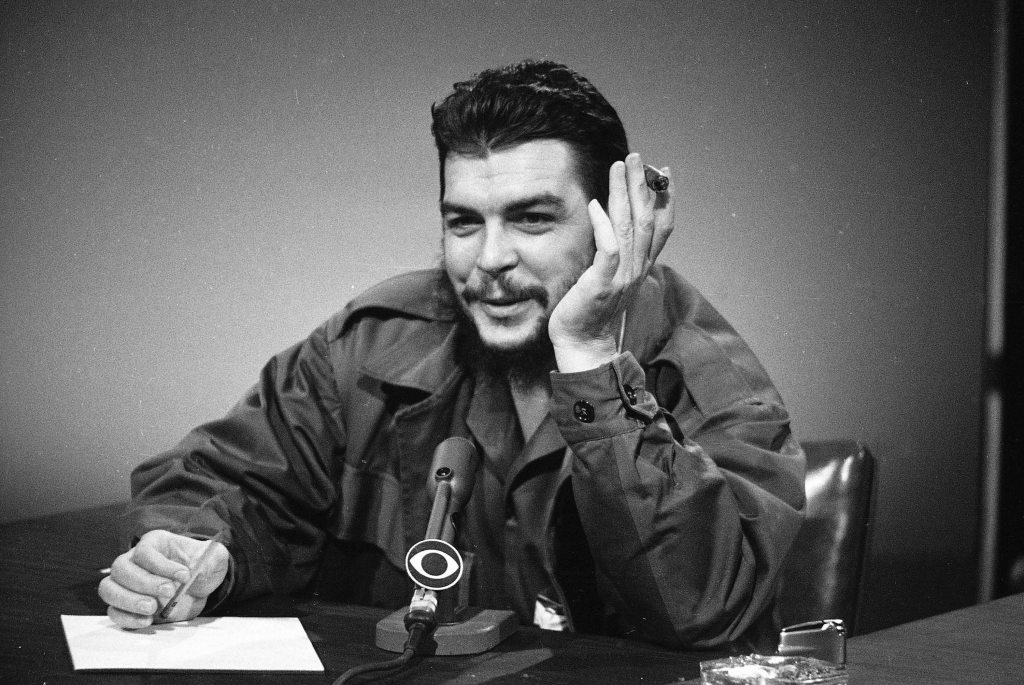
Ernesto Che Guevara, one of Premier Fidel Castro’s top aides, declared that in the Americas “the road to the liberation of peoples, which will be the road of Socialism, will go through bullets in almost all countries.” The bearded, 36‐year‐old Minister of Industry, puffing on a cigar, his olive‐green fatigue shirt open at the neck, addressed a nationwide Columbia Broadcasting System television audience on the “Face the Nation” panel‐interview program. He said that he could make the prophecy with confidence “that you wili see it” fulfilled. In an additional half‐hour interview that was filmed but not broadcast, Major Guevara asserted that the Castro regime was “not sending arms to anybody.”
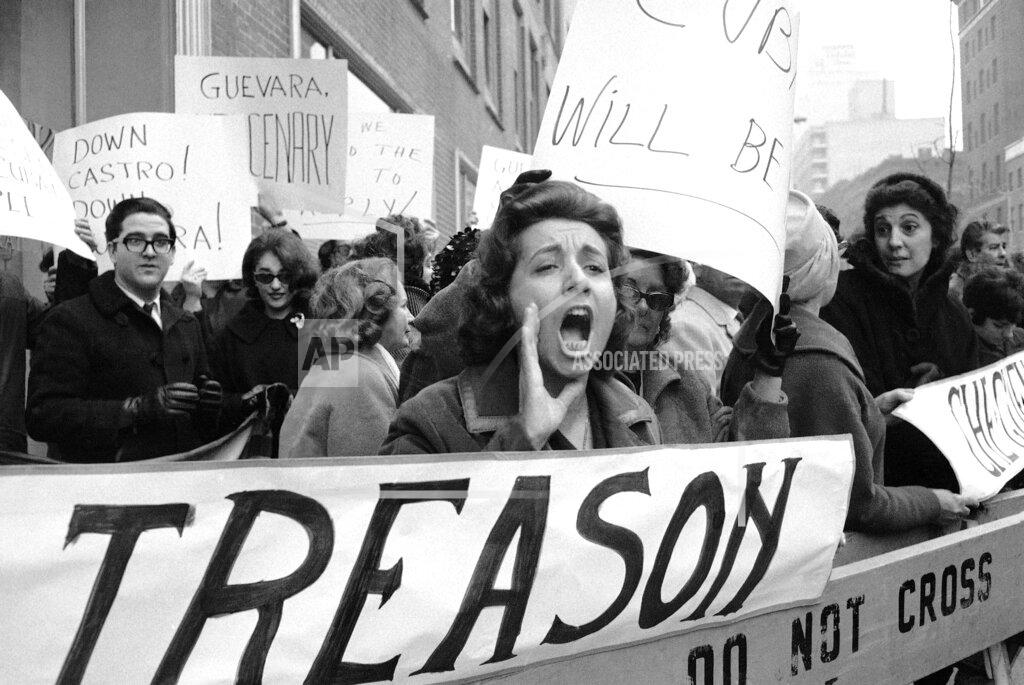
“However, we have helped some of our Latin‐American companions to acquire some military knowledge,” he continued. “We have never attacked anyone, but when there are people fighting for their freedom it would not be moral for us not to assist them. We have much enthusiasm for the freedom fighters in Venezuela. We have taught some of them to acquire military knowledge.” While anti‐Castro exiles shouted imprecations outside the closely guarded studio in New York, Major Guevara asserted in his broadcast that “harmonious relations with the United States would be very good for us from the economic point of view, more than in any other field.” This, he said, would allow Cuba to obtain “primary products and repair parts” in the United States. Most of the machines used by Cuban industry were manufactured in the United States and Major Guevara conceded that parts were difficult to make or obtain elsewhere.
More than 100 Cuban exiles demonstrated strongly but peacefully against Major Ernesto Che Guevara, who was under unusually tight police security as the result of a bazooka attack on the United Nations last Friday. Cuba’s Minister of Industry, the target of violent demonstrations that accompanied the bazooka shelling, was guarded by policemen placed on roofs and at high windows as he was interviewed in a CBS‐TV studio. Held behind barricades outside, the pickets protested loudly. The police bomb squad had made a thorough search of the building, and special passes were required for admittance. On the East River, across which the bazooka shell was fired, two police patrol launches were on an around‐the‐clock patrol.
The bazooka, a mobile rocket launcher, has been returned to the police, it was disclosed yesterday, aftern an examination by Lieutenant Colonel Henry T. Jackson of the Army Ordnance Depot in Picatinny, New Jersey. Colonel Jackson, called into the case as an ordnance expert, said: “We were able to answer exactly most of the questions the police had about the bazooka.” He declined to elaborate. The police officer in charge of the bazooka investigation reported “absolutely no leads” after questioning scores of persons, including prominent members of anti‐Castro groups here. The police also reported no progress in determining who left three sticks of dynamite near a garage at First Avenue and 33d Street on Saturday.
Soviet Premier Aleksei N. Kosygin disclosed last week that the present rulers of the Soviet Union inherited a very badly functioning economy when they took power last October by ousting Nikita S. Khrushchev. The Premier’s speech to the Supreme Soviet amounted to an indictment spelling out the unhappy results of the “harebrained scheming” earlier laid at Mr. Khrushchev’s door by Pravda. The speech made clear that economically 1961 has been one of the poorest years in Soviet history since World War II, and that not even the improvements hoped for in 1965 would make it possible to fulfill the goals set for next year by the special 1964‐1965 economic plan adopted in December, 1963.
In the heritage left by Mr. Khrushchev, Premier Kosygin indicated, the new rulers found a serious fuel shortage, a chaotic situation in economic administration and capital investment, a large accumulation of unwanted goods that has forced the biggest markdown sale in history, and an agricultural situation so bad that even this year’s improved harvest has not been enough to provide the Soviet people with a satisfactory diet. In addition, Premier Kosygin hinted strongly that significant inflationary forces were already being experienced by Soviet consumers.
The pent‐up resentment of Soviet wheat growers against the corn‐growing policy of former Premier Nikita S. Khrushchev erupted today in Pravda, the Communist party newspaper. The revolt, which had been expected since corn lost its powerful protector in the Kremlin shakeup two months ago, was led by Andrei Basiyel, a Hero of Socialist Labor, and Ivan Vovchenko, an Honored Agronomist of the Ukrainian Republic. Venting their long‐suppressed frustration, the two wheat specialists declared: “How could we sit by and watch masters of wheat farming being deprived of all privileges and encouragements? For corn, there was additional payment! For corn there were mineral fertilizers! But for those who grew wheat not even the principle of material incentive was preserved.”
General Chang Kuo‐hua, Peking’s military commander in Tibet, has disclosed that the Chinese Communists are continuing to meet with some resistance from Tibetans. General Chang, delivering a political report to a meeting of the Preparatory Committee for the Tibet Autonomous Region, identified the rebellious element as the “serf‐owner class.” Hsinhua, the Chinese press agency, carried an account of the meeting. General Chang said that although feudal serfdom no longer existed in Tibet the serfowners class had not disappeared. “Unreconciled to their defeat they are trying by hook and crook to attempt restoration,” he said. Acts of sabotage in Tibet are believed to be relatively minor. The Chinese Communists have eliminated all serious pockets of resistance that gave them trouble after the March, 1959, revolt against Tibet’s Communist rulers and the flight of the Dalai Lama to India.
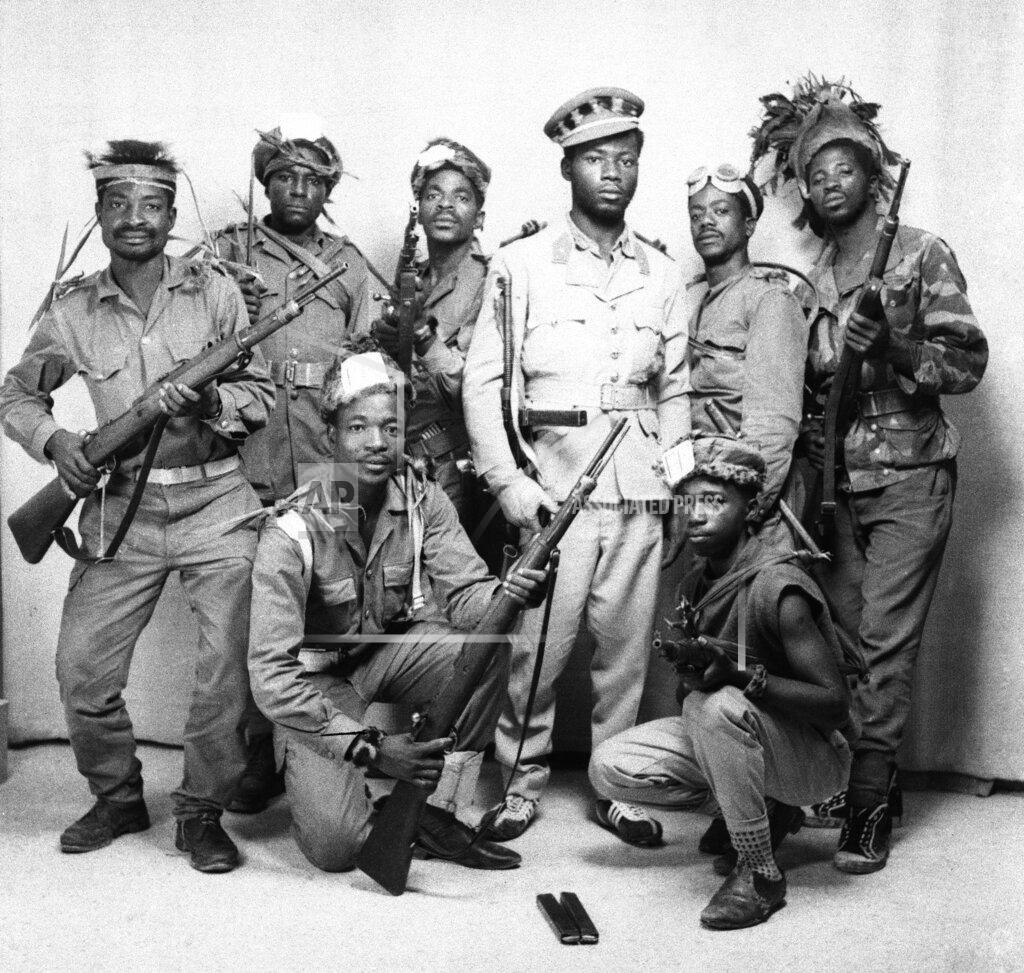
Premier Moïse Tshombe of the Congo said today that he could tip the scales in Africa against the Communists. But he added that he needed money to do the job. Mr. Tshombe made the comments in a talk with Richard Count Von Coudenhove‐Callerghi, president of the PanEuropa Union, a private organization that advocates the political unification of Europe. He also told the Count that he wanted to discuss an expansion of West German economic aid to the Congo and to muster German support in the “war of nerves” in Africa. Mr. Tshombe flew to Munich yesterday from Rome, where his visit touched off demonstrations. He plans to confer with West German officials in Bonn this week.
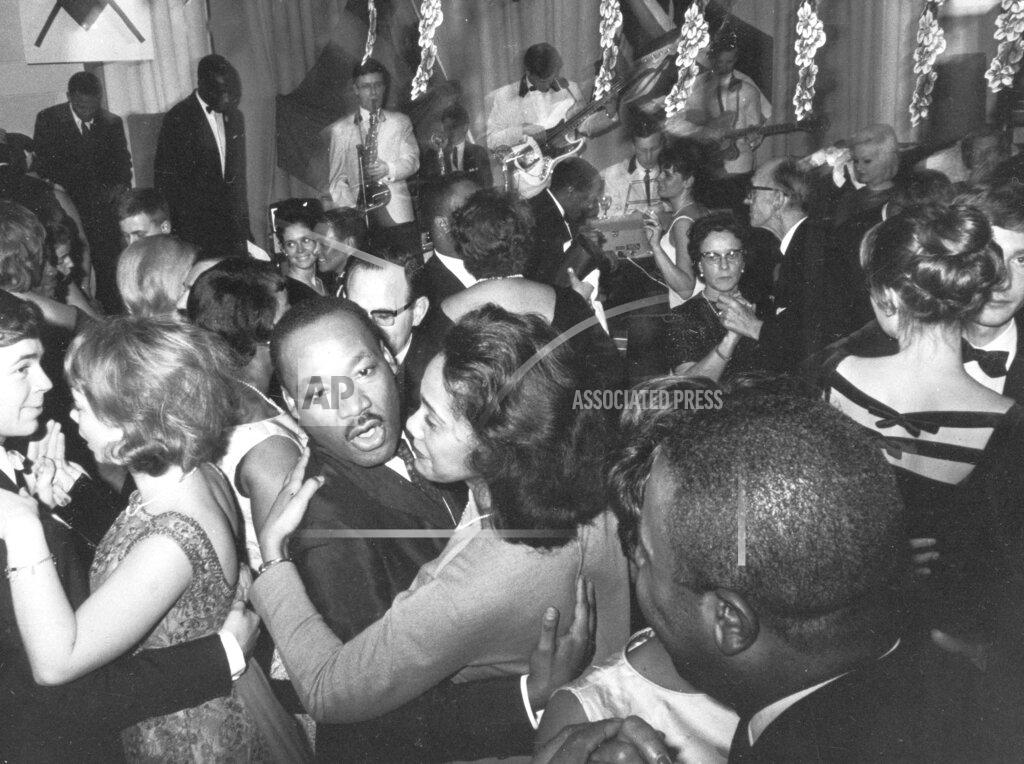
The Bev. Dr. Martin Luther King Jr., the American civil rights leader, called tonight for the withdrawal of all troops and mercenaries from the Congo. He described the regime in South Africa as “vicious.” Dr. King, winner of this year’s Nobel Peace Prize, told diplomats celebrating Kenya’s independence here: “There are many problems on a world scale today and one of them is the Congo.”
“The Congo problem can be solved when there is a withdrawal of all foreign troops and mercenaries,” he said. “The problem must be solved by negotiations, with the United Nations offering its assistance.” Of South Africa, he said: “We must not rest in any nation until the problem is solved in South Africa. I called for a massive boycott of that country because of the vicious regime existing there.” In another speech today in Stockholm Cathedral, Dr. King said there could be no peace in the world as long as conditions such as those in Mississippi and South Africa continued.
In El Paso, Texas, U.S. President Lyndon B. Johnson and Mexican President Gustavo Diaz Ordaz set off an explosion diverting Rio Grande, to reshape US-Mexico border.
The Single Convention on Narcotic Drugs, an international convention between nations agreeing to prohibit the production, manufacture, export and import, and distribution of narcotics for any uses other than for medical and scientific purposes, went into effect less than four years after it had been signed on March 30, 1961. The Convention would be amended effective August 8, 1975.
The Dutch coaster MV Tjoba capsized and sank in the Rhine river at Sankt Goar, West Germany. The ship was raised after eight days and it was discovered that the ship’s cat had survived in an air pocket. The cat was taken to a veterinarian in Koblenz for treatment.
Representative Charles A. Halleck will probably learn this week whether his job as House minority leader is in serious jeopardy. The occasion will be a special meeting Wednesday of the House Republican Conference, or caucus. The meeting is expected to produce much political soul‐searching and possibly provide the impetus for a revolt against the 64‐year‐old Indianan. All signs today indicated that Mr. Halleck’s stewardship would not be explicitly considered on the floor of the conference. But it will certainly be the topic of numerous informal caucuses and canvasses to determine the extent of opposition to him.
If substantial sentiment for his replacement is detected, further soundings will be taken to determine which of two possible successors has the better chance to unseat him at the regular pre‐session meeting of the conference on January 4. The potential challengers are Representatives Gerald R. Ford of Michigan, chairman of the conference, and Melvin R. Laird of Wisconsin, who served as platform chairman at the Re publican National Convention last July.
Each has publicly disclaimed his candidacy but has privately indicated that he would be available if a majority of his colleagues wanted him. If either becomes a eandidate, it will doubtless be the one who shows the greater strength in the soundings this week. The anti‐Halleck forces include the same men who engineered a lesser coup two years ago when they took the minority leader by surprise and elected Mr. Ford as chairman of the conference. Charles B. Heaven, of Iowa, an Old Guard conservative, was voted out of the job. Most of the present dissident leaders are considerably younger than Mr. Halleck and have been in the House for less than 12 years. Some are regarded as more conservative than Mr. Halleck and others as less so.
A special tax benefit to ease the burden of financing higher education was proposed today in a major study of the entire Federal income‐tax system. A basic change in the method of taxing capital gains, which would greatly increase the tax paid on such gains, was also recommended. The study, three years in preparation, was done by Richard Goode, an economist, under a Ford Foundation grant. It was published by the Brookings Institution, a nonprofit research organization. The proposed tax benefit to help defray the costs of higher education would be given to the student, rather than to his parents, under Mr. Goode’s plan.
The cost of tuition, books and other direct expenses connected with higher education would be deductible from the student’s own future income over a period of 10 to 20 years. This would be allowed even if the student’s parents or other persons paid for the education. Such a plan, Mr. Goode said, would make it easier for students who were forced to borrow to pay for higher education to repay their loans. Mr. Goode said that there were two main reasons for preferring his plan for amortization by the student of the costs of education to the more common proposal to give a deduction for the costs of education to the parents of students.
Three white men were arrested today when they exploded two ballons filled with gas outside a Black church in Montgomery, Alabama. The men, including one charged in a church bombing here in 1957, were arrested by a plainclothes detective who had been following them. Police Chief Marvin Stanley said the men had told him it was a “prank.” However, he said, he believed the men had intended to terrorize the Blacks in the First Baptist Church. The chief said the noise was “loud enough to be a bomb” and to alarm the Black worshipers. He said the device consisted of two plastic balloons filled with gas and attached to the side of a truck. The wires ran from the truck’s battery to the balloons. One of the men allegedly touched the wires together to set off the blast. The man who was arrested and tried in connection with a church bombing in 1957 was identified as Henry Alexander. The others were identified as J. M. White and Don Landers.
The National Association for the Advancement of Colored People has urged 50 New York City financial houses “to decline to participate” in bidding this week on three Mississippi bond issues totaling $32,650,000. In a memorandum released yesterday, Roy Wilkins, the executive director of the N.A.A.CAP., called upon the investment houses, banks, insurance companies and pension funds to withhold bids from the Pearl River Water Supply District issue, a $24,650,000 revenuerefunding issue to be announced Tuesday; and two school‐bond issues, general obligation of the state, totaling $8 million, to be announced Wednesday. The N.A.A.C.P. pointed out that Leake and Scott Counties, two of the five in the Pearl River Valley District, border Neshoba County, where three civil rights workers — Andrew Goodman and Michael. H. Schwerner of New York and James E. Chaney of Meridian, Mississippi — were murdered last June 21.
Mr. Wilkins’s memorandum, sent Friday to the financial houses, cited a resolution adopted at the association’s annual convention in Washington last June. The resolution urged the association’s branches to see that “no bank or other financial institution or public entity . . . seek, bid for, or buy bonds, notes or other obligation of the State of Mississippi, or its municipalities.” Declaring that the “brutal discrimination visited by Mississippi upon its citizens requires no elaboration here,” Mr. Wilkins asserted: “Nor does it need to be documented that the money raised by Mississippi borrowing will be spent in a discriminatory manner.” Mr. Wilkins noted that the Civil Rights Act of 1964 required the Federal Government to withhold financial aid to states that use it unfairly. “We believe that the private financial community can do no less,” he said.
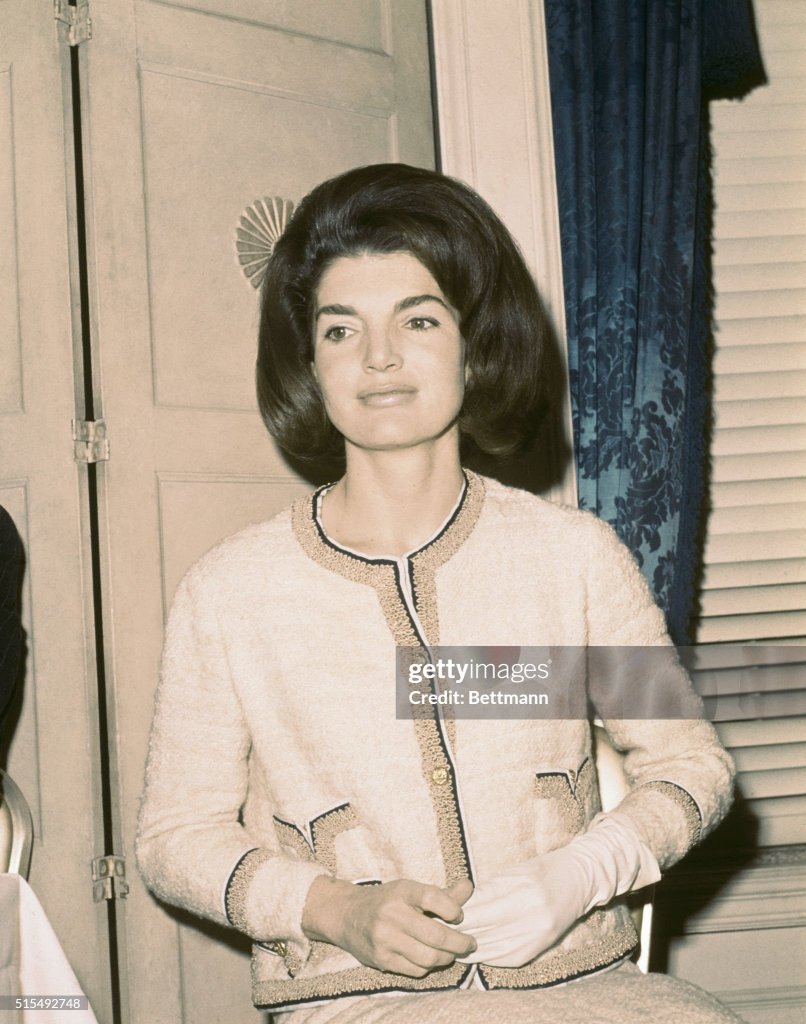
The Kennedy family announced yesterday the selection of an architect for the John F. Kennedy Memorial Library at Harvard University. At a news conference at the Hotel Pierre, Senator‐elect Robert F. Kennedy named I. M. Pei, Canton‐born New York architect, as the designer of the library and, in conjunction with it, of a projected institute for advanced political studies. Mrs. Jacqueline Kennedy, widow of the President, was present but did not say anything. Nathan M. Pusey, president of Harvard University, outlined plans for the Kennedy Institute, which will be connected with the Graduate School of Public Administration. When negotiations are complete, Richard E. Neustadt, professor of government at Columbia University, is to be the institute’s director. Eugene R. Black, in charge of fundraising for the library, announced that more than the original goal of $10 million had already been raised, But he said fundraising would continue, to provide an endowment for the institute. “I have never had a job as easy as this one,” said Hr. Black, the former president off the International Bank for Reconstruction and Development. “Contributions have come in from all over the country and the world, ranging from a few cents to a quarter of a million dollars. Over four million Americans have given something.”
Negotiations between the United Steelworkers of America and the 11 basic steel companies are scheduled to begin here this week with the union placing unusual stress upon working conditions in the nation’s steel plants.
President and Mrs. Johnson worshiped this morning at St. Mark’s Episcopal Church on Capitol Hill. After the services, they joined other members of the congregation for coffee in the parish hall. The President shook hands with many adults and children during the short time he spent there.
NFL Football:
Green Bay Packers 24, Los Angeles Rams 24
Minnesota Vikings 41, Chicago Bears 14
Philadelphia Eagles 34, St. Louis Cardinals 36
Pittsburgh Steelers 14, Dallas Cowboys 17
San Francisco 49ers 7, Detroit Lions 24
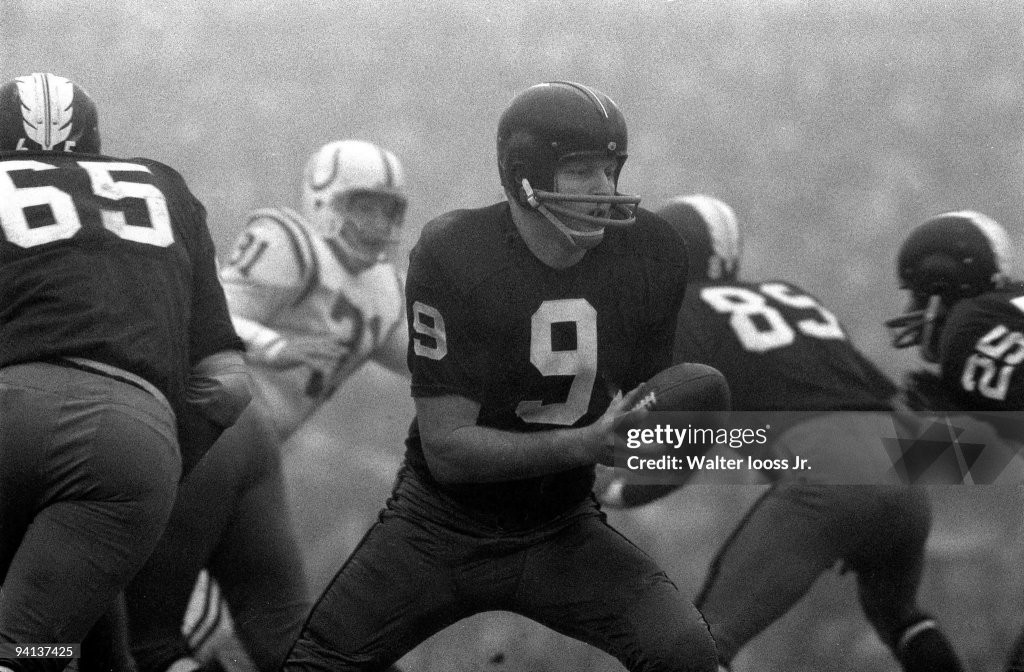
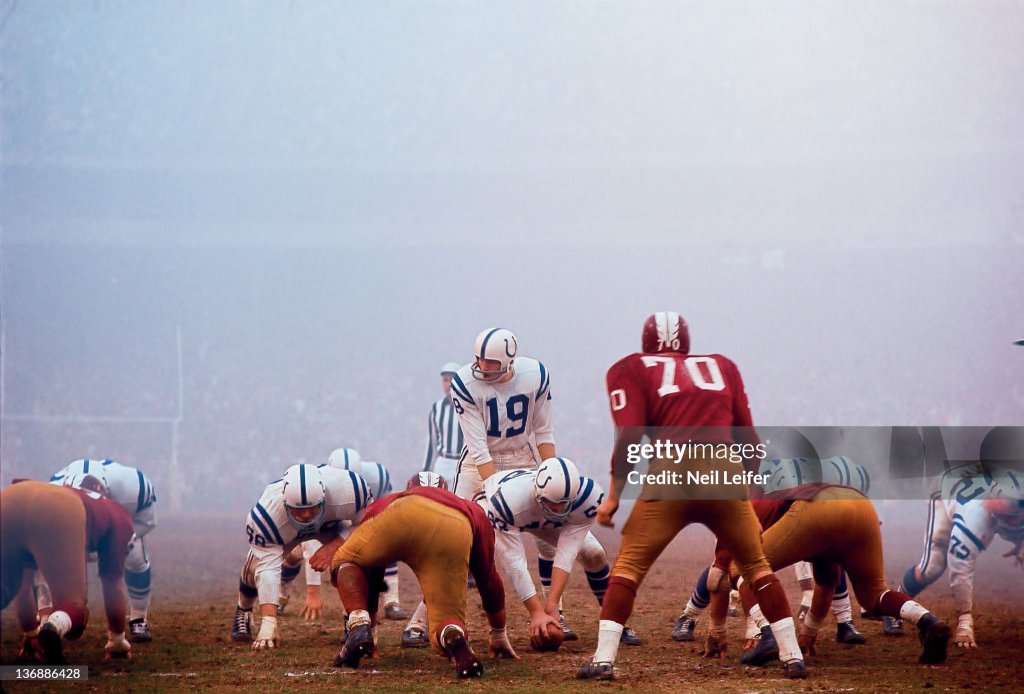
Washington Redskins 17, Baltimore Colts 45
The Green Bay Packers, fighting back from a 21–7 half‐time deficit, tied the Los Angeles Rams today, 24–24, to preserve a spot in the runner‐up Playoff Bowl Miami. The Packers finished the season with an 8–5–1 won‐lost‐tied record and tied with Minnesota for second place in the National Football League’s Western Conference. Because the Packers, outscored the Vikings in their two games. Green Bay won the Playoff Bowl spot against the St. Louis Cardinals of the Eastern Conference. The Rams scored two touchdowns in the first period, the first on a 95‐yard pass play by a pair of rookies — Bill Munson, the quarterback, and Bucky Pope. Jim Taylor paced the Packer attack. carrying the ball 17 times. He gained 165 yards for a 9.7‐yard average. His longest run came in the third quarter when he skirted end for 65 yards and was brought down on the Ram 8 by Jerry Richardson.
The Minnesota Vikings, led by Bill Brown’s three touchdowns, today crushed the Chicago Bears, 41–14, to close the worst season for a George Halas team in the 45‐year history of the National Football League. The Bears skidded from their 1963 championship season to a 5–9 won‐lost record. The Vikings ended with an 8–5–1 record. The Vikings, clicking method ically behind Brown, Frank Tarkenton and Tom Mason, rolled to a 31–0 half‐time lead while holding the Bears to a total gain of 19 yards. Runs of 47 yards by Brown and Tarkenton’s 22‐yard pass to Mason set up the first touchdown, with Brown going over from the 1. A 19‐year‐old rookie, Andy Livingston, returned a kickoff 86 yards for the Bears’ first touchdown. In the fourth period, Billy Wade of Chicago completed five of six passes on a 76‐yard drive that was capped by Ron Bull’s 10‐yard touchdown run.
The game that might have been one between the St. Louis Cardinals and the Philadelphia Eagles, turned out to be quite a game after all. The Cardinals, who had no motive other than pride, managed to win a free‐wheeling, free‐scoring free‐scoring contest, 36–34, today on a field goal by Jim Bakken with 22 seconds left to play. The big‐money aspects of the Cardinals’ season ended yesterday afternoon in front of television sets as the St. Louis players watched the Cleveland Browns crush the New York Giants, 52–20, in New York. The victory assured the Browns, the team the Cards had beaten badly here last Sunday, of the Eastern Conference championship in the National Football League instead of St. Louis, which was in the running until yesterday’s decision. So the Browns took away from the Cardinals a chance to earn $8,000 apiece by playing in and winning the NFL championship game on December 27 against the Baltimore Colts. Bill Koman, the Cardinal linebacker, shut himself in his bedroom yesterday to watch the Browns‐Giants game: “It was awful,” he said of the Giants’ defensive effort against the Browns. “I was just sick. The Browns aren’t that good.” Koman and his teammates went to Busch Stadium today with little desire in their hearts. They had second place clinched and their efforts against the Eagles were going to make no difference whatsoever. Their trip to Miami for the Playoff Bowl game between the conference runners‐up was certain. In the Miami game they can make $800 by winning.
Clutch pass receiving by Buddy Dial and Frank Clarke today, enabled the Dallas Cowboys to close their season with a 17–14 victory over the Pittsburgh Steelers. Neither Dial nor Clarke scored but their spectacular catches paved the way for a 10‐yard field goal by Dick Van Raaphorst, an 8‐yard scoring pass from Don Meredith to Pettis Norman and a 3‐yard touchdown smash by Perry Lee Dunn. The victory enabled the Cowboys to match their best previous season in the National Football League — a 5–8–1 record in 1962 — and it dropped Pittsburgh (5–9–0) into sixth place. Dallas finished fifth. The Dallas defense, led by a reserve linebacker, Harold Hays held the Steelers to three first downs in the first half, and once turned Pittsburgh back inside the 5 after the Steelers had recovered a Cowboy fumble on the 16.
Two long scoring passes from Milt Plum to Jim Gibbons and a 68‐yard punt return for a touchdown by Tommy Watkins highlighted the Detroit Lions’ 24–7 victory over the San Francisco 49ers today in the season finale for both teams. Plum hit Gibbons with a 64-yard scoring pass on Detroit’s third play of the game in the first period. Early in the second quarter Wayne Walker’ kicked a 27‐yard field goal to put the Lions ahead, 10–0, and two minutes later Watkins fielded a punt by Tommy Davis at the Detroit 32 and raced down the sidelines behind a wave of blockers for a touchdown as Detroit tok a 17–0 halftime lead. The 49ers got their lone score on John Brodie’s 13-yard touchdown toss to rookie Dave Parks. Gibbons closed out the scoring in the final quarter with an 82-yard touchdown reception, again from Plum. The crowd of 41,854 increased Detroit’s season total for seven games to 366,293, a record, breaking the previous mark of 257,595 set in 1962.
The Baltimore Colts, champions of the Western Conference, finished the regular season today with a 45–17 victory over the Washington Redskins as National Football League records were set by Lenny Moore and Raymond Berry. Moore’s two short runs for scores in the last quarter gave him 20 touchdowns this season, one more than the previous mark set by Jim Taylor of Green Bay in 1962. It also was the 18th game in which Moore had scored, another NFL record. Berry caught five passes, one for a 30‐yard touchdown, to raise his career total of 506 completions, three more than the previous career record held by Jim Howton. The Colts overcame a rash of fumbles and a costly pass interception. They lost the ball four times on fumbles. Washington recovered the opening kickoff fumble on the Colts 27 and three plays later Pervis Atkins ran 17 yards for a touchdown. With John Unitas completing 13 of 20 passes for 226 yards and two touchdowns, the Colts overcame their troubles in the second half, scoring two touchdowns in the third period and three in the final.
AFL Football:
Buffalo Bills 30, Denver Broncos 19
New York Jets 17, Houston Oilers 33
Kansas City Chiefs 49, San Diego Chargers 6
Buffalo took over sole possession of the Eastern Division lead in the American Football League today by defeating Denver, 30–19. The Bills, who now have an 11–2 won‐lost record, will meet the runner‐up Boston Patriots next Sunday in a game that will decide the title. Boston has a 10–2–1 mark. Against Denver, the Bills, piled up a 23–3 half‐time lead that withstood a second‐half comeback by the Broncos. Daryle Lamonica put Buffalo’ ahead early. He threw a 46‐yard pass to Ed Rutkowski for the first touchdown and contributed a 23‐yard touchdown run late in the second period. Denver scored two third quarter touchdowns to narrow the gap to 23–16 and Dick Guesman’s 40‐yard field goal cut Buffalo’s margin to 4 points. Jacky Lee, relieving Mickey Slaughter, Denver’s starting quarterback, threw a 30‐yard touchdown pass to Lionel Taylord on his first play, but Lee was knocked out of action on Denver’s next series and Slaughter returned to throw a 37‐yard touchdown pass to Bob Scarpitto. But, with two minutes to play, Lamonica sneaked a yard for Buffalo’s clinching touchdown.
The Houston Oilers ended their losing streak at nine games today as the hard running of a rookie, Sid Blanks, and some wide‐awake defensive play led them to a 33–17 American Football League victory over the New York Jets. Blanks gained 191 yards in 21 carries as New York’s star rookie fullback, Matt Snell, was held to short yardage by the Oilers. Blanks ran 91 yards for Houston’s first touchdown — a record from scrimmage for the league — and scored twice more on plunges of 1 and 3 yards. Two Oiler field goals were kicked by George Blanda and Don Floyd ran 23 yards for a touchdown after a blocked punt. New York scored once on the ground, once in the air, and once on a field goal. Blanda attempted 31 passes and tied the league record for attempts in a year — 478. He completed 15 passes for a season total of 246. Two deep New York thrusts were stopped, once on a pass interception by Charlie Rieves at the Houston 4‐yard line, and once when Freddie Goick blocked a field‐goal attempt at the Houston 24.
Len Dawson threw four touchdown passes to Frank Jackson today as they paced the Kansas City Chiefs to a 49–6 American Football League victory over the San Diego Chargers. Jackson tied a record set by Art Powell of Oakland last year. Jackson had scored four touchdowns against Denver in 1961, but three of them were on running plays. Dawson completed his first 11 throws against the Western Division champions, who boast the league’s top pass defense. Tobin Rote, the Chargers’ starting quarterback, hit on only four of 12 passes for 44 yards and was replaced by John Hadl at halftime. The game meant little to either team since San Diego had clinched the Western Division title with Kansas City assured of finishing second. Dawson hit on 17 of 28 passes for 220 yards and Jackson caught eight passes for 142 yards.
Born:
Steve Wilson, Canadian MLB pitcher (Texas Rangers, Chicago Cubs, Los Angeles Dodgers), in Victoria, British Columbia, Canada.
Andre Turner, NBA point guard (Boston Celtics, Houston Rockets, Milwaukee Bucks, Los Angeles Clippers, Charlotte Hornets, Philadelphia 76ers, Washingotn Bullets), in Memphis, Tennessee.
(Judge) “Lucky” Peterson, American contemporary blues, soul, and R&B musician (“The Son of A Bluesman”), in Buffalo, New York (d. 2020).
Dorinda Medley, American TV personality (“Real Housewives of New York City”), in Great Barrington, Massachusetts.
Hide [Hideto Matsumoto], Japanese rock guitarist, singer-songwriter and record producer (X Japan; Zilch), in Midorigaoka, Japan (d. 1998, by suicide).
Died:
Ernesto Almirante, 87, Italian stage and film actor
 History Diaries