
North Vietnam launched the Spring Offensive, fighting against the South Vietnamese Army in the Battle of Phước Long. Within less than five months, South Vietnam would be conquered by the Communist North Vietnamese. Phước Long was the northernmost provincial capital in III Corps, approximately 75 miles (121 km) northeast of Saigon. At the end of December 1974, the North Vietnamese 7th and 3rd Divisions, an independent infantry regiment, and armored, anti-aircraft, and heavy artillery support moved out of Cambodia to attack. The province was defended by five Regional Force battalions, 48 Popular Force platoons and four territorial artillery sections. From his headquarters at Biên Hòa, Lieutenant General Dư Quốc Đống, the III Corps commander, augmented this force by sending in the 2nd Battalion, 7th Infantry Regiment of the 5th Division, two artillery sections, and three reconnaissance companies. The battle for the province began on 13 December when PAVN forces began to isolate Phước Long City’s overland communications and eliminating static outposts. They then began to bombard Phước Long accurately with heavy artillery and launched a concerted armor/infantry ground attack on the 27th.
The Senate, voting 77 to 4, approved the administration’s sweeping foreign trade bill after adopting a provision authorizing trade concessions for the Soviet Union in return for freer Soviet emigration policies, particularly as they affect Jews. The bill, which has been in Congress for 20 months, prepares the way for major new international trade negotiations planned for next year.
The leading petroleum-exporting countries said in Vienna that they were stabilizing world oil prices for the next nine months at about the existing Persian Gulf level. This level is about 38 cents a barrel above prices set at the September meeting of the 13-nation Organization of Petroleum Exporting Countries, but appeared to be little changed from the prices set in November in Abu Dhabi by Saudi Arabia, Abu Dhabi and Qatar.
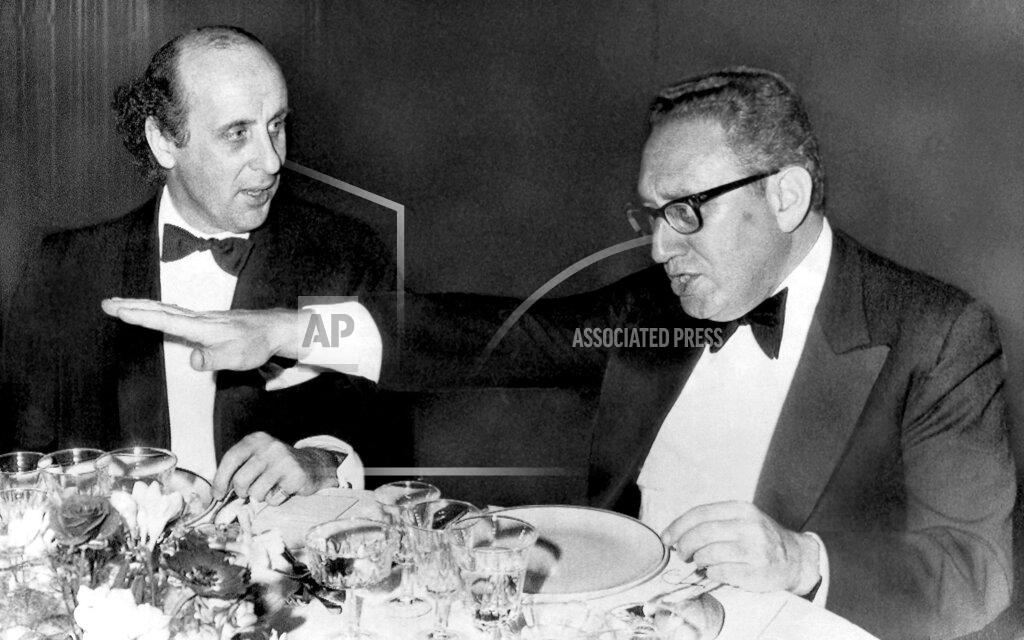
Secretary of State Kissinger said today that the differences between the United States and France over how to negotiate with oil‐producing countries could be reconciled when Presidents Ford and Valéry Giscard d’Estaing met in Martinique his weekend. Speaking at the close of a two‐day meeting of the foreign ministers of the North Atlantic Treaty Organization, he said it was still United States policy to approach the oil price problem by agreeing on cooperative action among the major oil‐consuming countries and then conferring with the producers. His remarks were reportedly received warmly by all but the French, who look upon the American approach as one of confrontation. The French favor an immediate meeting of oil producers, oil consumers and developing countries. High oil prices, Mr. Kissinger said later at a news conference, make “decisive action” necessary if NATO members are to maintain economic and political progress. The policy, Mr. Kissinger said, “is that we believe at present oil prices are too high and that for the sake of the stability and progress of the world economy, they should be reduced.”
“Reduction,” he added, is “in the long term interest of the producers.” The development of alternative sources of energy he said, could mitigate the impact of high oil prices. He said some thought had been given to creation of an incentive for these alternative sources so that, if the price of oil sinks below that of the alternative sources, there would not be massive economic dislocation. But, he added, this is a subject for study, not government policy.
The Security Council today extended the mandate of the United Nations force in Cyprus for another six months, and urged the parties involved “to act with the utmost restraint.” The 15‐country Council also endorsed a resolution that the General Assembly, in a rare unanimous vote, adopted on November 1, calling, on the Greek and Turkish Cypriots to negotiate a “mutually acceptable political settlement.” Today’s vote to prolong the mandate of the 4,335‐man international force was 14 to 0. China’s delegate did not vote, in keeping with her long‐standing policy of remaining aloof on he United Nations peacekeeping operations.
The island of Malta, formerly a British dominion in the Mediterranean Sea, became a republic as a new constitution was adopted. Sir Anthony Mamo, who had been the British Governor General of Malta since 1971, became the first President and continued as head of state, while Prime Minister Dom Mintoff continued in his role as the head of government.
An American law firm in Heidelberg has charged that United States Army intelligence paid an American civilian to pose as a staff assistant last summer, to spy on its work defending soldiers in court-martial cases.
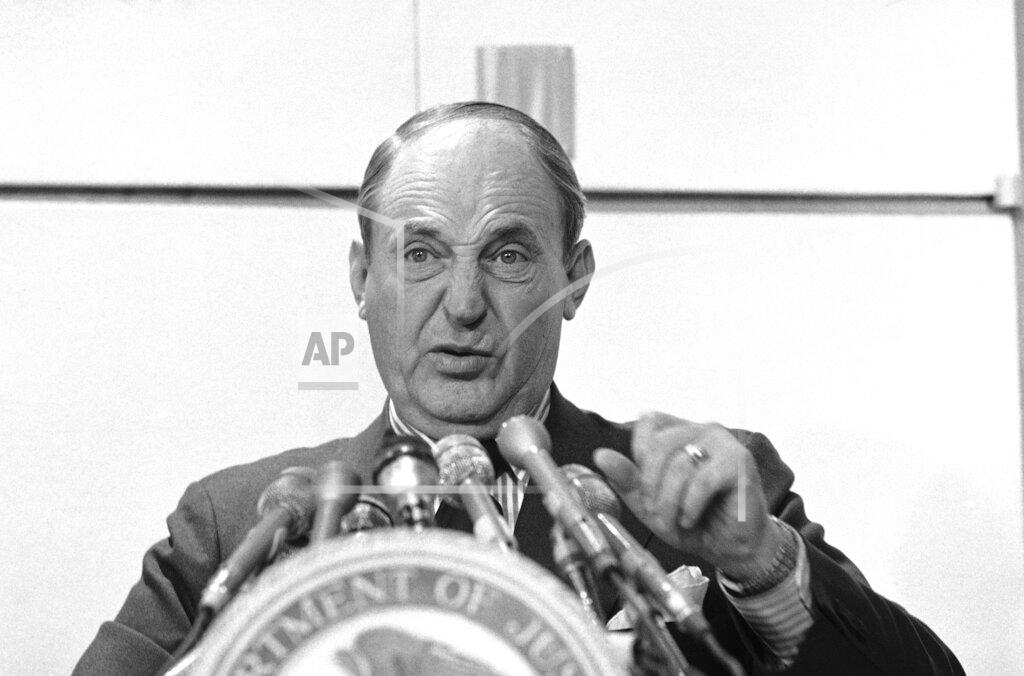
Elliot L. Richardson, who resigned as Attorney General 14 months ago during Richard M. Nixon’s “Saturday night mas sacre,” has been chosen to serve as President Ford’s Ambassador to London. Mr. Ford is expected to announce shortly that Mr. Richardson will be nominated to replace Walter H. Annenberg, the Philadelphia publisher, who has served as envoy to the Court of St. James’s since 1969 and has resigned. Mr. Richardson’s acceptance became known here as the White House announced that Attorney General William B. Saxbe had resigned to accept nomination as Ambassador to India, replacing Daniel P. Moynihan. Mr. Moynihan, who was named by Mr. Nixon in 1972, will return to Harvard in February.
The United States, in a major policy decision, announced that it would establish an economic aid program for the new government in Portugal as “a positive demonstration of United States support and confidence in Portugal’s future.” The aid will be general, embracing housing, agriculture, transportation, public administration, education, health and Portugal’s economy, including financial aspects. The announcement signified an apparent change in Secretary of State Kissinger’s views about aiding the Lisbon government. He reportedly had been extremely cautious because a Communist had become a member of the government.
Three Nobel laureates met with Secretary General Waldheim today to protest what they called the “corruption” of UNESCO by recent discriminatory actions against Israel at the agency’s recent Paris conference. The three —Dr. Julius Axelrod, Dr. Hans A. Bethe and Dr. Kenneth J. Arrow — said later that they had acted on behalf of an informal group of about 100 American scientists who were incensed over the resolutions adopted at the conference of the United Nations Educational, Scientific and Cultural Organization last month. The decisions, pressed by Arab and other third world countries and backed by Communist bloc nations, excluded Israel from participating in any regional group of the agency, cut off funds for Israeli cultural institutions and condemned archeological excavations in Jerusalem.
Seven people, including a probationary firefighter, were killed in an arson fire at London’s Worsley Hotel. In the early morning hours, two fires were deliberately lit in the hotel. Several occupants were roused by the smell of smoke, and on discovering fire raised the alarm as best they could, before leaving the building. One resident tried to extinguish one of these fires while it was still small, but he did not know how to operate the fire extinguisher which he found. The fire grew quickly and led to areas of collapse as the structure began to fail.
Israeli artillery shelled the southern Lebanese town of Nabatiye early today, wounding 10 people, the government in Beirut announced. It said that the shelling by long‐range 175‐mm guns had damaged two residential areas and the main street in the town of 50,000. Last month, two persons were killed and 12 wounded in Nabatiye by Israeli shelling after a rocket attack by Palestinian guerrillas on the Israeli town of Safad. The shelling today came shortly after the guerrillas had reported, firing rockets at Safad and a nearby settlement. A communiqué by the Palestinians said Israel military installations had been hit. A guerrilla said the rocket attack during the night was in retaliation for the raid yesterday by Israeli jets on two Palestinian, centers in the Beirut out skirts. One woman was reported killed and 15 persons wounded in the air attack.
Egypt’s Foreign Minister, Ismail Fahmy, declared today that Israel must “freeze” her present level of population and suspend immigration for the next 50 years if she wanted peace in the Middle East. Mr. Fahmy’s statement, which seemed to indicate a hardening of the Egyptian position, was issued shortly after the United States Ambassador. Hermann F. Eilts, had informed President Anwar el‐Sadat of the results of talks held in Washington few days ago by Secretary of State Kissinger and the Israeli Foreign Minister, Yigal Allon.
The results of the Kissinger-Allon talks were described by informed diplomats here as “sharply disappointing.” Mr. Fahmy was present at Mr. Sadat’s meeting with the Ambassador. Mr. Fahmy predicted that Israel would be compelled to recognize the Palestine Liberation Organization. He said that Israel should accept the proposal for a secular state of Palestine made by Yasser Arafat, the head of the P.L.O during the United Nations General Assembly debate last month. Alternatively, he added, Israel should accept partition with the Arabs along the lines of the 1947 partition plan adopted by the United Nations. The Foreign Minister’s statement was made public by the official Middle East News Agency.
Special military tribunals in Rangoon, Burma today sentenced 35 people to jail terms ranging from three to five years for destruction of public property during violence this week. An official statement said that three tribunals, in summary proceedings, jailed nine people for three years and 26 others for five years. The statement said that the military courts formed by the martial law administrator of Rangoon, Colonel Khin Ohn, would continue the trial of other arrested persons who are charged with the same offense. Unconfirmed reports said that more than 2,000 had been arrested. The Burmese Government imposed martial law in the capital Wednesday after widespread looting and destruction, apparently touched off by a predawn raid by about 1,000 soldiers and policemen on the Rangoon university campus.
The 11,151-ton freighter Sacramento Venture sank 1,100 miles (1,800 km) east of Japan. A Japanese tugboat rescued all 35 crew members. The freighter had developed a leak during a storm.
The Assistant Secretary of State for Inter‐American Affairs said today that the question of human rights under the military government in Chile “should be divorced from other issues” in relations with that country. William D. Rogers, the Assistant Secretary, also agreed at a Senate committee hearing today with a statement by Senator Lawton Chiles, Democrat of Florida, that the Chilean human rights issue was not “something you can sweep under the rug.”
Black African nationalist leaders, released from long detentions, scattered to their homes in various parts of Rhodesia today, but the white minority government relaxed its regulations slightly to permit the black leaders to hold some political meetings in advance of a planned conference on the future of the racially divided country. What was once considered unlikely was happening and what was once unthinkable to many Rhodesians was being thought, and there was a feeling that a major watershed was being approached — if it had not yet been passed. One of the nationalist leaders, the Rev. Ndabaningi Sithole, gave a gloomy interview to journalists, saying: “We cannot reach an accommodation with the Rhodesian Government because the Rhodesian Government is determined on minority rule. Until they change that position cannot see how we can reach an accommodation.” The pessimism his words might have caused was blunted, however, by several factors. One was that other nationalist figures, who merged their longquanreling black factions last week under an organization called the African National Council, said that by agreement they were now avoiding political and polemical comment.
Despite the promise of a veto by President Ford, the House, with support well short of the two-thirds majority needed to override the veto, gave final approval to the strip-mining reform bill that would curb strip mining’s most flagrant environmental abuses. Prospects of raising the two–thirds vote necessary to override the veto in the House seemed poor, thus apparently dooming strip mine reform legislation for the second Congress in a row. The Senate is expected to give the bill its final approval by Monday, probably with a veto-overriding majority. The President’s veto decision, made known to the House before its vote, was urged by his energy advisers but opposed by his top environmental officials. The bill is expected to reach his desk early next week. Mr. Ford can either veto the bill promptly and return it to Congress or wait the 10 days the Constitution entitles him to before acting. By waiting, he could exercise a pocket veto because Congress is expected to have adjorned by then.
The Senate approved legislation today that would extend the life of the Office of Economic Opportunity — the antipoverty agency—through next September and possibly beyond. The measure was a compromise between those who wanted the agency’s independent status maintained indefinitely and a bill passed by the House last spring that would abolish the agency and transfer its programs to the Department of Health, Education and Welfare and other agencies. The Senate and House Bills now go to a conference committee. But the differences between the bills are so great that there is some question whether action can be completed before Congress adjourns next week. Among other developments ill Congress today were the following:
- The House passed a bill that would provide authorization for hospital construction, regional medical programs and a new system of agencies responsible for areawide planning and development of health services.
- The Senate voted to confirm Melvin A. Conant as assistant administrator for international energy affairs.
- The Senate unanimously passed a bill that would allow veterans to take, a second home loan guaranteed by the Veterans Administration if their original loan has been assumed by another eligible veteran or paid off. The bill goes to conference with the House, which has passed a similar measure.
- The Senate deferred, for at least a day, a vote on whether to limit debate and thus force action on legislation that would allow the Government to continue to withhold funds from school districts that failed to comply with desegregation orders.
Mary Louise Smith, the Republican National Chairman, who says her party has a hard time “communicating” what it stands for, held another news conference today to explain plans to a $2‐million advertising campaign next year. Responding mainly to critics within the party, Mrs. Smith, said she was not planning “some artificial, phony, public relations hustle.” Slides prepared by the party’s new advertising agency did not touch on politics, policy, President Ford, the economy or former President Richard M. Nixon, who, Mrs. Smith said, accounts for “some” of the Republican problem. Mrs. Smith also said that the party did not yet have answers to the grave evidence of Republican decline, compiled in connection with the rebuilding effort.
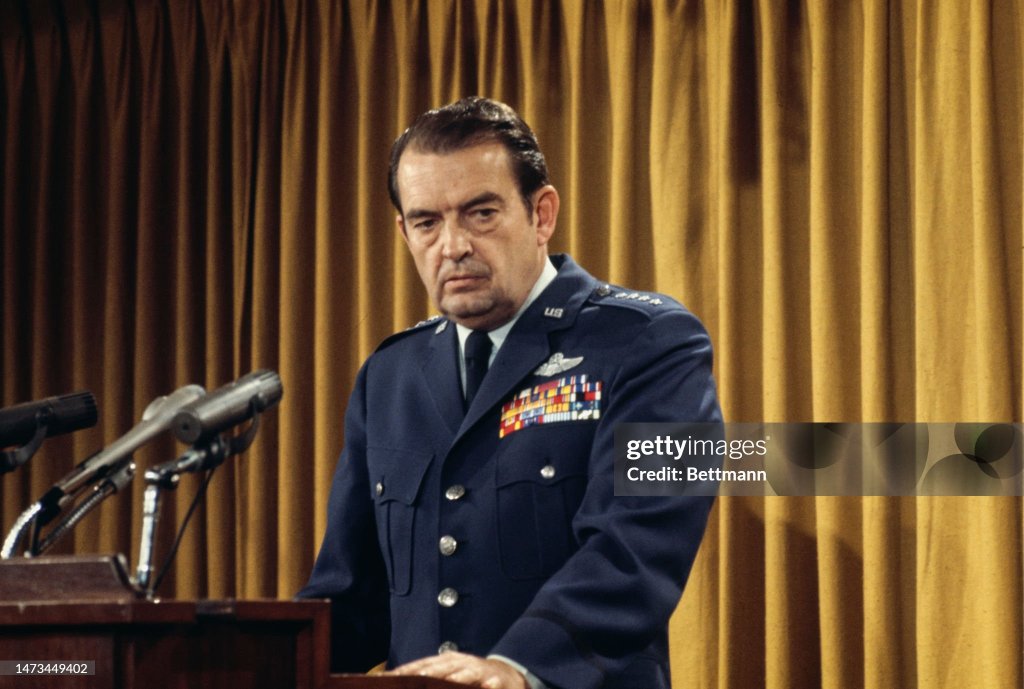
General David C. Jones, the Air Force Chief of Staff, said today the Air Force would save $300‐million annually through reduction of headquarters, including elimination of private planes assigned to top commanders. At his first Pentagon news conference since becoming of the Air Force lase July, chief Jones outlined the “belt‐tightening”, steps he had ordered to eliminate waste overstaffing in the 600,000‐man Air Force. His restructuring plans call for cosing 10 headquarters, with elimination of 15,000 military jobs and 5,000 civilian jobs. While there may be some small manpower reduction next year for the Air Force, General Jones said the monetary saving, which he estimated at $300‐million annually, would not result in reductions in the Air Force’s $28‐billion budget. Rather, in keeping with the management philosphy of Defense Secretary James R. Schlesinger, he said the saving would be. “cranked back into increased combat capability” for the Air Force.
Betty Ford has suffered a recurrence of osteoarthritis, an ailment that has caused her periodic discomfort in the back and neck for 12 years, and will be unable to accompany President Ford to Martinique for his meeting with President Valéry Giscard d’Estaing of France. When asked whether the osteoarthritis attack was in any way related to the breast cancer surgery Mrs. Ford underwent in September, a spokesman said, “It has absolutely nothing to do with it.” Instead of making the trip to Martinique, Mrs. Ford will receive treatment in the form of hot packs, deep heat applications and massage. The condition is expected to resolve itself in a few days.
A partial solar eclipse was visible from the United States but was obscured by clouds in the most heavily populated areas.
Dr. Hans Bethe of Cornell University, a Nobel prize physicist well known for pioneering studies of the thermonuclear reactions that produce the sun’s energy, believes that Americans must combat their dependence on foreign sources of energy with an all-out drive to build nuclear power plants and to double coal production within 10 years. He said that in energy supplies Americans were “far worse off today than we were a year ago.”
In a major ruling, Catfish Hunter wins his claim against owner Charlie Finley and is declared a free agent by arbitrator Peter Seitz.
Dow Jones Industrial Average: 592.77 (-3.60, -0.60%).
Born:
Anthony Mitchell, NFL safety (NFL Champions, Super Bowl 35-Ravens; Baltimore Ravens, Jacksonville Jaguars, Cincinnati Bengals), in Youngstown, Ohio.
Nicholas McCarthy, German-English guitarist (Franz Ferdinand), in Blackpool, England, United Kingdom.
Sara Cox, English TV and radio presenter (“The Radio 1 Breakfast Show”), in Bolton, Greater Manchester, England, United Kingdom.
Died:
Robert Bennett, 55, American Olympic hammer thrower.
Rufe Davis, 66, American stage, film and television actor (“Cocoanut Grove”, “Petticoat Junction”).
Henry de Monfreid, 95, French adventurer and author.
Betty Van Patter, 45, a white bookkeeper for the Black Panther Party, aide to Panther leader Elaine Brown, disappeared on this date. Her body would be found in San Francisco Bay in January 1975 with a fractured skull. Christopher Hitchens wrote in the Los Angeles Times in 2003 that: “There is no doubt now, and there was precious little then, of the Panther leadership’s complicity in this revolting crime.”




 History Diaries