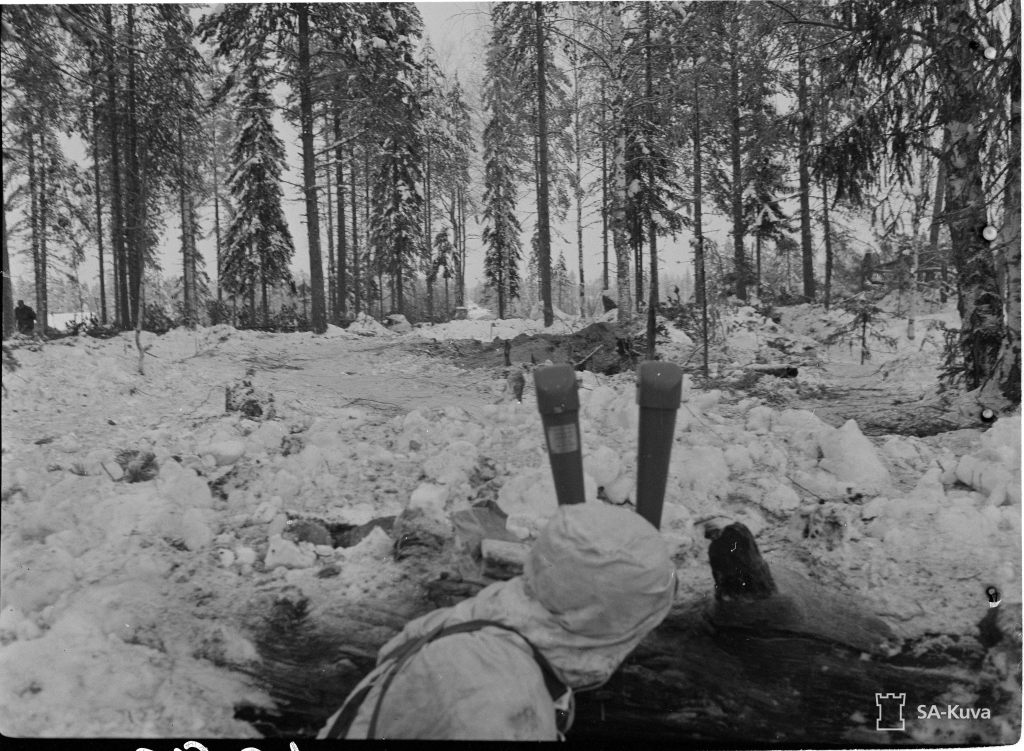
The government of Finland issues a general appeal for aid, stating that it has been attacked by the Soviet Union “without the slightest cause,” adding that “our position as the active outpost of western civilization gives us the right to expect the active resistance of other civilized nations.” Finland appealed to all civilized nations for help stating that “The people of Finland, who have always honestly endeavored to build up their future in mutual understanding with all other nations and on the foundation of peaceful labor, are being ruthlessly attacked by their eastern neighbor…”
Soviet 9th Army captures the Finnish town of Salla in northern Karelia. Soviet 9th Army (Chuikov) 122nd and 88th divisions capture at least part of Salla in the waist of the country on 10 December 1939. The tiny village itself has been burned down during the fighting on 9 December, but it is a key milestone on the road to the coast. The Soviet long-range objective is the port of Tornio by way of Rovaniemi, the latter of which Soviet plans call for taking in two weeks.
There are only so many useable east-west roads in this part of Finland, and this is the best one north of Suomussalmi. Reaching Tornio would split Finland in two and effectively decide the war. Even just taking Rovaniemi, which sits astride the only major north/south road east of the coast, would seriously damage Finnish prospects. Thus, the stakes are extremely high for the Finns, though the Soviets have multiple options – and all those options may be weighing on them.
Once in possession of Salla, Chuikov has a decision to make, because there is a fork in the road there. What he decides will have a big influence on future events.
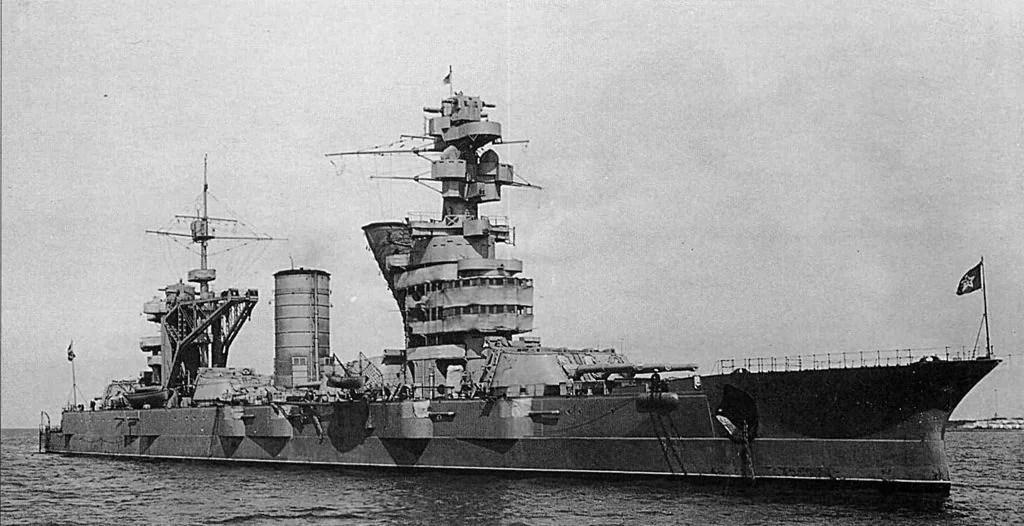
Soviet 7th Army, while attacking Finnish defense fortifications, received flanking fire from coastal batteries on the island of Saarenpää; in response, Soviet battleship Oktjabrskaja Revolutsija bombarded the island, but failed to hit the batteries due to heavy fog. Other Finnish batteries on islands in the Gulf of Finland prevent Soviet naval forces from invading behind the Mannerheim Line to undermine it. The Finns may not have an overwhelming amount of ordnance, but what they do have is cleverly used. In the Gulf of Finland and the Gulf of Bothnia, Soviet submarines sank three ships going in and out of Finnish ports; two of them actually flew German flags.
Prime Minister Ryti visits General Headquarters in Mikkeli. Commander-in-Chief Mannerheim says the late morning situation on the front is critical. General Headquarters issues the order to establish the first guerrilla battalions.
In Ladoga Karelia, Finnish troops overcome a Russian battalion which had outflanked the defensive position at Tolvajärvi.
Soviet troops launch a series of offensives on the River Kollaanjoki.
The Finnish artillery carries out counter-preparation fire against enemy artillery and infantry positions at Koukkuniemi. A half-hour artillery bombardment scatters the enemy’s offensive formations.
The Finns successful halt Soviet divisions, north of Lake Ladoga, in the battle of Kollaa begun December 7th.
Finland’s “waist” is held to be a crucial area. Moscow sees this narrow spot as the logical place for an invasion, but transportation across the wretched terrain is very difficult.
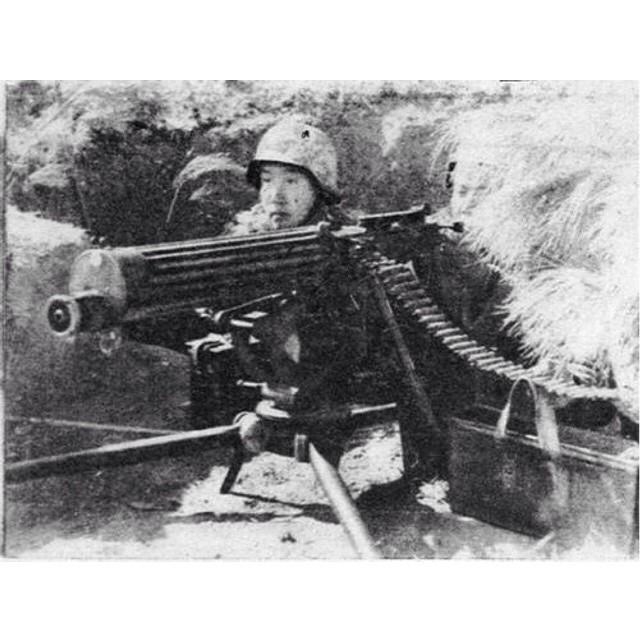
Finns harass foes by primitive means. The “puuko,” native dagger, light machine gun, and skis are combined to offset Soviet might in the dark and icy Arctic.
The League of Nations in Geneva continues to discuss the conflict between Finland and the USSR. As so often happens in Geneva, the direction of the wind changed today, and those who yesterday were forecasting confidently that Russia would be expelled from the League of Nations this week are now less certain that the League’s action will be so drastic.
Even if the League of Nations tomorrow accedes to the united Latin American demand that Russia be expelled, the League seems destined to lose four of its eight remaining South American members. The nations have been disillusioned by the league’s failure to stop aggression anywhere, culminating in the Finnish situation.
The Soviet government formally protests to the British government about its blockade.
Germany agrees to supply Soviet submarines enforcing the embargo of Finland in Baltic.
The German cargo ship Bolheim was shelled and sunk in the Gulf of Bothnia off Mäntyluoto, Finland, by the Soviet submarine S-1.
The German cargo ship Reinbeck was torpedoed and sunk in the Gulf of Finland by the Soviet submarine ShCh-322.
The Estonian cargo ship Kassari was torpedoed and sunk in the Baltic Sea off Utö by the Soviet submarine ShCh-323 with the loss of one crew member.
The Baltic is the one area where the Kriegsmarine and German merchant marine does not have to suffer the oppressive superiority of the Royal Navy. However, with the onset of the Winter War, now a loose cannon that cannot be avoided there is shooting randomly at everyone: the Soviet Navy. This places a further strain on German/Soviet relations in addition to everything else – and the Soviets never apologize for their mistakes.
The United States granted Finland a $10 million credit for agricultural supplies. This action was made because Finland was the only country to have paid its war debts from World War I to the United States.
New anti-Jewish measures in Poland were proclaimed, including a forced labor program.
The German Government today officially denied foreign (Soviet) reports that Germany had been delivering and relaying arms and munitions to Finland for use against the Soviet Red Army.
Irish government sets size of army at 20,000 officers and men.
The 1939 Nobel Prizes were awarded in Stockholm. The recipients were Ernest Lawrence of the United States for Physics, Adolf Butenandt (Germany) and Leopold Ružička (Switzerland) for Chemistry, Gerhard Domagk (Germany) for Physiology or Medicine and Frans Eemil Sillanpää of Finland for Literature. The Peace Prize was not awarded. Nazi Germany forced Butenandt and Domagk to refuse their awards at the time, but they accepted them after the war. Lawrence did not travel to Europe because of the war but accepted his prize on February 29, 1940 at the University of California, Berkeley.
Turkish newspapers today were increasingly hostile toward Germany, an influential one charging that Germany was trying to promote trouble between Turkey and Russia.
RAF Bomber Command conducts another daylight Anti-shipping sweep over North Sea. Three aircraft from No. 77 Squadron spotted nothing.
The Norwegian steam merchant Føina was torpedoed and sunk by the U-20, commanded by Kapitänleutnant Karl-Heinz Moehle, north of Scotland in the northern Atlantic Ocean (57° 45’N, 1° 06’W). At 06.55 hours U-20 fired one G7e torpedo at a steamer without visible nationality markings, which was hit in the forward hold, broke in two and sank within 3 minutes about 25 miles east-northeast of Rattray Head. This was probably the Føina (Master Ole Johan Daniel Larssen), reported missing in the North Sea after leaving Sarpsborg on 7 December 1939. Two bodies in a half-filled lifeboat from this ship were found on 12 December. All of the ship’s complement of 18 died. The 1,674-ton Føina was carrying ballast and was bound for Grangemouth, Scotland.
Dispersed from Convoy HG.9, the British steam merchant Willowpool struck a mine and sank 3 miles east from Newarp Lightship off the eastern coast of England in the North Sea (52° 53’N, 1° 51’E). At 16.00 hours the Willowpool (Master Norman Joseph Oliver) struck a mine, laid on 21 November by U-20, 3 miles east from Newarp Lightship and sank. The master and all 35 crew members were picked up by the Gorleston lifeboat. The 4,815-ton Willowpool was carrying iron ore and was bound for Middlesbrough, England.
The British coaster Fire King collided with the Duke of Lancaster in the Irish Sea off the Point of Ayre, Isle of Man and sank. The wreck was dispersed in 1940.
The Dutch coaster Immingham struck a mine and was damaged in the North Sea off Callantsoog, North Holland. She sank the next day. All seven crew were rescued.
The Norwegian coaster Jotun ran aground south of Berwick-upon-Tweed, Northumberland and was wrecked.
The Belgian cargo ship Kabinda ran aground on the Goodwin Sands, Kent and broke in two. She was declared a total loss.
The Royal Navy auxiliary minesweeper HMT Ray of Hope struck a mine and sank in the North Sea off Ramsgate, Kent with the loss of nine of her 12 crew. Survivors were rescued by the Royal Navy Trawler HMT Silver Dawn.
The British collier Stanwood had her cargo of coal catch fire. She was beached in the Carrick Roads but capsized and was declared a total loss. The wreck was dispersed by explosives.
The German liner Bremen decides to risk Allied patrols and leaves Murmansk for Germany.
U.S. freighter Steel Engineer is detained at Gibraltar by British authorities.
French submarines Achille and Pasteur departed Halifax as escort for Convoy HX.12.
Convoy OA.50G departs Southend.
Convoy OB.50 departs Liverpool.
Convoy SL.12 departs Freetown, Sierra Leone for Liverpool.
Convoy SL.12F departs Freetown, Sierra Leone for Liverpool.
Convoy HXF.12, first convoy of Canadian troops, departs Halifax for Liverpool.
The War at Sea, Sunday, 10 December 1939 (naval-history.net)
On Northern Patrol, two cruisers were between the Orkneys and the Shetlands, and four cruisers between the Shetlands and Iceland.
Armed merchant cruisers TRANSYLVANIA, WORCESTERSHIRE, ASTURIAS and ANDANIA arrived in the Clyde after Northern Patrol duties. SCOTSTOUN was due to arrive with them, but was delayed by weather and only reached the Clyde on the 11th. Armed merchant cruisers CANTON and DERBYSHIRE departed the Clyde for Portsmouth.
WITHDRAWAL OF C AND D-CLASS CRUISERS FROM NORTHERN PATROL
The old C and D-class light cruisers began to be withdrawn from the Northern Patrol as they were relieved by armed merchant cruisers. The first ones to leave for less arduous stations were CARDIFF, CERES, COLOMBO and DRAGON. All the ships were refitted and by the spring of 1940 had been reassigned:
CALEDON and CALYPSO of the 7th Cruiser Squadron to the Mediterranean Fleet. They arrived on station late December to relieve light cruisers ARETHUSA and PENELOPE for duty in Home Waters. DRAGON, also 7th Cruiser Squadron, which was refitting at Chatham until the end of February, arrived at Malta on 12 March 1940. From the 11th Cruiser Squadron, DELHI, after completing her refit at Belfast at the end of January, arrived at Malta on 6 February to relieve light cruiser GALATEA.
CARADOC and DESPATCH had arrived in the West Indies in October, and were joined by DIOMEDE of the 7th Cruiser Squadron, which left Plymouth for Bermuda on 6 February. She had completed her refit in late January and relieved light cruiser ORION.
CARDIFF, 7th Cruiser Squadron completed her refit at Plymouth at the end of January and was to have joined the 8th Cruiser Squadron in the America and West Indies Station. Instead she was assigned to the Gunnery School as a Training Ship, arriving at Portland on 23 February with a reduced complement for this duty. After the invasion of France and during the invasion threat of the summer of 1940, CARDIFF served in the 2nd Cruiser Squadron, Home Fleet, but in October 1940, she returned to the Gunnery School.
DUNEDIN, 11th Cruiser Squadron took CARDIFF’S place. She departed Portsmouth for Bermuda on 6 February, and arrived on station in mid-month to relieve Australian light cruiser HMAS PERTH, which in turn relieved New Zealand light cruiser HMNZS ACHILLES in the South Atlantic. ACHILLES headed for duty in the East Indies.
CERES sailed for the East Indies, via the Mediterranean leaving Scapa Flow on the 28th, and COLOMBO, 11th Squadron joined the 9th Cruiser Squadron in the East Indies, also via the Mediterranean departing Scapa on the 30th.
Light cruiser SHEFFIELD arrived at Wallsend for docking from the 11th to 17th for repairs, leaving on the 18th.
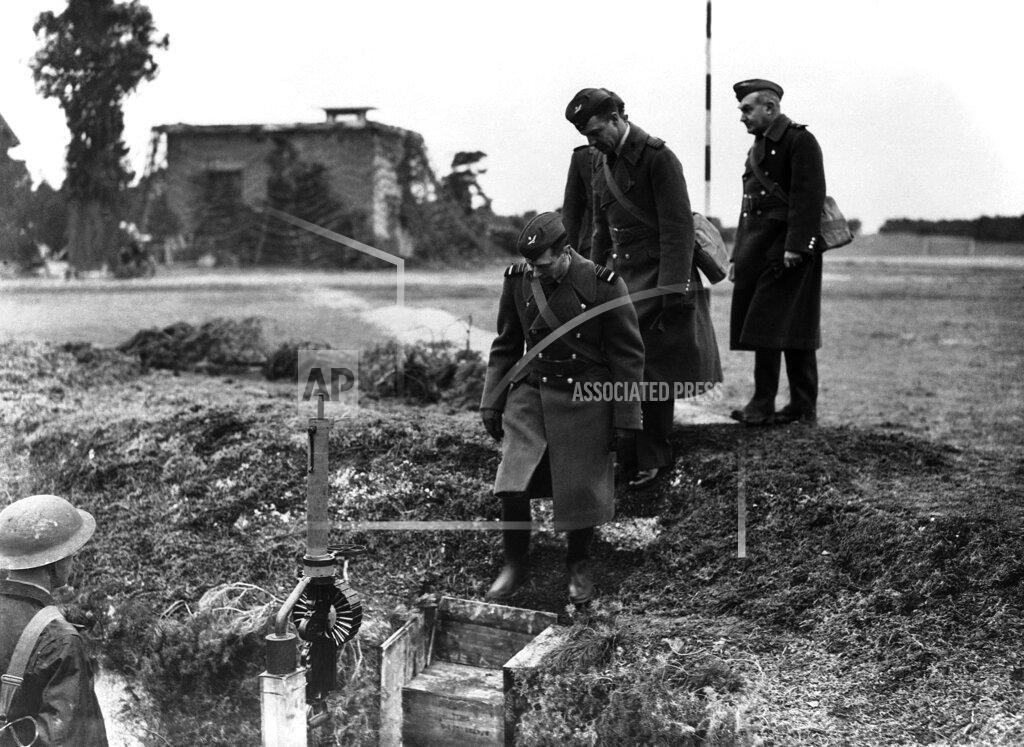
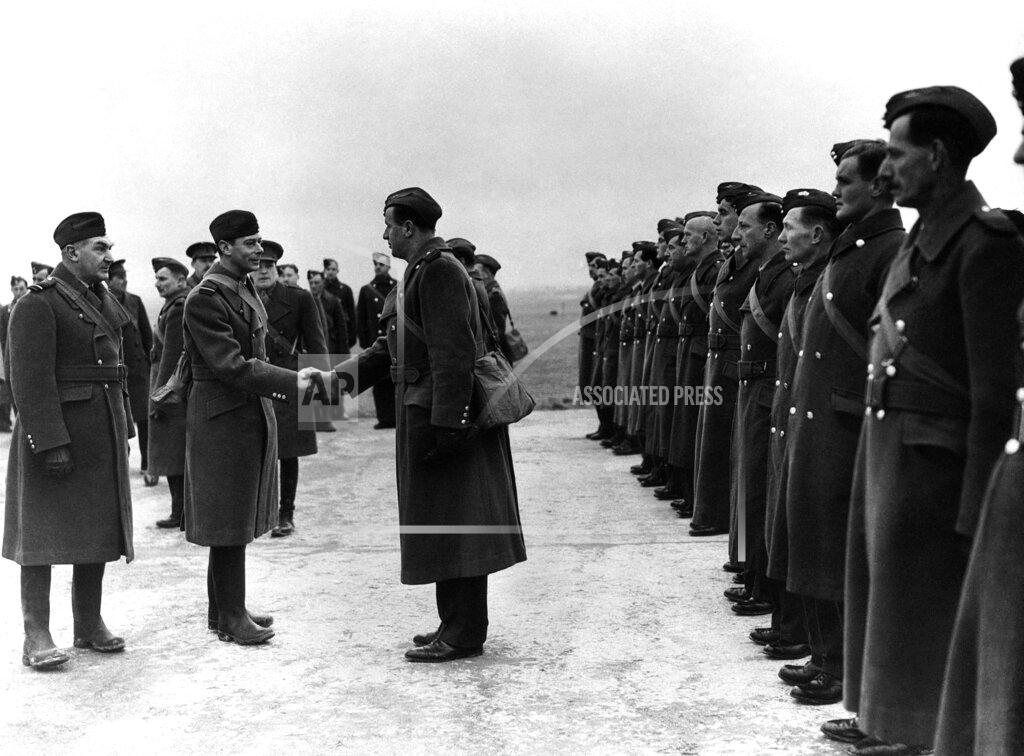
HM King George VI took passage in destroyer CODRINGTON from Dover to Boulogne escorted by destroyers BASILISK, BEAGLE, BOADICEA, BOREAS and BRILLIANT. The King and the ships arrived back at Dover that night.
Destroyers JERVIS, JUNO, JAGUAR, JANUS and JUPITER departed the Humber to sweep for U-boats off Terschelling. No contact was made and they arrived back on the 11th.
Sloop ABERDEEN, on convoy escort with destroyer WAKEFUL, attacked a submarine contact 24 miles 145° from the Owers and then rejoined the convoy. Destroyer ACHERON was sent to investigate, but in St Helen’s Bay on the 11th, the starboard engine failed and put her out of action.
Patrol sloop PUFFIN attacked a submarine contact in 50-06N, 3-50W.
Destroyer FORESTER attacked a submarine contact in 57-59N, 05-25W. Patrol sloop KINGFISHER also searched the area.
Destroyer WOLVERINE, escorting steamer TONGARIRO in tow, attacked a submarine contact in 49 49N, 05 25W. She was joined by destroyer KEITH, but the contact was not regained.
After delivering Force W to Rosyth, destroyers SOMALI and BEDOUIN proceeded to the Clyde. Sister ship MASHONA escorted tanker DAGHESTAN from Invergordon to Scapa Flow, and also proceeded to the Clyde.
Destroyer GURKHA arrived at Portsmouth for docking.
Sloop FLAMINGO departed Leith at 1300 for Rosyth after completing repairs following her November collision. She joined sloop PELICAN off Inchkeith at 1530 and both headed for the Tyne.
Convoy OA.50G departed Southend with 36 ships escorted by destroyers VISCOUNT and ANTELOPE, and on the 11th merged with OB.50G, escorted by destroyers WITHERINGTON and VIMY to form OG.10 – a total of 56 ships. VISCOUNT, ANTELOPE, WITHERINGTON and VIMY were all with the convoy from the 11th to 13th when VISCOUNT and ANTELOPE detached to HG.10. French destroyers JAGUAR and LÉOPARD, which departed Brest on the 12th, escorted from the 13th to 18th, when the convoy arrived at Gibraltar. The day before, the 17th, destroyer WISHART had joined off Gibraltar.
Soviet submarine S.1 sank German steamer BOLHEIM (3324grt) with gunfire off Rauma near Bjorneborg.
Soviet submarine ShCh.322 sank German steamer REINBEK (2884grt), en route from Leningrad to Oskarshamn on the west coast of Sweden, in the Gulf of Finland.
Soviet submarine ShCh.323 sank Estonian steamer KASSARI (379grt) off Uto with the loss of one member of crew.
Dutch steamer IMMINGHAM (398grt) struck a mine off Kallautsoog, off the Dutch coast and sank on the 11th; her crew of seven was rescued.
Norwegian steamer JOTUN (534grt) was lost by grounding south of Berwick.
Steamer FIRE KING (758grt) was sunk in collision with steamer DUKE OF LANCASTER (3814grt) in the Irish Sea off the Isle of Man.
French heavy cruiser ALGÉRIE arrived at Casablanca.
SAILING OF CANADIAN TROOP CONVOY TC.1
Canadian troop convoy TC.1, consisting of troopships MONARCH OF BERMUDA (22,424grt), EMPRESS OF BRITAIN (42,348grt), DUCHESS OF BEDFORD (20,123grt), EMPRESS OF AUSTRALIA (19,665grt) and AQUITANIA (45,647grt) carrying 961, 1,303, 1,312, 1,235 and 2,638 troops respectively, departed Halifax. The convoy was escorted out of Halifax by Canadian destroyers HMCS OTTAWA, HMCS FRASER, HMCS RESTIGOUCHE and HMCS ST LAURENT, and battleship RESOLUTION provided heavy support.
Battlecruiser REPULSE and aircraft carrier FURIOUS had just arrived at Halifax escorting liner DUCHESS OF RICHMOND (20,022grt), carrying British civilians being evacuated to Canada. REPULSE, FURIOUS, light cruiser EMERALD, and destroyers HUNTER and HYPERION departed Halifax and steamed ahead of the troop convoy to sweep for German raiders. HUNTER and HYPERION were detached at dusk on the 10th and rejoined at 0800/11th. Because of the severe cold, FURIOUS was unable to launch aircraft due to frozen hydraulic lines until the 11th, but then fog soon curtailed operations. Once out of the Halifax approaches, the local escort, HUNTER and HYPERION returned to Halifax, while at sea on the 14th, EMERALD was relieved by light cruiser NEWCASTLE.
Convoy HXF.12 departed Halifax at 0900 escorted by Canadian destroyer HMCS SKEENA, which was detached on the 12th. Ocean escort was armed merchant cruiser ALAUNIA and French submarine ACHILLE. ALAUNIA detached on the 22nd and ACHILLE arrived at Brest on the 22nd, escorted into port by sloop COMMANDANT RIVIERE. Destroyer WALKER escorted the convoy in Home Waters from the 23rd and HXF.12 arrived at Liverpool on the 24th.
Light cruiser GALATEA departed Malta on patrol and arrived back on the 19th.
Submarine OLYMPUS departed Diego Suarez to check Prince Edward Island in the southern Indian Ocean for suspected German raiders, but made no sightings.
French destroyer TEMPÊTE passed Gibraltar east to west.
Convoy SL.12 departed Freetown escorted by sloop ROCHESTER and arrived on the 26th.
French heavy cruisers TOURVILLE and COLBERT, assisted by sloop D’IVERVILLE, departed Malta for contraband control duties off the west of Greece. The cruisers arrived at Beirut on the 12th.
Convoy K.6 departed Bombay with troopships RAJULA (8478grt), D’ARTAGNAN (15,105grt), ROHNA (8602grt), CAP TOURAINE (8009grt), LANCASHIRE (9557grt), TAIREA (7933grt) and TALAMBA (8018grt), escorted by Australian light cruiser HMAS HOBART and armed merchant cruisers MALOJA and RANCHI from the 10th to 15th. The convoy arrived at Suez on the 20th and Port Said on the 21st, and was escorted by Australian destroyers HMAS VAMPIRE and HMAS VOYAGER from the 21st to 24th. They were relieved on the 24th by Australian sister ships HMAS VENDETTA and HMAS WATERHEN from the 24th to 26th when the convoy reached Marseilles.
The United States Government has taken its first material step to aid Finland, which is the only nation to pay its debt installments in full, by opening credits of $10,000,000 through the Export-Import Bank and the Reconstruction Finance Corporation with which Finland can buy “agricultural surpluses and other civilian supplies” in the United States. Announcement of the credits today gave concrete expression to the sympathy previously expressed in official circles for Finland in her effort to preserve her independence in the face of Soviet Russia’s attacks. The credits are expected to aid Finland in meeting the economia pressure that Russia is exerting, together with the use of armed force, to beat her small opponent into submission.
Shipments of vitally needed foodstuffs and cotton can reach Finland through the Scandinavian countries, despite the Stalin government’s naval blockade, since the Gulf of Bothnia, between Sweden and Finland, is protected by mines and still open to transit. Finland has been attempting, also, to find means of purchasing in this country airplanes and other war supplies.
The Finnish Government, with its 4,000,000 citizens behind it, has informed a number of governments, including that of the United States, that it can withstand the army of Russia’s 180,000,000 people almost indefinitely, but that it needs concrete aid in the way of war supplies, particularly planes, if it is to do so. Thus far, this government, in part it is understood because of the fear of being accused of unneutral action, has not advanced credits for such supplies. A Finnish military purchasing commission is at present in this country.
The announcement of the opening of government credits to the Finns, which was made by Jesse H. Jones, Federal Loan Administrator, was held certain to have a decided effect in showing both Finland and other powers that the United States is willing to stand behind Finland with more than words. Some Finnish circles expressed optimism that more effective aid would be forthcoming later, even though the Finnish Minister, Hjalmar J. Procope, refused to discuss this aspect of the situation. Mr. Jones said that President Roosevelt had approved the credit action.
A Dies Committee investigator claims that Reds use consumer groups. Communists try to stir discontent among shoppers, he says. Assertions that Communists are and have been active in the organization and management of the League of Women Shoppers, the Consumers Union and a group of less known consumer organizations for the purpose of stirring up discontent were contained in statements released today by the House Committee Investigating un-American Activities. The statements were embodied in a report made by the committee’s research director. J. B. Matthews, former head of the Consumers Research, of which Consumers Union is a rump offshoot. Mr. Matthews stated that Communists worked actively to destroy the power of advertising because they realized that it was an essential element in the capitalist system and that its destruction or discrediting would thus weaken that system.
“The consumer organizations which have been set up or which are controlled by the Communist party,” Mr. Matthews’s report said, “express the application of the principle of Lenin for the utilization of “every manifestation of discontent.” Precisely as the Communist party professes an interest in collective bargaining for the purpose of expanding its influence and control in trade unions, and precisely as it professes an interest in peace and democracy for the purpose of bringing members of the middle-class under its influence, so the party professes concern over consumers for the purpose of tearing down the institutions of capitalist society and erecting in their place the institutions of proletarian dictatorship.
Thomas Dewey declines to amplify upon his statement about the need for a balanced U.S. budget.
In his first speech since the start of the European war, Joseph P. Kennedy, Ambassador to Great Britain, strongly urged tonight that the United States “keep out” of the conflict.
U.S. Vice President John Nance Garner is telling his friends that if he is not nominated for the Presidency he is through with politics. He would retire to Uvalde to cultivate his acres, hunt for Texas deer and angle for Texas fish. Meanwhile, he is a candidate for keeps.
Power company executives raise the question whether the Tennessee Valley Authority would have the constitutional right to build new steam plants to safeguard its power supply in dry seasons, when hydroelectric production at the dams is curtailed as it is during the present drought, with 27 percent of total production coming from steam.
The Republican national party reapportions convention votes, dividing nine among eight states and lopping three votes each off four states.
Domestic retail sales of 162,881 General Motors cars and trucks in November represented an increase of 24 percent over the same month last year and 47 percent over the October total, the corporation reports. In the first eleven months, consumers brought 1,208,753 units, compared with 882,882 in the like period of 1938.
American mills welcome a slowdown in steel orders. This gives them time for renovation.
The outlook for American wheat is the worst in its history because of the long drought.
The Green Bay Packers beat the New York Giants 27–0 in the NFL Championship Game to win their fifth NFL title. The host Packers scored a touchdown in the first quarter on a touchdown pass from Arnie Herber to Milt Gantenbein and led 7–0 at halftime. They dominated in the second half, scoring two touchdowns on a pass from Cecil Isbell to Joe Laws and an Eddie Jankowski one-yard plunge, and adding two field goals, to win 27–0 and secure their fifth title — two more than any other franchise.
The first convoy of Canadian troops departed Halifax, Nova Scotia for England. First contingent of troops from the 1st Canadian Infantry Division sailed from Halifax in convoy TC.1 of five liners bound for Britain. The destroyers HMCS Ottawa, HMCS Restigouche, HMCS Fraser & HMCS St Laurent escorted them to the open ocean. A RN ‘ocean’ escort was provided by the carrier HMS Furious, battleship HMS Resolution, battlecruiser HMS Repulse and cruiser HMS Emerald.
Canada’s fertilizer exports are up.
Canada sets rigid wartime regulations to control all flying by civil aircraft.
The League of Nations loses face in South America. Even if Russia is expelled, four more states talk of quitting the organization.
Argentina’s cotton crop increases by 38 percent.
Gandhi bars undermining Britain, but he also urges India to show no enthusiasm for war. He says, “Show no enthusiasm for the war in Europe and refrain from stabbing England in the back.”
Chinese 2nd War Area (Shansi and southern Shensi with 4th Army Group, 5th Army Group, and 14th Army Group) opens offensive around Henglingguan, Chenfengta, and Yenchangchen . Chinese troops launched an attack on Henglingguan Pass south of Jiangxian in northern China; the Japanese troops at the strong point would be driven off by the month’s end.
United States pressure on Japan is unconsciously assisting plans that aim at the partition of China into Russian and Japanese spheres, according to an editorial in the Oriental Economist. The editorial is noteworthy not only as an exposure of the lengths to which certain Japanese jingoes and militarists are prepared to go to obtain speedy success in China. but also as a revelation of how Japanese commercial circles have been alarmed by their subterranean movement.
Summed up bluntly, what the Economist says is that the pro-Soviet, pro-German group would have no chance if it were not able to play on the public’s fear that the United States and Britain will never recognize Japan’s policy in China and that Japan therefore must join the Soviet-German camp as the only means of finishing the war in China. They say the critical speech by Joseph C. Grew, the United States Ambassador, and the United States State Department’s attitude show that while the United States is willing to straighten out American-Japanese relations it demands that this be done by concessions by Japan. “No amount of waiting will ever bring America to recognize Japan’s stand,” the pro-Soviet group says. “To build the new order in East Asia it is wisdom for Japan to shake hands with the Soviet at the present juncture.”
Reliable information indicates the proponents of Soviet rapprochement are not actually obtaining much support. but such as they get is found in circles whose energy and driving power often give them the lead. The Japanese distrust the Russians as much as ever, but are intensely anxious to see definite progress of pacification in China. Many believe Generalissimo Chiang Kai-shek’s resistance would collapse if all outside help were absolutely cut off. Russia is General Chiang’s last considerable source of external supplies. Russia also could cause a split between General Chiang and the Chinese Communist armies. Russian overtures imply that at the price of accepting Russian interests in the remote Red northern provinces Japan would have a free hand in the rest of China.
But this would utterly defeat Japan’s historic policy, as the Economist shows. It therefore opposes a rapprochement with the Soviet on the ground that it would sacrifice Japan’s permanent interests for a temporary advantage in China. It says a partitioned China would be impotent and ultimately Japan would be left to face a hostile world alone. A strong China, cooperating with Japan, it says, “is the only policy with which Japan can contend with the future onslaught of European and American powers.”
“Japanese Soviet cooperation might temporarily dispose of our China trouble, but the solution would be superficial,” it continues. “The result would allow Russia’s harmful influence to become rampant in China. Once China goes Red, Japan’s position becomes precarious. The movement for Soviet-Japanese cooperation should be left alone.” Such arguments are unanswerable, to the Japanese mind, and would be unnecessary if termination of the China war were a less tedious business. Their appearance in print is a gesture of asking the United States to modify the severity of its attitude toward Japan while revealing that the Japanese have recognized that Joseph Stalin is more dangerous as a friend than as an enemy. The consequences in Finland and the Baltic States of Germany’s agreement with Russia have been an object lesson.
Born:
Bob Priddy, MLB pitcher (Pittsburgh Pirates, San Francisco Giants, Washington Senators, Chicago White Sox, California Angels, Atlanta Braves), in Pittsburgh, Pennsylvania (d. 2023).
Jaroslav Jiřík, Czech NHL and Czechoslovakian National Team right wing (Olympics, bronze medal, 1964, silver medal, 1968; St. Louis Blues), in Vojnuv Mestec, Czechoslovakia (d. 2011).
Barry Cunliffe, English archaeologist and university professor, in Portsmouth, England, United Kingdom.
Died:
Wilhelm Grosz, 45, Austrian pianist, conductor, classical composer (Afrika Songs), and popular songwriter (“Red Sails in the Sunset”; “Isle of Capri”).
 History Diaries