Buddhist leaders reached agreement tonight on an intensified campaign against the Government. They said the movement would include an anti‐American stand if the United States persisted in its support of Premier Trần Văn Hương. In two days of secret policy meetings leading monks apparently ironed out the differences that have held back the more militant factions for the last week. The monks of the Buddhist organization pledged themselves to work “with all means” to bring down the present regime. They gave no hint of what governmental team they wished to substitute for the essentially nonpolitical Cabinet named by Premier Hương just over a month ago. Informed sources said the monks agreed on the wording of a communiqué and letter to the Chief of State, Phan Khắc Sửu, to be published tomorrow.
They decided to reopen the National Buddhist Center, which had been closed during the street riots of two weeks ago, to serve as a command center of their renewed anti‐Government campaign. The anti‐American statements would come soon as a second step, the sources said. Criticism of American policy has been implicit in recent Buddhist attacks on Premier Hương’s regime. Thích Quảng Liên, a Yale-educated Buddhist school principal, was said to be active as the leader of the proposed anti-American campaign. ‘‘This is a life or death struggle,” said a senior monk after the meetings.
Specific charges against the Hương Government are that it is re‐employing hated secret agents left over from the overthrown Diệm regime, has suppressed pro‐Buddhist newspapers and supported the anti-Buddhist press, is requiring civil servants to state their religion as President Ngô Đình Diệm did with the purpose of weeding out Buddhists from high position and finally that the Government is “slandering” Buddhist intentions and activities. “We consider Hương to be a second Diệm,” said one influential monk who took an active role in the deliberations.
Asked about the danger that Communist agitators might move in to take advantage of a political vacuum that might result if the Hương Government were overthrown, several monks shrugged and said: “We are not worried about the outcome or any circumstances — we are religious people of faith.” “We will take all possible precautions against exploitation of our campaign by the Communists,” said a senior monk. “It is just because we want to fight the Communists that we want a revolutionary government — Hương is not a revolutionary.” In their letter to Mr. Sửu the Buddhists are not setting a time limit or making specific threats of action if the High National Council fails to remove Premier Hương. But they said the communiqué would press for an urgent change and they were prepared to call out all manpower and the means of the country’s Buddhist movement to press the campaign.
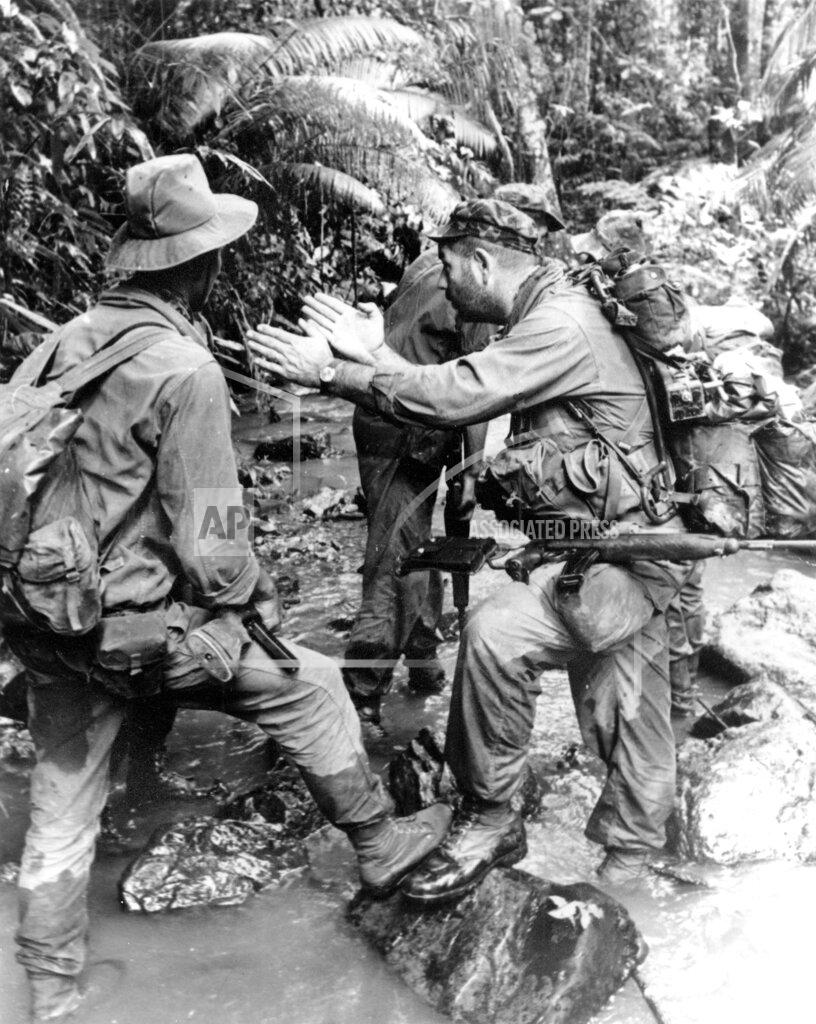
Four United States Army advisers who were trapped today by attacking Việt Cộng troops, called in air‐burst artillery directly overhead to drive off the enemy. The desperate measure caught the guerrillas in the open only yards from the Americans’ positions. Their assault faltered and lost momentum under the exploding shells. “We hugged our foxholes as that stuff burst 20 feet up in the sky,” said Captain Harry C. Spaulding of Seattle, Washington. “We were underground and they were above it. That stopped them in their tracks and turned the tide.”
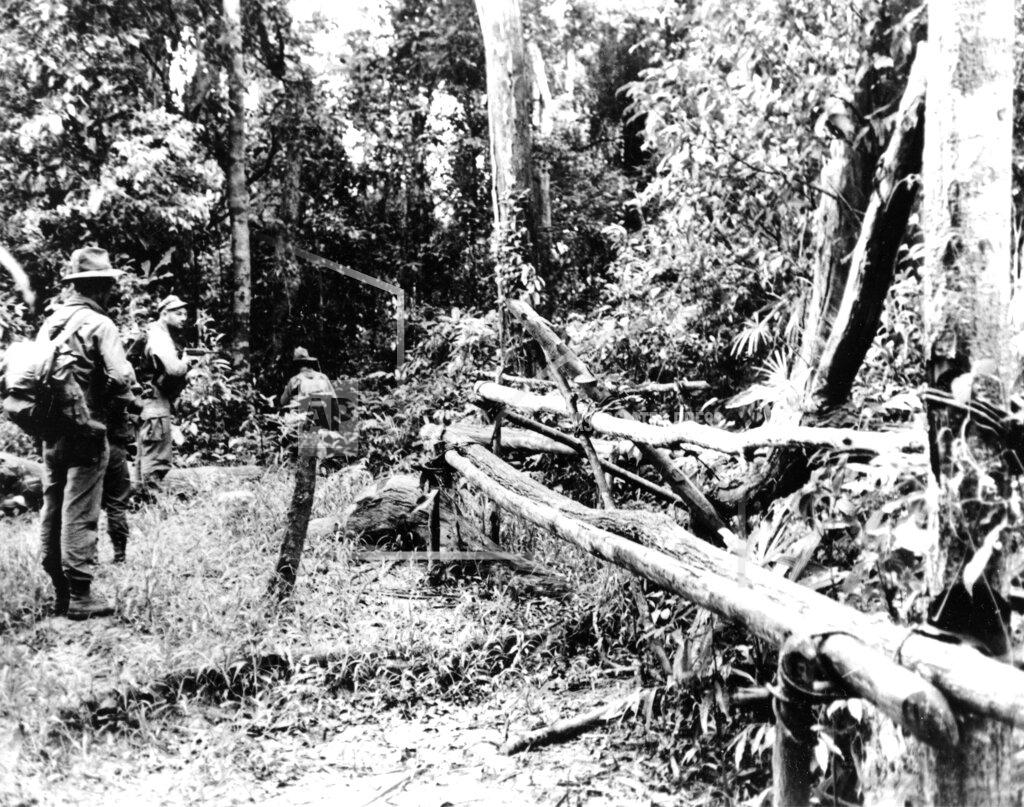
The Communist insurgents held the high ground; the lonely but strategic outpost of An Lão, at the head of the valley, was exposed, as was Hill 193 half a mile away where the government defenses included two high‐powered mortars. The only road along the valley floor was vulnerable to carefully laid ambushes. This tactical predicament, in both its practical and theoretical dangers, confronted the “Vietnamese and United States military commands this week in the mountains in Bình Định Province, 300 miles north of Saigon. The practical consequences were reported by official spokesmen. The two mortars were seized by the Việt Cộng Monday and a government relief battalion was caught Tuesday in an ambush.
In its theoretical meaning, the action seemed even more discomforting. It was reminiscent, in tactical terms if not in political, of the mountain campaigns waged by the French in Vietnam a decade ago before the decisive siege at Điện Biên Phủ. The Điện Biên Phủ siege was the culmination of eight years of French struggle against the Việt Minh Communist forces. A decision to defend the isolated bulwark led to a 55-day siege. The Communists captured Dienbienphu May 7, 1954. The following day France submitted armistice proposals and a conference at Geneva two months later worked out an agreement for the partition of Vietnam and the withdrawal of the French.
An American military spokesman announced that both the outpost of An Lão, a triangular-shaped compound that had been used by the French, and the mortar position on Hill 193 were reoccupied yesterday by government troops. The mortars were not recovered. The reports did not say that the Việt Cộng troops had been defeated but only indicated that they apparently had not continued their resistance. There was no certainty that the fertile An Lão Valley, a critical government position in the rugged mountains of central Vietnam, could be defended if the Việt Cộng decided to strike again. The loss of the two mortars, along with 300 rounds of highexplosivé ammunition, was particularly unnerving to American and Vietnamese officers in the central lowlands. The effective range of the mortar is as much as 5,500 yards and the supply of ammunition captured by the guerrillas is three times the number of shells that fell on Biên Hòa airbase November 1, destroying ór damaging a squadron of United States light bombers.
In Vientiane, Ambassador Sullivan gets Laotian Premier Souvanna Phouma to agree to the new operations that will allow U.S. planes to raid the Communist supply routes in Laos. The staging area, supply depot and distribution point of Tchèpone (Xepon) and other Communist supply routes in Laos will probably be the first targets if a limited air interdiction campaign is undertaken shortly. Air attacks by the South Vietnamese and Royal Laotian Air Force with United States help and support may come soon now that Ambassador Maxwell D. Taylor has returned to Saigon. These attacks were discussed during the meetings he attended in Washington last week and it is believed they will form part of Washington’s broadened policy for defeating the Việt Cộng in South Vietnam.
Talks between the United States and Cambodia to settle differences took place for the third day in New Delhi, India today. The delegations met for two hours and announced that they would meet again tomorrow.
Communist demonstrators protesting against the visit to Rome today of Premier Moïse Tshombe of the Congo clashed with rightists outside the Chamber of Deputies building. Mr. Tshombe, who has been under heavy police guard since his arrival by air at 6 AM from Leopoldville, was in another part of Rome at the time. He had been received in audience by Pope Paul VI. The police took 30 demonstrators of both factions into custody as they moved in to break up the fighting in the square in the center of the city. The sitting of the Chamber was delayed almost an hour when a number of Communist Deputies arrived showing signs of the street fighting. They accused the police of brutality. No one was injured seriously. During the audience at the Vatican, Pope Paul delivered an appeal for the ending of the fratricidal strife that has prevailed since the Congo gained independence from Belgium in 1960.
Mali’s Foreign Minister charged in the Security Council today that President John F. Kennedy’s assassination, the murder of Patrice Lumumba, and Dag Hámmarskjold’s death were all the work of forces that were behind the recent United States‐Belgian rescue operation in the Congo. The minister, Ousmane Ba, did not elaborate beyond denouncing what he called.”imperialistic forces, of reaction, obscurantism and racism.” He said the United States-Belgian mission to rescue white hostages was “criminal” and termed its “so‐called humanitarian” character a “gross subterfuge.” Mr. Ba’s speech was one in a series in the council by Africans who have stressed allegations of racial implications in the operation to save the hostages. The Foreign Minister said the “criminal attacks” by the Americans and Belgians were justified to European opinion “by stating that whites were being held as hostages by the authorities of Stanleyville and that their lives were in danger.
Premier Cheddi B. Jagan of British Guiana, who lost his majority in Monday’s election, said today that he would not resign. It was reliably learned tonight that Sir Richard Luyt, the British Governor of the colony, which is internally self‐governing, had sent a cablegram to London asking for an order that would modify the Constitution and allow the summoning of the Legislature without the Premier’s consent. The order sought by the Governor would automatically put Dr. Jagan out of office. Such an order — assuming London issues it — would arrive by Saturday. The Premier called on the Governor this morning and, in an angry session, told him that the election had been fraudulent and that he did not feel compelled to resign. After the meeting with Dr. Jagan, Sir Richard is reliably reported to have remarked to his aides, “If Dr. Jagan does not resign we shall have to get him out.”
Prime Minister Harold Wilson said on television tonight that Britain would not countenance the ex tension of control over nucleari weapons within the North Atlantic Treaty Organization. Speaking after returning from two days of talks in Washington with President Johnson and one in Ottawa with Prime Minister Lester E. Pearson, he said: “We certainly would not agree to any set‐up which meant another nuclear finger on the trigger, whether it be Germany or anybody else.” Mr. Wilson spoke in Manchester, where his plane was diverted because of heavy fog in London. The Prime Minister faced a tight schedule of meetings in his campaign to gather support for his concept of a broadened nuclear weapons system within NATO. He plans to outline his proposal to the House of Commons next week.
Apart from strict American control over the use of any NATO atomic weapons, Mr. Wilson is said to want British nuclear‐armed submarines and nuclear bombers added to the allied force proposed by the United States. The original concept was for a fleet of 25 surface ships armed with Polaris missiles and manned by international crews drawn from the participating nations. Tomorrow Mr. Wilson plans to consult with his Cabinet. The ministers are due to discuss how best to put his proposal in Commons in the face of expected criticism from the Conservative Opposition that he would give up Britain’s independent nuclear deterrent and from his own far left that he would not give it up.
France slipped slowly but steadily into paralysis tonight as electricity was cut by striking workers in one power station after another throughout the country. French economic life was expected to reach a standstill by tomorrow morning with close to two million workers in public services and nationalized, industries walking off their jobs for the day to protest against the Government’s wage policies. Electric power workers started the protest at 9 PM. Minutes after they left their posts lights began to go out in Paris and other cities. Officials of the state‐run industry reported at 11:30 PM that half the nation’s power was out. They said that the provinces were affected more seriously than the Paris area but that essential health services were assured.
United States officials in Seoul believe South Korea is on the way to. becoming self‐supporting, provided the 16‐year‐old republic maintains more political stability than it has had for long in its turbulent past. President Chung Hee Park, in an interview last week, contended that the country was “gradually” moving toward this goal. The short, slightly built former general, who fiddled with a brass ashtray as he talked and chain‐smoked in a sun parlor of Blue House, his official residence, gave the impression that he was carefully refraining from overstatement. The 47‐year‐old head of the Government seized power in a military coup in May, 1961, and became Président in October last year in a close election that was considered exceptionally clean for Korea. He appeared to be aware that the Opposition’s ability to turn restive students against the Government confronts the regime with an explosive political situation. “The last four years have been a time of crucial trial period, with two revolutions and three changes of government,” President Park said. “Now we are gradually but steadily moving toward security and stability. I am confident” that political stability will “be maintained in the future.”
The Communist party leader of Leningrad has come out in defense of the controversial regional councils established by Nikita S. Khrushchev in 1957 for the management of Soviet industry. Speaking in the Supreme Soviet (parliament), Georgi I. Popov, party chief of the Soviet Union’s second largest city, said that proposals, to abolish the regional bodies and to return industrial management to specialized central ministries were “unsound.” “We think the system of regional councils is definitely progressive and has proved its value,” Mr. Popov said.
Franz Josef Strauss, West Germany’s most articulate critic of the nuclear fleet project, for the North Atlantic Treaty Organization, said today that it was “intolerable” for West Germany to be driven to choose between the United States and France. “Our allies should stop confronting us with conflicting ideas,” the former Defense Minister said at a luncheon meeting of the Foreign Press Association in Bonn.
Ghana has become the eighth country to associate itself formally with a request by Cambodia that the current session of the General Assembly consider the question of United Nations membership for Communist China, it became known today. Algeria, Burundi, the Congo Republic (Brazzaville), Cuba, Guinea, Indonesia, and Mali had previously endorsed the request. Albania submitted a similar request separately.
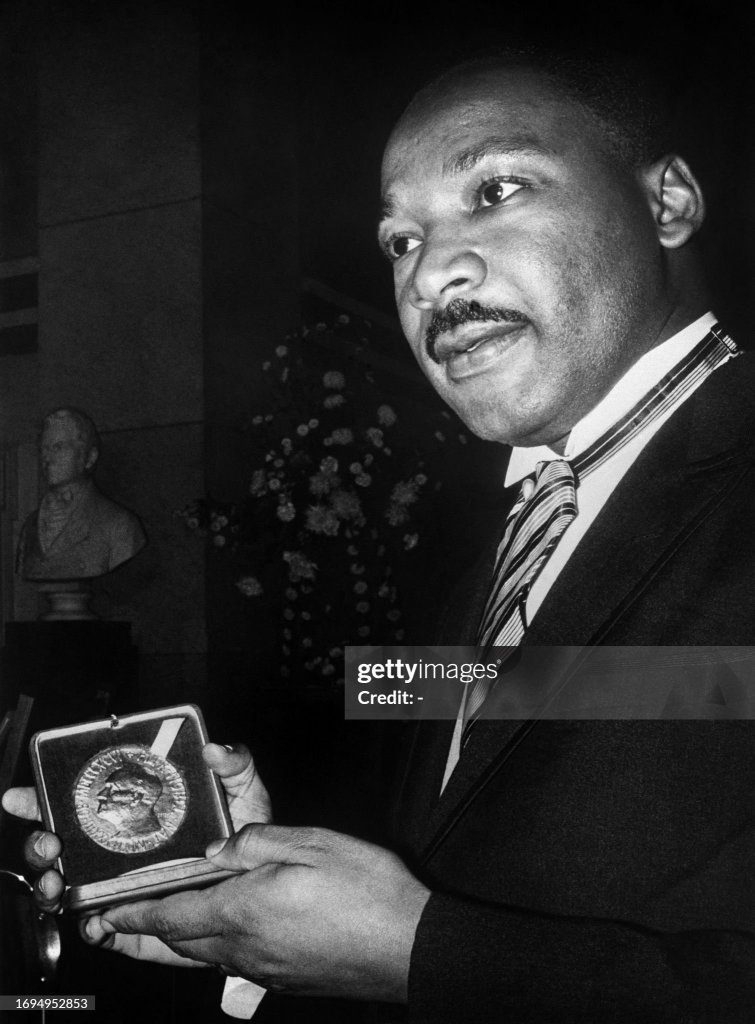
Martin Luther King, Jr. was presented the Nobel Peace Prize in Oslo for his work in the American civil rights movement. Dr. King commented, “I must ask why this prize is awarded to a movement… which has not won the very peace and brotherhood which is the essence of the Nobel Prize. I conclude that this award, which I receive on behalf of that movement is profound recognition that nonviolence is the answer to the crucial political and moral question of our time— the need for man to overcome oppression and violence without resorting to violence and oppression.”
The Japanese fishing trawler Uji Maru, owned by Japan Marine Products Company, disappeared with 33 crewmen aboard. The 535-ton ship had been in the south Atlantic Ocean off the coast of Angola when it had last sent a radio message. Its wreckage would be found two weeks later in 280 feet (85 m) deep waters.
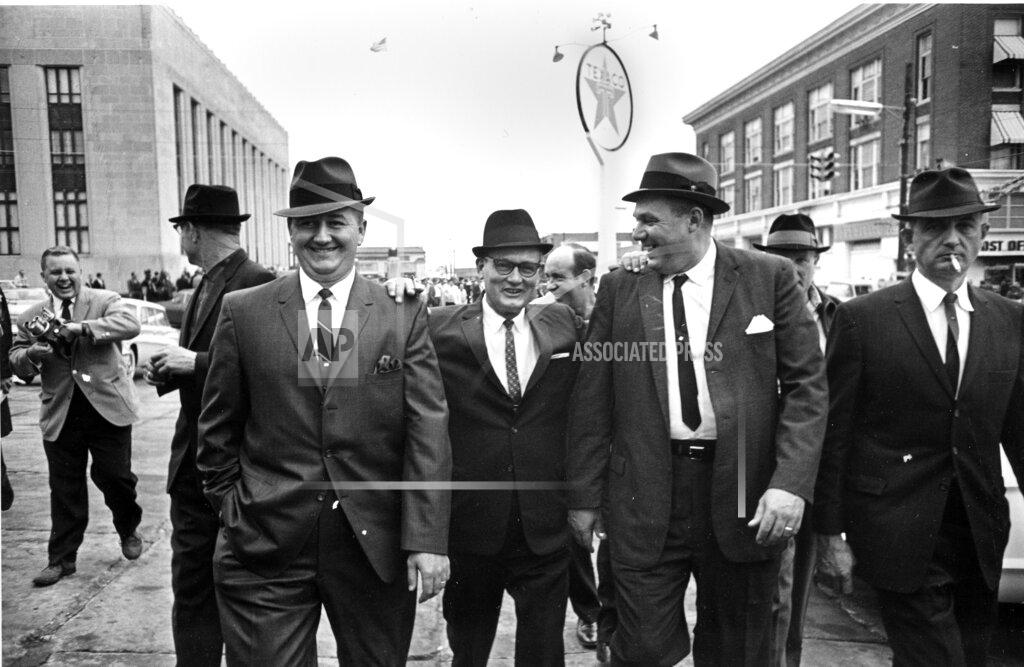
The Federal Bureau of Investigation disclosed in a preliminary hearing today that it had obtained a signed confession from one of the white men accused in connection with the slaying of three civil rights workers last June 21. Then, to the surprise of government attorneys, United States Commissioner Esther Carter, before whom the hearing was held, ruled an F.B.I, agent’s testimony about the confession, incompetent and dismissed the charges against 19 of the 21 defendants in the case. The defendants, smiling and congratulating one another on winning a first‐round victory, bounded from the concrete courthouse free men pending action of a Federal grand jury or filing of charges by the state. Robert Owen, a 34‐year‐old Justice Department attorney, could have sustained the charge by producing more evidence, but he chose not to do so for strategic reasons. Rather than reveal too much of the government’s case at this stage, he allowed the defendants to be released from their bonds and called for a grand jury meeting “as soon as possible.”
In Washington, a spokesman for the Justice Department said: “In the experience of the department, the refusal by a U.S. Commissioner to accept a law enforcement officer’s report of a signed confession in a preliminary hearing is totally without precedent.”
Apparently there is no end to the bizarre twists that the pursuit of justice can take in the state of Mississippi. When attorneys for the Justice Department attempted to present evidence in connection with the alleged Ku Klux Klan conspiracy against the three murdered civil rights workers, Miss Esther Carter, the United States Commissioner, refused to hear it on the novel ground that it was “hearsay.” The objection to hearsay evidence would be important in an actual trial, but it is not controlling in a routine preliminary hearing of this kind. When the Government lawyers refused to abide by these strange ground rules, Commissioner Carter dismissed the charges against the nineteen suspects under her jurisdiction and ordered their bail refunded. It will now be up to Federal District Judge Harold Cox to convene a grand jury to hear the evidence. This is the same Judge Cox who in October threatened the United States Attorney with a jail sentence for his refusal to draw up perjury indictments against Blacks who had been Government witnesses in a civil rights suit.
“He’s a good employee. You just don’t think that these things can happen.” With these words, Billy Bell, the manager of the Nation Brothers Packing Company at Springhill, described Horace Doyle Barnette, 25 years old, who was arrested last Friday at a supermarket in Bossier City, just across the Red River from Shreveport. Bamette was one of the 21 men charged by the Government in connection with the slaying last summer of three civil rights workers near Philadelphia, Mississippi. Barnette, along with his halfbrother, Travis Maryn Barnette, 36, were singled out by the Federal Bureau of Investigation as among the 10 men who conspired to intercept the civil rights workers and “assault, shoot and kill them.” Horace Barnette’s name came up today at the preliminary hearing in Meridian, Mississippi, for the arrested men when an FBI agent. Henry Rask, testified that he had a “signed confession” from Barnette. The United States Commissioner refused to let the Federal agent disclose the nature of the confession or any of its contents.
President Johnson, pledging quick action in abolishing racial injustice, announced tonight that Vice-President-elect Hubert H. Humphrey would coordinate the Government’s numerous equal‐opportunity programs. In one of his strongest civil rights speeches to date, the President said: “It is our task to carry forward nothing less than the full assimilation of more than 20 million Negroes into American life.” The President spoke to an anti-poverty workshop sponsored by the National Urban League, an interracial ageney seeking to wipe out poverty and discrimination. The President, in off‐the‐cuff remarks after completing his prepared text, said: “I wanted at the end of a long day to come here to tell you of my faith in you.”
He continued by saying: “One of the Presidents that I admire most signed the Emancipatior Proclamation 100 years ago But emancipation was a proclamation and was not a fact. It shall be my purpose and it is my duty to make it a fact. “Until every qualified person regardless of the house where he worships or the state where he resides or the way he spells his name, or the color of his skin — until he has the right unquestioned and unrestrained to go in and cast his ballot in every precinct in this country. I am not going to be satisfied.” The President concluded his speech shortly after 9 o’clock and, although he had not yet had dinner, remained to greet the 400 delegates to the conference before returning to the White House.
A Black filed suit today against a Ku Klux Klansman under the public accommodations section of the 1964 Civil Rights Law. Wedzell Escott charged in the suit that he and two other Blacks were refused service September 16 at a service station in Anniston, Alabama. Mr. Escott said the incident took place at the Adams service station. He said two white men came to his car and one told him to “get the hell out of here and don’t give me any backtalk.”
Reports of Pentagon plans for a large‐scale merging of military reserve units into the National Guard prompted a drawing of battle lines in Congress today. Representative F. Edward Hébert, chairman of the House Armed Services Subcommittee on Reserve and National Guard Affairs, demanded that a full Congressional review be held before the Pentagon took any action. “If for any reason the Department of Defense makes any move to effect this without first consulting Congress,” the Louisiana Democrat said, “I will take no cognizance of the validity of the action, and as chairman of the subcommittee I will hold hearings.” “If, on the other hand, the department requests Congressional concurrence before acting, this is itself a call for hearings, and I will hold them,” he said. “Either way, I will insist on full Congressional review and demand that the integrity of Congress be respected.”
The Democratic leadership of the House of Representatives has agreed to back changes in the House rules to make it easier to bypass the conservative Rules Committee, which clears legislation for floor consideration. Of equal or perhaps even greater importance is a decision to increase the ratio of Democrats on House committees — including the Ways and Means Committee, which considers tax legislation, and the Appropriations Committee. The effect of these decisions, reached in the last few days, will be to make much clearer sailing for President Johnson’s legislative program, including such items as medical care for the aged. Meanwhile, sources said that Mr. Johnson would adopt a policy of nonintervention in the question of whether to discipline Democratic Representatives John Bell Williams of Mississippi and Albert W. Watson of South Carolina. The two openly supported the Republican Presidential candidate, Senator Barry Goldwater of Arizona, in last month’s election.
Former President Dwight D. Eisenhower suggested yesterday a plan for two‐man leadership of the Republican party. Under it, the national chairman would deal with organization and a leader of equal status would serve as spokesman on policy and issues. In private conversations with friends about his meeting at the Waldorf Towers on Wednesday with Senator Barry Goldwater of Arizona and former Vice President Richard M. Nixon, General Eisenhower is reported to have said the Republican leadership crisis could be solved with the selection of “a strong, generally acceptable” figure like Ray C. Bliss of Ohio, as national chairman, to replace Dean Burch. At the same time, the former President is said to believe that a “well‐known, highly respected” Republican, like former Representative Walter H. Judd of Minnesota, keynote speaker of the Republican National Convention in 1960, should be chosen as party spokesman.
The Senate Rules Committee suspended the current phase of its Robert G. Baker investigation today amid signs of continuing discord over what course the inquiry would take when it is resumed next year. The chairman, Senator B. Evarett Jordan, Democrat of North Carolina, issued a statement, today in which he confirmed that the committee had agreed to question Walter W. Jenkins, a former special assistant to President Johnson, under oath at some future date, as the Republican minority has long demanded. But he also said the committee had agreed finally to wash its hands of any further consideration of the party girl and certain other issues that the Republicans have insisted be investigated.
Senator Howard W. Cannon, Democrat of Nevada, emerged the final victor in the disputed Nevada Senate race today when the State Supreme Court refused to consider an election contest petition from his opponent, Lieutenant Governor Paul Laxalt. Mr. Laxalt conceded victory to Mr. Cannon minutes after the unanimous decision by Chief Justice Milton Badt was issued and said he would not appeal the case to the Senate. Mr. Cannon, who will begin his second term January 3, had been certified the winner by 48 votes November 25. A recount raised his margin to 84 votes, and he received a certificate of election on the basis of the final count, 66,907 to 66,823.
Dorothy Hodgkin is the first British woman to be awarded the Nobel Prize in Chemistry for work on penicillin and vitamin B12.
Dow Jones Industrial Average: 863.14 (-0.67)
Born:
Bobby Flay, American celebrity chef, restaurateur, and TV personality (“Iron Chef America”; “Bobby Flay’s Barbecue Addiction”); in New York, New York.
Ted Karras, Jr., NFL defensive tackle (Washington Redskins), in Gary, Indiana.
Edith González, Mexican television soap opera actress, in Monterrey, Mexico.
Died:
Percy Kilbride, 76, American film actor best known as the co-star of the “Ma and Pa Kettle” movie series
Pina Pellicer, 30, Mexican film and television actress known for playing the female lead opposite Marlon Brando in “One-Eyed Jacks,” and as co-star with Ignacio López Tarso in the Mexican classic film “Macario,” committed suicide.
 History Diaries