The U.S. Senate voted the Administration authority to expedite U.S. underground nuclear-weapons testing before a new U.S.-Soviet test-ban treaty goes into effect March 31, 1976. Presidential assurances were issued that tests are needed for the United States to catch up with Soviet weapon systems. Meanwhile, the State Department said final wording of the Vladivostok pact limiting offensive strategic nuclear weapons is not yet agreed on, but there is full U.S.-Soviet agreement in writing on the “main and important elements.”
Defense Secretary James Schlesinger warned colleagues in the North Atlantic Treaty Organization in Brussels that they should not cut back military strength for economic reasons in the belief that American power would be sufficient to protect them. He said the preponderance of American military power that had allowed them to adjust their defense budgets in the past no longer exists. Therefore, he went on, the allies would be wise not to depend too much on the goodwill of those now moving toward preponderant military power. By this, he apparently meant the Soviet Union. Some European participants in the meeting said they regarded Mr. Schlesinger’s words as the gravest warning yet from an American Secretary of Defense about the shift in the strategic situation, and about what was described as the dangers of relying too much on improved relations with the Soviet bloc.
They said, however, that they doubted that the warning could decrease the clamor for defense reductions now mounting in the parliaments of Belgium, Italy and other allied countries. Britain recently announced a 10‐year plan for cuts in her military forces outside West Germany, and the Netherlands has linked a plan for extensive reductions to progress in the East‐West talks in Vienna on the reduction of military strength in Central Europe. Mr. Schlesinger’s statement was interpreted to mean that the Soviet Union’s conventional forces, plus those of its Warsaw Pact allies, were now superior to those of the United States and its allies, and that in nuclear strategic forces the Russians were approaching parity. Military sources say all this enabled the Soviet Union to approach preponderance.
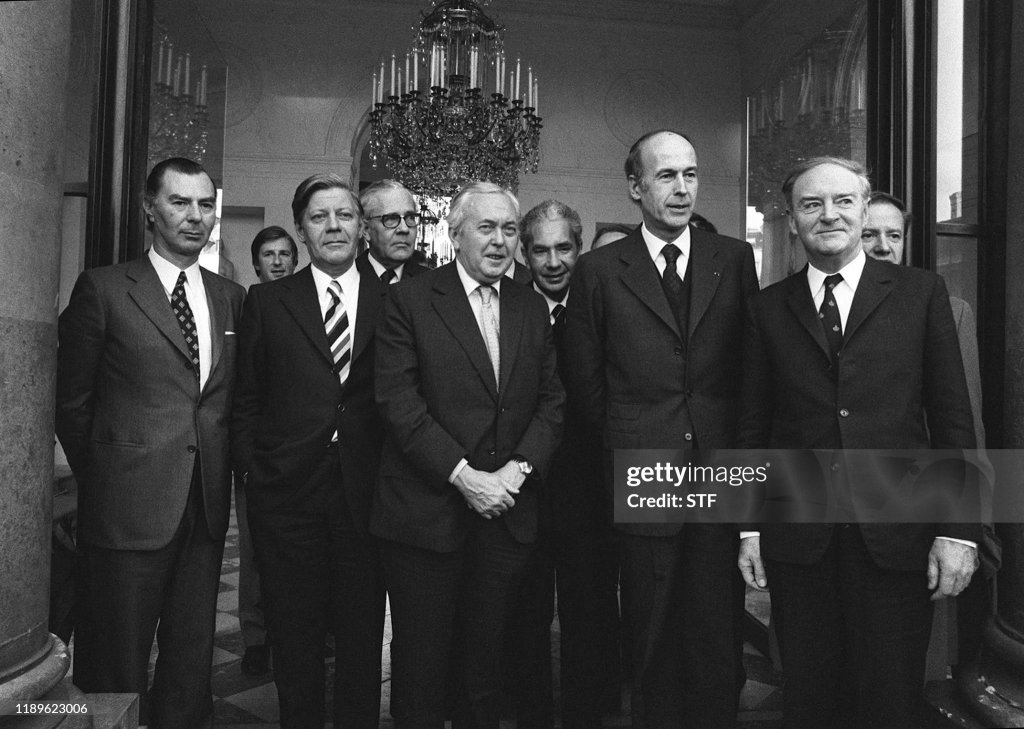
The heads of the nine European Economic Community governments ended their two-day Paris meeting with a communique reflecting moves toward compromise on the key issues of oil diplomacy and the terms of Britain’s participation. A deadlock over a demand by Britain that she contribute less to the cost of running the Common Market was broken with an agreement under which the market’s executive commission would be asked to find formula for payments by countries that find themselves in difficulties. On energy policy, the most difficult issue, the communiqué said that the Government leaders “discussed the possibilities for cooperation between oil‐exporting countries” and that they “attach very great importance” to the meeting between President. Ford and the French Preesident, Valery Giscard d’Estaing in Martinique this weekend. The European Economic Community calls for a European Parliament.
Britain succeeded today in winning pledge on easier terms from her Common Market partners that appeared to insure her continued membership in the ninenation community. A compromise, worked out after a sharp exchange between Prime Minister Harold Wilson and President Valéry Giscard d’Estaing, came on a day that had been difficult for the British. Mr. Wilson, who saw today’s meeting as a showdown over his demand for new terms, was able to return home with hopes of reducing Britain’s payments to the community budget. At the end of the day, French resistance gave way to allow for a vague and complex formula that could lead to lower British contributions. The final plan will be shaped by the community’s institutions.
United Nations General Assembly Resolution 3275 was approved by the UNGA, designating 1975 as International Women’s Year.
The U.S. State Department said today that it was cutting off military aid to Turkey immediately, in line with legislation approved in October. The law required that American aid to Turkey end on December 10 unless “substantial progress” toward a settlement of the Cyprus problem had been made. Privately, United States offidials acknowledge that there has been no tangible progress. Congress ordered the cutoff because it had been found that Turkey had used American weapons on Cyprus, which Turkish forces invaded last summer. Use of those weapons was restricted to national defense.
Secretary of State Henry A. Kissinger arrived in Brussels to confer with Greek and Turkish foreign ministers on the Cyprus issue and take part in a meeting of the North Atlantic Treaty Organization council. In Washington, the State Department said it was cutting off military aid to Turkey immediately because of legislation approved in October. Kissinger urged the House Saturday to follow the Senate’s lead and postpone the arms embargo to Turkey for two months but the House failed to act.
The Vatican said it had learned with “pain and grief” of the 12-year sentence passed in Jerusalem Monday on Greek Catholic Archbishop Hilarion Capucci. The archbishop was convicted on charges of smuggling arms from Lebanon for Arab terrorists. Meanwhile, Israeli officials denied reports that the archbishop might be deported before serving his sentence. Sources said there was little hope that he will serve less than 12 years because there is no parole for good conduct in convictions involving security offenses.
Rockets fired today from automobiles parked in crowded streets here caused heavy damage to three offices of the Palestine Liberation Organization, but only minor injuries were reported. Palestinian officials charged that the attack had been carried out by Israeli intelligence agents.“This was a continuation of Israel’s terrorist campaign against the Palestinian people,” the Palestinian press agency asserted. A Lebanese Government spokesman said four automobiles used in the rocket attacks had been rented on Sunday from local tourist agencies by four non‐Arab foreigners who “have since left Lebanon” through Beirut’s international airport. The four foreigners were identified only as having entered Lebanon last week as tourists with British, Irish, West German, and Mexican passports. Four explosions rocked crowded residential and commercial areas of Beirut between 9:30 and 9:50 o’clock this morning as salvos of up to 3.5‐inch rockets came from the cars, which had been parked during the night in front of buildings with Palestinian offices.
Reports that the Persian Gulf oil-producing states would stop taking the pound sterling in payment for their oil touched off a run on the currency, driving the pound to historic lows. The Bank of England had to spend an estimated $250 million in an effort to support the currency. It fell by more than 1½ cents against the dollar to $2.3195. It was the hardest battering that sterling has taken in recent months, pointing up Britain’s worsening financial position some 12 months after oilproducing states raised their prices. In New York, the Exxon Corporation confirmed reports that Saudi Arabia had informed the Arabian American Oil Company that it did not “desire” any further payments in sterling. About 25 per cent of Aramco’s tax and royalty payments to the Saudis have been in the British currency.
Ethiopia’s military government began public trials of former soldiers, officials and aristocrats accused of plotting its downfall. All face possible death sentences with no right of appeal. Fifty-nine of the accused have already been summarily executed and an undisclosed number have been tried. The military government has assured the United Nations there will be no more summary executions.
The death toll in the collapse of the airport terminal roof in Tehran, Iran, rose to 17 as one of the 11 injured people died, and investigators are reportedly blaming bad construction and supersonic overflights for last Thursday’s tragedy. The investigators were said to believe the immediate cause of the collapse was a heavy snowfall which put too heavy a load on a pillar that had been weakened by a recent addition at the airport.
A compromise in New Delhi was reached today in a dispute over opposition demands that the Indian Government publish the results of an inquiry into charges that a Cabinet minister and a member of Parliament from the governing Congress party were involved in an import-license scandal.
South Vietnamese casualties rose to a total of more than 2,000 today in the fifth day of intensified fighting, the Saigon command reported. The command said that 325 government soldiers had been killed and 1,374 wounded and that 320 were missing, most of them in the Mekong Delta, since the North Vietnamese and Việt Cộng stepped up their attacks. The government said 1,800 North Vietnamese and Việt Cộng soldiers had been killed, many by air and artillery strikes. Communist troops attacked government infantry reinforcements trying to lift the siege of one district capital in the delta, and the command reported 15 government soldiers killed, 68 wounded and scores missing. It said 178 North Vietnamese and Việt Cộng soldiers were killed in the fighting 115 miles south of Saigon.
Two other district capitals came under attack today and heavy fighting was reported around the provincial capital of Mộc Hóa, near the Cambodian border 50 miles west of Saigon. Military analysts say the Communists are trying to wear down the South Vietnamese Army, which already has been hit hard by casualties and reductions in American military aid that have forced it to conserve ammunition. The Việt Cộng are said to have enough stocks to sustain an offensive for at least four months. They are expected to continue trying to undermine South Vietnam’s weak economy by blowing up bridges, cutting highways, isolating towns and trying to prevent the government from collecting the rice harvest.
South Korea’s ruling party and opposition forces agreed to reopen the National Assembly, which has been closed for almost a month because of a dispute over constitutional revisions. Floor leaders said they had decided to reopen the assembly Thursday and conduct business until the current session ends next Wednesday.
The press preview in Washington of an exhibition of Chinese archeological finds was canceled because the National Gallery of Art would not agree to Peking’s demand that newsmen from Nationalist China, South Korea, South Africa and Israel be barred. Other events of the opening will continue as planned.
Few in Taiwan noticed and those who did averted their eyes as a major milestone in the history of the embattled island passed by today without commemorative speeches, editorials or public recognition of any kind. The forgotten occasion was the 25th anniversary of Chiang Kai‐shek’s arrival from the Chinese mainland after the final collapse of Nationalist resistance there to Communist power. Generalissimo Chiang did not admit defeat as he flew from Chengtu in Szechwan Province to Taipei, which he had proclaimed to be the “provisional capital” of China only three days earlier. Now 87 years old and enfeebled, he still has not admitted defeat. More than two years have passed since he made his last ceremonial appearance and more than one year since there was even a new photograph of him in the local press.
In the Mexico City area, thousands of parents stormed schools and removed their children due to rumors that people disguised as inoculation teams were giving children sterilization shots. The following day, authorities suspended all vaccination drives and posted police outside schools.
Followers of the late Argentine President Juan D. Peron and Eva Peron filed through a chapel in suburban Buenos Aires where their coffins lay side by side, one containing his remains sealed shut and the other open to show the white-clad body of his second wife. It was the first time that her embalmed body had been put on display since it was smuggled out of Argentina more than 19 years ago by military opponents who deposed Peron. The body was returned to the site on the presidential grounds by Peron’s third wife, President Maria Estela Peron.
The United Mine Workers of America (UMWA) ended its nationwide walkout of bituminous coal miners after 28 days. The strike had started on November 12 and was concluded after a three-year agreement with unionized coal companies on wages, health and safety, and work rules.
The Senate voted 90 to 7 to approve the nomination of Nelson Rockefeller as Vice President. Four Democrats and three Republicans voted against the former New York Governor. The House Judiciary Committee chairman, Representative Peter Rodino of New Jersey, said the panel would consider on Thursday sending the nomination next week to the House, whose Speaker, Carl Albert, said his impression was that it would be confirmed.
Testifying at the Watergate cover-up trial in his own defense, John Ehrlichman continued to implicate former President Richard Nixon, saying in effect that his chief had kept him in the dark. He broke down and cried at one point. He said that presidential tapes showed Mr. Nixon had been telling him and another aide, Charles Colson, “very different things.”
Congress today approved a program to accelerate the testing of atomic weapons before a new atomic‐test treaty with the Soviet Union went into effect, but provided less than half the money requested by the Administration. In the wake of an agreement reached with Moscow last July on a threshold for tests, the Administration requested $57.5‐million to carry out accelerated testing of larger nuclear warheads. Under the proposed treaty, which would go into effect in March, 1976, underground tests of over 150 kilotons would be banned. Some of the details of the treaty have still to be worked out. In an authorization, bill for the Atomic Energy Commission and then in a supplemental appropriations bill, the Senate reduced the funding by more than 50 per cent, to $22.2‐million.
U.S. Representative Wilbur Mills resigned as Chairman of the powerful House Ways and Means Committee (which controls the speed of passage of legislation to a vote) after being cited for public intoxication for a second time while with his mistress, Fanne Foxe. Representative Mills, still hospitalized, relinquished his chairmanship of the House Ways and Means Committee. Representative Otis Pike of Suffolk County will replace Governor-elect Hugh Carey in the committee seat traditionally held by a New Yorker. Andrew Young of Georgia, one of the first blacks elected to Congress in this century, received a Democratic seat on the Rules Committee.
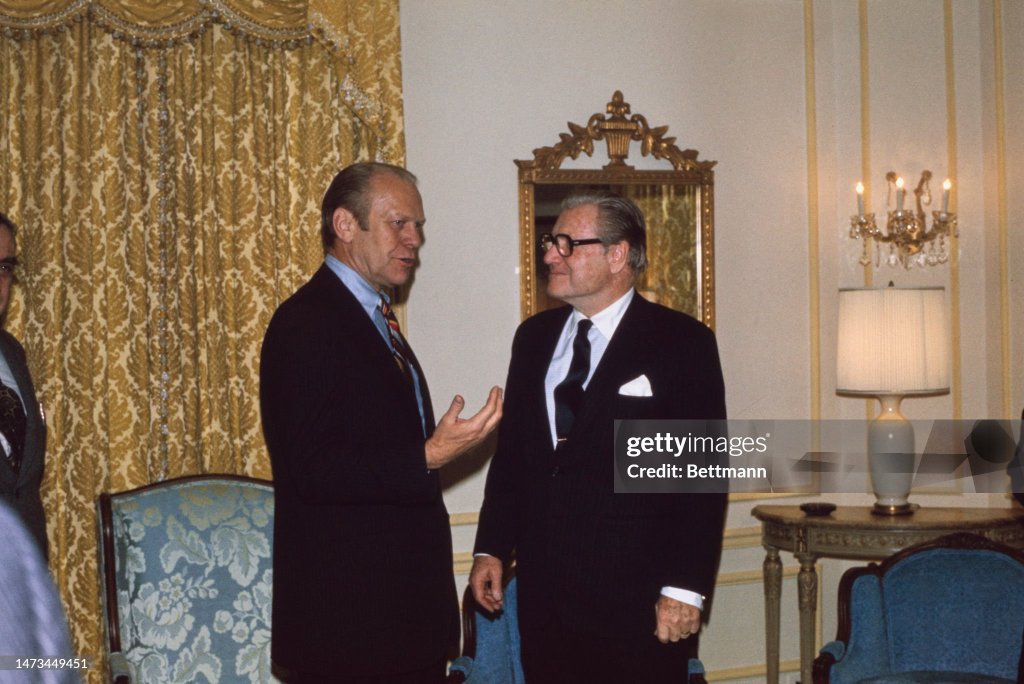
President Ford heard the views of seven members of the National Commission on Critical Choices, formed by Nelson Rockefeller before his appointment for the vice-presidency, on problems of world energy, raw materials and food. The meeting in New York City with Mr. Rockefeller and his aides was seen as a bid for presidential support for the commission to continue.
An avalanche of consumer mail has caused the Department of Agriculture to reconsider its plans to change the grading system of beef. The changes had been intended to reflect new developments in cattle breeding and feeding, such as allowing some younger cattle now graded “good” to be placed in the next higher category, “choice.” Consumer advocates, who proposed that a new intermediate grade be established, said the change would mean that shoppers would pay choice prices for good meat. Beef industry spokesmen responded that the supply of choice meat, which has been the most popular with buyers, would be increased, reducing retail prices.
Shutdowns of coal mines continued despite tentative agreement on a contract by mine construction workers and contractors. Miners were allowed to return to work in Virginia and Indiana but additional mines were shut down in West Virginia and eastern Ohio. If the new contract for the mine construction workers should be approved this afternoon at a meeting of the United Mine Workers bargaining council, it would undergo a ratification vote this weekend.
Budget cuts of $117 million recommended by President Ford were approved by the Senate, but it went along with the House in rejecting $540 million more in cuts. The approved cuts, which were voted by the House on December 4, affect national park roads, Forest Service roads and trails, college housing loans and Appalachian airport improvements. The two votes were the first decision actions taken under the Budget Control Act passed earlier this year. The act requires that both the House and Senate ratify decisions recommended by the President.
Compromise legislation to continue five health programs and to establish several new ones, at a total cost of $1,859 billion over two years was approved by the House. Among the new programs is one within the National Institute of Mental Health to include research on ways to curtail rapes, help the victims and rehabilitate the offenders. Extended were family planning, community mental health centers, migrant health programs, community health centers and comprehensive public health services.
A 25% cut in its 10,000-man military and civilian force in Hawaii was ordered by the Air Force, which will result in a savings of about $34 million annually, a spokesman said. Pacific Command Headquarters at Hickam Air Force Base at Honolulu will be closed and 1,858 military and 575 civilians will be transferred to units outside of Hawaii. The cutback amounts to only a 4% reduction in the total number of Department of Defense personnel in Hawaii, which includes 62,000 Army, Navy and civilian employees. Hickam will remain a major installation, with the Military Airlift Command taking over operating responsibilities.
The Federal Trade Commission accused the Continental Baking Company of illegally attempting to monopolize the wholesale bakery business and said its parent company, International Telephone and Telegraph Company, concurred or acquiesced in most or all of the alleged illegal practices. It asked that Continental split into two or more companies and brand names be licensed to other bakery concerns.
A bill that would open up thousands of acres of national forest lands for private development as ski resorts ran into tough sledding in the House Interior Committee. “We’re in danger in this country of becoming one big ski resort,” said Rep. Wayne Owens (D-Utah). The committee took no final action on the bill, introduced by Rep. Harold T. Johnson (D-California), after first defeating an amendment that would have required the approval of Congress for leases exceeding 1,000 acres. The new bill would put no limit on the amount of land that could be leased to a resort operator. Under present law, leases are limited to 80 acres, but the U.S. Forest Service has granted special use permits for additional land.
Considerable oil and gas is believed to be on the Atlantic outer continental shelf, but there is no way to accurately estimate the amount, Dr. V.E. McKelvey, director of the U.S. Geological Survey, told the Interstate Oil Compact Commission’s winter meeting in Phoenix. McKelvey said there has been new geophysical and geologic data uncovered over the past two years, but that is still not enough for a proper estimate. He said the Atlantic area would be a “marvelous place” to find oil and gas, noting that the Atlantic coastal region “is the largest oil-consuming area” of the country. He said the area now produces almost none of the 6.5 million barrels. of oil it uses each day.
Reserve Mining Co. — whose Silver Bay, Minnesota, plant was ordered closed because of extensive air and water pollution — has asked that the court-ordered closing be overturned. The company, in challenging the order, said economic interests outweigh possible health hazards at the facility. The plant was shut down in April by a U.S.. District Court judge, but resumed operations two days later when an appeals court stayed the lower court ruling. The appeals court now faces a Supreme Court-imposed January 3 deadline to decide on the health aspects of the case. Attorneys representing Reserve argued in the latest appeal that the pollution problems could be solved within three years by construction of a proposed $243 million plant.
Legislation to break up and prohibit oil industry monopolies of alternative energy resources was introduced in Sacramento by California State Senator David A. Roberti (D-Hollywood). The measure would immediately halt the acquisition and control of geothermal lands, oil shale, tar sands, coal and solar energy assets by oil companies. It would set a 1976 deadline for all oil companies to file a detailed list of energy resource holdings in California with the state attorney general. The industry would have until 1979 to divest itself of all alternate energy holdings, with penalties of up to $100,000 in fines and 10 years in prison for failure to comply.
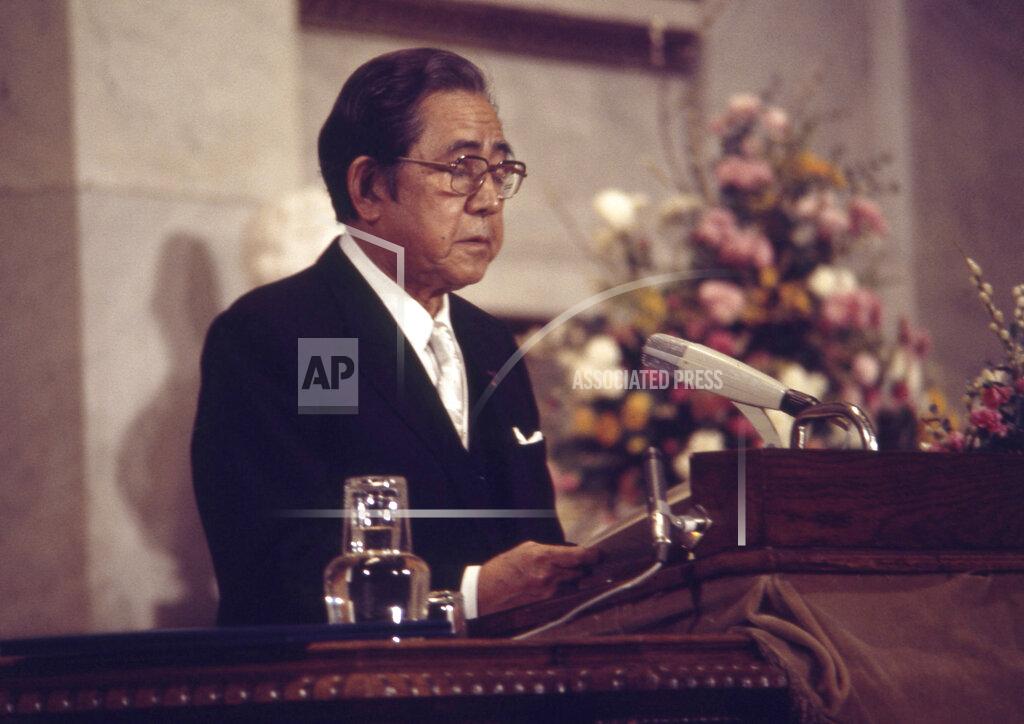
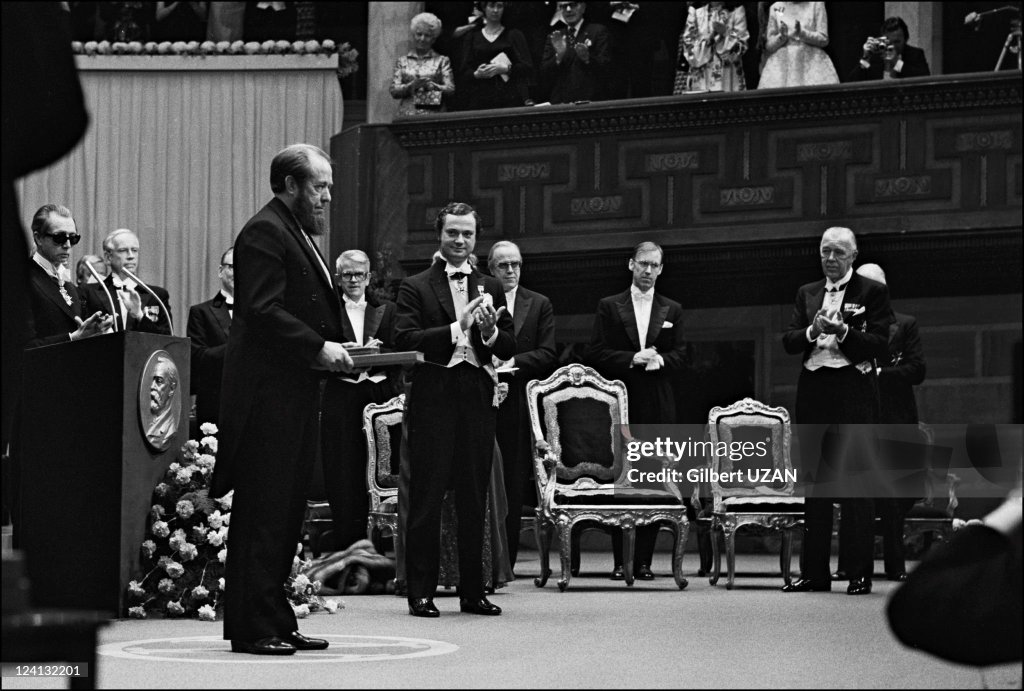
The Nobel Peace Prize is awarded to Irishman Seán MacBride for his human rights work and Japanese Prime Minister Eisaku Satō for signing Nuclear Non-Proliferation Treaty
The Helios-A space probe, built in West Germany, was launched from Cape Canaveral in the U.S. in order to orbit the Sun and gather data. The Helios-A and Helios-B were part of a joint operation of the German Aerospace Center (which provided 70% of the funding) and NASA, which provided the launch.
Dow Jones Industrial Average: 593.87 (+13.93, +2.40%).
Born:
Meg White, American drummer (The White Stripes), in Grosse Point Farms, Michigan.
Manuel Alejandro Aponte Gómez, alias “El Bravo”, Mexican drug trafficker and hitman for the Sinaloa Cartel; in Chilpancingo, Guerrero state (killed 2014)
Died:
Paul Richards (born Paul Richard Levitt), 50, American actor (“Kiss Daddy Goodnight”; “Breaking Point”), of cancer.
Dave Crowley, 64, former British champion lightweight boxer.
Manuel Komroff, 84, American author and editor.





 History Diaries