The Battle of An Lão continues. Việt Cộng guerrillas have killed four United States servicemen and a fifth is missing in widespread fighting that continued today. Nine Vietnamese troops died with three Americans yesterday in a vain defense of a small outpost in Kiên Giang Province, 125 miles southwest of Saigon. An American helicopter gunner was killed and another American advising an armored unit was missing after they tried to raise a Việt Cộng siege on a lonely mountain valley 300 miles northwest of Saigon in Bình Định Province. The toll of United States dead in action in Vietnam rose to 230.
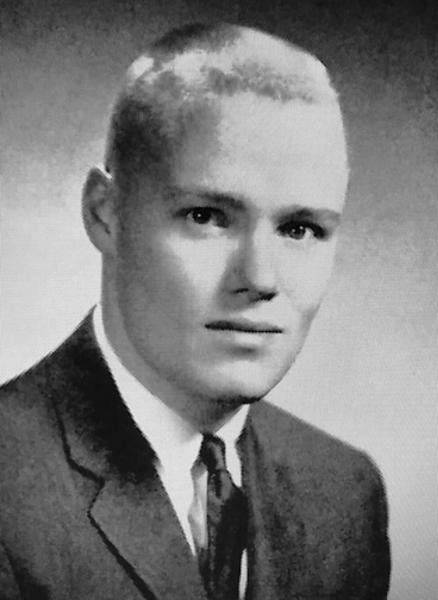
The United States Army identified the three killed in Kiên Giang Province as Captain Norman W. Heck Jr. of Ida, Michigan; First Lieutenant James G. Dunton of Melrose, Massachusetts, and S1C Guy T. Freeland of Fort Smith, Arkansas. A United States spokesman said the helicopter gunner died from Communist ground fire as his ship escorted a medical evacuation helicopter into the An Lão valley late last night. The missing American was with three armored personnel carriers destroyed by Việt Cộng 57-nim. recoilless rifle fire as they attempted to enter the valley, which is surrounded by Việt Cộng. Another Việt Cộng target was Đất Đỏ, a Government post 40 miles east of Saigon. Defended by 54 militiamen, one armored car and some fighter‐bombers, it held out against four assaults by more than 100 Việt Cộng and drove thern off.
Ambassador Maxwell D. Taylor is informing South Vietnamese leaders that they cannot expect dramatic new actions by the United States against the Communist insurgents without equivalent efforts by the Vietnamese. He conferred today with the chief of state, Phan Khắc Sửu, and members of the country’s provisional Legislature, the High National Council. Yesterday he met at length with Premier Trần Văn Hương, who was joined by his Deputy Premier and Interior Minister, Nguyễn Lưu Viên, and the Commander in Chief of the Armed Forces, Lieutenant General Nguyễn Khánh. The talks are part of the “urgent consultations” President Johnson, asked Mr. Taylor to undertake immediately on his return from a review of Vietnam policy last week in Washington. Mr. Taylor returned to Saigon Sunday. Informed Vietnamese sources said there was no indication of immediate new American actions against Communist installations in Laos or North Vietnam, as had been widely anticipated in the Saigon press on Mr. Taylor’s return.
An American willingness to support air and ground actions across the South Vietnamese-Laotian border was reported, but the American emphasis was on supporting, rather than initiating, any such actions. If undertaken, these strikes would be aimed at staging and supply points along the mountain, trails leading through southern Laos into South Vietnam, that form the so‐called Hồ Chí Minh trail. Vietnamese aircraft would be used, the same planes now flying bombing missions on this side of the frontier. The ground forces would be Vietnamese Army units or civilian irregulars, perhaps accompanied by American advisers. Such measures would be little more than a short extension of missions already in force. Diplomatic sources believe they would fall far short of the dramatie initiatives many Vietnamese had hoped for.
American officials declined to discuss the policy directives Mr. Taylor brought back from Washington. Their silence was said to be partly for security reasons, and partly because it had been decided that announcements of future policy should come from the Vietnamese Government, emphasizing Vietnamese responsibility for the war. A qualified Vietnamese official said Mr. Taylor and Mr. Hương would probably meet again tomorrow for further discussion of the Ambassador’s proposals. Foremost among the measures American officials are urging upon the Vietnamese is a moratorium on political pressures against the government. The United States holds that no meaningful military action can be undertaken while the government is under attack from its political foes in South Vietnam. On the military side, Americans are suggesting an increase in the authorized strength of the Vietnamese armed forces. The listed strength of the military and the police — 615,000 — is believed to be close to the authorized total. But it is considered inadequate to insure security at important centers, particularly if the Việt Cộng insurgents retaliate against new attacks in Laos.
The Air Force has received a report that the Hanoi radio has announced that Captain Richard L. Whiteside, a United States pilot who has been missing since last March, is in the hands of the South Vietnamese Communist querrillas. The report was disclosed today by the office of Representative John J. McFall, Democrat of California. The North Vietnamese radio report was picked up in South Vietnam, a McFall aide said. A transcript of the broadcast has been sent to Captain Whiteside’s father and wife, both in Stockton, California. Captain Whiteside was flying a small army observation plane that crashed in a jungle area near Saigon.
[Ed: Sadly, Captain Whiteside never came home. His co-pilot, Captain Floyd J. Thompson was captured after their aircraft crashed. He would become the longest-held prisoner in U.S. history. Thompson was told by his captors that Captain Whiteside was dead. His body was not recovered until 2014. It appears he died in the crash. The remains of Captain Richard LeBrou Whitesides now rest at the United States Military Academy Post Cemetery at West Point, Orange County, New York, in Section X, Row A, Site 048A. He is honored on the Wall at Panel 1E, line 48.]
United States and Cambodian negotiators opened talks here today on sharp differences between their countries. A communiqué, issued after a session of an hour and 45 minutes, said only that the two sides had agreed on procedural questions and had “presented their respective points of view on a whole range of differences between their two countries. ” Another meeting was set for tomorrow. Neither side would disclose the tenor of its preliminary statement. But comment from Cambodian sources had indicated their delegation would restate charges of American complicity in aerial violations of the Cambodian‐Vietnamese border. The United States delegation to the meeting in New Delhi is headed by Philip W. Bonsal, special representative of President Johnson. Son Sann, Privy Councilor to Prince Norodom Sihanouk, Cambodian chief of state, leads the Pnompenh delegation.
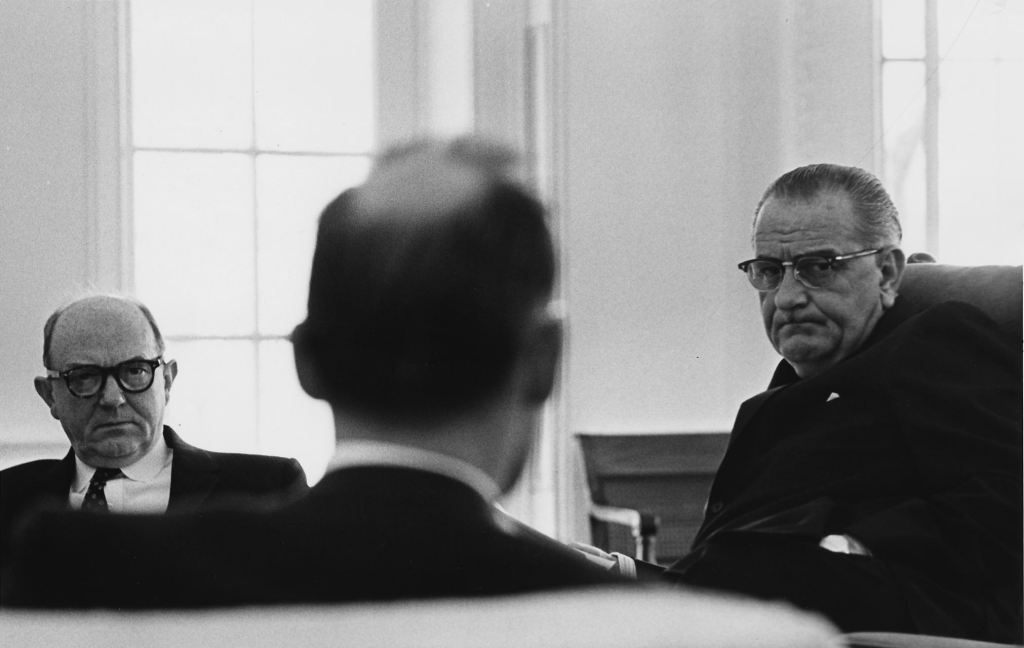
President Johnson reacted with interest today to British proposals for a collective North Atlantic nuclear force, and the United States Government hopes that they can lead to a breakthrough on the alliance’s nuclear problems. This was the major result of two days of talks here between the President and Prime Minister Harold Wilson. The President and his advisers heard for the first time details of the British proposals for a broader force than that in the American plan for a mixed‐manned fleet of surface ships carrying Polaris missiles. The talks, the first encounter between the two men as heads of government, were not designed to achieve British‐American agreements. The British plan and American ideas about it will be taken up with other allies, above all West Germany and Italy.
A communiqué on the talks, couched in relatively vague terms, said the President and the Prime Minister “recognized the importance of strengthening the unity of the Atlantic alliance in its strategic nuclear defense.” “They discussed existing proposals for this purpose and an outline of some new proposals presented by the British Government,” the statement continued. “They agreed that the objective in this field is to cooperate in finding the arrangements which best meet the legitimate interests of all members of the alliance, while maintaining existing safeguards on the use of nuclear weapons, and preventing their further proliferation.”
The West Germans are pressing their Western allies to urge the Soviet Union to join in a standing four‐power conference on Germany. The conference would be charged by the United States, Britain, France and the Soviet Union with the task of studying the problem of Germany’s reunification and of developing proposals to achieve that goal. The site and diplomatic level of the proposed conference are being left open for discussion by the West German officials who are urging the initiative on the World War II victors. Bonn is thinking in terms of a council of deputy foreign ministers, who would presumably gather in some Western capital. West German officials look upon the conference proposal primarily as a “procedural test” of Soviet intentions toward Germany. Nevertheless, studies are under way here on a possible solution of the reunification question on the basis of exchanging economic concessions with the Russians for political changes in East Germany.
Foreign Minister Gerhard Schroder broached the conference idea to Secretary of State Dean Rusk during his visit to Washington two weeks ago, official sources said. The United States response is said to have been generally favorable, although doubts Moscow would go along were registered. Diplomatic sources here said that Mr. Rusk touched in general terms on the questions of Germany and Berlin in his recent talks with Andrei A. Gromyko, Soviet Foreign Minister, at the United Nations. He did not put forward the conference proposal, however, since France and Britain are not yet committed to it, the sources said. Dr. Schroder, who left for Italy today on a round of oneday visits to allied capitals, will ask Foreign Minister Maurice Couve de Murville for France’s support when they meet in Paris tomorrow. He will make Bonn’s presentation to Britain’s Foreign Secretary, Patrick Gordon Walker, in London Friday.
An urgent Security Council session on the Congo was called today for 3 PM tomorrow. The Council was summoned at the request of 21 states that have criticized the recent United States‐Belgian air operation to rescue hostages held by the Congolese rebels. At the same time, there was evidence that the African bloc was not united in its campaign for a full‐dress Council debate on the Congo. Foreign Minister Doudou Thiam of Senegal said in a speech before the General Assembly that the rescue operation had aroused much “false indignation.”
The joint request for a Security Council debate had been co‐sponsored by Cambodia, Afghanistan and Yugoslavia and 18 African countries. But the drive had been.pressed hardest by the states most opposed to the Congolese Premier, Moise Tshombe. Premier Tshombe’s Government, which approved the rescue mission, has announced that it will submit its own complaint to the Council. This will charge, the Tshombe Government has said, that military help is going to the Congolese rebels from Algeria, the Sudan and the United Arab Republic and that such action constitutes interference in the Congo’s affairs. A formal request was expected, but it was not submitted today. The United States and Belgium have both defended their rescue mission as a humanitarian, not military, operation that saved the lives of many hundreds of Europeans and also Congolese.
Chinese Communist leaders were reported today to be dismayed by an unexpected hardening of the Japanese Government’s attitude toward Peking. A series of Chinese Communist statements have denounced what is termed the “policy of hostility” adopted by Premier Eisaku Sato, who took office November 9. Informants said that Peking had been compelled to reassess the position of Japan as a political and sconomic competitor in Asia. Premier Sato has indicated that he intends to pursue a more definite foreign policy than his predecessor, Hayato Ikeda. Sources said that Peking had attempted unsuccessfully, through commercial pressure, to compel the Sato Government to adopt a more accommodating attitude.
Premier Cheddi B. Jagan of British Guiana appears to be failing in his attempt to win a clear majority in yesterday’s elections. It is expected that Dr. Jagan will have to resign. His power over the last seven years has been eroded by political and racial strife and mounting pressure against him because of his links with Communism. There is foreboding here that the election, apart from toppling Dr. Jagan, has confirmed and drastically deepened the rift between this embattled colony’s East Indian and Black populations. With 90 percent of the vote counted, Dr. Jagan, who is an East Indian, had 103,222 votes. His chief rival, Forbes Burnham, a Black, had 87,448. In the 15 remaining districts, Dr. Jagan’s People’s Progressive party has a considerable advantage but it is no longer held even remotely likely that these districts will provide enough to attain the 50 percent needed to form a government.
Thousands of Southern Sudanese Blacks were placed in Khartoum’s Omdurman football stadium and a makeshift camp in the heart of this city today to shield them from Arab violence. Army units joined in a rescue operation requested by leaders of the Black community after racial violence in which 38 persons are believed to have been killed and more than 500, including five Americans, injured. None of the Americans was seriously hurt. Calm returned to the Sudanese capital but columns of armored cars and troops were ready to crush any new sign of strife. Black leaders, who are demanding the separation of the three predominantly African southern provinces from the Arab‐dominated country, said racial hatred was the sole cause of violence that swept the capital Sunday night and continued for two days. A delegation of Black Sudanese prepared to fly south to hold peace meetings in Malakal, Juba and Wau before news of the violence reached the four million southern Blacks and provoked another rampage against the Arabs.
UDEAC (Union Douanière et Économique de l’Afrique Centrale), the Customs and Economic Union of Central Africa, was established by the Brazzaville Treaty, signed in the capital of the Republic of Congo by representatives of that nation, as well as Cameroon, the Central African Republic, Chad, and Gabon.
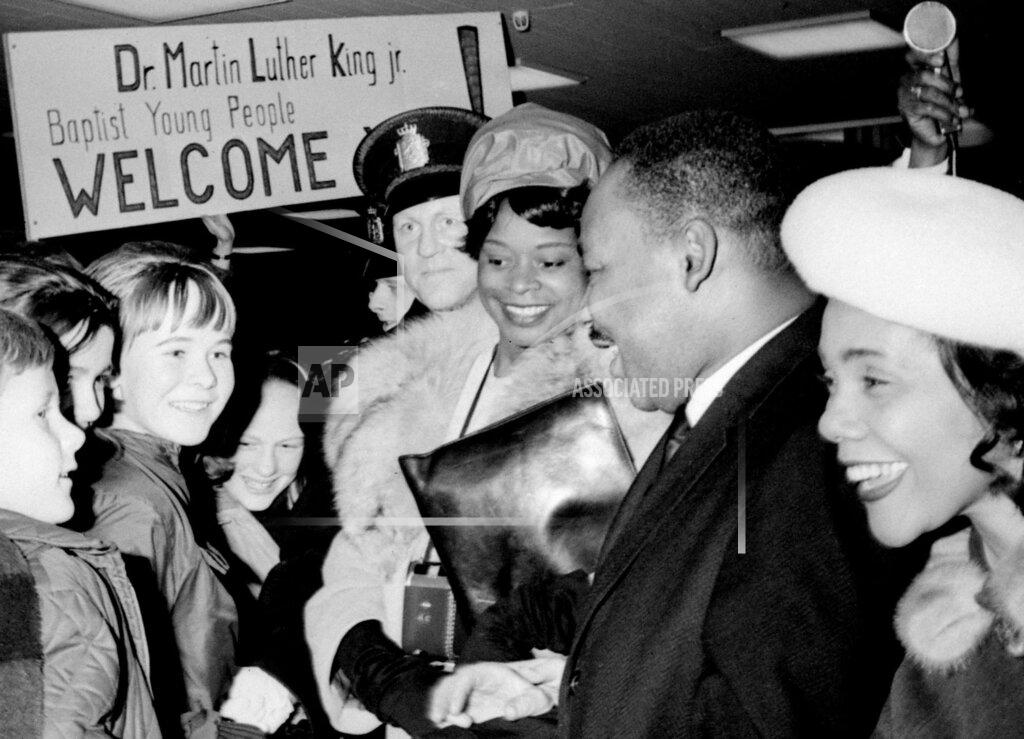
The Rev. Dr. Martin Luther King Jr. arrived in Oslo today to receive the Nobel Peace Prize on Thursday He was accompanied by his wife, his parents, a brother and a sister and a number of associates, 26 persons in all.
The Berkeley Division of the University of California Academic Senate voted, 824 to 115, in favor of a resolution calling on UC-Berkeley to halt all regulation of speech on campus and of its content, following the sit-in and arrest by Free Speech Movement protesters. The faculty of the University of California proposed a settlement tonight to the political freedom controversy and it was accepted immediately by the leader of the student Free Speech Movement. Clark Kerr, the president of the university, did not immediately embrace the proposals, under which the faculty would assume some authority now held by the university administration.
After the proposals were announced Mr. Kerr issued the following statement: “The action of the Academic Senate at Berkeley involves such basic changes in the policies affecting all campuses of the university, including changes in the standing orders of the regents, that no comment will be possible until the regents have next met.” Chancellor Edward W. Strong of the Berkeley campus is ill and did not comment. But Mario Savio, the leader of the Free Speech Movement, said after the Academic Senate voted 824 to 115 for a proposed settlement: “I welcome it. They’re given us what we’ve been after for months.”
About 200 students and faculty members from five Boston‐area colleges today staged a march and rally in support of demonstrators at the University of California at Berkeley. The chairman of the rally was Leonard K. Nash, professor of Chemistry at Harvard. The marchers were from Harvard, Radcliffe, Brandeis, Tufts and Simmons.
If they don’t get a conviction, I don’t think it will be a place where people can live. They can’t help but be afraid.” The speaker was a young mother, Mrs. Margaret Burnside, one of the few Blacks in Neshoba County who will profess an opinion about the arrest of Sheriff Lawrence A. Rainey and two other law‐enforcement officers in connection with the slaying of three civil rights workers. The Black neighborhood in Philadelphia starts where the pavement ends. A network of gravel roads on the other side of the railroad tracks and the lumber mills leads to small homes, perched atop orange clay hills.
Mrs. Burnside, a divorcee, lives in one of the smaller cottages with her six children. Their only income is $50 a month in public welfare. At one time she was employed as a domestic. “Nobody in town would hire me now,” she said. “I’ve helped in the freedom movement.” Mrs. Burnside was asked how Blacks felt about the arrest of 21 white men on federal charges in connection with the slaying of the three young men last June 21. “They felt pretty good when the arrests were made,” Mrs. Burnside said. Then she paused and smiled, showing three gold teeth: “But now they are wondering what will happen if they let the sheriff off. They are afraid.”
In the Longdale community, 10 miles east of Philadelphia, a Black farmer expressed a similar opinion. “If they do get a conviction, if will be the first time,” said Ross Jones, an officer in the Mount Zion Baptist Church, which was burned a few days before the slaying. ‘‘If they get away with it, I don’t know. Nineteen defendants, including the law‐enforcement officers, are accused of conspiracy to violate the victims’ civil rights and two are accused of refusing to give information. The federal government has no jurisdiction over murder charges, and the state has not yet said whether it will seek such charges. Mr. Jones is not in the civil rights movement. The movement was just getting started in the Longdaie community last summer when the murders, church burning and beatings of several church members occurred.
Mr. Jones said that Sheriff Rainey and his deputy, Cecil Price, the man the F.B.I. accuses of setting up the assassination for the Klan, went into the Longdale community in early June questioning Blacks about civil rights activities. “There was a man [a Black] from Arkansas visiting someone here,” Mr. Jones said. “The sheriff and his deputy came out and accused him of carrying a white man around in his car. That was just a few days before the murder.” He said the officers had not been around recently. Both are free under bond, as is the third defendant officer, O. N. Burkes, a Philadelphia policeman.
The need for lawyers from the North to defend local Blacks and civil rights workers in the South was emphasized last night by a group of lawyers who served as volunteers in Mississippi last summer. John Pratt, counsel for the Commission on Religion and Race of the National Council of Churches, recited episodes of racial hatred, horror and brutality encountered in Mississippi, which he characterized as a “police state.” “The truth in Mississippi is so unbelievable to one who has never been, there that it is almost impossible to put into words,” he said in an informal panel discussion at the headquarters of the New York City Bar Assocation.
A boycott of Duval County’s public schools in Florida by Black students weakened today when 68 percent of the students attended classes. Yesterday, the first day of the “sit‐out,” only 44 percent attended. The attendance figures came from Dr. J. Irving Scott, assistant director of education of the county school system, and William P. Harper, spervisor of elementary education. As the boycott lost some force, Black leaders seemed to be sharply divided over whether the boycott was a sensible method of racial protest against what has been called a system of education that is “separate but far from equal” as far as Blacks are concerned. About 31,000 of the 116,000 public school students in Duval County are Blacks. The school System is predominantly segregated. Token integration has taken place in the first and second grades under a grade-a-year desegregation plan ordered by the courts.
One person was killed and four B43 nuclear bombs and a warhead were knocked to the ground at Bunker Hill Air Force Base near Kokomo, Indiana a U.S. Air Force B-58 Hustler was blown off the runway by the exhaust of another B-58. Radioactive contamination was limited to the crash site. The plane’s navigator was killed in a failed ejection, but two other crew members escaped. SAC aircraft were taxiing during an exercise alert. As one B-58 reached a position directly behind the aircraft on the runway ahead of it, the aircraft ahead brought advanced power. As a result of the combination of the jet blast from the aircraft ahead, the icy runway surface conditions, and the power applied to the aircraft while attempting to turn onto the runway, control was lost and the aircraft slid off the left hand side of the taxiway. The left main landing gear passed over a flush mounted taxiway light fixture and 10 feet further along in its travel, grazed the left edge of a concrete light base. Ten feet further, the left main landing gear struck a concrete electrical manhole box, and the aircraft caught on fire. When the aircraft came to rest, all three crew members aboard began abandoning the aircraft. The aircraft commander and defensive systems operator egressed with only minor injuries. The navigator ejected in his escape capsule, which impacted 548 feet from the aircraft. He did not survive. Portions of the five nuclear weapons on board burned; contamination was limited to the immediate area of the crash and was subsequently removed.
The Senate Rules Committee was blocked today in its effort to discover a link between a $5,000 check endorsed by Robert G. Baker and the issuance a few weeks later of a Federal charter to a bank in San Rafael, California. The check in question was made out to Wayne L. Bromley, a Washington lobbyist and friend of Mr. Baker’s, but Mr. Bromley refused on constitutional grounds when he took the stand today to tell the committee any of the circumstances surrounding the transaction. The committee also sought without success today to shed more light on the admitted “goof” of Matthew H. McCloskey, builder of the D.C. Stadium, by which a $35,000 overpayment of an insurance premium went to Don B. Reynolds. Mr. Reynolds had told the committee earlier that $10,000 of the amount went to him as go‐between, and the balance to Mr. Baker for the Democratic campaign fund of 1960.
Senator Sam J. Ervin Jr. of North Carolina will argue an important case tomorrow before the Supreme Court. He will be representing a South Carolina textile company against the United States Government. It is unusual — although hardly a modem precedent — for a Senator to argue a case in the Supreme Court, Court aides said. One recent case in which a Senator made the argument was the offshore oil cases decided by the Court in 1960. Senator Spessard L. Holland of Florida argued successfully for his state that Florida owned these undersea resources for 10½ miles of its Gulf of Mexico coast. The representation by members of Congress of petitioners in the Supreme Court was much more common in the 19th century. Daniel Webster, a member of the House and Senate between 1813 and 1841, frequently represented clients before the Court. Senator Ervin, who is known as a student of constitutional law, will be taking his first case as a practicing lawyer since he was named an associate justice of the North Carolina Supreme Court in 1948. He has been a member of the Senate for 10 years.
The chairman of the Senate’s Agricultural Committee announced opposition today to much of the new farm legislation that the Johnson Administration is expected to sponsor next year. The chairman, Allen J. Ellender, Democrat of Louisiana, gave notice of his opposing some phases of the Administration’s program when he addressed the, 46th annual convention of the American Farm Bureau Federation. Mr. Ellender’s criticism of some phases of Administration farm policy drew repeated applause from several thousand Farm Bureau delegates. The group, which has opposed most Administration farm plans, also applauded a broader attack by Governor William W. Scranton, of Pennsylvania, a Republican, on the Administration’s production‐control theories.
Senator J. Strom Thurmond, Republican of South Carolina, was reported “doing very well” today after major surgery at Walter Reed Army Medical Center here. The operation, performed yesterday, was for removal of Senator Thurmond’s gall bladder and repair of a hernia. He is expected to remain in the medical center about two weeks. Senator Thurmond is 62 years old.
As a result of a series of events yesterday and today, Marlon Brando, the actor, has temporary custody of his 6-year‐old son and his former wife, Anna Kashfi, is awaiting a court hearing on charges of assaulting a police officer. The child, Christian Devi, called the police yesterday, who reported that they had discovered Miss Kashfi apparently under sedation. Rather than turn the child over to juvenile authorities, the police remanded the child to his father’s custody. The child went back to his mother’s home, but in the interim, Mr. Brando had obtained an order from Santa Monica Superior Court placing the boy under the father’s custody until a hearing on December 17. In the service of this order, shortly after midnight Tuesday, Miss Kashfi assaulted an officer, the police said. She was released on bail and will answer the charge of assault on Thursday.
Professional football player Fred Arbanas of the Kansas City Chiefs was permanently blinded in his left eye after being attacked by a mugger late in the 1964 season. Nevertheless, he returned to play six more seasons in the American Football League.
Dow Jones Industrial Average: 870.69 (-3.30)
Born:
Teri Hatcher, American TV actress (“Desperate Housewives”, “Lois & Clark: The New Adventures of Superman”), in Palo Alto, California.
James Blundell, Australian country singer (“Way Out West”, “This Road”), in Stanthorpe, Queensland, Australia.





 History Diaries