The events of today mark a climax of recent operations. The highly disciplined and well equipped (for winter warfare) Finns have retreated to prepared positions. They can retreat no further without beginning to jeopardize their rear. The battles that began on 7 December 1939 are destined to be major turning points in the Winter War, for better or worse, but at this point, nobody knows which way they will go.
The Battles of Kollaa and Suomussalmi began. In the area north of Lake Ladoga the Finnish positions at Kollaa are attacked. Farther north, Soviet troops enter Suomussalmi on the east side of Lake Kianta after it has been evacuated by the Finns.
In the middle of the Ladoga Karelian front, Finnish units retreated near the small stream of Kollaa. The waterway itself did not offer protection, but alongside there were ridges up to 10 m (33 ft) high. The battle of Kollaa will last until the end of the war. The Soviets attack Kollaa north of Lake Ladoga. It is the center of the Finnish line and provides absolutely vital flank protection for positions protecting the heartland of Finland. Their own deep flank also is vulnerable but is more easily defended because of the nature of the terrain (lakes and forests). The Finnish 12th Division, along with some odds and ends from other units, has to make its stand here at Kollaa. Their determination becomes a rallying cry for the Finns elsewhere: “Kollaa holds!” Further contributing to the legend of Kollaa was the sniper Simo Häyhä, dubbed “the White Death” by Soviets, who served in the Kollaa front. The Soviets, though, have more troops, more artillery, and more of pretty much everything except experience in the extreme conditions.
The Finns evacuate Suomussalmi, which is threatened from two different directions. They destroy it to deny the Soviets any shelter. The Soviet 163rd division of the 9th Army (KomKor M.P. Duhanov), seeing this as a welcome gift, is coming up the road to occupy it. The Finns have only scratch forces in the area, two incomplete companies, and are badly outnumbered. The Finns withdraw to the opposite shores of lakes Niskanselkä and Haukiperä. The Finns are using lakes and forests as defensive weapons, and are adept at moving through the woods that the Soviets avoid. The Finns have a plan for Suomussalmi and have not given up on it. Commander-in-Chief Mannerheim reinforces the troops around Suomussalmi with sections of the 9th Division commanded by Colonel Siilasvuo.
Unsuccessful attacks by the Soviet 7th Army against Mannerheim Line in the Taipale sector continue. By evening Finnish troops have beaten back the first Russian offensive.
Soviet 9th Army attacks in central Finland. Their objective is to cut the country in half, driving to the Swedish border at the Gulf of Bothnia.
Finnish troops in the Ilomantsi sector fall back to Möhkö and overnight to Kallioniemi ferry. They begin a defensive action.
Lieutenant-Colonel Pajari takes command of the Finnish forces in the Tolvajärvi area. Finnish troops launch active countermeasures.
In the North, the Russian 122nd Division launches its main offensive against Finnish positions on the Kairala parallel.The defending Finnish battalion cannot hold. The detachment pulls back to the parish village at Salla.
The Soviet government announces a naval blockade of the Finnish southern and western coasts.
England and France pledged support to Finland, but an inability to follow through left the promises rather empty.
Helsinki expects a bombing attack. Shop windows are boarded up and a blackout is now effective.
Finns celebrate Independence Day, encouraged by President Roosevelt’s supportive message.
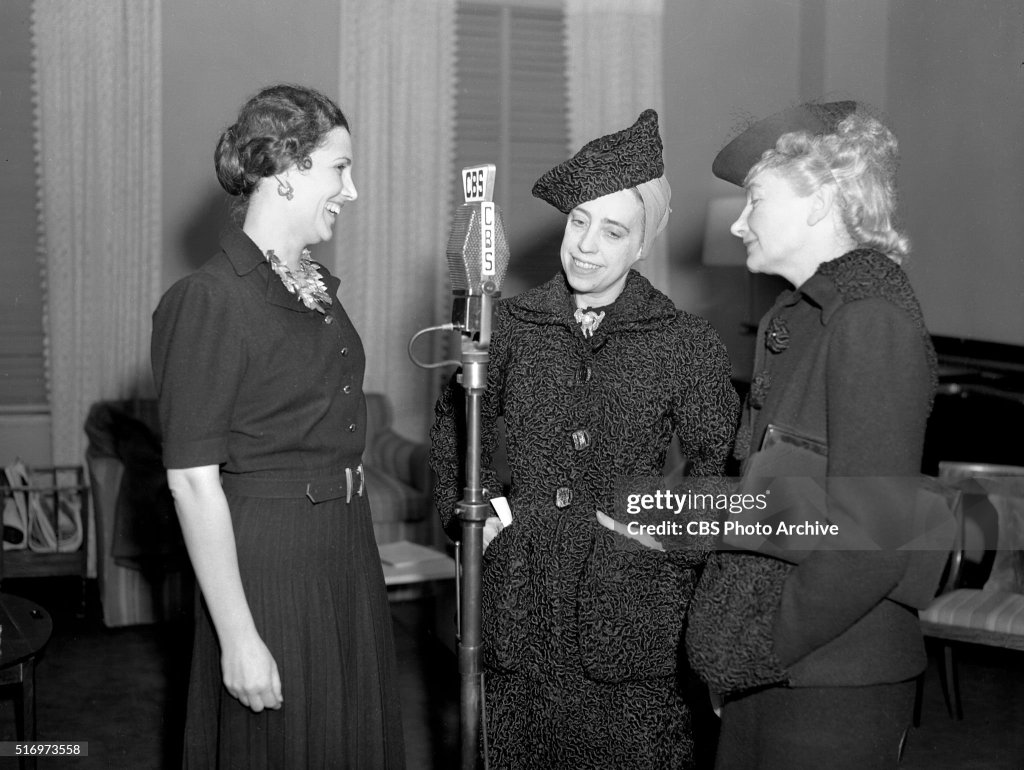
The three largest American radio networks have sent their own correspondents to Helsinki.One is the journalist Warren Irving, who is sending a radio commentary from Helsinki to the USA.
Sweden declares its neutrality in the Winter War.
Denmark declares its neutrality in the Winter War.
Norway declares its neutrality in the Winter War.
Italy declares non-belligerence in the Winter War.
The Dutch are ready to fight invaders. They will sacrifice everything to resist alien domination, an envoy declares.
The French complete new forts in France. The announcement coincides with increased German activity.
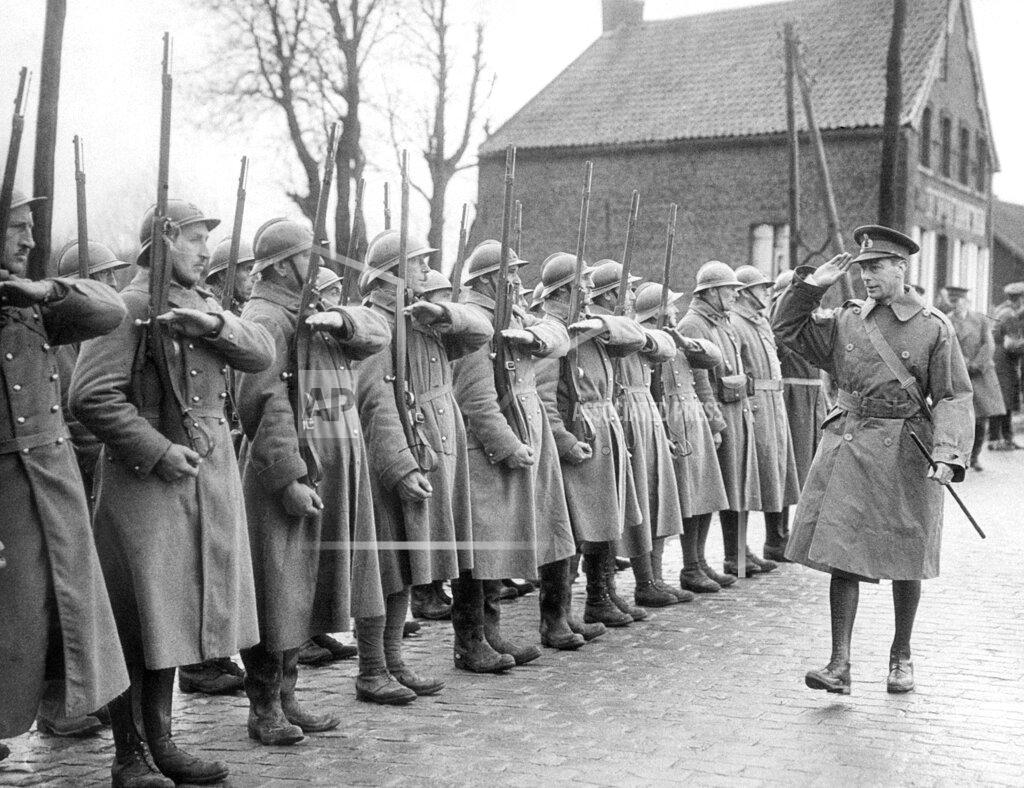
British King George VI has lunch with President Lebrun and the French Prime Minister, Edouard Daladier. King George VI of Britain and President Albert Lebrun of France met today for the first time since the war began. The meeting was in an unostentatious but homelike and thoroughly good restaurant in a French provincial town far behind the lines.
The Germans step up their patrolling activity on the Western Front.
SS Untersturmführer Herbert Lange began overseeing the euthanization of mentally disabled patients at the Dziekanka Psychiatric Hospital in Gniezno. Between this day and January 12, 1940, a total of 1,043 patients were loaded into a van and gassed with carbon monoxide. Pursuant to a decree from Adolf Hitler, the SS begins overseeing the euthanization of mental patients at the Dziekanka Psychiatric Hospital in Gniezno. The tool used to kill the patients is a simple van with its exhaust fed back into the compartment.
Inmates, including many Jews, at Tiegenhof asylum near Gnesen in the Polish Wartheland are said to be among the earliest victims of Nazi Germany’s poison-gas technology. Bottled carbon-monoxide appears to have been used in vans.
A high official of the Netherland Government took issue today with German attacks on neutrals for their lack of ‘strong measures’ to combat the Allies’ sea blockade. These nations, the official asserted, were under no obligation to resort to “violence.” Likewise, he said, “there is no obligation to answer with violence action of German U-boats for unreasonably long detention by German authorities of numerous Dutch timber ships out of the Baltic.”
Two thousand in Budapest denounce Russia. A demonstration is staged a few hours after Hungary renews relations with the Soviet Union.
Rumania, awake to a double threat, seeks the friendship of its neighbors. Bulgaria is ready to side with Russia, Hungary with Germany. King Carol asks London if it will guarantee Rumanian security against an expected Soviet attack. This, of course, would be quite difficult for the United Kingdom to do regardless of any good intentions it may have.
The Turkish press today called upon Franz von Papen, German Ambassador to Turkey, to halt alleged propaganda activities or “pack up and get out.” There were widespread reports that the Turkish Government would ask for Herr von Papen’s recall unless activities under attack were halted. As newspapers criticized the Ambassador and other Germans accused him of attempting to provoke a conflict between Turkey and Russia, Deputy Hossein Djahod asked the government what steps were being taken to curb “Nazi propaganda and infection.”
German armored ship Admiral Graf Spee stops and sinks British freighter Streonshalh at 25°01’S, 27°50’W. It is the pocket battleship’s ninth victim. Captain Langsdorff, as usual, takes the 32-man crew off, then sinks the vessel with scuttling charges and 6-inch shells.
Captain Langsdorff has made a habit of ransacking his victims for anything useful before sinking them, and this time it pays off handsomely. In the Streonshalh’s captain’s cabin, Langsdorff’s men find papers indicating that a 4-ship convoy will be departing Montevideo on 10 December 1939. It seems likes a wonderful gift, as if his next victims are going to meet him practically by appointment rather than his having to scour the empty sea for them. Langsdorff decides to head there to intercept them. Langsdorff is now holding 61 prisoners after previously having transferred 305 to the Altmark.
Meanwhile, a British cruiser squadron sails towards the River Plate estuary, anticipating an interception of the German warship.
Royal Navy destroyer HMS Jersey is damaged by a torpedo during brief night engagement off British coast with Kriegsmarine destroyer Erich Giese as it returns from minelaying operation.
The unescorted British steam merchant Thomas Walton was torpedoed and sunk by the U-38, commanded by Kapitänleutnant Heinrich Liebe, inside Norwegian territorial waters south of Svolvaer. At 17.09 hours, U-38 fired a spread of two G7a torpedoes at the unescorted Thomas Walton (Master Percy Dudley Townsend) inside Norwegian territorial waters south of Svolvaer and hit her with one torpedo forward of the bridge, causing the ship to break in two and sink. 13 crew members were lost. At 19.10 hours, the U-boat fired a G7e torpedo on the steamer that stopped to rescue the survivors but it became a circle runner that detonated at the shore after 8 minutes. Shortly after this attack they discovered that this was the German steam merchant Sebu, which picked up the master and 30 crew members and landed them at Bodo, Norway. The 4,460-ton Thomas Walton was carrying ballast and was bound for Narvik, Norway.
The neutral Dutch motor merchant Tajandoen was torpedoed and sunk by the U-47, commanded by Kapitänleutnant Günther Prien, in the eastern Atlantic Ocean. At 05.24 hours, Tajandoen (Master J.B. Roederink) was hit amidships by one torpedo from U-47 and sank in flames after a heavy detonation, only a few minutes after the hit. Six crew members were lost. The U-boat had spotted the ship only four minutes before firing and misidentified the type as tanker. The master, 47 crew members and 14 passengers abandoned ship in the lifeboats and had to avoid burning fuel on the water surface. The Belgian steam merchant Louis Scheid witnessed the attack and picked up the survivors, despite of the fear of her master of also being torpedoed. After the men were picked up, the ship immediately headed on full speed for the nearest land and by dusk she found herself off the Devon coast in heavy rainfall and a gale. Louis Scheid (6057 grt) struck a hidden rock near Warren Point in the early hours of 8 December and was destroyed by the seas. The Salcombe lifeboat made several dangerous trips and rescued all survivors from both ships. The 8,159-ton Tajandoen was carrying general cargo, including cement, iron, steel and glass and was bound for Batavia, Netherlands East Indies.
The British cargo ship Eskedebe was damaged by a mine 70 nautical miles (130 km) off the mouth of the River Tyne. She was beached at South Shields, County Durham. Later repaired and returned to service.
The Danish cargo ship Scotia was torpedoed and sunk in the North Sea (57°31′N, 2°17′E) by U-23 with the loss of 19 of her 21 crew. Survivors were rescued by Hafnia (also Danish).
The German fishing boat Heimat was sunk in the Gulf of Gdansk by a mine laid by the Polish submarine ORP Wilk.
The British cargo ship Whintown collided with the Leo in the North Sea 4 nautical miles (7.4 km) south of the Haisboro Lightship and sank.
U.S. freighter Exmoor is detained at Gibraltar by British authorities.
U.S. freighters Effingham and Winston Salem, detained at Ramsgate, England, by British authorities since 27 and 28
November, respectively, are released; the latter proceeds to Rotterdam where her cargo of 2,782 bales of cotton is seized by British authorities.
The War at Sea, Thursday, 7 December 1939 (naval-history.net)
Admiral Forbes transferred his flag to battleship WARSPITE in the Clyde. At this time, his only other capital ship was battlecruiser HOOD, badly in need of attention after her scheduled refit in November had been cut short.
On Northern Patrol, light cruiser SHEFFIELD and seven AMCs were between the Faroes and Iceland, and heavy cruiser SUFFOLK and AMC LAURENTIC in the Denmark Strait.
Anti-aircraft cruiser CAIRO departed Scapa Flow for Loch Ewe.
Destroyer IMPERIAL arrived in the Clyde from Rosyth.
Battleship RODNEY, destroyers IMPERIAL, IMPULSIVE, GURKHA, three more destroyers and two tugs departed the Clyde for Liverpool.
Destroyer INGLEFIELD escorted tanker DAGHESTAN (5742grt) from Invergordon to Scapa Flow.
Convoy FS.51 departed the Tyne, escorted by destroyers VALOROUS, VIVIEN and sloop BITTERN, arriving at Southend on the 8th. Convoy FN.51 was delayed 24 hours due to the danger of mines.
U-23 sank Danish steamer SCOTIA (2400grt) in 57 31N, 02 17E. Danish steamer HAFNIA (2031grt) was nearby and searched unsuccessfully for any survivors. She also observed U-23 searching.
U-38 sank British steamer THOMAS WALTON (4660grt) south of Vestfjord in 67 53N, 14 29E. Thirteen crew were lost, with 12 survivors picked up by German steamer SEBU (1894grt) and landed at Bodo, and another 22 rescued by Norwegian steamer IRMA (1392grt).
U-47 sank Dutch steamer TAJANDOEN (8159grt) in the English Channel in 49 09N, 04 51W. Six crew were lost, but British steamer LOUIS SCHEID (6057grt) rescued 62 survivors. Dutch steamer NAALDWIJK (2041grt) searched for those who were missing, but without success.
From the 8th to 21st, 38 eastbound merchant ships were sighted by the Northern Patrol and 24 sent in for inspection. The low numbers was partly due to the fact that from the 9th to 17th, the armed merchant cruisers had been withdrawn from the Patrol.
German pocket battleship ADMIRAL GRAF SPEE sank steamer STREONSHALH (3895grt) south of Trinidad in 25 01S, 27 50W.
Heavy cruisers EXETER and CUMBERLAND were on patrol in the Falkland Island area. The Admiralty anticipated that the German pocket battleship might attack Port Stanley on the anniversary of the Falkland Island naval battle in which a British force under Vice Admiral Sir Doveton Sturdee defeated a German force under Vice Admiral Graf Maximilian von Spee on 8 December 1914. When the attack did not materialize, they entered Port Stanley on the 9th. EXETER left late that morning to escort Falkland Island Company ship LAFONIA (1961grt) to Rio de la Plata.
Light cruiser ARETHUSA, which departed Alexandria on the 1st on patrol, arrived at Malta for refitting from the 7th to 18th.
Light cruiser DAUNTLESS, now attached to the 9th Cruiser Squadron, departed Singapore on patrol, arriving back on the 23rd.
Sloop LOWESTOFT completed her lengthy refit in Hong Kong on the 2nd, and sailed on the 7th. Reaching Singapore on the 13th and Colombo on the 18th, she departed Bombay on 2 January 1940 and arrived at Port Said on the 13th. She arrived at Malta on 18 January and Gibraltar on the 28th, and made Plymouth on 5 February for refitting, completed on the 21st.
After leaving the East Indies Command, sloop EGRET completed a refit at Malta on the 7th, arrived at Gibraltar on the 10th and departed on the 11th to reach Freetown on the 16th. She sailed on the 19th escorting convoy SLF.13 and arrived at Cardiff on 2 January 1940 for duty with Convoy C.
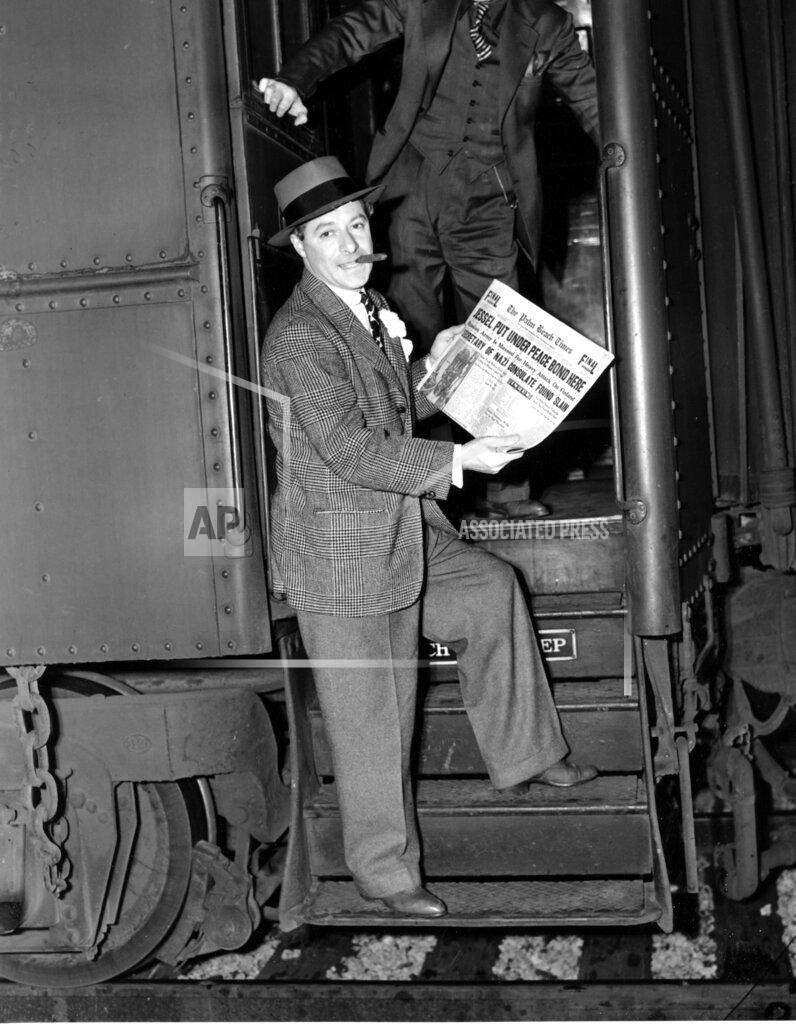
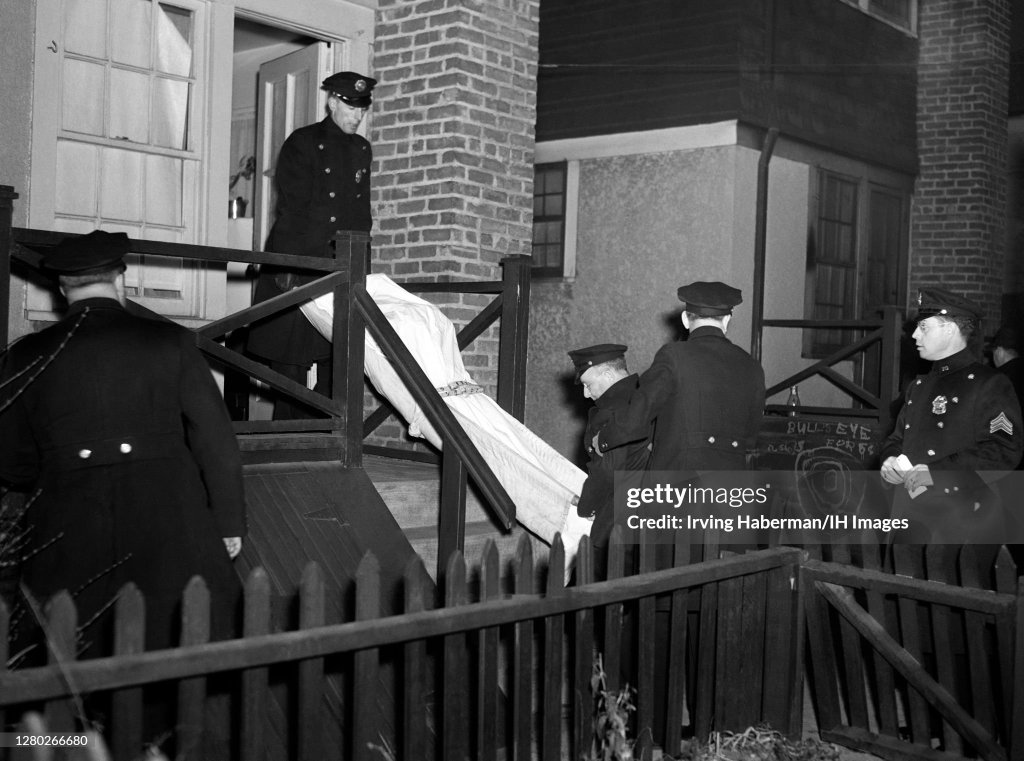
The murder of the quiet Dr. Walter Engelberg, secretary of the German Consulate, became a matter of primary concern to the United States Government yesterday, while the New York Police narrowed the search for his murderer to a quest for two men. One of these was described as wearing size 11 bedroom slippers and the other was described only as a “23-year-old Swede.” Against the eventual necessity of preparing a report to Chancellor Hitler’s government in Berlin as to how the 42-year-old consulate official had met his death, J. Edgar Hoover, chief of the Federal Bureau of Identification took over the job of preparing an exhaustive report.
The police search was initiated by the finding of the slippers and a bathrobe, both far too large for the murdered man. The information that caused them to include the Swede in their search was not revealed, but another spur to the search was the discovery in Dr. Engelberg’s home in the Parkville section of Brooklyn of a set of ten good fingerprints made by bloody hands on a polished surface, and a nightshirt that had been used to wipe off blood. The fingers were said to be large.
Against the background of this activity there were many reports. One was that Dr. Engelberg had maintained a radio sending set in his Brooklyn home, but this was officially denied. The other, coming from Dr. M. Edward Marten, Chief Assistant Medical Examiner for Brooklyn, who examined the body, was that Engelberg had been engaged in German secret service, and espionage activities, and that a motive of vengeance for acts he had done in that capacity might have brought about his death. Dr. Marten’s statement, which had a direct bearing on the secret activities of Mr. Hoover because of its international aspect, was neither affirmed nor denied in any other quarter. In the office of the FBI there was a reiteration of a previous announcement that the office had no “file” on Dr. Engelberg.
During the last few months the FBI has devoted almost all its resources to seeking out the agents of foreign governments in the United States and making long and detailed reports on their movements and activities. This has been developed to such an extent that, in some instances, the inherent purpose of the bureau, which is to investigate crimes, has been sidetracked for what the government considers a major undertaking. In connection with Dr. Marten’s statement, which he did not amplify or support, it was pointed out that the lack of a dossier on Dr. Engelberg might have two meanings. One was that he was not engaged in anything but his proper consulate duties, and the other was that, if he was in the espionage work, he had escaped the notice of the FBI during the year he was in the United States.
Thomas Dewey is pleased by the results of his speeches, and his associates are happy with the crowds at his Minnesota address.
Curbs on industry are found unpopular. A survey for manufacturers shows that the majority of the public has faith in business. A program for restoring national prosperity on the basis of free enterprise and reasonable regulation of industry by government was adopted by the Congress of American Industry, sponsored by the National Association of Manufacturers, at its session at the WaldorfAstoria yesterday.
Contracting and union circles heard yesterday that the contract had been let for razing the Soviet Pavilion at the World’s Fair, and the Soviet commission confirmed that the building definitely would be shipped to Russia, where it would be reassembled in Moscow. At this announcement a dispute developed between the Housewreckers Union and Marble Workers Union over which was to tear it down.
Leon Trotsky accepts an invitation to give testimony to the U.S. Dies Committee investigating un-American activities. He will talk on Stalinism.
Revised regulations designed to decentralize Administration of Wages and Hours Act and make possible more efficient enforcement will be issued by the Wages and Hours Administration.
Republicans move to set the date for their party convention. The executive committee of the Republican National Committee instructed John Hamilton, its chairman, today to call the national committee into session some time in February to act on the convention date. All want the Democrats to nominate first, but some fear a trap if they wait.
By resolution the Farm Bureau Federation approved today Secretary Hull’s trade agreement policy which he defended before the federation convention Tuesday night.
The Attorney General requests more judges for New York, saying that they are definitely needed to help drives against corruption and monopolies.
A 32-year-old woman gives birth to her fourth set of consecutive twins in five years. All are healthy.
Indiscriminate picketing in jurisdictional disputes between unions affiliated with the American Federation of Labor and the Congress of Industrial Organizations was condemned yesterday by Mayor La Guardia, who said he would not tolerate it anywhere in New York City.
Rear Admiral George J. Meyers, Commander Base Force, dies of coronary thrombosis on board his flagship, auxiliary Argonne (AG-31), San Pedro, California.
William Walton’s Violin Concerto premieres in Cleveland; Ohio, with Jascha Heifetz as soloist and the Cleveland Orchestra conducted by Artur Rodziński.
At the urging of Senator owner Clark Griffith, the other American League owners enact a rule prohibiting the league’s pennant winner from buying, selling or trading players during the following season. The winter meeting decision appears to have the desired effect as the Yankees finish in third place.
Lou Gehrig, age 36, is unanimously elected to Baseball’s Hall of Fame, the sole choice this year. The five-year waiting period is waived for the Iron Horse.
HMS Seaborn commissioned as flagship, Rear Admiral, 3rd Battleship Squadron, Halifax, Nova Scotia.
Sir Stafford Cripps, an early foe of fascism and a socialist, arrives in India for consultation with leaders Gandhi and Jinnah. It is felt that Cripps, with his communist leanings, may be best suited to keep the wayward Indians in line during the war, by offering various inducements for what may transpire after it.
The Japanese attack against the Chinese 2nd War Area around Wenhsi and Hsia Hsien continues.
Heavy fighting raged on two widely separated sections of the Sino-Japanese front today. Near Nanning, counter-attacking Chinese troops held the Japanese at bay not far from the city as the invaders continued attempts to consolidate their hold on the South Kwangsi metropolis by occupying favorable terrain west and northeast of Nanning. As long as the Chinese retain mountain strongholds in these areas, Japanese security in Nanning is threatened. So far efforts to drive the Chinese back have failed with losses exceeding 2,000 in the last few days, defenders say.
The second area of heavy hostilities is the elbow in the Hwang Ho in the extreme southwest of Shansi Province, where the Japanese are making an attempt to clean out the Chinese guerrillas, who heretofore have resisted all attacks. A military spokesman said the Japanese are losing heavily in these drives.
Foreign journalists today heard the leader of a Shantung railway wrecking corps, a group of more than 2,000 former Shantung railway workers and miners, tell of their activities in destroying Japanese trains, railway lines, bridges, warehouses and tunnels in Shantung. When the Japanese occupied lines in the province, the workers organized a guerrilla band and ceaselessly harassed the invaders, according to Liu Feng-wai, their leader. The wreckers get explosives from mine workers, who receive them from their Japanese bosses.
Dow Jones Industrial Average: 148.70 (-0.08)
Born:
Gary Phillips, NBA shooting guard and point guard (NBA Champions-Celtics, 1962; Boston Celtics, San Francisco Warriors), in Quincy, Illinois.
Blackie Dammett, American actor (“Lethal Weapon”), father of Red Hot Chili Peppers singer Anthony Kiedis, in Grand Rapids, Michigan (d. 2021, of Alzheimer’s).
Naval Construction:
The Royal Navy “M”-class destroyers HMS Musketeer (G 86) and HMS Myrmidon (G 90) are laid down by the Fairfield Shipbuilding & Engineering Co. (Govan, Scotland).

 History Diaries