South Vietnamese Government forces routed an expert Việt Cộng mainforce battalion in the swampy Cà Mau Peninsula yesterday and today, an American military spokesman announced. American advisers in the field confirmed a count of 115 Communists dead after a 14-hour engagement. Government casualties, as reported by the military spokesman, were 27 killed and 65 wounded. Nine of the wounded were civilians. Five battalions of Rangers and infantrymen pinned down the guerrilla force, estimated at more than 700 men, along a tree‐lined canal 140 miles southwest of Saigon.
In addition to suffering one of the largest death tolls of the war for a short operation, the Việt Cộng lost many weapons. These included three 60-mm. mortars, 18 machine guns, 35 rifles, 100 grenades and stocks of ammunition radios and documents. After hours of heavy fighting, American advisers said, the Việt Cộng resistance broke. Many guerrillas shed their black pajama-type uniforms and fled from the battlefield in their shorts, leaving behind their dead, weapons and equipment. Presumably in the shorts of ordinary Vietnamese peasant workers the insurgent troops could fade into farm villages and avoid detection in the follow‐up sweep by the government. More Việt Cộng dead were believed to be in the high grass and rice paddies through which the insurgent force withdrew.
Thirty‐seven United States Army helicopters took part in the operation. Six American pilots and helicopter gunners were wounded by ground fire, the American spokesman said, but none of them seriously. Most of the casualties were believed to have resulted from pinpoint machine‐gun fire and rocket fire from the helicopters and Skyraider fighter‐bombers supporting the ground troops. “The Việt Cộng seemed determined to hold their position and put up a fierce resistance,” said Captain Robert W. Butler of Frederick, Maryland. Intelligence officers identified the Việt Cộng force as elements of the U Minh-2 Battalion, an experienced unit operating out of the U Minh forest on the western edge of the peninsula. At least two companies of Việt Cộng local forces were said to have participated.
Ground troops made up the bulk of the government attacking force, but about 320 men of the elite Rangers were airlifted into battle in four helicopter lifts of 10 aircraft each. First Lieutenant Paul M. Campbell of Caribou, Maine, piloted his Army helicopter in on all four lifts. “It took us only two or three seconds to unload,” he said. “On the second lift they were jumping from my helicopter before it touched the ground. I felt the load lighten and asked my crewman what was happening. He said they were jumping out about four feet of fthe ground.” The airborne troops closed an encirclement set up by the ground units. Contact extended from about noon yesterday untill after 2 AM. Insurgent troops took refuge in a nearby village, which was subjected to heavy firing. Judging from the low civilian casualty reports, most of the villagers had apparently fled before the heaviest part of the action.
A squadron of the nations fastest, most powerful new jet fighter planes will be sent to the Far East for the first time this week. This will be the first overseas assignment for the Air Force’s McDonnell F-4C, known as the ‘Phantom 2.’ It is a triple‐purpose plane used by the Tactical Air Command as a fighter, bomber and interceptor. The Phantoms will replace a squadron of slower North American F-100 SabreJet fighterbombers now in the Pacific area. The Phantom, originally designed to protect Navy carrier forces, has been modified to handle such tactical missions as air strikes against ground targets. Eventually, the Air Force will have 10 wings of 72 Phantoms each. Only one stop — at Hickam Air Force Base in Honolulu — will be required to transfer the planes from MacDill Air Force Base in Florida to Naha, Okinawa, a distance of 10,000 miles.
Ambassador Maxwell D. Taylor returned from Washington today with an offer of unspecified “greater assistance” to South Vietnam. He scheduled a conference tomorrow with Premier Trần Văn Hương to tell him of new measures approved by President Johnson to intensify the war effort against what the Ambassador emphasized was “externally supported aggression.” Mr. Taylor implied that the South Vietnamese Government would be asked to take certain actions to coincide with American planning. The Ambassador, as well as other American officials, refused to describe what further efforts the United States Government had decided to take. Although aware of speculation that air strikes against Communist facilities outside South Vietnam might now be undertaken, Mr. Taylor declined to dispel the vagueness of the brief statement he made on his arrival.
In that statement, which he read from a folded scrap of paper, he said: “There are a number of measures which we can take on the United States side to provide greater assistance to the Government of Vietnam. Similarly, there were measures which we believed the South Vietnam Government could take to mesh more effectively with our efforts.” Officials explained that this did not imply that existing programs were ineffectively meshed but referred to newly proposed actions. The impression given by the statement was that the United States was willing to accept deeper responsibilities in Vietnam and Southeast Asia, but was not yet willing to disclose what this additional commitment would involve.
Diplomatic talks between the United States and Cambodia have been put off from tomorrow until Tuesday, it was announced today. The postponement was caused by the delay in the flight here of Philip W. Bonsal, the State Department official who will conduct the talks with the Cambodians. The talks were agreed to last month by Washington and Prince Norodom Sihanouk, Cambodian chief of state, in an effort to improve relations between the United States and the neutralist Southeast Asian kingdom. Prince Sihanouk charges that United States-supported South Vietnamese troops violate Cambodia’s borders.
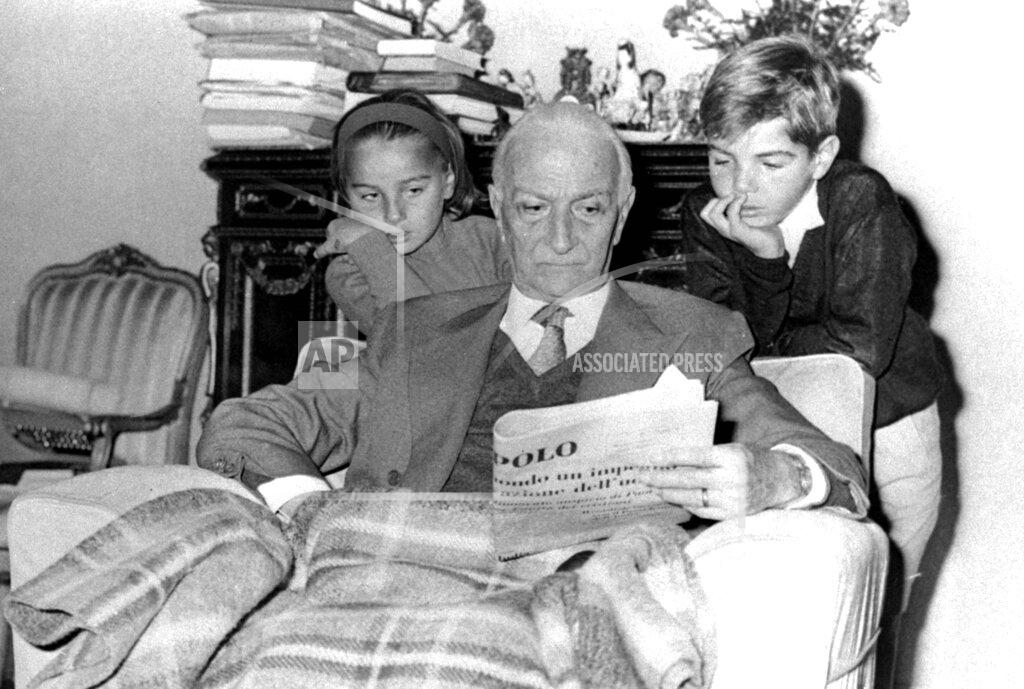
Antonio Segni resigned as President of Italy slightly more than halfway through his seven-year term, after suffering a stroke in August. Cesare Merzagora, leader of the Italian Senate, was sworn in as acting president until parliament could elect a successor to Segni. Segni suffered a cerebral stroke August 7 and his condition was critical for several weeks afterward. Lately he had shown slow improvement, but remained partly paralyzed with an impairment of speech. The 73-year‐old country gentleman and law professor from Sardinia served two years and seven months of a seven-year term as head of state. He was elected May 6, 1962. His unassuming ways and Old World courtesy had endeared the slim, white‐haired President to Italians of all political creeds. In a farewell message, Mr. Segni expressed his gratitude tonight for the many proofs of affection he had received from the nation during his long illness.
The new leadership of the Soviet Union, in a major statement of its program, made public today its principle for the political organization of Soviet society in the post‐Khrushchev period. An editorial in Pravda, the Communist party newspaper, said that the party’s role would be limited in the future to “political guidance” and that its leaders would no longer try to “play all the instruments” in the “orchestra.” In an evident allusion to the highly personal style used by the former Premier, Nikita S. Khrushchev, in running the country, Pravda said: “This not only spoils the music and opens the way for errors and one‐sided decisions, but it paralyzes the work of officials who are fully empowered and competent to solve concrete questions.”
The Soviet Union has agreed to provide weapons and to help pay for an airlift of arms to the Congolese rebels by the United Arab Republic and Algeria, well‐placed Communist‐bloc sources said tonight. One of the key reasons for the move, these sources said, is to block the Chinese Communists from extending their support to the rebels and to show African radicals that Moscow is prepared to back up its ideological support for “wars of national liberation.” The sources said the agreement for Moscow to underwrite the arms airlift to the Congolese rebels, already under way, had been made during a secret meeting in Cairo between the Soviet Ambassador, Vladimir Y. Yerofeyev, and Gaston Soumialot, self‐styled Defense Minister of the rebels.
Mercenaries of the Fifth Brigade stormed across the Congo River over the weekend and established a firm beachhead today on the south hank of Stanleyville. By securing the area, which consists mostly of docks and railroad marshaling yards, the mercenaries have put an end to the last major threat to the former rebel capital. Seventy-five rebel soldiers surrendered — the first to give themselves up since the war began more than six months ago. The prisoners were ferried back over the river and paraded through the heart of Stanleyville. A recently returned United Nations official said thousands of suspected rebels had been rounded up in the Stanleyville stadium, where they were being tried “by acclamation.”
At Dakwa, 200 miles north of Stanleyville, a mercenary-spearheaded Congolese Army column searching the Poko area found the bodies of three nuns and two priests. Eyewitness reports from Poko said two of the nuns were English‐born Belgians. One was hacked to death after having been raped by Simbas, or rebel soldiers. The second was shot when she tried to save two Dutch priests and a Belgian nun as they were shot at Dakwa. The toll of whites killed in the last 12 days is now put at 93, with 98 wounded. Poko’s fall came swiftly after Congolese Air Force planes spotted a rebel roadblock on the main road into town from the west. The government column was diverted and entered Poko on a back road from the north. When the column came upon the rebels from behind, they were said to have run into the open, saluted and cried in Swahili: “It’s the Russians!” Most were cut down by jeep‐mounted machine guns before they could recover from their surprise.
The United Nations official who told of the trials by acclamation in Stanleyville said: “Congolese officials had the names of about 3,000 Simbas from captured rebel documents. Once a Simba was identified from these lists, the crowd was asked over a loudspeaker whether he was a ‘good’ Simba or a ‘bad’ Simba.” He said that if the crowd booed, the man was taken out and executed. If the crowd was silent or expressed mixed reaction, the man was spared. The official said about 80 had been shot of about 20,000 screened so far.
Li Hsien‐nien, a member of the Chinese Communist party’s Politburo, returned to China today from a visit to Albania during which he declared that the Albanians and the Chinese would “always be united and fight side by side.” Albania has openly criticized the new Soviet leadership for following the policies of former Premier Nikita S. Khrushchev. Before Mr. Khrushchev’s removal, Albania and China were allied in denouncing what they called his “revisionism.” Peking at first showed relative restraint toward the new Soviet leadership, but relations have begun to deteriorate again and the Chinese have recently attacked those who would foster “Khrushchevism without Khrushchev.” Mr. Li visited Albania as head of a Chinese delegation to celebrations marking the 20th anniversary of Albania’s liberation in World War II. Hsinhua, the Chinese press agency, reported that Mr. Li had declared in a speech at a construction site in Albania, that imperialism, headed by the United States, and modern revisionism were “sinking into a predicament of disintegration.”
British Prime Minister Harold Wilson arrived in Washington tonight for talks tomorrow and Tuesday with President Johnson that he said would be “vitally important.” Mr. Wilson, was met at Andrews Air Force Base by Secretary of State Dean Rusk; the British Ambassador, Lord Harlech, and other officials. Arrival of the British leader’s plane was delayed by strong headwinds. Speaking briefly at the airfield, Mr. Wilson said: “We don’t expect to finalize anything, but this will be the beginning of our fruitful cooperation, the beginning of a series of discussions which, we hope, will lead to the strengthening of the [Atlantic] alliance.”
The meeting of Mr. Johnson and Mr. Wilson, their first as President and Prime Minister, could profoundly affect the future of the Atlantic alliance. It is the President’s most important conference with a foreign leader since he took office a little more than a year ago. Leading the agenda for the discussions tomorrow and Tuesday is the issue of allied nuclear defenses. A part of this general question is the proposed allied mixed-manned surface fleet carrying nuclear weapons. Mr. Wilson is expected to propose a broad new Atlantic nuclear force, with Britain contributing her present nuclearweapons systems. This would be his way of honoring the pledge of his Labor party to end Britain’s role as an independent nuclear force — an event of historic significance. No nation has ever taken such a step.
The sterling crisis has severely restricted the freedom of action of Prime Minister Harold Wilson’s Labor Government, now halfway through its first 100 days. At the same time, it has raised the grim possibility that Britain may find herself in another recession in the winter of 1965–66. Mr. Wilson’s decision to deflate rather than devalue was welcomed by those concerned with international financial stability. But it still does not completely satisfy foreign central bankers who have lent the Labor Government more in a shorter period than was ever lent to a Conservative Government.
General de Gaulle has told the United States: he will denounce the French‐German Treaty of Cooperation if Bonn participates in the mixed‐manned nuclear force proposed by Washington. The general also has informed the Johnson Administration that France will oppose a modified force including land‐based aircraft and missiles. This modification has heen proposed by Prime Minister Harold Wilson of Britain. These views were made known to the United States, according to a high allied source, during a meeting last week between President de Gaulle and Ambassador Charles E. Bohlen. Mr. Bohlen is now in Washington, where the French hope he has placed the general’s views before President Johnson. “We feel that this is the moment to be absolutely frank with our friends in the United States,” a French source said. “This fleet is more than a weapon, this is an issue involving the future structure of Europe.” Contrary to reports in London and Parish the general did not tell Mr. Bohlen that he was prepared to leave the North Atlantic Alliance if the controversial nuclear fleet was established by the United States and its European allies.
A peaceful attempt by young leftist intellectuals to find a new revolutionary leadership for the Perónist movement received a shock tonight when a small band of Perónist students turned their meeting into a wild riot. For 20 minutes the Perónists terrorized 300 students attending a panel discussion by bombarding them with bricks, bottles and noise bombs and threatening to use firearms. The meeting was in the main auditorium of the school of philosophy and letters of the University of Buenos Aires. It was intended to analyze the role of the left in the aftermath of Juan D. Perón’s thwarted attempted to return to Argentina. Instead, the panel and the students got a first‐hand sample of the methods favored by the movement they would like to lead as young revolutionaries. The incident also provided another example of the alienation here between intellectuals who talk about revolutionary theory and those advocating direct terrorist action.
Rioting that would eventually kill 250 people began in Khartoum, the capital of the Sudan, between the predominantly black South Sudanese minority and the white Arab northern Sudan residents. The triggering incident was a rumor of the death of the highest-ranked black African cabinet member in Prime Minister al-Sirr’s cabinet, Interior Minister Clement Mboro. A crowd of wellwishers had gone to the Khartoum Airport to welcome Mboro back from a tour of the south Sudan, and the airplane did not show up at the scheduled time. Word spread that Mboro had been murdered and, after hours had passed, angry southerners attack Khartoum’s northerners, and crowds of northerners retaliated.
Few changes are expected at the Pentagon when President Johnson begins his new term next month. Secretary of Defense Robert S. McNamara is among the Cabinet members whom President Johnson has announced he has asked to stay on. Yesterday, when he decorated Army Captain Roger H. C. DonIon with the Medal of Honor for bravery in South Vietnam, the President singled out Mr. McNamara for special praise. However, the Army, which has had three Secretaries since President Kennedy took office in 1961, will probably have another one soon. Stephen Ailes has indicated that he would like to return to his law practice when a replacement can be found.
There has been no word as to who his successor might be. Mr. Ailes has won the appreciation of the Administration by staying on long after he first wished to resign. That was last year. “A funny thing happened to me on the way to my law office,” he explained last January when he was promoted to civilian chief of the Army. He had been Under Secretary for three years. On the military side of the Pentagon, General Curtis E. LeMay, Air Force Chief of Staff, has announced his retirement effective February 1. His successor is expected to be the present Vice Chief of Staff, General John P. McConnell.
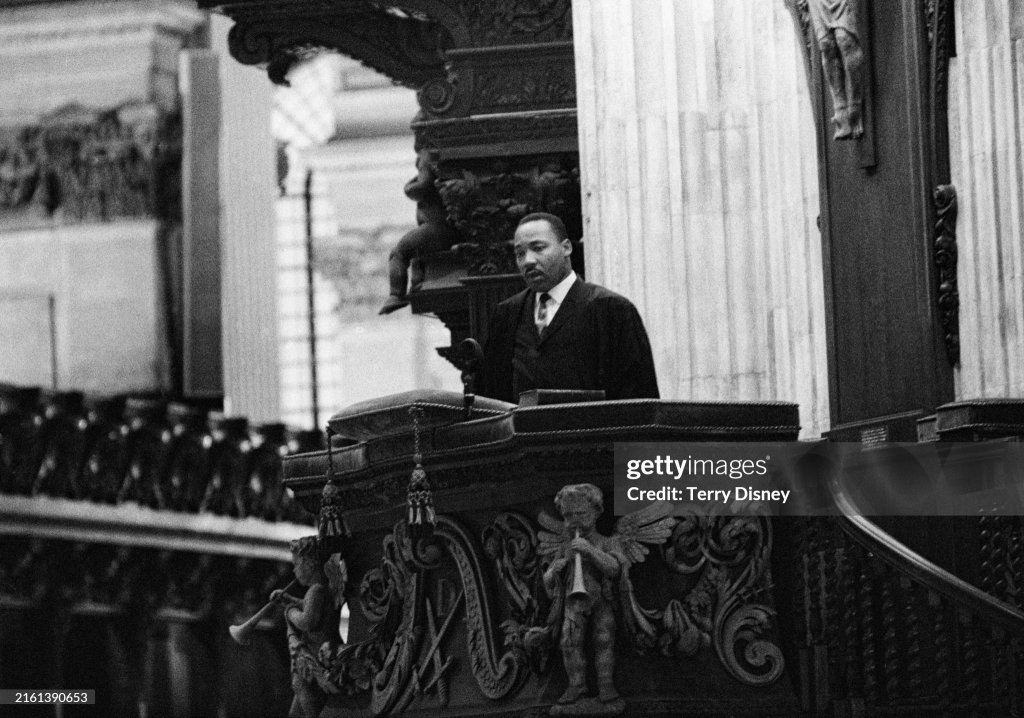
The Rev. Dr. Martin Luther King Jr. told a congregation in St. Paul’s Cathedral in London today that “the doctrine of Black supremacy is as great a danger as the doctrine of white supremacy.” Four thousand Britons packed the cathedral to its huge doors to hear the first evensong sermon ever delivered in St. Paul’s by a non-Anglican. Dr. King, a Baptist, said, “All over the world, as we struggle for justice and freedom, we must never use second‐class methods to gain it.” Speaking in the measured cadence familiar to millions of Southern Blacks in the United States, Dr. King added: “We must not seek to rise from a position of disadvantage to one of advantage, substituting injustice of one type for that of another. We must not substitute our oppression for another kind of oppression.”
The civil‐rights leader, visiting London on his way to Oslo to receive the Nobel Prize for peace, devoted his sermon largely to noncontroversial themes. But his plea for moderation in the rights struggle appeared directed at the activities of Malcolm X, leader of the militant Black Nationalist movement, who is also in London. Speaking on television last night, Malcolm warned that the patience of United States Blacks was wearing thin in the fight for equal rights. He intimated that major violence was just under the surface. At a news conference after his sermon, Dr. King pursued the racial question. “Negroes in the United States are more in line with the philosophy of integration and togetherness,” he said, “and not in line with racial separation.” He added that only 75,000 out of 22 million Blacks in the United States “joined groups supporting black supremacy.”
Major newspapers in the South generally praised the work of the Federal Bureau of Investigation in editorials yesterday commenting on the arrest of 21 Mississippi men. The arrests were made in connection with the murder of three civil rights workers last June 21 near Philadelphia, Mississippi. While many newspapers were forced to delay their editorials because of printing schedules, most of the nationally known publications presented their viewpoints on their Sunday editorial pages. However, Mississippi’s two largest dailies, The Clarion‐Ledger and The Daily News, both of Jackson, had no comment so far.
The tenor of opinion could be noted in this observation by The Memphis Press‐Scimitar, a Scripps‐Howard newspaper: “We think this crime has been shocking even to vigorous opponents of civil rights legislation — shocking in that it has revealed the depths of depravity, masked as opposition to civil rights, of which a criminal element in Mississippi is capable. We hope and believe that the decent people of Mississippi — forced by this case to recognize what is going on — will see that justice is done.”
The role of the FBI was emphasized by The Miami Herald, whose publisher is John S. Knight. The paper commented: “The arrests should answer critics who complained that the investigation was not being pushed with vigor. FBI Director J. Edgar Hoover cited ‘resentment and hostility’ which some agents met in trying to find witnesses. When responsible leadership shows a determination to abide by the law, the battle is almost won.” The Charleston (West Virginia) Gazette said that the “refusal of Mississippi to protect citizens who are black‐skinned or to bring to justice those responsible for vile crimes . . . cannot be tolerated by the rest of the nation. Mississippi is not sovereign.”
A statewide defense fund was being organized in Mississippi today to pay the legal expenses of 21 men charged in connection with the slaying of three civil rights workers. Laurel G. Weir of Philadelphia, Mississippi, the chief defense attorney, said a corporation may be set up to receive donations from Mississippians who wish to help the defendants. The same kind of public subscription drive paid for the heavy legal expenses of Byron De La Beckwith, the white Citizens Council member who was tried twice for the murder of Medgar W. Evers, the Black civil rights leader shot in ambush last year. Three of the state’s leading lawyers participated in the Beckwith defense. In each trial, the jury was unable to agree on a verdict. The murder charge is still pending.
The Federal Bureau of Investigation released today a letter in which it accused Newsweek magazine of “a new low in reporting” and of presenting inaccurate statistics on the agency. The letter, dated November 30, was sent by the FBI associate director, Clyde Tolson, to the Newsweek editor, Osborn Elliott. The letter was a reply to an article in the December 7 issue of Newsweek in which the magazine said President Johnson had decided to replace FBI Director J. Edgar Hoover — an allegation since denied by the White House.
The edition, released in advance of its cover date, also said that Representative John J. Rooney, Democrat of New York, who heads a House appropriations subcommittee, was especially sympathetic to Mr. Hoover’s request for funds. It said five special FBI agents were on loan to Mr. Rooney to help with subcommittee work. Mr. Tolson’s letter denied this. The letter also denied Newsweek’s assertion that Mr. Hoover did not send a letter of condolence to his superior, Attorney General Robert F. Kennedy, now Senator‐elect from New York, when Mr. Kennedy’s brother, President Kennedy, was assassinated.
Liberal Democratic members of the House of Representatives are quietly moving toward wide agreement on far-reaching procedural reforms to curb the power of conservatives in the new Congress. A long stride in that direction was taken last Thursday by leaders of the Democratic Study Group in a strategy session at the Capitol, according to information made available today. Liberal colleagues are being informed by letter that a detailed reform plan was unanimously approved at the two‐hour closed meeting. The Study Group is a loosely knit organization of House liberals. It claimed a membership of about 125 in the expiring Congress, and hopes to expand its roster to about 175 when the new Congress convenes January 4.
An about‐face in the National Rifle Association’s traditional stand against federal regulation of gun sales has opened a bitter dispute among its million members. In the aftermath of the assassination of President Kennedy with a cheap, foreign war‐surplus military rifle, the association is seeking some federal control of firearms distribution. The rifle that killed Mr. Kennedy was one of the hundreds of thousands of cast‐off weapons of foreign armies that are now available to mail‐order customers of American gun dealers. Among many association members, the switch by its leadership is regarded as a grievous heresy.
The leaders contend that they are acting to stave off public demands for far tougher laws. Some proposals in Congress and in the state legislatures, they point out, would outlaw ownership of guns. The association’s traditional doctrine has been that almost all gun laws are bad laws. It has sought stricter punishment of armed criminals but at the same time fewer regulations on gun purchasers, licensing and use. Now its top officials are seeking regulations that are opposed by a large segment of “the shooting fraternity.” Such top leaders of the association as Franklin L. Orth, executive vice president, believe that “the sport of shooting itself is in danger unless we act” to limit the mail‐order distribution of small arms.
In a move bristling with political significance, Senator-elect Robert F. Kennedy will set out today on a “quiet, leisurely” tour of upstate New York “to talk to the people about the problems in their communities.” In the next three or four days he will make what his aides call a “fact‐finding” tour of seven to ten cities to get information that will be helpful to him when he takes office in January as the junior Senator from New York.
The three national television networks are engaged in the closest competitive race for audiences since the commercial introduction of the medium in 1947, according to today’s report of the A. C. Nielsen Company, Chicago research organization. For practical purposes the long‐awaited Nielsen national study of the comparative popularity of this fall’s shows ended in the first three‐way dead heat in the history of the Industry. The National Broadcasting Company and Columbia Broadcasting System tied for first in the report with an average weekly rating of 19.4 for commercial evening programs between the hours of 7:30 and 11. The report covers the two‐week viewing period ended November 22. The American Broadcasting Company finished third with a rating of 19.3.
The one-hour stop-motion animated special “Rudolph the Red-Nosed Reindeer,” based on the popular Christmas song, was broadcast for the first time, on NBC. Filmed by Rankin/Bass Productions, and narrated by Burl Ives, the show was sponsored originally by the General Electric Company and was telecast at 5:30 p.m. Eastern Time. It became a Christmas tradition in the United States, still being shown on television more than 50 years later. Associated Press TV critic Cynthia Lowry praised the show as “a program of sheer delight for young and old”. Another critic, however, commented that “efforts to ‘modernize’ Christmas with such insipid treacle as last night’s ‘Rudolph the Red-Nosed Reindeer’ presentation should be resisted in the streets, the alleys and on the beaches.”
Major League Baseball releases its official 1964 batting averages that confirms Twins’ outfielder Tony Oliva, who finished the season hitting .323, is the first rookie to win a batting title. The recently crowned American League Rookie of the Year finished ahead of Orioles’ third baseman Brooks Robinson (.317), who copped the circuit’s Most Valuable Player Award.
NFL Football:
Cleveland Browns 19, St. Louis Cardinals 28
Dallas Cowboys 14, Philadelphia Eagles 24
Detroit Lions 31, Baltimore Colts 14
Los Angeles Rams 7, San Francisco 49ers 28
Minnesota Vikings 30, New York Giants 21
Pittsburgh Steelers 14, Washington Redskins 7
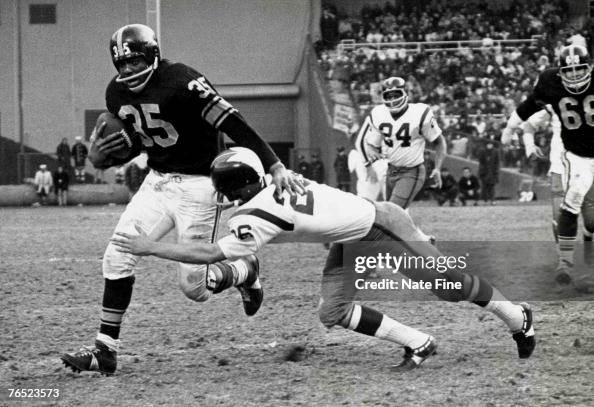
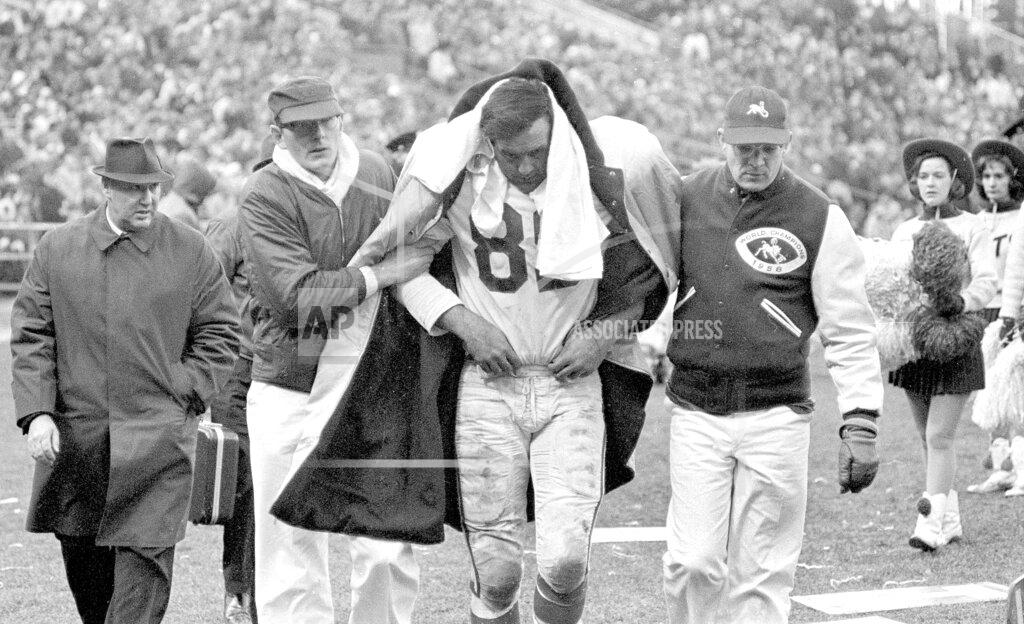
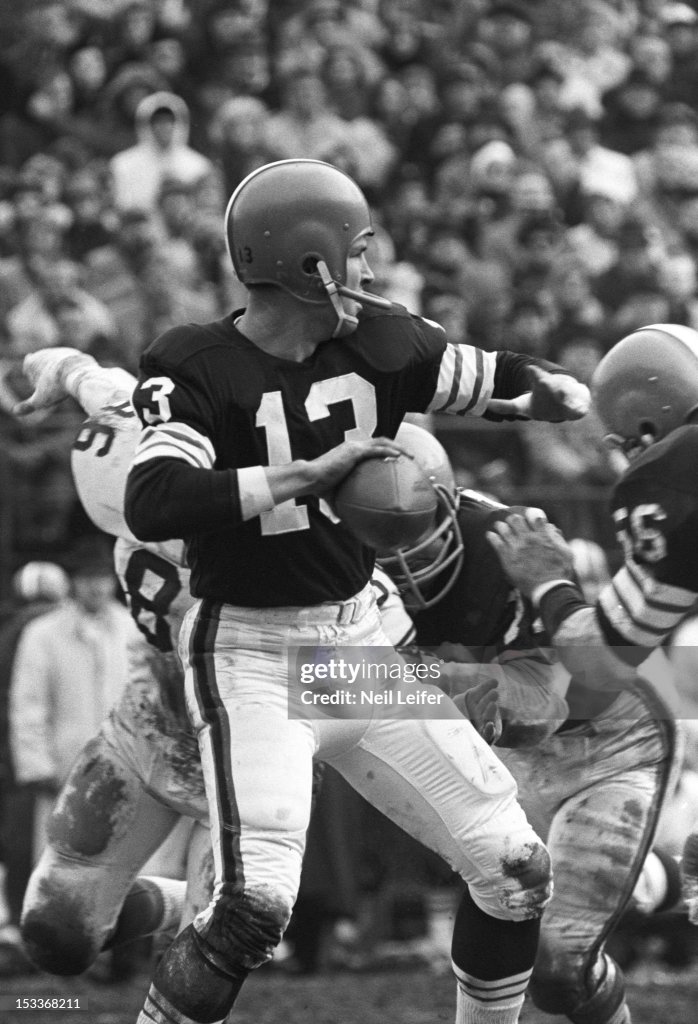
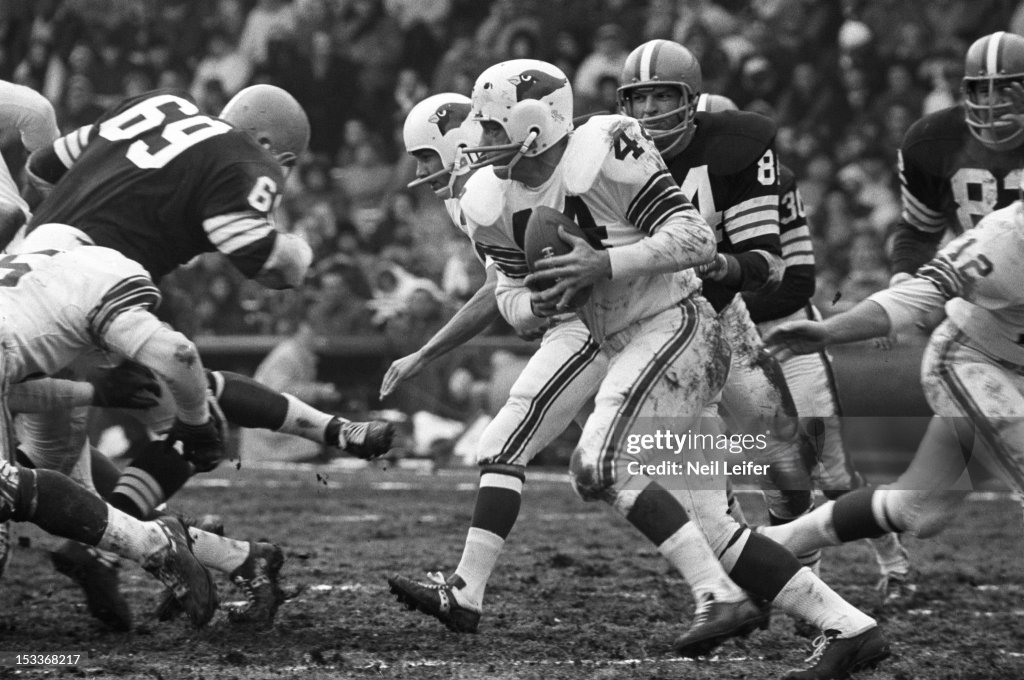
The St. Louis football Cardinals, in the pattern set by their baseball namesakes last summer, kept their title hopes alive today with a surprising 28–19 victory over the Cleveland Browns, the leaders of the Eastern Conference of the National Football League. Immediately after Charlie Johnson, the Cards’ quarterback, had led his team to the triumph, the Cards became the strongest New York Giant rooters in the nation. The Giants must beat the Cleveland Browns Saturday in New York and then the Cards must defeat or tie the Philadelphia Eagles here next Sunday for St. Louis to win its first Eastern Conference crown since the Cards were moved here from Chicago four years ago. If Cleveland wins on Saturday, it will clinch the title. Cleveland, with a 9–3–1 wonlost‐tied record, is a half‐game ahead of St. Louis, which stands at 8–3–2. Ties don’t count in figuring the division winner. A crowd of 31,585 fans filled Busch Stadium in freezing weather today and cheered wildly as Johnson sparked a secondquarter rally that settled the issue. He passed for two touchdowns in that 15-minute segment and ran one yard for another. He also ran a yard for the final Cardinal touchdown in the third period. Johnson and his offensive team were greatly supported by one of the best Cardinal defensive efforts in recent weeks. An intercepted pass and a blocked field‐goal attempt set the stage for‐two of the Card touchdowns and Cleveland couldn’t do much more than get its field‐goal, kicker, Lou Groza, within range time and again. After Groza had put the Browns ahead, 3–0, in the first period with his first of four field goals, Johnson took control of the game.
Jack Concannon, a rookie who had spent the first 12 games on the bench, fired two touchdown passes and scrambled for long running yardage today as he directed the Philadelphia Eagles to a 24–14 National Football League victory over the Dallas Cowboys. In his first start as a pro quarterback, the $50,000 bonus rookie from Boston College completed 10 of 20 passes for 134 yards. He also carried the ball eight times for 99 yards, setting, up the first Philadelphia score with one of his dashes after being trapped trying to pass. The Eagles beat the Cowboys for the second time this season with a late fourth‐period score. This time it was a 31-yard pass from Concannon to Pete Retzlaff. The play overcame a 14–10 Dallas lead. Tommy McDonald had grabbed a 12-yard pass from Don Meredith to give Dallas a 14–7 lead as the sellout crowd of 60,671 roared. Dallas took a 7–0 lead early in the first period when Jim Ridlon scooped up a fumble by Israel Lang of the Eagles and raced 63 yards for a touchdown. The Eagles gained a 7–7 half time tie in the second quarter as Concannin moved 56 yards on four plays. He ran 29 yards on a broken pass play, passed 14 yards to Earl Gross and then whipped an 11-yard touchdown pass to Ron Goodwin.
Milt Plum passed for three touchdowns and ran for one today to lead the Detroit Lions to a 31–14 upset over the Baltimore Colts. It was the first defeat for the Colts since they lost their opening game to Minnesota. The Colts had won 11 in a row and had clinched the Western Conference title of the National Football League in the process. Plum mixed his passing and running attack well, connecting on 11 of 16 aerial attempts for 143 yards. He received strong support from Nick Pietrosante who carried the ball 27 times, his personal high, in gaining 78 yards. Plum hit Jim Gibbons with 6-yard touchdown passes twice and threw 17 yards to Terry Barr for a third score. The other Detroit touchdown was made on a one‐yard plunge by Plum. Wayne Walker kicked a 41-yard field goal and four conversions for the Lions’ other points. The Colts scored on a 3-yard plunge by Jerry Hill and on a fumble recovery in the end zone by Lenny Moore. It was the 16th consecutive game in which Moore had scored.
The San Francisco 49ers allowed the visiting Los Angeles Rams a first‐period touchdown today before their defense stiffened and their quarterback, John Brodie, directed a passing attack that brought them a 28–7 victory over the Rams. Brodie redeemed himself for a poor showing a week ago by completing 18 of 30 passes; two for touchdowns. The hot-and-cold 49ers played their best game of the year and posted their fourth victory of the season against nine losses. It was the seventh defeat against five victories and a tie for the Rams. Brodie connected on a one-yard pass to Dave Kopay in the second period to cap a 52-yard drive and tie the score at 7–7. Then, Gary Lewis completed an 80-yard march in seven plays with a 5-yard run for a 14–7 halftime lead for the 49ers. A 53-yard pass to Monte Stickles by Brodie in the third period increased San Francisco’s margin to 21–7 and Mike Lind, a fullback, connected on a 69-yard pass‐option play to a completely uncovered Dave Parks with seven minutes left for the final 49er tally. Les Josephson, a rookie, scored the Los Angeles touchdown on an 8-yard pass from rookie starter Bill Munson in the first period. Munson completed 19 of 36 pass attempts but took a beating as he was sacked ten times. The Rams only managed 15 yards rushing for the entire game.
The New York Giants were consistent yesterday. They lost. The 30–21 winners before a capacity crowd of 62,802 at Yankee Stadium were the Minnesota Vikings, an ambitious young team in purple pants that did not play very well by the admission of its coach, Norm Van Brocklin. It didn’t have to. The home side, which lost its ninth game of the season, tying a Giant record, was ahead twice for brief periods, but the game turned on two quick plays at the start of the final quarter. On the first, Tommy Mason, Minnesota’s all‐league halfback, returned a punt 36 yards to the New York 30-yard line. On the next play, Fran Tarkenton, the Viking quarterback, passed to Bill Brown, the fullback, at the edge of the end zone for a touchdown. Jerry Hillebrand, the defender, had no chance to break it up. That gave the Vikings a 27–21 lead and eventually, the game, which was less than fascinating. “That punt return killed us,” said Al Sherman, the losing coach. “We’ve covered every kick for about six weeks, but not that one.” The damaged defensive secondary also hurt the Giants again. Andy Nelson, the safetyman, was beaten by the Vikings’ tight end, Hal Bedsole, on three passes, one going 43 yards for a touchdown. Tarkenton, who has had many stronger games, was the passer. He also hit Paul Flatley, his split end, on a 48-yard play that set up Minnesota’s second touchdown in the second period and put the Vikings ahead, 17–7.
The Pittsburgh Steelers halted a last‐minute Washington Redskin drive in the shadow of the goal posts today to wrap up a 14–7 National Football League victory in a bitter battle dominated by the defenses. The Redskins, seeking their fourth victory in a row, failed twice to score from the 1-yard line in the final minute. The winning touchdown for Pittsburgh came midway in the fourth period on a 47-yard pass, from Ed Brown to Gary Ballman. Until he completed the scoring toss, Brown had lost more yards trying to pass than he gained in his previous four completions. He finished with just 5 completions in 10 attempts, for only 41 yards.
AFL Football:
Boston Patriots 31, Kansas City Chiefs 24
Buffalo Bills 13, Oakland Raiders 16
New York Jets 3, San Diego Chargers 38
Babe Parilli fired three touchdown passes and Gino Cappelletti set an American Football League scoring record as the Boston Patriots beat the Kangas City Chiefs, 31–24, today. By winning the Patriots kept alive their Eastern Division title hopes. The Chiefs were eliminated from contention in the Western Division. Two of Parilli’s touchdown passes went to Art Graham and the other to Cappelletti, who also kicked a field goal and four extra points. Cappelletti has scored 155 points to erase his old mark of 147, established in 1962. Boston broke a 17–17 tie early in the fourth quarter when Parilli hit Graham on a 29-yard throw to cap an 89-yard drive. Parilli, who has thrown 29 touchdown passes, accounted for 77 yards in the drive on four completions.
Tom Flores passed to Art Powell for a touchdown on the final play of the game today to give the host Oakland Raiders a 16–13 American Football League victory over Buffalo and thwart the Bills in their bid to clinch the Eastern Division championship. It was the Bills second loss this season and dropped them into a tie for first place with the Boston Patriots who defeated Kansas City. The Bills have two games left to play in the regular season and the Patriots one — against Buffalo. Pete Gogolak had kicked two field goals in the last period to give the Bills a 13–10 lead. Then, with two minutes left, the Raiders marched 75 yards to score the touchdown that won the game. The drive was kept going when pass interference was called against Charlie Warner of the Bills on the Bills’ one-yard line. Flores then passed to Powell in the left corner of the end zone. Most of the crowd of 18,134 ran onto the field to make a conversion attempt impossible. Oakland had built a 10–0 lead on -a 35-yard scoring pass from Flores to Clem Daniels in the second period and Mike Mercer’s 40-yard field goat in the third. Daryle Lamonica, who had taken over for Jack Kemp at quarterback during the second period, accounted for Buffalo’s first score with 33 seconds left in the third quarter on a 38-yard pass tò Elbert Dubenion.
The San Diego Chargers walloped the New York Jets, 38–3, today to clinch their fourth American Football League Western Division title in five years. The victory was San Diego’s eighth against three defeats and one tie. Second‐place Kansas City lost its last mathematical chance by bowing to Boston. John Hadl’s passing and the running of Keith Lincoln and Paul Lowe dominated the first half, which saw the Chargers roll to 18 first downs while the Jets got only one. San Diego led at half‐time, 24–3. Weeb Ewbank, the Jet coach, used three quarterbacks, Dick Wood, Pete Liske and Mike Taliaferro, and got the same indifferent results from each of them. The Chargers assumed command at the outset, marching 78 yards in 15 plays after the opening kickoff. Hadl’s 8-yard pass to Don Norton, a tight end, accounted for the touchdown. Later in the first period, Lincoln ran 37 yards to the Jets’ 4 after taking a screen pass from Hadl. When the New Yorkers stiffened, Lincoln hooted a 19-yard field goal to make the score 10–0. The Chargers increased their lead to 17–0 with a 90-yard, nine‐play drive ending with Lowe driving one yard over guard. Mark Johnston’s interception of a pass by Hadl on the San Diego 31 set up the Jets’ score in the first- half. Jim Turner booted a 37-yard field goal with Johnston holding. Leslie Duncan, a Charger cornerback, returned the following kickoff 91 yard to the Jet 4 before Bill Baird hauled him down. The brilliant run went for nought when Lincoln missed a field goal from the Jets’ 16. Just before the half ended Hadl passed 5 yards to Lincoln for another score. The tally was set up by two passes covering 44 yards to Dave Kocourek, a split end. Earl Faison, a 262-pound defensive end, ran 42 yards for a touchdown in the third quarter after intercepting Wood’s pass in the flat. This score was made after Wood had finally moved the Jets for two straight first downs, on a 12-yard pass to Gene Heeter and a 12-yard run by Bill Mathis. Wood sat out the entire fourth quarter, which saw Taliaferro, former Illinois star, throw some fine long passes. But the San Diego defense broke up most of them. Rote, relieving Hadl in the final period, hit Lance Alworth with a perfect strike on the Jets’ 40. From there the speedy flanker outran Johnston to score the Chargers’ last and longest touchdown. It was Alworth’s 14th touchdown of the season. Lincoln’s fifth conversion made the score 38–3, sealing the Jets’ worst defeat of the year. The Jets earlier this season had gained a 17–17 tie against the Chargers at Shea Stadium.
Born:
Kevin Campbell, MLB pitcher (Oakland A’s, Minnesota Twins), in Marianna, Arkansas.
Solomon Miller, NFL wide receiver (NFL Champions, Super Bowl XXI-Giants, 1986; New York Giants, Tampa Bay Buccaneers), in Los Angeles, California.
Died:
Consuelo Vanderbilt, 87, American-born Duchess of Marlborough.


 History Diaries