
The United States warned the United Nations that support for it in Congress and among the American people is eroding. Speaking in the General Assembly, John Scali, the chief United States delegate, criticized the recent organization’s drift toward dominance by a broad coalition of developing countries, including very small ones, backed by the Communist powers. Mr. Scali asserted that a recent trend in the United Nations to “adopt one-sided, unrealistic resolutions that cannot be implemented” was accelerating, and he said there was a new threat — a growing tendency by the United Nations to flout its own charter. “The minority which is so often offended may in fact be a practical majority, in terms of its capacity to support this organization and implement its decisions,” Mr. Scali said. He cautioned that when majority rule be‐came “the tyranny of the majority, the minority will cease to respect or obey it.” Mr. Scab’s wide‐ranging indictment of recent United Nadons practices appeared to stun many delegates from other nations. “Many Americans are questioning their belief in the United Nations,” he said. “They are deeply disturbed.”
Secretary of Defense James Schlesinger described the proposed new arms agreement with the Soviet Union as “a major step forward” but acknowledged it would lead to larger strategic forces than previously planned by the United States. He foresees a major restructuring of the country’s strategic forces, with an increasing reliance on submarine-based missiles. Depending partly upon what the Soviet Union does, he also saw a probable need to build two Trident missile submarines beyond the 10 already planned, to keep 10 Poseidon missile submarines in operation longer than planned, to build a new strategic bomber and to deploy a larger intercontinental ballistic missile.
The cost of such programs would run into billions of dollars. A Trident submarine, for example, costs about $1‐billion, and a new B‐1 strategic bomber fleet of 240 planes, it is estimated, would cost $18‐billion. President Ford, at a news conference last week explaining the agreement in principle he had reached at Vladivostok with Leonid I. Brezhnev, the Soviet leader, suggested that strategic spending would remain relatively constant. But Mr. Schlesinger appeared to modify that projection today. The Defense Secretary saw “little impact” in the fiscal year ahead. But beyond that he forecast “some upward adjustment” in a strategic budget which he said was now at a “historic low” of about $8‐billion a year.
President Valéry Giscard d’Estaing said today that his talks in Paris with Soviet leader Leonid I. Brezhnev had produced agreement on “all essential points.” The President made this statement at a ceremony at which the two leaders signed a five‐year trade agreement providing, for a doubling of current exchanges to reach $2.65 billion a year by 1980. Mr. Brezhnev said the three day talks, which are due to end tomorrow, were “very fruitful and useful for both sides.” Later, the French spokesman, Xavier Beauchamps, said Paris now has reason to believe that the Soviet Union is going to make some concessions, at the two‐year‐old European security conference in Geneva, on the long‐stalled issues of freer movement of people and information.
When President Makarios returns tomorrow from five months of exile, he will find a Cyprus in which the balance of power on the ground has shifted dramatically in favor of Turkey. Exploiting their military conquest of the northern half of the island last summer, Turkey has moved swiftly and sweepingly to create a de facto partition of the island, with the northern half in effect a virtual part of Turkey. The principal, and most fundamental, change has been a redistribution of the population. Of the 160,000 Greek Cypriots who lived in the region now under Turkish military control only 14,000 remain. Qualified sources report that in future negotiations Turkey will insist that the remaining ethnic Turks under Greek Cypriot control must be moved to the north.
Greece’s armed forces were placed on alert today on the eve of President Makarios’s return to Cyprus, military sources reported. The alert was ordered in apparent reaction to a threat by EOKA‐B, an anti‐Makarios underground group in Cyprus, to renew violence if the Archbishop did not change his policies. EOKA‐B played a role in the deposing of President Makarios in July because he opposed their demands for union of Cyprus with Greece.
West German Chancellor Helmut Schmidt said today President Ford had told him the Administration expected the current recession in the United States to reach its lowest point by next summer and then begin to turn upward after that.
Palestinian guerrillas raided the kibbutz of Rosh Haniqra just south of the Lebanese border early today and wounded two Israelis. An Israeli soldier shot and wounded one of the terrorists and then burned him to death with a phosphorous grenade, an Israeli officer said. Defense Minister Shimon Peres flew to the kibbutz, perched on rocky cliffs high above the sea, and told reportther “Lebanon will pay a further price if we continue to allow the terrorists to operate as they please.” The guerrillas stole across the Lebanese border shortly before dawn and cut through the security fence at Rosh Haniqra, where 10 Americans and dozens of other foreign volunteers were working. None of the foreigners was injured. “There was a burst of gun fire about 5 o’clock in the morning while it was still dark and the whole kibbutz woke up,” Jay Goldstein of New York said. “We locked the doors and kept the lights out until we were ordered to go into the bomb shelters.”
Other residents said the guerrillas had riddled a farm worker with submachine gun bullets as he got out of bed. The victim was shot in the throat, chest and stomach but was reported out of danger after surgery. The Israeli command said the gunmen fled after the victims wife screamed and a neighbor began firing in the dark, but one terrorist was found later inside the kibbutz, hiding in an evacuated cottage. He wounded a kibbutz worker who had thrust his flashlight through the door. Israeli troops charged the cottage, and a lieutenant who took part in the operation said: “They were driven back by the terrorist’s gunfire. But then one officer kicked open the door and sprayed the room with bullets, wounding the Arab. Then he threw a phosphorus grenade into the room and incinerated him, burned him to death.”
Ethiopia’s military rulers today announced a shuffle of 14 top civilian and military posts, a move apparently aimed at purging opponents. New foreign and defense ministers and new commanders of the country’s air force and national police were named. The former Ambassador to Washington, Kifle Wodajo, was appointed to take over as Foreign Minister from Zewde Gebre‐Selassie, a cousin of the deposed Emperor Haile Selassie.
Zewde Gebre‐Selassie, on learning that he had been dismissed as Foreign Minister, said tonight that he wanted to disassociate himself from the “summary executions and other excesses of power” in Addis Ababa. Speaking at an improvised news conference at the United Nations, where he had been lasding his country’s delegation, he said he did not plan to return to Ethiopia for the time being.
After centuries of stagnation and submissiveness, Iran is now moving unevenly toward the ambitious goals set for her by Shah Mohammed Reza Pahlavi — Western major‐power prosperity at home and major‐power status in the world. The Shah, who rules this nation of 32 million people with an authoritarian hand, says that within a generation there will be a “great civilization” Iran to equal most of the industralized nations, and an influence in the world that this country has not had since before the birth of Jesus, when the kingdoms of Darius and Cyrus reached Africa, Europe and the Indian subcontinent. “Let me tell you,” the Shah said in an interview earlier this year, “in 25 years we will be the fifth largest world power and we shall have around 65 million people. Our future achievements will not be of a military nature, but rather what we can contribute to civilization.”
[Ed: Sigh. It’s a nice dream, Shah. But there is a 13th-century barbarian shithead waiting to ruin it all.]
In South Vietnam, Communist‐led forces mounted shelling and ground attack yesterday against a district capital in the Mekong Delta and radio contact with the town was cut off for more than 24 hours, military sources here reported. The South Vietnamese command said that contact with the town, Hùng Long, 115 miles southwest of Saigon in Chương Thiện Province, was re‐established early today. It added that the attack had been repulsed and that 85 enemy soldiers were killed and 27 weapons captured. The command reported 19 government soldiers killed and 37 wounded.
Opposition legislators extended their sit‐in in the South Korean parliament into the second day today. Three of the 58 participants are also fasting to dramatize their demands for reforms and for revision of the Constitution. The demonstrators, who are led by Kim Young Sam, of the New Democratic party, slept last night in the main chamber of the National Assembly, where they are taking their meals. Early this morning, as 200 plainclothes policemen guarded the building, Mr. Kim and 20 other Christians held a small prayer meeting dedicated to “national salvation.” Meanwhile, Government sources said that Seoul was “cautiously” considering an amnesty early next year for some political prisoners if they recanted their wrongdoing, and their families or professors assumed responsibility for their future conduct.
Official sources in the Philippines said today that 18 persons had been killed and 10 wounded in an ambush in central Mindanao about 500 miles south of Manila. The sources said the ambush occurred November 24 in an area that has been the scene of frequent fighting in the last two years between Muslim rebels and government forces.
The House of Assembly of Dominica today approved emergency legislation giving the. Government new powers in its drive against the black power guerrillas who have been blamed for a series of attacks on whites on the Caribbean island. Prime Minister Patrick John, who earlier mobilzed the island’s 30‐man army and 130‐man police force, asked for the legislation.
President Isabel Martínez de Perón asked Congress today for broad powers to call up the armed forces to fight subversion and to set up a centralized national defense program under the presidency. The bill she sent to the legislature calls for the creation of a centralized committee for national security and defense, a central intelligence committee, and a committee for security in the Argentine interior. All three committees “will depend on the President of the nation in direct and immediate form,” the bill said. It gives broad guidelines for establishing security zones in areas of the country where security is threatened. It recommends that the defense minister consider measures permitting take‐over by Government and military authorities of natural, energy, and industrial resources in such zones. The bill went to the Senate yesterday, the same day the police reported five assassinations in and around Buenos Aires.
In Tucuman Province today the police reported the fatal shooting of the son of a jailed leftist militant four days after his mother was assassinated. They found the body of 19‐year‐old Luis Manuel Montenegro in the street of a small town near Tucuman, 780 miles north of Buenos Aires, the newspaper La Razon said. His mother, Berta Rosa Molina, was found shot to death near an automobile race track in the city Monday. The victim’s father, Oscar, is in prison because of links with a Marxist guerrilla group, the People’s Revolutionary Army.
Three African Presidents today continued efforts to bind Rhodesia’s splintered black nationalist movement into a unified front that could hold new constitutional talks with the white minority government of the former British colony. There were reports from the closed meetings both of progress and deadlock as the Presidents of Zambia, Tanzania, and Botswana met for the second time in a month with two rival black nationalist leaders whom Rhodesia’s Prime Minister, Ian D. Smith, has temporarily paroled from a decade of detention for the discussions in neighboring Zambia. The black nationalists are Joshua Nkomo of the Zimbabwe African People’s Union, and the Rev. Ndabaningi Sithole, who broke away from that group to form the Zimbabwe African National Union. There are many obstacles to a Rhodesian settlement. But if the talks here succeed, they mark the most important development in the history of post‐independence Africa — a step toward reconciliation between the black north and the white‐ruled southern tip of the continent.
The Labor Department reported that the nation’s unemployment rate sharply increased in November for the third consecutive month, reaching 6.5 percent of the labor force, or just under 6 million jobless persons, the highest rate in 13 years. Total employment had its first large decrease since the economic slowdown began a year ago. After rising gently through most of 1974, the number of jobs dropped by about 800,000 last month. Additional layoffs in the automobile and several other industries, and some related to the coal strike, have been announced since the mid‐November job survey. Ron Nessen, the White House press secretary, said that the rise in umemployrnent “is a source of great concern.” But he said that the only short‐term remedies the government could use depended on action by Congress.
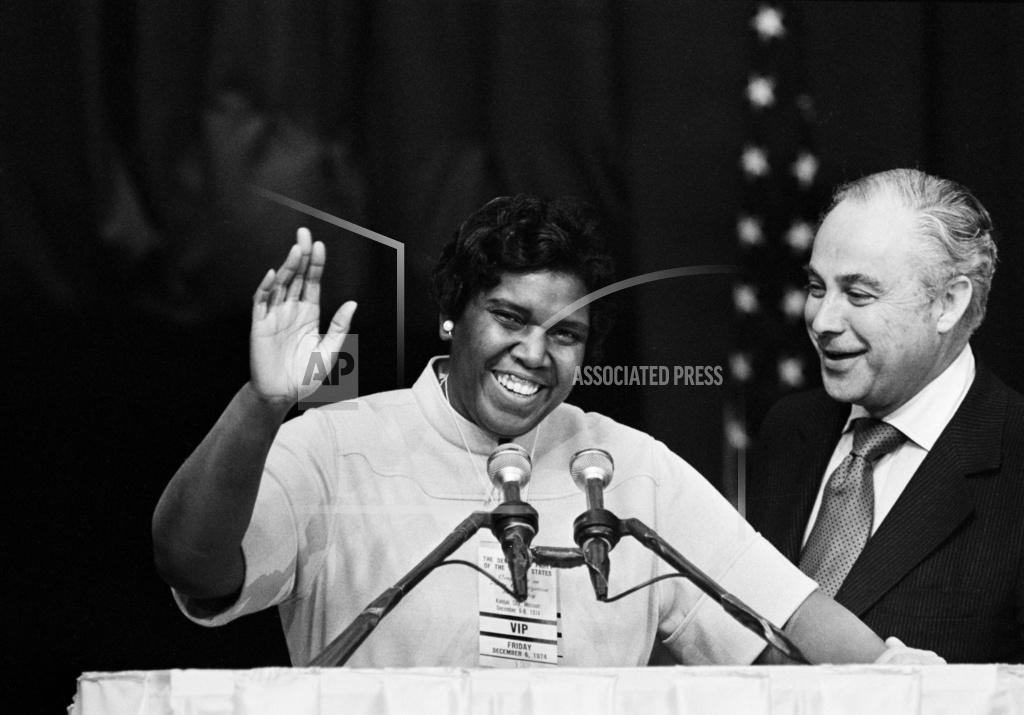
The Democratic Party, gathered in Kansas City, Missouri, in the first non-presidential convention in American politics, outlined a program of “economic recovery” for the country and prepared to adopt tomorrow a harmony charter of rules and broad principles for itself. The economic agenda, combining anti-inflation controls with anti-recession stimulation, was presented as an alternative to the “callous economic nonsense” of the Ford administration. The Democratic Party began work on the basis of its 1976 campaign platform today, 18 months before the delegates will meet to choose a Presidental candidate.
Acknowledging that voluntary efforts to curb oil imports were not going as well as hoped, the White House press secretary, Ron Nessen, said that President Ford planned to announce new energy conservation proposals next month. He said he thought that mandatory controls on oil imports would be among the options that the President will consider, but that it was “much too soon” to say what the final proposals would be. Mr. Nessen said the President would meet tomorrow with Interior Secretary Rogers C. B. Morton, head of the President’s Energy Resources Council, and Frank G. Zarb, the council’s executive director, to discuss energy problems and strategies for dealing with them.
The Federal Reserve Board announced a reduction in the discount rate it charges on its loans to banks from 8 percent to 7¾ percent. It was the clearest message since last August that the central bank wants to make credit conditions easier. The reduction will apply initially only at the Federal Reserve Banks of New York and Philadelphia, but the other 10 regional reserve banks are expected to follow soon.
The steady decline of prices on the New York Stock Exchange reached its lowest point, closing at 577.60 points, its lowest level in 12 years, since October 26, 1962. The nadir came after prices dropped more than 45% over two years since the NYSE’s high point of 1,003.16 on November 4, 1972.
Executives attending the National Association of Manufacturers’ annual meeting said yesterday they did not expect the current recession to bottom out until the third or fourth quarter of 1975.
The jury at the Watergate cover‐up trial informed Federal Judge John J. Sirica today that it did not want the trial to be hurried unduly just so that it could be released from sequestration in time for Christmas. In a handwritten note to the judge, the jurors said “they are united in thinking that, in fairness to all concerned, the trial should proceed at a pace consistent with fairness and justice.” Judge Sirica had told the jurors several times during the trial that he had hoped they would be “home for the holidays,” and had often urged the lawyers to expedite their cases to meet the deadline.
The efforts of Federal District Court Judge John J. Sirica and the finest investigative reporting in American history have made former President Richard M. Nixon’s direct testimony at the Watergate cover-up trial nonessential, Senator Sam J. Ervin Jr. said last night.
A Federal judge today denied a second attempt by John A. Durkin, the Democratic candidate in New Hampshire’s United States Senate race, to block state review of his razor-thin victory.
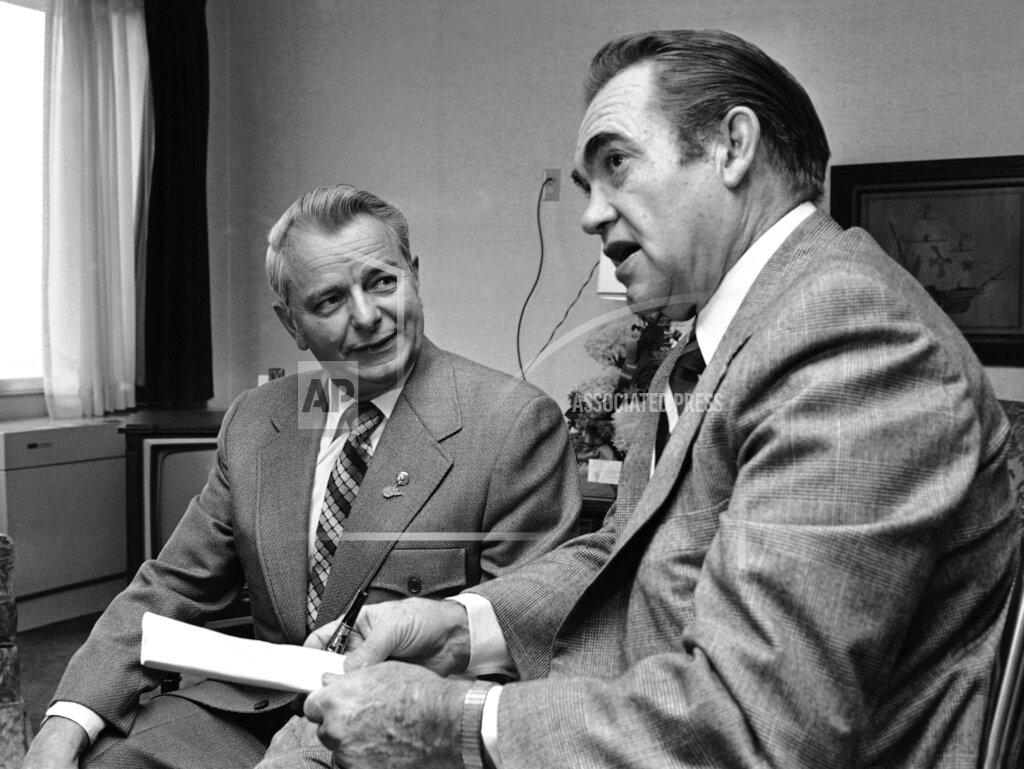
Sargent Shriver said today that Alabama Governor George C. Wallace’s paralysis from the waist down would present a handicap to his performance as President.
Harry S. Dent, White House aide under President Nixon, resigned today as general counsel to the Republican National Committee. Mr. Dent has been reported to be negotiating with the special Watergate prosecutor’s office over a plea in connection with a secret political fund to Support candidates favored by Mr. Nixon.
Despite picketing in at least four states by mine construction workers, the nation’s 120,000 miners began trickling back to work today after their 25‐day strike ended. Although some miners were still unhappy over terms of the new United Mine Workers contract, those companies that chose to open today reported turnouts of 50 to 80 per cent, which officials terms “normal” for the first day. More mines will open at midnight Sunday with fuller crews expected. There were disruptions in isolated pockets of western Kentucky, southern Illinois, southern. West Virginia and Indiana by the Association of Bituminous Contractors. The 4,000‐member construction arm of the United Mine Workers has not had its own contract settled and individual picket lines some miners off their today.
The union president, Arnold R. Miller, urged the association’s members to withdraw their picket lines this afternoon, saying he was working on a settlement of the specific problems of mine construction workers. A union official said that a settlement was not likely by Monday and further picketing could develop. However, as work began in nearly two dozen states, there was no evidence of wildcat strikes by miners over terms of the contract that narrowly passed a rank‐and‐file vote last week. When the last contract was settled after a 45‐day walkout in 1971, wildcat strikes lasted for a week or longer in the coal fields. “I’ll tell you what happened,” said Don Burleson, a Distriot 29 field representative. “The men took too many wildcats already this year. They didn’t like the contract but they couldn’t afford to stay out.
As a result of the new coal miners’ contract agreement, electric utilities and steel producers will be asked to pay producers $3 to $10 more per ton of coal than at present, the head of the Bituminous Coal Operators Association said yesterday. Nicholas T. Camicia, the chairman of the association and the man who directed much of the contract negotiations on behalf of coal producers, said in a telephone interview from Lebanon, West Virginia, it would be several weeks before pricing details were determined. “But I can tell you that starting next month and continuing during the first year of the contract the price is going to go up between $3 and $10 per ton,” he said. “The price will depend on the mine, its conditions, mine seams and other factors.”
The Agriculture Department has given food processors more than a year to use up existing supplies of packaging labels for meat and poultry products, although the labels include advertising terms that a Federal court says are misleading.
The state of Michigan presented the 1974 White House Christmas tree to Betty Ford today. Less than an hour later, a congressman’s aide ran into the tree with his automobile in the White House driveway. “Oh, the sun blinded me. Oh, yeah. I really like Christmas trees,” said Wayne Hose of Arlington, Virginia, the driver who is an aide to Representative J. Robert Traxler, Democrat of Michigan. The giant fir tree was not damaged.
The Navy found a 19‐year‐old seabee guilty of assault and battery today for hitting his commanding officer in the face with a chocolate cream pie despite testimony from Soupy Sales, the comedian, that the incident was a harmless joke.” The commanding officer, Lieutenant (j.g.) Timothy Curtin, had testified that he was a “by-the-book” officer who did not find slapstick funny. Nor he added, had he ever found Soupy Sales very funny.
George Harrison releases single “Ding Dong, Ding Dong”.
Dow Jones Industrial Average: 577.60 (-9.51, -1.62%).
Born:
Nick Stajduhar, Canadian NHL defenseman (Edmonton Oilers), in Kitchener, Ontario, Canada.
Died:
Admiral Nikolai Kuznetsov, 70, Soviet naval officer who had commanded the Soviet Navy during World War II and was later the first officer to reach the rank of Admiral of the Fleet of the Soviet Union, in 1955.
Robert Bartini, 77, Hungarian-born Soviet aircraft designer.




 History Diaries