Soviet Foreign Minister Molotov replies to President Roosevelt’s condemnation of the Soviet invasion of Finland. The reply comes in the Moscow Daily News and focuses solely on one aspect of the President’s complaint, the bombings of civilian cities: “Mr. Roosevelt’s suggestion that air bombardment of the population of Finland’s towns should not be permitted, insofar as it is addressed to the Soviet Government, is caused by a misunderstanding. Soviet airplanes have bombed airdromes, but they have not bombed towns and do not intend doing so, because our Government values the interest of the Finnish population no less than any other Government does. Certainly one may fail to see this from America, which is over 8,000 kilometers away from Finland. Nevertheless, facts are facts. In view of this, Mr. Roosevelt’s statement is, as can be seen, pointless.”
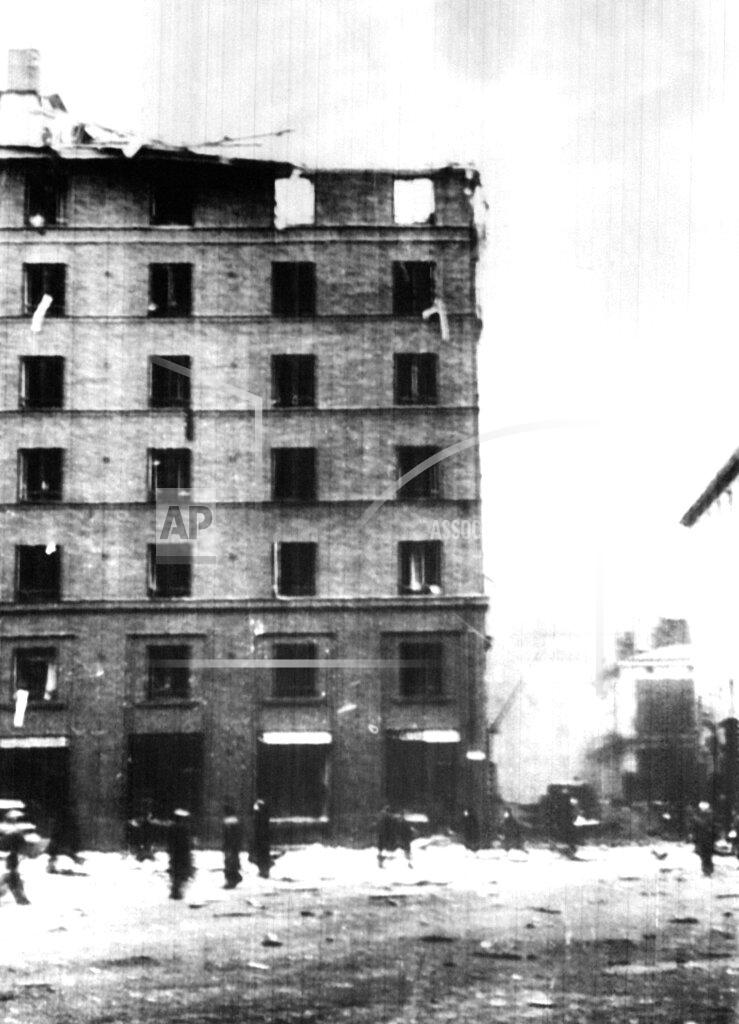
Extensive research shows that the Soviets indeed were bombing Helsinki from the very first day of the war. There are many photographs of Helsinki buildings burning.
Finland’s peace bid is rejected. The Soviet government rejects a Swedish offer to mediate in the war with Finland. The ground is that it no longer recognizes the legitimate Finnish government, but rather its own puppet government. The Soviets make the rather bizarre claim that, since they are at peace with the Finnish Democrat Republic which they had set up with a Finnish Comintern member, they are no longer at war with Finland.
A Finnish appeal to the League of Nations is scheduled to be heard on 9 December 1939. The British suggest that they will attend, while the Soviets state flatly that they will not.
There is a huge snowstorm in Finland today that brings operations to a halt. On the whole, this favors the Finns, giving them time to recover from the initial shock of the invasion and develop foreign sources of aid. Helsinki has been evacuated of all non-essential personnel and only some 50,000 remain.
Gas rumors alarm Helsinki; most foreigners leave the city.
Finnish forces in the Karelian isthmus gradually withdrawing to Mannerheim Line under pressure from Soviet 7th Army.
France is surprised by Russia’s pace, expecting a swifter advance in Finland.
Poor weather and terrain is forcing the Soviets to use the roads which are typically not paved and not suited to the heavy tanks and other equipment they are using. The Finns, of course, notice the Soviet reliance on the very few good roads running north from Leningrad and in the other, more desolate parts of the front. They mine the roads and site their artillery with precision from their entrenched positions in the Mannerheim Line. The Soviets are barely moving forward either on the Karelian Isthmus.
North of Lake Ladoga, there are few good roads, so nature is the prime obstacle. The Finns have naval batteries at Taipale which can be swung around to attack ground targets. Once again, the Soviet forces are compressed into narrow killing zones in the endless forests. The Finns are in emplaced turrets with extensive experience of targeting the approaches to their guns, while the Soviet troops are on the move with smaller guns that are difficult to pull over the rutted and sometimes obstructed or mined roads.
Soviet naval forces land troops on Suur Island and Pien-Tytarsaari Island.
Finns fortify Aaland Island in the Gulf of Bothnia. Only about 50,000 people remain in the Finnish capital of Helsinki which is being evacuated because of Soviet bombing.
Finnish submarines operate unsuccessfully against Soviet warships.
The commander of the Finnish IV Army Corps was replaced by Woldemar Hägglund.
The Kriegsmarine lays more mines near Kristiansand.
Sweden forms a coalition regime and defense preparations are spurred.
Italy hints that the League of Nations should aid Finland. A strong hint that Italy would like to see the League of Nations impose sanctions on Russia as it did on Italy during the Ethiopian war is contained in Virginio Gayda’s editorial in today’s Giornale d’Italia.
Forcing the issue with the backing of other South American countries, Argentina today demanded immediate expulsion of Soviet Russia from the League of Nations for her aggression against Finland.
British King George VI arrives to inspect the British Expeditionary Force and RAF units deployed in France. He also meets with President Lebrun, Premier Daladier, and General Gamelin.
The British Admiralty reveals that, since the outbreak of the war, it has lost 4% of its tonnage. It also states that it has imprisoned 144 U-boat crew as POWs.
Abolition of all objective justice and supremacy of the law of war as a new legal principle of a new world order being created by the might of German arms were proclaimed by Dr. Hans Frank, Reich Cabinet Minister, and Governor General of Poland. “Right is whatever profits a nation; wrong is whatever harms it.”
Three hundred Polish hostages are reportedly executed.
The developing underground movement in Poland is placed under the command of the Polish government-in-exile.
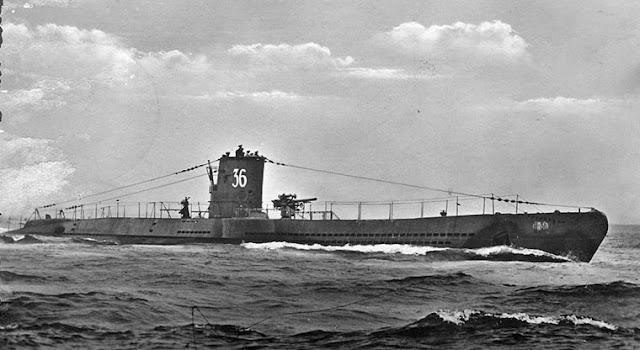
En route to Basis Nord in northern Russia, the German U-boat U-36 is sunk in the Heligoland Bight in the North Sea SW of Kristiansand, position 57.00N, 05.20E, by a torpedo from submarine HMS Salmon. 40 dead (all hands lost).
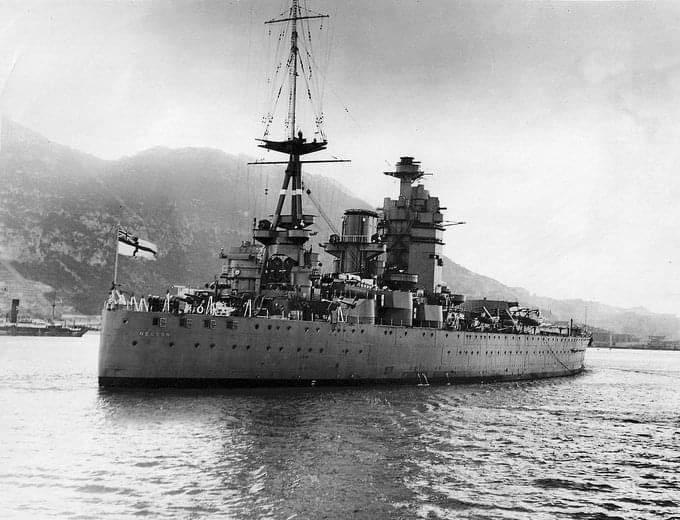
Returning home from the hunt for the German battlecruisers after the sinking of HMS Rawalpindi, the battleship HMS Nelson (28), commanded by Captain G.J.A. Miles and flagship of the Home Fleet (Admiral Charles Forbes) was badly damaged by a magnetic mine at the entrance of Loch Ewe, Scotland (57° 52’N, 5° 40’W). At 07.52 hours, HMS Nelson (28) (Capt G.J.A. Miles, RN) as flagship of the Home Fleet (Adm Forbes) was badly damaged by a mine laid on 27 October by U-31 at the entrance of Loch Ewe. The battleship was en route with HMS Devonshire (39), escorted by HMS Faulknor (H 62), HMS Fury (H 76), HMS Firedrake (H 79) and HMS Forester (H 74). The explosion seriously damaged her and injured 73 crew members. The machinery of HMS Nelson (28) was not affected, but she could not be moved for repairs before the area was searched for further mines. On 23 December HMS Glen Albyn and HMS Promotive were lost in the same minefield and only after five more mines were swept, it was possible for the battleship to leave Loch Ewe on 4 January 1940. The ship was escorted by HMS Faulknor (H 62), HMS Foxhound (H 69) and HMS Impulsive (D 11) to Portsmouth, where she was repaired from 14 January to 8 June.
This is the last major success for this weapon. The Germans have been employing this and other types of mines to good effect. By the end of the year, the Allied shipping lost to mines will amount to 79 ships of 262,700 tons.
German Kriegsmarine submarine chaser UJ-117 struck a mine and sank in The Belts, Denmark. She was salvaged in June 1940, repaired and returned to service.
The unescorted Norwegian steam merchant Gimle was torpedoed and sunk by the U-31, commanded by Kapitänleutnant Johannes Habekost, in the North Sea (57° 15’N, 1° 50’E). At 01.23 hours the Gimle (Master Nils Dahl Nielsen) was torpedoed and sunk by U-31 about 130 miles east of Aberdeen. The ship was struck by one torpedo near #3 hatch and soon listed heavily to starboard. All the lights went out and the starboard lifeboat was destroyed, but the survivors managed to launch the port boat. The master and two men were fished up from the water by the boat. The damaged motorboat with one man had floated free, as well as a raft with another man. The lifeboat with 13 survivors took the raft with three survivors in tow. Several of the survivors were not properly dressed, so they had to sit barefoot in the ice cold water which collected on the bottom. By the time they were rescued they had developed large sores, and were very swollen. Due to stormy weather with heavy seas the tow kept breaking so the men on the raft were transferred into the boat in the afternoon of the 5 December and they dropped a sea anchor. The next morning they set sail for the Scottish coast. At least 14 vessels passed them until they were picked up on 7 December by the Rudolf and taken to Arendal. The 1,271-ton Gimle was carrying coke nuts and was bound for Gothenburg, Sweden.
The unescorted and neutral Norwegian steam merchant Primula was torpedoed and sunk by the U-31 approximately 120 miles east of Stonehaven, Scotland (57° 15’N, 1° 50’E). Of the ship’s complement, At 15.42 hours Primula (Master Eivin Christian Wang) was hit in the stern by one torpedo from U-31 and sank within two minutes after breaking in two about 120 miles east of Stonehaven. Eight of her crew were lost. The survivors had to jump overboat because both lifeboats were destroyed and the motor boat got stuck. Seven crew members, three of them injured, rescued themselves on a raft and were picked up by the Danish steam merchant Wm.Th. Malling, which landed them at Methil, Scotland. The 1,024-ton Primula was carrying ballast and was bound for the United Kingdom.
The British cargo ship Horsted struck a mine and sank in the North Sea south east of Flamborough Head, Yorkshire (53°48′N 0°16′E) with the loss of five crew. Survivors were rescued by the Royal Navy destroyer HMS Jackal.
French submarines Stax and Casablanca departed Halifax escort for Convoy HX.11.
The German liner Ussukuma left Bahía Blanca in the direction of Montevideo in Uruguay, to help the pocket battleship Graf Spee, also heading for Montevideo..
Convoy OA.47 departs Southend.
Convoy OB.47 departs Liverpool.
Convoy HX.11 departs Halifax for Liverpool.
U.S. freighter Examiner, detained at Gibraltar since 17 November by British authorities, is released.
The War at Sea, Monday, 4 December 1939 (naval-history.net)
BATTLESHIP NELSON DAMAGED BY MINE
Admiral Forbes with battleship NELSON and heavy cruiser DEVONSHIRE, en route to the Clyde with destroyers FAULKNOR, FURY, FIREDRAKE and FORESTER, entered Loch Ewe to enable the destroyers to refuel. At the entrance, NELSON struck a mine 5.4 cables 38° from Rudha nan Sasan triangulation station laid by U-31 on 28 October. She was seriously damaged, but due to the shortage of minesweepers could not immediately be moved for repairs. No boilers, engines, electrical, steering, or power machinery were affected, but 52 crew were injured, nine seriously.
Salvage tugs RANGER (409grt) on other duties, and DISPERSER (313grt) were diverted to Loch Ewe to assist. Destroyer ECHO escorted RANGER from Kilchattan Bay, arriving on the 5th. FAULKNOR remained at Loch Ewe and stood by from the 4th to 28th.
The damage to NELSON also forced sister ship RODNEY to remain at the Clyde deferring her docking at Liverpool until NELSON’s status was determined. Also, the light cruisers of the Northern Patrol in Loch Ewe could not sail until minesweeping operations cleared the harbour. Attempting to clear the field, armed patrol drifters GLEN ALPYN (82grt) and PROMOTIVE (78grt) were mined and sunk on the 23rd. Five more mines were swept and it was not until 4 January 1940 that NELSON could be safely moved.
Old German steamer ILSENSTEIN (8216grt) sailed ahead of NELSON to detonate any remaining mines. She had been purchased pre-war, departed Rosyth on the 11th escorted by destroyers ESCORT and WOOLSTON for Loch Ewe, and arrived on the 15th. Escorted by FAULKNOR, FOXHOUND and IMPULSIVE, the damaged NELSON proceeded to Portsmouth, and arrived on 7 January for repairs beginning on the 14th. She was repairing until early June 1940, arrived at Greenock on 8 June for refitting and departed on the 29th to rejoin the Home Fleet at Scapa Flow.
FAULKNOR, FOXHOUND and IMPULSIVE were ordered to remain at Portsmouth for two days, then return to the Clyde. Destroyers ISIS, FAME and FORESIGHT proceeded independently at the same time to Devonport and returned to the Clyde with FAULKNOR, FOXHOUND and IMPULSIVE.
After leaving Gibraltar and sailing via Halifax, which she left on 18 November, battleship WARSPITE arrived in the Clyde, escorted by destroyers EXMOUTH, ECLIPSE and ECHO, which had departed the Clyde on 30 November. The battleship had been originally ordered to go to Portsmouth, but orders were changed in early December due to RODNEY’s rudder defect.
Submarines TRITON and TRIBUNE departed Rosyth on patrol.
Destroyers IMPERIAL and IMPULSIVE arrived at the Clyde from Scapa Flow.
On Northern Patrol, the six armed merchant cruisers which were ordered to search for a suspected German battleship on the 3rd were returning to their patrol stations between the Faroes and Iceland. Heavy cruiser SUFFOLK and AMC LAURENTIC were west of the Shetland Islands, proceeding to the Denmark Strait.
Heavy cruiser BERWICK departed Portsmouth for duty with the Northern Patrol, reached Scapa Flow and departed for patrol on the 12th.
Light cruiser ENTERPRISE arrived at Portland from Portsmouth.
Anti-aircraft cruiser CALCUTTA departed the Thames and arrived at Loch Ewe on the 5th to provide protection for damaged battleship NELSON.
Destroyers ESKIMO and MATABELE joined destroyers ICARUS and ILEX searching for a submarine in the Firth of Forth.
Destroyer VETERAN, which departed Plymouth on the 3rd, was damaged in a collision with steamer MIRIAM (1903grt) in the English Channel. VETERAN suffered minor damage, arrived back at Plymouth on the 4th but was able to depart on patrol on the 5th. She arrived at Dover on the 9th after convoy duty.
Patrol sloop MALLARD attacked a submarine contact in Liverpool Bay.
Submarine SALMON departed Harwich on the 2nd for patrol, and at 1330/4th fired six torpedoes at U-36 and sank her 75 miles SW from Lister Light in 57 00N, 05 20E; forty crew were lost and there were no survivors. U-36 had been sailing for northern Norway, where she was to join U-38 on patrol and then proceed to a base at Zapadnaya Litsa Bay in Northern Russia for replenishment. At it happened, the base was never used by U-boats.
Convoy OA.47 of nine ships departed Southend escorted by destroyer WREN and sloop ABERDEEN from the 4th to 7th. Destroyer WATCHMAN was with the convoy from the 4th to 5th, and sister ship WIVERN, from OA.46, joined on the 5th, and remained until the convoy dispersed on the 7th.
Convoy OB.47 departed Liverpool escorted by destroyers WINCHELSEA and VANOC until the 7th.
Convoy SA.20 of one steamer departed Southampton, escorted by destroyer ANTHONY, and arrived at Brest on the 5th.
Convoy FN.49 departed Southend, escorted by destroyer WHITLEY and sloop STORK, and arrived in the Tyne on the 5th.
Convoy FS.49 departed the Tyne, escorted by sloops GRIMSBY and WESTON. Due to increased German activity in the North Sea, the convoy was supported by destroyers JUNO and JUPITER. It arrived at Southend on the 5th.
Destroyer BROKE was investigating a submarine contact one mile east of Slapton Sands Hotel near Dartmouth.
Destroyers ESKIMO, MATABELE, ICARUS and ILEX departed Rosyth to search for a suspected submarine in the Firth of Forth.
French large destroyer LE TRIOMPHANT departed Cherbourg escorting light cruiser GLOIRE to Brest, arriving on the 5th.
Steamer HAMSTERLEY (2160grt) in convoy FN.48 was damaged by collision off Great Yarmouth, with one crewman lost. She was still afloat the next day but seriously damaged.
Steamer TONGARIRO (8719grt) reported she had a disabled rudder 180 miles SW of Land’s End. At 0315/5th, destroyers VERITY and WOLVERINE from the Plymouth command were ordered to assist. She was taken in tow, but broke away. At 1957/10th, she was 15 miles off the Lizard and as a tug could not tow her, destroyer KEITH was ordered to, escorted by WOLVERINE.
U-31 sank Norwegian steamer PRIMULA (1024grt) in 57 15N, 01 50E, 125 miles east of Aberdeen; eight crew were lost and seven survivors picked up by Danish steamer WM TH MALLING (1034grt) and taken to Methil.
German light cruiser NÜRNBERG laid mines in the Skagerrak off Kristiansand from the 4th to 6th.
German auxiliary submarine chaser UJ-117 (trawler GUSTAV KORNER, 450grt) sank on a German defensive minefield in the Belt. Later, in June 1940, she was salved and repaired.
Convoy HX.11, escorted by destroyer HYPERION and Canadian destroyers HMCS ST LAURENT and HMCS SKEENA, departed Halifax at 1000. HYPERION was detached early on the 5th and at 1600/5th the Canadian ships turned over the convoy to ocean escort by battleship REVENGE and French submarines SFAX and CASABIANCA as protection against German battleships. The submarines were detached off the Lizard on the 16th and arrived at Brest on the 17th, being escorted into port by French sloop COMMANDANT RIVIERE. Meanwhile destroyers WOLVERINE, WANDERER, WALPOLE and ARDENT provided escort in Home Waters from the 16th to 18th, when the convoy reached Liverpool.
Heavy cruiser KENT departed Colombo on escort duties, and arrived back on the 14th.
Destroyer DIAMOND, having completed her refit, departed Singapore en route to the Mediterranean.
Destroyer DELIGHT departed Aden to return to the Mediterranean Fleet.
Sloop WELLINGTON departed Malta for Gibraltar, where she arrived on the 8th. Next day, she sailed for Freetown to escort convoy SL.13 to the UK.
Minesweepers SUTTON and ELGIN arrived at Gibraltar from Malta, and departed on the 8th for Portsmouth.
French convoy 34.KF of four steamers had departed Casablanca on the 3rd, but next day, still near Casablanca, destroyer ORAGE was damaged in collision with French steamer MARRAKECH. The convoy turned back and arrived on the 6th. Steamers JAMAIQUE and LIPARI left with 37.KF on the 8th, and MARRAKECH and MALGACHE with 38.KF on the 10th. ORAGE was able to leave on the 28th for repairs at Bizerte, arriving on the 30th.
The U.S. Government will not yield to pressure to break diplomatic relations with the Soviet Union or recall the United States Ambassador from Moscow by rushing to take either of these steps in protest against the Russian attempt to conquer Finland, an authoritative source revealed today. Both moves are remote possibilities at the moment, it was explained by this qualified source — which cannot be disclosed — as pressure for some such strong action developed further along partisan lines with the issuance of a statement by Senator Arthur H. Vandenberg of Michigan demanding that the United States sever diplomatic ties with Russia and condemning President Roosevelt for establishing them in 1933.
There were strong indications last week that high administration officials were seriously considering the advisability of breaking relations or withdrawing Ambassador Laurence A. Steinhardt at this time to show United States displeasure over the Soviet assault on Finland. Such considerations as the difficulty of getting information on Russia if either step were taken and the fact that the United States would be hampered in making a contribution toward sound peace later were advanced today as reasons for the apparent decision to delay strong action of this sort. So was the fear that such action would have no effect upon the attitude of the Stalin Government.
While these considerations undoubtedly entered into the picture, careful checking at the State Department indicated that no information had been received here indicating that the Soviet attitude toward Finland had softened or that there had been any developments abroad to force the decision. It was noted, however, that this was made on the heels of a demand by former President Herbert Hoover that the United States withdraw its Ambassador from Moscow and after the Republican National Committee last night issued statements by former Presidents and prominent Republicans opposing Soviet recognition. To this, Senator Vandenberg’s strong statement was added today. Secretary Hull reflected the government attitude at his press conference when he brushed aside questions on the possible breaking of relations and on a suggestion that the United States place a combat zone around Russia under the Neutrality Act, from which American shipping would be banned as an act of condemnation of Russia’s course. That the United States would not recognize any conquest of Finland by force was taken for granted here, where such a policy has been followed in the case of all such conquests since Japan took over Manchuria, in 1932.
In reply to requests for comment on the invasion of Finland by Soviet Russia, Mrs. Roosevelt said at her press conference today that it was “a very sad situation.” Regarding the bombing of cities, she was more explicit. “Of course, the bombing of civilians is a very terrible thing,” Mrs. Roosevelt said. “I wish we could become more civilized.”
Senator Vandenberg condemned the “brutal rape” of Finland by the Soviet Union and asserted that the recall of the American Ambassador to Russia “would reflect our deep moral indignation.” He based his plea for severing diplomatic relations completely, however, on the ground that the Stalin government had broken its pledge not to interfere in the internal affairs of the United States, which was a basis of recognition. President Roosevelt should investigate this matter, he said.
“The recall of the American Ambassador to Russia would reflect our deep moral indignation over the brutal rape of Finland following the partition of Poland,” Senator Vandenberg declared. “But there is something else in this connection which vitally involves our own domestic security. Since the assault upon Finland puts the world upon final notice that Soviet policy is as treacherous as it is ruthless, we should realistically re-examine the integrity of those Russian promises to us in the Roosevelt-Litvinoff compact of November 18, 1933, upon which our entire diplomatic relationship with Russia relies. It is folly longer to take good faith for granted where it is so often demonstrated that none exists
Robert William Wiener, travel agency executive who serves as financial secretary of the Communist party of the United States, was called yesterday to Federal Court, but no longer as a material witness. In a surprise indictment, on which he was immediately arraigned, federal authorities charged that Wiener, one of the top-ranking leaders of the Communist International affiliate here, really a Russian immigrant illegally resident in this country. The Communist party treasurer, who was released on $2,000 bail a week ago as a material witness in the investigation of the federal grand jury that returned two indictments for passport fraud against Earl Browder, general secretary of the party, was arrested yesterday as he awaited a call to the grand jury room. Taken before Federal Judge Murray Hulbert, he pleaded not guilty to a charge of procuring a passport under the name of Wiener, which is alleged to be false, of succeeding in having it visaed for both France and Great Britain and of obtaining re-entry to this country by means of its use.
Wiener, a short, stout man, conservatively dressed, looked on with dignified gravity as Assistant United States Attorney Lester C. Dunigan told the court the defendant was “the rankest sort of impostor, who had masqueraded as a citizen of the United States for the last twenty years under the alias Robert William Wiener and the aliases Weiner, A. Benson and A. Blake.” The man who has handled hundreds of thousands of dollars in funds of the Communist party here is not the native of Atlantic City, New Jersey, that he had told the Dies Committee as a sworn witness that he was, according to the indictment’s allegations. It charges that his real name is Welwel Warszower and that he is an alien who was born in Radanjenko, Russia, on September 5, 1893, and who came here. as an immigrant March 27, 1914. Members of the grand jury that had voted the indictment paid no heed to Judge Hulbert when he told them that they might retire and remained to witness Wiener’s arraignment. They heard the prosecutor tell the court that the Communist treasurer had never been an American citizen “and in our judgment is in the country illegally.”
Twenty-five defendants, including fourteen women were convicted today of conspiracy in connection with the WPA strike riots in which a policeman died of a heart attack in Minneapolis last July.
Antitrust law controls were further tightened today when the U.S. Supreme Court unanimously ruled that enactment by Congress of the Agricultural Marketing Agreement, Capper-Volstead and other farm acts, did not give the production and distribution of agricultural commodities immunity from the anti-monopoly statutes.
The First Lady clears the American Youth Congress. She investigates the group and finds no trace of outside control and sees no un-Americanism. Mrs. Franklin D. Roosevelt told reporters today that she had investigated the American Youth Congress long before the Dies committee had undertaken the job and had found nothing “to indicate any outside control.”
[On February 10, 1940, members of the AYC, as guests of First Lady Roosevelt, attended a picnic on the White House lawn where they were addressed by President Roosevelt from the South Portico. Appealing to them to condemn not merely the Nazi regime but also all other dictatorships, Roosevelt was reportedly booed by the group. Afterwards, many of the same youth picketed the White House as representatives of the American Peace Mobilization.]
[Ed: Eleanor Roosevelt may not have been an actual communist, but she was most certainly one of their “Useful Idiots.”]
Isador Lubin, Commissioner of Labor Statistics, predicted before the natoional economic committee today that prolongation of the European war would increase American prices and bring about a “period of painful economic adjustment in the United States.”
Repeal of the unemployment compensation section of the Federal Social Security Act as an unnecessary measure and contrary to the principle of States’ rights was urged yesterday at a general forum of the New York State Employers Conference in the Hotel Astor in New York.
AT&T adds nearly 700,000 new phones in 1939.
The specially constituted federal court that heard the appeal of former Judge Martin T. Manton from his conviction of conspiring in the sale of justice ruled unanimously yesterday that he had been convicted rightfully.
A decrease in drunkenness is reported in New York, six years after repeal of anti-alcohol laws. More women drinkers are suspected, in large part because of the popularity of cocktail parties.
Argentina and Uruguay call for punishment of the Soviet Union for the invasion of Finland.
The Central China Daily News, organ of former Premier Wang Ching-wei who will head the new “national” government of China under the sponsorship of the Japanese in Nanking, said today that the “new China” would not “agree to support Japan in any future war in which Japan may be involved.” The editorial, one of a series the newspaper has been running to show that Wang will not be a Japanese “puppet, apparently was intended to prove to the Chinese people that Wang would not enter an alliance with Japan similar to that between Japan and Manchukuo. The Japanese must be able to understand it is impossible for them to attain military and economic control of China because of the opposition of the United States and Britain, the editorial asserted.
Japanese operations in Nanning and its vicinity since the capture of the city have been directed to strengthening their hold by the occupation of territory some thirty or forty miles around the south of the Kwangsi metropolis. Japanese troops have been pushed up the highway northeast of Nanning for thirty miles and along the highway to the west for twenty miles. The Chinese are fighting back vigorously. On Sunday Chinese troops retook Patang, thirty miles northeast of Nanning, after it had been captured by the Japanese. Chinese guerrillas are closing in around the Japanese line of communications with Nanning and the sea. They are tearing up the road to attack supply convoys, it was reported.
The official Chinese Central News Agency said today that Japanese forces in Kwangsi Province have suffered 500 casualties during the past twenty-four hours in attempts to capture Patang. The Chinese also said that “nearly 1,000 Japanese were killed at Lieutang and Taltang,” villages south of Patang.
The Japanese Taiwan Brigade captures Kunlunkuan northeast of Nanning.
The Japanese launch more spoiling attacks against the Chinese winter offensive, targeting the Chinese 2nd War Area around Wenhsi and Hsia Hsien.
Anti-Soviet feeling grows in Japan. The press hopes Russia becomes the world’s most hated nation.
Lord Bernard Freyberg, a retired World War I vet, has been recalled to duty as a Major General. He departs for New Zealand to take over the 2nd New Zealand Expeditionary Force and the New Zealand 2nd Division. It is the start of a long association with New Zealand for Major General Freyberg.
Dow Jones Industrial Average: 146.34 (-0.28)
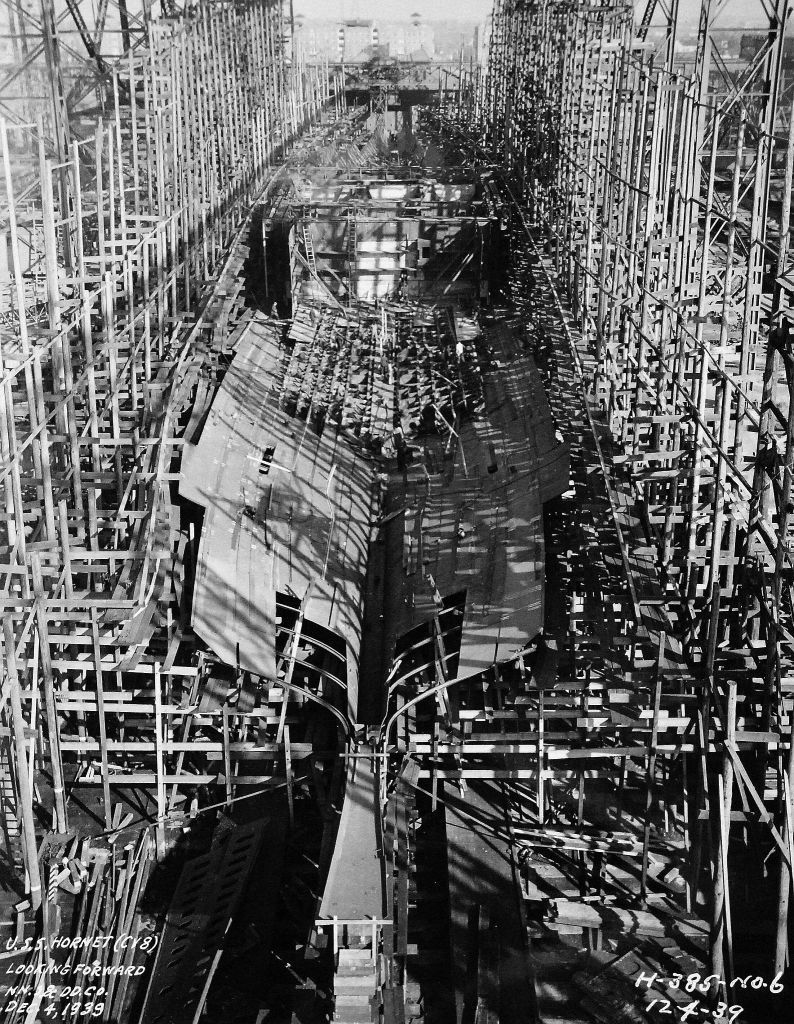
Naval Construction:
The Royal Navy Flower-class corvette HMS Petunia (K 79) is laid down by Henry Robb Ltd. (Leith, U.K.); completed by Kincaid.
The Вое́нно-морско́й флот СССР (ВМФ) (Soviet Navy) Project 26bis (modified Kirov-class) light cruiser Molotov is launched by the Marti Yard (Nikolayev, U.S.S.R.) / Yard 198.
The Royal Navy armed merchant cruiser HMS Derbyshire (F 78) is commissioned. Her first commanding officer is Captain (retired) Edmond Alan Berners Stanley, DSO, RN.
The Royal Navy armed merchant cruiser HMS Pretoria Castle (F 61) is commissioned. Her first commanding officer is Captain (retired) Eric John Shelley, RN.
The U.S. Navy Clemson-class destroyer USS Herndon (DD-198) is recommissioned. Her commanding officer at recommissioning is Lieutenant John Alden Webster, USN.
 History Diaries