In South Vietnam, Lieutenant General Nguyễn Khánh, still commander in chief of the military forces, meets with other high-ranking military leaders at Đà Lạt, and they issue an appeal to all dissident groups, to support the government. The leaders of South Vietnam’s armed forces, seeking to promote governmental stability for the United States‐backed war effort, formally proclaimed their support for Premier Trần Văn Hương’s harassed civilian regime today. Pronouncements issued after a two‐day meeting attended by General Khánh, the commander in chief and other senior Vietnamese officers demanded order and unity. Calling for an honest administration, they said the government should be “under no pressure, internally or externally, in its mission to fight the Communists so the country can be saved for democracy.”
The South Vietnamese military leaders’ stand, considered a victory for young officers impatient about the efforts of Buddhist leaders and others to topple Premier Hương, was made plain in two communiqués. The signers included the commanders of the army, navy, marines and air force, plus all corps and division commanders. The young officers, who thwarted a military uprising against General Khánh on September 13 while he was Premier, had been critical of lukewarm support among their elders for Mr. Hương, a former Mayor of Saigon who was named Premier on October 30. The attitude of General Khánh himself has been described by American sources as proper but lacking apparent: enthusiasm.
Buddhists and students have been campaigning against Premier Hương on the ground that his 15-man Cabinet is not sufficiently representative of the people. They object to his call for the elimination of politics from pagodas and schools. The leaders of the armed forces urged Cabinet officers, religious figures and politicians to “sink your differences and take your responsibility before history. There is a need for unity for all people to fight off effectively the Communist invasion and the dark designs to neutralize South Vietnam.”
William Bundy leaves for Australia and New Zealand to brief their governments’ leaders on the two-phase bombing plan. Other governments supporting of the U.S. efforts in Vietnam will also be briefed, although most governments will not be told of the plans for Phase II, the extension into North Vietnam.
The Việt Cộng move into Phước Tuy Province, southeast of Saigon, and commence a series of movements and attacks that will culminate in a major defeat of the ARVN forces at Bình Giã, 40 miles from Saigon, from 28 December 1964-4 January 1965. About 1,000 Việt Cộng have been making their way in small groups for several weeks from Tây Ninh Province, northwest of Saigon, and now having joined forces the Việt Cộng will conduct a series of surprise attacks.
A Cambodian delegation arrived in New Delhi today, two days ahead of a reconciliation meeting with the United States. Son Sann, the delegation’s leader, said in an arrival statement that he had come “with the hope of being able to reach an understanding” with the United States. He preceded this with familiar charges of aggression by South Vietnam and the United States against Cambodia. He asserted that his country had been subject to “more than 300 border aggressions and violations” from its neighbors. The United States delegation, headed by Philip Bonsal, is due here Sunday.
In a memorandum supporting the admission of Communist China to all United Nations bodies, Cambodia has strongly promoted the Peking Government as a “peaceful” regime, the target of “unfounded” accusations by “certain powers.”
Communist China declared today that it would refuse any association with the United Nations until the delegates of Nationalist China were expelled from all of the world body’s organizations. Peking declined suggestions put forward by “well‐intentioned friends” that it accept a seat in the General Assembly before acting to evict the representatives of the Government on Taiwan. Analysts in Hong Kong said that a policy statement contained in authoritative editorial of Jenmin Jih Pao, the party organ, meant that the seating of Peking in the General Assembly would he indefinitely postponed even if the Cambodian and Albanian items on the agenda of the current session were favorably voted upon. The position supported by a number of African countries would hand to Peking credentials for sole representation in General Assembly but would not affect the permanent seat of Nationalist China in the Security Council or representation in such affiliated agencies as the United Nations Educational, Scientific and Cultural Organization.
“If the United Nations does not evict the Chiang Kai‐shek gang from all its organizations, the Chinese Government will not have anything to do with it nor undertake any responsibility toward it. This firm and just stand of ours is unshakable.” Peking previously refused to share representation in the General Assembly with the Chinese Nationalists, but this was the first time that it had linked seating in that body with the question of credentials in the other principal organs and affiliated agencies of the United Nations. The analysts said the statement raised procedural and voting hurdles that could block for a considerable time any participation by Communist China in the Assembly. The Peking statement, which was transmitted abroad by Hsinhua, the Government press agency, was published as a realignment of African votes in the United Nations enhanced chances that Communist China might be awarded an Assembly seat. At the 1963 session, a motion to seat Peking was defeated 57 to 41 with 12 abstentions.
Japan’s Foreign Minister today attacked Communist China’s explosion of a nuclear device as an “open betrayal” of the world’s “millions upon millions of people.” The minister, Etsusaburo Shiina, in a statement in the General Assembly, expressed skepticism about Peking’s call for a conference of nuclear powers. “We feel grave doubts,” he said, “about the intentions of the Communist Chinese leaders who launch a nuclear test explosion with a view to developing their nuclear arsenal and who in the same breath advocate the holding of a world summit conference on the prohibition of the use of nuclear weapons” Mr. Shiina said Peking could demonstrate its sincerity by signing the treaty banning nuclear tests in the atmosphere, in space and under water. More than a hundred governments have already signed it.
The Soviet Union and Czechoslovakia reiterated today a call for a world Communist conference. Communist China is strongly opposed to such a meeting. The new appeal was made in a communiqué issued after the Czechoslovak President, Antonin Novotny, ended four days of talks with Soviet leaders, including Leonid I. Brezhnev, the Communist party chief, and returned to Prague. “Both parties believe hat an international conference of Communist and workers’ parties would, in the present condition, mark an important step toward overcoming difficulties with the Communist movement and strengthen the unity of the world Communist family,” the communiqué said. It also called for the seating of Communist China in the United Nations and the expulsion of Nationalist China from the world organization. Czechoslovakia pledged, as the Soviet Union has done, to give “necessary assistance” to North Vietnam if the war in South Vietnam was extended northward.
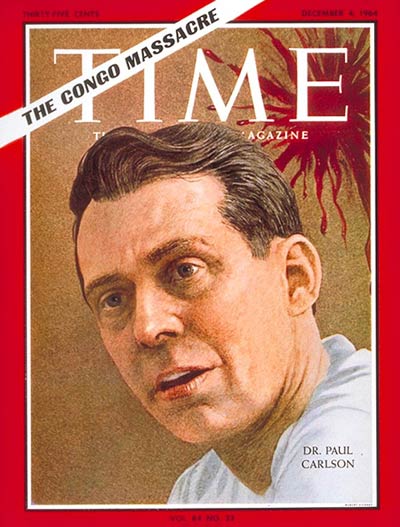
White mercenaries and Congolese Army troops have rescued 600 more white persons from rebel‐held territory since the Belgian‐United States mercy mission ended last Friday, Premier Moise Tshombe said today. Two Americans were still missing, United States Embassy sources identified them as William McChesney and Mary Baker, a missionary. Mr. Tshombe said at a news conference that only four new deaths of whites had been reported in the same period. They were a nun and three priests, who were slain by the Communist‐backed rebels at Bunia. The 600 rescued were in addition to the 1,800 saved by the Belgian‐American paratroop action in the region of Stanleyville and Paulis and later flown to safety aboard United States Air Force planes. Official sources said the confirmed toll of identified whites during and following the Belgian paratroop drop at Stanleyville November 24, was 88 killed and 96 wounded. The death toll was lower than had been feared.
Premier Georges Pompidou warned West Germany anew today of the dangers of straying from the straight and narrow path of France’s “European Europe.” The occasion was the start of a three‐day conference on “French-German friendship against the test of facts.” One fact underlined by Mr. Pompidou is that France expects West Germany to cleave to Europe and to reject intimate ties with the United States, especially through the proposed mixed‐crew nuclear missile fleet. He said he detected a tendency to shirk European responsibilities, “in other words to perpetuate a situation that conditions imposed 15 years ago but that has now lost its justification.” The North Atlantic Treaty Organization was organized 15 years ago.
Italian Foreign Minister Giuseppe Saragat expressed Italy’s qualified support today for the proposed nucleararmed fleet as a means to prevent dissemination of atomic weapons. He also disclosed that Italy had opened consultations with the United States and other allies on the problem of recoginizing Communist China. The Foreign Minister was speaking in the Chamber of Deputies during a budget debate.
A bill to abolish the death penalty for murder in Britain was presented to Parliament today. It was widely considered to have a good cliance of becoming law. As usual on a Friday morning, the House of Commons was almost empty when the bill was presented by Sydney Silverman, the white‐bearded Labor member who has championed this cause for years. His sponsorship of the bill was supported by two other Labor members, two Conservatives and a Liberal. The no – hanging measure, which will probably be debated before Christmas, would abolish capital punishment for murder fin the categories that have continued to apply since the homicide act of 1957. Even in courts‐martial, these categories have been: Murder during theft, murder by shooting or by causing an explosion, murder while resisting arrest, or to escape or assist an escape from legal custody, murder of a policeman or anyone assisting him in his duty (in Britain the police are unarmed), murder of a prison officer by a prisoner and murder by anyone previously convicted of murder in Britain.
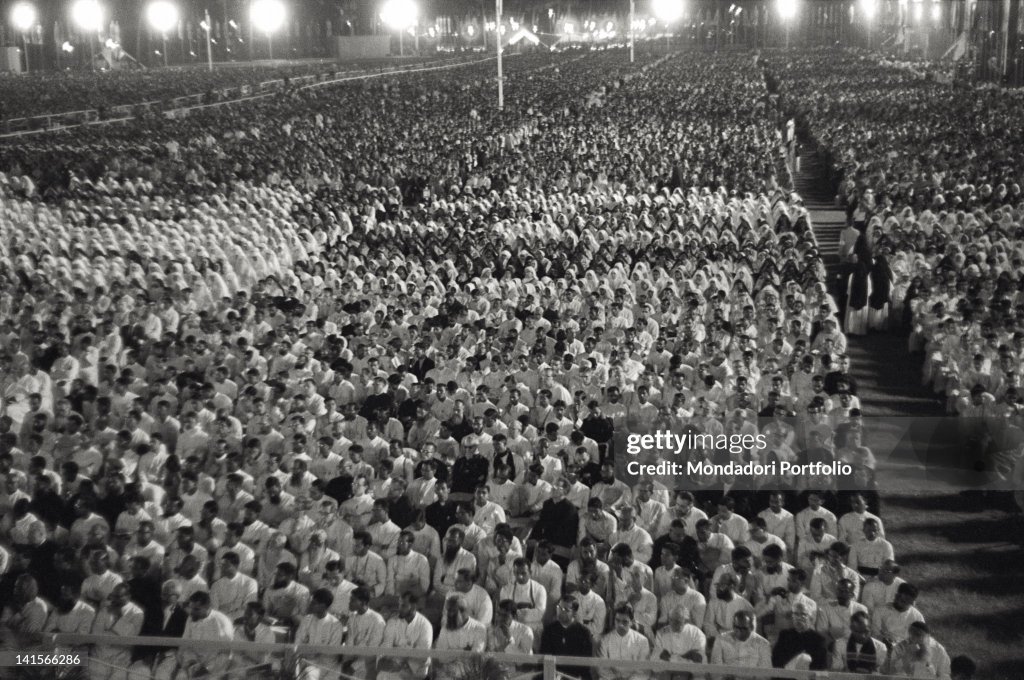
Pope Paul VI left India by airliner for Rome this noon after a three‐day visit marked by new Roman Catholic expressions of respect for all the world’s faiths. His final full day of prayer and sightseeing here closed last night with an appeal for an end of the arms race. This morning, in a brief talk that he gave at the Bombay Airport, he said the journey had filled his heart “with joy and satisfaction” and with respect for the “high talents and generous energies’ of India’s people. The Pope’s disarmament appeal, in an audience for reporters, called on nations to “devote their resources and energies to fraternal assistance for developing countries.” The Pontiff added: “Would that every nation, thinking thoughts of peace and not of affliction and war, would contribute even a part of its expenditure for arms to a great world fund for the relief of many problems of nutrition, clothing, shelter and medical care which afflict so many peoples.”
Palestinian refugee youths in Jordan will receive military training in Syria, the chief of the Palestine Liberation Organiation, Ahmed Shukairy, reported after having called on Jordan’s Premier Bahjat Abdul Khadr Talhouni.
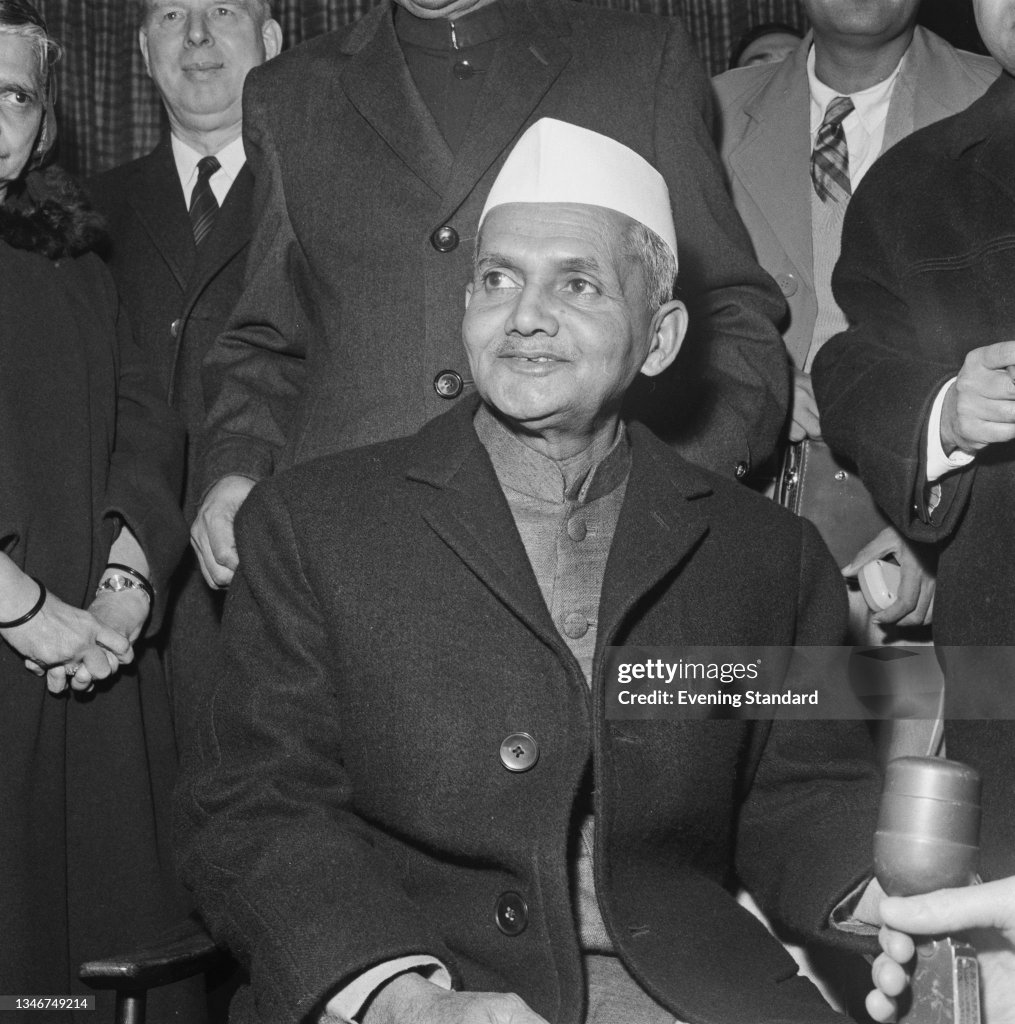
The Indian Government disclosed today that it had moved a step closer to the complete absorption of the part of Jammu and Kashmir that is under its control. The disclosure, by Home Minister Gulzarllal Nanda, came in reply to an opposition demand in Parliament for abolition of a constitutional provision for special status for the state. He said that the government had already proposed steps that would make the provision “empty and redundant” and that there was no need to abolish it. The most significant step announced was a proposal to empower the President of India to take over administration of the state if the government there failed. This could be an anticipatory measiure because of the shaky position of the present government in the state, led by G. M. Sadiq. Mr, Sadiq has many enemies in his party among the followers of a former Prime Minister of the state, Bakshi Ghulam Mohammed, who is in jail.
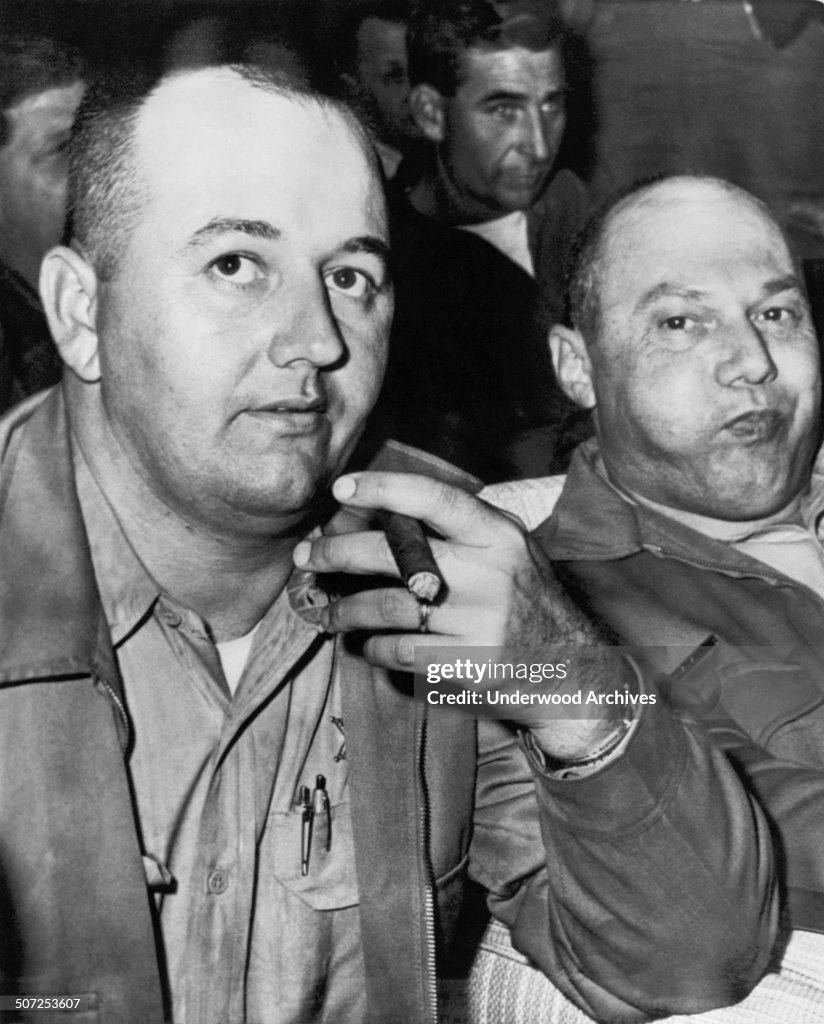
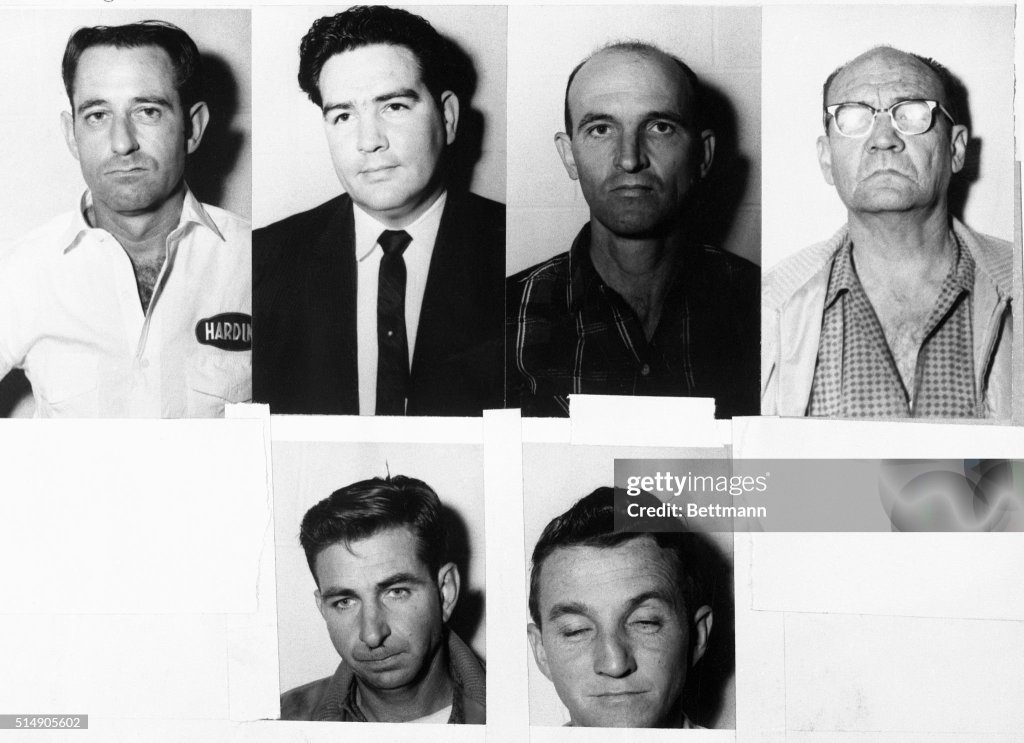
FBI agents arrested 21 men in and around Neshoba County, Mississippi on federal indictments arising from the June 21 kidnapping and murder of Andrew Goodman, Michael Schwerner and James Chaney. An author would note later, “The accused, including truck drivers, farmers, cops, and the owner of the burial site, were taken from cafes, farmhouses, and trailers.” Two of the most prominent defendants, Neshoba County Sheriff Lawrence A. Rainey and Deputy Sheriff Cecil Price had returned from a raid on a moonshine still to the courthouse in Philadelphia, Mississippi, to find agents waiting for them. Most were freed the same day when friends posted bonds of $5,000 apiece for them. Six days later, a U.S. trial commissioner in Meridian voided the arrest warrants on 19 of the 21 defendants pending a hearing for whether there was probable cause for continuing charges. The bureau said the murder had been plotted by the Ku Klux Klan.
It said that Sheriff Lawrence A. Rainey, 41 years old, had been involved in the conspiracy but had not taken part in the actual slaying. It added that his deputy, Cecil Price, 26, had set up the crime by unlawfully arresting and detaining” the victims, then turning them over to a lynch mob of which the deputy was a part. Others arrested included a Philadelphia city policeman, a fundamentalist Baptist minister and several leaders in the White Knights of the Ku Kluk Klan of Mississippi, a terrorist organization believed to have originated much of the state’s racial violence in recent months.
Nineteen defendants, most of them members of the Ku Klux Klan, were charged under federal law with conspiring to violate the constitutional rights of the three young men. The two others were charged with refusing to disclose information about the crime. The defendants were arraigned at the Naval Air Station at Meridian, Mississippi, before the United States Commissioner, Miss Esther Carter, and were released on bond. Sheriff Rainey and Deputy Price then returned to their law‐enforcement jobs in Philadelphia, a town in southcentral Mississippi near which the three rights workers were killed. Miss Carter set bond at $5,000 for each defendant charged with conspiracy and $3,000 for each charged with refusing to give information. She scheduled a preliminary hearing for December 10.
For the first time, the bureau told how the three young men allegedly met their deaths on a dirt road a few miles southeast of Philadelphia. The complaint said that Deputy Price had sent them into the hands of a group of armed segregationists. The armed men, most of them Klansmen from Meridian, followed the three civil rights workers outside the city limits, intercepted them and forced them into other automobiles, the bureau said. The three were taken down a side road and shot to death, it said. J. Edgar Hoover, director of the FBI, said in Washington that the information gathered by his agents was being made available to state authorities for consideration in possible murder charges. The Federal Government has no jurisdiction over murder charges. Governor Paul B. Johnson Jr. and State Attorney General Joe T. Patterson declined yesterday an offer by the bureau to make the arrests on state charges.
Agents of the Federal Bureau of Investigation began their stakeout of the Neshoba County Courthouse in Philadelphia at 8:30 AM, just as the stores on Beacon Street were opening. The men they were after, the huge bear‐shaped sheriff, Lawrence Rainey, 41 years old, and his deputy, Cecil Price, 26 had gone out on a “whisky raid,” hunting a moonshine still, and did not return until just before 9 o’clock. It had rained all night, and the succession of slow‐moving thunderstorms had drenched the red clay hills. The rain had stopped, but the sky remained bleak and overcast. Overnight the temperature had dropped and it was chilly.
Sheriff Rainey’s black boots were caked with mud. Deep South sheriffs are usually big men, often running to fat. This one weighs over 240 pounds and is developing a paunch. The sheriff paid no attention to the four Federal agents in trench coats who were watching him from two cars. He strode into the courthouse, trailed by Deputy Price, a revolver jouncing on one big hip and a blackjack dangling from the other. The agents waited a few moments, then entered the sheriff’s office and arrested him and his deputy as suspected participants in a plot that resulted in the murder of three civil rights workers last summer.
Civil rights leaders applauded the arrests in the slaying of three integration workers in Mississippi. They expressed doubt, however, that convictions could be obtained in that state. “The FBI has done its job of gathering the evidence, detecting and arresting the suspects,” Roy Wilkins said, “it is up to Mississppi to do the rest.” Mr. Wilkins, the executive director of the National Association for the Advancement of Colored People, went on to say: “We may be sure that the evidence is of a kind which, in any normal jurisdiction, would justify indictment by a grand jury. Mississippi, however, is not a normal jurisdiction as far as the lives and rights of Negroes are concerned. The record to date shows that its white people can kill Negroes without fear of punishment in a judicial process.”
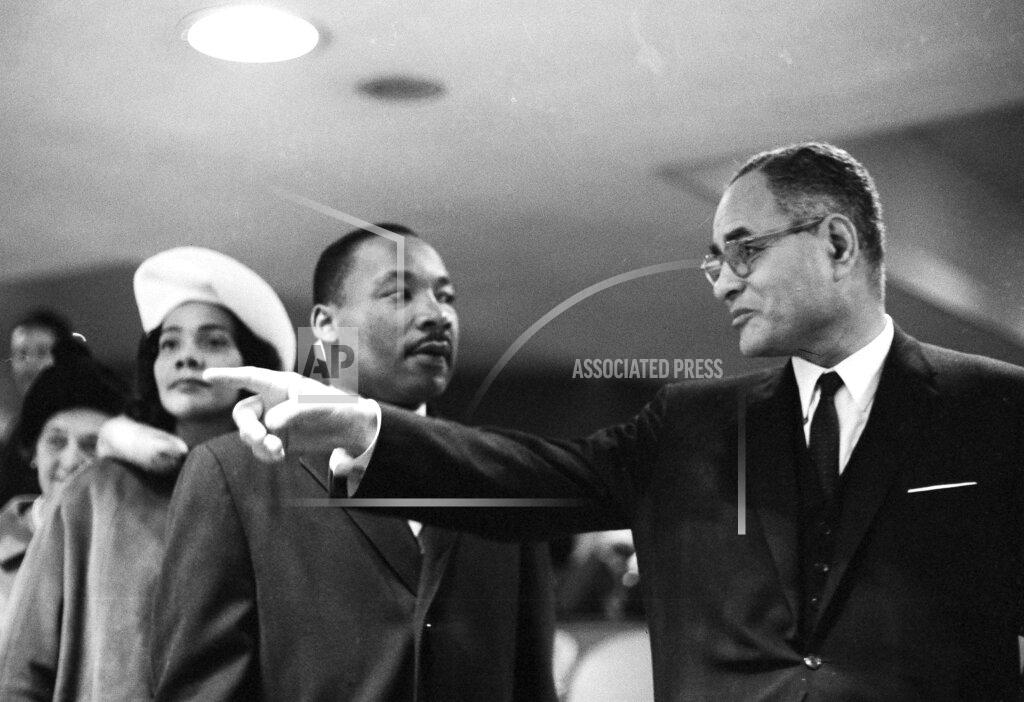
He said that the state “now has another chance to make a new kind of history.” The Rev. Dr. Martin Luther King Jr., who has been critical of FBI, effectiveness in Southern civil rights cases, hailed the arrests at a news conference in New York. “I must commend the Federal Bureau of Investigation,” he said, “for the work they have done in uncovering the perpetrators of this dastardly act.” He said “it renews again my faith in democracy.” Dr. King’s statement went on to say: “I sincerely pray that justice reign in this situation and that the State of Mississippi will find its conscience and forthrightly declare that murder, even if it be the murder of a black man, is a crime in every state of this great Union of ours, even in the State of Mississippi.”
President Johnson has approved regulations to implement Title VI of the Civil Rights Act of 1964 that could cut off Federal financial assistance to states and cities that discriminate in federally financed projects. As required by the act, Mr. Johnson gave approval yesterday to the regulations of Government departments and agencies. The regulations were published in the Federal Register today and become effective in 30 days. The President said in a statement that “just and reasonable procedures” had been prescribed to insure that failures to comply with the law “will be promptly and justly decided.” However, Mr. Johnson indicated he was confident that voluntary compliance would be so general that punitive actions would be minimal.
The Federal Bureau of Investigation began an investigation today into the fatal shooting of a Black man by a Choctaw County (Alabama) sheriff’s deputy. The investigation was ordered by the Justice Department at the request of the Citizens Committee of Mobile, a civil rights organization. The victim, Frank Andrews, 27 years old, was killed the night of November 28 outside a tavern at Lisman, by Deputy Quinnie Donald. Wymon O. Gilmore, circuit prosecuting attorney, said Mr. Andrews was shot after he allegedly advanced toward another deputy with a knife. In a telegram to the Justice Department, the Citizens’ Committee said an investigation showed Mr. Andrews “was shot in the back and that he did not resist arrest.”
The Freedom Democratic party took steps today to challenge the seating of all five members of Mississippi’s delegation to the House of Representatives. Spokesmen announced at a news conference here that notices of the challenges were served on the interested parties today and yesterday. They said that a “Legal Peace Corps” of more than 100 lawyers would go to Mississippi to gather evidence In the case. They issued an appeal for volunteers. The final decision, under the procedure being used, rests with the House itself.
J. Edgar Hoover has served 40 years as director of the Federal Bureau of Investigation under seven Presidents and has no plans to retire. “I feel fine,” Mr. Hoover, who is 69 years old, said in an interview. “I’m in better physical condition than I have been in years. And I intend to remain active because I just don’t like the rocking‐chair life. If I retired, I wouldn’t enjoy life very much.” Mr. Hoover, who has been bureau director since 1924, is 33 pounds lighter than he was six years ago. He appears to have lost little of his restless, energy. President Johnson waived last May the requirement that he retire at the age of 70 — which he reaches in January. “If I quit,” Mr. Hoover said, “I think I would have trouble. After three or four days of vacation, I get so itchy for activity that I call the office and ask them to send me some work.”
The Rev. Dr. Martin Luther King Jr. was nearly a half‐hour late for his news conference yesterday at the Sheraton Atlantic Hotel here because of “complete exhaustion.” Before his appearance, Bayard Rustin, another civil rights worker, told newsmen: “He’s just worn out — exhausted — and he has an upset stomach.” Mr. Rustin said Dr. King was being attended by a physician. Dr. King said later that “my health is pretty good, but I have lived a pretty hectic life and am told that I need a long period of rest.’’
President Johnson said today he believed in a tight fist with the taxpayers’ money and an open mind to the needs of the nation. The President urged civil servants to make greater efforts toward economy as he presented award plaques to 30 government employes who had saved the Government a total of $85 million. Mr. Johnson told a blue-ribbon audience including almost all the top management officials of Federal agencies in Washington that he believed the Administration had “made good” on his pledge to run a frugal government. He said that a compassionate government had a special duty to be frugal and efficient because it would be impossible to eliminate poverty and to achieve the “great society” if the way “is blocked by the debris of inefficiency or obsolescence or downright waste.” “We can afford only the essential,” said Mr. Johnson.
The national unemployment rate fell in November to 5 percent from 5.2 percent in October, the Labor Department said today. The improvement was attributed by Bureau of Labor Statistics experts to good weather last month. This meant that fewer outdoor workers were laid off than ordinarily would be expected at this season. The 5 percent level was the lowest seasonally adjusted unemployment rate since the 4.9 percent of July and the second lowest since February, 1960, when the rate was also 4.9 percent. Improvement in the situation of married men and adult men 20 years and over was particularly noteworthy. The rate among married men declined during the month from 2.8 to 2.5 percent and among adult men, from 4 percent to 3.5 percent. In both cases, the rates for November were the lowest in more than seven years. The teenage jobless rate did not change significantly. It rose to 14.9 percent from 14.4 percent. This level is roughly 50 percent higher than the level of 1957.
The Republican Governors, groping for a formula for rebuilding their shattered party, debated today whether to seek to oust Dean Burch as national chairman or create a super‐organization that would supersede the Republican National Committee. The aim of such an organization would be to downgrade the influence of Senator Barry Goldwater’s associates who control the national committee. The overwhelming sentiment of the 17 Governors and Governors‐elect at the outset of their two‐day conference at the Brown Palace Hotel was that Mr. Burch should be replaced. This, they felt, would symbolize a new start at national headquarters and a turning away from the men and issues most closely linked to the Republican election disaster last month. Governor Robert E. Smylie of Idaho, chairman of the Republican Governors Association, and several others proposed that the organization communicate its majority view to the national committee in a resolution.
Dr. Malcolm Moos, an adviser and speech writer for former President Eisenhower, called today for the ouster of Mr. Burch as national chairman. Dr. Moos said Mr. Burch represented a repudiated element of the Republican far right. Speaking at a Johns Hopkins University political science seminar, Dr. Moos said it would take a “vigorous effort” from Republican moderates to replace Mr. Burch when the national committee meets in January.
The closing session of the two‐day conference in Des Moines of the General Board of the National Council of Churches reported today on the council’s anti-poverty program. The report called for “replacing the attitude of paternalism with the attitude of cooperation and partnership with churches and Christians in poverty, including those who are not members of any church.” The Rev. Dr. Cameron P. Hall, executive director of the National Council of Churches Department of the Church and Economic Life, said “ways must be found to encourage, cooperate with, and support the organized effort of those in poverty to help themselves.”
The eastern half of the nation was deluged by snow, sleet or rain yesterday as the first big storm of the season swept out of the Midwest. Chicago was the hardest hit. Up to a foot of snow clogged highways and closed airports. For the first time in more than a quarter of a century, the city’s schools were closed by snow.
“Beatles for Sale”, the fourth studio album by The Beatles, was released in the United Kingdom on the Parlophone label, and included the single “Eight Days a Week”. Songs from the 34 minute British album would be on two American extended play albums, Beatles ’65 and Beatles VI.
Major League Baseball approves a free-agent draft. At their winter meetings in Houston, the minor league and major league organizations establish a system, basically like that of professional football, which will take effect in January 1965 and be held every four months thereafter. Choices will be exercised by clubs in inverse order of their previous year’s standing. Draftees must be included in their club’s 40-man roster or be susceptible to claim at the waiver price the following season.
The majors also restore to the commissioner’s office all powers rescinded after Judge Kenesaw Mountain Landis’s death in 1944. Principally, they waive their right to take legal action in the event of disagreements with the commissioner and grant him authority to judge whether actions taken by the owners in concert are, automatically “in the best interests of baseball.” Voting for the annual All-Star teams is turned back to the fans.
The Los Angeles Dodgers trade outfielder Frank Howard, pitcher Phil Ortega, pitcher Pete Richert, and third baseman Ken McMullen to the Washington Senators for pitcher Claude Osteen, infielder John Kennedy, and cash.
The Minnesota Twins acquire versatile Cesar Tovar from the Cincinnati Reds for pitcher Jerry Arrigo. Tovar will play 8 seasons in Minnesota.
Dow Jones Industrial Average: 870.93 (+0.14)
Born:
Marisa Tomei, American actress (Academy Award for Best Actress – “My Cousin Vinny”; “In the Bedroom”, “The Wrestler”) in Brooklyn, New York, New York.
Chelsea Noble, American actress (Kate – “Growing Pains”), in Cheektowaga, New York.
Jonathan Goldstein, American actor (“Drake & Josh”), in Manhattan, New York, New York.
Darin Jordan, NFL linebacker (NFL Champions, Super Bowl XXIX-49ers, 1994; Pittsburgh Steelers, Los Angeles Raiders, San Francisco 49ers), in Boston, Massachusetts.
Will Johnson, NFL linebacker and CFL defensive end (CFL Champions, Grey Cup, 1992; Calgary Stampeders, Saskatchewan Roughriders; NFL: Chicago Bears), in Monroe, Louisiana.
Tracy Martin, NFL kick returner and wide receiver (New York Jets), in Minneapolis, Minnesota.
Wayne Cowley, Canadian NHL goaltender (Edmonton Oilers), in Scarborough, Ontario, Canada.
Sertab Erener, Turkish pop music singer; in Istanbul, Turkey.



 History Diaries