The Soviet 8th Army north of Lake Ladoga achieves a small success near Suojarvi. The Finns pull back a little in this sector. However, the Finnish resistance there has stiffened and the Finns are now giving up ground grudgingly.
Finnish troops in the Karelian Isthmus continue slowly giving up ground to the Soviet 7th Army.
Soviet 9th Army captures Suomussalmi.
The Finns send a small detachment north to defend the Kuhmo area against the Soviet 54th Division of the 9th Army.
The Soviet Navy gunboat Oranienbaum ran aground off Cape Yarisinielmi whilst shelling a Finnish battery. She was refloated on 15 December and taken in to “Polutorno” for repairs.
The Soviet Navy minesweepers M-31 and M-37 and ship 211 ran aground off Cape Yarisinielmi whilst attempting to refloat Oranienbaum. M-37 sprang a leak and was abandoned by her crew.
Finland appealed to the League of Nations for intervention.
Premier Risto Ryti, head of the new Finnish Government, declared last night in a radio broadcast to the United States that no one had given promises of help to Finland, no one had advised Finland to fight with promises of assistance and that events had “simply led to an armed struggle in defense of our liberty.”
The Finnish cabinet makes inquiries through the Swedish government to see if the Soviet government would open negotiations.
Army reservists are called up in Sweden and a minefield is laid off the east coast.
The oldest of Queen Victoria’s surviving children dies at 91. Princess Louise was the first to marry a commoner in 350 years.
King George VI arrived in France to inspect British Army and RAF units and to view the French Maginot Line.
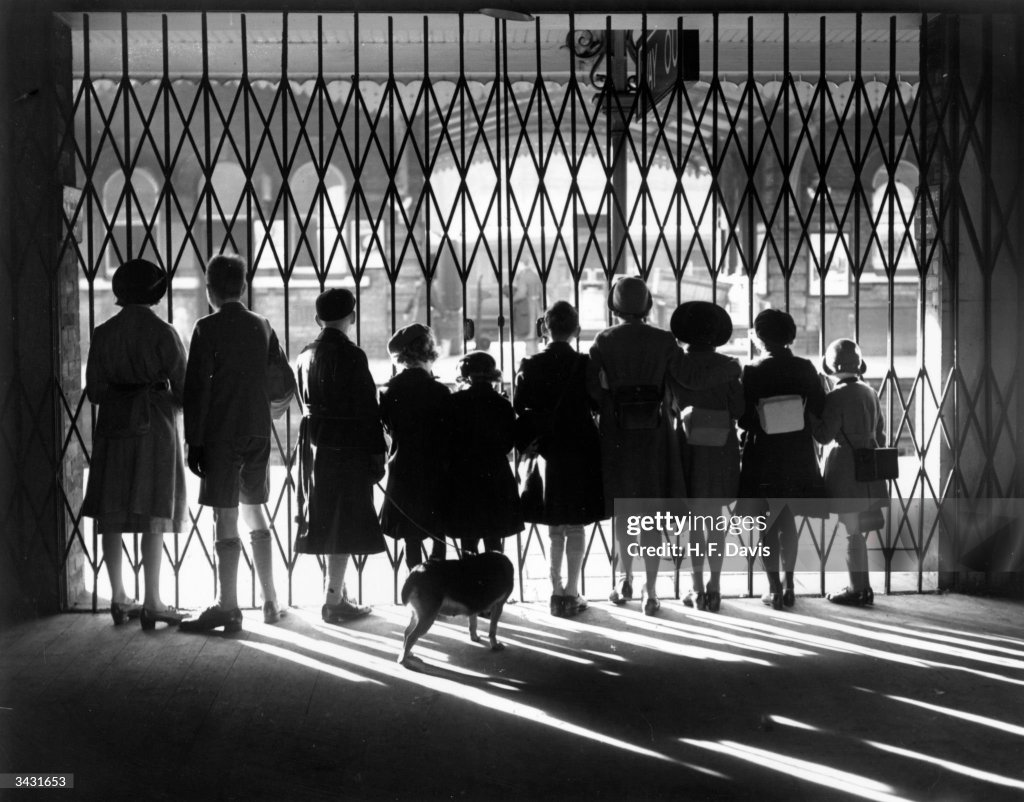
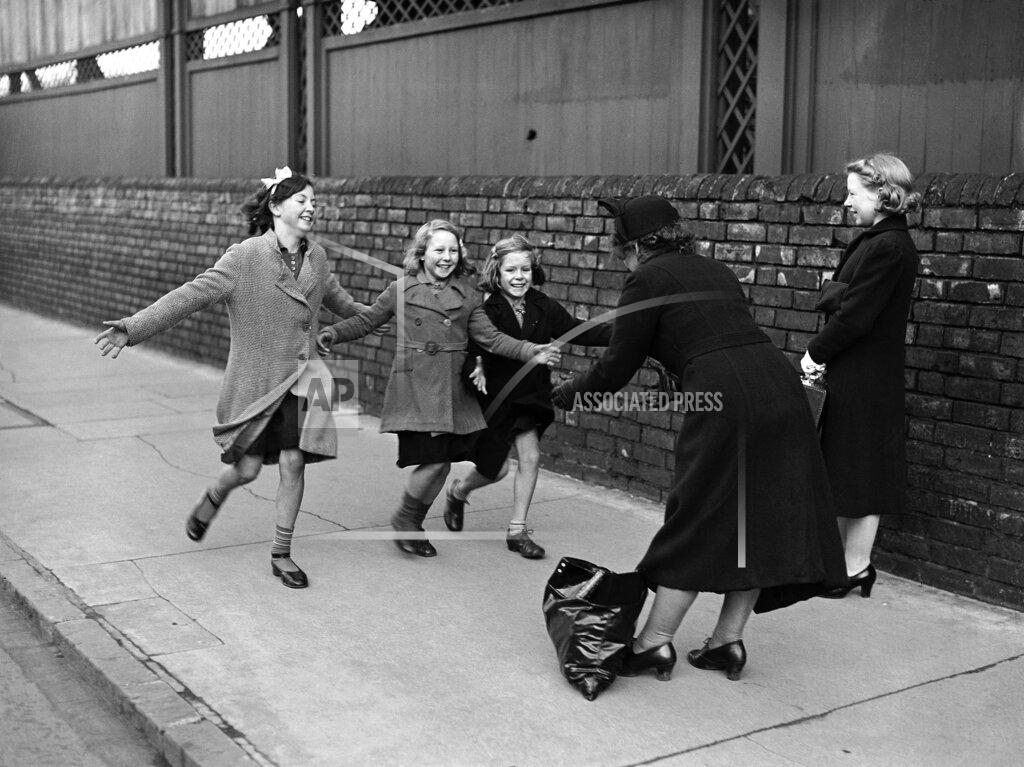
The British Government ran the first of a series of cheap railroad excursions for the parents of evacuated children today but warned parents that it would be difficult for them to see their children at Christmas time.
Reports from Berlin that the Pope had proposed a Christmas truce from December 22 to 27 to Germany, Britain and France were neither confirmed nor denied in Vatican quarters today. The only comment was that such a proposal was “possible but not likely.”
Circles close to the Italian Government made it quite clear today that any Russian attempt to upset the status quo in the Balkans will be opposed by Italy with every means in her power. Whether this hostility will materialize in an open conflict or whether Italy will adopt a policy similar to the one in the Spanish Civil War depends on Russia’s attitude and methods, it was said.
Russia’s invasion of Finland has intensified the growing weakness of the Hungarian National Socialist party, the Magyar offshoot of the German Nazis, and there are many who believe that this green-shirted version of Hitlerism is now on its last legs.
The High Commissioner in Palestine refuses to grant amnesty to imprisoned Arabs.
24 Vickers Wellington bombers raided German warships at Heligoland. A German anti-aircraft battery was hit, probably the first British bomb of the war to land on German soil. 24 RAF Wellingtons, flying in sections of three at 10,000 feet, attacked German shipping and scored, according to the RAF, a hit on a cruiser. [No cruiser was hit.]
The second prototype of the British Short Stirling heavy bomber flew for the first time. The Short Stirling was the RAF’s first four engine bomber. The Short Stirling would enter service in August of 1940 and flew its first bombing mission on the night of February 10/11 1941.
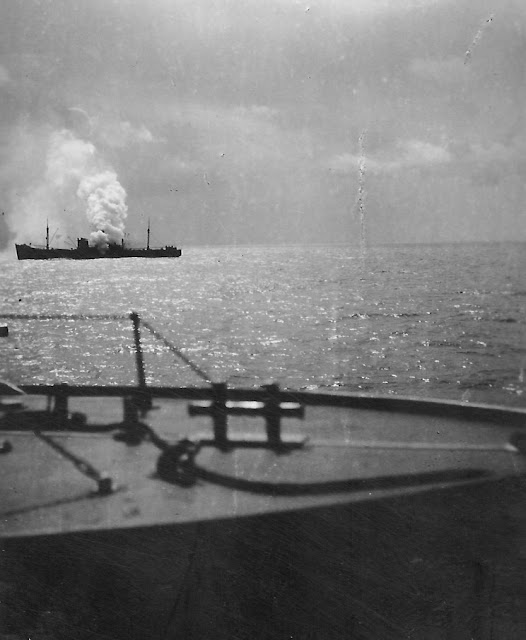
The unescorted and neutral Danish steam merchant Ove Toft was torpedoed and sunk by the U-31, commanded by Kapitänleutnant Johannes Habekost, approximately 100 miles east of the Tyne, England in the North Sea (55° 36’N, 0° 46’W). At 13.20 hours on 3 Dec 1939 the unescorted and neutral Ove Toft was hit amidships by one torpedo from U-31 and sank within four minutes about 100 miles east of the Tyne. The ship had been spotted at 12.55 hours, identified and was attacked because her course was suspicious. Of the ship’s complement, 6 died and 15 survived. The 2,135-ton Ove Toft was carrying goal and was bound for Gothenburg, Sweden.
The Swedish steam merchant Rudolf was torpedoed and sunk by the U-56, commanded by Kapitänleutnant Wilhelm Zahn, in the North Sea (56° 15’N, 1° 25’W). At 00.13 hours on 3 Dec 1939 the unescorted and neutral Rudolf (Master Bertil Persson) was hit in the stern by one G7e torpedo from U-56 while steaming at 8 knots about 40 miles east of May Island. The ship had been spotted about 45 minutes earlier and was attacked because no nationality markings were visible. The explosion blew away the whole after part, destroying the crew quarters and killing nine crew members. The survivors abandoned ship in two lifeboats and remained nearby until she sank about one hour after the hit. Six survivors in one boat were picked up the same day by the British trawler Cardew and landed at Dundee. The eight men in the other boat were rescued on 4 December by the Swedish steam merchant Gunlög and landed at Newcastle. On 6 December, one of the abandoned lifeboats was located three miles north of Longstone and towed into Holy Island Harbour. The 2,119-ton Rudolf was carrying coal and was bound for Malmö, Sweden.
German armored ship Admiral Graf Spee stops British freighter Tairoa; the warship then sinks the merchantman at 21°30’S, 03°00’E. Ironically, the same day Commodore Commanding South Atlantic Station, Commodore Henry H Harwood, orders his three cruisers to concentrate off the River Plate estuary on 12 December.
Commodore Henry J. Harwood, commanding the British South Atlantic Station, orders his three cruisers to police the River Platte estuary as of 12 December 1939.
The British cargo ship Hamsterley collided with Accrington in the North Sea off Happisburgh, Norfolk and sank with the loss of one crew member.
The British cargo ship Manchester Regiment in Convoy HXF.11 collided with the Oropesa and sank with the loss of nine of her 74 crew. Survivors were rescued by the Oropesa.
The British cargo ship Moortoft foundered in the North Sea with the loss of all 13 crew.
Battlecruiser HMS Renown and aircraft carrier HMS Ark Royal arrive at Cape Town, South Africa.
Convoy OA.46 departs from Southend, OB.45 from Liverpool, and OB.46 from Liverpool, while SL.11F departs from Freetown.
The War at Sea, Sunday, 3 December 1939 (naval-history.net)
A suspected German battleship was D/F’d in 62-30N, 13W, and battlecruiser HOOD and her destroyers were ordered to proceed as fast as her escorts could steam without damage. Six armed merchant cruisers between Iceland and the Faroes were also to proceed south, but no contact was made.
Heavy cruiser DEVONSHIRE and light cruiser NEWCASTLE were on patrol to the northeast of the Shetlands.
Heavy cruiser SUFFOLK departed Scapa Flow for Northern Patrol in the Denmark Strait, and arrived back in the Clyde on the 14th.
Destroyer ASHANTI departed Scapa Flow for Liverpool to refit a leaking feed tank.
Light cruiser SOUTHAMPTON had problems with leakage in several oil fuel tanks and marked vibration at high speed. She entered the dockyard in the Tyne on the 24th to repair.
Destroyers out of service on the 3rd were – ASHANTI with leaking feed tanks arrived at Liverpool on the 4th to refit, COSSACK repairing collision damage, FAME repairing weather damage and refitting to complete on the 24th, FORESIGHT repairing weather damage and refitting to complete on the 24th, FORTUNE repairing weather damage, FOXHOUND repairing and refitting to complete on the 11th, GURKHA with turbine defects en route to Southampton, INGLEFIELD to dock at Leith with defects on the 8th, IMOGEN docking to repair asdic, IMPERIAL at Scapa Flow with engine room defects (after escorting battleship RODNEY, IMPERIAL was to repair at Liverpool), INTREPID and IVANHOE refitting to minelaying destroyers to complete on the 9th, KELLY repairing damage and refitting to complete on the 12th, KELVIN repairing collision damage to complete on the 12th, MOHAWK repairing bomb damage, PUNJABI repairing collision damage, SIKH at Malta with turbine defects, and TARTAR refitting and repairing rudder damage to complete on the 15th.
Convoy OA.46 of 19 ships departed Southend escorted by destroyers KEITH, WIVERN and VETERAN from the 4th to 5th. On being released, WIVERN proceeded to escort OA.47.
Convoy OB.46 departed Liverpool escorted by destroyer WALPOLE until the 3rd and destroyer ESCAPADE until the 5th.
Convoy BC.16S of four steamers, including BARON KINNAIRD, departed the Loire escorted by destroyers MONTROSE and VESPER, and arrived in Bristol Channel on the 6th.
Convoy FN.48 departed Southend, escorted by destroyer VALOROUS and sloop BITTERN. Due to increased German activity in the North Sea, the convoy was supported by destroyers JACKAL, JANUS and the Polish ORP BŁYSKAWICA. The Polish ship detached that night, and the convoy arrived in the Tyne on the 4th.
Convoy FS.48 departed the Tyne, escorted by destroyer WHITLEY and sloop STORK, and arrived at Southend on the 4th.
Destroyers ICARUS and ILEX carried out an anti-submarine sweep on their way back to Rosyth after a ship had been detected crossing the May Island indicator loop. Destroyers AFRIDI and ZULU searched inshore of May Island, and then proceeded to Rosyth after being relieved by ICARUS and ILEX.
Destroyer VEGA attacked a submarine contact 9 miles SW of St Catherines. Destroyers ACHATES and WINDSOR joined in the search.
Submarine SNAPPER, returning to Harwich from patrol in the North Sea, was struck by a British 100-pound anti-submarine bomb, dropped by a “friendly” Anson aircraft. A direct hit was scored at the base of the conning tower, but the explosion only shattered four light bulbs.
Russian submarine ShCh-323 damaged German steamer OLIVA (1308grt) with gunfire off Uto. She was damaged again by Russian submarine S-1 off Rauma on the 10th.
U-31 sank Danish steamer OVE TOFT (2135grt) in 55 36N, 00 46E and Norwegian steamer GIMLE (1271grt) in 57 15N, 01 50E. OVE TOFT lost six crew and 15 survivors were picked up, while GIMLE lost three and her 16 survivors were picked up by Norwegian steamer RUDOLF (924grt).
Steamer MOORTOFT (875grt) was lost in the North Sea to an unknown cause.
Lithuanian steamer KRETINGA (542grt) was seized by German warships as a prize in the Baltic and renamed MEMELLAND for German service.
German pocket battleship ADMIRAL GRAF SPEE sank steamer TAIROA (7983grt) in the South Atlantic in 20 20S, 03 05E.
Heavy cruiser SHROPSHIRE arrived at Simonstown and Force K arrived at Capetown. After refueling, Force H departed the same day and Force K on the 4th to patrol the Capetown-St Helena trade route.
Light cruiser NEPTUNE departed Freetown and arrived at Dakar on the 4th.
Light cruiser EFFINGHAM departed Kingston and arrived at Halifax on the 6th. However a serious leak had been discovered in the starboard condenser on the 5th, and she had to return to Kingston for repairs.
Convoy SLF.11 departed Freetown on the 3rd escorted by armed merchant cruiser DUNNOTTAR CASTLE and sloop MILFORD, the latter with the convoy for the day only. On the 18th, DUNOTTAR CASTLE developed engine problems and was sent to Gibraltar. She was joined on the 20th by destroyer KEPPEL and on the 21st by French destroyer MAILLÉ BRÉZÉ, and arrived at Gibraltar on the 22nd. Destroyers WHITEHALL and WIVERN joined the convoy in Home Waters.
French large destroyer L’AUDACIEUX was proceeding to Dakar to repair minor defects.
Sloop LEITH departed Malta for Gibraltar, en route to England.
The situation created by the attack of Soviet Russia upon Finland received the close attention of President Roosevelt and Secretary of State Cordell Hull today. Developments were watched carefully with an eye toward final determination of the course the United States will pursue in its relation with the two countries, particularly Russia.
Secretary Hull spent several hours at the State Department reading reports from diplomatic representatives abroad. He communicated the information to the President, who remained in the White House throughout the day. Although no suggestion came from any official source as to the probable course the Administration would follow, there were indications of increasing pressure upon the President and Secretary Hull for some official action that would give concrete expression to American disapproval of the Soviet invasion of Finland.
The suggestions most often heard involved breaking off diplomatic relations with Moscow or the recall of Laurence A. Steinhardt, the United States Ambassador to Russia, as an expression of disapproval of Soviet policies. The feeling existed in some quarters that the country would not be satisfied with the steps already taken, namely, President Roosevelt’s formal expression of disapproval of “wanton disregard of law” by Russia in invading Finland and bombing her cities and towns, and the imposition of a moral embargo upon shipments to Russia of airplanes or munitions that might be used in bombing civilian population centers. It was understood that the President and Secretary Hull have discussed this apparent trend of sentiment but have agreed that hasty decisions would be inadvisable. The belief here is that the Administration would await developments of the next few days, and study them carefully, before taking any definite steps.
Alexander Kerensky, former Russian Premier and leader of the 1917 revolution that led to the overthrow of the Czarist regime, issued a statement yesterday appealing to American public opinion “not to confuse Stalin’s invasion of Finland with the real wishes of the Russian people.”
President Roosevelt was urged by Senator George W. Norris of Nebraska, in a statement issued today, not to accede at this time to demands that the President declare his position. with regard to a third term. To do so, Senator Norris said, would be “a sad mistake” on the part of the President. The demands came, he went on, from the enemies of the President and his policies, and the question of whether the President ran for a third term was “greater and broader” than Mr. Roosevelt’s personal wishes. The Nebraska Senator pictured the President as desirous of relinquishing his office at the end of his present term and said that he had “earned a rest,” but nevertheless asserted that the interests of progressive citizens made it important that Mr. Roosevelt refrain from deciding at this time whether he should seek another term in the White House.
Mr. Norris’s statement did not reveal his own position with regard to Mr. Roosevelt’s candidacy in the event that the President should decide to seek a third term, but it was interpreted by some political observers as an indication that the veteran Nebraskan would support the President if he became a candidate for re-election. The Senator’s assertion that no other figure existed on the political horizon “under whose banner there can be such unanimity of honest, progressive, patriotic citizens” was regarded as tantamount to an avowal that he regarded Mr. Roosevelt’s candidacy as essential to the success of progressivism in the 1940 campaign. Mr. Norris supported President Roosevelt for re-election in 1936.
The National Labor Relations Board announced today its intention to invalidate a closed-shop contract between an American Federation of Labor union and the Condenser Corporation of America and the Cornell-Dubilier Electric Corporation, both of South Plainfield, New Jersey. The proposed order of the board, if finally issued, would clear the way for collective bargaining negotiations on behalf of 1,300 employees of the two corporations, in which the United Electrical and Radio Workers of America, a unit of the Congress of Industrial Organizations, would participate. Before making its order final, however, the board will hear oral arguments and receive objections from the A.F.L. or the companies.
The chief power engineer denies that the TVA lacks basic water needs. He discounts the auxiliary use of steam in drought. J. A. Krug, chief power engineer of the Tennessee Valley Authority, disputed today the argument of private utility company executives that the use of steam plants to produce 27 percent of TVA power during the present dry spell means that there is a shortage of hydroelectric power, in the area or that TVA should change its basic plan for an exclusively hydro system and build stand-by steam plants for an inter-connected hydro and steam system. In the territory it serves — virtually all of Tennessee, North Mississippi, Northern Alabama, Northwest Georgia and extreme Western North Carolina — the TVA is meeting, according to Mr. Krug, all the demands of residential, farm and other consumers of “primary” or continuous power, which has to be available twenty-four hours a day, 365 days in the year, with peak load requirements at certain hours. The fact that it has had to reject and curtail orders for “secondary” power does not mean that there is a shortage, he adds, since this is interruptable hydro power which never can be guaranteed more than three-quarters of the year, and is sold at a lower rate because TVA reserves the contractual right to suspend its delivery during dry seasons.
The Amalgamated Clothing Workers of America, C.I.O. union of 250,000 members, will not seek a wage increase in the men’s and boys’ clothing field at the present time.
Bestselling lists still feature “The Grapes of Wrath”, “Christmas Holiday”, “Kitty Foyle”, “The Nazarene” and “Escape.”
My mom was five years old on this day.
Bob Feller signs for the 1940 season. Pay for the Cleveland Indians’ ace pitcher is $23,000.
Military headquarters announced tonight that Colonel Fulgencio Batista, Cuban Army Chief of Staff, would retire December 6 and that Colonel Jose Pedraza, chief of the National Police and Inspector General of the army, would take command of the army. Batista is retiring to run for president.
The South American press today made a concerted attack on Russia for her invasion of Finland.
The Chinese winter attacks continue, but the Japanese mount a spoiling counterattack against the Chinese 2nd War Area (Shansi and southern Shensi) near Wenhsi and Hsia Hsien to disrupt their plans.
The British cut the strength of the Tientsin garrison. The first units of the Durham Light Infantry Battalion depart; their destination is unknown.
Britons and Japanese-controlled Chinese police clashed tonight on a road outside the International Settlement in Shanghai. The police fired more than fifty shots and arrested an unarmed British soldier who was on weekend leave and a British civilian. The cause of the incident was obscure. The firing, apparently into the air, began when the Britons were leaving a bar. A Chinese woman passerby was wounded critically. British armed troops and municipal policemen rushed to the scene of the shooting. The Chinese police also were heavily reinforced, but eventually withdrew. The British troops and municipal policemen proceeded to the headquarters of the Chinese police where they stood guard until British officers had negotiated the release of the Britons arrested.
Japan worries about a rice shortage. Eighty thousand bushels are sent home by the army in China to allay fears of soldiers at the front. Prompted by the fact the Japanese soldiers at the front in China are worrying about their homes in the drought-stricken areas where the rice crop has partly failed, General Juzo Nishio, Commander in Chief in China, shipped 80,000 bushels of rice from China.
United States Ambassador Joseph C. Grew will confer with Foreign Minister Kichisaburo Nomura tomorrow afternoon at the Foreign Minister’s request. The meeting will be the second between the Ambassador and the Foreign Minister since President Roosevelt abrogated the United States-Japan Commercial Treaty, effective January 26, 1940. It was believed that this question would be discussed today as Japan fears that a “no treaty” period after the commercial agreement expires might place a dangerous strain on relations between the two powers. Yakichiro Suma, Foreign Office spokesman, in revealing the new conference, refused to divulge what questions Admiral Nomura wished to bring up. Mr. Suma mentioned Russian relations in his press conference today. He praised a recent editorial in the Moscow newspaper Pravda, urging a Russo-Japanese rapprochement. “I would like to say definitely, however, that a non-aggression pact is not to be on Japan’s program at all,” he added.
A typhoon, described by meteorologists as the worst in the Philippines since 1908, moved swiftly toward Manila today after having ravaged five islands to the southeast.
Born:
Ron Stillwell, MLB shortstop and second baseman (Washington Senators), in Los Angeles, California (d. 2016).
Ed Connolly, MLB pitcher (Boston Red Sox, Cleveland Indians), in Brooklyn, New York, New York (d. 1998, of a heart attack).
Died:
Princess Louise, Duchess of Argyll, 91, sixth child of Queen Victoria and Prince Albert.
Naval Construction:
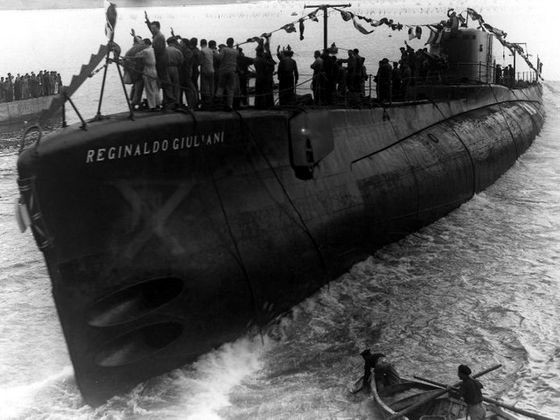
The Regia Marina (Royal Italian Navy) Liuzzi-class submarine Reginaldo Giuliani is launched by Cantieri navali Tosi di Taranto shipyard (Taranto, Italy).
The Regia Marina (Royal Italian Navy) Marconi-class submarine Michele Bianchi is launched by CRDA (Monfalcone, Italy).


 History Diaries