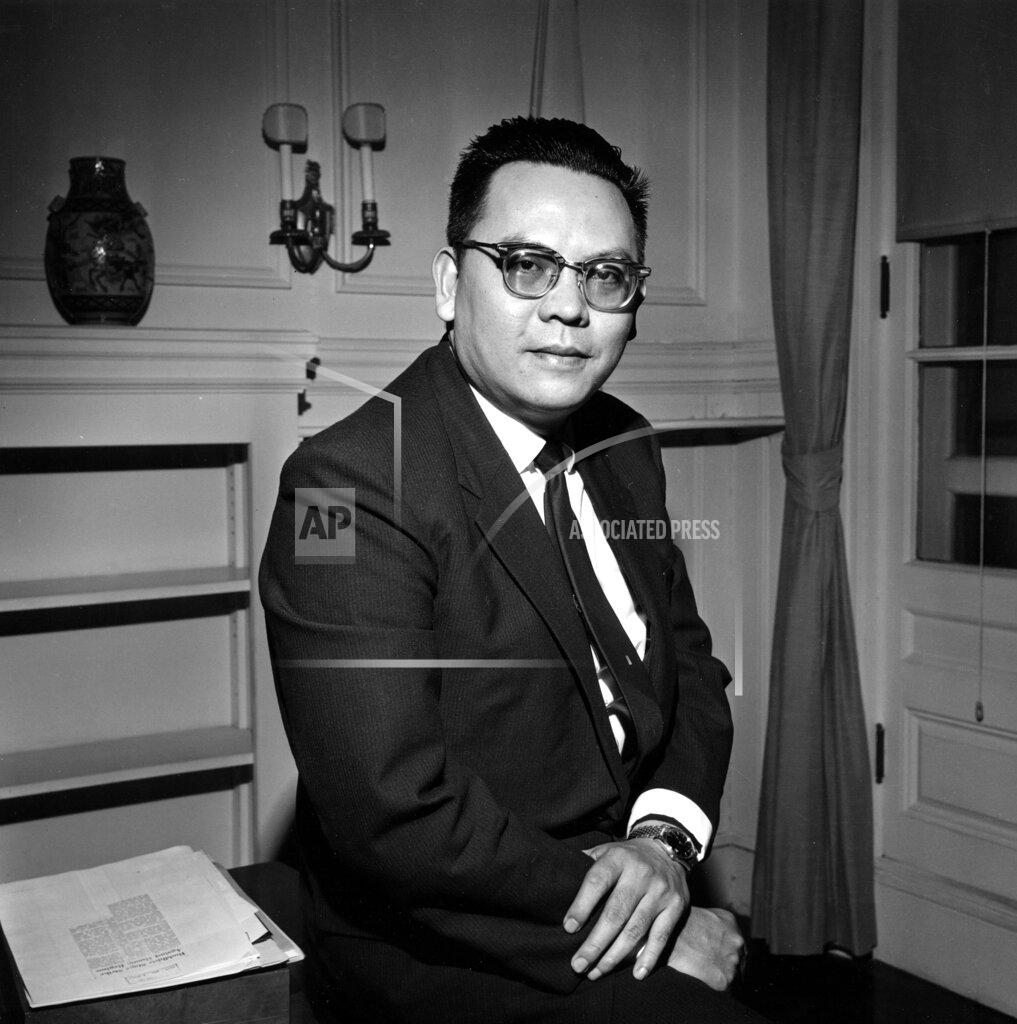
In a news conference on the 3rd, Ambassador Max Taylor indicates he has been authorized to improve South Vietnam’s war efforts and that this might involve changes “in tactics and method,’ but he says nothing about the bombing operations planned. Ambassador Maxwell D. Taylor was bound for Saigon tonight with proposals designed to mesh the American‐South Vietnamese war effort more efficiently. Asked in the White House lobby whether he had discussed with Washington policymakers a proposal to bomb North Vietnamese installations in Laos and North Vietnam, he replied, “Draw your own conclusions.” His words left little doubt that he had done so. Mr. Taylor said he would not answer questions about proposais to “widen” the Vietnam war, “because, if I do, it would suggest that was all I talked about.” “We talked about all subjects under the sun,” he added.
Mr. Taylor said he could see no requirement for more United States troops in South Vietnam. The ambassador met with President Johnson at the White House for an hour in the afternoon and then prepared to leave for Saigon via Honolulu and Hong Kong. He is due to reach Saigon by noon Sunday. He then plans to begin talks, “across the board” with the Government of Premier Trần Văn Hương on how the United States and South Vietnam can create a “more effective pacification plan” against the Communist Việt Cộng guerrillas.
South Vietnam’s National Buddhist Association demanded today that the United States withdraw its support of the month‐old civilian Government of Premier Trần Văn Hương. A Buddhist statement addressed to the United States Government, the South Vietnamese Army and chief of state, Phan Khắc Sửu, charged that Mr. Hương’s regime had become a dictatorship.
It is announced that the first U.S. women to serve as military advisers will be assigned to a South Vietnamese Women’s Army Corps training camp at Saigon. A spokesman said two women, a commissioned officer and a noncommissioned officer, would be assigned as training advisers in the South Vietnamese Women’s Army Corps training camp to be established in Saigon. The spokesman stressed that the United States Women’s Army Corps would not be involved in combat operations or training. The women advisers were requested by the Vietnamese armed forces to assist a plan for tripling the size of the South Vietnamese Women’s Army Corps and to help in clerical duties.
A 30-year‐old Army captain who quit West Point after two years and then returned to military service will receive the Medal of Honor, the nation’s highest military award, in ceremonies scheduled at the White House Saturday. He is Roger Hugh C. Donlon of Saugerties, New York, who, according to the citation, displayed “conspicuous gallantry and intrepidity in action at the risk of his life above and beyond the call of duty” during fighting in South Vietnam in July. The White House said that the Medal of Honor award to Captain Donlon will be the first since the Korean War. It will also be the first Medal of Honor for heroism in what is officially described as a counterinsurgency effort.
William Healy Sullivan, an expert on Southeast Asian affairs, was sworn in today as the new United States Ambassador to Laos. Under Secretary of State W. Averell Harriman and Maxwell D. Taylor, Ambassador to South Vietnam, headed a group of distinguished well‐wishers in the ceremony in Washington for the 42-year‐old career diplomat.
Forces of the neutralist faction in Laos have captured the northern part of Phoukout ridge on the Plaine des Jarres, Western military sources said in Vientiane today. The ridge, with five high points, is of strategic value to the opposing neutralist and pro‐Communist forces.
The group of junior officers arrested last Tuesday had planned to attempt a coup d’état during today’s parade of the Royal Guard, according to Premier Thanom Kittikachon. The ceremony, which took place without incident, is a colorful prelude to annual celebrations marking the birthday on December 5 of King Phumiphol Aduldet. Premier Thanom said the officers, four from the army and one from the navy, had conspired to overthrow his Government. The police were reported to be looking for another navy commander who had been implicated in the plot.
Twenty‐six persons were killed yesterday when Burmese Communist guerrillas blew up a bus near Tavoy, 300 miles southwest of Rangoon. After the explosion the guerrillas stripped the victims of all valuables and cut off the ears of dead women to remove their earrings. Six policemen were among those killed.
Marshal Chen Yi, Communist China’s Foreign Minister, arrived in Rangoon today for a three‐day visit en route home from Jakarta, Indonesia,
Communist China has rejected a new Soviet proposal for holding a conference of Communist parties, according to reliable information reaching London. The proposal was contained in a letter that Stepan V. Chervonenko, the Soviet Ambassador to Peking, sought to deliver last week to either Mao Tse‐tung, the Chinese Communist party leader, or Chou En‐lai, the Chinese Premier. Particularly galling to the Russians, according to the information available in London, was the refusal of the Chinese even to accept the letter. The conference was originally called by Nikita S. Khrushchev at the height of the Chinese-Soviet ideological dispute. The meeting of 26 parties was to have opened in Moscow December 15 and, according to what is known of Mr. Khrushchev’s views, was intended, in effect, to read the Chinese out of the world Communist movement. Mr. Khrushchev’s ouster from power in October changed the situation. One consequence of discussions Premier Chou held with the new Soviet leaders in Moscow last month was the cancellation of the plans for the December 15 meeting.
Secretary of State Dean Rusk and Foreign Minister Andrei A. Gromyko of the Soviet Union discussed a wide variety of international issues, ranging from Berlin to Laos, in two long talks in New York this week. They are scheduled to meet again Saturday. United States sources said tonight that when they had luncheon together Monday and yesterday, Mr. Rusk and Mr. Gromyko discussed a number of subjects besides the United Nations financial crisis. These sources indicated that the discussions had not disclosed any fundamental change in Soviet policy since the ouster of Nikita S. Khrushchev. According to the United States sources, Mr. Gromyko did not repeat the harsh criticisms of United States actions affecting the Congo and North Vietnam that have been made on the Moscow radio.
Soviet; and Czechoslovak Communist leaders made a coordinated attack today on both the West and Communist China. Leonid I. Brezhnev, the head of the Soviet Communist party, attacked the Western powers on a wide range of questions in a speech considered tougher than previous statements by members of the new Kremlin regime. Despite the tone of the speech, Western diplomats were reluctant to conclude that the Soviet Union had made a basic decision to adopt a hard line toward the West.
Antonin Novotny, the Czechoslovak President and Communist party leader, called again for an international conference of Communist parties, a proposal that has been bitterly opposed by the Chinese Communists. Mr. Novotny, who is visiting Moscow, implied criticism of Peking by saying that the unity of the Communst world could not be improved by isolated “positive” gestures, especially if these gestures were followed by unjustified attacks of other Communist countries. This was understood by Western observers as being an allusion to last month’s visit of Premier Chou En‐lai to Moscow. That visit was followed by attacks from Peking on former Premier Nikita S. Khrushchev and on his policies that had been adopted by his successors.
Mr. Brezhnev attacked the Western powers and particularly the United States for their policies on Germany, Vietnam, the Congo and Cuba. He condemned plans fo an internationally manned nuclear force in the Atlantic alliance as a “dangerous concession” to West German militarists and declared that it was the “firm decision” of the Soviet Union to keep West Germany from gaming access to nuclear weapons. Mr. Brezhnev talked about “provocations” against Cuba and declared the Soviet Union’s “full solidarity” with Premier Fidel Castro. Mr. Brezhnev reiterated last week’s pledge of support to the Hanoi regime if the United States extended the conflict in South Vietnam to North Vietnam. “Let the imperialists be careful when playing with fire,” he warned.
President Johnson indicated today that the United States would press ahead with its like‐minded allies toward the formation of a mixed‐manned nuclear fleet, despite the objections òf the French Government. “Those of us who are ready to proceed in common ventures must decide to go forward together — always with due deliberation, with due respect for the interests of others and with an open door for those who may join later,” Mr. Johnson said. In a major foreign policy address at the 175th anniversary convocation of Georgetown University, the President said that while the United States would always seek agreement, “We shall never insist on unanimity.” He continued: “This is the course which has brought fruitful results in almost every major advance in 20 years since World War II.”
Although he did not name the “common ventures” he had in mind, his context indicated he meant the fleet of 25 ships armed with Polaris missiles that the United States has proposed to the North Atlantic Treaty Organization. He appeared to give notice that the United States would attempt to press ahead with West Germany and other NATO members that are ready to join if it became impossible to reach agreement with President de Gaulle and others. Mr. Johnson, wearing academic robes said, “We must all make sure that the Federal Republic of Germany is always treated as an honorable partner of the West.” Mr. Johnson praised the West Germans saying, “They have rejected all separate adventures—especially and, I think, most wisely, in the field of nuclear weapons.”
The United States suggested today that the Secretary General, U Thant, take over the negotiations for a settlement on unpaid assessments for the United Nations peacekeeping forces. United States sources said the recommendation was based on the belief that this was a matter involving the entire organization and should not be left for negotiations between the United States and the Soviet Union. Adiai E. Stevenson, the United States representative, and Francis T. P. Plimpton, his deputy proposed the negotiations. They suggested that such talks go on independently of those envisaged between the United States and the Soviet Union on the long‐range problem of the peace‐keeping forces. The United States representatives reported to C. V. Narasimhan, Mr. Thant’s executive assistant, that Andrei A. Gromyko, the Soviet Foreign Minister, had agreed to the overall negotiations.
Reliable sources reported today that 100 to 150 mercenaries from South Africa and Rhodesia had been recruited to reinforce Major Michael Hoare’s Fifth Brigade of mercenaries in Stanleyville, the former capital of the Congolese rebels. Major Hoare’s second in command, Captain Alistair Wicks, was sent to Johannesburg today to assemble the new recruits. The contingent is expected to arrive here within 10 days. Unconfirmed reports said that 500 additional mercenaries were being recruited in Belgium and in other European countries. In Bunia today three Belgian priests and a nun were found murdered by the rebels. The deaths brought the total of foreign civilian casualties to 88 killed and 96 wounded since Belgian paratroopers captured Stanleyville nine days ago. The priests were killed Tuesday about five miles west of Bunia, a tin‐mining town near the eastern frontier. A fourth priest escaped by making believe he was dead when the shooting began.
The United States said today that both Syria and Israel were to blame for a border clash three weeks ago. It called on both to cease provocations that could endanger the 16year‐old Palestine armistice. But the Soviet Union, directing a sharp attack on Israel, said the Security Council should condemn her for “aggressive acts.” The council ended its third debate on the latest SyrianIsraeli incident without a resolution and only a decision to meet again soon. Brazil and the Ivory Coast took the position of most members that there should be practical measures to prevent a recurrence of the fighting. They especially urged a survey and demarcation of the border north of the Sea of Galilee. Four Israelis and seven Syrians died November 13 as a result of a two‐hour fight, which began when an Israeli patrol vehicle approached the ill‐marked border.
In today’s debate, a brief but angry exchange was touched off when Rafik Asha of Syria attacked a speech delivered by Britain’s Lord Caradon last week. The Syrian said it had been overly friendly to Israel. “If the representative of the United Kingdom did not have instructions to blame Israel publicly,” Mr. Asha protested, “he should have, at least, refrained from speaking in a manner detrimental to the Syrian and Arab interests, the more so when the Government he represented professed the desire to improve its relations with the Arab world.” Lord Caradon, the former Sir Hugh Foot, had spoken of his own service as a youthful British administrator in Palestine when it was a mandated territory. These recollections prompted the Syrian to complain that the Briton had been carried away by his “high ideals of the brotherhood of man and Christian charity, and by his nostalgic reminiscences.”
Former Chancellor Konrad Adenauer said today that an American should be named Secretary General of the North Atlantic Treaty Organization as the first step in an urgently needed reform. “The United States carries the heaviest responsibility in NATO,” Dr. Adenauer observed at a luncheon meeting of foreign correspondents. “It should, therefore, not only occupy the highest military positions but also the post of Secretary General.” The 88-year‐old first Chancellor of the West German Republic said the Atlantic alliance needed “a real regeneration” with emphasis on its potential as a political force. “NATO is urgently in need of reform in almost all of its parts,” he said during a one-hour question period in which he avoided relighting the fires of controversy with his successor, Chancellor Ludwig Erhard.
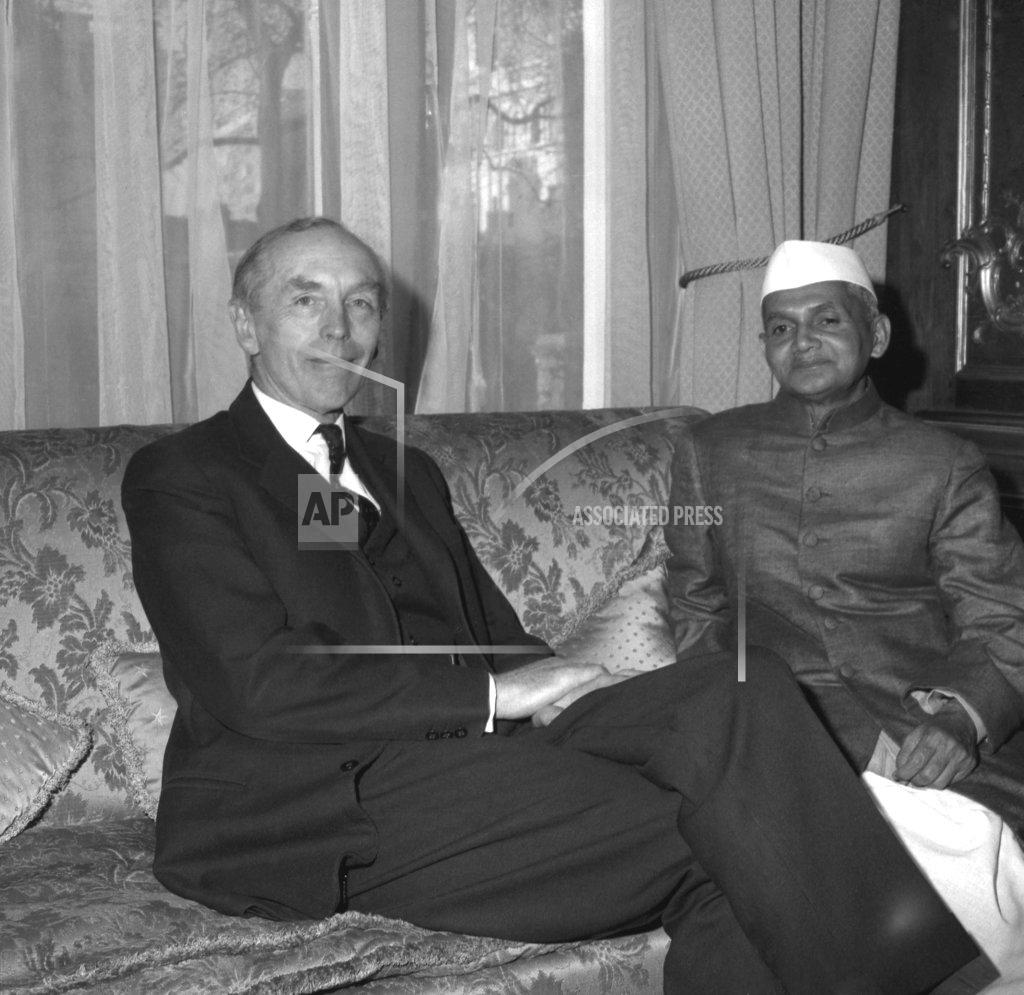
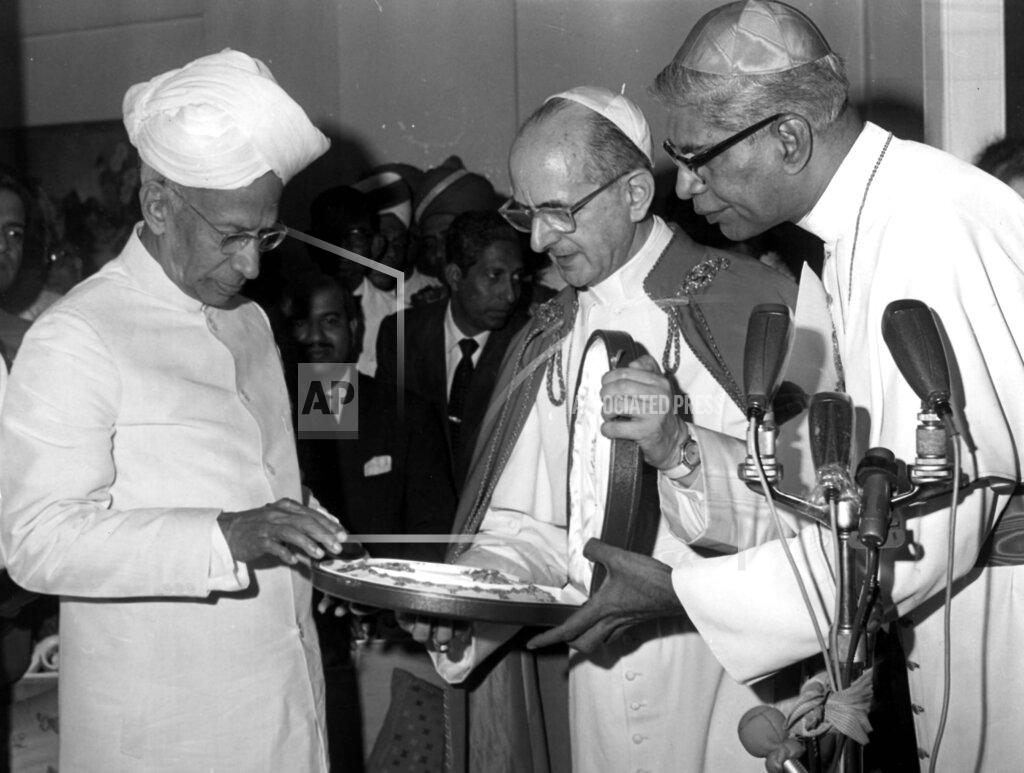
Lal Bahadur Shastri, the Prime Minister of India, arrived in London Airport today, pressed his hands together in a traditional Eastern greeting and announced that he intended to combine business with pleasure during his four‐day state visit to Britain. It is his first visit not only to this country but to Europe. Illness prevented him from attending the Commonwealth Prime Ministers’ conference in London last July. Like most people visting London for the first time, the 60-year-old Mr. Shastri has set time aside to visit the Tower of London and St. Paul’s Cathedral. Today he was received by Queen Elizabeth II at Buckingham Palace. Afterward he went to 10 Downing Street for a vegetarian lunch with Prime Minister Harold Wilson and other high officials of both countries. It was a straight working session.
Sirimavo Bandaranaike lost a vote of confidence as Prime Minister of Ceylon by a single vote, as 14 members of parliament from her Sri Lanka Freedom Party went against her. The final result on the resolution that the House of Representatives had lost confidence in her government was 74 for, 73 against. The immediate cause had been her decision to form a coalition government with the Lanka Sama Samaja Party and to nationalize opposition newspapers. New elections would be held in March, and opposition leader Dudley Senanayake would form a new government with his United National Party.
Canadian murderer George Marcotte, who had dressed as Santa Claus to hold up a bank in the Montreal suburb of St. Laurent, Quebec and killed two policemen responding to the alarm, had his death sentence commuted 12 hours before he was scheduled to be hanged. The decision was made by a vote of the cabinet of Prime Minister Lester Pearson at the request of Justice Minister Guy Favreau.
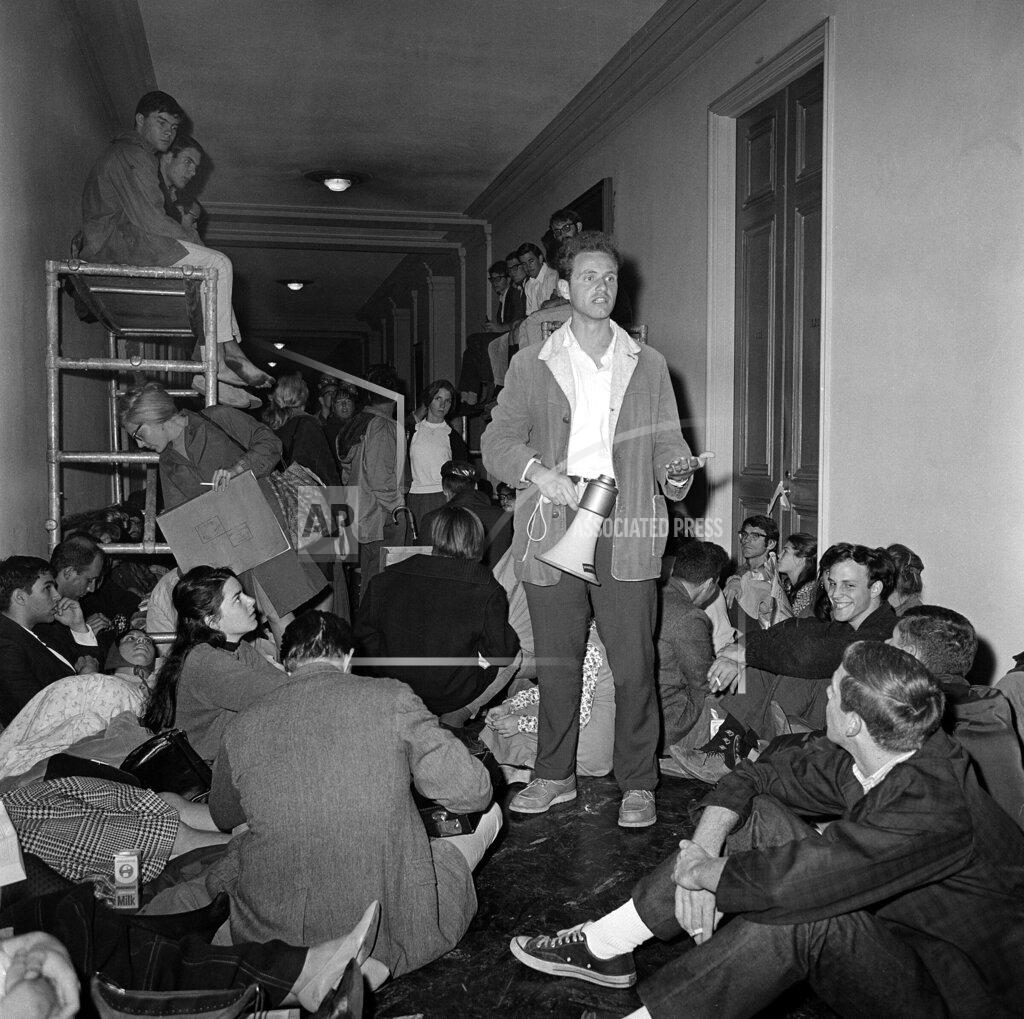
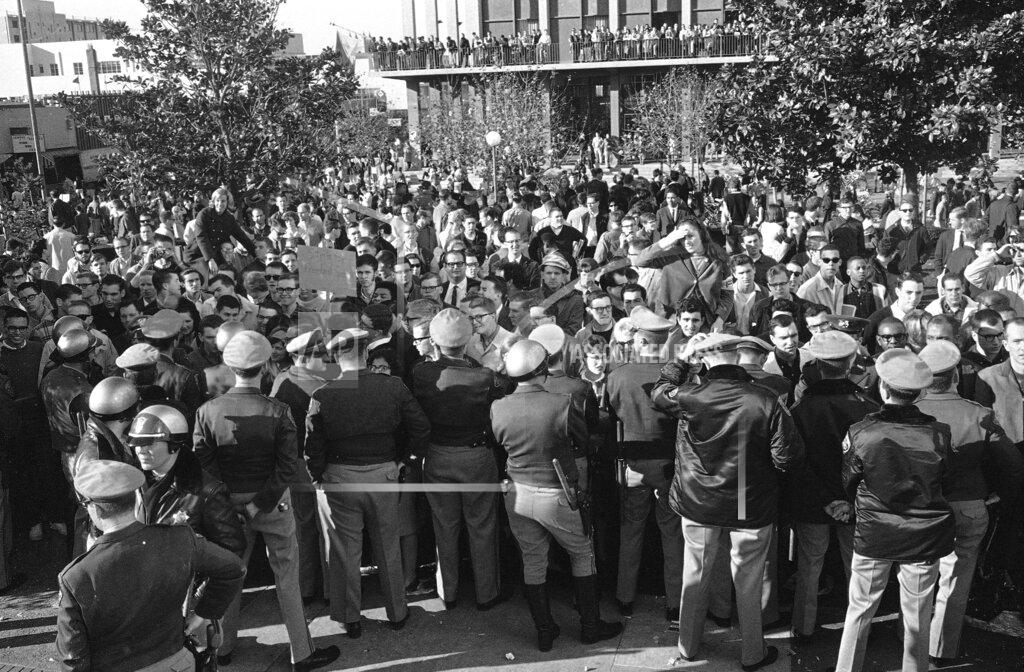
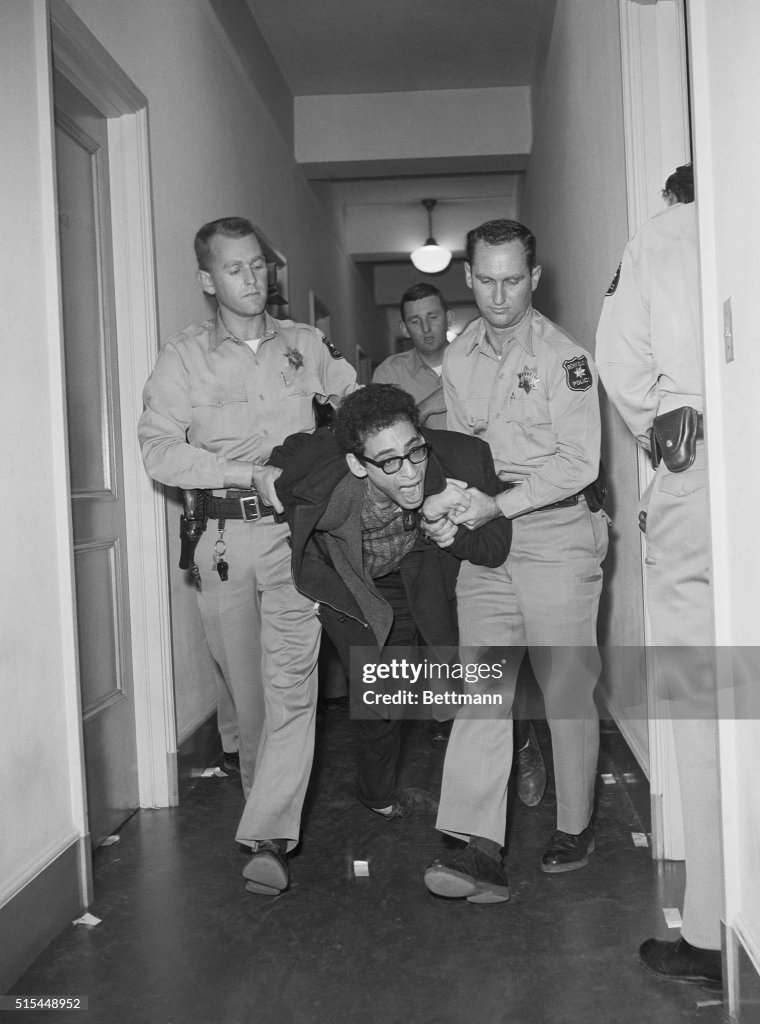
Police arrested about 814 students at the University of California, Berkeley, following their takeover of and massive sit-in at the Sproul Hall administration building. The sit-in most directly protested the U.C. Regents’ decision to punish student activists for what many thought had been justified civil disobedience earlier in the conflict. Police made the arrests of students, dragging many on their backs down flights of stairs to end a sit-in demonstration. The mass arrests were made in removing demonstrators who took possession of the administration building on the campus last night. The Free Speech Movement, the protesting, student group, retaliated by calling a student strike. Faculty members, at a special meeting, gave evidence of some support for the students. The dispute over students’ political and protest activities has shaken the university for almost three months.
The strike was called after Governor Edmund G. Brown ordered early this morning that sit‐in demonstrators be removed by force from the corridors of Sproul Hall, the administration building. Mr. Brown said that the students’ action constituted “anarchy.” Charges of police brutality were made as a result of the removals and arrests today. In the 27,500-student university, the effectiveness of the strike was difficult to measure. In the morning pickets wheeled in front of the doors of all the classroom buildings and, although students continued to pass through the lines, there were reports that many classrooms were empty. Clark Kerr, president of the university, issued a statement tonight declaring that the Free Speech Movement represented an “understandable concern” last September but that it “has now become an instrument of anarchy and of personal aggrandizement.”
The First National Bank of Boston, succumbing to what it termed “political pressures” from President Johnson, yesterday rescinded an increase in its basic interest rate on business loans that it had announced Tuesday. Its cancellation of the rise, to 4¾ percent from 4½ percent, made it almost certain that banks generally would not lift interest rates in the near future. Some New York bankers said no general advance was likely before next spring. A spokesman for the Boston bank said that it would have maintained the 4¾ percent rate at least for a while longer, in hopes that other banks would go along, if the President had not publicly appealed to bankers to hold the line. In a speech Wednesday night, Mr. Johnson said that he did not believe “any general increase in the rates which banks charge their customers” was justified.
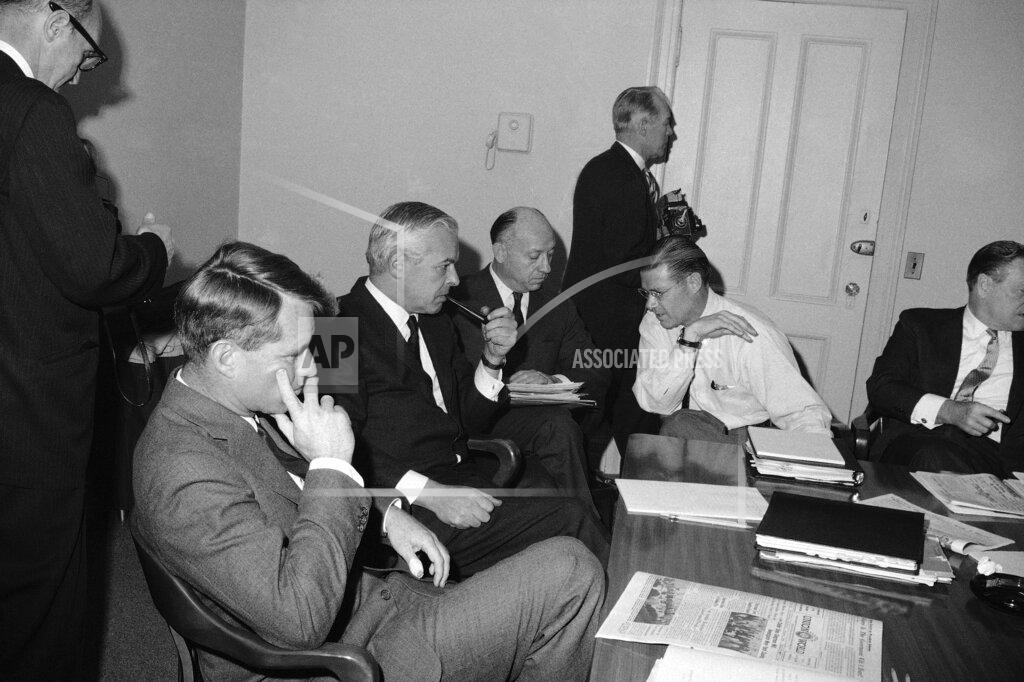
Senator John J. Williams angrily disassociated himself today from the Senate Rules Committee’s investigation of Robert G. Baker. He did so after a bitter exchange with the committee’s chief counsel, Lennox P. McLendon. Each man attacked the other’s veracity in one of the most ill‐tempered flare‐ups in recent Senate history. As the lanky Delaware Republican stalked from the hearing room, he flung a warning over his shoulder: “I shall continue to observe the committee’s activities with the greatest interest.” A new angle in the Baker case was introduced today as the committee sought to trace a $5,000 payment made to Mr. Baker by Myron Weiner, a Washington lawyer and public relations man. Mr. Weiner said the payment covered a one‐year retainer fee for legal services. Senator Williams is not a member of the committee, but he has attended each session of the revived hearings this week and has often, with the chairman’s permission, participated in the questioning of witnesses.
As the author of the original Baker investigation, and the source of the new information on which the hearings were reopened, he has occupied a role this week in the nature of a wary Banquo’s ghost at the committee table. This morning the Senator and Mr. McLendon quarreled over whether Senator Williams had or had not given the committee a certain item of information. At one point the counsel exploded, “That statement you made is absolutely untrue.” This brought a sharp reaction from Senator Williams and from Senator Carl T. Curtis of Nebraska, the ranking Republican on the panel, who came to his colleague’s defense. The angry exchange continued for approximately 10 minutes. In the course of it Mr. Williams said he would attend no further meetings of the committee.
Senator Edward M. Kennedy took his first steps tonight since last June 19, when his back was broken in a plane crash in western Massachusetts. Wearing a back brace, the Massachusetts Democrat was swung into an upright position in his orthopedic bed. He stepped out and walked the length of his room, about 10 feet, in the New England Baptist Hospital. He was wearing shoes and socks. After concentrating on taking his first step, Senator Kennedy could only grin and nod his thanks to physicians, who were in the room to watch his effort. Physicians expressed satisfaction with the Senator’s progress. They said, he would do more walking In the next few days. He and his family plan to spend the Christmas holidays in Palm Beach, Florida.
Two business associates of James R. Hoffa were acquitted of extortion charges in San Francisco tonight. Paul Dorfmann, 63 years old, and his stepson, Allen, 41, of Chicago were found not guilty of charges that they had threatened bodily harm to Stewart B. Hopps, a financier. Through the 11-day trial, defense attorneys maintained that the Justice Department was attempting to get at the president of the International Brotherhood of Teamsters by harassing his associates. James Martin Mclnnis, one of the attorneys, said that “faceless agents” of the Government were out to get Hoffa through the Dorfmanns. “If you prosecute friends of Hoffa, then do you prosecute friends of the friends?” he asked. “And where does it stop?”
Senator Margaret Chase Smith called upon the nation yesterday to restore honor to “squares” on the ground that they represent the wholesome bulwark of the country. The petite, gray‐haired Maine Republican said that “squares” would not stand idly by when a woman screamed for help while being stabbed to death, when another woman was stripped of her clothes and attacked, or when a man drowning off a beach could get help from only one person. Speaking to 1,200 women leaders of Hadassah, the Women’s Zionist organization in America, the Senator deplored what she said was a national trend to glorify people who “cut corners, play the angles and goof off.”
Liberal Democrats seeking reforms in House of Represntatives procedures assigned first priority today to imposing sanctions against politically disloyal colleagues. They will seek to purge from the party’s House organization two Southerners who openly supported Senator Barry Goldwater, the Republican nominee for President. The defectors are Representatives John Bell Williams of Mississippi and Albert W. Watson of South Carolina. Leaders of the Democratic Study Group, a loosely knit organization of more than 100 House liberals, held a strategy session at which proposals to revise rules and procedures of the House and its Democratic caucus were discussed. The only announced decisions were to press ahead with the proposed purge and to consult like‐minded members about other reforms.
The weekly newspaper in Philadelphia, Mississippi said today the Federal Bureau of Investigation should “cut out all this cloak and dagger stuff” in the case of three slain civil rights workers. “If arrests are to be made, why in hell don’t they go on and make them?” the frontpage editorial in the Neshoba Democrat said.
Two white civil rights workers from New England drove a carload of “freedom school” youths to the Toddle House, a Meridian, Mississippi restaurant, in a test of compliance with the Civil Rights Act last night. All were arrested. The civil rights workers, Freeman Cocroft, 22 years old, of Providence, Rhode Island, who was graduated last June from Yale, and Lucian Kabat, 25, of Saunderstown, Rhode Island, a medical student at Stanford University, were given a preliminary arraignment today on charges of contributing to the delinquency of minors. They pleaded not guilty. Bond was set at $650 each by Lauderdale County Judge J. Emerson Harwell. Judge Harwell dismissed charges of disorderly conduct against the eight Black children involved in the incident and they were released in the custody of their parents. The judge warned staff members of the Council of Federated Organizations that they faced “serious trouble” if they continued to “lead innocent little people into trouble in the middle of the night.” An employe of the Toddle House testified that the eight children entered the restaurant and ordered soft drinks.
A community relations director of the Congress of Racial Equality was beaten and four other civil rights workers were arrested today in scattered disorders during å farm program election in nearby Madison County. Marvin Rich of CORE headquarters in. New York was knocked to the ground and whipped with a belt buckle as he tried to observe voting for a community committee of the Federal Agricultural Stabilization and Conservation Service. Civil rights workers have been encouraging Blacks to enter the contests for seats, and in the statewide election thousands of Blacks were voting for the first time. There were a total of 52 Blacks running, but only one was elected. In Madison County, where Blacks outnumber whites 2 to 1, Black voters in the town of Camden elected Luther Honeysuckle, a farmer. Since Mr. Honeysuckle received more votes than any of his five white rivals, he will become the first Black chairman of any community committee in Mississippi.
The Danish football club Brøndby IF was founded as a merger between the two local clubs Brøndbyøster Idrætsforening and Brøndbyvester Idrætsforening. The club would win the national championship in the Danish Superliga 10 times, and the national Danish Cup six times.
Owners of the 20 National League and American League baseball teams voted to create the Major League Baseball draft in order to make a more uniform distribution of amateur players. In an imitation of the drafting process in other professional sports leagues, the teams would select “in reverse order off the standings at the end of the previous season”. Though the proposal was initially opposed by both New York teams (the Yankees and Mets), both Los Angeles teams (the Dodgers and Angels), the St. Louis Cardinals, the Minnesota Twins, and the Washington Senators, the resolution passed unanimously. The teams would have the first option, for a limited time, to negotiate exclusively with the players selected. The first draft would be held on June 8, 1965.
Astros’ General Manager Paul Richards sparks controversy when news leaks out during the Winter Meetings in Houston that he had offered the team’s entire 40-man roster plus $5 million dollars for the 40-man roster of the Milwaukee Braves. Richards claimed to have had the backing of owners Bob Smith and Roy Hofheinz but the Braves shoot down the idea as a joke that got out of hand. Had it been consumated, future Hall of Famers like Hank Aaron, Phil Niekro and Eddie Mathews could have been Astros.
In what is a fine move by the Angels, California unloads pitcher Bo Belinsky to the Philadelphia Phillies for minor-league pitcher Rudy May and first baseman Costen Shockley.
Dow Jones Industrial Average: 870.79 (+3.63)
Born:
Darryl Hamilton, MLB outfielder (Milwaukee Brewers, Texas Rangers, San Francisco Giants, Colorado Rocies, New York Mets), in Baton Rouge, Louisiana (d. 2015, murdered by ex-girlfriend).
Steve Carter, MLB outfielder and pinch hitter (Pittsburgh Pirates), in Charlottesville, Virginia.
Jeff Carter, MLB pitcher (Chicago White Sox), in Tampa, Florida.
Toi Cook, NFL cornerback (New Orleans Saints, San Francisco 49ers, Carolina Panthers), in Chicago, Illinois.
Phillip James, NFL guard (New Orleans Saints), in Atlanta, Texas.
Shelley Poole, NFL running back (Atlanta Falcons), in Button Gwinnett, Georgia.
Died:
U.S. Navy Admiral Charles P. Snyder, 85, the first Naval Inspector General
 History Diaries