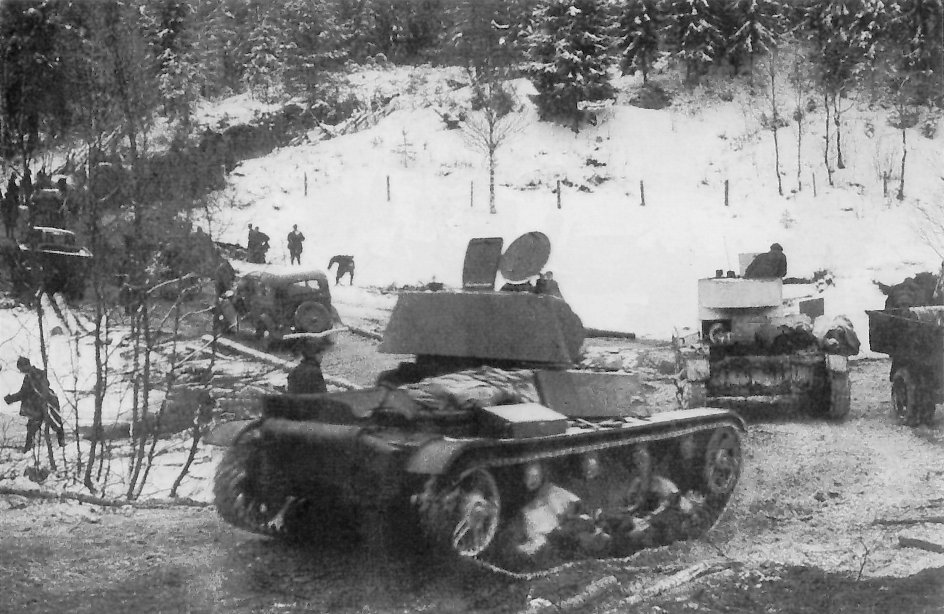
The third day of Finland’s war with Russia brought a series of Finnish successes, according to reports gathered in Helsinki, and slowed the Soviet invaders’ advance to a snail’s pace in fierce land and naval fighting.
General Baron Carl Gustav Emil Mannerheim, Commander in Chief of the Finnish armed forces, in his order of the day No. 1, said today: “The President of the republic on November 30 appointed me chief of the country’s defense. Brave soldiers of Finland: I take over this task at a time when our arch foe again is attacking our country. The first necessity is that you trust your chief. You know me and I know you and I know that everybody in this country is prepared to do his duty fully, even unto death. This war is nothing except the continuation and the last act of our war for liberation. We fight for our homes, our faith and our Fatherland.”
Finland appeals to the League of Nations to mediate in their quarrel with the Soviets.
There are Soviet landings with naval support near Petsamo and other units of 14th Army are attacking overland nearby. Elsewhere the slow advance of the Soviet forces continues. The main Finnish defenses have not yet been reached in most areas.
Soviet Red Army units take Petsamo, in northernmost Finland. At the north end of the Front, the Soviets have occupied Petsamo and are advancing toward Rovaniemi against light opposition. The Finish 10th Separate Company and 5th Separate Battery, both part of the Lapland Group, face two Soviet Divisions (the 52nd and the 104th).
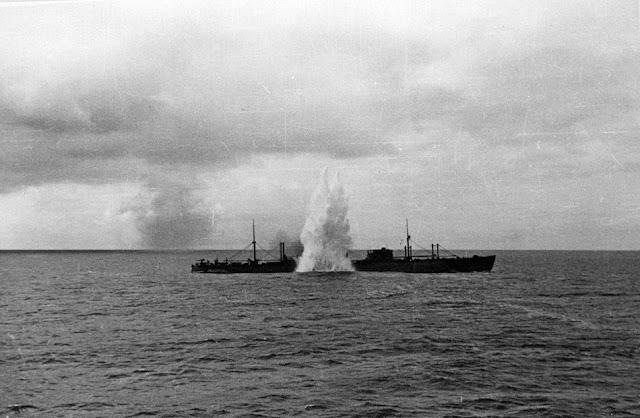
The Finns claim 36 tanks destroyed and 19 planes shot down. They also claim to have sunk a Soviet warship off the island of Russaro (the ship was only damaged, though with numerous casualties).
Soviet 8th Army north of Lake Ladoga captures Suojarvi.
The Red Army advanced slowly on the Karelian Isthmus sustaining massive casualties.
Finnish units withdraw in good order to the Mannerheim Line. Finnish troops are slowly withdrawing to the Mannerheim Line. They are proving adept at ambushing Soviet tanks and setting booby traps. There are some 13,000 front-line Finnish troops on the Karelian Isthmus facing several times their number. The lines are still well ahead of the major Mannerheim Line defenses.
The Finnish Legation staff was still in Moscow today, and it is uncertain when its members will leave. They have the greatest difficulty in trying to communicate with their government, and have been unsuccessful in the attempts for two days.
That Finland expects more violent air attacks was shown tonight when the government ordered the evacuation of all major cities in the southern part of the country.
The German Reich approves of the attack on Finland. The press insists the British and Swedish ministers inspired resistance to the Soviets.
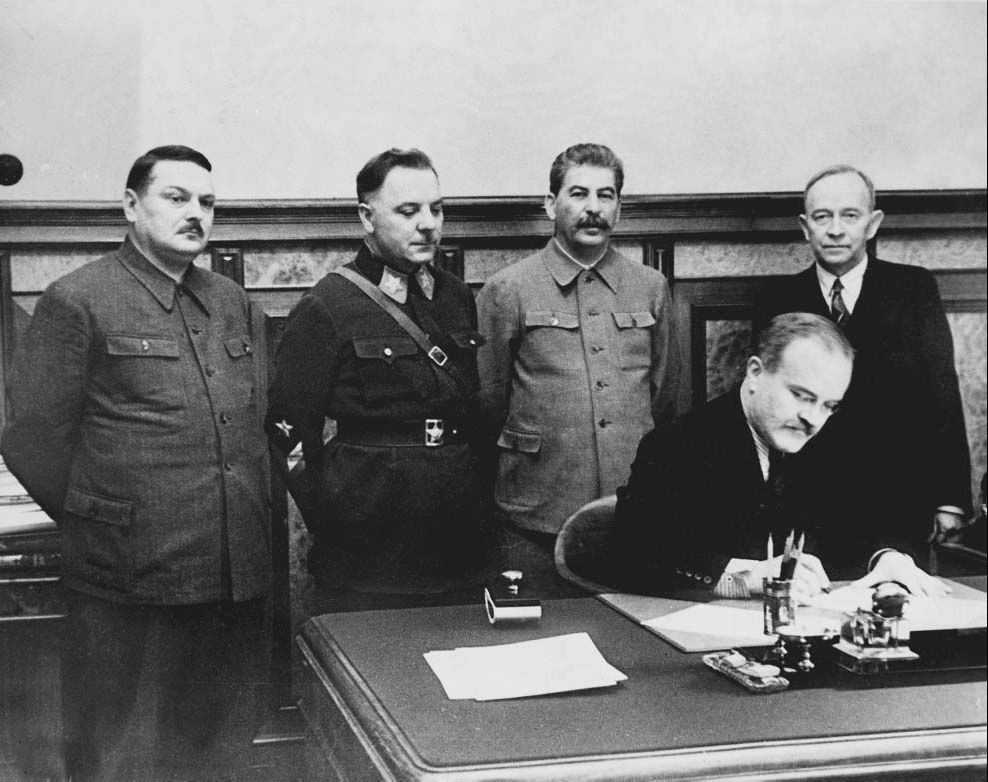
Moscow recognizes the new “democratic republic” founded in Finland. Its Cabinet asks for aid. The Soviet government signs a “pact of mutual assistance” with its puppet Finnish People’s government.
Italian hostility to Russia stiffens; the press condemns the invasion of Finland. Officials are silent. Italians protest at the Soviet legation. Demonstrators boo and jeer Stalin.
The Pope condemns Soviet aggression.
President Roosevelt’s response to the Soviet action is stern. The Soviet invasion of Finland is denounced in his strongest words since the war began. A “moral” ban is hinted. The United States takes steps to bar planes to the Soviet Union.
The German state media launch a campaign against Sweden. This contributes to the general sense of unease felt throughout Scandinavia.
The Swedish Army calls up reserves. The Foreign Minister resigns when the government refuses to send troops to help Finland.
In Switzerland, the International Olympic Committee announces the abandonment of the Helsinki Olympic Games, planned for 1940. The IOC announces that, just as in November they had canceled the Winter Olympics at Garmisch-Partenkirchen, Germany, they also now were canceling the summer 1940 Games. Those Games had been planned for Helsinki, but the Winter War makes holding them there impossible.
Count Edward Raczynski, the Polish Ambassador, handed to Viscount Halifax, the Foreign Secretary, today a strongly worded protest accusing the Germans of robbery and murder in Poland and charging that human life in that country “has become the sport of ferocious and bestial hangmen.” Lord Halifax expressed deep indignation at the alleged horrors and promised to give fullest attention to the protest. Today’s memorandum was prepared by General Władysław Sikorski, former Premier and chief of staff of the Polish Army, and will be followed by an official Polish White Book. The Poles accuse the Germans of the wholesale shooting of leading citizens of the occupied country; seizure of private property; eviction of families from their homes and deportation to the interior of Germany of the entire faculty of the University of Kraków.
The Western Front remains mostly quiet. A French communiqué reports: “A quiet day on the whole front… the air forces, on both sides, were completely inactive.”
French Premier Edouard Daladier warns “bomb for bomb” in answering the German raid threat.
British conscription was increased to cover men from 19 to 41 years of age, with limited occupational deferments.
The RAF sends 24 Vickers Wellington bombers of 115 Squadron against the Kriegsmarine base at Heligoland. A bomb is dropped on land when it “hangs up” in the bomb bay and eventually drops on Heligoland Island, where it apparently quite fortuitously hits an anti-aircraft battery. This marks the first RAF bombs dropped on the Reich in World War II.
German liner Watussi is scuttled by her crew after she is spotted by a Junkers-86 of 15 Squadron of the South African Air Force which directs the cruiser HMS Sussex to intercept. Sussex rescued the 196 people on board. Watussi was shelled by HMS Renown to quicken her sinking. Watussi had been acting as a supply ship for German surface raiders.
The German pocket battleship SMS Admiral Graf Spee stopped the 10,086-ton British freighter Doric Star west of Southwest Africa in the southern Atlantic Ocean (19°15′S 5°05′E). The warship then torpedoed, shelled, and sank the merchantman. The crew was taken prisoner.
A straggler from convoy HN.3 due to a gale, the 3,829-ton British steam merchant Eskdene was hit amidships by one G7e torpedo from the U-56, commanded by Kapitänleutnant Wilhelm Zahn, approximately 70 miles northeast of Tyne, England in the North Sea. At 23.25 hours on 2 Dec 1939, the Eskdene (Master E.J. Niblett) was hit amidships by one G7e torpedo from U-56 (Zahn) about 70 miles northeast of Tyne in 56°30N/01°40W, but stayed afloat with a heavy list on her cargo of timber that had been loaded in Archangel. The 29 crewmen abandoned ship and were picked up by the Norwegian steam merchant Hild. HMS Icarus (D 03) (LtCdr C.D. Maud, RN) and HMS Ilex (D 61) (LtCdr P.L. Saumarez, RN) searched the area for the U-boat and the floating ship, which was not found although being located by aircraft on 4 December. At dawn on 7 December, the abandoned Eskdene was found by an aircraft in 56°20N/00°15W and the next day towed to the Tyne by the British tug Bullger, escorted by HMS Stork (L 81) (Cdr A.C. Behague, RN) and beached on Head Sands. The ship was later refloated, repaired and returned to service in October 1940.
The British cargo ship Chancellor collided with the British Athelchief in the Atlantic Ocean 70 nautical miles (130 km) off Halifax, Nova Scotia, Canada (44°30′N, 61°51′W) and sank. All 42 crew survived.
The British tanker San Callisto struck a mine and sank in the North Sea 2.5 nautical miles (4.6 km) south west of the Tongue Lightship (51°31′09″N 1°25′00″E) with the loss of six of her 42 crew. The wreck was subsequently dispersed by explosives.
Convoy OA.45G leaves Southend, Convoy SL.11 leaves Freetown, and Convoy HXF.11 departs from Halifax.
The War at Sea, Saturday, 2 December 1939 (naval-history.net)
Destroyer PUNJABI was badly damaged at 0200 in collision with steamer LAIRDCREST (789grt), off Holy Island, off the coast of Arran in the Clyde estuary as PUNJABI was escorting battlecruiser HOOD into port. She was towed stern first into the Clyde from Cumbrae, and repaired at Govan from 8 December to 29 February 1940.
Battlecruiser HOOD and destroyers KINGSTON, KHARTOUM and KASHMIR departed the Clyde at 1910 to patrol north of the Faroe Islands.
Light cruiser AURORA arrived at Rosyth.
Six armed merchant cruisers were on Northern Patrol duties, while MONTCLARE left from Scapa Flow and LAURENTIC from Liverpool to join them.
Light cruiser DUNEDIN arrived in the Clyde to refit, completed on the 22nd.
Light cruisers DIOMEDE, DRAGON, DELHI, COLOMBO and CARDIFF arrived at Loch Ewe.
Light cruiser SHEFFIELD departed Scapa Flow on Northern Patrol in the Denmark Strait.
Convoy FN.47 departed Southend, escorted by destroyer VALOROUS and sloop BITTERN, and arrived in the Tyne on the 3rd.
Convoy FS.47 departed the Tyne, escorted by sloops PELICAN and HASTINGS, arriving at Southend on the 3rd.
U-28 and U-29 were reported radioing each other in 50-17N, 4-35W. Destroyers ANTELOPE, VETERAN and WHITEHALL searched to the west of the location, and destroyers GRENVILLE, VEGA, ACHATES and WINDSOR to the east. The search continued until the 3rd without success.
Anti-submarine trawler LOCH DOON (534grt) reported four unidentified ships as apparently destroyers, five miles east of Coquet Light steering north. British aircraft later sighted five Danish fishing smacks 90 miles east of Flamborough Head, and destroyers JERSEY and JAGUAR were sent to investigate.
U-56 damaged steamer ESKDENE (3829grt) in 56 30N, 01 40W after she became separated from convoy HN.3 in bad weather, and sank Swedish steamer RUDOLF (2119grt) off Dundee in the Firth of Tay in 56 15N, 01 25W. Destroyers ICARUS and ILEX were sent to investigate in case the steamers had been sunk by a submarine. ESKDENE was abandoned by her crew, and all 29 picked up by Norwegian steamer HILD (1356grt). ICARUS and ILEX then searched for the steamer, but without success, and although aircraft located her at 1530/4th, surface ships could still not find her. Finally she was located, again by aircraft, at dawn on the 7th in 56-20N, 00-15W, towed to Shields on the Tyne on the 8th by tug BULGER screened by sloop STORK, and finally beached on Head Sands. RUDOLF lost nine crew, with six survivors rescued by minesweeping trawler FIREFLY (394grt) and eight by trawler CARDEW (208grt).
Convoy OA.45G of 24 ships departed Southend escorted by destroyers ANTELOPE, AMAZON and sloop ENCHANTRESS. The sloop detached on the 4th and the destroyers transferred to HG.9 on the 6th. OA.45G merged with OB.45G to become convoy OG.9, escorted by destroyer VOLUNTEER and sloop DEPTFORD until the 5th.
U-61 laid mines off Newcastle during the night of the 1st/2nd, on which one steamer was sunk and one damaged.
U-58 laid mines off Lowestoft, on which no shipping was sunk or damaged.
Convoy HXF.11 departed Halifax at 1000 escorted by Canadian destroyers HMCS ST LAURENT and HMCS SKEENA, which detached on the 3rd. Ocean escort was provided by armed merchant cruiser ASCANIA and submarines NARWHAL and SEAL. On the 3rd, 70 miles from Halifax, steamers MANCHESTER REGIMENT (5989grt) and OROPESA (14,118grt) collided. MANCHESTER REGIMENT was taken in tow, but foundered in mid-afternoon, and the crew taken aboard OROPESA.
ASCANIA detached on the 12th, while destroyer MACKAY from OB.49 escorted the convoy from the 12th to 15th, when it arrived at Liverpool.
Force K received a sighting report at 1030 from a South African bomber of a suspicious vessel in the area south of Cape Agulhas, 74 miles 167° from Cape Point. Battlecruiser RENOWN and heavy cruiser SUSSEX went to the position to investigate and found German passenger ship WATUSSI (9522grt) which had departed Mozambique on 22/23 November. WATUSSI scuttled herself when approached by SUSSEX, and the 196 passengers and crew were picked up by her. To hasten her sinking, battlecruiser RENOWN dispatched WATUSSI with main armament gunfire. The crew and passengers were taken to Simonstown on SUSSEX, arriving at 2359/2nd.
Light cruiser AJAX departed Port Stanley for Rio de la Plata, and heavy cruiser CUMBERLAND, when relieved, patrolled southward before entering Port Stanley.
German pocket battleship ADMIRAL GRAF SPEE sank steamer DORIC STAR (10,086grt) in the South Atlantic in 19 15S, 05 05E.
Heavy cruiser KENT arrived at Colombo.
Light cruiser PENELOPE departed Malta on patrol duties and arrived back on the 12th.
Destroyer DECOY was refitting at Malta for corrosion to her bulkheads.
Convoy SL.11 departed Freetown at 0700/2nd. Escorting sloop FOWEY was slightly damaged in collision with steamer GRAINTON (6341grt) at 2040 in 8-51N, 14-37W, and on arrival at Southampton began a refit. The convoy arrived on the 18th.
French battleship BRETAGNE entered the dock at Toulon and was under repairs from 2 December to 3 March 1940. She sailed on 10 March.
The Roosevelt Administration imposed a “moral embargo” on the sale of American arms to unnamed countries perpetuating “terror bombing.” Roosevelt urged American companies not to sell those countries airplanes or components in their manufacture. A moral embargo that is expected to shut off completely the sale or export to Russia of United States airplanes, engines, spare parts, bombs and other equipment essential for attacking civilians and open cities and towns from the air was declared by President Roosevelt today.
In the light of the successful embargo of this type applied against Japan in June, 1938, it is expected to be complete. The embargo was in the form of a public statement issued by the President after a conference with Secretary of State Cordell Hull calling for a cessation of such business. Although Russia was not mentioned by name, any more than Japan was a year and a half ago, Mr. Roosevelt branded the Soviet Government by declaring that the embargo was directed to nations “obviously guilty” of such “unprovoked bombings” as had occurred.
President Roosevelt misses the Army-Navy football game. International affairs prompt a change in plans.
Former President Herbert Hoover tonight urged that the United States withdraw its ambassador from Moscow in protest against Russia’s assault on the Finns and “the dead women and children in their streets.”
U.S. Attorney General Murphy bluntly informed William Green today that the Department of Justice was following Supreme Court decisions in taking the position that labor unions were liable under the Antitrust Laws. He made public a brief letter in reply to the one in which the American Federation of Labor president insisted that labor unions were exempt from these laws and demanded to know whether Thurman Arnold, Assistant Attorney General in charge of the Antitrust Division, represented the opinion of the department in his public acts and statements.
The controversy arose over recent prosecutions and threats of prosecutions in connection with the department’s drive against alleged restraint of competition in the construction industry. Mr. Arnold has insisted that labor unions are involved in this investigation and will be prosecuted if the facts warrant. Indictments have been returned against the Teamsters Union, an A.F.L. affiliate, as a result of a jurisdictional dispute on a government construction job in Washington; against the international president of the carpenters’ union and other officers in St. Louis and against officers of the glaziers’ union in Cleveland.
A.F.L. building trades union chiefs and other A.F.L. leaders conferred with Mr. Murphy some time ago, reportedly in search of a basis for terminating the department’s investigation of the unions. The conference evidently was fruitless, however, for most of Mr. Arnold’s moves in the field followed that conference. Mr. Green’s letter, dated November 22, insisted upon the exempt status of the unions and inferentially threatened political reprisals if the drive was not dropped.
Women and men will be on equal footing in the campaign to make District Attorney Thomas E. Dewey the Republican nominee for President, it became known yesterday when notice of the formation of the Thomas E. Dewey Committee for the Presidential Nomination was filed with the Secretary of State. J. Russel Sprague, Nassau County leader, and Mrs. Ruth Hanna McCormick Simms, were named co-chairmen and George H. Sibley treasurer. Mr. Sprague and Mrs. Simms, daughter of the late Mark Hanna, are the joint campaign managers. There is no women’s division of the committee at the headquarters in New York. For the first time since women obtained the vote they will participate on an equal footing with the men in an important political movement. In his home state of New York as well as elsewhere in the country, Mr. Dewey has strong support among women.
The Steel Workers Organizing Committee of the C.I.O. announced today that it was conducting a strike vote among the 12,000 employes of the Crucible Steel Company of America and the firm’s affiliate, the Pittsburgh-Crucible Steel Company at Midland.
Jay Lovestone, former secretary of the Communist party in this country, told the Dies Committee today that the policies of American Communists were dictated by the desires of Moscow.
Philip Pearl, the American Federation of Labor’s Weekly News Service columnist, asked in his column today why the Congress of Industrial Organizations was “so touchy on the subject of communism.” “If that organization is free of Red taint, why doesn’t it say so?” he demanded. “The old proverb says there are none so blind as they who will not see,” he commented. “In this case,there are none so blind as the color-blind. The C.I.O. attitude, from what we can gather, is that it is color-blind. It cannot distinguish one political color from another. Especially, it cannot see Red.” Mr. Pearl ridiculed the Red “purge” of John L. Lewis, C.I.O. head, in which several C.I.O. officials were demoted or their positions changed. Mr. Pearl suggested that the shifting of these officials was no “purge” at all.
Food for Cleveland’s hungry will be apportioned, for the rest of this year, on the present emergency ration system. This was made known today by Mayor Harold H. Burton after a conference with Cabinet heads.
Drought in the U.S. menaces the TVA power supply. A fall in electric current and rise in home and factory use presents a challenge. Steam plants are being used for 27 percent of the power generated, despite the original intent to use hydro-electric power exclusively.
The problems of keeping America out of war and giving jobs to the unemployed are the two issues which tower above all others in the public mind today, a nation-wide survey by the American Institute of Public Opinion, of which Dr. George Gallup is director, indicates. 47% of those polled call keeping out of the war the most important American issue today; 27% point to solving unemployment.
Discussion occurs over whether television viewers will accept breaks in the story-telling for commercials, as it happens with radio programming.
The U.S. Army Air Corps is authorized to begin development of a four-engine bomber with a 2,000-mile radius of action, which led to the Boeing B-29 Superfortress.
New York’s North Beach Airport began operations as an airliner from Chicago landed at one minute after midnight. The North Beach Airport opened in Queens, NYC, with 2 levels for passenger circulation. It was later renamed LaGuardia Airport.
Advance tickets for the premiere of “Gone With the Wind” sell out.
Navy defeated Army 10–0 in the Army–Navy Game in Philadelphia.
College Football Scores:
Baylor 10, @ Rice 7
Boston College 14, (10) Holy Cross 0
Citadel 21, N Wofford 2
Detroit Mercy 10, @ (6) Duquesne 10
Fordham 18, New York University 7
George Washington 13, @ West Virginia 0
Georgia Tech 13, Georgia 0
Hardin-Simmons 7, @ Centenary (LA) 6
Navy 10, Army 0
(1) Southern California 9, Washington 7
Southern Methodist 14, @ Texas Christian 7
Stanford 14, @ Dartmouth 3
(5) Tulane 33, Louisiana State 20
Washington (MO) 21, @ Saint Louis 17
Canadian destroyers HMCS St. Laurent and HMCS Skeena and submarines HMS Cachalot and HMS Seal departed Halifax as convoy escorts for HXF.11.
The death knell of foreign oil companies in Mexico, as far as the Mexican courts are concerned, was sounded today by the Supreme Court, which by the unanimous vote of its four members upheld the constitutionality of the decree expropriating the companies’ property.
The second Inter-American Labor Conference closed this afternoon after a twoweek study of social problems of the American nations.
Chinese officials display a reluctance to comment on the Russian invasion of Finland. Significantly today’s press editorials make no mention of the event. The Soviets have, to this point, been one of the main supporters of the Chinese in their war with Japan.
Dow Jones Industrial Average: 146.62 (+0.08)
Born:
Harry Reid, politician (U.S. Senator from Nevada, 1987-2017; U.S. House of Representatives, 1983-1987), in Searchlight, Nevada (d. 2021).
Francis Fox, Canadian politician (member of the Senate of Canada), in Montreal, Quebec, Canada.
Yael Dayan, Israeli writer and politician, in Nahalal, British Mandate of Palestine.
Naval Construction:
The Royal Navy “U”-class (Second Group) submarine HMS Undaunted (N 55) is laid down by Vickers Armstrong (Barrow-in-Furness, U.K.).
The Royal Indian Navy auxiliary patrol vessel HMIS Victoria Marie is commissioned. Her first commanding officer is Lieutenant Alfred Trevor John Cole, RIN.
The Royal Navy armed merchant cruiser HMS Canton (F 97) is commissioned. Her first commanding officer is Captain George Devereux Belben, DSC, RN.
The Kriegsmarine (German Navy) Type 35 torpedo boat T2 is commissioned.

 History Diaries