Richard Nixon called on the United States to bomb Việt Cộng supply routes, even if it required extending the war. In a speech at the Diamond Jubilee Dinner of the Brooklyn Bar Association in the St. George Hotel, the former Vice President said that if the United States did not cut these lines it would suffer a defeat in South Vietnam “within a matter of months.” Last April, in the course of a sweeping attack on the Johnson Administration’s foreign policy, Mr. Nixon advocated military strikes against Communist bases in North Vietnam and Laos.
Yesterday he warned that if South Vietnam fell to the Communists, most of the other countries in Southeast Asia would also fall and a “major war” would be necessary to save the Philippines. With most of Southeast Asia in their hands, he said, the Communists would be able to exert “tremendous pressure on Japan — the big prize in Asia.” Mr. Nixon acknowledged that an extension of the war in South Vietnam ran the risk of Chinese Communist or even Soviet intervention. But he said that the United States must take the necessary risks to win, “so that we won’t have to fight a major war three or four years later.”
Việt Cộng overrun the district headquarters of Thiên Gạo, supposedly an area controlled by the South Vietnamese government; the Việt Cộng kill the district chief and take many weapons. About three companies of Việt Cộng troops overran a 90-man district headquarters yesterday in a supposedly pacified section of the country. In reporting the action today a United States military Spokesman said the Vietnamese district chief had been killed and large stocks of weapons seized. The action took place early yesterday at the Thiên Gạo district headquarters, about 10 miles from Phan Thiết on the South China seacoast east of Saigon. The Communist force of 400 men withdrew after having occupied and sacked the post.
Government air raids against insurgent concentrations have forced Communist commanders to make adjustments in battle tactics, but have not noticeably lowered their morale or fighting capability, according to a new intelligence analysis of weapons’ effectiveness in the guerrilla war. The engagement yesterday broke a week‐long pattern of Government successes in the field. While rioting in Saigon last week confronted the Government with serious new threats, the armed forces achieved one of their most effective weeks against the insurgent army.
North Vietnam accused the United States today of having made a new air attack on its territory. It denounced the incident as an “act of war.” The Foreign Ministry in Hanoi said the attack was made yesterday by “12 United States military planes, including four jet planes, coming from the direction of South Vietnam.” The charge was quoted by the Chinese Communist press agency Hsinhua. It was speculated that the accusation may have arisen from an American and South Vietnamese strike against the Việt Cộng near the border between North and South Vietnam. Hanoi said the action took place “in the northern part of the demilitarized zone in the territory of the Democratic Republic of Vietnam.”
The North Vietnamese charge came as Maxwell D. Taylor, United States Ambassador to Saigon, ended consultations with President Johnson and his top policymakers in Washington on the war in South Vietnam. A Presidential statement issued yesterday reaffirmed that the United States would provide “all possible and useful assistance” in its the war against the Việt Cộng. North Vietnam said that for half an hour planes bombed and strafed the villages of Chati, Tang, Sa, and Cobai.
Relations between Communist China and the Soviet Union have begun to deteriorate again after a period of relative restraint in their ideological quarrel. A series of Chinese attacks on Soviet policies reveal growiag impatience with the new Kremlin leadership. Leonid I. Brezhnev, Soviet party chairman, and Premier Aleksei N. Kosygin have not been criticized by name as was their predecessor, Nikita S. Khrushchev. However, Chinese propagandists, returning to practices of the Khrushchev era, are castigating the Soviet party on a range of national and ideological issues. Minority peoples living in areas bordering on the Soviet Union are being warned once more to be alert against subversion. Within the international Communist movement, the ideological conflict has been resumed actively in a struggle for control of front organizations.
Hsinhua, the Government press agency, published a detailed report today accusing the Soviet Union of attempting to “manipulate viciously” the Executive Committee of the International Union of Students in the interests of its foreign policy. At a meeting of the committee in Prague from November 14 to 17, the Chinese delegation was unable to achieve changes in a Soviet‐proposed draft resolution despite violently expressed opposition to clauses on foreign policy. Li Shu‐eheng, leader of the Chinese delegation, denounced the draft for failure to emphasize that the main task was “to concentrate all forces to oppose the main enemy, United States imperialism.” Moreover, he said, the draft report “wrongly defined the road to world peace as through peaceful coexistence and general and complete disarmament.”
Peking has also been critical of Soviet attitudes on the issues of the Congo and the war in Vietnam. Recent Soviet declarations of support for the Congolese rebels and the Vietnamese Communists have been minimized and usually noted belatedly by Hsinhua. Speaking in Peking at an Albanian National Day reception, Premier Chou En‐lai, in an obvious thrust at Moscow, asserted: “Marxism‐Leninism is no dogma but a guide to action. Facts speak louder than words. We hold that unity of the Socialist camp and the international Communist movement should manifest itself in action against United States imperialism.”
Andrei A. Gromyko, the Soviet Foreign Minister, has agreed to negotiations on all aspects of past, present and future peace – keeping forces, including financing, reliable sources said today. According to these sources, the Soviet Foreign Minister lias indicated that the negotiations may also include the method of authorizing and forming such forces and the possibility of voluntary contributions by all members of the organization to a “rescue fund” to replenish the treasury. These are the issues that have threatened to bring a clash between Moscow and Washington in the General Assembly. Secretary of State Dean Rusk said today, after a three‐hour luncheon with Mr. Gromyko, that their talk had been “constructive.” No other information was made available after the luncheon, which was held at the headquarters of the Soviet delegation.
Afterward Adiai E. Stevenson, the chief United States delegate, said the Secretary General, U Thant, might “take an initiative very soon.” Since no date has been set for further talks between Mr. Rusk and Mr. Gromyko, it was beilieved that Mr. Thant would take over the responsibility for proposing negotiations along the lines agreed to by Mr. Gromyko. Reliable sources said the next step would be for the United States and the Soviet Union to report the results of the luncheon talks to Mr. Thant, possibly tomorrow. Mr. Thant is then expected to form a negotiating group including the major countries and possibly representatives of the African, Asian and Latin‐American groups.
The quarrel between France and the United States, over Europe’s nuclear defense neared a flash point tonight. Under Secretary of State George W. Ball argued the case for the United States proposal for a nuclear fleet with international crews in a meeting with Foreign Minister Maurice Couve de Murville. While the two ministers met, Premier Georges Pompidou was describing what he saw as Europe’s alternative to membership in the mixed‐manned force. This is the construction of a European nuclear force around the French force. Premier Pompidou, in a debate in the National Assembly, advocated such a move, saying that the United States could no longer be counted upon to defend Europe now that American territory was vulnerable to Soviet attack.
The British Government has decided to cloak the true losses of gold and convertible currency used last month in the battle to defend the pound sterling. The decision was made to curb any lingering fears about the pound, which has strengthened in the foreign‐exchange market since last Wednesday, when a consortium of 11 central banks made $3 billion in short‐term credits available to Britain. The Treasury announced today that reserves for the sterling area, for which Britain acts as central banker, declined by £39 million ($109.2 million) last month to £837 million ($2,343,600,000). But monetary observers said these figures might just as well have been drawn from a hat. The true loss last month is believed to have been the greatest for any month in British history.
West Germany’s confidence in the new British Labor Government has been shaken by the sound of contradictory voices heard from Britain. The West German Government is maintaining a studied silence. But politicians and the press with close ties to official quarters are giving expression to a disheartened attitude in Bonn that has become obvious in the last week. “The crisis of confidence in Britain is apparent,” said the newspaper Frankfurter Allgemeine Zeitung in a leading editorial. “It is no inheritance but — in its present sharpness — something produced by Labor itself.”
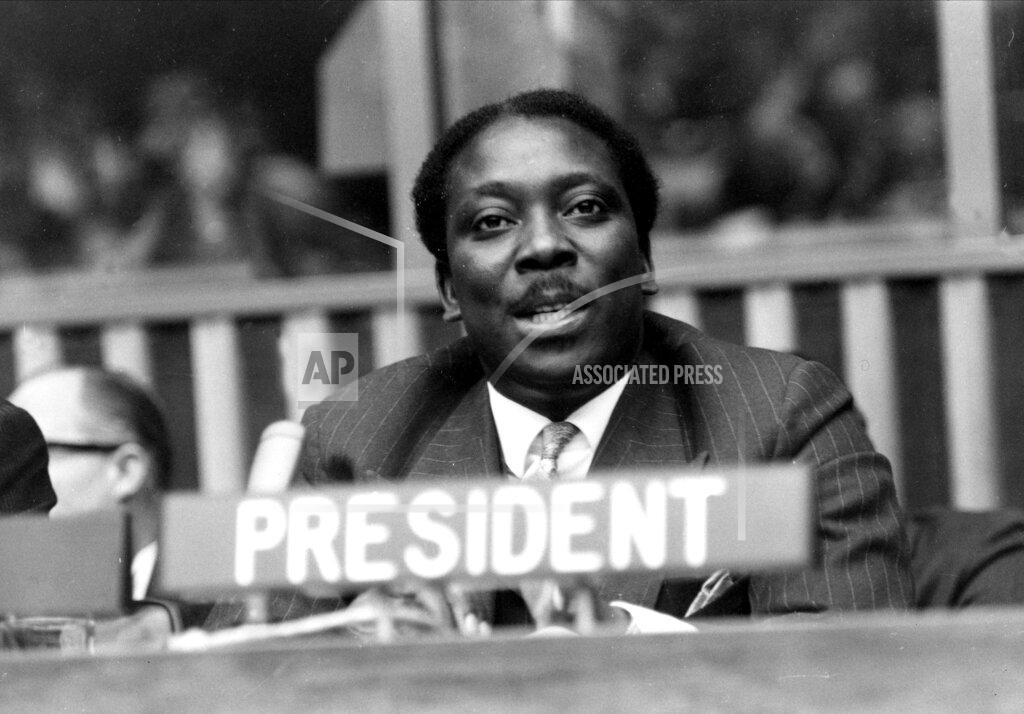
The General Assembly’s new President, Alex Quaison-Sackey, has stirred comment and criticism at the outset of his term with the suggestion that the question of uniting Germany should be taken up here. Soviet‐bloc delegations were reported to be angry although they did not comment publicly. One Eastern European chief delegate said tonight: “It may be done, but it would mean amending the Charter.” He took the usual Soviet position that Germany was one of the questions reserved for discussion by the powers that had fought and won World War II.
When the United Nations was formed in 1945, an agreement was made that it should not intervene in post‐war settlements, but Western and Soviet sources have always disagreed on interpretation of the accord. Mr. Quaison‐Sackey said at a news conference here that he also believed “there is no doubt the People’s Republic of China should be a member of the United Nations.”
Israeli and Syrian military forces exchanged fire again today for the second consecutive day along the border. An Israeli Army spokesman said an armored vehicle had come under the fire of Syrian heavy machine guns and recoilless rifles as it patrolled the northern edge of Tel Dan, a hill in northeastern Israel. Israeli supporting positions on the hill were also fired upon, according to the spokesman, but there were no Israeli casualties. He said the exchange had lasted 30 minutes. The site of the flare‐up was the same as those of yesterday and November 13 which grew into a major clash, with casualties and heavy property damage as well as Israeli, air strikes against Syrian positions.
A Syrian army spokesman reported a new clash on the Israeli border today and blamed Israel. He said Syria had lodged another urgent complaint with the United Nations. Truce Supervision Organization in Jerusalem.
Two British soldiers were slightly wounded in a clash in which three rebel tribesmen were killed in the Radfan area, about 60 miles north of Aden, British headquarters said tonight.
Pope Paul VI, coming farther east than any other Pope, received a great welcome here today. A million Indians — Hindus, Moslems, Sikhs, Parsees and Christians — greeted him with smiles and cries of “welcome” and “Jai Hind” (“Hail India”) when he landed at Santa Cruz Airport and as he drove the 20 miles into Bombay, “the gateway to India.” There was no indication of anything but friendliness for the burra guru (great holy man) of the Christians, though far fewer than half of those who greeted him were men and women of his own faith. Experienced observers of the Indian scene said they had never encountered such a demonstration of popular feeling except at the funeral of Prime Minister Jawaharlal Nehru in Delhi last May. They reported that the welcome markedly exceeded that received in Bombay by Nikita S. Khrushchev, another figure held in popular esteem here.
Juan Perón, the former President of Argentina who had been overthrown in 1955, attempted to secretly return from exile in Spain and to take power again as the Argentine dictator. When his flight from Madrid stopped in Brazil at Rio de Janeiro, Brazilian authorities boarded the aircraft and ordered Perón to disembark. Argentine union leader Augusto Vandor, who had organized “Operation Return” and had accompanied Perón on the flight from Spain, was allowed to continue to Argentina. Perón, however, was sent back on the Iberia DC-8 jet on its return flight from Rio to Madrid. Peron’s Iberia Airlines flight had been scheduled to land in Montevideo in Uruguay, where Peron had planned to travel by land to Paraguay nad then back to Argentina. Peron would finally return to Argentina in 1973 and would serve as President until his death in 1974.
Premier Moise Tshombe of the Congo left tonight for Leopoldville after a three‐day visit that yielded little tangible return. The Congolese leader failed to obtain from President de Gaulle, French officials said, the three things he wanted most. Mr. Tshombe received no assurance that France would issue a strong statement of support for his Government. His request for military advisers to reorganize and strengthen the Congo’s armed forces was received coolly. Lastly, no offer of French economic aid was forthcoming. To have committed France to any of those things, French sources said, would have involved the risk of harming the Gaullist aspirations for leadership in the “third world” — the uncommitted nations. To most of their leaders, Mr. Tshombe is a hated symbol of subservience to former colonizers.
A Federal appeals court held unanimously today that Virginia’s system of paying tax‐financed tuition grants to white students in segregated private schools was “a transparent evasion of the 14th Amendment.” The decision by the United States Court of Appeals for the Fourth Circuit struck down the tuition‐payment plan in only 2 of the 10 Virginia districts that have opened hastily organized all‐white “private academies” with state aid to avoid or limit “race mixing” in classrooms. The two districts are Prince Edward and Surry Counties.
But the language of the opinion, written by Chief Judge Simon E. Sobeloff, was widely regarded here as having made untenable the entire tuitiongrant plan. It is the last surviving fixture of Virginia’s “massive resistance” strategy of 1958-59 for defying or evading the desegregation orders of the federal courts. The 14th Amendment to the Constitution guarantees equal protection of the laws — both state and Federal — to all citizens. In the two cases decided today, the court held that Black pupils had been flagrantly denied equal access to equal public education. Although he will remain on the bench as an Appeals Court judge, Judge Sobeloff, who is 70, retires tomorrow as chief judge of the court.
Judge Clement F. Haynsworth Jr. of Greenville, South Carolina, who will succeed him as chief judge, was the only member of the five‐man court to place a handwritten concurring notation on the opinion. On a corner of the opinion were penned the words “I concur,” followed by Judge Haynsworth’s signature. The decision was received here as “the handwriting on the wall.” One segregationist spokesman commented that “we do “not expect to get any better treatment than this from the Supreme Court.” A decision on whether to take the case to the Supreme Court had not been reached tonight, but such an appeal was not expected.
Rayford Jones, the Neshoba County (Mississippi) Attorney, said today that the Federal Bureau of Investigation had kept him in the dark about its investigation of the three murdered civil rights workers. Mr. Jones said that local officials, who would prosecute murder charges in the case, had “given the federal people a free rein and expect to hear from them when the case is ready. But we have no idea what it will be or when,” he said. Most residents of this town believed the FBI could have gathered little more information than was presented to the federal grand jury in September. The jury took no action in the triple slaying, but indicted five persons, including Sheriff Lawrence Rainey and Deputy Sheriff Cecil Price, on charges of violating rights of Blacks two years ago. Arrests could be made on murder charges only for presentation to a county grand jury. A federal grand jury would be empowered only to consider cases involving violations of civil or constitutional rights.
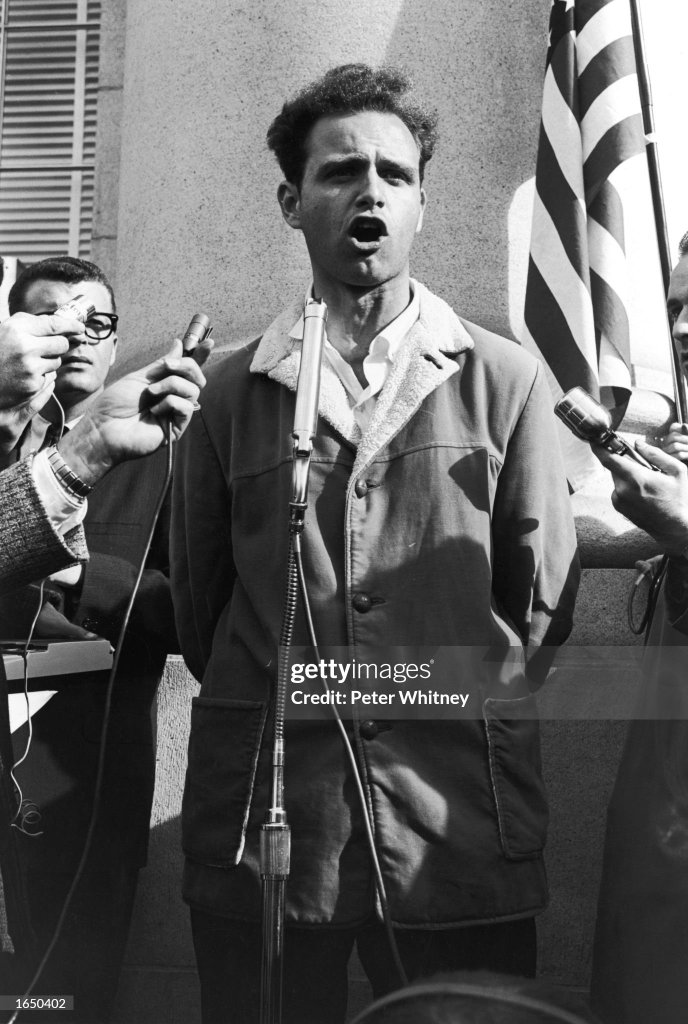
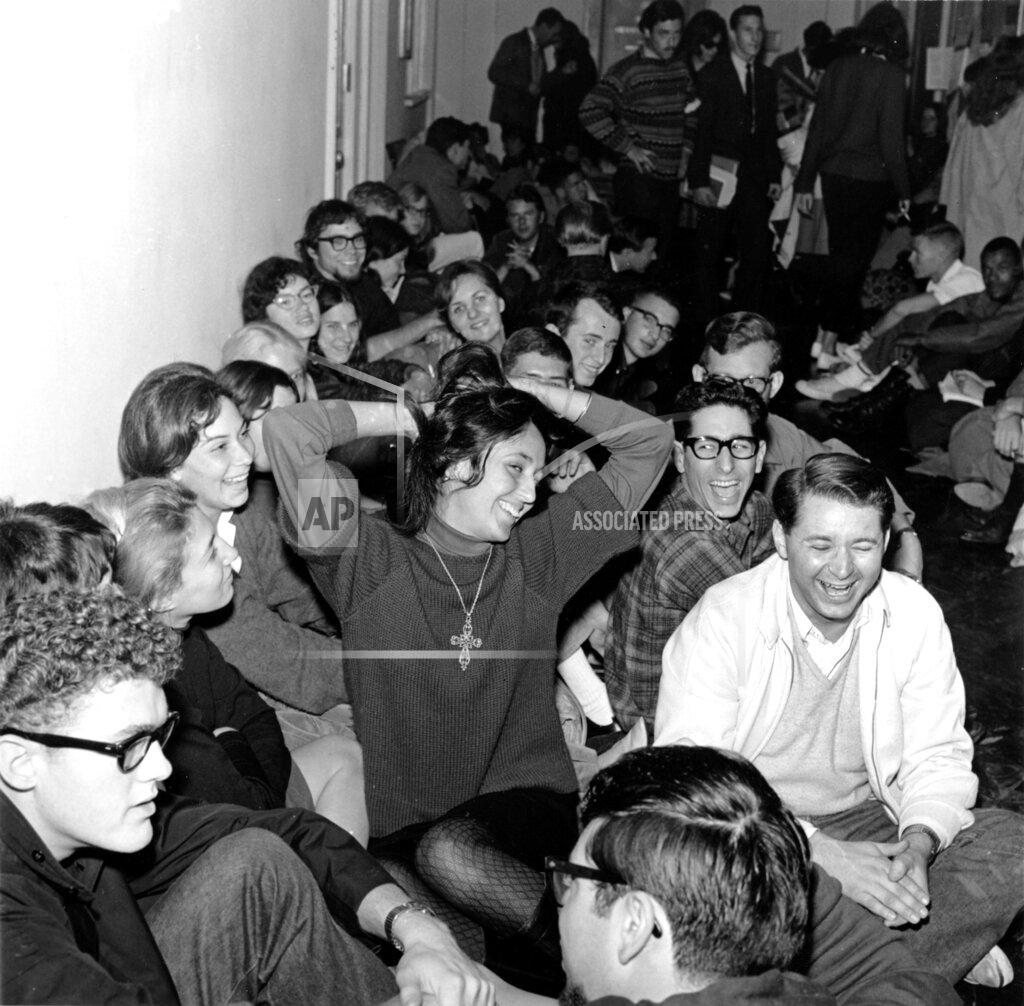
Mario Savio addressed a crowd of 5,000 students at the University of California in Berkeley, delivering what would be a famous speech now known as the “Bodies Upon the Gears” speech, guiding them to occupy the university’s administration building, Sproul Hall. More than 1,000 walked into the building to begin a sit-in; UC officials estimated that 814 of the occupiers were arrested and “that most of those who sat in and were jailed were students” “There is a time,” Savio said, “when the operation of the machine becomes so odious, makes you so sick at heart that you can’t take part; and you’ve got to put your bodies upon the gears and upon the wheels, upon all the apparatus, and you’ve got to make it stop. And you’ve got to indicate to the people who own it, that unless you’re free, the machine will be prevented from working at all.” The Free Speech Movement would expand from Berkeley to other university and college campuses in America and beyond.
In Jacksonville, Florida, a white preacher’s son was convicted of manslaughter today in the slaying of a Black woman during racial trouble last March. An all‐white, 12-man jury returned the verdict in Circuit Court after an hour’s deliberation. The trial lasted three days. The convicted man, J. W. Rich, 22 years old, was given until December 14 to file a motion for a new trial. He will be sentenced at that time if the motion is denied. Rich was charged with firstdegree murder in the shooting of Mrs. Johnnie Mae Chappell, 35. His court‐appointed defense, attorney, Frank Cannon, told the jury that the only conceivable charge was manslaughter, since no premeditation had been shown.
Assistant State’s Attorney Nathan Shevitz said that Rich and three other men had been drinking and driving a car in a Black district, and that this showed they had been “looking for trouble.” The state also contended testimony that someone in the car had said, “Let’s get a n****r,” before the shooting took place was sufficient to show premeditation. The three other men will be tried later.
Governor George C. Wallace of Alabama has offered a $1,000 state reward for information, on the bombing of a Black home Sunday night. Total rewards posted have reached $5,000. The dynamite blast damaged a car and the $30,000 home of Charles Spears in Montgomery.
President Johnson warned tonight of four possible storm signals on the economic horizon. In a speech to the Business Council he told the nations bankers that an increase in their rates of interest on loans “might slow down our economic advance” and result in an increased federal budget deficit. Mr. Johnson said he was troubled by this “risk,” and added he was sure that bankers “know that their own longterm interest is inseparable from the prosperity of the nation.” The President also warned of the danger of inflation, of the need to improve the nations international balance of payments and of the need to reduce widespread unemployment among teenagers.
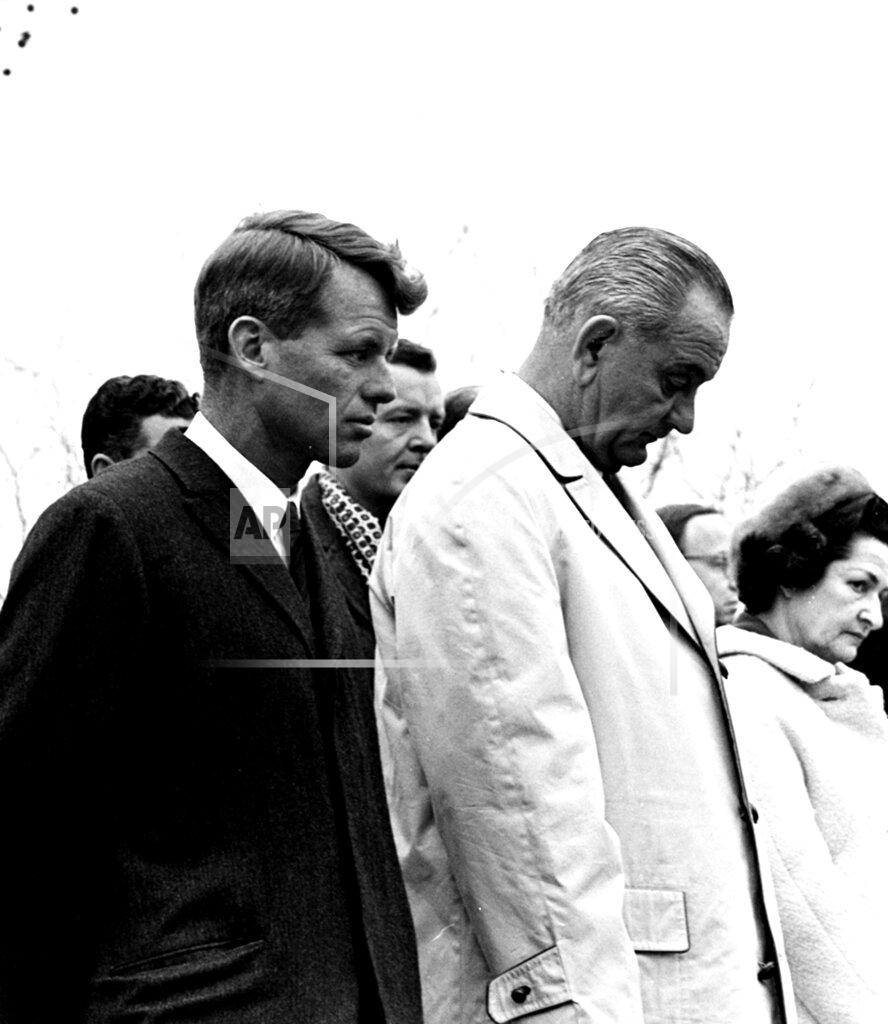
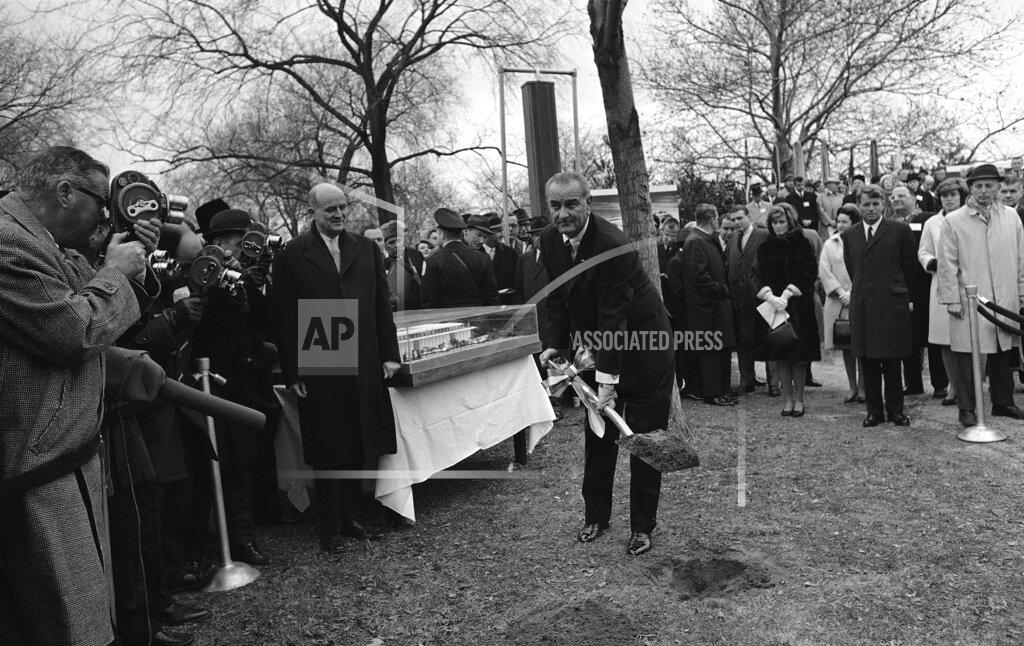
President Johnson broke ground with a gold‐plated spade today for a national cultural center that will keep alive the memory of President Kennedy and fulfill one of his dreams. Gathered on the banks of the Potomac at the ceremony for the John F. Kennedy Center for the Performing Arts were witnesses from what Mr. Johnson called “the worlds of poetry and power.” Sir John Gielgud read in his famous, mellifluous voice from Shakespeare’s “Henry V.” Jason Robards Jr., who had forgotten his notes on the plane that brought him to Washington, quoted President Kennedy from memory on artists and the arts. Senator‐elect Robert F Kennedy told of his brother’s belief “that America is judged as every civilization is judged — in large measure — by the quality of its artistic achievement.”
President Johnson appealed today for support for Radio Free Europe as the voice of truth in the Communist bloc, where history is “on the march toward increased freedom.” Mr. Johnson’s remark was made at a White House luncheon for officials of Radio Free Europe, a privately financed network. The organization is opening an annual fund drive. Mr. Johnson said the United States wished to build new bridges to Eastern Europe —bridges of ideas, education, culture, trade, technical cooperation and mutual understanding for world peace and prosperity. “In this process,” he added, “there is no greater instrument than truth, and truth is the daily business of Radio Free Europe.”
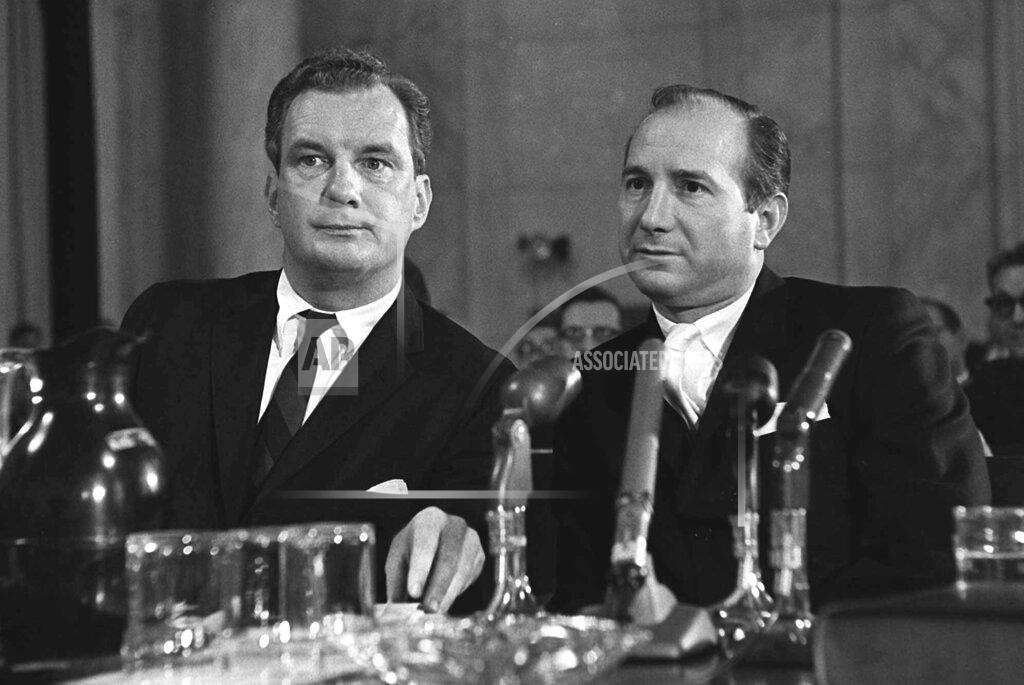
Matthew H. McCloskey, builder of the $20-million D. C. Stadium in Washington, acknowledged today that his company had made a $35,000 overpayment on a performance bond premium to Don B. Reynolds, a witness in the investigation of Robert G. Baker. But, in testimony before the Senate Rules Committee, Mr. McCloskey said that the overpayment to the Maryland insurance man had been the result of a “goof” by a member of his own staff. Mr. Reynolds testified yesterday that the overpayment had been arranged with Mr. Baker, former secretary to the Senate’s Democratic majority, to conceal contributions to the Democratic campaign fund of 1960. Mr. McCloskey, who was treasurer of the Democratic National Committee at the time, denied that the overpayment had had a political purpose.
Mr. Baker, appearing before the committee under subpoena, refused today to testify or to make his papers available to the Senators. He refused on constitutional grounds, as he had when first summoned last February. Mr. McCloskey, a former Ambassador to Ireland, said that Mr. Baker had received the overpayment when McCloskey & Co. paid him for general liability insurance that he had not handled. He said this premium had also been paid to the rightful recipient. The construction company, Mr. McCloskey said, became aware of the error only after the transaction had been publicized in connection with the revived inquiry into Mr. Baker’s business dealings while on the Senate payroll. “We have plans to recoup that $35,000, that is for sure,” he said.
A mid‐December caucus of all House Republicans was called today in what some dissidents interpreted as a slap at the leadership of Representative Charles A. Halleck of Indiana. The special meeting was scheduled for December 16 by Representative Gerald R. Ford of Michigan, chairman of the House Republican Conference, or caucus, in response to requests from a number of colleagues. Those attending will be lame ducks as well as Republicans who will be serving their first terms in the next Congress. In notices mailed today, Mr. Ford said one purpose was “to discuss and develop a program with reference to our Republican organizational structure in the House.”
An American electronics engineer and a Soviet citizen were found guilty of conspiring to commit espionage by a Federal Court jury tonight. John W. Butenko, 39 years old, of Orange, and Igor A. Ivanov, a 34-year‐old chauffeur for Amtorg, the Soviet trade agency, were convicted of conspiring to pass secrets of the Strategic Air Command to the Soviet Union. The jury of eight women and four men found Butenko and Ivanov each guilty on two counts of the indictment charging conspiracy to commit espionage. In addition Butenko was found guilty of failing to register as an agent of a for eign government. The maxiimum possible penalty on the espionage charge is death. The verdict came at 10 P.M. after seven and a half hours of deliberation.
The verdict was given by Miss Michelina DeLuca, a Newark factory worker, who served as the foreman. At the request of Raymond A. Brown, Butenko’s lawyer, District Judge Anthony T. Augelli polled the jury. All responded guilty to all the counts that were read to them. Butenko took the verdict with an obvious effort at selfcontrol. His face was ashen and his jaw muscles worked agitatedly. Ivanov, who had sat at the defense table during the more than eight weeks of the trial with an air of detachment, took the verdict impassively. Ivanov’s lawyer, Samuel A. Larner, asked that his Client be permitted to remain at liberty in the $100,000 bail, which had been provided for him by the Soviet Embassy in Washington. The request was granted.
The American Medical Association’s House of Delegates rejected any compromise today on its stand against medicare, reiterated its support of the KerrMills Act, and began preparing its opposition to the Johnson Administration’s health‐care programs. The House of Delegates, which makes policy for the 204,000-member association, rejected by a voice vote compromise resolutions offered by the delegations from Michigan and the District of Columbia. The proposals would give the Federal Government a minimal role in providing medical care for the aged. Any Federal action in setting up health‐care programs is anathema to all but a few of the 228 members of the House of Delegates.
A small rocket aboard Mariner 4 will put the Marsbound spacecraft through a relatively minute but critical course correction tomorrow at about 11 AM, Eastern Standard Time. This was announced last night by a spokesman for the Jet Propulsion Laboratory in Pasadena, California, which manages the Mariner project for the space agency. The maneuver should determine whether the craft will pass close enough to Mars next July for its television camera to obtain useful pictures of the Martian surface.
Ringo Starr’s tonsils are removed at University College Hospital, London, England.
Dow Jones Industrial Average: 867.16 (+2.73)
Born:
Brian Habib, NFL guard and tackle (NFL Champions, Super Bowl 32-Broncos, 1997; Minnesota Vikings, Denver Broncos, Seattle Seahawks), in Ellensburg, Washington.
Chip Hale, MLB pinch hitter, second baseman, and third baseman (Minnesota Twins, Los Angeles Dodgers), manager (Arizona Diamondbacks), in San Jose, California.
Don Barber, Canadian NHL left wing and right wing (Minnesota North Stars, Winnipeg Jets, Quebec Nordiques, San Jose Sharks), in Victoria, British Columbia, Canada.



 History Diaries