U.S. President Lyndon B. Johnson and his top-ranking advisers met to discuss plans to bomb North Vietnam. After some debate, they agreed on a two-phase bombing plan with an objective of ending North Vietnamese support of Việt Cộng operations in South Vietnam and maintaining the security of other non-Communist nations in Southeast Asia. In two crucial meetings today and Thursday at the White House, President Johnson and his top-ranking advisers agree somewhat ambivalently to a two-phase bombing plan. Phase I to involve air strikes by the U.S. Air Force and U.S. Navy jets against infiltration routes and facilities in the Laotian panhandle. Phase II to extend the air strikes to widening selection of targets in North Vietnam. The more ‘hawkish’ advisers particularly the JCS would prefer a more immediate and intensive series of raids against many targets in North Vietnam, while ‘doveish’ advisers question whether bombing is going to have any effect in Hanoi’s support of the war. President Johnson makes it clear that the South Vietnamese leaders must cooperate and pull their government and people together. Qualified sources reported that Mr. Taylor’s assessment of the political and military situation in Vietnam was one of marked pessimism.
At the same time a White House statement issued after the conference in which Mr. Taylor reported to the President said they had “reviewed the accumulating evidence of continuing and increased North Vietnamese support” for the Việt Cộng guerrillas in South Vietnam. The statement said that Mr. Taylor had “reported that the political situation in Saigon was still difficult but that the new Government under Prime Minister Hương was making a determined effort to strengthen national unity.” The White House statement said Ambassador Taylor had reported that “security problems have increased over the past few months in the northern provinces of South Vietnam” and that uneven progress had been made elsewhere.
Cambodian frontier forces have joined the Việt Cộng again in attacks on South Vietnamese troops, the Defense Ministry charged today. It said four Vietnamese soldiers were killed in two such border incidents yesterday. The shooting developed in Chaudoc province, 110 miles west of Saigon, a week before the scheduled opening of United States‐Cambodian talks in New Delhi on recent frontier hostilities.
Elsewhere, the Việt Cộng destroyed two United States aircraft today. First‐Lieutenant Kemp P. Roedema, 26 years old, of Garfield, New Jersey, parachuted to safety when ground fire brought down the A-1E fighter he had flown on a strafing mission 33 miles northeast of Saigon. Helicopters rescued him. An Army helicopter was shot down 30 miles north of Saigon. The crew of four landed safely.
The Việt Cộng leadership has intensified its program lately to smuggle agents provocateurs into Saigon and mobilize sympathizers to exploit unrest and demonstrations such as occurred last week, according to recent intelligence reports. Captured documents and questioning of prisoners disclose a plan to apply in the capital the same phased tactics of subversion the Communists have used in the countryside. In the first phase of fear and insecurity, the Communists are trying to establish what they call “safe zones” in sections of the city. These are areas in which arms could be stored and agents, even military personnel, could gather secretly in the guise of youths or workers, ready for a full-scale revolt against the Government.
That is the reason that senior American and Vietnamese officials view with deep concern any uncontrolled mass gatherings. No firm evidence has yet been produced that Việt Cộng cadres actually instigated last week’s demonstrations or any previous riots. Their instructions as now known are merely to urge the exploiting of unrest among dissatisfied elements, including, political and religious groups. The Communist instructions, captured at police roadblocks outside the city and in house‐tohouse searches in town, are detailed and specific. They reinforce the general calls for urban uprisings broadcast almost daily by the Việt Cộng’s clandestine radio and the radio station in Hanoi, capital of Communist North Vietnam.
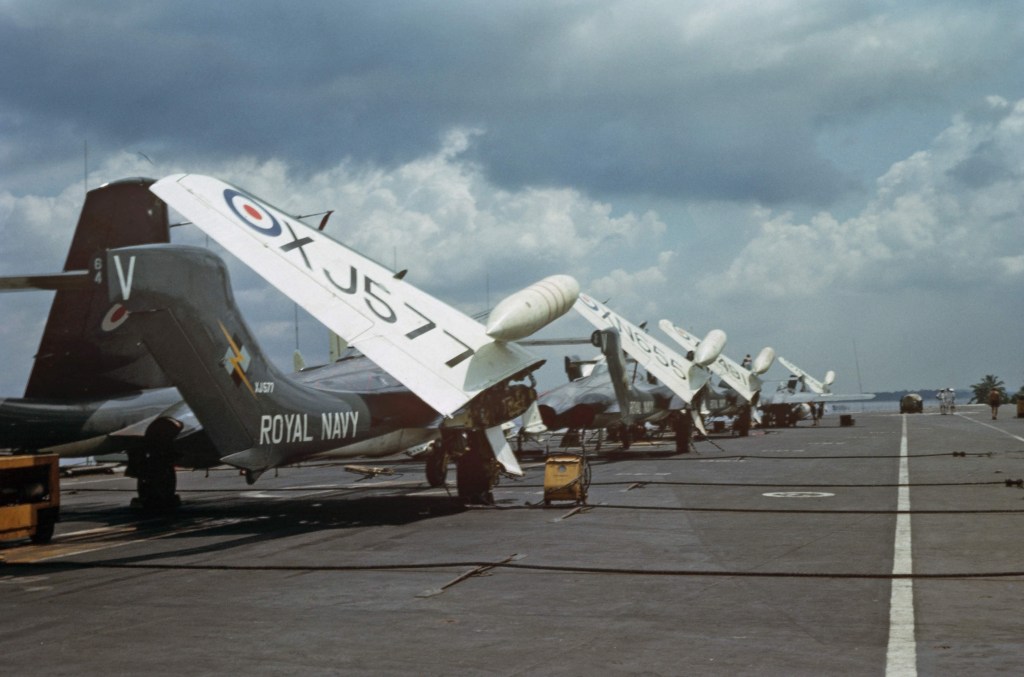
The U.S. Navy Task Group 77 (TF 77), including the attack carriers USS Hancock, USS Coral Sea and USS Ranger, is assigned to rendezvous about 75 miles out in the Gulf of Tonkin during December. This is Yankee Station (as opposed to the U.S. ships assigned to the waters off South Vietnam, which are on Dixie Station).
U.S. military command data released early this month shows November to have been one of the most successful months in the war to date, with some 1370 guerrillas reported killed, 370 captured, and with the ratio of guerrillas killed to South Vietnamese dead (the ‘kill ratio’) at its most favorable level since 1961.
Communist‐led forces have mounted attacks on Laotian Government positions north of Thathom, in central Laos, according to Western military sources and a military communique today. The sources said the attack was launched by a Pathet Lao battalion, including North Vietnamese cadres, early yesterday six miles north of Thathom. The attackers succeeded in taking two Government positions before running into stiffening opposition. Military observers here were unable to say whether the attack preluded a large‐scale assault on Thathom. They said, however, that there was no immediate danger for the town.
Communist China aware that President Johnson was discussing United States policy in Vietnam with Ambassador Taylor in Washington warned today that it would fight in the event of American “imperialist aggression” against North Vietnam.
The United States asked today that the Secretary General, U Thant, use his influence to obtain humanitarian treatment for hostages still in the hands of Congolese rebels. The request for action by Mr. Thant was made in a letter from Adlai E. Stevenson, chief United States delegate, to the President of the Security Council. The letter said the recent rescue operation undertaken by Belgian paratroopers flown in United States planes had saved most of the hostages, but that many persons could not be reached. The United States and Belgium, in separate communications, informed the Security Council today that the rescue operation was concluded last Sunday.
The operation led 14 African states to sign a letter yesterday asking for a Council meeting on the Congo situation. Afghanistan and Yugoslavia signed the letter today and it was submitted. In a memorandum, the 16 members protested that the Belgian‐United States action, made with the concurrence of Britain, was an “intervention in African affairs, a flagrant violation of the Charter and a threat to the peace and security of the African continent.” The Council is expected to meet later this week on the Congo question. The Belgian delegation said that Foreign Minister Paul‐Henri Spaak intends to fly here for the debate. Although not a member of the 11-nation Council, Belgium is certain to ask to participate in the proceedings. Washington and Brussels have emphasized that the operation was a humanitarian undertaking. The sole purpose, they said, was to save the missionaries and others held hostage by rebel forces operating from Stanleyville. Belgian sources said tonight that 800 to 900 Europeans were still in danger.
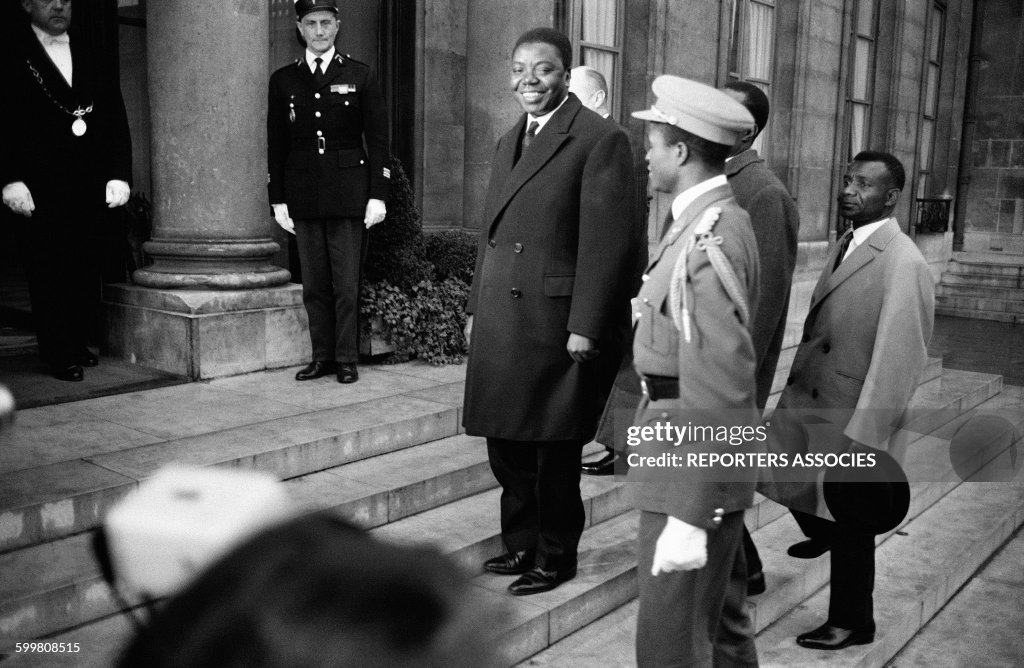
Congo’s Premier Tshombe conferred with President de Gaulle today and said he was “very satisfied” with the meeting. “France wants only one thing,” the Premier said on leaving the Élysée Palace, “and that is that we should be independent.”
The United Nations General Assembly opened its 1964 session today after having narrowly avoided a long-threatened showdown between the United States and the Soviet Union over unpaid Soviet assessments. Under an agreement reached just before the session convened the Assembly took decisions without voting. The agreement was negotiated by the Secretary General U Thant and representatives of the United States Britain France and the Soviet Union and other delegates. No votes will be taken until the Assembly concludes its general debate in which heads of delegations state their views on United Nations issues. This will take two or three weeks putting the dispute over at least until after the holiday recess.
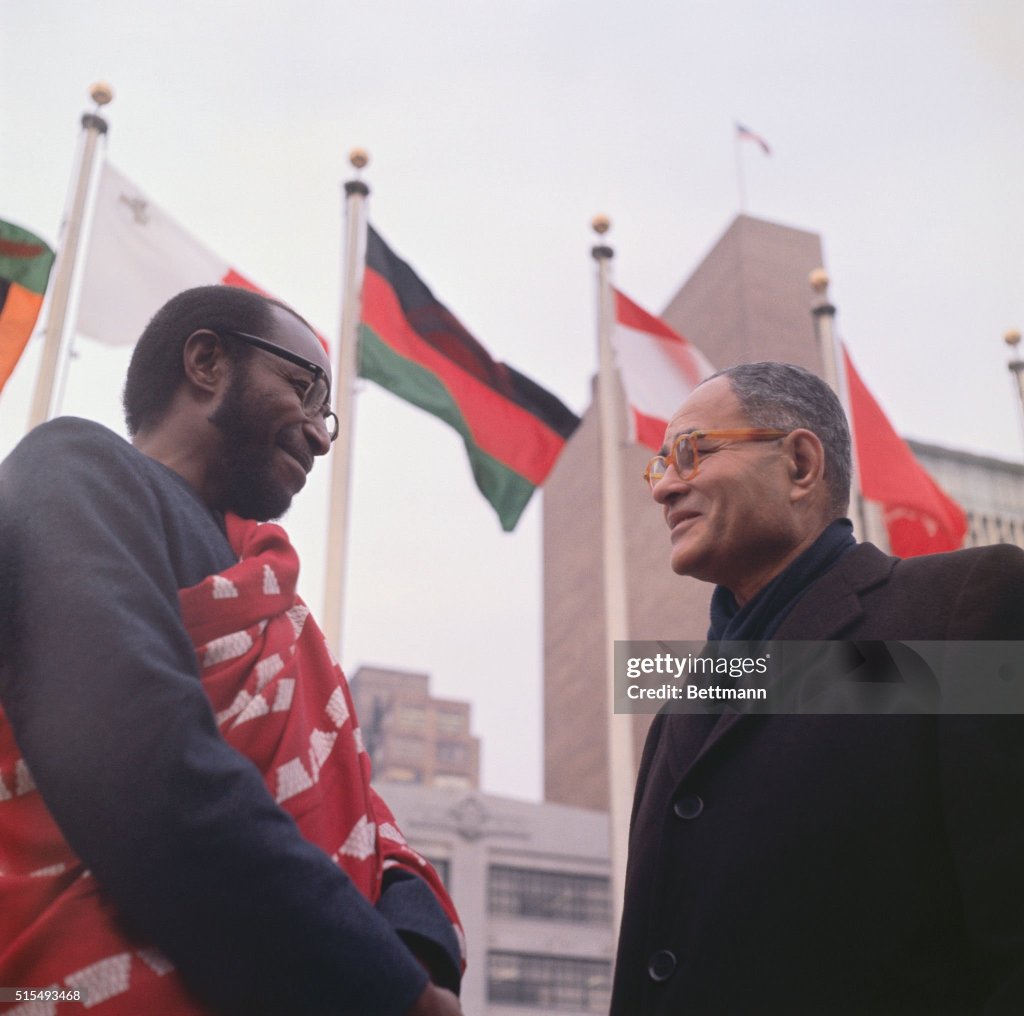
Alex Quaison-Sackey of Ghana was elected to a one-year term as President of the United Nations General Assembly, becoming the first black African to hold the post and, at age 40, the youngest. In 1961, Mongi Slim of Tunisia had been the first from an African nation.
Armed forces of Israel and Syria exchanged fire today on the contested northeastern border between the two countries. The shooting appeared to have occurred at the same spot as the border incident of November 13 which quickly expanded into major conflict costing 11 lives and inflicting heavy property damage. The new shooting followed yesterday’s decision by the United Nations Security Council to postpone further discussion of the November 13 clash.
An Israeli military spokesman said that at 9 AM, Syrian positions north of Tel Dan (Dan Mound) fired on an Israeli armored vehicle on a patrolling track on the northwestern edge of the mound. The spokesman said the Syrians had used heavy machine guns and antitank recoilless guns. He said Israeli forces returned the fire. The shooting lasted only a few minutes he said and there were no Israeli casualties. A spokesman for the United Nations truce supervision organization said the firing had lasted half an hour but had been halted by both sides without the imposition of a United Nations cease‐fire.
Nine persons were killed in fresh clashes along the Kashmir cease‐fire line the Pakistani Government said today. The statement said that clashes took place Saturday in the Kotli Muzaffarabad Samani and Padhar areas about 140 miles from here. It alleged that Indians had fired at civilians on the Pakistani side of the line nad Pakistanis had hit back.
Pope Paul VI left Rome by jet for India in a driving rainstorm today to attend the International Eucharistic Congress. The flight was the longest journey ever undertaken by a Pope. The papal plane was to land at Beirut Lebanon for a 30-minute stopover before going on to Bombay. The Pope’s car took a halfhour to drive from the Vatican to Fiumicino Airport about 20 miles away. Cardinals and other churchmen as well as Italian and Indian diplomats and officials were gathered at the airport to see the Pope off. The Pope traveled in a special compartment set apart from the first‐class section where two cardinals and 13 other ecclesiastical and lay aides of his suite were seated.
The Supreme Court of the Soviet Union announced a change in the nation’s historic presumption of guilt in criminal proceedings, in favor of the presumption of innocence, often described as “innocent until proven guilty”. Justice Alexander Gorkin, the President of the Supreme Court and the USSR’s highest judicial officer, gave notice in the government newspaper Izvestia of the new criminal procedure, and added that the practice of summary secret police trials, common during the era of Joseph Stalin, was over.
An appeal for a quiet, composed examination of the United States proposal for a mixed-manned nuclear fleet was made today by Manlio Brosio, secretary General of the North Atlantic Treaty Organization.
The Ankara Agreement, signed on September 12, 1963, between representatives of Turkey and the European Economic Community (EEC), went into effect, beginning the preparatory stage for Turkey’s eventual full membership in the EEC. More than fifty years later, Turkey maintains a relationship with the EEC’s successor, the European Union, but has not attained membership.
Japanese Premier Eisaku Sato was formally installed today as head of the ruling Liberal-Democratic party. He declared that he would continue the basic policies established under his predecessor, Hayato Ikeda.
Gustavo Díaz Ordaz took office as for a six-year term as the 49th president of Mexico, succeeding Adolfo López Mateos. Díaz Ordaz would serve until December 1, 1970.
The semi‐official Spanish news agency Cifra reported that Juan D. Perón the former Argentine dictator left here early today for South America. Official sources refused to confirm the departure. Earlier Madrid press dispatches said Mr. Perón was to leave shortly for Paraguay en route to Argentina. The news agency in reporting the departure quoted “a reliable source.”
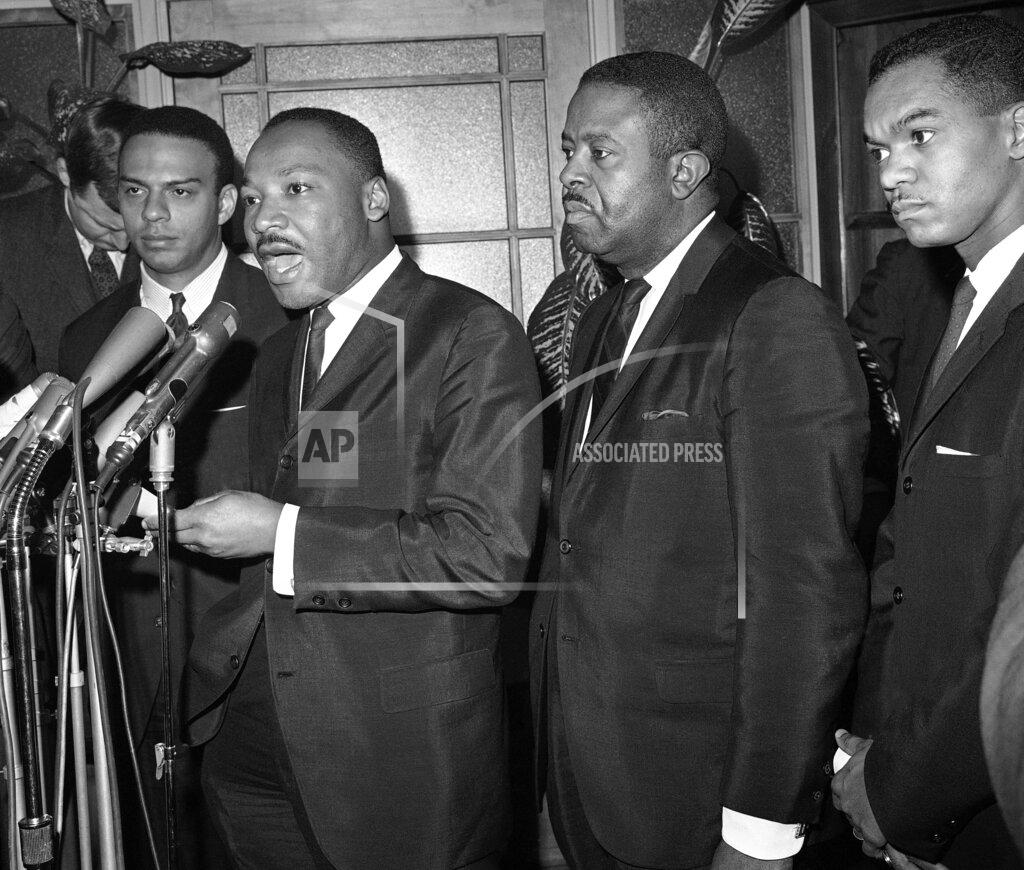
Civil rights leader Martin Luther King, Jr. and FBI Director J. Edgar Hoover met for 70 minutes at FBI headquarters in Washington, D.C. in order to clear up the animosity between the two men. King had said that the FBI had done a poor job of investigating civil rights violations in the South, and Hoover had called King “the most notorious liar in the country”, and the two met at King’s request. Dr. King told reporters they had had a “quite amicable discussion.” He said he was pleased because “a nonviolent leader must seek to maintain communications” with ail who are in a position to help the disadvantaged Blacks of the South. “There must not be misunderstanding between the FBI and civil rights leaders ” Dr. King said. “I sincerely hope we can forget the confusions of the past and get on with the job that Congress the Supreme Court and the President have outlined the job of providing freedom and justice for all citizens of this nation.”
The Rev. Dr. Martin Luther King- Jr. said today that J. Edgar Hoover had told him there would be arrests “in the next few days” in the murders of three civil rights workers in Mississippi. Dr. King made the statement after having met for more than an hour with Mr. Hoover director of the Federal Bureau of Investigation. Neither the FBI nor the Department of Justice would comment on the likelihood of early arrests.
The American Civil Liberties Union urged yesterday a strengthening of the FBI’s role in civil rights complaints. In a letter to Acting Attorney General Nicholas deB. Katzenbach the civil liberties group said the FBI record in the civil rights area had been inadequate. The letter signed by John de J. Pemberton Jr. executive director of the A.C.L.U. urged Mr. Katzenbach to give the FBI “explicit instructions that investigation of civil rights complaints is a number one priority” and “that because violations of civil rights laws concern human beings — their safety and their right to equal protection of the laws — the FBI is to show as much vigor in these investigations as those where private property is involved — regardless of the fear that cooperation of local police in dealing with other crimes may be adversely affected.” The letter said a problem existed in the bureau’s attitude toward civil rights — what it called “the absence of a psychology of commitment to enforcing laws which guarantee Blacks equal rights.”
Don B. Reynolds told the Senate Rules Committee today that he acted as a “bag man” in 1960 in the transfer of an allegedly illegal campaign contribution of $25 000 from Matthew H. McCloskey to Robert G. Baker. Mr. Reynolds said Mr. Baker had told him that $15 000 of this money was to go to the campaign of John F. Kennedy for President and Lyndon B. Johnson for Vice President. The Maryland insurance man said he had no knowledge of where the money had actually gone. His testimony was supported by copies of invoices and a canceled check. These indicated that Mr. McCloskey builder of the $20 million D.C. Stadium had overpaid the premium on his company’s performance bond with most of the excess going to Mr. Baker for political purposes. Mr. Johnson was then the Senate Democratic leader and thus Mr. Baker’s superior.
The hearing today was a resumption of an investigation begun more than a year ago into the business affairs of Mr. Baker former secretary of the Senate’s Democratic majority. Almost immediately the proceedings were bogged down in partisan dispute among committee members. Repeatedly Senator Carl T. Curtis of Nebraska the senior Republican on the committee accused the committee counsel Lennox P. McLendon of trying to impeach the testimony of Mr. Reynolds rather than trying to extract information from him.
Senator Clinton P. Anderson, coauthor of the Administration’s bill on medical care for the aged, said today that the measure could clear Congress by Easter; He called his confidence “realistic.” The New Mexico Democrat said that he and the principal House sponsor, Representative Cecil R. King, a California Democrat, would re‐introduce the measure at the 89th Congress in January. He said the bill would be about the same as the one that experienced long delays and final blockage in the 88th Congress. “It will be based on the Social Security principle of payroll contributions from workers and employers,” he said, “and the emphasis will still be on hospital care and post‐hospital skilled nursing care.”
He expressed hope that the House Ways and Means Committee, long the principal barrier, not only would begin hearings promptly after the re‐introduction but also that the hearings would be brief. “I have no doubt that the House will pass the bill,” the Senator declared. The House did not have an opportunity to vote on the program during the 88th Congress. Last June 24, the Ways and Means Committee, under the chairmanship of Representative Wilbur D. Mills, Democrat of Arkansas, set aside the Administration program. It substituted a new program calling for a general 5 per cent increase in Social Security benefits. The cost would be covered by special taxes.
The House approved this substitute on July 29 by a vote of 388—8, and the bill, minus the medical care plan, was sent to the Senate. The Senate attached the medical care program to the benefit payment increases by a vote of 49—44 on Sept. 2, and the next day passed the combination by 60—28. The combined measure was sent to conference for adjustment of Senate‐House differences and went into deadlock. By Oct. 2, the conferees abandoned hope of any agreement and the legislation died. Uncompleted legislation cannot be carried over from one Congress to another.
Reports persist in Washington that John A. McCone, director of the Central intelligence Agency, wishes to resign. Mr. McCone has told friends he would like to return to West Coast business interests. Another of his reasons is said to be that he believes President Johnson may wish to make his own selection for the position. Mr. McCone became director in 1961, appointed by President Kennedy. White House sources would not comment today on reports that Mr. McCone wished to resign. It is believed he will stay on until the President reaches a decision on a successor — which apparently is not imminent.
A chilling wind whistled through a wing of a controversial Boston hospital under reconstruction here today, forcing the transfer of at least 100 patients to warmer areas of the building. “I almost froze in there,” one pajama‐clad patient said. “I might just as well have been outside.” The hospital, which is in the Jamaica Plain section, is owned by the Veterans Administration. It was completed in 1952 at a cost of $10,563,000 by McCloskey & Co. of Philadelphia. A year later, the brick facing of the structure began to disintegrate. The reconstruction of the 16story structure was begun earlier this year by the Gervyn Construction Company of Mamaroneck, New York. The work is expected to be completed in 1965.
Federal District Judge Sidney Mize took under advisement today a request for an injunction to prevent alleged harassment arrests of civil rights workers in the McComb area. Judge Mize promised a decision in the case within 10 days. Attorneys for the defendants — city, county and state police — agreed not to prosecute a number of cases against civil rights workers until the ruling was made. Attorneys for the Council of Federated Organizations charged in closing arguments that Pike County (McComb) officers showed “complete lack of any judicial standards” in dealing with civil rights workers. The injunction, sought by the council against Sheriff R. R. Warren; Police Chief George Guy; the state patrol head, T. B. Birdsong, and a number of McComb policemen, would prevent “harassment” arrests and block the enforcement of a state criminal‐syndicalism law.
An appeal by Edward Rehm, a Peoria, Illinois, barber, on a 10-day license suspension was denied today by the Illinois Department of Registration and Education. Mr. Rehm was ordered suspended by a committee of the department for allegedly refusing to cut the hair of two Blacks. Frank Gagen, a lawyer for the department, said Mr. Rehm might appeal the department’s decision to the courts.
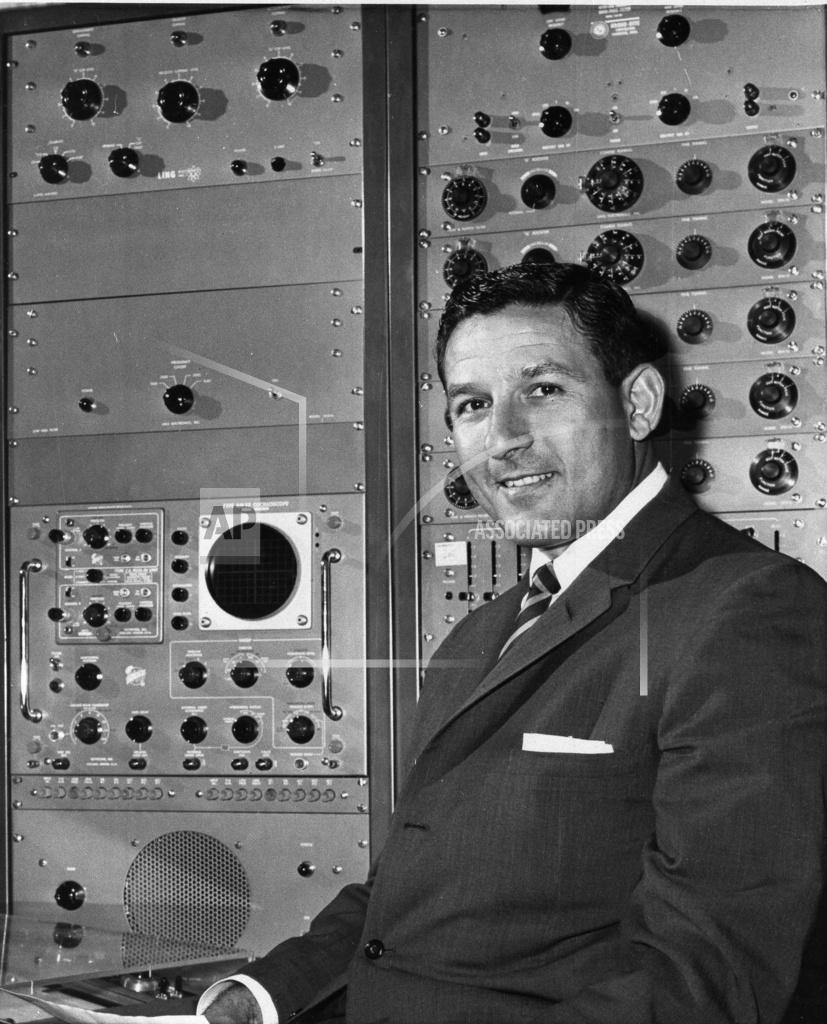
The Monroe International division of Litton Industries introduced an electronic desk‐top calculator yesterday that it hopes will fill the market gap between adding machines and computers. The new machine, called the EPIC 2000, was described by Monroe officials as the world’s first programable electronic desk printing calculator. C. Donald Furer, vice president of Monroe, said the EPIC 2000 would calculate faster than any other electronic desk calculator and in addition gives a printed record in a fraction of the time it takes an operator to copy an answer. The new calculator will sell for $2,000, Mr. Furer said. First deliveries will be made in about six months.
Seven children died in a fire that destroyed their Baltimore home today. The police arrested their father on charges that he set the fire in reprisal against his wife.
The Chicago White Sox trade pitcher Ray Herbert and first baseman Jeoff Long to the Philadelphia Phillies for outfielder Danny Cater and shortstop Lee Elia.
The Cleveland Indians obtain outfielder Chuck Hinton from the Washington Senators for first baseman Bob Chance and infielder-outfielder Woody Held.
The Houston baseball team officially changes its name from the Colt 45s to the Astros. After just 3 seasons in MLB the Houston Colt .45s change name of the team to Astros; owners say move signals a step into the future for the franchise and the city of Houston.
Dow Jones Industrial Average: 864.43 (-11.00)
Born:
Onzy Elam, NFL linebacker (New York Jets, Dallas Cowboys), in Miami, Florida.
Darren Gottschalk, NFL tight end (New Orleans Saints), in Merced, California.
Died:
J. B. S. Haldane, 72, British-Indian geneticist (primordial soup theory).
Marie-Clémentine Anuarite Nengapeta, 24, Congolese Roman Catholic nun, was murdered by the Simba rebels in the Congo; she would be beatified by the Roman Catholic Church in 1965.

 History Diaries