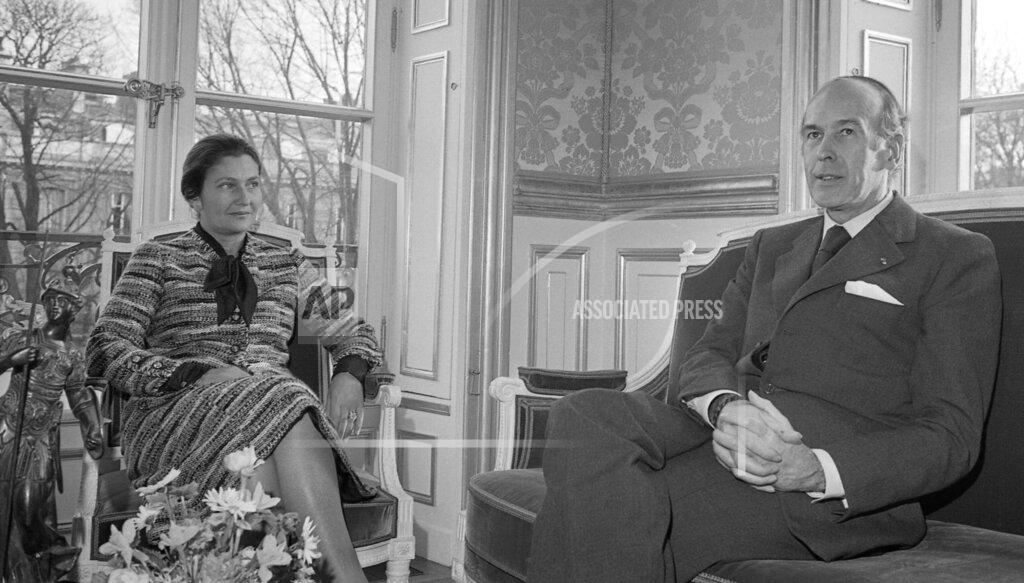
In a historic change for a Roman Catholic country, France’s National Assembly voted by a clear margin to legalize abortion during the first ten weeks of pregnancy. The vote overturned an anti-abortion law dating from 1920. The French National Assembly, after a 30-hour debate that included a speech by Simone Veil, voted 284 to 189 to pass a bill legalizing abortion in France. The French Senate would ratify the bill on December 1, “making France the first nation of Latin and Catholic background to legalize abortion.”
The first Prevention of Terrorism (Temporary Provisions) Act in the United Kingdom was given royal assent by Queen Elizabeth II, eight days after the Birmingham pub bombings, hours after the measure passed the House of Commons and the House of Lords. The laws, which authorize the police to search and detain suspected terrorists and to impose curbs on travel between England and Ireland, were approved early this morning without opposition by the House of Commons after a 17‐hour session. Under the new laws, more rigorous controls on travelers from Ireland will be introduced at ports and airports, and Mr. Jenkins will have the power to refuse entry or to order expulsion of suspected terrorists or accomplices. The measures, proposed only days after 20 persons were killed in two pub bombings in Birmingham, also ban any public display of support for the I.R.A. and the wearing of its traditional parade uniform, black trousers and shirt, beret and sunglasses. Punishment for anyone belonging to, supporting financially or aiding in any other way an illegal organization under the new laws ranges up to a five‐year prison sentence and an unlimited fine.
Fifty‐eight persons were injured by two bombs that exploded in crowded bars in Northern Ireland tonight. The bombs exploded in Newry, 60 miles south of here, and in the village of Crossmaglen in County Armagh. Both places are close to the Irish Republic border and the strongholds of the Provisional Irish Republican Army. However, both bars are owned by Roman Catholics. In each case the bomb exploded without warning in a doorway, causing extensive damage. Five of the 52 persons injured in Newry were hospitalized, one in serious condition. Two of the six injured in Crossmaglen were badly hurt.
Archbishop Makarios, the deposed President of Cyprus, said in Athens today that he would offer an “olive branch” to Turkey in negotiations over the island’s future. But the conditions he outlined indicate that it settlement is still far away. As he stated in London last week, Archbishop Makarios is ready to discuss a “multi-regional federation” for Cyprus. Under this plan, Turkish Cypriots would have administrative control over their own communities scattered throughout the island. This puts Archbishop Makarios in sharp conflict with the Turkish side, which favors division of Cyprus into two separate districts, and the recognition of the wartime massive shift of population. One district would be controlled by the ethnic Turks and the other by ethnic Greeks.
Turkish Premier Sadi Irmak resigned today after only 12 days in office following his government’s defeat in a vote of confidence in Parliament. The 450-member National Assembly voted 362 to 11 against Mr. Irmak’s Cabinet, which was, composed mainly of Independents and technocrats. President Fahri Koruturk accepted the Premier’s resignation and asked him to act as caretaker Premier until the formation of a new government. The major political parties made known their opposition to Mr. Irmak’s government during the last few days, so the result of the vote did not come as a surprise. Political leaders are scheduled to meet next week to discuss the crisis and try to agree on an early date, for an election.
The crisis began September 18 when the Premier at that time, Bulent Ecevit, broke with his coalition partner, the National Salvation party, over policy in the Cyprus crisis. During the succeeding two months both Mr. Ecevit and Suleyman Demirel, leader of the Justice party, failed in attempts to form a government. President Koruturk then appointed Mr. Irmak, an Independent Senator, in hope that the major political parties would come together to form a government or at least support the interim administration until elections were held. Mr. Ecevits’ Republican People’s party insisted that a date be fixed before today’s vote of confidence for new elections. The other parties disagreed.
The French Government which has been urging the other members of the European Commom Market to join in a summit meeting in Paris December 9 and 10, announced today that the formal invitations had now gone out. West Germany and Britain have agreed to attend. Italy and Ireland have not yet responded.
The woman who was considered the ringleader of a group of German urban guerrillas was sentenced today to eight years in prison by a West Berlin court for her role in helping another terrorist escape from jail four-and-one-half years ago. he trial of 40‐year old Ulrike Meinhof, who was a successful newspaper writer before she turned political extremist, stirred a fresh wave of anarchist activity in the last few weeks. It greatly alarmed the public here and in West Germany. On November 11, West Berlin’s highest judge, Ginter von Drenkmann, was fatally shot by an unidentified group of men. The slaying has been linked to underground guerrillas seeking to avenge the imprisonment of terrorists.
West Germany and the Soviet Union have reportedly reached agreement in principle on a long‐disputed problem of how West Berlin’s legal institution’s can be represented in East European countries. According to diplomatic sources, Bonn and Moscow are arguing now over how to say so.
Coco the Clown’s [Nicolai Poliakoff] special memorial service held at St. Paul’s Cathedral, London, England
Major grain-exporting nations met in Rome to work out details for an emergency food aid plan that aims to get $2 billion worth of food grains shipped over the next seven or eight months to South Asia and Africa to help prevent widespread starvation and malnutrition. The conference was sponsored by the United Nations Food and Agriculture Organization, whose secretary general, Addeke Boerma, said there was “considerable progress in recognizing the problem, in getting countries to cooperate in helping assure that supplies are available and in exploring the financial aspects.”
The U.N. Security Council today renewed for six months the mandate for the United Nations force, serving as a buffer between Israeli and Syrian troops in the Golan Heights.
Premier Yitzhak Rabin said today that détente between the United States and the Soviet Union did not extend to Middle Eastern affairs. In this area, he said, the two big powers are working at cross‐purposes.
Female relatives of deposed Emperor Haile Selassie were moved from a small palace today into a military compound, witnesses said. There was no official explanation of why this was done, but it was felt unlikely that the military junta that now rules the country would think of harming the Emperor’s daughter, Princess Tegene Worq, or the other women. The junta last Saturday executed 60 aristocrats, generals, officials and other men accused of exploiting this poor African nation during many decades of semifeudal rule by the Emperor.
Iran is believed to have acquired a substantial amount of the shares of the prosperous Daimler-Benz Company of West Germany, manufacturer of the Mercedes-Benz automobiles and trucks. A spokesman for the West Germany Economics Ministry said he did not know which country had bought the shares, but said it was in “the Middle East.” A spokesman for the Iranian Embassy in Bonn said he knew nothing about the purchase, but said “by Monday, we hope everything will be perfectly clear.”
A cyclone that swept in form the Bay of Bengal yesterday and, hit, the coast of Bangladesh may not have caused nearly as much damage and loss of life as originally feared, Government officials said today.
Explosions ripped through a large ammunition dump at the Đà Nẵng air base in South Vietnam today, killing at least eight students and injuring more than 100 civilians, reports from the base said. The reports that said several homes, a school and a textile factory had been heavily damaged in the explosions. Two South Vietnamese planes were also reported damaged. The Saigon command said that its initial reports listed 48 injured but that it could not confirm anw fatalities. A spokesman, Lieutenant Colonel Võ Việt, said that the cause of the blasts was not immediately known. “We are still investigating inside the base, and it has been closed,” he said. Military sources said that four separate explosions went off within 20 minutes shortly before noon. They said the dump contained 1,000 500‐pound bombs, cannon ammunition and rockets
South Korea called today for a resumption of negotiations with North Korea for the peaceful reunification of the Korean peninsula. The talks were broken off in August, 1973.
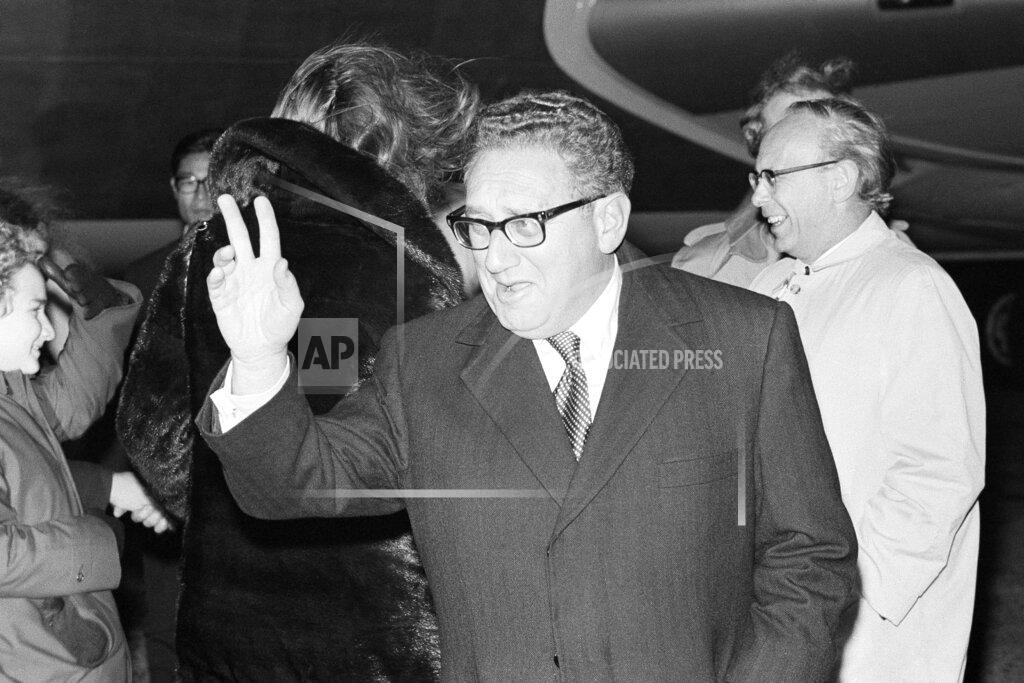
It was announced in Tokyo, after Secretary of State Kissinger had arrived from Shanghai, that President Ford would visit China next year. An American official said the trip would be made in the latter half of the year, following the scheduled visit to Washington of Leonid Brezhnev. The announcement of the visit was the only substantive disclosure in a foursentence communiqué. It was the first communiqué on relations between China and the United States to be issued without any mention of progress since former President Richard M. Nixon’s precedent‐setting trip of nearly three years ago.
Mr. Kissinger ended his four‐and‐one‐half‐day visit without having seen Chairman Mao Tsetung. There was no hint from either Chinese or American sources that Mr. Mao, who will be 81 next month, was indisposed or otherwise preoccupied. It seemed that the Chinese, in a typically indirect manner, were indicating their displeasure over the lack of momentum in the relationship between the two countries. At the same time, by their invitation to President Ford, they were showing that they still placed a high value on their American connection for boarder strategic reasons, which are generally presumed to be the leverage it gives their against the Soviet Union.
The National Guard of El Salvador invaded the town of La Cayetanan, near Tecoluca in the San Vicente Department, then rounded up and executed six peasants who were members of the Federation of Christian Peasants of El Salvador (FECCAS), and arrested another 13 who were not seen again.
Officials at Orly Airport expressed doubts today that Elizabeth Bagaya, dismissed as Uganda’s Foreign Minister, could have made love in an airport restroom, as has been alleged by Ugandan President Idi Amin.
A court-appointed panel of three physicians told federal Judge John Sirica that former President Nixon would not be physically able to testify at the Watergate cover-up trial before February 16 and that he would not be able to testify by deposition until January 6. Their opinions, the doctors said, were “subject to modifications by unknown future medical developments,” and were conditioned on Mr. Nixon’s continued recovery at the present “anticipated rate.”
U.S. President Ford pardoned 8 men convicted of resistance to the Vietnam War and granted conditional clemency to 10 others. Most of the men had been in prison for refusal to enter military service. President Ford, acting on the first recommendations from a nine-member clemency board established September 16 as part of his “earned re-entry” program, granted full pardons to eight convicted Vietnam war resisters and gave conditional clemency to 10 others who will receive full pardons after completing periods of alternative service ranging from three months to one year.
The Agriculture Department’s Crop Reporting Board said that prices farmers receive for the raw agricultural products fell 1.5 percent from October 15 to November 15 following a 4 percent increase the month before. Lower prices for corn, cattle, soybeans, oranges and upland cotton were responsible for the decrease. Higher prices for milk and tomatoes partly offset the decline.
Department of Agriculture officials said today that there was much less American grain available for food aid to hungry nations than they estimated in September. A study prepared by the Agriculture Department for President Ford just before his speech at the United Nations in September showed that as much as 3 million tons of grain, over and above the 3.3 million tons then planned for food aid, might be available. Today, based on the latest crop reports and commercial sales commitments, the extra amount available will be “way down from September,” the officials said. One Administration official said it would be no more than a million tons, but that this would almost certainly be committed to the 20‐year‐old Food for Peace program.
Secretary of Agriculture Earl Butz, under orders from President Ford, apologized for telling an anecdote about Pope Paul VI’s position on birth control. The anecdote was told in a mock Italian accent at a breakfast with newsmen. “I sincerely apologize for any part I played in it,” Mr. Butz said. His apology was made public after he had been rebuked by President Ford at a private meeting.
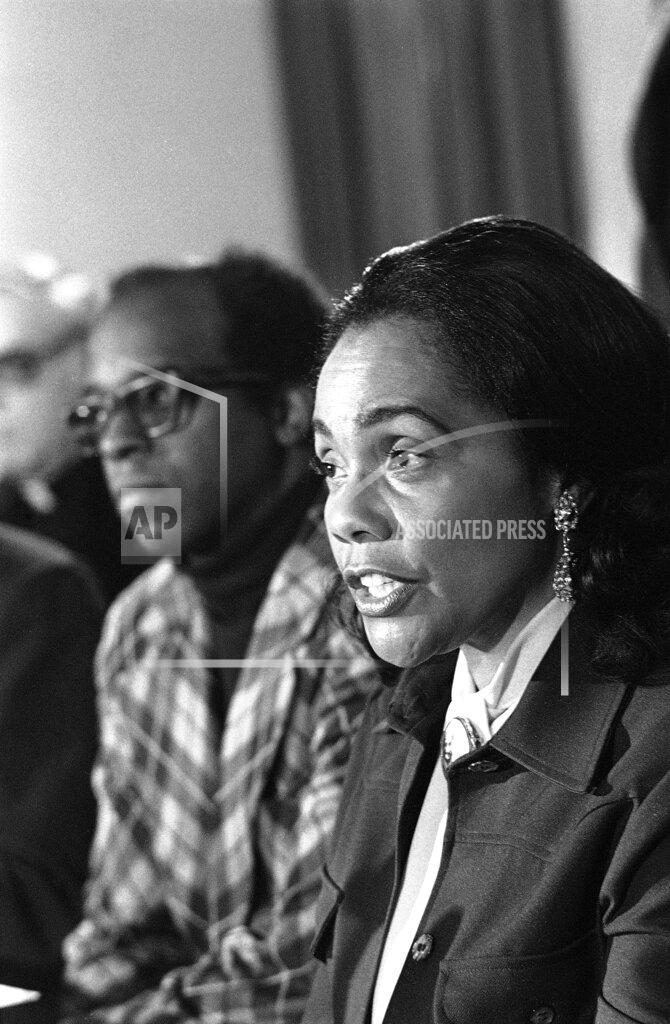
Coretta Scott King, widow of the assassinated civil rights leader the Rev. Dr. Martin Luther King Jr., said today that she would participate in a rally and march tomorrow to show support for a Federal order to bus 18,000 students to desegregate the city’s schools. “The issue, in my view, is not really busing,” Mrs. King said at a news conference called by Boston religious leaders. “Can anyone believe that people using or condoning violence as well as vulgar racial epithets are making a democratic protest against busing? No. They are making an undemocratic assault on equality.” Asked how Dr. King would have reacted to the violence in Boston, Mrs. King said, “Like Christ when He saw Jerusalem, he [Dr. King] wept when he went back to Montgomery. If he came to Boston, he would weep, too.”
The recession has given a new luster to civil service jobs and enlistment in the armed forces in the New York, New Jersey and Connecticut area. Recruiters only a few months ago had a hard time attracting applicants. The turnout at enlistment booths and civil service examinations is being led by recent high school and college graduates, and in some places has reached levels not seen since the Depression. Enlistment in the armed forces and applications for civil service jobs are highest in areas which jobs are scarcest.
A telephone company executive calls it “hogwash,” but the Southwestern Bell Telephone Company’s troubles in Texas seem to be growing. A grand jury is hearing evidence about illegal wiretaps. The state Attorney General has begun questioning former company employees about the company’s business methods. Several Texas cities are reviewing the company’s rates. And a special legislative committee is planning a hearing on the need for a statewide public. utilities commission. The company’s troubles began to go public on October 17, the day that the head of the Texas operations of the company killed himself in the garage of his home at Dallas.
The dead man, T. O. Gravitt — a 51-year-old executive believed to have had a bright future with Southwestern Bell’s parent company, the American Telephone & Telegraph Company — left several suicide notes and memorandums. In these, he accused the company of widespread corporate corruption, listing instances of political payoffs from a company “slush fund,” the illegal tapping of telephones, the misuse of company funds, and possibly the most sérious allegation — the securing of high telephone rates in Texas through the use of misleading and sometimes false information.
The General Motors Corporation announced further layoffs today that will affect 40,420 additional workers in January becasue of a cutback in car production. With previously announced layoffs, today’s actions will mean that 64,000 G.M. workers will be on indefinite layoff and 41,000 on temporary layoff in January. In addition to the layoffs in the assembly plants, General Motors said that there will be an unknown number of workers affected in its manufacturing and feeder plants. For next week the following number of workers will be on indefinite aid temporary layoff: Chrysler, 61,200; Ford, 39,900; General Motors, 56,870: American Motors, 10,000. The industry total will be 167,970.
The vice chairman of the Senate-House Economic Committee said today any further price increase by the steel industry in the near future would be unjustified. Senator William Proxmire, Democrat of Wisconsin, said the industry was “in a very strong position to proceed with its expansion plans without any additional price increases in the near future.” Senator Proxmire said the committee staff found that utilization of steelmaking capacity dropped by 1.7 percentage points in the first half of 1974. “While this decline is not large and some of it can be related to deficiencies in raw materials, I find it peculiar that utilization has declined to 94 percent in a period of the most sharply rising steel prices in the nation’s history,” the Senator said in a statement.
A Collingswood, New Jersey, mother charged with taking her 6‐year‐old daughter away from foster parents here last week was given temporary custody of the girl today in Family Court here. The woman, Diane Meritz, 24, also was given temporary custody of her 3‐year‐old son, who was reported missing three weeks ago from an Allentown, Pennsylvania, foster home. Mrs. Meritz has said she has been caring for her daughter, Denise, and son, Michael, since they disappeared. But she has refused to say where they are.
Shoppers crowded stores across the country yesterday as the 1974 Christmas shopping season got underway but prospects were clouded by the troubled economy. Stores in New York, Chicago, Los Angeles, and at other locations reported peak crowds during the day, some greater than on the typical post-Thanksgiving Day when the season usually begins. On the basis of the crowds, the success of the 22- day season would seem promising. But merchants yesterday pointed out that it is what they bought that counts.
H. L. Hunt, the oilman who was reputedly one or the world’s richest men, as well as a militant anti-Communist and ultraconservative, died at the Baylor University Medical Center in Dallas at the age of 85.
39th Iron Bowl: Alabama beats Auburn 17-13 in Birmingham.
The University of Texas, capitalizing on fumbles, stunned Texas A.&M. with two touchdowns in the first minute of play today and went on to a 32–3 victory in the Southwest Conference, a victory that gave Baylor University a berth in the Cotton Bowl for the first time.
Dow Jones Industrial Average: 618.66 (-0.63, -0.10%).
Born:
Pavol Demitra, Slovak National Team and NHL right wing, left wing, and centre (Olympics, 2002, 2006, 2010; NHL All-star, 1999, 2000, 2002; Ottawa Senators, St. Louis Blues, Los Angeles Kings, Minnesota Wild, Vancouver Canucks), in Dubnica nad Váhom, Czechoslovakia (d. 2011, in an airliner crash).
Mike Penberthy, NBA point guard (Los Angeles Lakers), in Los Gatos, California.
Ferenc Merkli, Hungarian Slovene priest, writer and translator; in Szentgotthárd, Hungary.
Lin Chi-ling, Taiwanese model, in Taipei, Taiwan.
Died:
H. L. Hunt, 85, American ultraconservative oil tycoon and billionaire.
James J. Braddock, 69, American boxer who was the world heavyweight champion from 1935 to 1937, later profiled in the 2005 biographical film Cinderella Man.
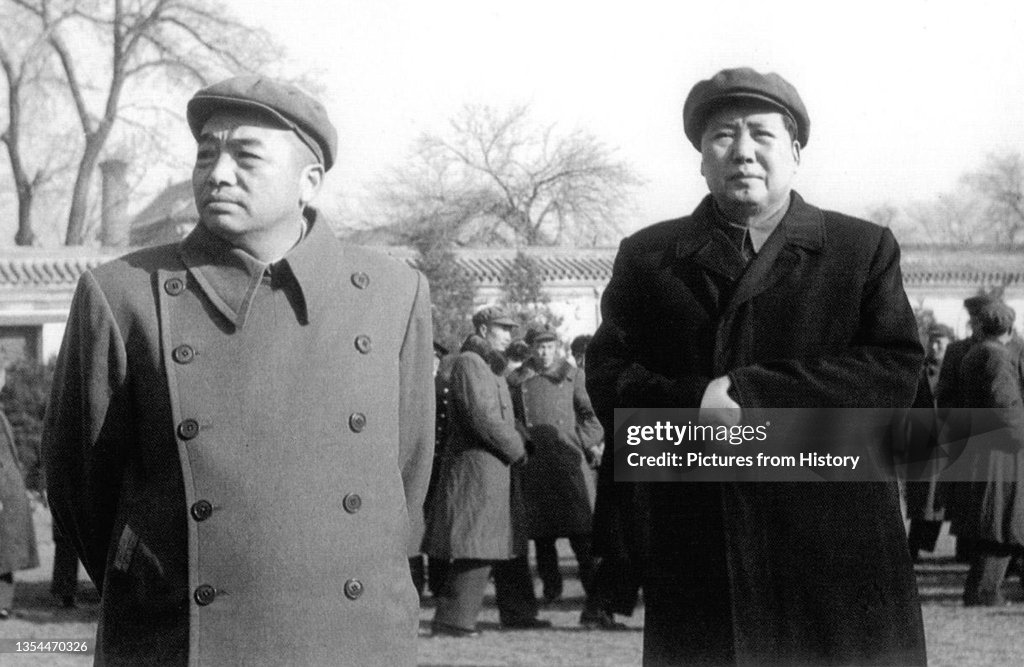
General Peng Dehuai, 76, Chinese military leader, former Minister of National Defense for the People’s Republic of China (1954 to 1959), died in a prison in Beijing, where he had been imprisoned during the 1966 Cultural Revolution.
Sir Douglas Menzies KBE, 67, Justice of the High Court of Australia since 1958, died while attending a Bar Association dinner in Sydney.
Ouida Bergère (born Eunie Branch), 87, American screenwriter and actress, widow of Basil Rathbone.
Paul Frederick Brissenden, 89, American labor historian.





 History Diaries