The official political policymaker for South Vietnam’s Buddhists announced today that they would oppose the Government of Premier Trần Văn Hương by nonviolent means through a campaign of noncooperation. The warning came as the Buddhist Secular Institute charged the regime with using some of the same tactics against Buddhists as did the overthrown Government of President Ngô Đình Diệm. In reading a statement by the institute, Thích Tâm Châu, the political spokesman, registered formal Buddhist opposition to the Hương Cabinet. His action shattered American hopes for an early political settlement that would refocus Saigon’s attention on the antiCommunist war effort.
After Thích Tâm Châu had read the Buddhists’ statement, he repeated, demands for the release of prisoners taken during four days of street rioting earlier in the week. He called again for a vote of nonconfidence in the Hương Government. Vietnam’s provisional legislature, the High National Council, issued a communiqué today suggesting that Premier Hương might meet some of the demonstrators’ demands “when the situation in the capital permits.” But meanwhile the council appealed for calm and for cooperation with law enforcement authorities. A principal grievance against the new government, formed late last month, is that Mr. Hương manned it with nonpolitical civil servants, depriving Saigon’s ambitious political and religious factions of representation. Instead of ending political turmoil, as the High National Council hoped to do in forming a civilian government, it set the stage for new rioting.
Meanwhile the week’s clashes between soldiers and young civilians armed with stones and clubs drew a sharp reaction today from Lieutenant General Nguyễn Khánh, the former Premier who is now commander in chief of the armed forces. Interviewed in the mountain resort of Đà Lạt, where he is attending a graduation ceremony at the military academy, General Khánh told Vietnamese reporters: “This situation cannot go on.” Despite his criticism of the rioters, General Khánh expressed some doubt about the policy of preventing demonstrations. He recalled that when he faced political difficulties last August he realized that it was not feasible to suppress the population, as President Diệm had done.
Supported by artillery and helicopter strikes, South Vietnamese Government forces killed at least 46 Việt Cộng and captured 70 today in a battle 27 miles southwest of Saigon. In addition to the confirmed dead, the guerrillas were estimated to have lost 90 in killed and wounded carried from the battlefield near Chợ Gạo. The government also asserted that 73 Việt Cộng had been killed in a heavy engagement near the North Vietnamese frontier and 77 others had been killed in three separate actions in Quảng Nam Province yesterday. A United States military adviser, Lieutenant Colonel Hugh Hoffman, described the government action against the Việt Cộng near Chợ Gạo as “very successful.” South Vietnamese losses were put at 8 killed and 19 wounded.
U.S. President Johnson’s top advisers — Taylor, Rusk, McNamara and other members of the National Security Council — agree to recommend to the president that he adopt Taylor’s plan for a two-stage escalation of bombing of North Vietnam.
The last planeload of refugees from the Congolese rebels arrived here today as the rescue operation of Belgian paratroops and United States aircraft came to an end. Seventy‐six former hostages were aboard the plane. Since Tuesday, when Belgian paratroops recaptured the rebel capital of Stanleyville, United States Air Force planes have evacuated 1,286 foreigners. At least 400 more were ferried out of rebel territory by the commercial planes of Air Congo, bringing to nearly 1,700 the total liberated in the week. Since the paratroops’ rescue mission began, the rebel soldiers have massacred at least 80 white hostages and have left at least 44 wounded.
Estimates of the number of foreign nationals still stranded in rebel‐held areas rose sharply today in the wake of the sudden decision by Washington and Brussels to recall all planes and paratroops to Europe. A check of embassies put the total of remaining hostages well above 900. This includes 450 from Greece, at least 200 from Belgium, 30 from the Netherlands, 60 from Britain, 20 from Luxembourg, 20 from Italy, 9 from Canada, 5 from France and 4 from the United States. Their fate is in doubt. It would take weeks or months for Congolese ground forces and their white mercenary officers to reach all the foreigners in a rebel area the size of France.
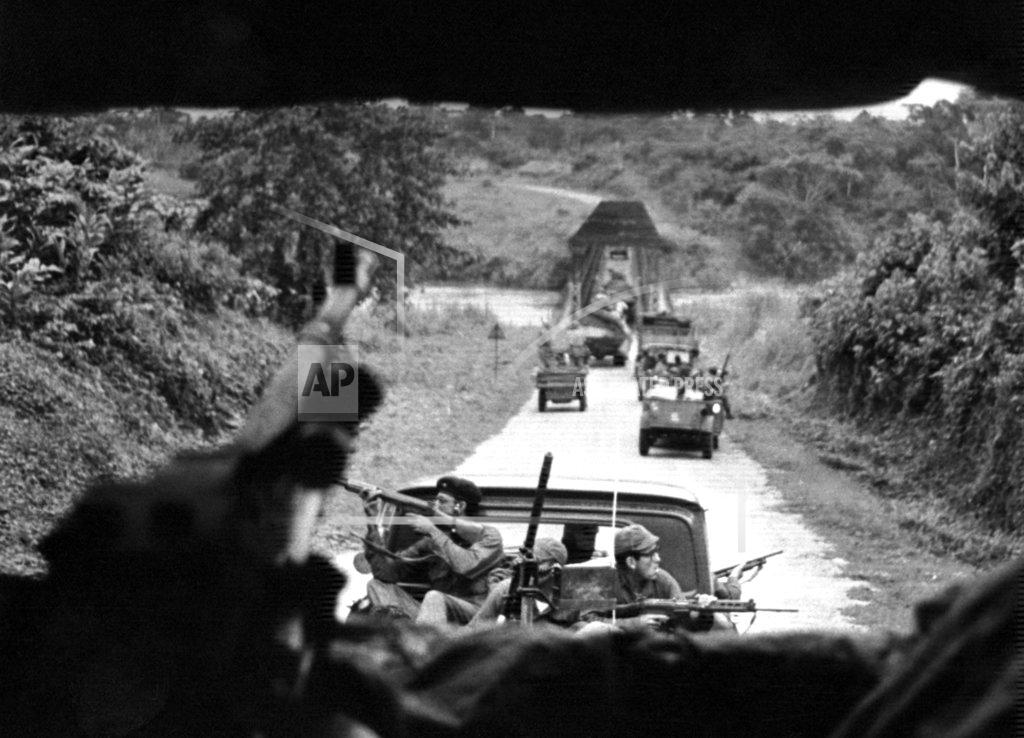
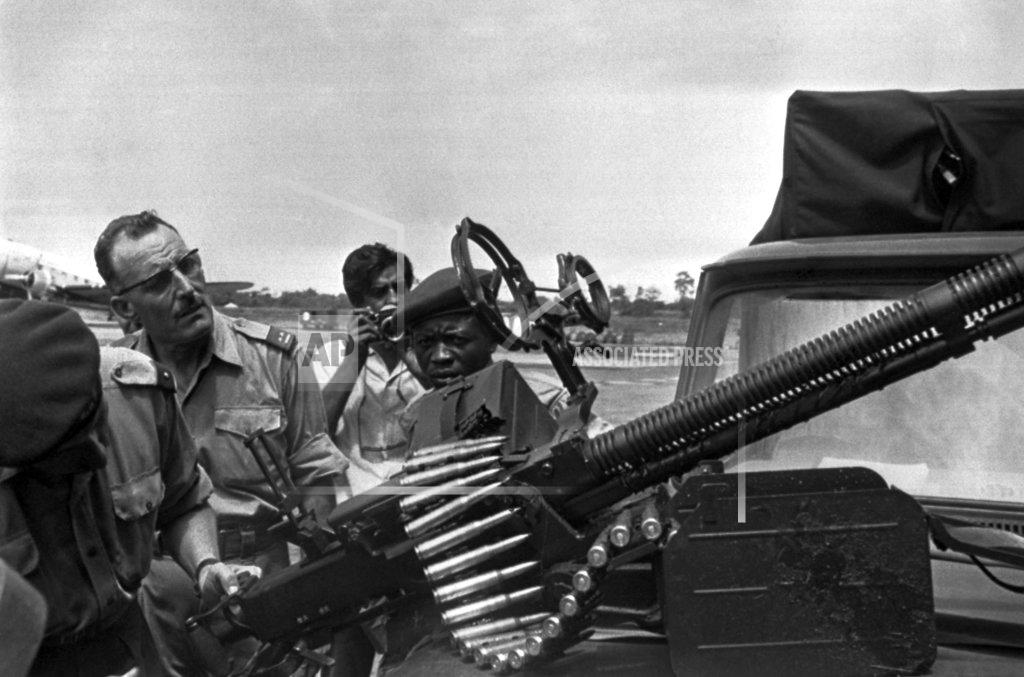
Paulis, the town northeast of Stanleyville that was captured by parachute assault Thursday, was abandoned yesterday. The last American C‐130 transport plare to take off was subjected to heavy ground fire. Paulis is again in rebel possession, and at least 70 foreigners are being held hostage in the surrounding bushland. All Belgian paratroops that were in Stanleyville were flown to Kamina military base in North Katanga Province today. The entire battalion and 10 America C‐130’s are to be back in Europe by Tuesday. This leaves Stanleyville in the hands of two companies of Congolese soldiers and about 200 mercenaries under Major Michael Hoare, a Briton. A handful of mercenaries are leading two small Congolese columns advancing eastward from Buta and north from Beni, but their progress has been much slower than they planned.
Most of Major Hoare’s Fifth Brigade will have to remain in Stanleyville if it is to be safe against rebel counterattacks. In fact, some towns that the mercenaries have overrun and passed by in their haste to reach Stanleyville are back in rebel control or are seriously threatened. Punia and Lubutu have been reported reoccupied. Kindu, which is guarded by only 10 Belgians and a company of Congolese, is threatened, with almost daily attacks from north of its airfield. There are also strong indications that four giant C‐130’s that have been flying logistical support for the Congolese Army may shortly be withdrawn by Washington. This would end all direct American involvement in the campaign against the rebels, a role that has drawn criticism from many Africans. Military; observers emphasized that without the C‐130’s the Congolese Army’s mobility would be critically curtailed.
The purpose of the anxious consultations between the Governments of the United States and Belgium, and by these with other allied and uncommitted Governments, before the military rescue mission was flown to Stanleyville in the Congo, was to provide a cushion against the effects on neutrals and quasi‐neutrals of Communist charges of “colonialism” and “imperialism” the mission was sure to evoke. But not until there is some tangible coagulation of so‐called world opinion toward the American-Belgian undertaking can it even begin to be calculated whether the purpose was achieved sufficiently to justify the plain risk of further delay, once the expedition has been mobilized. This reckoning will be speculation at best. Meanwhile the facts in hand are plain enough:
(1) The preparations for flying Belgian paratroopers to Stanleyville in United States military aircraft, if no previous agreement for the release of the white hostages could be reached with the Congolese rebels who held them under threat of death, were among the most highly‐publicized in military history.
(2) The Congolese rebels were virtually provided with a time‐table, by the United States and Belgian Governments at the sacrifice of the vital element of surprise, not only in the measurement of hours but of days.
(3) Thereby ample time was afforded for herding the hostages in the streets of Stanleyville; for executing some by methods ranging from quick, merciful death to mutilation; and for driving others before the rebels in their retreat to the jungle.
(4) The U.S.S.R. and Communist China made the same anti‐Western propaganda of the landings they would have made if the military rescue mission had been swift and unheralded.
(5) The same can be said of the Conference of African states at Nairobi, and of the Afro-Asian and Latin “student” demonstrations again symbols of the United States and Belgium aboard that followed, in full accordance with precedent and pattern.
Therefore, in the circumstances immediately subsequent to the Stanleyville paratroop landings, the weight of evidence is that the anxious Washington-Brussels consultations, and the additional time spent in a prior parleys with Secretary‐General U Thant of the United Nations, failed in their purpose, Also they fairly raised tha question whether more of the white hostages in the Congo would be alive and safe today if there had been less publicity and delay.
The Congolese rebels’ “president,” Christophe Gbenye, fled the Congo into the Sudan today, a provincial Governor announced. Ahmad Hassan, Governor of Equatorial Province, said Mr. Gbenye and his top officer, Nicholas Olenga, had arrived in Juba, in the Southern Sudan after Belgian paratroops, mercenaries and the Congolese Army entered Stanleyville. Medical care is being given to rebel refugees, Governor Hassan said.
The Cairo Govemment formally apologized today for the Thanksgiving Day attack on the United States Embassy and agreed in principle to compensate the United States for the heavy damages. An embassy spokesman said the apology and agreement to enter into negotiations over compensation had come in a diplomatic note from Mahmoud Pawzi, Deputy Premier for Foreign Affairs, to the United States Ambassador, Lucius D. Battle. Yesterday Mr. Battle delivered a bristling protest to the Government over the burning of the embassy’s John F. Kennedy Library and also indicated his displeasure with the handling of mob attack by Egyptian authorities.
It was also learned today that the United States Embassy had a report that Chinese Communists had supplied some of inflammable materials used by the rioters to set the embassy buildings ablaze Thursday night. This report was relayed to diplomatic circles from some of the African students who were among the mob that burned the library and a marine dormitory and sacked much of the embassy compound. According to these reports, which have not yet been confirmed, at least one member of the Chinese mission here passed out kerosene‐soaked rags to participants in the embassy attack.
Mao Tse‐tung called on all peoples of the world today to unite to defeat “United States aggressors.” In a rare personal statement, the Chinese Communist party chief also pledged full support to the Congolese rebels and predicted that they would be victorious over the American “paper tiger.” Although the Congo rescue operation inspired the statement, Mr. Mao charged that the United States “rides roughshod everywhere” and called for a battle against it around the world. “United States imperialism has overextended its reach,” he said. “It adds a new noose around its neck every time it commits aggression anywhere. It is under heavy siege by the people of the whole world. “People of the whole world, unite! Defeat the United States aggressors and all their flunkies! People of the whole world, have courage, dare to fight, defy difficulties, advance one after the other so that the; world shall belong to the people. Each and every evildoer shall be liquidated!”
Mobs of student demonstrators attacked the United States, Belgian, British and Congolese Embassies in Moscow in a three‐hour rampage today to vent their anger over the Belgian‐American operation to rescue whites held hostage by rebels in the Congo. Most of the demonstrators, who numbered about 1,500, were from Africa, Asia and Latin America, but they were accompanied by a number of young Russian toughs. The students invaded the Congolese Embassy, defaced the United States and Belgian Embassies and broke 35 windows in the British Embassy.
The Soviet police did nothing to prevent the riot from erupting but tried later to keep it from getting out of hand. Tass, the Soviet press agency, described the riot as a “spontaneous meeting.” But Soviet newsmen were on hand before the students arrived at the United States Embassy. One of the student leaders told correspondents the demonstration had been authorized by the Soviet Ministry of Higher Education. The ministry controls the Patrice Lumumba Friendship University, named after the Congo’s first Premier, where most of the foreign students are enrolled.
The State Department, in a formal statement tonight, said that the United States Government “rejects the charge that it has intervened militarily in the Congo.” The charge was made in Nairobi, Kenya, today by the Ad Hoc Commission on the Congo of the Organization for African Unity. The department again stressed the point that United States participation in the Congo rescue mission was “for purely humanitarian reasons and with the authorization of the Congo Government of Premier Moïse Tshombe. “This mission was undertaken then,” it said, “only because the rebels had left open no other way to save the lives of innocent civilians of at least 18 nationalities, many of whom had been held hostage by the rebels in direct violation of the Geneva conventions and accepted humanitarian principles. The evacuation of all those who could be saved by this air rescue mission has been completed and, as was announced today, the entire force is being withdrawn from the Congo tonight. The United States Government has no comment on other matters raised in the communiqué, which are matters between the O.A.U. and one of its sovereign members, the Democratic Republic of the Congo.”
Nigeria praised Belgium and the United States today for their military action to rescue hostages of the rebels in the Congo. Foreign Minister Jaja Wachuku said Nigeria recognized the Congo as an independent and sovereign state, capable of conducting its foreign affairs and entitled to call in friendly foreign nations to save human beings from a massacre. Mr. Wachuku added that if a similar situation occurred involving Nigerians abroad; he would do everything possible to save them. While condemning the white mercenaries of Premier Moise Tshombe, Mr. Wachuku attacked the “interference of African states in Congo affairs” and said some had helped arm the Congo rebels.
President Johnson said today that the United States would not be “adamant in our attitudes” on the proposed mixed‐man nuclear fleet within the Atlantic alliance. The President joined in Washington’s attempts to discourage speculation that the United States would expand the war in Vietnam. He strongly supported the American role in the Congo rescue operation. The problem in Vietnam, Mr. Johnson conceded, is a serious one, hut he indicated that his meetings next Tuesday in Washington with Maxwell D. Taylor, United States Ambassador to South Vietnam, would produce little if any change in policy. “I anticipate that there will be no dramatic announcement to come out of these meetings except in the form of your speculation,” he told newsmen attending a press conference in the front yard at the LBJ ranch.
The disagreement within the Atlantic alliance over the proposed mixed‐man nuclear force apparently was uppermost in Mr. Johnson’s mind. He opened the news conference with a lengthy statement outlining United States views on the matter. France is actively working against the proposal, Britain is cool and other member nations in the North Atlantic Treaty Organization are, at best, lukewarm. “The ultimate essentials of the defense of the Atlantic community are the firmness and the mutual trust of the United States and Europe,” Mr. Johnson said. The United States, he said, “is committed to the increasing strength and the cooperation of the Atlantic community in every field — economic, commercial and monetary.” “There are no problems which we cannot solve together, and there are very few which any of us can settle by himself,” he continued. “The United States sees no safe future for ourselves and none for any other Atlantic nation in a policy of narrow national self‐interest.”
U Thant has proposed that the General Assembly postpone until February a decision on whether to take away the Assembly vote of members more than two years behind in their assessments. The Secretary General’s plan, if accepted by the leading powers, would avoid the longthreatened confrontation between the United States and the Soviet Union when the General Assembly opens its 1964 session Tuesday. The Russians have refused to contribute to the cost of maintaining the United Nations peace‐keeping forces in the Middle East and the Congo. In addition to the Soviet Union, which owes $52.6 million, six Soviet bloc countries and Yemen are also more than two years in arrears.
The Nationaldemokratische Partei Deutschlands (NPD), the National Democratic Party of Germany, was founded in West Germany by extreme right-wing members of the Deutsche Reichspartei, the Gesamtdeutsche Partei and the Deutsche Partei. A former Nazi Party member, Adolf von Thadden guided the NPD, but Fritz Thielen, a co-founder of the Christian Democratic Union (CDU) was installed as the NPD’s first Chairman in order “to create the appearance of being a national- conservative party with a leadership without a Nazi past.”
Süleyman Demirel was elected as the new leader of the Adalet Partisi, the Justice Party of Turkey. A year later, he would become Prime Minister with the Justice Party’s win of the October 10 general election.
France performs an underground nuclear test at Ecker, Algeria.
President Johnson said today he was doubtful that the Federal budget for the next fiscal year could be kept below $100 billion. Authoritative Government sources thought earlier that there was a good chance of holding the budget below that figure. Mr. Johnson had made it clear that he wanted to do so. The President, holding his first news conference in almost two months, also predicted there would be changes in high Administration posts “from time to time.” Just two weeks ago he had indicated that no Cabinet changes were contemplated.
Mr. Johnson, standing in bright sunshine in front of the house at his LBJ Ranch, near Johnson City, looked rested and relaxed as he quietly answered questions of reporters gathered in the shade of live oak trees. Mr. Johnson, who had discussed budget requests from Federal agencies, was asked whether he still hoped to keep the budget below $100 billion. “I would always hope to keep it as low as possible. I hope it can be $100 biliion, but I’ve given you the facts as I see them, and maybe your speculation on that is as good as mine. It’s very difficult to know whether you can reduce these requests to that area or not. I would rather doubt it at the moment.”
Mr. Johnson carefully skirted the matter of whether he would ask J. Edgar Hoover to remain as director of the Federal Bureau of Investigation. Mr. Hoover, in a rare three-hour news conference two weeks ago, termed the Rev. Dr. Martin Luther King Jr. a “notorious liar” for asserting that the bureau had failed to provide adequate protection for Blacks in the South. The President would not say today whether he had assured Mr. Hoover that he could remain in his post so long as Mr. Johnson was President. Mr. Hoover recently indicated that he had done so. Mr. Johnson merely noted today that there was a “public ceremony” last May 8 at the White House at which he had signed an Executive order waiving “indefinitely” the mandatory retirement age for Mr. Hoover. The retirement age is 70 years, and Mr. Hoover will be 70 on January 1.
The belief is growing among moderate leaders in Philadelphia, Mississippi that a Ku Klux Klan group of at least 50 persons plotted the murder of Michael H. Schwerner at least six weeks before he and two other civil rights leaders were slain last summer. Why would Mr. Schwemer be the particular target of the Klan? Why not one of the other victims: Andrew Goodman, who like Schwerner was a white man from New York? Why not the lone Black of the three, James E. Chaney? “Schwemer wore a beard and looked very Jewish,” explained one Philadelphian. “He had become a known figure to the Klan; he had been in the area several months.”
Mr. Schwerner, a 24‐year‐old former settlement house worker on the Lower East Side of Manhattan, came to Mississippi last January. He and his wife, Rita, had joined the Congress of Racial Equality and had opened a community center at Meridian. Blacks were trained there for civil service examinations and motor registration and in other phases of the civil rights program. Mr. Goodman, a Queens College student, was among 175 student volunteers who had completed a one‐week orientation course for the Mississippi civil rights project in Oxford, Ohio, only the week before he vanished. The three disappeared June 21. Their bodies were found in an earthen dam near here on August 4.
At least 50 persons were partner to the conspiracy to murder Mr. Schwemer, it is believed. As for motivation for murder, it is suggested by some that the Klan mob was worked up to an embittered conviction that the state was facing an invasion by Yankee beatniks, Jews and others whom Klansmen call “scum,” and decided to make Mr. Schwerner an example.
On June 21, Mr. Schwerner, Mr. Goodman and Mr. Chaney, a 21‐year‐old plasterer from Meridian, came to Neshoba County to investigate the burning of a Black church. They were stopped late in the afternoon by Deputy Sheriff Cecil Price, who took them to jail and held them for several hours on a speeding charge. According to Mr. Price, it was late at night when they were released and headed home for Meridian. They never arrived there. Two days later, the burned bulk of their stationwagon was found in a swamp a few miles from town. Since then, this town of 5,000 in the red clay hills of east-central Mississippi has been under close scrutiny by agents of the Federal Bureau of Investigation.
Until recently the FBI men have been given scant information by the townspeople. Many Philadelphians insisted for a long while that the disappearance was some sort of a hoax invented by the civil rights workers to give the state a bad name and that the three would turn up eventually safe and sound. Then, when the bodies were uncovered and inquiry showed the men had been shot, the pop‐ ular theory was that they had been shot by other civil rights workers just to create a clamor for harsh Federal intervention. Even today there are Philadelphians who say they cannot comprehend “all this fuss over two Jews and a n****r.”
But at last, a few Philadelphians are beginning to break silence and comment openly on the undercurrents of fear and guilt. “People will tell you everything is rosy here,” said the Rev. Clay Lee, pastor of the First Methodist Church, “but that’s a lot of hogwash. I’ve been a minister 15 years in Mississippi and I’ve never seen so much tension.”
“What bothers me most,” he said, “is the unwillingness of so many people to face the fact that this was planned, premeditated murder. I honestly don’t know one member of the Klan. But beyond the shadow of a doubt they are here and they were mixed up in this. I don’t consider myself a crusader,” Mr. Lee said, “but I believe in law and order. A breakdown at any point encourages a general feeling of lawlessness.”
The Government’s chief civil rights strategist describes the Civil Rights Act of 1964 as an overwhelming success in its first five months of life. “It did what it was supposed to do” said Burke Marshall, Assistant Attorney General, in charge of the Justice Department’s Civil Rights Division. “It brought under the machinery of law the means of dealing with racial injustices that could neither be left to the states nor covered up by measures of repression,” Mr. Marshall, said. The Assistant Attorney General, an architect of the legislation, appraised it in a speech prepared for the Illinois Chamber of Commerce this week. Mr. Marshall conceded that he and others had had. some doubts at first about how the law would work. But instead of massive resistance to change, he said, “we have had massive compliance, as befits a nation governed by law and a people who rspect and comply with the law.”
Along tree‐shaded Winter Avenue, an area of 40‐year‐old frame houses that divides Atlanta from the suburban town of Decatur, rows of “for sale” signs proclaim an area of racial transition. The Greater Atlanta Council on Human Relations wants to influence white owners to take down these signs and stay in the area. Three miles away, handsome old oaks line the broad, winding streets of Druid Hills, an area of some wealth and of many large, well‐kept homes, all occupied by whites. The Human Relations Council wants to influence this area to accept Black residents, too. These two neighborhoods, and others adjacent to them, have been singled out for a program of fair housing and open occupancy that the Atlanta council believes will be the first in the Deep South.
The White House released today a report urging increased emphasis on health programs for youngsters that would begin in early childhood and continue through secondary schools. President Johnson said the report, submitted by Welfare Secretary Anthony J. Celebrezze, “presents disturbing facts.” President Kennedy told Congress February 14, 1963, he was asking the Welfare Department to make the study. His request was prompted in part by the large number of men rejected by the military services for medical reasons.
A verdict by a Federal Court jury in Miami has decided that cigarettes are reasonably fit for human consumption. The verdict was returned in favor of the American Tobacco Company in a $1.5 million damage suit brought against the company by the estate of a heavy smoker who died of lung cancer. At the conclusion of the seven‐day trial, Federal District Court Judge Emett C. Choate charged the jury to consider, first, whether cigarettes are reasonably fit for human consumption and, if not, how much in damages should be assessed against the company. The jurors deliberated some two hours and reported, simply: “We find for the defendant.” Whereupon Judge Choate commented: “You have answered the first question in the affirmative.” In his charge to the jury, Judge Choate had explained that “if cigarettes impose a threat to any substantial number of people who use them, then they would not be reasonably fit.”
The broadcasting industry here reacted cautiously yesterday to the decision by the Federal Communications Commission to investigate reports that radio and television were still plagued by “payola” and “plugola.” Most of a dozen persons interviewed said they had heard rumors that plugola — illegal payments for subtle advertising — was being accepted in some circles. “But it’s hard to believe,” said William B. Williams, a disk jockey with radio station WNEW, that illegal payments “would crop up again in the light of what happened four years ago.” Mr. Williams was referring to the broadcast scandal in which eight employes of New York radio stations were arrested and accused of accepting $116,580 in payola — illegal gratuities — from companies anxious to have their records played on the air.
The American Medical Association, confronted with the prospect of Congressional defeat in its fight against the Administration’s medical care program, gathered in Miami Beach today for its semiannual meeting. The decision whether to stand firm in opposition to health care for the elderly under Social Security or to seek a compromise lies ultimately with the House of Delegates, a 228-member body that makes policy for the 204,000‐member organization.
NASA launched the Mariner 4 space probe from Cape Kennedy at 8:22 in the morning, three weeks after the failure of Mariner 3. The two-stage launch vehicle consisted of an Atlas D, number 288, and an Agena D, number 6932. Traveling at 8,300 miles per hour (13,400 km/h), the fourth Mariner started off toward Mars on a seven-month journey. On its original trajectory, the probe would have missed the Red Planet by 150,000 miles (240,000 km), but a correction was made on December 5. Mariner 4 would make its closest approach (within 6,118 miles (9,846 km) of Mars) and return television pictures on July 15, 1965.
Tommy Ross, a soccer football striker for Ross County F.C. in the lower level Highland Football League of Scotland, set a record for the fastest hat-trick (three consecutive goals). In the game against Nairn County F.C., Ross made three goals in 90 seconds.
The Philadelphia Phillies’ slugging third baseman Dick Allen is chosen as the National League’s Rookie of the Year, receiving 18 of the 20 votes cast by a special committee of the BBWAA. The ‘Wampum Walloper’ led the NL in runs scored, triples, and total bases, batting .328, fifth-best in the league, with 29 homers and 91 RBIs.
The Minnesota Twins freshman outfielder Tony Olivia, named on 19 of the 20 ballots cast by a special committee of the BBWAA, is overwhelmingly selected as the American League’s Rookie of the Year, with the lone dissenting vote going to 19 year-old Oriole right-hander Wally Bunker (19-5, 2.69). The Cuban native from Pinar del Rio won the AL’s batting crown with a .323 average while hitting 32 home runs and driving in 94 runs for the sixth-place club.
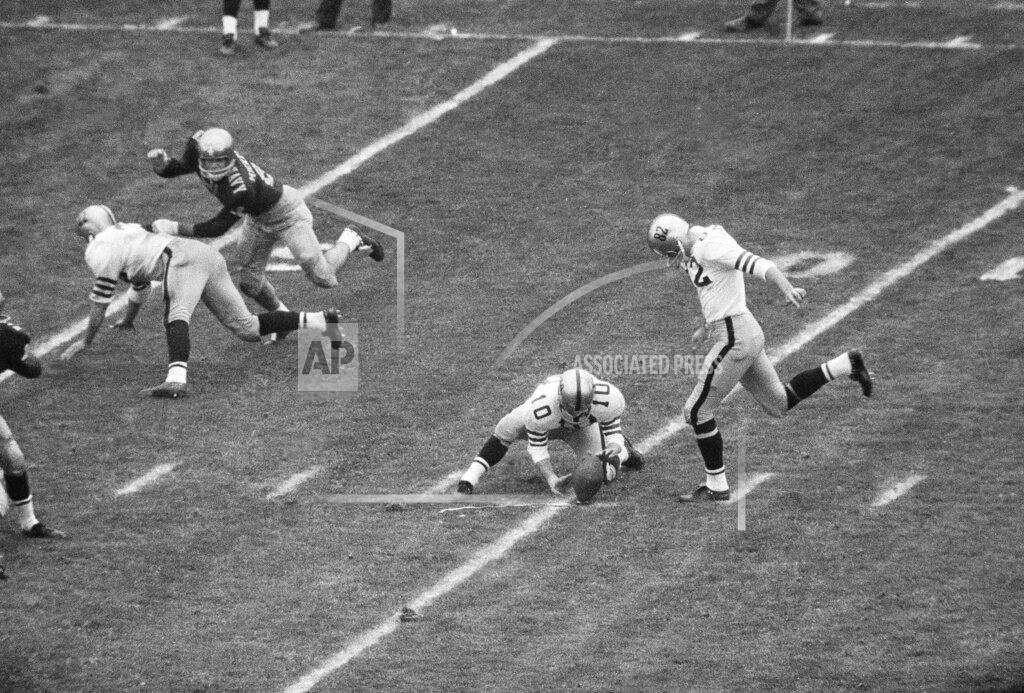
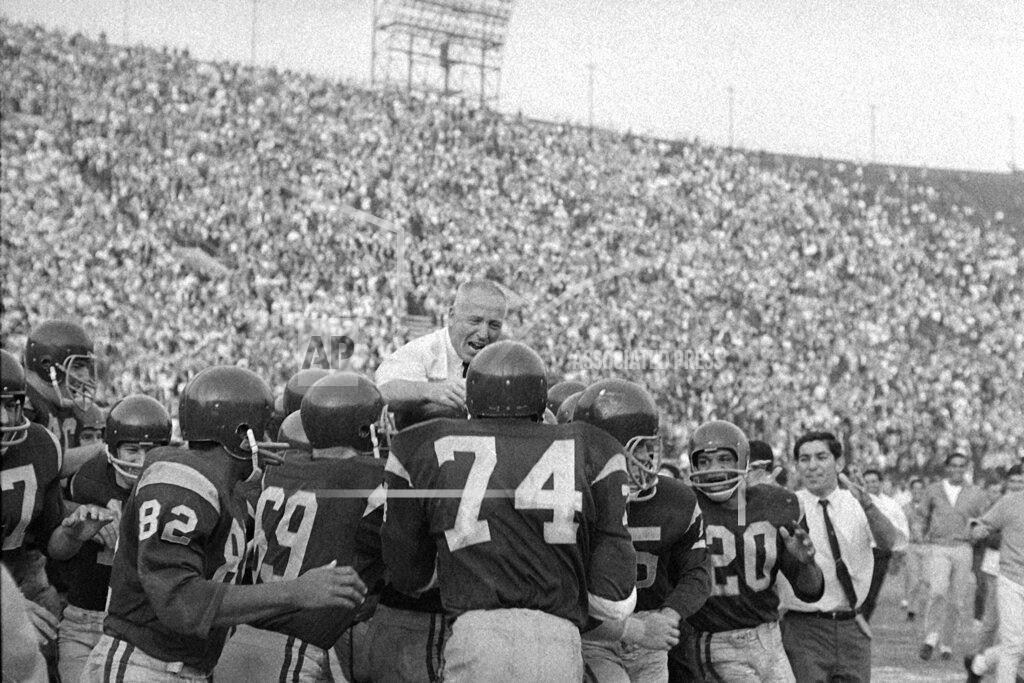
On the last day of scheduled games during the 1964 college football season, the #1-ranked Notre Dame Fighting Irish blew a 17-0 halftime lead against the USC Trojans at Los Angeles, and lost the game, 20-17. With that loss, the #2-ranked Alabama Crimson Tide (which had closed its season at 10-0-0 with its win over Auburn two days earlier) was voted the #1 ranking by both the Associated Press poll of sportswriters and the United Press International poll of coaches to be recognized by the NCAA as the unofficial college football champion for 1964. At the time, no polling was taken after the postseason bowl games. Alabama would lose in the Orange Bowl to Texas, while the nation’s other major unbeaten and untied team, the #2 ranked Arkansas Razorbacks, would win the Cotton Bowl over Nebraska. Since no further polls were taken, however, Arkansas would remain at second place despite its 11-0-0 record.
Army beat Navy for the first time in six years before a crowd of 100,000 at John F. Kennedy Memorial Stadium, Philadelphia. The score was 11-8.
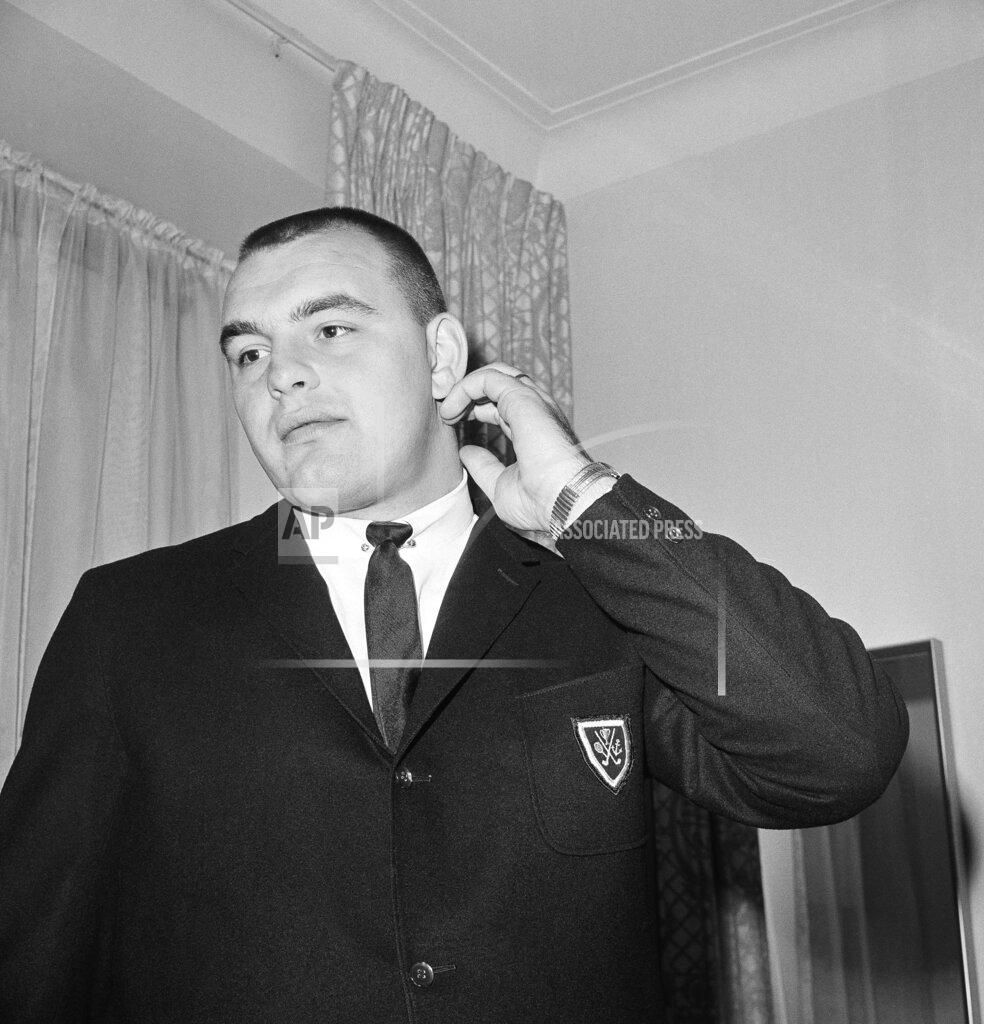
1965 NFL Draft: Tucker Frederickson from Auburn University is the first pick by the New York Giants. The Chicago Bears get an incredible haul, managing to draft two Hall of Fame players in the first round: running back Gale Sayers and linebacker Dick Butkus.
CFL Grey Cup, CNE Stadium, Toronto: BC Lions defeat Hamilton Tiger-Cats, 34-24; BC’s Bill Munsey scores 2 touchdowns in the 3rd quarter, one on offence and another on defence.
Born:
Michael Bennet, American politician (Senator-D-Colorado 2009-), in New Delhi, India.
John Burkett, MLB pitcher (All Star, 1993, 2001; NL wins leader 1993; San Francisco Giants; Florida Marlins, Texas Rangers, Atlanta Braves, Boston Red Sox), in New Brighton, Pennsylvania.
Craig Wilson, MLB pinch hitter, third baseman, and second baseman (St. Louis Cardinals, Kansas City Royals), in Annapolis, Maryland.
Roy Tarpley, NBA power forward and center (Dallas Mavericks), in New York, New York (d. 2015, due to liver failure from drug and alcohol abuse).
Jesse Cook, French Canadian jazz-flamenco guitarist (Free Fall), in Paris, France.
Died:
Charles Meredith, 70, American silent film star (“Court of Last Resort”) and stage actor.


 History Diaries