The Soviet Union denounced tonight United States “air attacks” on North Vietnam and said that it was prepared to give any “necessary assistance” to that Communist country. The denunciation and the pledge of help were contained in an “authorized statement” by Tass, the Soviet press agency. Such statements are considered to be as official as declarations by the Foreign Ministry and only a shade less emphatic.
The statement charged that a group of United States F‐100 and T‐28 military planes violated the airspace of North Vietnam and attacked a district in Quảng Bình Province November 18. Three planes were shot down and two damaged, Tass added, quoting the North Vietnamese Ministry of Foreign Affairs. This and other “aggressive actions” by United States military forces could have dangerous consequences for the peace of Southeast Asia and the world, the statement said. It cited American “press reports” to the effect that the United States was making plans to broaden the war in Vietnam and to carry out bombing attacks against targets in North Vietnam and along the route in Laos used by the North Vietnamese to supply the Vietcong guerrillas in South Vietnam.
North Vietnam charged today that United States and South Vietnamese warships shelled a North Vietnamese island for one hour Wednesday. The Hanoi radio said a protest had been filed with M. A. Rahman, Indian chairman of the International Control Commission office in Hanoi. The island, Cồn Cỏ, lies in the territorial waters of the northern part of the demilitarized zone, the protest note said. “It is crystal‐clear that this war act is part of the United States plan of attack against North Vietnam in an attempt to retrieve their defeats in South Vietnam, a plan the United States aggressors have time and again spoken of, and which Ambassador Maxwell D. Taylor recently disclosed,” the note said. The Hanoi protest neither disclosed the extent of damage caused by the alleged shelling nor identified the ships.
Political and religious leaders sought today to break the impasse created by anti‐government mob violence in Saigon and by a regime determined to maintain order, even at the cost of gunfire and death. Premier Trần Văn Hương declared a state of siege in the capital, beginning at midnight tonight. This reinforced the martial law measures imposed yesterday and put the police and other civilian security agencies under military control. The commander of the capital military district, Brigadier General Phạm Văn Đồng, was made military governor of Saigon and charged with enforcing the rigid security decree.
Heavily armed paratroopers and police patrols took up positions at key points across the darkened city. A force estimated at two battalions was posted around the National Buddhist Center, the point of origin of the most intense rioting of recent days, with orders to open fire on violators of a 10 PM curfew. The demonstrations have received Buddhist support but were not instigated by Buddhist leaders. They were inspired by opposition political factions angry at their exclusion from Mr. Hương’s Cabinet, made up of civil servants. For the first day since Sunday there were no large‐scale demonstrations in the streets. A few youths were injured in a gang fight between rival student organizations, but there were none of the angry confrontations between policemen and demonstrators that turned sections of the city into battlefields yesterday.
Mr. Hương, in a seven‐minute radio address to the nation, defended the government’s firm stand against mob defiance and charged the demonstrators with attacks on policemen. He said the police were not repressing the people. “I assumed office because I wanted to secure happiness and well‐being for the population,” the Premier said, “and I will not back down while the people are still being threatened.” He said that the Việt Cộng insurgents were attempting to turn the political protests into open revolt. Communist agents have infiltrated Saigon in recent days, he added.
Meanwhile, American diplomats conferred with senior Buddhist officials, urging restraint and moderation in a tense situation that threatens to lead to anarchy. While Buddhists have demanded that the Hương Government be ousted, they have conceded that they do not have an alternative list of ministers to propose. Mr. Huong met twice today with the chief of state, Phan Khắc Sửu, to obtain his endorsement for the government’s position. The High National Council, the Vietnamese provisional legislature, assembled during the afternoon and continued in session far into the night. The council has the right to dismiss Mr. Hương through a vote of no confidence, but there were indications that a majority for such a move could not be mustered.
Ambassador Maxwell D. Taylor arrived in Washington today and indicated that his return did not necessarily mean that the United States would adopt a more aggressive strategy in Vietnam involving the bombing of selected Communist targets. It had been widely reported that Mr. Taylor advocated such a program and would urge its adoption. The Ambassador flew here from Saigon for high‐level strategy sessions with President Johnson and other American policymakers. On the way, he stopped briefly in Hong Kong and Honolulu. In reply to questions at the airport, he said his trip had not suddenly made the bombings more likely. He also emphatically denied that he was threatening to resign unless his proposals for resolving the war in South Vietnam were adopted.
Prince Norodom Sihanouk has begun to feel leftist displeasure at his agreement to meet with United States negotiators in New Delhi to discuss the strained American‐Cambodian relations. Far left and pro‐Communist organizations have been openly displeased. One group of students planned demonstrations against the proposed talks. But authorities in the capital intervened, and the protest meeting was canceled. Cambodia’s chief of state took the youthful malcontents to task today and said they had put their Socialist sympathies above the welfare of the country. “We have no intention of betraying our Communist friends nor of looking for the re‐establishment of friendship with the United States,” Prince Sihanouk said. But, he added, even though the talks may prove “illusory,” Cambodia could not reject them “without taking grave risks for the future.”
Canada will send $15,000 in emergency relief assistance to flood victims in central Vietnam, it was announced today.
Marshal Chen Yi, the Chinese Communist Foreign Minister, arrived unexpectedly in Jakarta, Indonesia today for talks with President Sukarno. His unannounced appearance appeared to be a new step in a round of diplomatic activity in preparation for a conference of African and Asian nations next spring at Algiers.
The Malaysian Defense Ministry announced today that security forces killed three Indonesian invaders and captured nine others off the east coast of Southern Johore State yesterday.
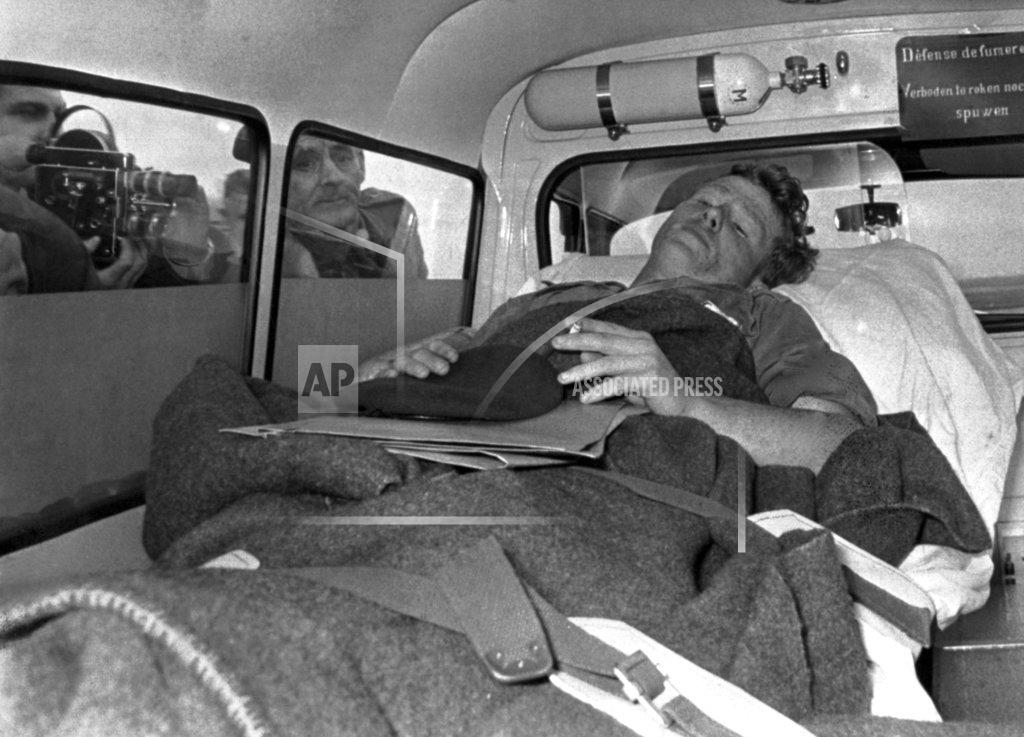
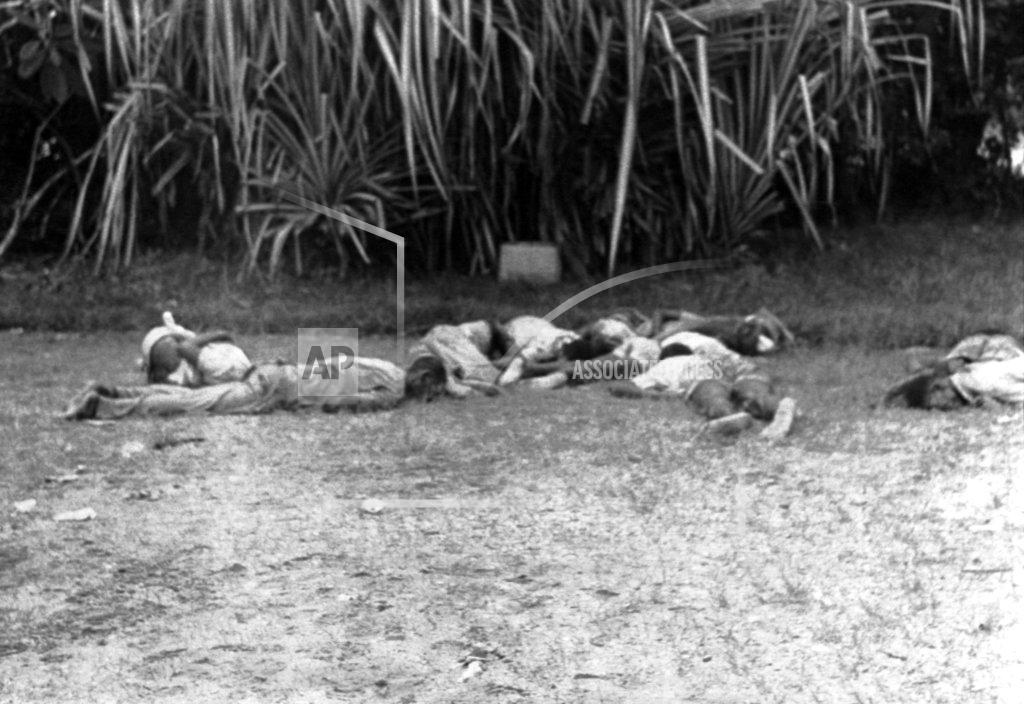
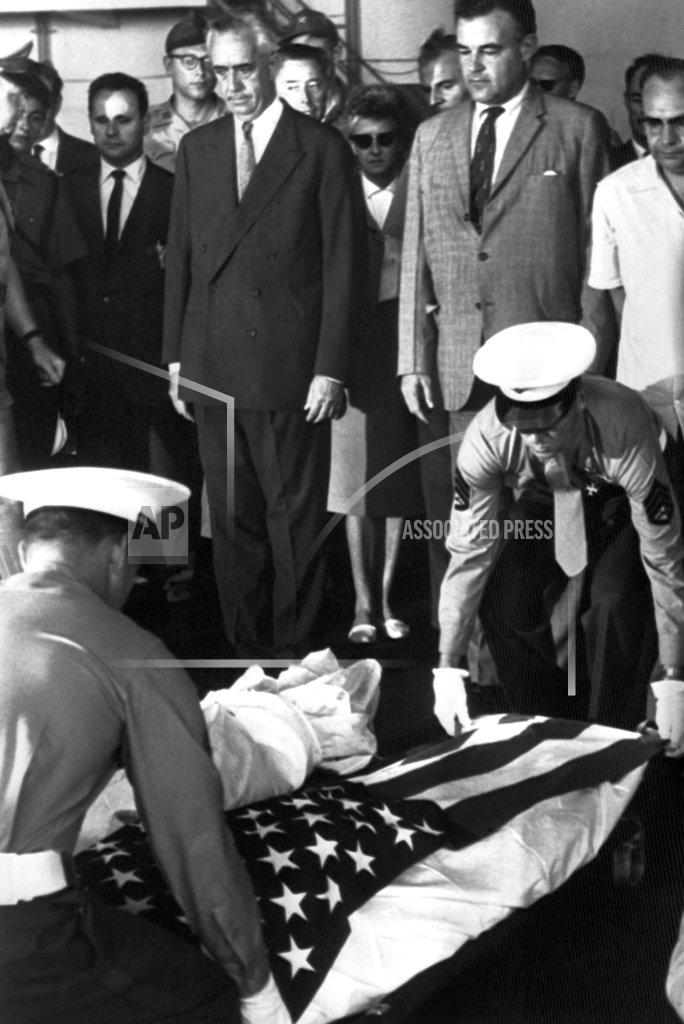
Belgian paratroops captured the town of Paulis from the Congolese rebels early today and liberated 211 whites who had been held as hostages. Twenty‐one Belgians and an American missionary had been clubbed to death by the rebels before the Belgians landed. The rebels were also reported to have slaughtered 2,000 to 4,000 Congolese. The assault on Paulis, which is about 225 miles northeast of Stanleyville, was launched at 6 AM. Seven United States Air Force transport planes carried the Belgians from Stanleyville, the capture of which they spearheaded Tuesday. The operations are being carried out with the approval of Premier Moise Tshombe. Many of the refugees from Paulis who stumbled down the ramps of the American C‐130’s were crying hysterically. Others were almost speechless from shock. Reports from Brussels said 100 whites remained to be evacuated from Paulis.
News of the massacre of whites in Paulis was almost eclipsed by reports of the mass killing of African civilians belonging to “opposition” parties. Nearly all the victims were followers of former Premier Cyrille Adoula. Many were killed at the last moment by fleeing rebels. Evidence of the slaughter could be seen along the airport road, where lay the bodies of more than 50 Congolese slain by machetes. The massacre of the whites began Tuesday night. Witnesses said the rebels acted on final orders broadcast by Christophe Gbenye, president of the Congolese People’s Republic, calling for the execution of all whites in rebel hands. Joseph W. Tucker, an Assemblies of God missionary from Lamar, Arkansas, was the first to be executed.
Foreign Minister Paul‐Henri Spaak said today that the Belgian paratroops who rescued white hostages from Congolese rebels would regroup tomorrow or Saturday in Kamina, Katanga Province, in preparation for their departure from the Congo. Mr. Spaak made the announcement at a news conference. In reply to a question on whether Communist China was involved in the Congolese strife, he said Peking had played “a certain role” in the rebellion. “Objectively,” he added, “I cannot say precisely what that role has been.” Mr. Spaak mentioned “the two important Peking embassies” that had been opened in Burundi and the Congo Republic, the former French colony. These countries are adjacent to the Congo. Other Belgian officials said they were not surprised at reports that Chinese antiaircraft guns and ammunition boxes had been discovered in the combat area around Stanleyville.
An angry mob in Cairo set fire to the United States Information Agency library in the Egyptian capital as a protest against American support for the Congo rescue. The city’s fire department was slow in responding and the library’s 24,000 book collection was destroyed along with the furniture and equipment.
In Nairobi, a mob demonstrated at the United States and Belgian Embassies after bombing diplomats’ cars. Africans in Prague were reported to have stoned buildings and cars at the United States, Belgian and British Embassies.
Kenyan political leaders urged a break in relations with the United States and Belgium. Presidents Ahmed Ben Bella of Algeria and Aden Abdulla Osman of Somalia called for an urgent meeting of the Organization of African Unity.
The Soviet press continued today to denounce the Belgian‐United States rescue of civilian hostages from the Congolese rebels. The Government newspaper Izvestia said that the operation had been an “unprecedentedly insolent military aggression against the Congo by Belgium, the United States and Britain” and declared that the “warlike colonialists shall not evade responsibility.”
Communist China said today that it would take “all possible measures” to help the Congolese rebels and would “never remain indifferent” to the Belgian and United States operation to rescue whites held hostage in Stanleyville. The Chinese have backed the rebel movement with money and advisers in its struggle with the Congolese Government. The statement by Communist China denounced the paratroop operation carried out Tuesday by the United States and Belgium. The rebels had threatened to murder the hostages if the troops of the central Congolese Government carried out an offensive against the city.
Leaders of the Ghana Students Association of the Americas condemned the Soviet Union today for “supporting the Congolese rebels” despite their slaying of Dr. Paul E. Carlson and others. Kwado Asafo Akwawuah, president of the group, sent a protest letter to the Soviet Embassy in Washington. It said: “When the Congolese rebels held a Christian missionary medical doctor as a hostage and ransom for their political recognition by the Western Governments, but murdered him along with other hostages they held in the Congo, your Government did not see fit to condemn these rebels and their crimes because the Communist world has armed them and supported them to fight against the lawfully constituted Government of the entire Congo under the Prime Minister, Moïse Tshombe.”
The $3 billion, 11‐nation rescue operation for the British pound had the desired effect today of strengthening sterling in European money‐trading centers. The pound advanced to its highest levels since last July. An early burst of enthusiasm on the foreign‐exchange market in London raised the pound to $2.79 1/8, up about half a cent from yesterday’s closing quotation. This rally was followed by a lull in trading and a slight recession in price to just below $2.79. Around 2:30 P.M., Paris and German markets began buying and the pound reached its high for the day at $2.79 7/32. This was its best level since July 11. The pound then fell back a little to close at $2.79 1/16. The official rate of the pound is $2.80.
The Labor Government has been scarred by the financial crisis over the pound, but apparently not nearly so much as some Conservative leaders say or as the talk in London’s hothouse political atmosphere might indicate.
Nineteen crew members on the Norwegian tanker MV Stolt Dagali were killed when their ship sank after being cut in half by the Israeli cruise ship SS Shalom off the coast of the United States. The Stolt Dagali, with a crew of 43, was carrying “a cargo of solvents and vegetable oils” from Philadelphia to New York City to pick up more cargo; the Shalom had departed from New York with 616 passengers on their way to the West Indies. At 2:15, as the ships proceeded through a heavy fog, the faster Shalom cut “directly through the tanker’s hull, splitting her neatly in two”. The stern of the Stolt Dagali sank immediately with all on board; the forward two-thirds of the tanker stayed afloat and the U.S. Coast Guard and the Shalom to rescue 24 survivors from the icy waters of the Atlantic Ocean.
The United States and West Germany expressed hope today that a final agreement on thel proposed mixed‐manned nuclear fleet could be reached soon. Hope for maximum participation by members of the Atlantic alliance also was sounded in a joint communiqué issued by Secretary of State Dean Rusk and the West German Foreign Minister, Gerhard Schröder. Their confidence contrasted with hardening opposition to the idea of the allied fleet that is developing within the North Atlantic Treaty Organization. France is actively working against the project, many other NATO members are at best lukewarm about it, and only last Monday Prime Minister Harold Wilson warned that the mixed‐manned fleet could weaken the alliance and complicate the efforts at cooperation with the Communist powers.
Zenon Rossides of Cyprus has appealed to the Secretary General, U Thant, for aid from the United Nations peace‐keeping force to protect Turkish Cypriots from “Turkish terrorists.” In a letter dated Tuesday, Mr. Rossides asserted that this was necessary to protect “the freedom of movement of Turkish Cypriots and their right to peaceful living, denied to them by Turkish terrorist organizations.” He renewed Greek Cypriot charges that these groups were forcing Turkish Cypriots to leave their homes and gather in “segregated captivity.”
Portugal’s democratic opposition has publicly charged that the regime of Premier Antonio de Oliveira Salazar is not able to solve major national problems and therefore must be changed.
Indian Defense Minister Y.B. Chavan said in Parliament today that Britain had agreed to lend India a submarine “for two to three months each year for a few years” for the training of Indian Navy men.
Television was introduced to Pakistan as the Pakistan Television Corporation (PTV) went on the air in the city of Lahore.
Japanese Premier Eisaku Sato, faced with a variety of important policy decisions, plans no early action on one of Japan’s potentially most explosive issues — revision of the “no war Constitution.”
The revolutionary Brazilian Government deposed Governor Mauro Borges of the State of Goias today on charges of having Communist connections.
The election to Parliament yesterday of the general secretary of South Africa’s powerful secret society, the Afrikaner Broederbond, and particularly the size of his majority, was regarded as a significant victory both for the Broederbond and for Prime Minister Hendrik F. Verwoerd’s Government.
Thanksgiving Day in the United States.
At the Evers Hotel in the town of Philadelphia, Mississippi today, a small band of civil rights workers sat around a battered phonograph listening to recordings of Mozart and Haydn and wondering what on earth Mississippians have to be thankful for. “Where’s the bounty?” inquired Alan Schiffmann, of 659 Ocean Avenue, Brooklyn, a graduate student of philosophy at Princeton University. “This is a place of total repression and grinding poverty,” he went on. “The Negroes are shown less respect than the white man shows his dog. And the whites are as victimized and brutalized as the Negro.”
Thanksgiving was warm and pleasant in Philadelphia. At the office of The Neshoba County Democrat, Jack L. Tannehill, the editor, said everything was quiet in town. “I don’t think there are a dozen cars on the street,” he said. One hundred and thirteen days have passed since the discovery on August 4 of the bodies of three civil rights workers who, after being shot, were buried in a deep grave near an earthen dam not far from town. The three had disappeared on June 21. This week there was a flurry of reports from Washington that the Federal Bureau of Investigation was about to make some arrests. Nowhere did these reports stir less interest than in the red clay hills of east‐central Mississippi.
“No one seems alarmed or confused,” Mr. Tannehill observed. “The rumor is that there will be some arrests but nobody seems to be concerned about it. It’s my opinion they [the FBI agents] are trying to make somebody nervous,” the editor said. “It may work if they keep at it long enough. I hope it does work. When they do get evidence I hope it sticks.” He said nobody had left town.
Reports that the FBI was about to crack the case were received with greatest skepticism among civil rights workers. They had heard it all before. Hadn’t President Johnson himself declared, many weeks ago, that arrests were imminent? they asked. And even if arrests were made, no white jury in Mississippi would convict the slayers. “No one in his right mind believes there would be any convictions.” said Mr. Schiffmann. “The murder of a Negro isn’t a crime down here, that’s all. These aren’t human lives.” Here in Jackson, at headquarters of the Council of Federated Organizations the command center for the civil rights drive, the consensus was that the stories of impending arrests were put out merely to counter the mounting criticism of J. Edgar Hoover, director of the FBI.
“I don’t think there will be any arrests,” said Dave Dennis, Congress of Racial Equality program director for the South. “They know they can’t get conviciions. The Federal Government is caught up in its own jury system.” Charles Horwitz of Chicago, a Federated Organizations volunteer, said that lawyers last week had briefed the staff on the futility of expecting convictions. Hunter Morey of Evanston, Illinois, a field secretary for the Student Nonviolent Coordinating Committee, who was graduated from Princeton in 1962, was sharply critical of Mr. Hoover, whom he described as “a Goldwater type, a right‐wing nut.”
He also criticized some FBI agents in the state. “When we report incidents to the FBI we find that many agents seem to have only the most perfunctory interest in the cases,” he said. “I remember an agent saying with a mixture of irritation and boredom, ‘Are you just telling me this for the record?” “Some agents have acted in an insulting way, such as refusing to shake hands with Negroes,” Mr. Morey asserted. But Mr. Hoover’s stock has risen among Jackson whites.
Biracial government in Tuskegee, long considered anathema by whites, has brought a lessening of tensions and a new confidence in the future of the town. Although the scars of almost a decade of conflicts remain, most white and Black leaders agree that the community has moved into a new era of race relations. Some believe that with restraint on both sides this Black Belt town of 6,500 could become a model for the South. Only a few months ago, Tuskegee was so torn by racial unrest that many here feared it was in danger of drying up or becoming an all‐Black community. In recent weeks, these changes have taken place:
- A new City Council of two Blacks and three white moderates has been elected and installed without the upheavals that many had predicted; four Blacks have been elected to Macon County offices and will assume their duties next year.
- Most of the white leaders who had gerrymandered the Blacks out of the city in 1957 and opposed any change in the old order have been silenced and isolated.
- Tuskegee High School, which closed last year after it was integrated by court order, has reopened and is continuing to draw students from the private school established by whites to avoid desegregation.
- White and Black business and civic leaders have reopened communications, with meetings on the campus of Tuskegee Institute, the Black college founded by Booker T. Washington in 1881.
- The Tuskegee News, the weekly newspaper that had opposed any change in the social structure, has been purchased by Neil O. Davis of nearby Auburn, a moderate.
The attitude of the new City Council was symbolized in a float the city sponsored in the Tuskegee homecoming day parade a few days ago. It showed a line of modern vehicles moving upward toward a new city under a sign saying “Good Road Ahead.”
President Johnson spent a quiet Thanksgiving Day at home on the LBJ Ranch, working on matters of state before joining his family for a turkey dinner tonight. The President was in telephone contact with Secretary of State Dean Rusk and Secretary of Defense Robert S. McNamara, keeping abreast of developments in the Congo and South Vietnam. He also conferred by telephone with Secretary of the Treasury Douglas Dillon. The family dinner was put off until early evening so that Mr. and Mrs. Johnson’s daughters, Lynda and Luci, could attend the state’s Thanksgiving Day football classic, the game between the University of Texas and Texas A. & M. College, in Austin, 60 miles form the ranch. The University of Texas won, 26 to 7.
The National Rifle Association has warned its members to expect an increase in agitation for stiff Federal control of firearms when Congress convenes in January. There has been pressure for such legislation ever since Lee Harvey Oswald murdered President Kennedy with a mail‐order gun. But the association is urging its members to fight firearms control. In an editorial in the Decernber issue of its magazine, The American Rifleman, the association said that a flood of gun control bills could also be anticipated in state legislatures. The editorial argued that such laws would not only be ineffective but were also unconstitutional.
Wage increases of “at least” 15 cents an hour and of doubling of shift differentials will head the economic demands proposed to the United steelworkers leaders by the union’s wage policy committee here next week. The committee will meet to outline demands for a new contract with the basic steel industry. The steelworkers’ rank-and-file did not get a wage increase under the last two contracts, settling instead for some historic fringe benefits. The last increase was 9.4 cents, effective on December 1, 1960. That increase was won in the settlement ending the 116‐day strike of 1959.
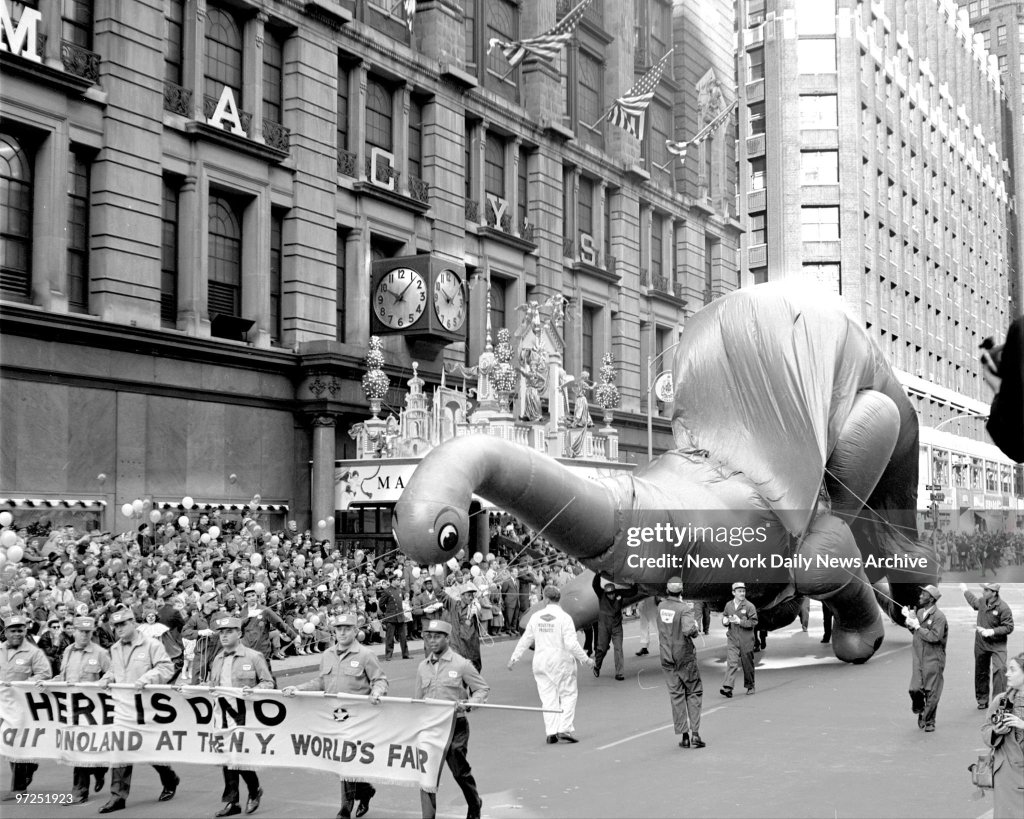
Gusts batted the big balloons from one side of the New York street to another, and the jutting finger of a lamppost finally punctured Dino the Dinosaur. This took the merriment out of Dino, but not out of Macy’s Thanksgiving Day parade, which yesterday went down Broadway for the 38th time. The parade was two and a half hours long. It had 10 marching bands, 100 or more clowns and 20 colorful floats that carryied pretty girls, film stars, a puppet show, TV entertainers, a steel band, a jazz band and part of the Metropolitan Opera ballet company. But most of all the parade was the six enormous balloons, which doze limply in a warehouse in Akron, Ohio, month after month dreaming of this one glorious day each year for a balloon.
Rubyanne Doll likes to help children, especially handicapped children, but until about two weeks ago she was handicapped herself. The 19‐year‐old Lansing, Michigan high school senior could not hear well. This did not bother her a great deal then, because she was an excellent lip reader. She lost most of her ability to hear when she was about 5 years old. after the mumps and a series of ear infections. Even an ear operation did not seem to help. Then, about two weeks ago, an automobile door slammed, and suddenly Miss Doll, to her amazement and delight, could hear well again.
The American Medical Association reported today a “steady upsurge” of interest among physicians in overseas service.
When he was 9 or 10 years old, John F. Kennedy wrote his parents a letter and asked that his allowance be raised. The late President’s mother, Rose, 73, recalled it for newsmen yesterday and said it probably was her favorite item in the Kennedy Memorial Library Exhibit. “He felt that since he was a Boy Scout, he should have more money,” Mrs. Kennedy said just before leaving Kennedy Airport for Paris.
29th Iron Bowl: Alabama beats Auburn 21–14 in Birmingham.
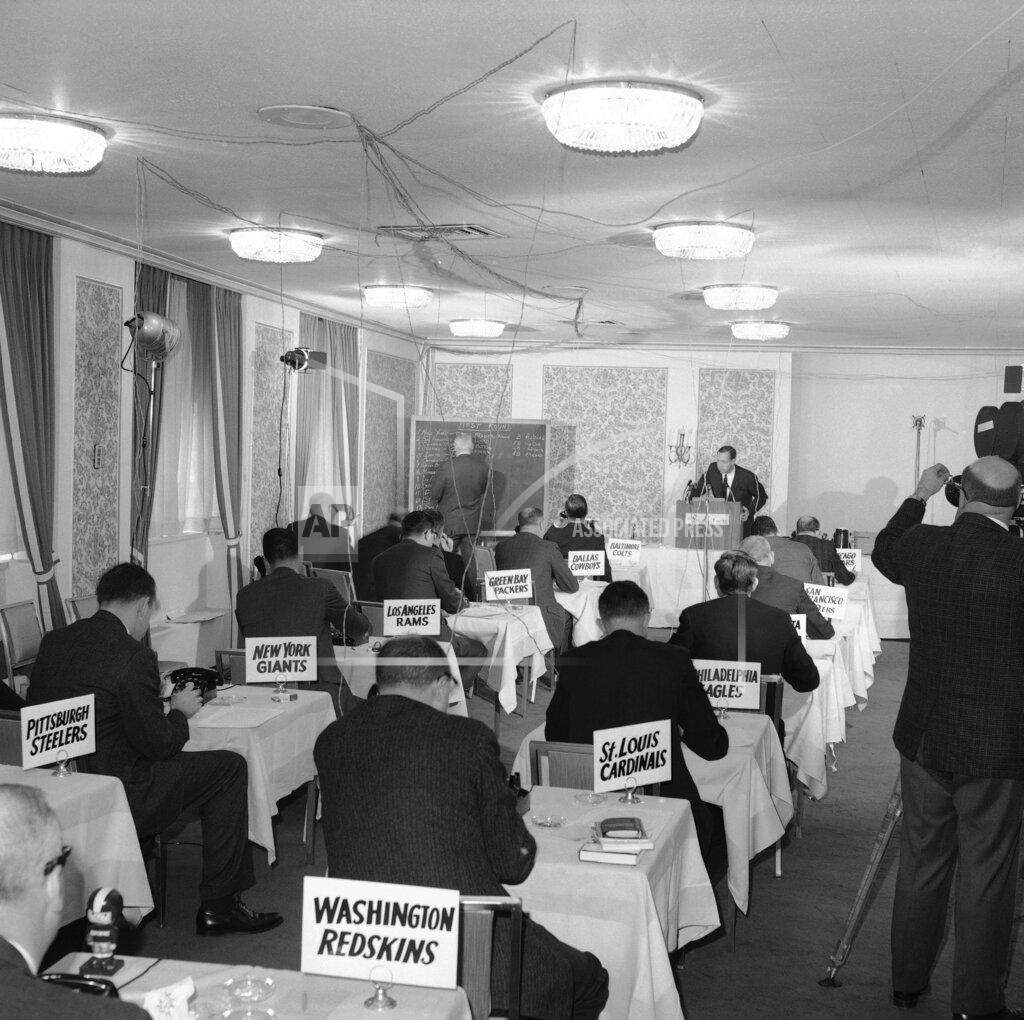
NFL Football:
Chicago Bears 27, Detroit Lions 24
A 17-yard field goal by Roger Leclerc with 1 minute 41 seconds remaining gave the Chicago Bears a 27–24 National Football League victory today over the Detroit Lions. The Lions held the Bears to a pair of field goals in the second half after Rudy Bukich, the Chicago quarterback, had thrown three touchdown passes in the second quarter to give the visitors a 21–17 halftime lead. Bennie McRae intercepted a pass by Milt Plum and returned it to the Detroit 36‐yard line to set up Leclerc’s winning three-pointer. Tommy Watkins of the Lions scored on a 1‐yard run with less than five minutes to go in the third quarter for the only touchdown of the second half. The Bears gained possession of the ball on the Detroit 2 with 32 seconds remaining in the game as Milt Plum’s fourth down pass went out of bounds. Ronnie Bull gained a yard, but the Bears did not try to get another play off. Johnny Morris of the Bears set a league pass‐receiving record by catching seven to bring his total for the season to 90. Tom Fears of the Los Angeles Rams held the previous mark of 85. Bukich threw a 1‐yard scoring pass to Jon Arnett, a 5yarder to Joe Marconi and connected with Morris on a 16-yard play. Plum threw two touchdown passes, hitting Terry Barr on a 13‐yard play in the second quarter and later tossing to Jim Gibbons for 5 yards.
AFL Football:
Buffalo Bills 27, San Diego Chargers 24
Pete Gogolak kicked a 32-yard field goal with three seconds left today to give the Buffalo Bills a 27–24 triumph over the San Diego Chargers in a battle of American Football League division leaders. The field goal was set up by a pass interception by a Buffalo linebacker, Mike Stratton, on Buffalo’s 49. Running plays by Cookie Gilchrist moved the ball into field goal position. The Chargers had lost a seemingly insurmountable 24–14 lead in the closing minutes after John Hadl was thrown for a safety and Charley Warner of Buffalo returned the ensuing kick 40 yards. The return set up a one‐yard touchdown plunge by the quarterback, Daryle Lamonica. Lamonica then followed with a run for a 2‐point conversion to tie the game. Lance Alworth thrilled the Chargers’ record home crowd of 34,865 by catching two long scoring passes for San Diego. He outran two Buffalo defenders on a 63‐yard pass from Hadl to give the Chargers a 10–0 first quarter lead. He later scored on a 53‐yard option pass from Keith Lincoln for his 11th touchdown of the season. Alworth leads the league in touchdown pass receptions. Two consecutive pass interceptions gave Buffalo a 14–10 half‐time lead. John Tracey picked off a Hadl pass to put the ball on San Diego’s 16. Joe Auer then carried three times for the score. Following the kickoff, Gene Sykes intercepted a pass from Tobin Rote and returned it 36 yards to San Diego’s one. Jack Kenp took it over from there. The Buffalo defense intercepted five passes and recovered two fumbles. The Chargers’ defense was also tough. It did not allow a sustained touchdown march and made a successful fourth‐quarter stand at its 4‐yard line. Gilchrist, the league’s leading rusher, gained 84 yards in 22 attempts.
Born:
Vreni Schneider, Swiss ski racer (Olympic gold medals, women’s slalom, 1988, 1994), in Elm, Switzerland.
Al Smith, NFL linebacker (Pro Bowl 1991, 1992; Houston Oilers), in Los Angeles, California.
Jeff Jaeger, NFL kicker (Pro Bowl, 1991; Cleveland Browns, Los Angeles-Oakland Raiders, Chicago Bears), in Tacoma, Washington.
Tom Cable, NFL head coach (Oakland Raiders), in Merced, California.


 History Diaries