
The United States and the Soviet Union have agreed to keep their offensive nuclear arsenals limited to fewer than 2,500 bombers and missiles each under the tentative accord worked out by President Ford and the Soviet leader, Leonid Brezhnev, over the weekend in Vladivostok. American officials said that under the proposed accord, which would last until 1985, the United States would probably not have to make any substantial cuts in the current strength of its nuclear force but that the Soviet Union would.
Rejecting arguments that accelerated nuclear tests would cast doubt on U.S. intentions, the House passed legislation authorizing $80.5 million more for the Atomic Energy Commission, including $57.5 million for a testing schedule permitting underground tests of large devices before March 31, 1976. On that date a U.S.Soviet treaty banning tests of weapons over 150-kiloton yield becomes effective.
The Soviet Union and Norway opened formal negotiations in Moscow today aimed at defining their disputed boundary on the potentially oil‐rich contiental shelf of the Barents Sea.
Eight congresswomen, in an effort to dramatize the plight of Soviet Jews, announced that they had each adopted a Jew being held prisoner by Russia for his efforts to emigrate to Israel. “As part of our adoption program,” said Rep. Elizabeth Holtzman (D-New York), “we will make periodic inquiries of appropriate Soviet officials regarding our prisoner’s treatment and welfare, as well as correspond directly with the prisoners.”
U Thant, the Burmese schoolteacher who became the third Secretary General of the United Nations and held that post longer than any other person, until his retirement in 1971, died today at Columbia-Presbyterian Medical Center in New York.
Four days after the Birmingham pub bombings, the Provisional Irish Republican Army (IRA) terrorist group carried out the placing of time bombs in and near letter dropboxes across London, each placed inside a pillar box. The first gelignite bomb exploded at a box at Caledonian Road at King’s Cross. Ten minutes later, a bomb at the Piccadilly Circus road injured 16 people. Two days later, a larger bomb at a pillar box on Tite Street in Chelsea injured 20 people, including nine first responders.
A 55‐year‐old Protestant was shot dead today and another seriously injured when they were ambushed on their way to work in north Belfast. Later, a gunman firing on a Protestant residential street shot another man to death, United Press International reported. And late Monday, a passerby found a man shot in the head slumped behind the wheel of his car at Newtownards, 9 miles west of Belfast. The man died in a hospital. The number of killings during the last three days in Belfast has now reached 10—about equally divided between Protestants and Roman Catholics. November has been the bloodiest month year in Northern Ireland. There have been 33 deaths. Authorities link the shootings to an increase in sectarian tensions here since the Irish Republican Army Provisionals began to step up their bombing campaign in England. A Catholic woman and a Protestant man were shot dead in a Catholic‐owned taxi office on Saturday night. Earlier the same day, two Protestants died. Last Friday, the victims were all Catholics: a girl shot at a filling station, a man gunned down in a bar and a man shot on a lonely country road.
The British government asked Parliament to approve emergency legislation outlawing the Irish Republican Army, giving the police sweeping powers of arrest and detention and imposing new controls on travel between England and Ireland. The measures were outlined in the House of Commons by Roy Jenkins, the Home Secretary, who described them as “unprecedented in peacetime.”
A British authority on warplanes said today that he thought four members of the North Atlantic Treaty Organization would probably buy the Northrop YF‐17 Cobra as their basic fighter aircraft for the nineteen eighties. John W. R. Taylor, editor of Jane’s “All The World’s Aircraft,” the British publication, added that the YF‐17 and General Dynamics’ YF‐16 were both “quite remarkable aircraft” and that he hoped the United States would be able to purchase both. “Both aircraft stack up well against the latest Soviet fighters,” he said. “The key is maneuverability in air combat and they have that.”
[Ed: Nope. It’ll be the F-16. But the F-17 becomes the F-18, and becomes a mainstay of naval aviation.]
Official sources here say that Chancellor Helmut Schmidt has reductantly concluded that President Valery Giscard d’Estaing of France does not have sufficient domestic political support to join West Germany in bold moves to strengthen European unity and the Atlantic alliance.
Lufthansa said it was modifying the wing flap warning system in its Boeing 747 jumbo jets following the crash of one of its planes to provide an additional safety measure until the reason for the crash has been clarified. Fifty-nine persons died in the crash last week in Nairobi and preliminary findings blamed wrong flap positioning. Lufthansa said Boeing had not told it about a modification made by British Airways to the warning system in its jumbo fleet after a similar situation occurred in August, 1972. Lufthansa said it will require visual checking of the flap setting before takeoff.
Secretary General Waldheim of the United Nations had a meeting in Damascus with President Hafez al-Assad of Syria and said afterward that he expected a six-month extension of the life of the United Nations peacekeeping force now separating Syrian and Israeli troops in the Golan Heights. Mr. Waldheim said that he believed tension had relaxed in the Middle East as a result of his talks with the Syrian President. The current mandate expires at the end of the week. In Peking, a senior U.S. official in Secretary of State Henry A. Kissinger’s party also expressed confidence that Syria would agree to an extension.
The U.S. State Department expressed regret over a search of Lebanese President Suleiman Franjieh’s diplomatic party in New York two weeks ago for suspected hashish smuggling. U.S. officials said reports were received that there might be attempted smuggling by minor aides. The State Department said no offense was meant to the president and other Lebanese diplomats who appeared at the United Nations.
Four Palestinians ended their three‐day siege of a British jetliner today and surrendered to Tunisian authorities. The Tunisians denied making any sort of deal with the hijackers, but gave the hijackers asylum in Tunis.
The military rulers of Ethiopia put the country’s armed forces and police on full alert today as a precaution against strong reaction to the announcement of the execution of 60 aristocrats and former officials.
An American aircraft carrier has entered the Persian Gulf for the first time in 26 years, the Pentagon announced today. The carrier USS Constellation, accompanied by two guided missile destroyers, will conduct a brief “familiarization. deployment” and will leave after less than a week, the Pentagon said.
The Roman Catholic-led anticorruption movement in South Vietnam today asked for government permission to stage a large protest march to downtown Saigon on Thursday.
North Korea denounced President Ford as a “warmonger” and asked for the immediate removal of about 38,000 American troops from South Korea. North Korean Vice Foreign Minister Li Jong Mok, addressing the U.N. General Assembly’s main Political Committee, said the U.S. troops were no longer needed since South Korea has an army of 700,000 men and another 2.5 million in the reserves.
Secretary of State Kissinger started his seventh visit to China this evening with a brief social call on Chou En-lai in the hospital where the 76-year-old Premier has been convalescing for the last five months. He then went on to a banquet at the Great Hall of the People and pledged in a toast that the “process of normalization” between the United States and China would continue. Deputy Premier Deng Xiaoping, a short, stubby man with broad features, sat next to the Secretary at the banquet and clinked glasses of mao tai with him. The nine‐course meal ended exactly two hours after Mr. Kissinger and his party entered the hall, but not before a People’s Liberation Army band had played “Home on the Range,” which has been standard at state dinners for Americans here ever since the Nixon trip.
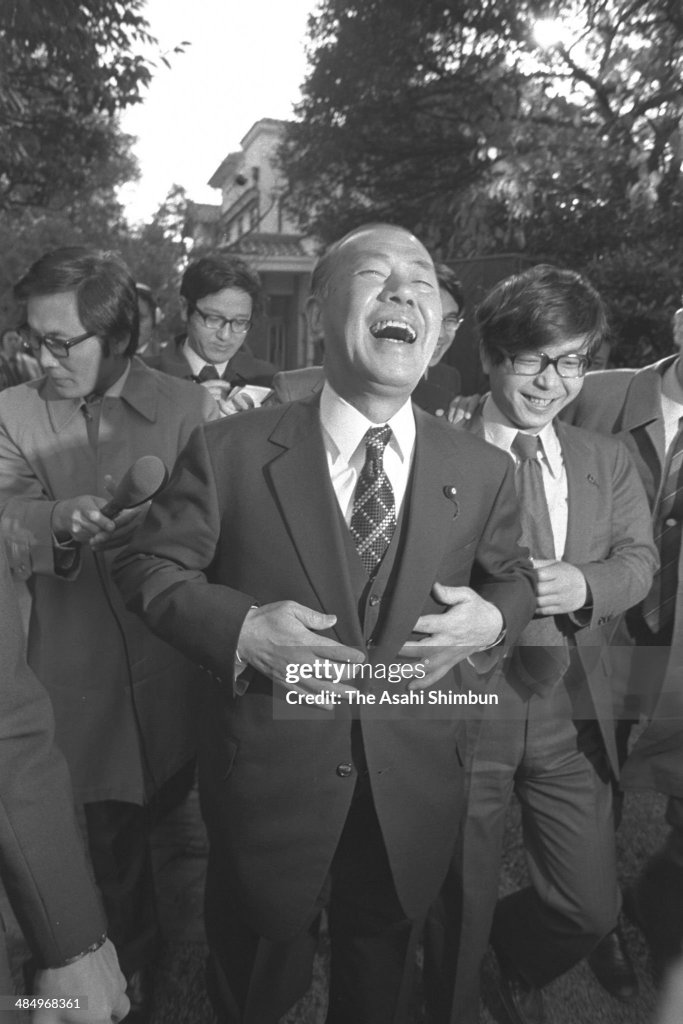
Japanese Premier Kakuei Tanaka, battered by financial scandals and increasingly unpopular at home, is expected to resign tomorrow.
Thomas A. Clingan, chief U.S. delegate to the biennial U.S.-Japan fishery talks which have just opened in Tokyo, proposed a ban on fishing by foreign ships off the U.S. West Coast to protect fishery resources. He also complained about Japan’s big hauls of crabs in the Pacific and the East Bering Sea. The conference is expected to run about two weeks.
In Canada, André Desjardins, leader of the Fédération des travailleurs du Québec labor union, stepped down after being questioned in detail about his ties to organized crime.
The first “double heart” transplant on a human being was performed at the Groote Schuur Hospital in Cape Town, South Africa, by Dr. Christiaan Barnard, introducing a new technique of supplementing a diseased heart with a donor heart that “takes the brunt of pumping the blood through the body” while “the blood still passes through the patient’s original heart.” The first recipient, Ivan Taylor, received the donor heart of a 10-year-old girl. Taylor survived for four and a half months, dying on April 5, 1975. “The old heart takes care of as much as it can. What it can’t handle is taken care of by the new heart,” Dr. Barnard said.
Frank Zarb, a 39-year-old Wall Street management expert who has been shaping energy policy in recent weeks, was designated by President Ford to take on the added responsibility of heading the Federal Energy Administration. He will give up his present job as an associate director in the Office of Management and Budget, but keep his present additional assignment as executive director of the Energy Resources Council, a new cabinet-level interagency body whose responsibility is to shape energy policy choices and recommendations for the President.
The prosecution rested its case at the Watergate cover-up trial at noon, and a few hours later the jury heard the start of one of the five defendants’ cases, that of John Mitchell, the former Attorney General. His lawyer told the jury that Mr. Mitchell had been “kept in the dark” about the cover-up by people at the White House who wanted to “set him up.”
The House Judiciary Committee heard Vice President‐designate Nelson A. Rockefeller assailed today from both the right and the left, but seemed generally unimpressed with the testimony.
Margaretta Rockefeller underwent surgery for the removal of her right breast, five weeks after her left breast was removed following the discovery of a tumor. Doctors said the chances of a normal life expectancy were virtually unchanged from those described as excellent after Mrs. Rockefeller’s first operation.
A government staff study his found that “all sectors of the United States sugar industry” have realized “very large windfall gains” from the recent big increases in sugar prices. The study, made public as the new Council of Wage and Price Stability began two days of hearings on the sugar situation, did not attempt to fix any blame for the jump in sugar prices.
A lawyers’ group called today for a ban on most electronic surveillance of United States citizens and released a statement by a former top Federal Bureau of Investigation official urging that the agency be stripped of its domestic spying operations.
Twenty-one major American publishing houses were accused of conspiring with British publishers to suppress competition by dividing a major part of the world book market into exclusive territories. The Justice Department made the accusation in an antitrust suit filed in United States District Court seeking a permanent injunction to end the alleged conspiracy.
Two trials, instead of one, were ordered for John B. Connally in the milk fund case. A federal judge ruled that the former secretary of the Treasury should stand trial March 19 in Washington on charges of accepting a $10,000 bribe from a dairy cooperative, allegedly paid in return for Connally’s efforts to have milk subsidy levels raised. However, the judge severed related charges of perjury and conspiracy to obstruct justice, which will be considered in the second trial. The judge rejected pleas of Connally’s attorney that the trial be shifted to Texas.
The annual retail cost of feeding a theoretical family of 3.2 persons rose $4 in October to a record $1,779, due mostly to rising farm prices, the Agriculture Department announced. The report said the increase in farm prices more than offset a slight dip in middlemen’s margins during the month. But the figures also showed that increased marketing charges were the main factor in pushing the typical food basket cost to 9.8% above the level a year ago. The rate paid in October — 0.2% above September — was $734 for farmers and $1,045 for middlemen. The farm return was up $7 and marketing was down $3.
A bill killing the 28-year-old Hill-Burton program of federal grants to build hospitals was passed by the Senate, 65 to 18, and sent to the House, Hill-Burton was too successful, sponsors of the bill said — of 500,000 new hospital beds created under it, 70,000 to 110,000 are considered excess. Altogether, $4.4 billion in federal funds was spent on hospitals under the program. The new $990 million health aid bill contains $375 million for hospitals but limits the funds to hospital modernization or expansion of outpatient facilities only.
The American Hospital Association called for a nationwide moratorium on new hospital construction as a major move to fight inflation. No more beds should be added without first showing a critical need for them and then reviewing plans with other hospitals and community groups to avoid duplication and redundance, the AHA said in a letter sent to its 7,000 members. The board of trustees also admitted that in some areas there was an “idle capacity” that should either be closed or converted to other uses. One survey indicates an oversupply of 60,000 beds for the nation.
Greyhound, the nation’s largest bus company, back in service after a week-long strike, promised it would be able to accommodate Thanksgiving holiday passengers at the 40,000 cities and towns it serves in the continental United States. Greyhound Lines, Inc., reached a tentative settlement with the Amalgamated Transit Union in a strike which halted service November 18. A large portion of the 16,000 drivers and terminal workers have returned to work.
Fearful of fueling inflation, the Food and Drug Administration announced a six-month delay in implementing its sweeping new food labeling regulations. Commissioner Alexander M. Schmidt said the delay until next June 30 was granted in response to President Ford’s directive to weigh the impact of regulations on inflation. The FDA said a small number of companies would have been unable to meet the December 31 deadline and “would be compelled to destroy valuable food, expensive containers and labels” which would lead to higher costs for the consumer.
Running back into a burning house, a 13-year-old East Indian boy saved a year-old baby near Yuba City in Northern California. Authorities said Jas Singh was treated for first-degree burns on his hand and minor burns on his leg after rescuing the child. The house, reportedly occupied by three East Indian families, apparently was ignited by fireplace sparks while all the men were working in nearby fields, leaving women and children at home.
No cattle exposed to DDT in a tussock moth-infested area of northeastern Oregon have reached retail markets, according to Gene Kunkle, director of the Oregon Department of Agriculture livestock identification program. Kunkle said the state had anticipated that animals exposed to sprayed foliage would retain for a while DDT residues above the tolerance levels established by the Environmental Protection Agency. All cattle sold for slaughter must be tested for DDT residue, he said, adding that no more than 5,500 cattle were involved in the spray area, out of 1.5 million in the state. He said all the cattle exposed to the insecticide were expected to be released for slaughter early next year.
Portions of the application to build the nation’s first breeder power reactor were rejected by the Atomic Energy Commission, which said the project’s developers had not supplied enough information about the meteorology, geology and seismic activity at the proposed Oak River, Tennessee, site. Project Management Corp. of Chicago and the Tennessee Valley Authority will build the $1.5 billion breeder reactor, designed to produce more fuel than it consumes. The plant is not expected to be operating until the early 1980s. The AEC said it would continue its review of other portions of the application and allow the developers to submit the deficient sections when they have compiled more information.
Mike Hargrove of the Texas Rangers takes American League Rookie of the Year honors.
NFL Monday Night Football:
Pittsburgh Steelers 28, New Orleans Saints 7
Terry Bradshaw threw for two touchdowns and ran for one and Lynn Swann returned a punt 64 yards for a score as the Pittsburgh Steelers routed the New Orleans Saints, 28–7, in a nationally televised National Football League game tonight. A tough Steeler defense, led by two tackles, Joe Greene and Steve Furness, held the Saints in check, sacking New Orleans quarterbacks five times. The Steelers’ first score came midway through the first quarter when Bradshaw hit Frank Lewis from 31 yards out. Lewis took, the ball at the 10‐yard line and sprinted into the end zone. With five minutes left in the half, a Steeler linebacker, Andy Russell, picked off Archie Manning’s pass at the 30, and five plays later the Steelers scored again. This time Bradshaw ran the ball in after dropping back to his own 18, intending to throw. His receivers were covered, but the middle was open so he sprinted for the 14–0 edge at halftime. The Saints were unable to move the ball after the second half kickoff, and Tom Blanchard had to punt from his 4‐yard line. Swann took the ball at his 36, picked up a key block from Glen Edwards and tightroped 64 yards down the left sideline to make it 21–0. The Saints finally scored later in the third quarter on a 10‐yard pass from Bobby Scott to his rookie tight end, Paul Seal. Scott relieved Manning late in the second quarter. The touchdown was set up when Jim Merlo slammed into Franco Harris, knocked the ball loose and recovered it on the Steeler 31. Alvin Maxson got 21 yards on two carries and Scott pegged the scoring strike to Seal. The Steelers’ final score capped a 10‐play, 68‐yard drive. Harris, who gained over 100 yards for the sixth straight game, carried six times, picking up 51 of the 68 yards. Bradshaw accounted for another 12 yards on a rollout and pitched to Larry Brown from a yard out for the score. The victory raised the Steelers’ won‐lost‐tied record to 8–2–1, strengthening their hold on the American Conference Central Division lead. Pittsburgh now has a 1½-game edge over the Cincinnati Bengals.
Dow Jones Industrial Average: 611.94 (-3.36, -0.55%).
Born:
Kenneth Mitchell, Canadian television actor (“Jericho”), who was diagnosed with amyotrophic lateral sclerosis (ALS; “Lou Gehrig’s Disease”) prior to his retirement; in Toronto, Ontario, Canada (d. 2024).
Sarah Monette, American novelist, pen name Katherine Addison (“The Goblin Emperor”) in Oak Ridge, Tennessee.
Steve Lindsey, NFL kicker (Jacksonville Jaguars, Denver Broncos), in Hattiesburg, Mississippi.
Died:
U Thant, 65, Burmese diplomat and 3rd Secretary-General of the United Nations (1961–1972), of lung cancer.
Nick Drake, 26, British musician (Pink Moon), of an overdose of amitriptyline.
Joseph F. Farley, 85, U.S. Coast Guard admiral, former Commandant of the Coast Guard, of cancer.
Rosemary Lane (stage name for Rosemary Mullican), 61, American actress and singer and one of the Lane Sisters, of complications of pulmonary obstruction and diabetes.




 History Diaries