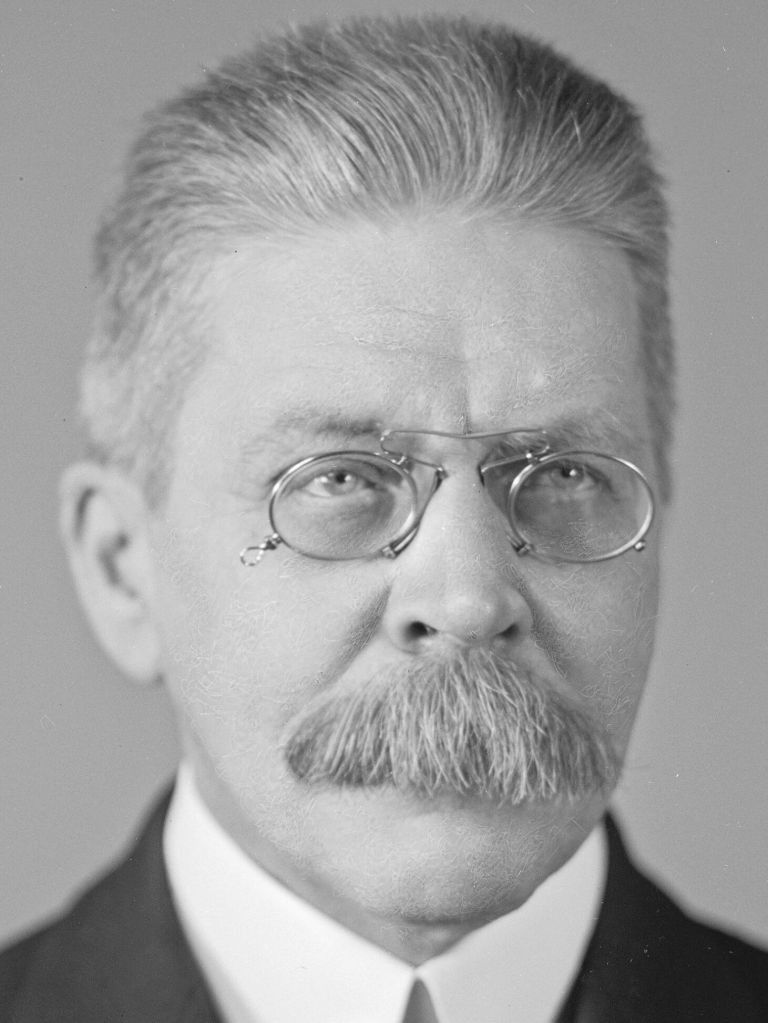
Finnish Prime Minister Aimo Cajander addresses the nation. He states that Soviet demands are impossible to meet while protecting Finnish security. Since the war with the USSR now is imminent (despite the Soviet-Finnish non-aggression pact of 21 January 1932), he tells every Finn to man “his own guardpost” and “learn to plow carrying a rifle.” Marshall Mannerheim begins situating his forces, some 200,000 men, to meet a likely attack of up to a million Soviet troops.
Stalin, in fact, has roughly 800,000 troops deployed from Leningrad to the Petsamo region above the Arctic Circle. The Red Army is not yet mobilized, so they literally kidnap men off the street in the manner of historic British press gangs, give them rifles, and send them to the front.
The German government issues a warning to all neutral shipping. It states that it cannot guarantee the safety of neutral shipping in the waters around the British Isles and the French Coast due to the numerous engagements taking place there. [This is according to the testimony and evidence of Admiral Doenitz at the Nuremberg trials following World War II.]
An unsuccessful German raid on the French lines east of the Moselle River and reduced air activity, owing to the return of cloudy, wet weather, were reported in tonight’s communiqué from French military headquarters. The French were said to have taken several prisoners.
In Czechoslovakia, the Gestapo executed 120 students who were accused of anti-Nazi plotting.
The German Government takes in trust the property and financial interests of Fritz Thyssen — the iron and steel magnate and a key supporter of Hitler in earlier years — who fled to Switzerland in September 1939. Thyssen was an early supporter of Hitler’s, funding his rise to power, but became increasingly disillusioned.
The two British officers captured at Venlo, Major Stevens and Captain Best, are still very much on the minds of the top Third Reich hierarchy. While they are the subject of German propaganda about the Munich bombing, they also get feelers from the Germans about the sincerity of the desire for peace among the Allies. It is believed but has not been corroborated that the two may have betrayed various classified information while in captivity.
The magnetic mine dropped at Shoeburyness arrives at HMS Vernon. This marks a vital step in the battle against these particular mines, which are causing heavy losses and long delays. In November alone 27 ships of 121,000 tons are sunk and for a time the Thames is virtually closed to shipping.
The French repulse Germans in a Moselle attack. The French report the capture of several prisoners.
The government of Belgium addresses a note to the British government in London concerning British reprisals against German mine-laying.
On the Yorkshire coast of Great Britain, over 200 drifting magnetic mines wash ashore.
Italy and Hungary form a new trade pact. The announcement is held significant after the switch by Rumania to a pro-French government.
RAF Bomber Command flies reconnaissance of the naval bases at Wilhelmshaven, Cuxhaven, Heligoland, and Brunsbuttel. These continue for the next four days.
Imperial Airways and British Airways Ltd. merged to form British Overseas Airways Corporation.
The British cargo ship Mangalore struck a mine and sank in the North Sea off Spurn Head Yorkshire.
The British cargo liner Pegu became stranded at Liverpool, Lancashire. She broke in two and was declared a total loss
The Swedish cargo ship Iris grounded at Tallinn, Estonia. She was later refloated and temporary repairs were affected for a return to Sweden. The ship was then laid up.
U.S. freighter Nishmaha, her master having signed an agreement under protest to proceed to Marseille, France, via Barcelona, Spain, leaves Gibraltar.
Convoy OA.40G departs from Southend, Convoy OB.40 departs from Liverpool, and Convoy SL.10 departs from Freetown.
The War at Sea, Friday, 24 November 1939 (naval-history.net)
HOME FLEET DISPOSITIONS AGAINST GERMAN BATTLECRUISERS
On the evening of the 24th at 1600, Admiral Forbes redisposed his fleet off Utvaer, Norway, to intercept the German battlecruisers. Light cruisers CERES, CALYPSO, CARDIFF, CALEDON, COLOMBO, NEWCASTLE, SHEFFIELD, GLASGOW, EDINBURGH, SOUTHAMPTON and destroyer KINGSTON, which was deployed just off the Norwegian coast, were disposed in a patrol line respectively, west to east, . Meanwhile light cruiser AURORA and destroyers AFRIDI, GURKHA, INGLEFIELD, BEDOUIN, ISIS, IMPERIAL and IMPULSIVE were stationed as a strike force to the south of the patrol line. Destroyer MAORI was detached to Scapa Flow on the 24th to refuel and returned to patrol that day. KINGSTON patrolling just off shore was relieved by destroyers ZULU and IMOGEN.
Destroyers TARTAR, KANDAHAR, KASHMIR were ordered to join the AURORA group late on the 24th, but fears of mistaken identity caused their rendezvous to be delayed until daybreak on the 25th. En route TARTAR’s rudder was damaged by weather and she was sent to Scapa Flow and then on to the Clyde for repair late on the 24th.
Battleships NELSON, RODNEY and destroyers SOMALI, MASHONA, PUNJABI, FAULKNOR, FURY, FIREDRAKE and FORESTER remained at sea.
At 1201/25th, a direction-finding bearing NNW of the Faroes caused heavy cruisers NORFOLK, SUFFOLK and light cruiser DELHI to be sent to investigate. However, DELHI was low on fuel and could not take part in the search.
The patrol line, joined by NORFOLK, SUFFOLK and light cruisers DRAGON, DIOMEDE and DUNEDIN early on the 25th, was moved north at 0700/25th, but all these efforts were unsuccessful and SCHARNHORST and GNEISENAU arrived at Wilhelmshaven on the 27th with only storm damage.
Refueling of the cruisers began on the 25th. One cruiser from each of the squadrons were sent in turn to refuel — ships of the 1st, 2nd, 18th Cruiser Squadrons to Scapa Flow and those of the 7th and 11th Squadrons to Sullom Voe.
GNEISENAU was repaired at Kiel, completing on 4 February 1940 and SCHARNHORST with similar defects returned to service shortly thereafter. Both ships immediately went to Wilhelmshaven on completion of repairs to prepare for Operation NORDMARK.
Northern Patrol from 24 November to 7 December sighted 34 eastbound ships and sent 23 into Kirkwall for inspection.
Destroyers ICARUS and ILEX departed Rosyth to investigate a submarine report six miles 320° from Rattray Head, and returned to Scapa Flow the next day.
Destroyer JUNO was damaged in a collision alongside an oiler at Immingham, repaired there and returned to service on the 30th.
Motorship SUSSEX (13,647grt) was damaged SE of Southend in North Channel on a mine laid by U-33 on the 5th.
Depot ship CYCLOPS and submarines SHARK, SEALION, SNAPPER, SALMON departed Sheerness for Harwich where they arrived that day. 3rd Submarine Flotilla began operations next day when SNAPPER departed Harwich on a patrol off Terschelling. CYCLOPS also served as the headquarters of Captain G E Creasy (D.22) from 27 November to 1 December.
Convoy OA.40G of 21 ships departed Southend, escorted by destroyers VERITY and WOLVERINE from the 24th to 26th. The convoy merged on the 26th with OB.40G, escorted by destroyers WINCHELSEA, WALPOLE, VIVACIOUS and sloop ENCHANTRESS, to form OG.8 with 44 ships. OG.8 was escorted by WALPOLE from the 24th to 26th when she detached to SL.10, and WINCHELSEA and VIVACIOUS from the 24th to 28th. ENCHANTRESS was with the convoy from the 24th to 27th. Other escorts were French destroyers TARTU and CHEVALIER PAUL from 27 November to 3 December after they had departed Brest on the 26th, and destroyer VORTIGERN from 2 to 3 December. OG.8 arrived at Gibraltar on 3 December.
German pocket battleship LÜTZOW, light cruisers KÖLN, LEIPZIG, destroyers BERND VON ARNIM, BRUNO HEINEMANN, FRIEDRICH IHN, ERICH STEINBRINCK, KARL GALSTER and torpedo boats LEOPARD, SEEADLER, ILTIS and WOLF operated in the Skagerrak during the night of the 24th/25th.
Light cruiser EFFINGHAM departed Halifax and arrived at Kingston on 1 December with Australian light cruiser HMAS PERTH.
Light cruiser GALATEA departed Alexandria and arrived at Malta on 3 December.
Convoy SL.10 departed Freetown escorted by sloop LONDONDERRY, and was joined on 10 December by destroyers WALKER, WHIRLWIND, WHITEHALL and sloop ENCHANTRESS. The convoy arrived later that day, while LONDONDERRY reached Devonport on the 12th.
Light cruiser GLOUCESTER departed Diego Suarez on patrol duties and arrived back on the 29th.
President Roosevelt plans a $500 million rise in defense costs. President Roosevelt warned today that the disturbed world conditions would necessitate a record peacetime national defense budget of about $2,250,000,000 next year and said the country must soon decide whether the bill should be met by a special defense tax or through additional borrowing, which would put a burden on future generations. In a roadside discussion of business, taxes and national defense, Mr. Roosevelt told reporters that the ever-present threat of war would force a $500,000,000 increase in the outlay for the military establishment during the 1941 fiscal year. The current military and naval budget totals about $1,760,000,000, a record peace-time program.
The President said, however, that expenditures customarily ran behind appropriations in the year for which they were made and reminded that the more than $2,000,000,000 outlay for next year would not be spent in that fiscal period. The increase over this year’s appropriations would go for increased enlisted strength in both service branches and for equipment, he added. At the same time the Chief Executive disclosed plans of Administration fiscal advisers to cut the current budgetary deficit by more than a half, reflecting earlier forecasts of a cut of at least $1,000,000,000 in the current year’s excess of expenditures over revenues. Mr. Roosevelt reminded, however, that all budget estimates were necessarily of a tentative nature at this time.
Just where the 1941 estimated deficit would be left should the Administration succeed in cutting it by more than a half of the current year’s figure, Mr. Roosevelt did not say. This year’s deficit was estimated in his budget message last January at $3,426,000,000, but the higher level of revenues resulting from the business upturn have improved the outlook. Treasury fiscal and budget experts have been working with a view to limiting the deficit for the fiscal year beginning next July to about $2,000,000,000 but have stressed the importance of appropriation and revenue levels in the result of these calculations.
It was his purpose in talking about increased defense appropriations and taxes at this time, the President said, to provoke public discussion of the question. Should it be decided to place these expenditures on a pay-as-you-go basis and finance them out of current revenues it might become necessary to levy a special defense tax of some form. It was pointed out by Mr. Roosevelt in this connection that no decision had been made on the question so far as the Administration was concerned. He made it quite clear that if a decision was made to continue federal borrowing to finance the expanded defense program there would be no request next year for special taxes. It would have to be one thing or the other, he said.
Mr. Roosevelt explained that national defense expenditures were a current item and brought back nothing into the Treasury except a few additional business taxes from increased profits. The country should understand thoroughly what was involved in the two schools of thought because adoption of the first would mean additional special taxes, while the other meant passing the burden along for future generations to pay.
In discussing Administration plans for cutting next year’s deficit by more than a half the President reminded that the estimates finally submitted to Congress would have to be adhered to if fiscal experts were to succeed in the attempt. The responsibility was primarily that of Congress, he said, reminding that appropriations made this year exceeded estimates by $350,000,000. The projected economy depended also on a continuance of Federal revenues at the present level or better — this depending in turn on general business conditions. When asked whether he did not expect a continuance of the current business volume for some time to come, Mr. Roosevelt replied with a smile that he was not “playing the market.”
Secretary of State Cordell Hull returned today from a ten-day vacation in the South to find his reciprocal trade agreements program under vigorous attack and he promptly went to its defense. Speaking at his press conference, he charged misrepresentation and short-sightedness on the part of some of the opposition, and did not hesitate to use the short and ugly word, though cloaked in the garments of a saying. “While figures don’t lie, liars will figure,” he recalled. Looking refreshed after his vacation, Secretary Hull, while using pointed phrasing, spoke without display of temper. He particularly defended the program against charges that it was inimical to labor and agriculture. And he held it up as offering a cornerstone for permanent peace after the European war has been ended.
Mr. Hull’s remarks were prompted by a question as to whether he was disposed to favor suggestions made in some Congressional circles that, rather than precipitate a legislative battle in a Presidential election year, the reciprocal trade agreements program be permitted to lapse next June for one year, before being renewed. In reply he said he had not discussed that possibility with any one but added that as a general policy he discussed in advance with Congressional leaders legislation pertaining to foreign affairs. He then began his defense of the program.
Generally speaking, Mr. Hull said, there is always a disposition through lack of information or understanding to misinterpret or misrepresent, either intentionally or unintentionally, the basic features of the reciprocal trade policy. The entire policy came into existence, he declared, to meet an extreme economic emergency condition. It was based on the idea and purpose of fair and mutually profitable trade, he asserted, and as affording a chief cornerstone for any structure of peace that may be worked out following the war, if peace is to be of any permanent value.
Charging that Russia had violated the conditions under which the United States recognized it in 1933, Representative Dies, chairman of the Committed to Investigate Un-American Activities, called today for the severance of diplomatic relations unless Russia “can give assurances the agreement will be kept.”
President Roosevelt made it known today that he had dissolved the War Resources Board, created in August to formulate a plan mobilizing industry for war.
The U.S. Navy regards mine planting from planes as an effective form of attack.
Judge James G. Wallace dismissed yesterday five of the ten counts in the indictment on which Fritz Kuhn, German-American bond leader, is being tried for theft of bond money and reserved his ruling on two others.
A strike call to 21,000 Hollywood studio employees, effecting a complete shutdown of motion-picture plants, would be issued tomorrow morning between 9 and 10 o’clock unless the producers agree to a 10 percent wage increase to all utility employes.
Twenty-one are condemned for plotting a revolt in Thailand. The two grandsons of the late ruler are doomed.
Japanese forces enter the strategically important city of Nanning, despite fierce resistance by some 100,000 Chinese Nationalist troops. The Japanese 5th Division captured Nanning, Guangxi Province, China. Nanning falls to the Japanese as Chinese forces fall back along the highway to Wuming. Loss of the city represents a setback for the Chinese winter offensive and the first Japanese victory since forces advanced west into Kwangsi province in a bid to break Chinese links with Indochina. By seizing Pakhoi and Nanning, the Japanese cut off Chungking (Chongqing), severing foreign aid to China’s war efforts by the sea. Thereafter, rail and trucks from Indochina, trucks on the Burma Road and the air cargo across the Himalayas (The “Hump”) remain the only ways for China to receive foreign assistance, a situation that Tokyo plans to rectify.
When Japanese vanguards entered Nanning today they immediately started mopping up in a city littered with the dead and wounded civilian victims of ten air raids a day for three days, the army announced here. The wave of air raids had been preceded by intensive artillery bombardment. Shortly after the announcement the Japanese Domei news agency reported that the occupation had been completed and that the Chinese defenders, the Sixteenth Route Army commanded by General Tsal Ting-kai, who held the Japanese for six weeks before Shanghai in 1932, was in full retreat.
In addition to Nanning, one of the major objectives of the Japanese landing was Pakhol, the last Chinese outlet to the sea. The port is only 100 miles from the border of French Indo-China and with the occupation of Nanning it is now isolated.Some believe the Japanese, after consolidating their positions, will push into the adjoining Province of Yunnan in an attempt to cut off Chinese supplies from Burma. Nanning had long been a center of anti-Japanese sentiment. Before its fall the Kwangsi Provincial Government, under General Pai Chung-hsi, was transferred to Kweilin.
Dow Jones Industrial Average: 148.47 (-1.87)
Born:
Jerry Mays, AFL and NFL defensive end and defensive tackle (AFL Champions, 1962-Texans, 1966, 1969-Chiefs; Super Bowl IV Champions, 1969; AFL All-star, 1962, 1964-1968; NFL Pro Bowl, 1970; Dallas Texans-Kansas City Chiefs), in Dallas, Texas (d. 1994, of melanoma).
Jim Northrup, MLB outfielder (World Series Champions-Tigers, 1968; Detroit Tigers, Montreal Expos, Baltimore Orioles), in Breckenridge, Michigan (d. 2011).
Jim Yester, American rock vocalist and guitarist (The Association – “Cherish”; “Windy”; “Time For Living”), in Birmingham, Alabama.
Yoshinobu Miyake, Japanese weightlifter (Olympic gold Featherweight 1964, 1968; World Championship gold x 6), in Murata, Japan.
Died:
John Harron, 36, American actor (spinal meningitis).
Naval Construction:
The Nihon Kaigun (Imperial Japanese Navy) Type B1 submarine I-23 is launched by the Yokosuka Naval Arsenal (Yokosuka, Kanagawa Prefecture, Japan).
The Вое́нно-морско́й флот СССР (ВМФ) (Soviet Navy) Project 7U-class (Storozhevoy-class) destroyer Statny (Статный, “Stately”) is launched by Zhdanov (Leningrad, U.S.S.R.) / Yard 190.
The Royal Navy armed merchant cruiser HMS Maloja (F 26) is commissioned. Her first commanding officer is Captain (retired) Clement Richard Dane, RN.
 History Diaries