Two Royal Navy mine experts, Lieutenant-Commanders R.C. Lewis and J.G.D. Ouvry are dispatched to the scene in Shoesburyness, just after midnight. By the time they get there the tide in the Thames Estuary is on the ebb and, stepping out across the mudflats, they are able to locate the magnetic mine. Noting that it has two brass fittings, which clearly have to be removed to make it safe, they make a rubbing so that a nearby army workshop can make a non-magnetic brass tool.
At dawn Lieutenant-Commanders Lewis and Ouvry are with Chief Petty Officer Baldwin and Able Seaman Vearncombe, who brought with them non-magnetic brass tools to defuse the mine, off Shoeburyness. Ouvry and Baldwin now made their way out to the mine, realizing that they had to make it safe before the tide covered it once more. There was also the fear that the mine might be acoustic, and so they had to approach it very gingerly. One detonator and then another were identified and carefully removed, the second ticking very loudly. Luckily for them the clock had jammed. It had been designed to activate the mine hydrostatically when it settled on the seabed. Once made safe and towed ashore by tractor the mine was taken to HMS Vernon, the Royal Navy’s Mine and Torpedo School at Portsmouth.
Adolf Hitler gathered the top German leaders and lectured them on his vision for the future of Germany, which involved an invasion of France. In a speech before his senior generals, summoned to the Reich Chancellery, Hitler says that he has led the German people to great heights, while they have only shown a lack of faith. “I am irreplaceable,” a frustrated Hitler states. “I shall attack France and England at the earliest moment. My decision is unchangeable.”
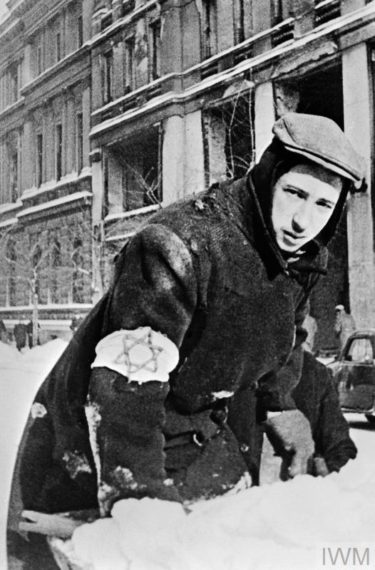
All Jews above the age of 10 in the General Government in German-occupied Poland were required to wear white armbands bearing a Star of David. Dr. Hans Frank, Gauleiter of occupied Poland, expands upon decisions already taken by individual municipalities such as Lodz and orders that all Jews over the age of 10 are to wear armbands identifying them as Jews. For the moment, this requirement is confined to the Government General of Poland only, and not those areas annexed to the Reich or anywhere else.
Rumors continue to escalate about the number of dead killed by the SS to stop the student uprising in the Reich’s Bohemia and Moravia province. Some say as many as 1,700 have been killed.
Johann Georg Elser, the assumed bomber of the Bürgerbräukeller in Munich, has been subjected to five days of torture in Berlin. His family also has been detained there. While the confession does not survive, the interrogation report prepared on this date does. In it, Elser is said to have stated that he acted alone. Investigator Arthur Nebe, who led the investigation by Hitler’s express order, later states that Elser’s motives were that Hitler’s rule meant only war, and without Hitler, there would be peace.
Food rationing for pets is announced in Germany.
The Official Secrets Act 1939 received Royal Assent in the United Kingdom, revising the Act of 1920.
The session of the British Parliament that saw the failure of Great Britain’s hopes to preserve the peace of Europe came to an end today with a curtailed ceremony of prorogation and the reading of the King’s speech, read by Viscount Caldecote, the Lord Chancellor. The new session will open next Tuesday. After today’s short sitting, members of the House of Commons, headed by their Speaker, were summoned by the Blackrod to the House of Lords to hear the King’s speech. Prime Minister Neville Chamberlain arose and shook hands with the Speaker, Captain E. A. Fitz Roy, followed by his Ministers, by Clement R. Attlee, the leader of the Labor Opposition, and Sir Archibald Sinclair, the Liberal leader.
The speech of King George VI, who at the opening of this historic session outlined a modest program of domestic legislation on November 8, 1938, lasted only two minutes. “The shadow of war has once more fallen over Europe,” he declared, because of Germany’s “wanton” invasion of Poland in violation of her undertakings. The people of Britain, he added, were not seeking material gain, but were fighting to preserve the liberty and free institutions bequeathed to them by their forefathers. Pointing to the unity of the empire and praising the contribution of the nation’s French and Polish allies, the King declared “the issue is clear.” He expressed gratification at Parliament’s ready acceptance of the heavy financial burdens imposed by war.
Bacon and butter are rationed in the UK.
The Dutch government files a protest against the British and French blockade. Concerned for her neutrality as well as her trade, the Netherlands today made a formal demarche to the British Foreign Office.
Rumanian King Carol II names Gheorghe Tătărescu Prime Minister. Gheorghe Tătărescu, pro-French Rumanian political leader, was organizing a new government today to replace the Cabinet of Premier Constantin Argetoianu, which resigned yesterday after a majority of the Ministers had rejected Germany’s reported demands for a virtual monopoly over Rumania’s oil and raw material exports. M. Tătărescu, a former Premier and Ambassador to France until recently, is known as “the man with the iron fist” because of his strong methods against the pro-Nazi Iron Guard, which has assassinated two Premiers in seven years.
The Premier-designate said early today that he had virtually completed his Cabinet list and it was understood that the new government would be sworn in later in the morning. The Cabinet’s resignation and the selection of M. Tătărescu, who first became Premier in January, 1934, after the Iron Guard’s assassination of Premier Ion Duca, indicated that Rumania had reached a turning point in King Carol’s struggle to maintain neutrality.
Rome expects a split in the Balkans. The new Cabinet in Rumania is seen as linking it to the Allies; Hungary leans to the Reich.
No steps, it is authoritatively stated, have yet been taken on the part either of Finland or of the Soviet Union for the resumption of negotiations. The Soviet press now professes the belief that Finland has no intention of seeking a way out of what is here treated as an impasse.
In an aerial battle over the French border, Leutnant Werner Methfessel became the Luftwaffe’s first Bf 110 fighter pilot ace (although the veracity of his claim remained in some doubt).
RAF claimed seven Luftwaffe aircraft over France.
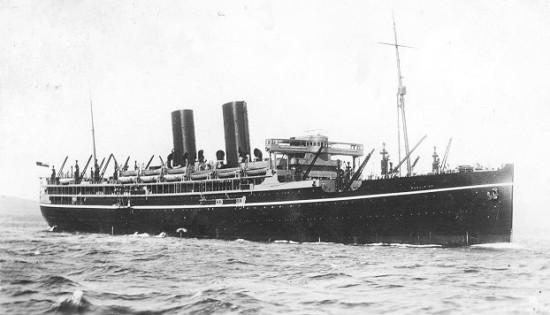
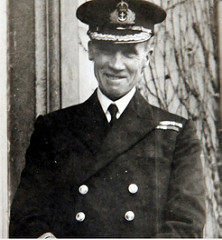
The German battlecruisers Scharnhorst and Gneisenau attempted to break out into the Atlantic to raid convoys. In the Iceland-Faeroes Gap, they encountered the armed merchant cruiser, HMS Rawalpindi. Commanded by Captain Edward Coverly Kennedy, the Rawalpindi was a P&O merchant ship converted for patrol duties. Although only armed with 6″ guns, she nevertheless attacked the Scharnhorst. Kennedy was heard to say “We’ll fight them both, they’ll sink us, and that will be that. Good-bye”. Although inevitably sunk, Rawalpindi inflicted some damage on the battlecruiser. The arrival of the light cruisers Newcastle and Delhi, known to be scouting forces for the Home Fleet, was the reason Marshall had to suspend operations. It was well that he did. The battleship Warspite and battlecruisers Repulse and Renown supported by the carrier Furious, were only a couple of hours steaming away and converging quickly. The Germans escaped by a very narrow margin, with the aid of bad weather and falling darkness. German radar was, at this point, superior to and in wider use than British radar. It was key to the partial success they enjoyed on this occasion and was even more important during the later Operation Berlin, when Scharnhorst and Gneisenau did break out into the Atlantic.
The German warships sank Rawalpindi within 40 minutes. She managed to score one hit on Scharnhorst, which caused minor splinter damage. 238 men died, including Captain Kennedy. Thirty-seven men were rescued by the German ships, a further 11 were picked up by HMS Chitral (another converted passenger ship). Captain Kennedy — the father of broadcaster and author Ludovic Kennedy — was posthumously Mentioned in Dispatches.
The British cargo ship Hookwood in Convoy FS.40 struck a mine and sank in the North Sea 3.5 nautical miles (6.5 km) east north east of the Tongue Lightship (United Kingdom) with the loss of two of her 17 crew. Survivors were rescued by HMS Bittern.
The German steam merchant Borkum was torpedoed and then damaged by gunfire by the U-33, commanded by Kapitänleutnant Hans-Wilhelm von Dresky, near the Orkneys in the northern Atlantic Ocean (59°33′N 3°57′W). On November 18, 1939, the German blockade runner Borkum had been captured by the armed merchant cruiser HMS California in the Denmark Strait and a prize crew was ordered to bring the ship to Kirkwall, Scotland. Four German crew members had been killed, but the remaining Germans and the British prize crew abandoned ship and were picked up by HMT Kingston Beryl and HMT Kingston Onyx. Borkum was abandoned and came ashore in Papa Sound, but was declared a total loss. She was refloated on 18 August 1940 and scrapped at Rosyth, Fife in October 1940. The 3,670-ton Borkum was carrying grain.
German liner Watussi leaves Mozambique. It is believed to be a supply ship for German raiders.
U.S. Consul at Gibraltar William E. Chapman declines to consent to execute agreement wherein the master of freighter Nishmaha will agree to proceed via Barcelona, Spain, to Marseilles to unload cargo deemed contraband by the Gibraltar Contraband Control board. Secretary of State Hull subsequently approves Consul Chapman’s action with respect to U.S. merchantmen which left the U.S. with cargoes prior to the Neutrality Act of 4 November.
U.S. freighter Express, released from her detention at Malta on 21 November by British authorities, continues on her voyage to Greece, Turkey, and Rumania.
Five survivors of the Dutch tanker Sliedrecht sunk by a U-boat, are picked up after 7 days in an open boat. The survivors remained at sea for seven days in an open boat before sighting land on the night of November 22–23. The next morning they hailed the trawler, Merisa after passing Barra Head Lighthouse. The trawler then delivered them to Oban where they were taken by ambulance to the West Highland cottage hospital.
The War at Sea, Thursday, 23 November 1939 (naval-history.net)
German merchant ship KONSUL HENDRIK FISSER (4458grt), which had departed Vigo on the 11th, was captured north of the Faroes in 63N, 07W by light cruiser CALYPSO, which had left Loch Ewe on the 23rd. She was taken to Leith by a prize crew commanded by Lt Cdr G R H Smith Rtd, and renamed EMPIRE SOLDIER for British service.
During the afternoon of the 23rd, Northern Patrol was disposed as follows: (1) Denmark Strait – heavy cruisers NORFOLK, SUFFOLK and armed merchant cruisers CALIFORNIA, TRANSYLVANIA and AURANIA; (2) Iceland-Faroes Channel – light cruisers NEWCASTLE, DELHI, CERES, CALYPSO and armed merchant cruiser RAWALPINDI (AMC CHITRAL departed the Clyde on the 14th for this station, but was now returning with the crew from German steamer BERTHA FISSER). Meanwhile DELHI was pursuing German steamer LUDOLF OLDENDORFF (1953grt) but was unable to stop her. She was stopped the next day by light cruiser SHEFFIELD, but disguised as a Danish steamer, was allowed to continue; and (3) south of the Faroes – light cruisers CALEDON, CARDIFF and COLOMBO.
SORTIE BY GERMAN BATTLECRUISERS SCHARNHORST and GNEISENAU – LOSS OF RAWALPINIDI
German battlecruiser SCHARNHORST came upon armed merchant cruiser RAWALPINDI (Captain E C Kennedy Rtd) southeast of Iceland at 1507. She tried to outrun SCHARNHORST and at 1551 radioed that an enemy battlecruiser had been sighted, adding a few minutes later that the warship was the DEUTSCHLAND which was still believed to be at sea.
At 1603, SCHARNHORST came within range and opened fire, followed by GNEISENAU at 1611. RAWALPINDI was soon wrecked and set afire, but SCHARNHORST was hit in return by one of RAWALPINDI’s six inch shells which exploded on the quarter deck causing some splinter casualties among the crew. SCHARNHORST picked up six survivors from RAWALPINDI and GNEISENAU another twenty-one. Ty/Lt Cdr (E) B J Dyer RNR, Midshipman D Dugdale RNR and 25 ratings were made prisoners of war.
Light cruiser NEWCASTLE on Northern Patrol next to RAWALPINDI picked up the SOS and steamed to her position. NEWCASTLE actually sighted GNEISENAU at six and a half miles, but both German ships escaped unharmed. RAWALPINDI was still afloat, although afire when NEWCASTLE and light cruiser DELHI located her. She finally sank around 2000.
Lost with her were Captain E C Kennedy Rtd, Lt Cdr G H E Molson Rtd, Lt Cdr K D Morgan RNR, Lt J A W French Rtd, Lt M F Shute RNR, Ty/Lt H J Cholerton RNR, Sub Lt O V Pickersgill RNR, Sub Lt R L Pallister RNR, Ty/Sub Lt F H J Orton RNR, Py/Sub Lt T B Quinn RNR, Act/Sub Lt H W Raymont RNR, Ty/Act/Sub Lt A D Seabrook RNR, Ty/Cdr (E) C C Sangster RNR, Ty/Lt Cdr (E) A J Burge RNR, Ty/Lt (E) T H C H Fee RNR, Ty/Lt (E) H Turner RNR, Ty/Lt (E) J Shields RNR, Ty/Act/Sub Lt (E) H J Arbin RNR, Ty/Act/Sub Lt (E) L E Bevington RNR, Ty/Act/Sub Lt (E) A W Briden RNR, Ty/Act/Sub Lt (E) W A Lambert RNR, Ty/Act/Sub Lt (E) J MacDonald RNR, Ty/ Act/Sub Lt (E) A MacKie RNR, Ty/ Act/Sub Lt (E) E G Meredith RNR, Ty/ Act/Sub Lt (E) R H Taylor RNR, Ty/Paymaster Lt Cdr J B Dickinson RNR, Ty/Paymaster Lt P E Sparks RNR, Py/Midshipman D W Bean RNR, Py/Midshipman J A Blackledge RNR, Py/Midshipman W Middleton RNR, Py/Commissioned Electrician G P Johnson RNR, Py/Commissioned Electrician R Main RNR, Py/Surgeon Lt F H J Weston RNVR and two hundred and forty six ratings.
Armed merchant cruiser CHITRAL, returning to the Clyde, picked up eleven more survivors from a lifeboat 36 hours later.
In response to RAWALPINDI’s contact report, Admiral Forbes with battleships NELSON, RODNEY, heavy cruiser DEVONSHIRE and destroyers FAULKNOR, FORESTER, FORTUNE, FIREDRAKE and FURY of the 8th Destroyer Flotilla departed the Clyde for a position off the Norwegian coast to intercept the German ships, still believed to be DEUTSCHLAND, as they returned to Germany. Destroyers FAME and FORESIGHT joined the force at sea, off the Clyde.
Heavy seas badly battered FORTUNE, FAME and FORESIGHT, and FORTUNE was detached to Pentland Firth Patrol, arrived at Scapa Flow on the 28th and was later taken to Liverpool for repairs, completed on 5 January. FAME and FORESIGHT returned to the Clyde arriving on the 24th and were under repair there until 28 December.
Light cruisers SOUTHAMPTON, EDINBURGH and AURORA with destroyers AFRIDI, GURKHA, BEDOUIN, ISIS and KINGSTON departed Rosyth for Fair Island Channel.
South of the Faroes on Northern Patrol were light cruisers CALEDON of the 7th Cruiser Squadron, and CARDIFF and COLOMBO of the 11th. They were joined by light cruisers DIOMEDE of the 7th Squadron and DUNEDIN of the 11th from Loch Ewe and all took station off North Rona to patrol the approaches to the Fair Island Channel. However, DIOMEDE and DUNEDIN had just arrived in Loch Ewe from patrol and both soon had to detach for refueling.
Light cruisers CALYPSO and CERES were stationed five miles due north of Kelso Light to act as a night attack striking force.
Light cruiser DRAGON of the 7th Squadron had just arrived at Loch Ewe on the 19th to repair weather damage and boiler clean, and did not depart until the 24th.
Light cruiser SHEFFIELD departed Loch Ewe and proceeded towards the reported position of the German battleships.
Heavy cruisers NORFOLK and SUFFOLK in the Denmark Strait were ordered to proceed towards Bill Bailey Bank.
Light cruiser GLASGOW and destroyers MAORI and ZULU, at sea since the 20th, looking for German liner BREMEN, were to the northeast of the Shetlands. Convoy ON.3 left the Firth of Forth at 1530, but was recalled, and its escorts, destroyers INGLEFIELD, IMPERIAL, IMPULSIVE and IMOGEN joined the GLASGOW force off Muckle Flugga.
Destroyer BEDOUIN of the SOUTHAMPTON force was detached to patrol Pentland Firth until relieved by destroyer FORTUNE.
Destroyers SOMALI, MASHONA, ASHANTI and PUNJABI, recently departed Belfast with Force W, the dummy battleships, were ordered to join Forbes at sea off the Mull of Kintyre. Force W returned to Belfast.
Destroyers TARTAR, KANDAHAR and KASHMIR sortied from Scapa Flow with orders to locate and shadow the German force.
Armed merchant cruiser CHITRAL arrived in the Clyde on the 24th with survivors from the RAWALPINDI.
Armed merchant cruisers TRANSYLVANIA, CALIFORNIA, AURANIA rendezvoused at the Butt of Lewis and returned to the Clyde. They arrived at Loch Ewe on the 24th. CALIFORNIA then reached the Clyde on the 27th and the other two on the 28th.
Battleship WARSPITE escorting convoy HX.9, which had departed Halifax on the 18th with Canadian destroyer HMCS ASSINIBOINE as local escort, was ordered to leave the convoy and take station in the Denmark Strait.
Aircraft carrier FURIOUS and battlecruiser REPULSE departed Halifax on the 24th to cover convoys HXF.10 and HX.10, but when REPULSE sustained damage to her Y turret in heavy weather, both ships returned to Halifax.
Battlecruiser HOOD with destroyers EXMOUTH, ECHO and ECLIPSE departed Plymouth on the 25th and rendezvoused with French battlecruiser DUNKERQUE, light cruisers MONTCALM, GEORGES LEYGUES and large destroyers MOGADOR and VOLTA which departed Brest on the 25th to relieve aircraft carrier FURIOUS and battlecruiser REPULSE on the Halifax station. This force swept for the German battleships through to the end of November. At sea, EXMOUTH, ECHO and ECLIPSE were detached and returned to the Clyde on the 29th, while MOGADOR and VOLTA arrived at Belfast for fueling, also on the 29th.
After refueling at Sullom Voe on the 28th, SOMALI, PUNJABI and MASHONA joined HOOD, and arrived at Loch Ewe late on 2 December.
Submarines in the North Sea failed to make contact with the German force. THISTLE was on patrol off the Skaw, TRIAD off Lindesnes, STURGEON off Horn Reef, and L.23 southwest of Lister Light. UNDINE and STARFISH departed Blyth, and TRIUMPH and TRIDENT from Rosyth, all on the 23rd to reinforce the Patrol Line.
In all the confusion searching for the German battleships, German steamer ENTRERIOS (5179grt), which had departed Natal on 24 October, was able to pass through the Denmark Strait unobserved, and arrived safely at Narvik on the 29th.
Anti-aircraft cruiser CURLEW departed Grimsby on escort duties, and arrived back on the 24th.
Convoy BC.16S of steamer BARON KINNAIRD departed Bristol Channel escorted by destroyers MONTROSE and VESPER, and arrived in the Loire on the 24th.
Convoy FS.41 departed Methil, escorted by sloops GRIMSBY and WESTON and was joined off the Tyne by destroyer WOOLSTON. The convoy arrived at Southend on the 25th. Convoy FN.41 was delayed and did not depart until the 25th.
Heavy cruiser KENT arrived at Nancowrie.
Australian light cruiser HMAS SYDNEY arrived at Geraldtown.
German steamer GERRIT FRITZEN (4128grt) was lost by grounding near Borkum.
ALLIED HUNTING GROUPS
Status of Allied Hunter Groups searching for German raiders.
Force F – Heavy cruiser YORK at Bermuda preparing to sail for Halifax. YORK had sustained damage to her A-turret in heavy weather and had been under repair at Bermuda since early November. (Heavy cruiser BERWICK had been detached on the 7th and arrived at Portsmouth for docking on the 14th prior to joining the Home Fleet.) Destroyers HUNTER, HYPERION, HOTSPUR and HEREWARD were attached to this force as convoy escorts. The four destroyers were respectively at Bermuda with defects to complete repair on the 29th, at Halifax, at Kingston, and at Trinidad on this date.
Force G – Heavy cruisers EXETER and CUMBERLAND were along the east coast of South America, with light cruiser AJAX off Montevideo and the New Zealand HMNZS ACHILLES off Rio de Janiero.
Force H – Heavy cruisers SUSSEX and SHROPSHIRE were stationed along the west and south coast of Africa.
Force I – Aircraft carrier EAGLE and heavy cruiser CORNWALL were at Colombo, heavy cruiser DORSETSHIRE was at sea in the Ceylon area, and Australian light cruiser HMAS HOBART was south of the Arabian Sea. Light cruiser GLOUCESTER and French sloop RIGAULT DE GENOUILLY, due to be joined by Australian destroyer HMAS STUART from Colombo on the 25th, were north of Madagascar sweeping towards the Seychelles Islands. In addition, Australian destroyers HMAS VENDETTA and HMAS WATERHEN were operating as convoy escorts, and submarine OLYMPUS was in the Maldives and Chagos Archipelago area.
Force J – Battleship MALAYA and aircraft carrier GLORIOUS with attendant destroyer BULLDOG departed Aden on the 10th and were at sea in the area. Battleship RAMILLIES and destroyer DELIGHT departed Aden on the 16th and were at sea off Aden near Socotra.
Force K – Aircraft carrier ARK ROYAL and battlecruiser RENOWN were en route to Madagascar.
Force L – Aircraft carrier FURIOUS and battlecruiser REPULSE were refueling at Halifax.
Force M – Heavy cruiser KENT, French heavy cruiser SUFFREN, and Australian destroyers HMAS VAMPIRE and HMAS VOYAGER were escorting convoys off Sumatra in the Nicobar Islands area.
Force X – Aircraft carrier HERMES and French heavy cruisers FOCH and DUPLEIX were patrolling between Pernambuco and Freetown.
Force Y – Relieved by Force X and en route to France.
Sloop WELLINGTON arrived at Port Said from the Indian Ocean, en route to England, departing next day for Malta. Sloop LEITH arrived at Port Said on the 24th and left on the 25th for Malta. Both ships were on station in New Zealand at the start of the war.
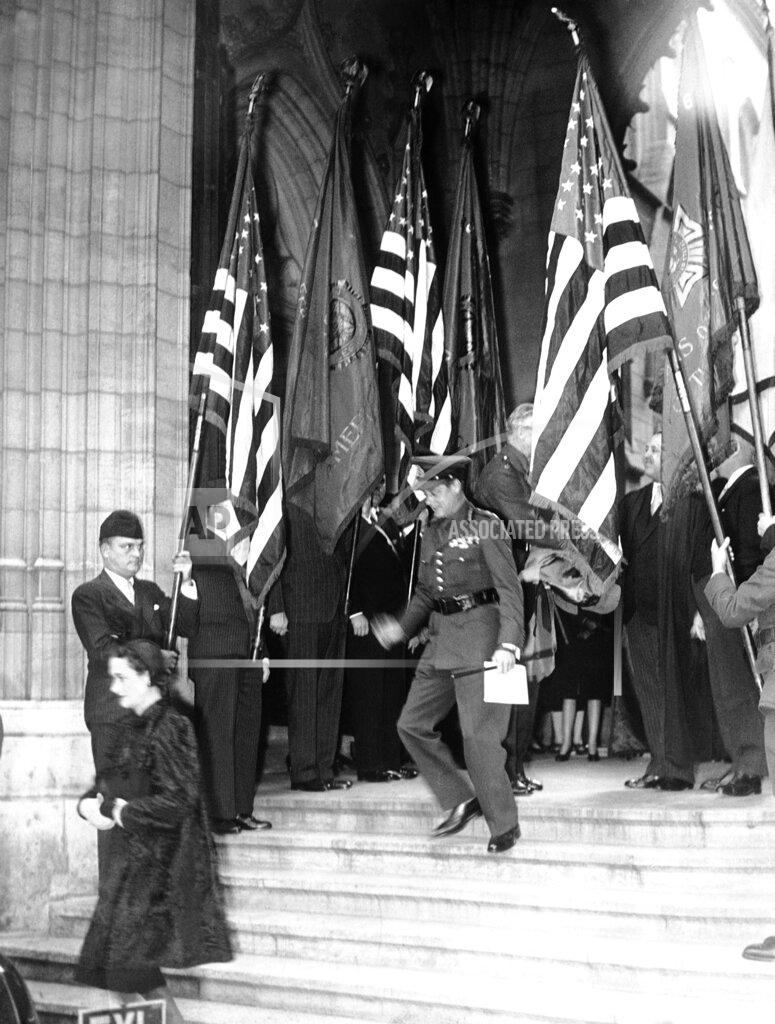
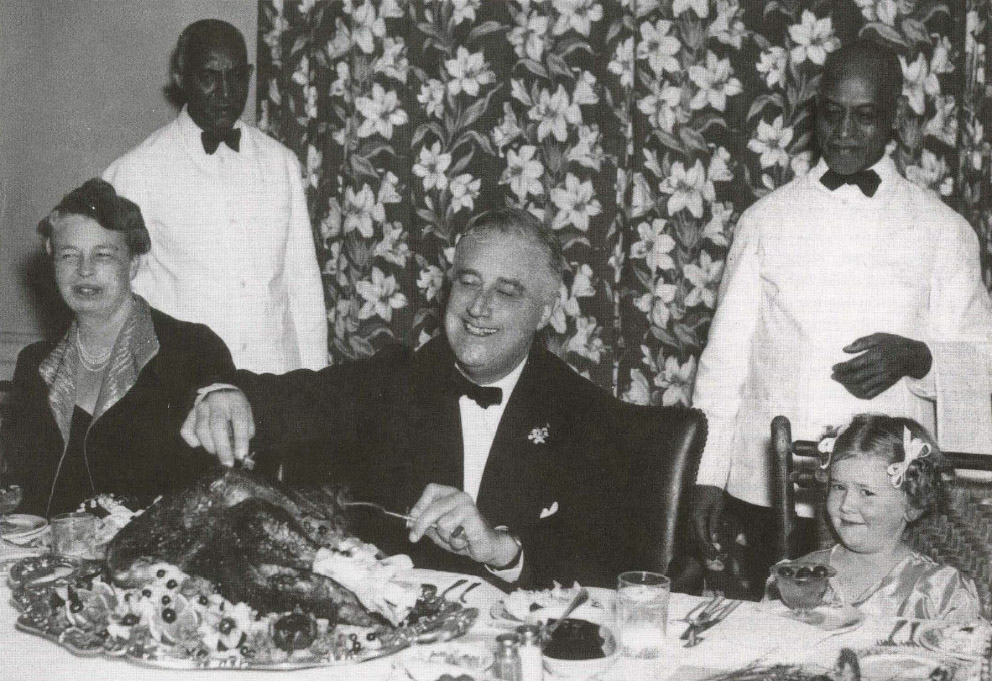
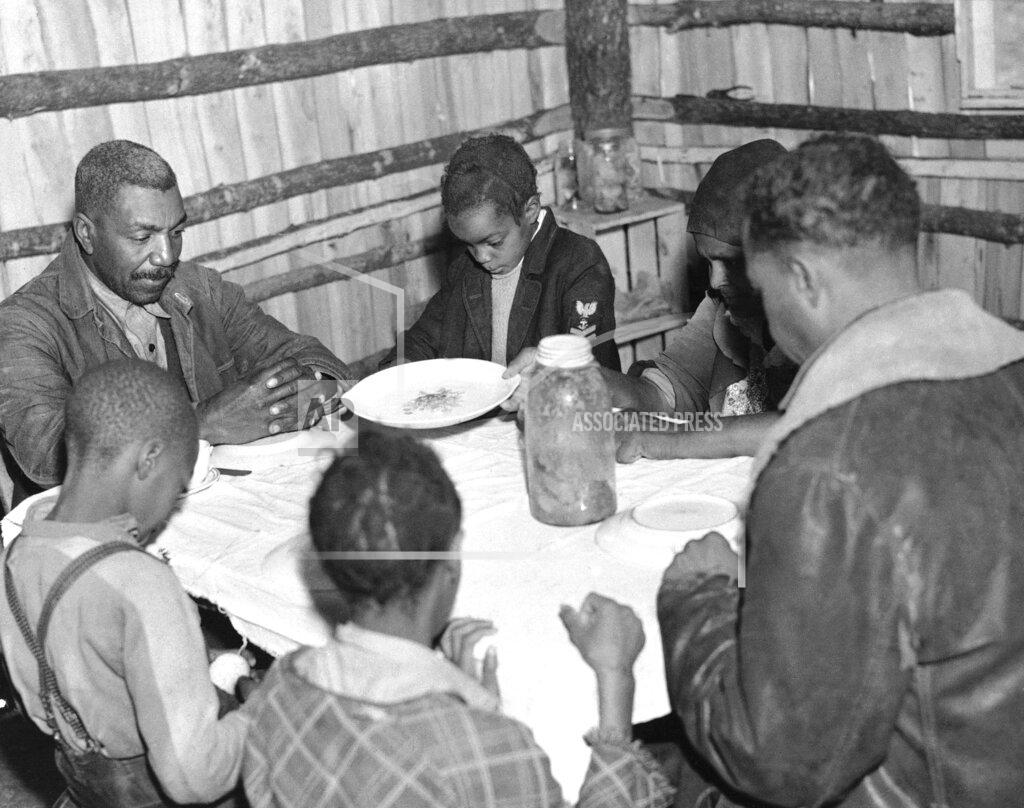
Thanksgiving Day in the United States. President Roosevelt has moved the date of Thanksgiving to the fourth Thursday in November — today — rather than the last Thursday. This usually is the same thing, but not this year – there are five Thursdays in November 1939. This does not sit well with everyone, and roughly half the country celebrates Thanksgiving today and other half in a week, on November 30. The decision has nothing to do with the war situation, but is strictly economic in nature – retailers claim that holiday sales will increase with a longer period of time before Christmas.
Divided on the date but not on reasons for marking the 316-year-old custom of giving thanks for the manifold blessings of the last twelve months, a majority of United States families yesterday Joined with President Roosevelt in celebrating Thanksgiving Day. The rest will do so next Thursday. As far away as Rio de Janeiro, and as near as the five boroughs of New York City, millions of Americans sat down to holiday dinners undisturbed by air-raid alarms or the shadow of war under which so much of the world lies.
Mayor William A. Pattern of Torrington, Connecticut, probably phrased the average American’s attitude toward the political squabble that resulted from the President’s break with tradition in proclaiming the third Thursday in November instead of the last as Thanksgiving when he told The United Press that outstanding among the blessings for which Americans could be thankful was “the fact that we live in a democracy where the President can proclaim one day as Thanksgiving and the Governors of the States can proclaim another.” “Where,” he asked, “but in our own glorious democracy could this happen?” Mayor Pattern’s State is officially celebrating next Thursday, and, adding point to his remarks, his own city virtually ignored his proclamation of both days as holidays, with schools, stores and industries operating as usual.
The President carved and ate his Thanksgiving turkey, as has been his custom for many years, in the Administration Building of the Warm Springs Foundation at Warm Springs, Georgia, surrounded by his fellow victims of infantile paralysis. The President did not speak for publication yesterday, but in his mind there probably were the sentiments enunciated in his formal proclamation of the holiday in which he asked his fellow Americans to give thanks “for the hope that lies within us of the coming of the day when peace and the productive activities of peace shall reign on every continent.”
In Rio de Janeiro, Brazil, where Summer is just coming in instead of Winter, the Americans there gathered at their annual Thanksgiving dinner to hear Ambassador Jefferson Caffery say that they should give thanks that the United States was at peace in a world of chaos and that the country seemed to be out of the depression and headed for better times. To show that Americans are just about the same whether at home or abroad the colony at Sao Paulo, Brazil, only a few miles away in the interior, voted for next Thursday for their communal Thanksgiving dinner. Although the celebration is strictly an American custom, started by the Pilgrims who helped colonize the country three centuries ago, there were observances of the day in practically every part of the world, wherever there were two or more Americans, an American ship, an American army post or an American consular office.
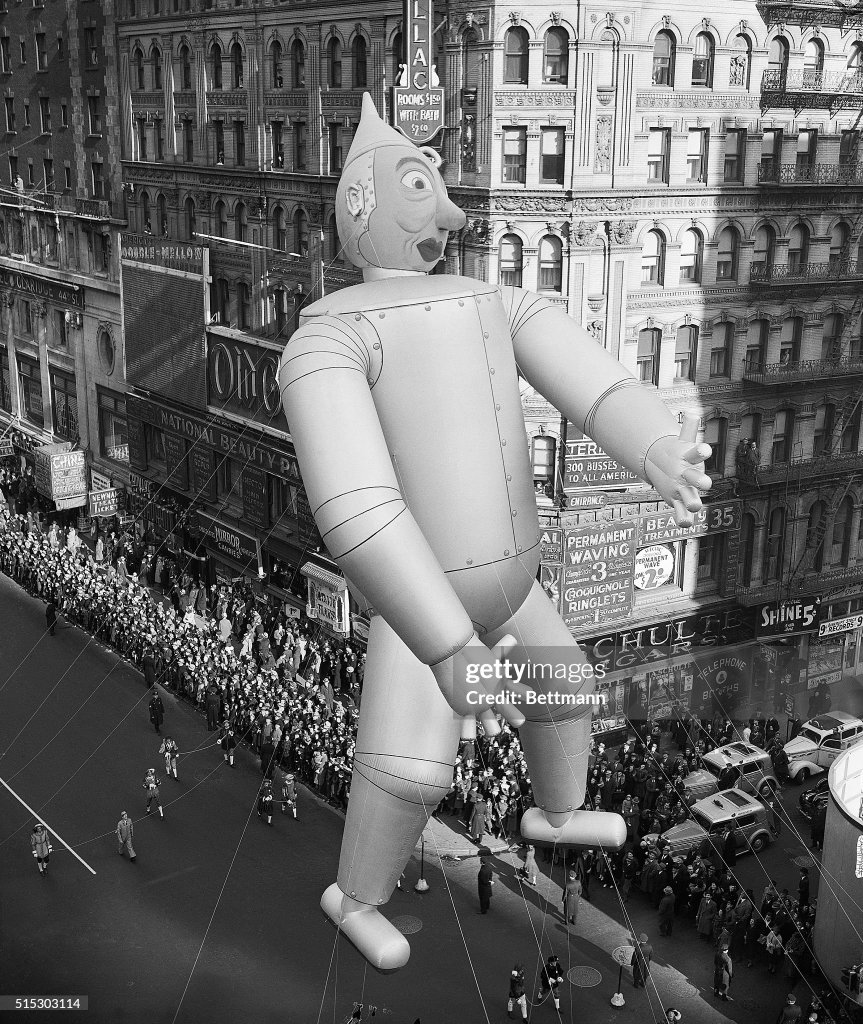
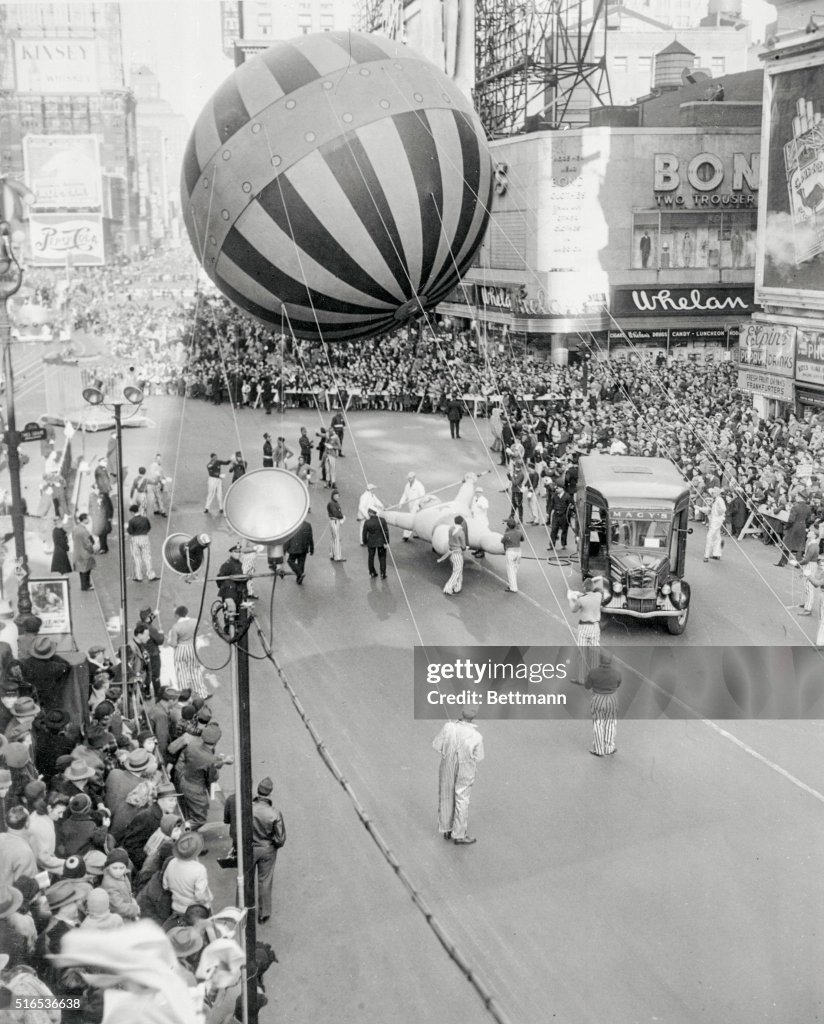
Bowing to the President’s wishes, the six-mile-long Macy’s Thanksgiving Day Parade proceeds today and is televised locally by NBC for the first time. Other firsts in this parade are a balloon of Superman — then only a year old — and the Tin Man from “The Wizard of Oz,” which was still playing in theaters.
The United States Ambassador to Great Britain, Joseph P. Kennedy, announced today that he had been called to Washington by the State Department for consultation. While the announcement said he would return to London soon after Christmas, it is generally believed here that Mr. Kennedy will have to be persuaded to continue his mission at the Court of St. James. He plans to fly to New York from Lisbon on December 3. With all respect to the British, whom he sincerely likes, Mr. Kennedy has made no secret of the fact that he is anxious to give up his post here whenever President Roosevelt decides he could be more valuable elsewhere. He has felt that way ever since last Spring, and the nearer the Presidential election comes, the more eager he is to get back into the domestic political whirl. There is no question now of Mr. Kennedy’s not returning here, after a visit with his wife and family, who are now in the United States and are hampered by the Neutrality Act from coming to London. But it is more than a possibility that a new job in the Roosevelt Administration might be arranged when he sees the President.
War perils have eased, says U.S. Assistant Secretary of State George Messersmith. Only unendurable acts of violence will get the United States involved, he declares.
Elliot Roosevelt says that labor is in peril. He warns unions of a “frightful beating” in Congress unless the AFL and CIO can heal their split.
Vice President Garner will probably announce his candidacy for the 1940 Democratic Presidential nomination within the next week.
Republican strategists in Congress have decided to limit their attack on the New Deal’s farm policies to “essentials” at the next session and wait until the 1940 Presidential campaign to offer the party’s substitute, it was learned tonight.
Seventy percent of the people surveyed say that they approve of the food stamp program. The basic idea of the Federal foodstamp plan has the overwhelming support of the public, according to the results of a survey made public yesterday by the American Institute of Public Opinion, of which Dr. George Gallup is director.
Job placements set a record pace in October, with more than 308,000 people placed in private industry jobs. Unemployment benefits show a drop to the lowest level paid out this year.
The defense in the trial of Fritz Kuhn, leader of the German-American Bund, will complete its presentation of evidence today when the trial is resumed before Judge James G. Wallace and a jury in General Sessions Court, it was indicated yesterday by defense counsel.
A Thanksgiving warning to Americans to guard against “the tendency in Washington toward centralization of power” was sounded by Francis A. Adams, director general of the Minute Men of America, in a radio address over Station WCNW yesterday afternoon.
The door was left open for further negotiations between the All-India Congress and the British Government by a resolution adopted today by the Congress Working Committee.
As part of the Battle of South Kwangsi, the 5th Infantry Division and the Taiwan Brigade cross the Yung River and capture Szetang.
Japanese dispatches from the South China front today reported that “the fall of Nanning is imminent.” The Japanese vanguard slowly was fighting its way toward the center of the flaming city, which had been devastated by repeated aerial bombings in which hundreds of Chinese were reported killed. The Japanese asserted the Chinese Sixteenth Route Army under General Tsai Ting-kai, hero of the defense of Shanghai in 1932, was “disintegrating.”
The last phase of the drive on the key munitions center in South Kwangsi Province, through which vital war supplies have been flowing into Nationalist China from French Indo-China, started at 1 PM yesterday. Strong Japanese forces crossed the Yu River, on the outskirts of Nanning, and drove for the citadel. Other Japanese columns had occupied hills surrounding the city and flying columns were hurrying forward in an effort to cut all main lines of retreat for the disorganized Chinese.
Chinese dispatches from Chungking described the situation of Nanning as critical. General Pai Chunghsi, co-commander of Kwangsi and one of China’s ablest soldiers, was said to have assumed command of the defending forces. The Chinese said scores of Japanese planes had raided Nanning ten times in the past three days and that parts of the city had been in flames since Wednesday morning.
Casualties were described as “enormous.” The aerial bombing was so continuous that rescue parties could not penetrate the burning areas to remove persons trapped in smashed buildings. Reports to foreign embassies in Chungking said no foreigners were hurt. The only Americans in Nanning are Dr. and Mrs. D. D. Coffin of Wenatchee, Washington, who were said to be at the Seventh Day Adventist Mission. The British Embassy said its last reports showed six Britons in Nanning.
The Chinese War Office said that Chinese forces holding Tatang-yu, where an effort was made to check the Japanese advance at a point south of Nanning, had withdrawn for “strategic reasons.” The fighting was moving farther inland, the War Office said.
Two flights of eighteen Japanese airplanes bombed Nanning, Wuming, Pinyang and neighboring towns beginning at 10 AM yesterday, causing “very heavy destruction,” the War Office was advised. Pinyang was reported bombed three times in four hours.
A Shanghai spokesman says the new Chinese regime is soon to be established. Japanese today were understood to be making a vigorous effort to reach a final agreement with former Chinese Premier Wang Ching-wei so that he could proclaim his new “Central” Chinese Government in Nanking within a month.
A Japanese spokesman said that “some slight differences” still existed, but that they should be adjusted soon. He said the latest views of the Tokyo Government on Mr. Wang’s program had been given to General Juzo Nishio, Commander in Chief of the Japanese Army in China, by Yakichiro Suma, spokesman of the Japanese Foreign Office, when Mr. Suma visited General Nishio and his Chief of Staff, General Seishiro Itagaki, in Nanking. “The Tokyo Government and the Japanese Army are in complete accord as to the necessity of proclaiming the Wang Ching-wei Government soon,” the spokesman said.
Unofficial Japanese blamed the United States for some of the difficulties Japan is experiencing and said that recent statements by Sumner Welles, Acting Secretary of State, implying the possibility of a severance in Japanese-American commercial relations after the present Japanese-American commercial treaty expires on January 26, were part of an American program to prevent establishment of friendly relations between Japan and China. These Japanese said that Washington again was “pulling British chestnuts out of the fire” in China and had undertaken to protect British and French interests as part of a “pin-pricking” campaign against Japan.
The Japanese professed not to be worried at an editorial yesterday in Wang Ching-wei’s newspaper, the Central China Daily News, in which it was said that Mr. Wang was not willing to proclaim his new regime until he obtained more specific assurances from Tokyo regarding Chinese independence. The editorial insisted that Mr. Wang’s plan was an all-Chinese plan and not a pro-Japanese movement.
Born:
Betty Everett, American soul singer (“Shoop Shoop Song (It’s In His Kiss)”, in Greenwood, Mississippi (d. 2001).
Bill Bissett, poet, in Halifax, Nova Scotia, Canada.
Naval Construction:
The Royal Navy Bangor-class (Reciprocating engined) minesweeper HMS Rhyl (J 36) is laid down by Lobnitz & Co. Ltd. (Renfrew, Scotland).
The Royal Indian Navy auxiliary patrol vessel HMIS Netravati (4.123) is commissioned. Her first commander is B A Samson, RINR.
The Kriegsmarine (German Navy) vorpostenboot V 412 Bremerhaven is commissioned.
 History Diaries