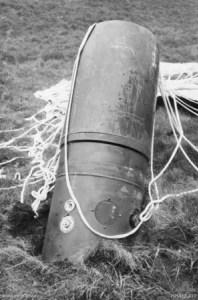
At about ten o’clock in the evening a British soldier, on duty at the artillery range at Shoeburyness, sees a low-flying Heinkel 111 bomber drop an object by parachute in the nearby Thames Estuary. It is believed to be a magnetic mine. The admiralty is immediately alerted. Lieutenant Commanders John Ouvry and Roger Lewis of the Render Mines Safe group (HMS Vernon) will very carefully recover one of the mines. It quickly is given to scientists to figure out a counter-measure. First Lord of the Admiralty Winston Churchill himself personally arranges the whole affair and carefully supervises it.
Artillery is again active on the Western Front. Clearing weather enables both sides to get observations for big guns. The eastern bank of the Moselle River near Perl continued to be the scene of artillery activity on both sides today. The land armies, however, generally maintained their present status. No important movements were made by either side.
The French government announces reprisals, similar to those announced by the British government, concerning the German use of mines.
The Reich gains in the air arms race. U.S. aid is not expected to put the Allies ahead until next fall or 1941.
Joseph Goebbels has the Reich’s state media full of stories about British involvement in the Bürgerbräukeller bombing of 8 November 1939. This is Hitler’s personal view, and Goebbels is just carrying out what Hitler wants. According to this narrative, Johann Georg Elser was controlled by the two British officers arrested at Venlo, Best and Stevens, along with Otto Strasser in Switzerland. Even Walter Schellenberg, who knew intimately the scope of Best and Stevens’ operations found this theory “quite ridiculous.”
All the German possessions of Fritz Thyssen, German industrial magnate, who helped finance the National Socialist movement before 1933, have been seized by the government because he refuses to return to Germany. By winning German industrial circles over to the Nazis in 1933, Herr Thyssen greatly contributed to Chancellor Hitler’s accession to power, but later turned against him. Herr Thyssen, who was head of the Thyssen firm and one of the leading personalities in the Vereinigte Stahlwerke, the German steel trust, was also a member of the German Economic Council, a Prussian State Counselor and a member of the Academy for German Law. He is supposed to be staying in Switzerland after a previous prolonged visit to South America.
Four Germans escape from a British camp. The seamen defied floodlights, sentries, and the high barbed-wire fences of the prison.
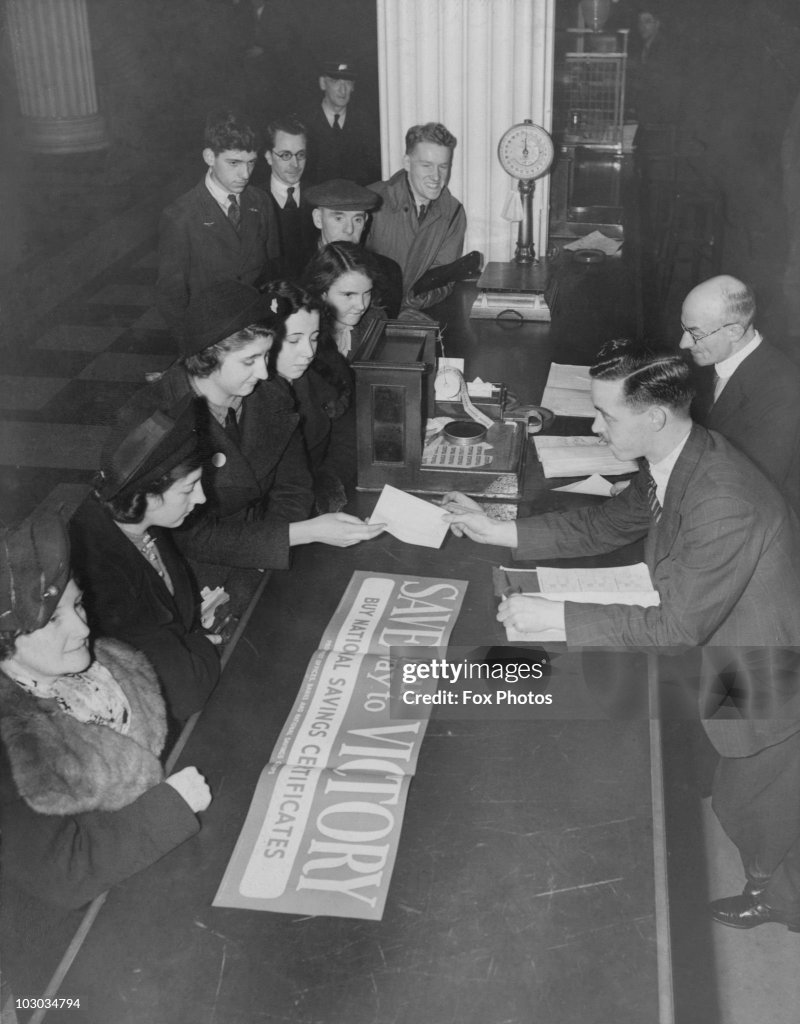
A national savings scheme with the slogan “Lend to Defend the Right to be Free” is launched in Great Britain by Sir John Simon.
Netherland authorities warned shipowners today not to permit their vessels to sail in view of the serious mine danger in British waters.
While appreciating and fully believing the friendly references to Italy by Count Stephan Csáky, Hungarian Foreign Minister, in his speech yesterday, Italians are not without misgivings today for their ardently desired peace and the status quo in the Balkans. Hungarian-Italian understanding is indeed close and cordial, but it was made clear by Count Csáky that the same sentiments do not exist between Hungary and Rumania.
Count Csáky, in short, has given the death blow to what little life remained in the once lively idea of a Balkan neutral bloc. Not only that, he has stated clearly that unless Hungary gets her long-awaited territorial revision, primarily at Rumania’s expense, there is not even going to be tranquility in the long run. The Italians feel that they and others who are vitally interested in Balkan peace are facing the apparently impossible task of trying to persuade Rumania to yield disputed territory to Hungary and Bulgariaand one could not get it without the other.
Count Stephan Csáky’s speech met strong criticism today in the Rumanian press, which warned Budapest that Rumania considers all questions with Hungary “permanently settled.” The speech of the Foreign Minister, it is held, has virtually nullified all the efforts of the Rumanian Government to improve relations between the two countries. Count Csáky is charged with placing unacceptable conditions on her cooperation with Southeastern Europe. Political circles foresee that Rumanian Foreign Minister Grigore Gafencu will voice a sharp criticism of Hungary’s attitude in a speech he is scheduled to make shortly. It is also expected that the representative of the Hungarian minority will make a statement in Parliament when it opens on Saturday.
The Rumanian cabinet resigns.
Navicerts, warrants first issued in 1915 to neutral ships carrying cargos not harmful to the Allies, are reintroduced.
Six Luftwaffe planes raid the Shetland Islands. They destroy a Royal Air Force seaplane that is lying at its mooring. Other raiders appear over the Thames estuary and elsewhere along the coast. A Luftwaffe plane is shot down by anti-aircraft fire near the southeast coast.
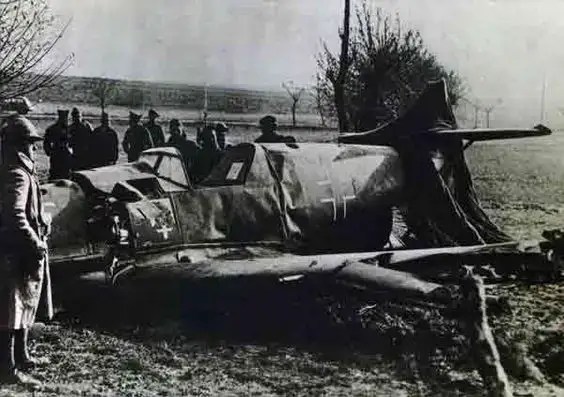
There are air battles over France. Three Bf 109s are shot down by Allied fighters, and one Bf 109 is brought down by the anti-aircraft fire. A crashed Bf 109 is recovered by the French for evaluation.
RAF reconnaissance planes make sweeps over Stuttgart, Frankfurt, Hamburg, and Bremen.
Royal Navy Minesweeping trawler HMS Aragonite mined in the English Channel off Deal, Kent.
The Royal Navy Scott-class destroyer HMS Bruce was sunk as a target in the English Channel off the Isle of Wight.
The British cargo ship SS Geraldus struck a German mine and sank in the North Sea 3 nautical miles (5.6 km) off the Sunk Lightship. Survivors were rescued by HMS Wivern.
The British cargo ship SS Lowland struck a mine and sank in the North Sea off Clacton-on-Sea, Essex with the loss of nine of her 12 crew. Survivors were rescued by HMT Myrtle.
Italian freighter Fianona, 4,576-tons, strikes a mine off the Thames estuary but makes it to port.
The Greek steam merchant Elena R. struck a mine at 2300 hours and sank two miles south of Shambles Light Vessel in the English Channel. Of the ship’s complement, all 24 survived and reached the Light Vessel on their own. The 4,576-ton Elena R. was carrying grain and was bound for Antwerp, Belgium.
Sailing with Convoy 14.BS, the French steam merchant Arijon was torpedoed and sunk by the U-43, commanded by Kapitänleutnant Wilhelm Ambrosius, in the Bay of Biscay in the eastern Atlantic Ocean (45°40′N 4°50′W). At 1605 hours the Arijon was hit forward of amidships by one torpedo from U-43 and sank within a few minutes in the Bay of Biscay. 14 crew members and two gunners were lost. The 25 survivors were rescued by the French armed trawler Cap Nord. The 4,374-ton Arijon was carrying steel bars, sheets, section hoops, and paper and was bound for Buenos Aires, Argentina.
HMS Calypso captured the German merchant ship Konsul Hendrik Fisser off Iceland. The ship was falsely flying a Norwegian flag and painted in Norwegian colors. She was taken to Leith and taken into British service, renamed Empire Soldier.
The German merchant ship Antiochia is scuttled near Iceland (62°15′N 15°08′W) when intercepted by HMS Laurentic.
German SS Adolph Woermann scuttled near Ascension Island (10°39′S 5°44′W) when intercepted by HMS Neptune.
The Greek cargo ship Nicolaos Piangos collided with the Brarena (Norway) in the North Sea and sank.
U.S. freighter Exmouth is detained at Gibraltar by British authorities.
German supply vessel Westerwald returns to Germany.
Convoy OA.39 departs from Southend and OB.39 from Liverpool.
Wednesday, 22 November
On Northern Patrol were two cruisers between the Orkneys and the Faroes, three cruisers and three AMCs between the Faroes and Iceland, and one cruiser and three AMCs in the Denmark Strait. Light cruiser NEWCASTLE departed Loch Ewe for patrol in the Denmark Strait.
Armed merchant cruiser LAURENTIC intercepted German merchant ship ANTIOCHIA (3106grt) which had departed Ponta Delgada on the 12th. First sighted south of Iceland in 62 30N, 16 30W, LAURENTIC chased ANTIOCHIA to 62 15N, 15 08W where she scuttled herself.
Destroyers IMOGEN, IMPULSIVE and IMPERIAL arrived at Invergordon to refuel after their Rattray Head patrol.
Destroyers KASHMIR and KANDAHAR arrived at Scapa Flow.
Two flights of German aircraft attacked Sullom Voe and seaplane depot ship MANELA, but were driven off by anti-aircraft cruiser COVENTRY. One London flying boat was destroyed but there was no other damage. Incendiary bombs were also dropped over Lerwick Harbour.
Minesweeping trawler ARAGONITE (315grt, CO – Lt Cdr F G Rogers RNR, Chief Skipper P J Miles RNR) was mined and sunk near South Brade Buoy off Deal, one mile 49° from the Deal Coast Guard Station; four men were wounded in the explosion.
Destroyer FOXHOUND left Greenock at 2315 during a submarine alert and shortly after, at 0008/23 ran aground near Black Point Light, suffering minor hull damage. She was able to get off by herself at 0713, but was in dock at Greenock until 11 December.
Destroyers WIVERN and Polish ORP GROM and ORP BŁYSKAWICA departed the Nore for Kentish Knock to search for moored mines.
Destroyer MASHONA was searching for a submarine located by D/F.
Destroyer MONTROSE made anti-submarine attacks in 48 46N, 06 35W.
Sloop PC.74 and patrol sloop SHELDRAKE with two anti-submarine trawlers were searching for a submarine contact off Northern Ireland in 56-39N, 7-31W.
Former destroyer leader BRUCE, which had been paid off and disarmed prior to the war, was sunk as an aircraft torpedo target south of the Isle of Wight.
Convoy OA.39 of four ships departed Southend escorted by destroyer ARDENT from the 22nd to 24th.
Convoy OB.39 departed Liverpool escorted by destroyers VOLUNTEER and WARWICK until the 25th.
Greek steamer NICOLAOS PIANGOS (4499grt) was sunk in a collision with Norwegian steamer BRARENA (6996grt) in the North Sea.
U-43 sank French steamer ARIJON (4374grt) in 45 40N, 04 50W.
U-20 laid mines during the night of the 21st/22nd near Newarp Light Ship, east of Yarmouth, on which two merchant ships were lost.
Greek steamer ELENA R (4576grt) was sunk two miles south of Shambles Light Vessel on a mine laid by U-26 on 4 September; the crew of 24 reached the Light Vessel.
After being relieved by destroyer DELIGHT, sister ship DARING departed Aden on the 10th and arrived at Suez after operations in the East Indies which started on 13 October. DARING departed Port Said on the 23rd and proceeded to Malta where she arrived on the 25th for refitting.
Convoy HG.8, which departed Port Said on the 11th, left Gibraltar on the 22nd, escorted by destroyers KEPPEL, VIDETTE and the French TIGRE and PANTHÈRE from the 22nd. The French ships arrived at Brest on the 29th. Cable ship MIRROR departed with the convoy and escorted by VIDETTE carried out cable repairs in 36-16N, 7-24W. These ships arrived back at Gibraltar on the 26th. The convoy reached Liverpool on the 30th.
French destroyers L’INDOMPTABLE, LE MALIN and LE TRIOMPHANT were patrolling in 44 30N, 9 30W.
Destroyer HOTSPUR departed Kingston to intercept German steamer ARAUCA (4354grt), reported leaving Vera Cruz.
German liner ADOLPH WOERMANN (8577grt) departed Lobito on the 16th, and Forces H and K were involved in trying to intercept her. Steamer WAIMARAMA (12,843grt) reported sighting a suspicious merchant ship at 0842/21st and light cruiser NEPTUNE of Force K was detached to investigate. On her approach, ADOLPH WOERMANN scuttled herself off Ascension Island in 10-39S, 5-44W and NEPTUNE picked up the crew. Destroyers HARDY, HASTY, HERO and HOSTILE, also of Force K accompanied NEPTUNE to Freetown for refueling, arriving on the 25th. The German crew was taken to England by armed merchant cruiser CARNAVON CASTLE, which departed Freetown on the 25th in convoy SLF.10.
Light cruiser AJAX and New Zealand sister ship HMNZS ACHILLES searched for German merchant ships off Cape San Antonio. Both refueled from tanker OLYNTHUS at San Boroborn Bay on the 23rd and then set off northwards.
Heavy cruiser EXETER departed Rio de Janiero for the Rio de la Plata, then left the area on the 26th for the Falklands, arriving on the 30th.
Light cruiser BIRMINGHAM departed Hong Kong on the 22nd after submarine RAINBOW reported a darkened ship leaving Kobe. No contact with the ship was made and BIRMINGHAM returned to Hong Kong.
Envoys return to give President Roosevelt war reports. The ambassadors to Britain, Belgium, and Poland share their views with the President. President Roosevelt is to obtain first-hand reports from the European war zone through a series of conferences with important Ambassadors who are returning from their posts to inform him regarding the situation as they see it. In a succession of talks beginning early in December and extending through the holidays he will obtain intimate reports of conditions from what will amount to a council of his Ambassadors.
It was announced today that Joseph E. Davies, Ambassador to Belgium, would sail soon for the United States, but it was not announced that Ambassador Joseph P. Kennedy would sail from Britain for home early in December and that Anthony J. Drexel Biddle Jr., Ambassador to Poland, who is now stationed at Angers, France, would follow. It is possible but not definite that William C. Bullitt, Ambassador to France, will also return. He may not return at this time, because he was in the United States only a few months ago.
Mr. Davies will return, the State Department said, for consultation on phases of the project for revising the reciprocal trade agreement between the United States and Belgium. Hearings have been concluded and the American proposals will be submitted to Belgium next month. The trip is considered more important, however, because of the opportunity for a report to the President. Ambassador Kennedy will come home for the express purpose of conferring with the President, but his trip will also provide an opportunity for him to spend the holidays with his wife and nine children, all of whom are in this country.
Ambassador Biddle will be in a position to round out his cabled and written reports on the fall of Poland. If Mr. Bullitt returns, he will be able to give the President valuable information on the French side of the war. The plan of obtaining first-hand reports from Ambassadors is not new with Mr. Roosevelt. It has been employed occasionally in the past. Ambassadors and Ministers have returned from their posts in Europe, Latin America and Asia for this purpose.
The present plan will be especially important because it will give the President detailed information when he is preparing the section on foreign affairs in his annual message to Congress. The President’s message is expected to report on the status of America’s neutrality policies both as they relate to the belligerents and to the united front to the war presented by the American republics.
The U.S. Supreme Court issues its ruling in Schneider v. New Jersey (308 U.S. 147) (1939). This holds that people may hand out literature to people willing to receive it on public streets, and local municipalities may not unduly restrict that right on such grounds as keeping the streets clean. It is a key development in the law of public fora and the right to free speech under the 1st Amendment. “Although a municipality may enact regulations in the interest of the public safety, health, welfare or convenience, these may not abridge the individual liberties secured by the Constitution to those who may wish to speak, write, print or circulate information or opinion,” Justice Roberts said in the court ruling covering all four cases. “This court has characterized the freedom of speech and that of the press as fundamental personal rights and liberties,” the justice stated in citing former findings on this subject. “The phrase is not an empty one and was not lightly used.”
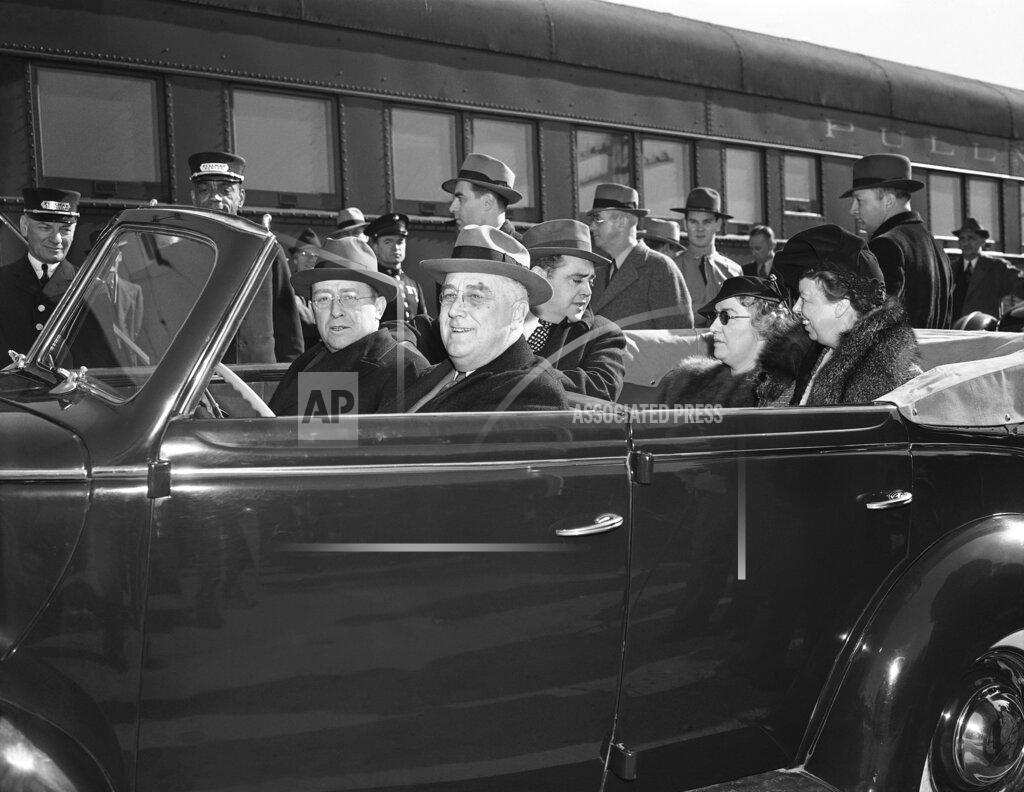
President Roosevelt returned today to the familiar surroundings of his “other home” on Pine Mountain, near Warm Springs, Georgia. He came back to the colony which he founded for infantile paralysis victims to preside over the Thanksgiving Day dinner which he has missed here only twice since the first one in 1927. From the rear platform of his special train the President waved a greeting to the group on hand to welcome him this morning.
Mr. Roosevelt had nothing to say to the crowd as he detrained at almost the same spot from which he promised many of the same persons last April that “I’ll be back in the Fall if we don’t have a war.” On the first day of his scheduled week of rest at the “Little White House” the President divided his time between the glass-enclosed swimming pool, where the ninety patients of the foundation exercise daily, and the red clay roads over which he drove throughout the afternoon at the wheel of his specially equipped automobile.
If the President were concerned over the possibility of being suddenly called back to Washington by some unexpected turn of events abroad, he gave no indication of it as he motored about the foundation grounds with Mrs. Roosevelt and a few old friends. He had no official visitors during the day and, although he is in direct touch with Washington by telephone and telegraph, there were no developments thought worthy of mention by his aides. A cheery greeting went up from in front of Georgia Hall, the foundation’s administration building, where many of the patients waited in wheelchairs to see him drive by on his way from the train. To them, Mr. Roosevelt is a benefactor — and also an inspiration.
The proudest of the group of cheering patients was Ann Smithers, a 6-year-old girl of Frankfort, Kentucky, who has drawn the coveted seat next to the President for the Founder’s Dinner tomorrow night. She was one of eighty-nine patients who drew straws for the place. Nine other children will share the head table with the President and Mrs. Roosevelt. It was an ideal day for the President’s return to his beloved Warm Springs. The driving snow and rain through which he passed while. aboard his special train last night had disappeared when he arrived here this morning. A late frost had transformed the usual countryside into a vista of flaming reds and yellows reminiscent of his native Dutchess County, New York, a month ago.
Bugsy Siegel, Whitey Krakower, Frankie Carbo and Albert Tannenbaum kill Harry “Big Greenie” Greenberg outside his Hollywood Hills apartment after Greenberg had threatened to become a police informant. Prosecutors claimed that Siegel had brought them to his house and drove the getaway car, and that Carbo shot Greenberg in the head five times. His wife Ida Greenberg found him murdered at his driveway. Greenberg allegedly demanded $5,000 from Buchalter to keep his silence from law enforcement, however Buchalter subsequently ordered his murder. Siegel was sent to trial in 1940 but not convicted.
Fritz Kuhn, the German-American Bund leader, spent an entire day on the witness stand in General Sessions Court yesterday under cross-examination, admitting, at one point, that he had lied to Mrs. Florence Camp when he set a date for their marriage, and had lied again to the jury hearing evidence of larceny charges against him when he denied he had ever written to her that he would marry her. The production of one love letter after another by Assistant District Attorney Herman J. McCarthy wilted the bund leader, who listened red-faced while two of the letters and a shipboard note proposing marriage a few days after he met Mrs. Camp in February, 1938, were read to the jurors. He called her his “golden angel,” promised her a trip to Mexico, and other things which, he said, were lies when he wrote them. Kuhn testified he is married and has two children.
Admiral Byrd departs from Boston on his Antarctic expedition with his massive snow cruiser. Bucking a foretaste of the storms she will encounter in polar seas, the 68-yearold barkentine Bear headed tonight for the Antarctic after slipping away from this port in a swirling snowstorm, whipped up by a stiff nor’easter.
The National Labor Relations Board ruled today that the refusal of an employer to grant his employes a closed shop while bargaining in good faith was not an unfair labor practice under the Wagner Act.
Announcement of the candidacy of District Attorney Thomas E. Dewey for the Republican nomination for President probably will be made next week, it became known yesterday.
Princeton University refused permission tonight to the American Whig-Cliosophic Society, student political group, to sponsor a speech by Earl Browder, communist party leader.
Black schoolteachers win a court case, whereby Maryland County must pay them the same as white teachers.
Auxiliary Bear (AG-29) departs Boston, Massachusetts, as part of the U.S. Antarctic Service [Rear Admiral Richard E. Byrd, USN (Ret.)] to investigate and survey the land and sea areas of Antarctica.
The Japanese are at the gates of Nanning, which is on fire from many bombs, say the Japanese. The southern China city is reportedly devastated by the attacks of invaders’ planes. The Chinese deny this and say the advance has been halted. The Japanese claimed today that their new expeditionary army in South China had fought its way into the suburbs of Nanning, strategic city in South Kwangsi Province, but the Chinese asserted that the Japanese drive had been stopped. Japanese bombing planes smashed Nanning’s outer defenses, the Japanese Domei news agency said, after which cavalry units entered the outskirts of the city through which vital war supplies for China’s Nationalist armies have been flowing from French Indo-China.
Fresh Chinese divisions have been thrown across the line of the Japanese advance in Southwest Kwangtung and it is asserted that they have halted the invasion from the Pakhoi region. The Japanese are said to have been held up at the Kwangsi border north of Yamhsien, but small units are said to have filtered into Kwangsi near Tatang. A desperate Chinese effort to hold the city of Nanning and to keep back the Japanese from the vital Kwangsi-Indo-China highway is expected in Chungking.
A day-long Japanese air bombardment of Nanning and neighboring towns was reported yesterday. The effects of the invasion fell heavily upon Chinese transport connections with the outside world yesterday. Since the Japanese vanguard threatens Nanning, the South Kwangsi metropolis on the trunk highway to Indo-China, all normal traffic on that road has been suspended between Nanning and the French border. In contrast to the comparative calm with which the Chinese transport authorities accepted the new Japanese threat last week, officials now display concern. It is stated that the new Indo-China-Kwangsi highway, 100 miles to the west of the present road, will not be usable for two months because the Indo-China section is incomplete.
If the Japanese capture Nanning they will not only cut the present main highway trade route, but also will have severed the important Indo-China-Kwangsi river communications. A portion of the gasoline stocks for China’s internal highway and airway traffic has been coming into Kwangsi by road and waterways. It is feared that with an air base near Pakhoi or Nanning the Japanese would be in a position seriously to interfere with traffic in Yunnan and might even bombard the road effectively. In a statement to the people of the Province, General Pai Chunghsi called on the masses for united and organized resistance to the enemy. He demanded the destruction of highways, the evacuation of people and supplies from zones of prospective hostilities and the fullest mobilization of the people and the civil officials. The Japanese are bombing Nanning daily. The city was attacked eight times on Tuesday and wide destruction was caused.
The Japanese were proud of the Terukuni Maru, one of the best ships of their leading ship line, the Nippon Yusen Kaisha, and its loss after striking a mine off England yesterday startled the public more than anything yet reported in connection with the European war. Japanese newspapers demand that the government make strong representations to Germany, Britain and France regarding neutral rights and to adopt retaliatory measures if the protests are disregarded. The conditions where the Terukuni Maru sank are considered a specially glaring example of how neutrals’ safety has disappeared.
Every newspaper quotes The Hague convention of 1907, emphasizing the clauses that restrict the use of unmoored mines and require belligerents to warn of mined areas. Japan was not notified of the existence of the mine field where the explosion occurred and a protest and compensation claims will be made when she determines which belligerent was responsible. The press notes that the ship carried a British pilot which is regarded as evidence that the mine was not British.
Dow Jones Industrial Average: 150.34 (-0.64)
Born:
Allen Garfield, American actor (Candidate, Beverly Hills Cop II), in Newark, New Jersey.
Mulayam Singh Yadav, Indian politician (Samajwadi Party), in Saifai, Etawah district, British India (d. 2022).
Stefan Dimitrov, Bulgarian basso opera singer, in Burgas, Bulgaria (d. 2004).
Tom West [Joseph Thomas West III], American computer engineer, in New York, New York (d. 2011) .
Naval Construction:
The Royal Navy “U”-class (Second Group) submarine HMS Unbeaten (N 93) is laid down by Vickers Armstrong (Barrow-in-Furness, U.K.).
The U.S. Navy Gar-class submarine USS Gudgeon (SS-211) is laid down by the Mare Island Navy Yard (Vallejo, California, U.S.A.).
The Royal Navy Flower-class corvette HMS Hydrangea (K 39) is laid down by Ferguson Shipbuilders, Ltd. (Port Glasgow, Scotland).
The Royal Navy Hunt-class (Type II) escort destroyer HMS Oakley (L 72) is laid down by Vickers Armstrong (Newcastle-on-Tyne, U.K.); completed by Parsons. Loaned to the Polish Navy before completion on 30 May 1941 and commissioned as ORP Kujawiak on 17 June 1941.
 History Diaries