Prime Minister Chamberlain announces that German merchant shipping will be seized in retaliation for indiscriminate mine warfare. All goods in Britain, earmarked for shipment to Germany, are confiscated. The British government declared a blockade of German exports in reprisal for numerous incidents at sea such as the sinking of the Athenia and the Simon Bolivar. “I may remind the House that in the last war, as a measure of justified reprisal for submarine attacks on merchant ships, exports of German origin or ownership were made subject to seizure on the high seas”, Prime Minister Neville Chamberlain explained in the House of Commons. “The many violations of international law and the ruthless brutality of German methods have decided us to follow a similar course now, and an Order-in-Council will shortly be issued giving effect to this decision.”
In a treaty signed with Germany, Slovakia is given 225 square miles of former Polish territory (which Poland had progressively annexed from Czechoslovakia in 1920, 1924 and 1938).
Germany seeks more diesel fuel. The problems of obtaining sufficient Diesel oil fuel and enough industrial fats are harassing German authorities, the Department of Commerce reported today.
The Polish government-in-exile moved from Paris to Angers, France.
Hungary stresses a rift with Rumania. Hungarian Foreign Minister Count Stephan Csaky issued a sharp warning to Rumania today in the course of an analysis of Hungarian foreign policy before the Chamber of Deputies and indicated that Hungary would be willing to participate in a Balkan neutral bloc only under definitely specified conditions.
Antanas Merkys became Prime Minister of Lithuania.
Heinrich Himmler announced that the United Kingdom was responsible for the 8 November 1939 attempt on Adolf Hitler’s life. Two British agents were kidnapped in the Netherlands several days prior, who were blamed for plotting the attack.
Lufthansa’s Do 18F flying boat, upgraded with BMW 132N radial engines and redesignated Do 18L, took its first flight after the upgrade work. After two days of testing, it was found that the BMW engine suffered overheating problems.
RAF fighters shoot down a Dornier DO 17 reconnaissance plane off Deal. Other Luftwaffe planes are spotted over Sunderland (a Heinkel He 111) and over the Orkneys.
The German battleships Gneisenau and Scharnhorst (code-named “Salmon and Gluckstein” by the British after a venerable tobacconist) begin a sortie. The Scharnhorst and Gneisenau sailed into the Iceland-Faroes passage on their first wartime sortie accompanied by the light cruisers Köln and Leipzig.
The Admiral Graf Spee rounds the Cape of Good Hope and returns to the Atlantic after its unproductive sortie into the Indian Ocean. There is a fleet of Allied ships looking for it there.
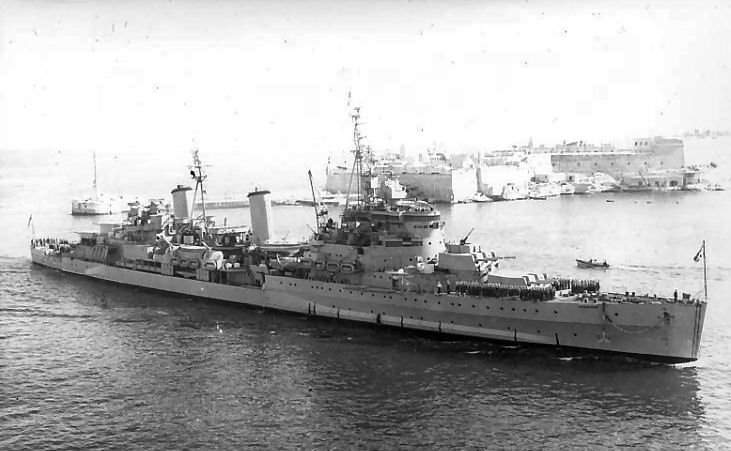
The new British light cruiser HMS Belfast, commanded by Captain G.A. Scott, sets sail with the light cruisers HMS Aurora, HMS Edinburgh, and HMS Sheffield to carry out a search for German warships reported on passage to attack convoy traffic in Atlantic. On departure from Rosyth the HMS Belfast detonates a magnetic mine in the Firth of Forth off the Isle of May (56°06′N 2°55′W) and sustains severe damage. The explosion caused major ‘whipping’ of ships structure and as a result equipment is damaged throughout her length and her keel is broken. 21 crew members are injured, one of them dying of wounds the next day. She is taken in tow to Rosyth for temporary repairs. In July 1940 the HMS Belfast arrives at Plymouth and is rebuilt at Devonport Dockyard and does not return to service until December 1942.
Destroyer HMS Gipsy is mined and sinks in the North Sea off Harwich, Essex with the loss of 30 of her 146 crew. Survivors were rescued by HMS Keith and HMS Griffin.
British vessel Geraldus also strikes a mine and sinks.
French battleship Strasbourg departs Dakar for Brest.
U-33 (Kapitänleutnant Hans-Wilhelm von Dresky) continues its attacks on fishing trawlers.
The 287-ton British fishing steam trawler Sulby was sunk by gunfire by the U-33, commanded by Kapitänleutnant Hans-Wilhelm von Dresky, approximately 75 miles northwest of Rathlin, north of Ireland in the northern Atlantic Ocean. Of the ship’s complement, 5 died and 7 survivors were picked up by the Tobermory Lifeboat.
The 276-ton British fishing steam trawler William Humphries was sunk by gunfire by the U-33approximately 75 miles northwest of Rathlin. All of the ship’s complement of 13 died. Nobody knows what happened with the Humphreys since nobody lived to give a statement. The seas in the North Atlantic are rough and lifeboats are easily swamped.
French Naval auxiliary minesweeper Ste Claire is sunk by mine laid by U-16 in the Strait of Dover(51°00′N 1°20′E). All 11 hands lost.
The 296-ton French fishing steam trawler Les Barges II was stopped and after the crew abandoned ship was sunk by gunfire by the U-41, commanded by Kapitänleutnant Gustav-Adolf Mugler, in the Bay of Biscay in the eastern Atlantic Ocean (45°35′N 3°22′W). Of the ship’s complement, all 15 survived and were picked up by a Spanish trawler. Mugler stops and disembarks his victims before sinking them with gunfire. Mugler also stops a total of 17 trawlers during the day but lets them go because they are Spanish.
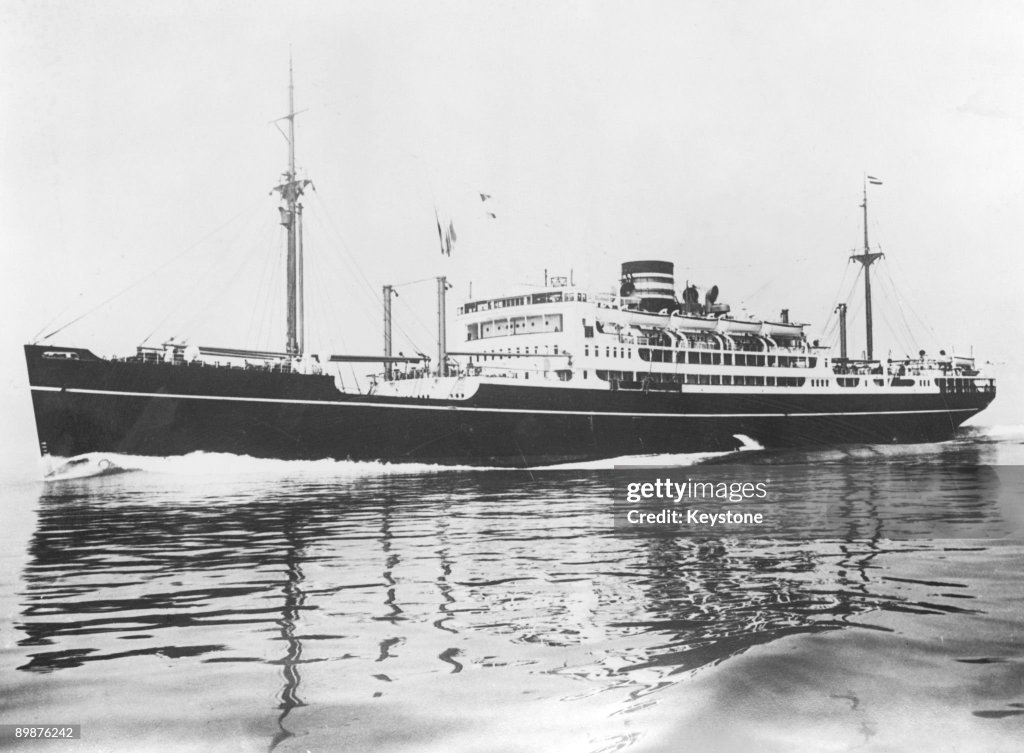
Japanese liner Terukuni Maru is sunk by German mines in the North Sea, 1.5 nautical miles (2.8 km) off the Sunk Lightship (51°50′40″N 1°31′04″E). All 206 passengers and crew were rescued. The wreck was subsequently dispersed by explosives.
U-20 laid 9 mines off Yarmouth, resulting in two ships sunk later that year.
Kriegsmarine patrol vessel V-701 strikes a mine and sinks.
German cargo ship Tenefire is scuttled west of Iceland (62°25′N 20°00′W) when intercepted by HMS Transylvania.
German freighter Rheingold has been seized by the Royal Navy and brought to a Scottish port.
German naval forces seize and detain a Finnish freighter, the Asta, off the Åland Islands. So far, the Kriegsmarine has seized 17 Finnish vessels.
Navicert system is instituted by U.S. in an attempt to avoid incidents at sea. U.S. merchant ships are to obtain clearances for their cargoes (certificates of non-enemy origin for all items) prior to leaving port.
U.S. freighter Express, detained by British authorities at Malta since 12 November, is released and allowed to proceed on her voyage after declaring the nature of her cargo.
The War at Sea, Tuesday, 21 November 1939 (naval-history.net)
Battleships NELSON and RODNEY with destroyers FURY, FAME, FAULKNOR, FOXHOUND, FORTUNE and FORESIGHT arrived in the Clyde from Loch Ewe.
Light cruisers SOUTHAMPTON and BELFAST with destroyer AFRIDI departed the Firth of Forth on gunnery exercises. At 1058 near May Island, BELFAST struck a mine laid by a U-21 on the 4th. Badly damaged and with a broken back, she was towed back to Rosyth by tug KROOMAN (230grt). Tug BRAMHAM soon joined and later, tugs GRANGEBOURNE, BULGER and OXCAR also met BELFAST. Twenty-one crew, including Lt Cdr (E) F S. Ferguson, were wounded, with one rating dying of wounds on the 30th. Destroyers GURKHA and ICARUS put out from Rosyth to search off Fiora for the submarine thought responsible. They were joined by escort vessel WHITLEY and sloop STORK and later by destroyers ISIS and BEDOUIN. Destroyers IMOGEN, IMPULSIVE and IMPERIAL were also recalled from patrol off Rattray Head to assist in the search, refueling at Invergordon on the 22nd en route. Escort vessel VIVIEN remained in company with BELFAST after she passed through the gate. After temporary repairs, BELFAST left Rosyth on 28 June 1940 for Devonport, arrived there on 3 July and was repairing until 3 November 1942 – almost three years later.
Light cruiser AURORA advised she had leaking rivets in her stern, was seaworthy, but did require docking at the earliest possibility.
On Northern Patrol were two cruisers between the Orkneys and the Faroes, three cruisers and one AMC between the Faroes and Iceland, and one cruiser and three AMCs in the Denmark Strait. Armed merchant cruiser CALIFORNIA on reported she had a slightly damaged bow due to ice. Light cruisers DELHI, CALYPSO and CERES departed Loch Ewe on Northern Patrol duties.
Destroyer GIPSY (Lt Cdr N J Crossley) and the Polish ORP BURZA departed Harwich to rescue a downed German aircrew, who were picked up and returned to Harwich. That evening at 2100, destroyers GRIFFIN (D.22, Captain G E Creasy), KEITH, GIPSY, BOADICEA and Polish ORP GROM departed Harwich for a sweep in the North Sea in operation GT.1. Leaving Harwich Harbour, the destroyers ran into a minefield laid by U-19 on the 17th and GIPSY struck a mine and was badly damaged. She was run aground a total loss and KEITH and GRIFFIN picked up the survivors. One crewman died of injuries, 29 crewmen were missing, and Lt Cdr Crossley died of injuries on the 27th. Py/Lt J B Rigg RNVR, Py/Midshipman M A J Landon RNR and nineteen ratings were wounded, one seriously. Consideration was given to salvaging and repairing GIPSY, but she had been too badly damaged.
Destroyers JUNO, JAGUAR, JANUS and JERSEY departed Immingham and were on a patrol in the North Sea, designated operation BT.2. Following the patrol, JANUS joined convoy FS.40 and JAGUAR joined FN.40. JAGUAR was attacked by a German bomber in 53-33N, 00-48E, but was not damaged.
Destroyers PUNJABI, ASHANTI, SOMALI and MASHONA departed Greenock for Belfast to escort the fleet tenders A (dummy battleship REVENGE – decoy ship PAKEHA) and B (dummy battleship RESOLUTION – decoy ship WAIMANA) to Rosyth to help divert the Luftwaffe’s attention away from Scapa Flow. The group was designated Force W and included fleet tender C as dummy aircraft carrier HERMES – decoy ship MAMARI.
Destroyers SOMALI, ASHANTI and MASHONA departed Belfast to search for a submarine 70 miles NW of Rathlin. They were joined by sister ship PUNJABI.
Polish destroyer ORP BŁYSKAWICA investigated suspicious vessels southwest of Shipwash.
Destroyers IMOGEN, IMPERIAL and IMPULSIVE were searching for the U-boat responsible for sinking trawler WIGMORE on the 18th off Rattray Head.
Destroyers ESCORT and ELECTRA were searching for a submarine one mile 180° from Rame Head.
Destroyer WARWICK and patrol sloop GUILLEMOT were submarine hunting in 53 49N, 3 51W.
Minesweepers SKIPJACK and LEDA were searching for a submarine one mile south of Cross Sands.
On the 19th, destroyer WIVERN was relieved on patrol by destroyer BRILLIANT. Then on the 21st, WIVERN was ordered to make runs at high speed along the line from the wreck of the Dutch steamer SIMON BOLIVAR in 51 49.6N, 01 41E and that of British steamer BLACKHILL in 51 47.6N, 01 39E to detonate any magnetic mines. Anti-submarine trawlers WELLARD and LADY ELSA took off non-essential crewmen and stood by should WIVERN be mined in the attempt. Four runs were made, but no mines detonated. This was repeated on the 23rd with similar results, and after one run, a leak developed in the stern gland and she returned to Chatham.
Convoy FN.40 departed Southend, escorted by destroyer WOOLSTON, and sloops PELICAN and HASTINGS. Destroyer JAGUAR provided support on the 22nd, while WOOLSTON detached when the convoy was abreast the Tyne to join the escort of FS.41. FN.40 arrived at Methil on the 23rd.
Convoy FS.40 departed the Tyne, escorted by escort ship VALOROUS and sloop BITTERN. Destroyer JANUS provided support on the 22nd, and the convoy arrived at Southend on the 23rd.
Anti-submarine trawlers BEDFORDSHIRE (443grt), WARWICK DEEPING (445grt) and CAMBRIDGESHIRE (443grt) attacked a submarine contact three miles from Bull Point.
German merchant ship TENERIFE (2436grt), which had departed Vigo on the 9th, scuttled herself when intercepted by armed merchant cruiser TRANSYLVANIA west of Iceland in 62 25N, 20W. The crew of 12 officers and 61 ratings were taken aboard the British ship.
U-41 sank French steamer LES BARGES II (296grt) in 45 35N, 03 22W; survivors were picked up by Spanish fishing vessel PAZ Y TRABAJO, and landed at Pasajes.
Italian steamer FIANONA (6660grt) was damaged on a mine near South Brade Buoy off Deal late on the 21st and taken to Calais for drydocking and repair.
SORTIE BY GERMAN BATTLECRUISERS SCHARNHORST and GNEISENAU
German battlecruisers SCHARNHORST and GNEISENAU departed Wilhelmshaven at 1310 hours under the command of Vice Admiral Marschall to raid in the North Atlantic and relieve pressure on the ADMIRAL GRAF SPEE in the South Atlantic. They were accompanied by light cruisers KÖLN, LEIPZIG and destroyers ERICH GIESE, BERND VON ARNIM and KARL GALSTER until late on the 21st. The escorting ships then joined pocket battleship LÜTZOW (former DEUTSCHLAND) and torpedo boats LEOPARD, SEEADLER, ILTIS for operations in the Skagerrak during the night of the 21st/22nd. However, heavy weather forced a cancellation of the Skagerrak operation and these ships returned to Wilhelmshaven.
Escorted by Canadian destroyers HMCS ASSINIBOINE and HMCS ST LAURENT, and light cruiser EMERALD arrived at Halifax with another shipment of gold bullion from England.
FRENCH NAVY MOVEMENTS
French battlecruiser STRASBOURG and heavy cruiser ALGÉRIE of Force Y departed Dakar, escorted by destroyers LE FANTASQUE and LE TERRIBLE. They were joined by destroyers GUÉPARD, VALMY and VERDUN of the 3rd Large Destroyer Division, which had departed Toulon on the 17th. The destroyers, large destroyer LION and destroyer LA RAILLEUSE, departing Casablanca on the 23rd, joined them on the 24th and later arrived at Brest on the 30th.
Later on the 24th, ALGÉRIE, LE FANTASQUE, LE TERRIBLE, LION and LA RAILLEUSE separated from the group and arrived at Toulon on the 26th. LE FANTASQUE and LE TERRIBLE reached Brest on the 30th.
West of Spain on the 25th, STRASBOURG was joined by destroyers LE MALIN and LE TRIOMPHANT of the 8th Large Destroyer Division which had departed Brest on the 23rd. Destroyer L’INDOMPTABLE departed with her two sister ships, but was delayed by a storm on the 24th, then reassigned. GUÉPARD, VERDUN, VALMY, LE MALIN, and LE TRIOMPHANT escorted the battlecruiser, and on the 27th, there was an aerial mining alert. Still escorted by the five destroyers, she arrived at Brest on the 29th for refitting.
Destroyer L’AUDACIEUX departed Dakar with turbine defects on the 22nd escorting a convoy of steamers JAMAIQUE, LIPARI, and BELLE ISLE for Casablanca, and arriving on the 27th. She left there on the 30th, arrived at Oran on 1 December and Toulon on the 4th for repairs.
To relieve Force Y, Force X was formed with heavy cruisers FOCH and DUPLEIX.
A number of ships joined heavy cruiser DUPLEIX at Casablanca. Large destroyer MILAN departed Bizerte on the 2nd and arrived on the 6th. Large destroyer CASSARD departed Toulon on the 3rd escorting submarines LE HÉROS, LE CONQUÉRANT, ACHÉRON and arrived on the 7th. Finally heavy cruiser FOCH and destroyer LION departed Oran on the 7th to reach Casablanca on the 8th.
Destroyer depot ship WOOLWICH, carrying MTB.3 and MTB.4 aboard, departed Malta for Portsmouth, escorted by sloop ROCHESTER, which had only reached Malta on the 20th from the East Indies. After reaching Gibraltar on the 25th, ROCHESTER left on the 28th for Freetown. Now with local escort by destroyers VELOX and WISHART, WOOLWICH departed Gibraltar on the 25th.
The White House lent encouragement today to reports that President Roosevelt would have some surprising proposals to offer Congress in his annual budget message in an effort to obviate tax increases and to hold the deficit to a minimum. It was made clear that economizing is now the fashion, as far as the Administration is concerned. Commenting on reports that the President would limit the budget for the 1941 fiscal year to $9,000,000,000, including outlays for national defense, Stephen T. Early, White House secretary, said there was a noticeable “trend” within the Administration toward economizing and against new or increased taxes.
Mr. Roosevelt has been conferring several times a week with Budget Director Harold Smith and is said to have been using his blue. pencil with alacrity in an effort to hold the estimated deficit to about $2,000,000,000. His paring of budget figures for the national election year is said to have dismayed some adherents of the spending school of New Deal economists. Senator Harrison, chairman of the Finance Committee, said after having lunch with the President yesterday that the present level of internal revenue collections might make it unnecessary to consider the question of new taxes at the next session of Congress, and Secretary Morgenthau let it be known later that the Treasury Department had no tax program to present at the January session.
However, Mr. Early’s remarks today provided the first indication from the White House that the Administration was trying to cut down on expenses at a time when election campaigning normally is augmented with larger appropriations. The President’s spokesman said it was still too early to discuss total figures. He had been asked about Mr. Roosevelt’s reported intention to economize wherever possible. “I think that is about true as far as my knowledge goes,” Mr. Early stated. “There is apparently a trend to cut down governmental expenditures. I have not, however, heard of any estimates as to the amount of the total reduction in expenses that will be proposed. What I have heard concerned more the trend.”
Without referring specifically to Senator Harrison’s statement that he expected an increase in outlays. for the national defense during the fiscal year beginning next July, Mr. Early said budget estimates for such purposes might not be as high as had been indicated in some quarters. “As a matter of fact,” he added, “I don’t think the President himself has arrived at any total figures for national defense except for the deficiency estimate already submitted to the House Appropriations Committee which was brought about by the neutrality safeguards and emergency defense measures.”
President Roosevelt recently sent to Congress a deficiency estimate of $273,000,000 for financing the “limited emergency” program of the army, navy, Coast Guard and Federal Bureau of Investigation incident to his proclamation of American neutrality. This was $2,000,000 less than his first estimate of the emergency defense bill. The Navy Department is contemplating an appropriation request for $1,300,000,000 and the War Department proposes a similar outlay of $1,700,000,000, including $700,000,000 to $800,000,000 for expansion of the regular army and National Guard to about 600,000 men, and amounts for equipment necessitated by the larger enlistments. For the current fiscal year the army received appropriations totaling $760,000,000 while the navy got about $1,000,000,000.
Before leaving Washington in mid-afternoon today on his special train, President Roosevelt announced through Stephen T. Early, his secretary, that the ship registry transfer plan was a closed chapter as far as the nation’s neutrality policy was concerned. Although the United States Lines’s application for shifting eight vessels to Panama registry still had to be rejected formally, Mr. Early said, it was only a matter of days before the Maritime Commission would rescind its tentative approval of the request. He used the President’s own words in remarking that the direction in which the wind was blowing must be evident to all persons. “The President very naturally doesn’t think it right for the United States to put any other American nation in a position which he does not think proper for the United States,” Mr. Early explained.
This evening, through a driving snowstorm that blanketed fields of Southern Virginia and the Carolinas, the President was traveling to his “other home” at Warm. Springs, where he planned to pass a few days vacationing at the Little White House on Pine Mountain. Accompanying him were Mrs. Roosevelt and a small secretarial staff which will keep him constantly in touch with domestic and world affairs during his Thanksgiving holiday.
As the train moved southward through the late afternoon word went the rounds that the President would be prepared to leave the Warm Springs retreat at a moment’s notice if developments in the war warranted.In the main hall of the foundation, Mr. Roosevelt will carve a turkey on Thanksgiving, as has been his custom since he was Governor of New York. Governor Rivers of Georgia has proclaimed Thanksgiving Day for November 23 to have the holiday in his State coincide with the date to which the President changed the observance this year, on the fourth instead of the last Thursday of the month. At the Infantile Paralysis Foundation, which Mr. Roosevelt visits every Autumn for the muscular exercises that are part of the treatment prescribed for him, he will go daily to the glass-enclosed swimming pool.
A slight decrease in the number of voters who approve of the Presidency of President Roosevelt has been noted in November, a survey by the American Institute of Public Opinion shows.
Fritz Kuhn, the German-American Bund leader charged with having stolen its funds, took the witness stand in General Sessions Court yesterday to deny, in a quiet voice and with a volume of detailed explanation and accounting, that he was guilty of any wrongdoing.
Protests against the registration of noncitizens as a step toward “regimentation of the entire population” and also as a threat to democratic government were made by the American Committee for Protection of Foreign Born to the General Federation of Women’s Clubs in Washington, according to an announcement made yesterday.
The Yale Civil Liberties Committee announced in The Yale Daily News today that Earl Browder, general secretary of the Communist party, has been invited to address an open meeting at an unannounced date.
Wendell L. Willkie, president of the Commonwealth and Southern Corporation, would make “a very strong candidate” and is an ideal business man for President of the United States, Hugh S. Johnson, newspaper columnist, said today.
Internal revenue collections in the first four months of the current fiscal year were $96,311,466 below collections for the corresponding period last year, the Bureau of Internal Revenue said today. For October collections were $22,820,775 below the same month last year.
U.S. Vice President Garner will spend his 71st birthday hunting and then cooking his own dinner over a campfire.
Artie Shaw, orchestra leader and critic of the jitterbug movement, severs all ties with his musical group because of illness and he leaves for Mexico.
New York will have its first glimpse of the much-anticipated movie “Gone With the Wind” on December 19, four days after the picture’s world premiere in Atlanta, home town of its author, Margaret Mitchell.
The Argentine Government today announced a new import policy, designed to prevent, as far as possible, purchases from any countries except Great Britain and France as long as the present war lasts.
Gandhi warns the British on India’s war role. Complete freedom for India is demanded as the price.
The Chinese assert that Japanese forces attempting to root out guerrillas from the Wutai Mountain fastnesses on the Shansi-Hopeh-Chahar border have been shattered in an outstanding triumph for the Chinese defenders, during which a Japanese commander, Lieutenant General Norihide Abe, was killed and a third or more of the mixed brigade that he led wiped out. General Abe’s brigade was engaged in an advance south from Laiyuan when it was caught in the mountain passes and decimated. The Japanese are said to have been forced to rush relief units from Paoting and Yiḥsien. The Chinese assert that these are now halted short of their objective.
The military spokesman today said that the Japanese force that was pushing into the interior in the extreme southwest of Kwangtung Province had been checked twenty miles northwest of Yamhsien. He denied that Japanese troops had entered Kwangsi Province. Small raiding cavalry units, it was said, had reached to within thirty or forty miles of the South Kwangsi metropolis, Nanning. Transport authorities say that traffic with Indo-China on the Kwangsi highway through Nanning, a major channel for Chinese imports from abroad, is continuing. Officials of the Chinese-American Fusing Trading Company, which is engaged in exporting wood oil to America over the Kwangsi road, say 39,000 tons of a 45,000-ton order have been transported already. This oil goes to retire the American loan of $25,000,000 with which China bought the American trucks that are now used to carry this oil on the threatened highway.
Chinese Government spokesmen reported today that the Japanese advance into extreme South China had been checked. The advance, aimed at cutting the Chinese “lifeline” supply routes from British Burma and French Indo-China, was stopped a few miles from its landing point on Tongking Bay, the Chinese said. The Japanese themselves reported no progress in twenty-four hours in the direction of Nanning, Chinese Army headquarters in Kwangsi Province. The Japanese said they were consolidating their base positions on Tongkin Bay.
The Japanese 5th Infantry Division and Taiwan Brigade continue advancing from the coast toward their objective, Nanning, and reach the Yung River.
Japanese insistence upon basic laws for monopolies to control vital industries and Wang Ching-wei’s reluctance to make the desired agreements are declared to be responsible for the repeated delays in establishing Mr. Wang’s proposed puppet central government in Nanking. Reports from Nanking circles close to the Japanese Army general headquarters there say the Japanese are demanding that Mr. Wang agree to a law apportioning 51 percent of the stock in all public utilities to Japan and 49 percent to Chinese investors collectively. Third power nationals would not be permitted to participate. Monopolies also are demanded for favored companies on all inland waterways, in coastal shipping, in all mining enterprises and in plants developing electricity for industries. If such monopolies are promised Wang Ching-wei would assist Japan in slamming the Open Door in China before attaining office.
Dow Jones Industrial Average: 150.98 (-0.71)
Born:
R. Budd Dwyer, American politician who committed suicide on TV, in St. Charles, Missouri (d. 1987).
Rick Lenz, actor (“Hec Ramsey”, “Scandalous John”), in Springfield, Illinois.
Died:
Émile Paul Amable Guépratte, 83, French admiral.
Naval Construction:
The Kriegsmarine (German Navy) Type VIIC U-boats U-551 and U-553 are laid down by Blohm & Voss, Hamburg (werk 527 and 529).
The Royal Navy Hunt-class (Type II) escort destroyers HMS Eridge (L 68) and Farndale (L 70) are laid down by Swan Hunter and Wigham Richardson Ltd. (Wallsend-on-Tyne, U.K.); completed by Wallsend.
The Royal Navy Dido-class light cruiser HMS Argonaut (61) is laid down by the Cammell Laird Shipyard (Birkenhead, U.K.).
The Royal Navy armed merchant cruiser HMS Worcestershire (F 29) is commissioned. Her first commanding officer is Captain (retired) Frederic Archibald Hunter Russel, RN.
The Royal Indian Navy auxiliary patrol vessel HMIS Parvati (4.179) is commissioned. Her first commander is H A Romer, RINVR.
The Kriegsmarine (German Navy) Type VIIB U-boat U-55 is commissioned. Her first commanding officer is Kapitänleutnant Werner Heidel.
 History Diaries