Tactics that were carefully conceived and executed by South Vietnamese Government forces caught a strong rebel force off guard in the Mekong Delta, the American Military Assistance Command reported today. During the Mekong battle Thursday, a government battalion clashed with about 900 Việt Cộng guerrillas. The skillful planning and execution of the operation contrasted favorably with the bigger but less successful government action launched at the same time northwest of Saigon. That operation was conceived and commanded by senior members of the Vietnamese military command. The delta operation, reported today, was carried out on a lower level, with less fanfare, yet produced more satisfactory results. It took place 50 miles southwest of Saigon, six miles south of Cai Lậy. The two operations made this one of the government’s most active weeks militarily.
Việt Cộng commanders, apparently stunned by the delta engagement, broadcast a warning last night that their revenge would come within 48 hours. Military spokesmen declined to say whether any special precautions against attacks in the Cai Lậy area were being taken. One intelligence report reaching Saigon said that two insurgent battalions were deploying in the Saigon area, possibly to harass or assist in terrorist attacks in the capital. There was no confirmation of this report. Accounts from sources who participated in Thursday’s delta action confirmed the reports given by the American military spokesman.
Six government battalions took part in the operation; the spokesman said, though only one was directly engaged. Heaviest contact took place near a marketplace village called Badua. Aircraft dropped leaflets early Thursday over the village warning civilians to move out of the area because of a possible clash. At the same time helicopters and army trucks were converging on a sector east of the village. Field intelligence reports had indicated that elements of the Việt Cộng 514th and 267th Battalions were concentrated in the sector. The guerrilla force moved to the west, presumably hoping to avoid a clash on unfavorable terms. Three Việt Cộng companies passed through Badua, but a short distance from the village encountered a government infantry battalion moving up from the south.
The helicopter and truck movement had been a feint. Coordinated with the one battalion that made contact were five other government battalions, including one marine battalion and a squadron of 113 armored personnel carriers moving in from the north and south to narrow the Việt Cộng escape route. Heavy fighting ensued from 4:30 PM Thursday until 9:30 PM. Government artillery fired 1,631 rounds into the Communists’ path. Vietnamese fighters made 14 sorties over the area and 17 American armed helicopters supported the ground troops. The heaviest weapon used by the Việt Cộng was the .30‐caliber machine gun, according to field reports. Normally an entrenched battalion would deploy heavier weapons. The government toll was eight dead and 38 wounded. Twenty‐four Việt Cộng bodies were counted after the engagement and 54 rebel regulars were taken prisoner along with 13 persons suspected as “irregular guerillas.” The prisoners and villagers reported that at least 50 Việt Cộng dead were carried away in the darkness and that about as many wounded left the battlefield.
A United States Marine was killed in the crash of a helicopter engaged in a flood‐relief mission in South Vietnam, the Defense Department announced today. Another marine was missing.
The South Vietnamese Government served notice today that it would not be bound by any decision on South Vietnamese affairs taken without its agreement at the coming United States‐Cambodian talks in New Delhi. The South Vietnamese suggested in a Foreign Ministry statement that they were ready to undertake bilateral talks with Cambodia on their own. The statement said three of the questions slated for discussion at New Delhi were exclusively of interest to South Vietnam. These were alleged frontier incidents, the Vietnam‐Cambodian frontier, and the sovereignty of coastal islands in the Gulf of Thailand. No date has been set for the talks.
William Worthy Jr., a newsman who has waged numerous court battles over the right to travel, arrived in Cambodia yesterday afternoon on a planned reporting journey to North Vietnam and Communist‐held areas of South Vietnam. The 43‐year‐old Black reporter was last denied a passport by the State Department in May because he had made earlier forbidden journeys to Communist China in 1957 and Cuba in 1961. He is traveling on what he described as a KLM Royal Dutch Airlines “affidavit of identity and nationality to serve in lieu of passport.” Mr. Worthy said in a cablegram that he flew from Boston to Montreal Thursday by Northeast Airlines, then from Montreal to Paris. He said the flew from Paris to Pnompenh, Cambodia, on an Air France flight. His message did not mention what airline he took from Montreal to Paris. He said he would fly to Hanoi, North Korea, Tuesday. Mr. Worthy says he asked the North Vietnamese regime “through half a dozen channels,” starting last June, for permission to enter the Communist areas, and finally received its clearance this month. He planned a stay of four to six weeks, saying he had received advance funds from two leading United States magazines.
Another United States military plane has been shot down in Laos, the Pentagon announced today. It said an Air Force RF‐101 jet reconnaissance plane was shot down by ground fire in south central Laos about midnight, Eastern time. The pilot, Captain Burton L. Waltz of Fort Morgan, Colorado, suffered compound fractures but was rescued, presumably by helicopter. “This reconnaissance operation was one of a series which we have carried out since late May with the concurrence of the Laotian Government,” Nils A. Lennartson, Acting Assistant Secretary of Defense for Public Affairs, said. “The purpose of the flights, which will continue as required, is to gather information on infiltration of North” Vietnamese troops and material into Laos in violation of the Geneva accords of 1962.”
Three other United States planes have been shot down on reconnaissance flights in Laos. They were an F‐8U Navy reconnaissance jet last June, another F8U the following day and an Air Force F‐100, flying escort for a reconnaissance plane, last Wednesday. In the first case, Lieutenant Commander Charles F. Klusmann was captured by the Pathet Lao, but he later escaped. In the incident on June 7, the pilot was rescued. The pilot of the F‐100 fighter shot down last Wednesday was picked up, but he died before reaching a hospital. Mr. Lennartson said a plane escorting Captain Waltz “delivered suppressive fire on the ground installation which had downed the reconnaissance aircraft.” He added that, as in previous instances, the escort plane had fired only after gunfire had come from the ground.
Peking stresed today that important differences persisted in the Communist bloc by reprinting selected comments of world Communist leaders, parties and party organs on the downfall of Mr. Khrushchev. The comments served to identify Communists who would qualify as targets for Peking’s major ideological declaration last night attacking those who would foster “Khrushchevism without Khrushchev.” The Hung Chi editorial represented a severe attack on Mr. Khrushchev’s policies and, by implication the new Soviet leadership. It ended the ideological truce during which the Chinese Communists explored the intentions of the new Soviet regime. The comments on Mr. Khrushchev covered three pages in the Chinese Communist party organ Jenmin Jih Pao.
The Soviet leadership was believed today to have been put in a difficult position by the public attack on it yesterday by the Chinese Communists. The Chinese, in an editorial in the ideological journal Hung Chi, violently denounced the policies of Nikita S. Khrushchev before he was deposed last month. As seen from Moscow the Chinese attack was directed against Mr. Khrushchev’s successors. The Chinese journal denounced as a “revisionist” deviation virtually the entire policy of the new Soviet regime, including peaceful coexistence with the West, cooperation with the United States, friendship with President Tito of Yugoslavia, hostility to Albania, the treaty for a limited nuclear test ban, de‐Stalinization and reduced emphasis on the importance of the class struggle. All the Soviet policies and principles have been endorsed officially by the new Soviet leadership. Most of them were spelled out by Leonid I. Brezhnev, the new First Secretary of the Communist party, in a speech November 8 in the presence of the Chinese Premier, Chou
The Chinese attack was seen here as the public result of the report Premier Chou En‐lai made to his colleagues after his return to Peking eight days ago. It is widely believed that the conclusions Mr. Chou drew from his exploratory talks in Moscow were negative. He is thought to have concluded that Mr. Khrushchev’s removal had failed to change the ideological position of the Kremlin. The Soviet leaders may find it difficult to answer the new Chinese attack effectively, it is thought. Almost certainly they will feel that they cannot acknowledge it as an attack on Mr. Khrushchev. They cannot defend the former Premier publicly; they have not even mentioned his name in public since they ousted him.
The most likely Soviet answer, it is felt, is another restatement of basic Soviet ideology, perhaps in sharper terms than in the last five weeks. As the experts in Moscow see it, the fundamental Chinese‐Soviet disagreement on ideology remains. Both sides have put their positions on record and these positions are incompatible. Both sides are under strong pressure to make another attempt at a reconciliation. This pressure arises from the fact that Mr. Khrushchev’s dismissal, while not removing the basic disagreements, opened the possibility of a Chinese‐Soviet dialogue on which other Communist parties pinned their hopes for restoring the unity of the Communist movement.
West German Defense Minister Kai‐Uwe von Hassel received informal assurance during his recent visit to Washington that West Germany will eventually receive missiles the can hit strategic targets in the Soviet Union. The weapons system would be an improved version of the Pershing rocket, already a part of the “tactical” nuclear arsenal of the West German armed forces. The Pershing, a solid‐fuel ground‐to‐ground rocket that is fired from a vehicle, has an official maximum range of 400 miles.
Qualified sources said that Mr. von Hassel was informed during his visit to the United States that it had been found technically feasible to increase the Pershing’s range to about 700 miles. The shortest airline distance between West German soil and the western border of the Soviet Union is 450 miles. It is 650 miles from the Rhine to Lvov, the Western Ukrainian city that lies near the center of a cluster of several hundred medium‐range Soviet missiles, believed to be targeted on Westem European strategic objectives.
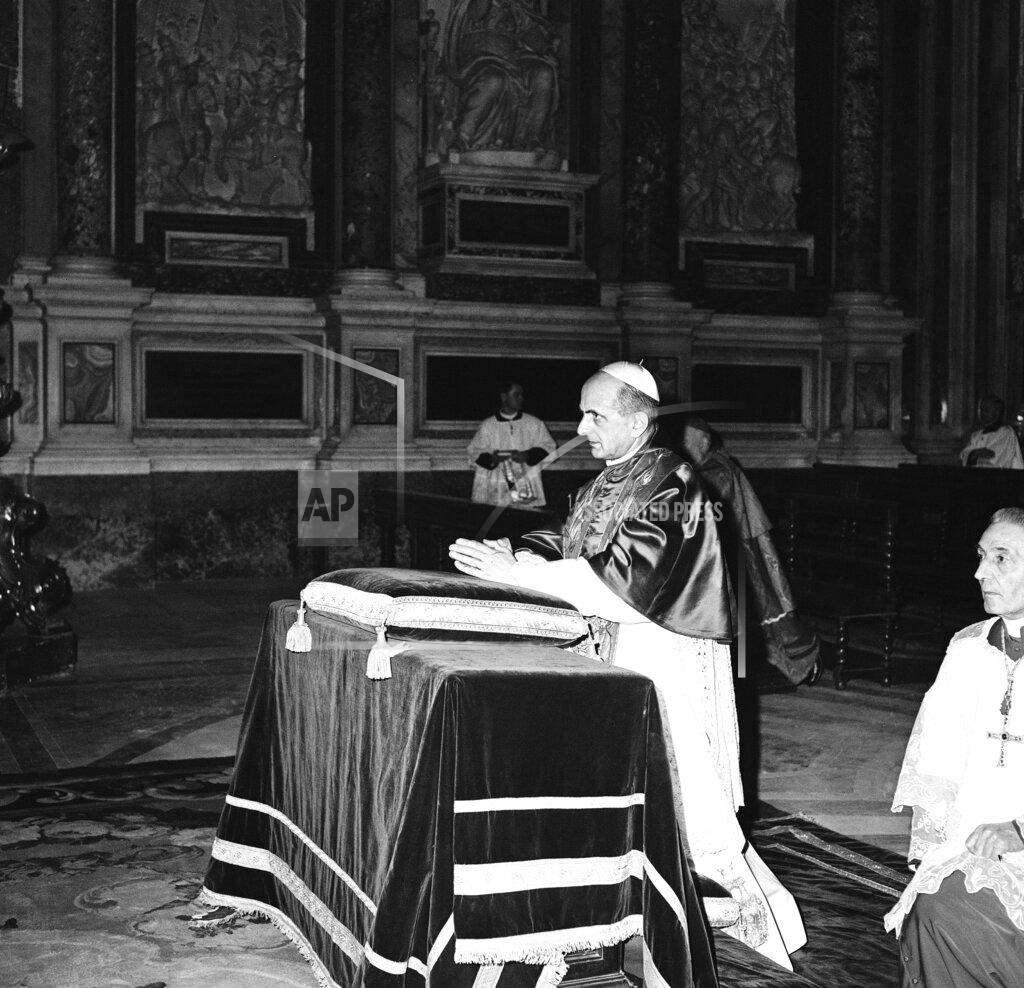
Pope Paul VI signs 3rd sitting of 2nd Vatican council. Pope Paul VI promulgate the doctrine, “Unitatis redintegratio,” that had been approved by the bishops of the ecumenical council the day before, as the third session of the council was brought to a close.
With only nine days left before the opening of the United Nations General Assembly, there is growing pessimism about the possibility of avoiding a climactic test of strength between the United States and the Soviet Union over unpaid Soviet assessments. Although Secretary of State Rusk and the Soviet Foreign Minister, Andrei A. Gromyko, have exchanged messages confirming the desire of both to avoid a showdown, each side has stuck to its position. Thus the organization is confronted with the most serious internal crisis since September, 1961, when it was feared for a time that the Soviet Union would block the election of a successor to the late Secretary General Dag Hammarskjold, thus paralyzing the organization.
Although the Soviet refusal to pay assessments for peacekeeping forces dates back to 1957, the gravity of the crisis was not fully realized until after the United States Presidential election. Until then it was the almost universal belief that President Johnson, with the election out of the way, would agree to some sort of compromise enabling the Assembly to avoid a decision on the enforcement of Article 19 of the Charter, which denies a vote in the Assembly to members more than two years in arrears. Last week the United States took drastic action to show that it means business, withholding any pledge to the United Nations aid programs for underdeveloped countries until the Article 19 issue is resolved.
The Campaign for Nuclear Disarmament, hesitant to risk embarrassing Britain’s new Labor Government, put off today until next year a decision about its course. At the St. Paneras town hall, George Clark, a member of the organization’s National Council, faced 150 assembled delegates and said, “We face a crisis.” The majority of the National Council favors continuing activities, but more closely and formally allied to the Labor party. The minority want the organization to form the nucleus of a new political movement as an alternative to the Labor party, which it feels is not so willing as some people thought to give up the country’s nuclear arsenal.
Two young Congolese men and an old woman lay bound and bleeding on the deck of the ancient pontoon ferry as it nudged up to the west bank of the Lulualaba River at Kindu. First Lieutenant Patrick Kirton, a 34‐year‐old South African, watched the ferry dock from the terrace of the mercenaries’ headquarters. The mercenaries are spearheading Premier Moise Tshombe’s war against the Congolese rebels. “When you see things like that you wonder whose side you’re on,” Lieutenant Kirton said.
The ferry was packed with Congolese Army soldiers who danced around the prostrate captives, kicking them and clubing them with rifle butts. When the ferry dropped its ramp, the three prisoners were picked up like potato sacks and heaved onto the ground. More soldiers rushed up and continued the beating. “You know,” said Lieutenant Kirton, “one of these days I am going to kill one of those blokes. They’re not soldiers, they’re savages.”
A Congolese lieutenant stood passively nearby, gazing at the scene. Why were the three being beaten? “They’re under arrest,” said the lieutenant. What had they done? “Those two,” he said, pointing to the youngsters, “belonged to the M.N.C.L.” — the Patrice Lumumba wing of the National Congolese Movement. Mr. Lumumba, the Congo’s first Premier, was murdered Feb. 12, 1961. To the lieutenant the statement that the youngsters belonged to the M.N.C.L. seemed to require no amplification. After all, it was the party of the rebels’ Congolese People’s Republic in Stanleyville. Had not the rebels killed all opposition party members? Had not at least 800 Congolese here in Kindu been executed at the foot of the Lumumba monument, many of them burned alive?
And the woman? “She was found with a radio in her bedroom. They say her oldest son is a captain in the rebel army.” One of the Congolese soldiers displayed a cheap pocket transistor radio as “evidence.” The soldiers, it seemed, believed that the woman, in addition to listening to the radio, could “communicate” with her son. So she was accused of spying.
Suddenly a Belgian mercenary appeared and shouldered his way through the crowd. He could barely control his rage as he bellowed at the soldiers to step back. Then he untied the prisoners’ feet, helped them stand and personally escorted them away — not to the jail, where the beatings would almost certainly have continued until they died, but to the Belgian mercenaries’ headquarters. There they would be given some sort of medical attention, would probably be interrogated and most likely set free. “That’s the trouble with this war,” said Lieutenant Kirton. “We liberate a town like Kindu for the Congolese and then the Congolese Army comes in and makes enemies out of everyone. So what good are we doing? We win this war. And there will be another war next year.”
The rebel‐controlled Stanleyville radio announced today that 600 Belgian and 60 American hostages had been taken from that city to an “unknown destination.” United States Embassy sources here confirmed that they had received a monitored report of the rebel announcement that all American and Belgian “prisoners of war” had been removed. Congolese troops yesterday took the town of Punia in an offensive aimed at capturing Stanleyville. The announcement made no reference to whites other than Americans or Belgians who might be in rebel hands. But it was believed that the rebels might have classed other nationalities as Belgians. The broadcast brought increased concern over the fate of white hostages. The United States has warned the rebel regime of Christophe Gbenye that it would be held responsible for the hostages’ lives. Belgian paratroopers flown to Ascension Island in the Atlantic aboard United States Air Force planes, stood ready to go to the aid of the white captives in the Stanleyville area “if the need arises.”
Fresh reports from southern Sudan indicate that the tempo of a spreading rebellion there has increased in the last year despite the former military regime’s ruthless efforts to stamp it out. It is an insurrection being fought on behalf of southern independence from the North with much the same hit‐and‐run guerrilla tactics as those in Vietnam and the Congo, and with a bitterness and brutality reminiscent of the Mau Mau rebellion in Kenya. It has pitted Black against Arab, reviving the deep racial hatreds of the Arab slave trade among the Black peoples of the southern Sudan a century ago. It is a rebellion of a predominantly Black South to throw off the age‐old domination of northern Arabs. So far at least, the fighting is on a much smaller scale than that in Vietnam or the Congo and without a clash of the cold war powers. However, some Western diplomats are fearful that the Chinese Communists, already at work across the southern border in the Congo, may find the Sudan rebellion inviting.
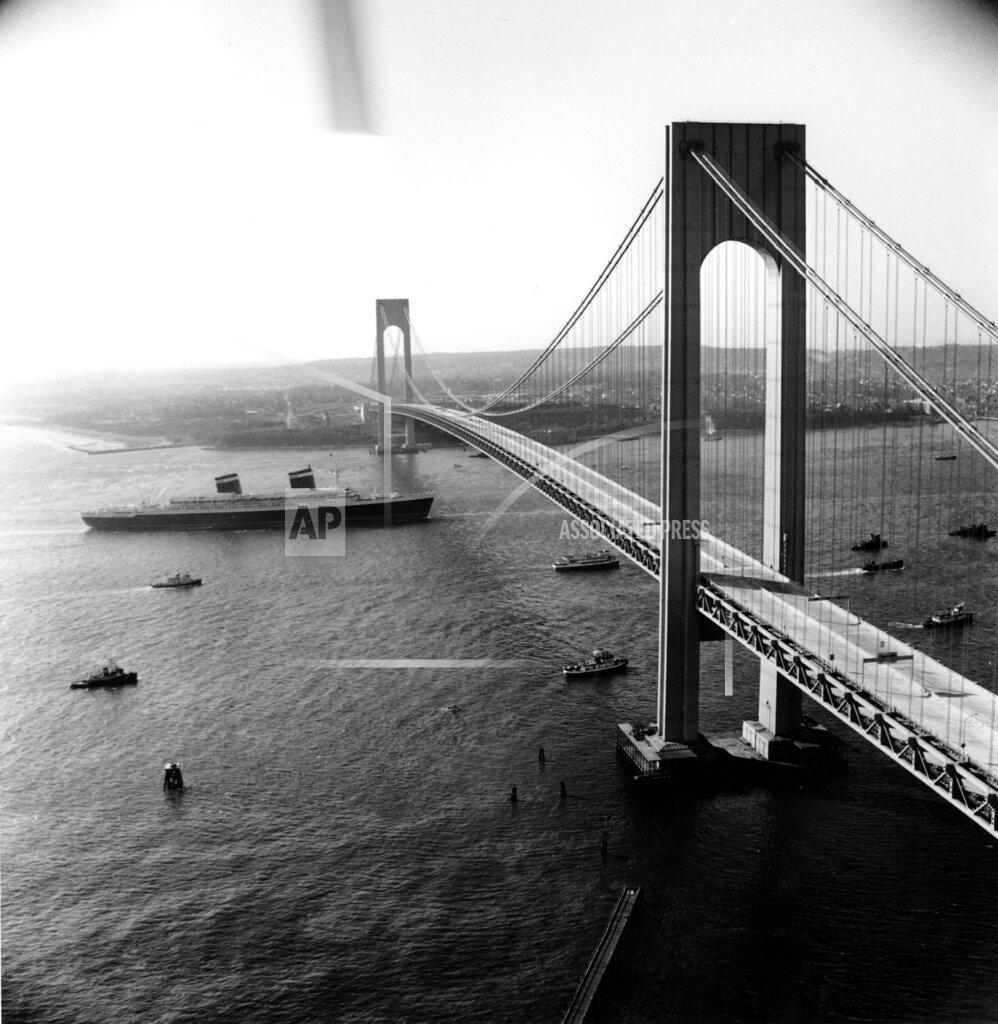
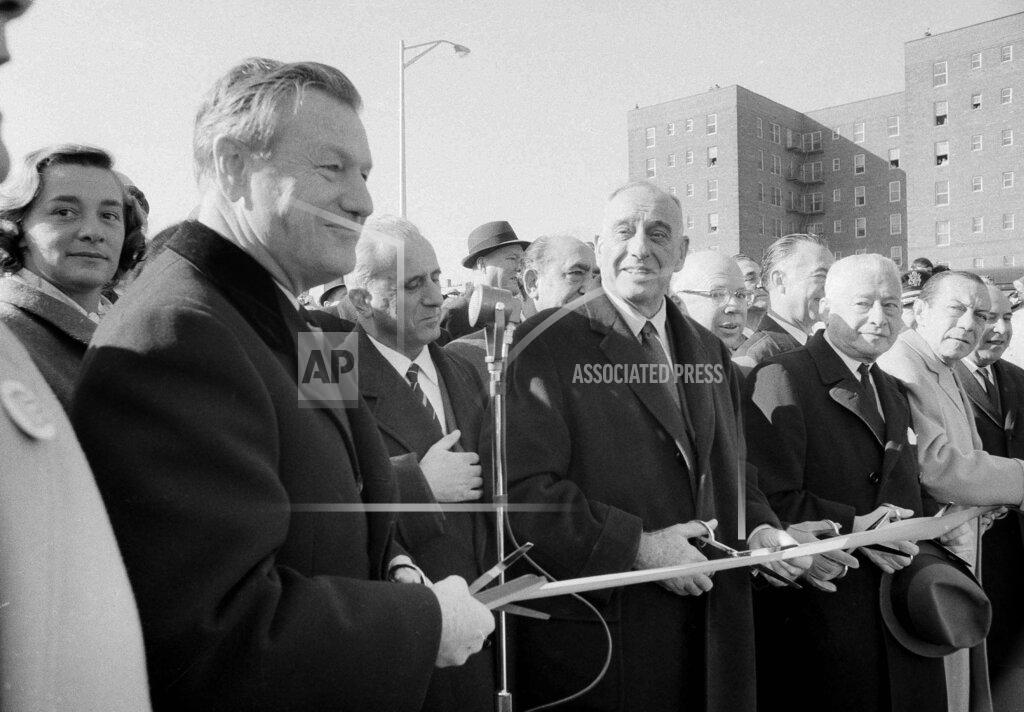
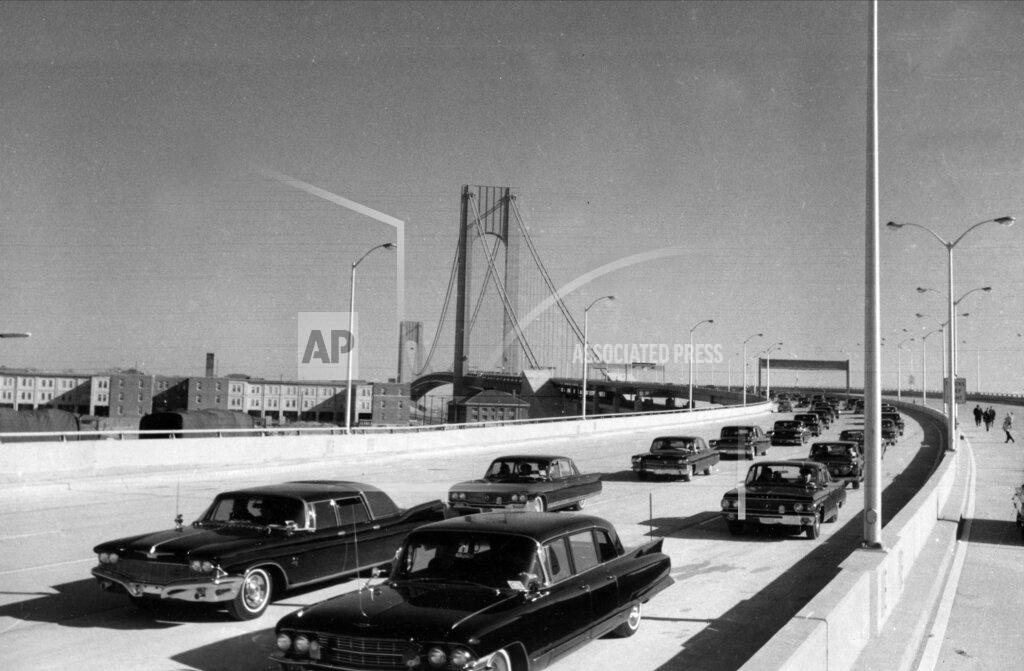
The Verrazano Narrows Bridge, at 13,700 feet (4,200 m) still the world’s longest suspension bridge, opened to traffic in New York City. Crossing over “The Narrows” between the Upper and Lower sections of the New York Bay, the bridge linked Staten Island and Brooklyn for the first time, with access at Fort Wadsworth on Staten Island and Fort Hamilton in Brooklyn. Previously, direct access between the two boroughs was on the 69th Street Ferry. On the first 24 hours of its operation, 100,000 cars crossed the bridge. The bridge itself is named for Italian explorer Giovanni da Verrazzano; the name of the bridge uses one “z” while Verrazzano, credited as the first European to (in 1524) sail into the New York Harbor, spelled his name with two.
“Something More!” closes at Eugene O’Neill Theater NYC after 15 performances.
“Zizi” opens at Broadway Theater NYC for 49 performances.
Born:
Thomas Everett, NFL safety (NFL Champions, Super Bowl XXVII, XXVIII-Cowboys, 1992, 1993; Pro Bowl, 1993; Pittsburgh Steelers, Dallas Cowboys, Tampa Bay Buccaneers), in Daingerfield, Texas.
Mike Junkin, NFL linebacker (Cleveland Browns, Kansas City Chiefs), in North Little Rock, Arkansas.
Olden Polynice, Haitian-American NBA center (Seattle SuperSonics, Los Angeles Clippers, Detroit Pistons, Sacramento Kings, Utah Jazz), in Port-au-Prince, Haiti.
Shane Douglas [as Troy Allan Martin], American professional wrestler, in New Brighton, Pennsylvania.
Liza Tarbuck, British actress (“Watching”), comedienne, and TVe and radio presenter, in Liverpool, England, United Kingdom.
Marjorie Judith Vincent, Miss America (1991), in Oak Park, Illinois.

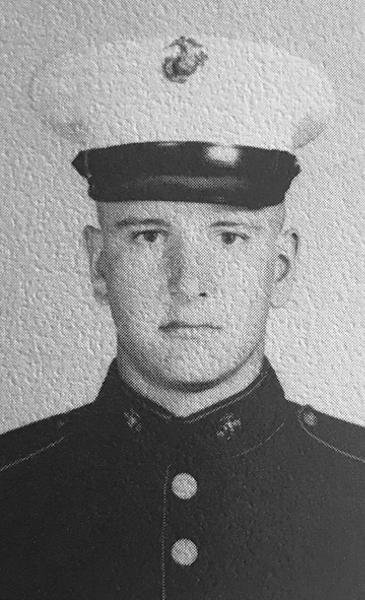
On November 21st, a UH-34D Choctaw (#150234) was lost at sea in an operational accident off Qui Nhon. Two crewmen, crew chief CPL Richard D. Slack Jr. and passenger LCPL David Nipper, died in the crash. The UH-34D ditched at sea shortly after takeoff from the Princeton with a 2000 lb. load of relief supplies. After issuing a Mayday call, the helicopter turned back towards the Princeton and began autorotating with crew members frantically tossing bags of rice out the cabin door to lighten the ship. With control of the crippled aircraft passed to him by the aircraft commander, the more experienced co-pilot attempted to let the Choctaw roll gently on its side after touching down in the sea; however, when the blades hit the water, it violently flipped over on its other side. Marines risked their lives and jumped from rescue helicopters into wind-tossed seas to recover Slack. He was brought back aboard the Princeton unconscious to a waiting medical team on the flight deck. They were unable to revive him. The pilots were rescued uninjured; however, Nipper’s remains were not recovered. David has a military stone in his honor at Chatterton Grove Cemetery, Coffee Co, Georgia. (vvmf.org Wall of Faces web site)

 History Diaries