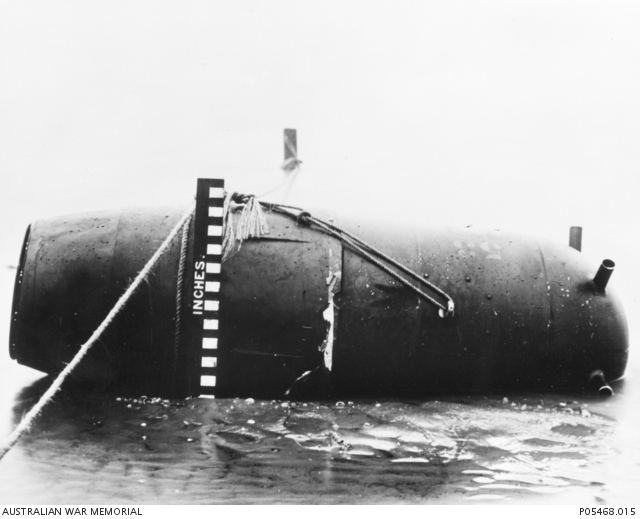
This photo is one of a couple of historic photos that exist of the very first magnetic mine that was defused on the mudflats near Shoeburyness, Essex by Lt Cdr John Ouvry and his team from HMS Vernon Portsmouth. The mine was dropped by parachute from a German seaplane on the evening of 23rd November 1939. This photograph is of the mine before it was defused (it was disarmed on the low tide the next day). The magnetic fuse was recovered intact and forwarded to the physicist Albert B Wood, who, with two assistants (W F B Shaw and H W Kelly), dismantled the fuze at Portsmouth the following day and discovered its internal induction magnetometer which commenced a train of events which within five or six weeks led to the first flight of the minesweeping Vickers Wellington DWI Mk1. Lt Cdr Ouvry and his assistants were awarded DSOs and DSMs for their brave defusing. The first crew of the Wellington were successful in destroying a magnetic mine on their very first sortie on the 8th January 1940 (aircraft was P2518 piloted by test pilot “Bruin” Purvis, navigator Lt Cdr “Ben” Bolt with Sq Ldr John Chaplin operating the gear in the fuselage) this aircrew were also decorated for their efforts. Shortly after this the anti-magnetic minesweeping method (using two vessels) developed by Charles Goodeve came into being — again based off the information gleaned from the fuze successfully recovered by Ouvry.
Hitler issued Directive No. 8, Further Preparations for Attack in the West. It does not specify an attack date anytime soon. It details the occupation of Holland and Belgium. Otherwise, the Front is quiet.
The Supreme Commander Of The Armed Forces.
Berlin. 20th November, 1939. 8 copies
Directive No. 8 For The Conduct Of The War
- For the time being, a high state of preparedness must be maintained in order to deliver, at a moment’s notice, the offensive which is being mounted. Only thus will it be possible to take immediate advantage of favourable weather. The Armed Forces will make their preparations in such a way that the offensive can still be delayed even if orders for this delay reach Commands as late as A-Day-1, 2300 hours. At this hour at the latest Commands will receive the codeword, which will be either:
Danzig (proceed with offensive) or
Augsburg (delay offensive).
Commander In Chief Army and Commander In Chief Air Force are requested, immediately after the date of the offensive has been decided, to report to the High Command of the Armed Forces, Operations Staff (Defence Department), the time which they have agreed for the beginning of the attack.
- Contrary to earlier Directives, all measures planned against Holland may be taken without special orders when the general offensive opens. The attitude of the Dutch forces cannot be foreseen. Where no resistance is offered, the invasion will assume the character of a peaceful occupation.
- Land operations will be conducted in accordance with the Operation Order of 29th October. That Order is supplemented as follows: (a) All precautions will be taken to enable the main weight of attacks to be switched from Army Group B to Army Group A should the disposition of enemy forces at any time suggest that Army Group A could achieve greater success. (b) Holland, including the West Frisian Islands, but (for the time being) excluding Texel), will be occupied in the first instance up to the Grebbe-Meuse line.
- The Navy will undertake the blockade of Belgian ports and sea lanes and, contrary to former Directives, those of Holland also. For submarines this action is authorised on the night preceding the offensive; for surface craft and aircraft from the moment of attack by the Army. The interval between the initiation of blockading operations and the time of the attack by land must, however, be kept as brief as possible even where submarines are concerned. Operations against the Dutch Navy will be undertaken only if the latter displays a hostile attitude. The Navy will assume responsibility for the defence by coastal artillery of occupied areas of the coast against attack from the sea. Preparations for this will be made.
- The tasks of the Air Force are unchanged. They have been amplified by the Special Orders given verbally by The Leader for airborne landings and the support of the Army in capturing the bridges west of Maastricht. 7th Airborne Division will be used for parachute landings only after the bridges across the Albert Canal are in our hands. When this occurs, immediate communication between Commander In Chief Army and Commander In Chief Air Force must be ensured. Neither in Holland nor in Belgium-Luxembourg are centres of population, and in particular large open cities and industrial installations, to be attacked without compelling military necessity.
- Frontier Control (a) Until the opening of the attack, traffic and communication across the Dutch, Belgian, and Luxembourg frontiers will be maintained at a normal level in order to ensure surprise. Civil authorities will make no preparations to close these frontiers until the beginning of the attack. (b) Upon the opening of the attack the frontiers with Holland, Belgium, and Luxembourg will be closed to all traffic and communications of a nonmilitary character. Command In Chief Army will issue the relative orders to the military and civil authorities concerned. At the beginning of the attack the High Command Of The Armed Forces will inform the highest Government authorities that Commander In Chief Army is issuing direct orders for the closing of the frontiers and that these will include the Dutch frontier outside the theatre of operations. (c) On the other frontiers between the Reich and neutral States, no restrictions on frontier traffic or communications will be applied on the opening of the offensive. Further measures for the control of the passage of persons and communications have already been prepared and will be enforced as necessary. pp. Chief Of The High Command Of The Armed Forces.
All Jewish assets held in Polish banks in the General Government were blocked.
Heinrich Himmler is reportedly on his way to Prague. Hitler is said to demand that order be restored. Chancellor Hitler was reported unofficially tonight to have sent Heinrich Himmler, chief of the SS, and high-ranking Storm Troop leaders to Prague to take charge of the “restoration of order” in the former Czech capital.
SS troops are reportedly in control of Prague. The local Prague authorities have called in the Waffen SS, the militarized formations of the Party’s Schutzstaffel (SS, “Protective Squadron”). While some proto-Waffen SS formations participated in the Battle of Poland, they did not play a major role in the fighting. However, since then, the piecemeal SS regiments used there (Deutschland, Germania, and Der Führer regiments) have been combined into one unit, the SS-Verfügungs-Division. It gets useful practical experience suppressing the unarmed students and teachers in Prague and the SS quickly gains control of the city.
In Zurich, Switzerland, Fritz Thyssen, industrialist who helped the Nazi party achieve power in Germany, said today that “threatened consequences” of his opposition to the Reich Government’s present policies “forced me to leave Germany.”
Reports circulating abroad that relations between the Hohenzollern dynasty and the National Socialist regime have reached an open rupture were summarily disposed of by Prince August Wilhelm, fourth son of the former Kaiser, in a personal statement to foreign journalists at today’s official press conference.
A German airplane is shot down by Dutch aircraft. There are numerous Luftwaffe reconnaissance flights, both over France (Rhone Valley, Normandy) and Great Britain (Kent, Essex, Thames estuary, the Orkneys). The Luftwaffe loses one Heinkel He 111 over England and another over Holland, shot down by Dutch fighters. It is the first Dutch kill of the war. The Luftwaffe makes an abortive raid on a British destroyer in the southern part of the North Sea.
Colin Gubbins heads to Paris to be the UK’s military liaison with the Polish Government-in-Exile.
At the end of a two-day visit to France, War Secretary Leslie Hore-Belisha of Britain conferred for a considerable time today with Premier Édouard Daladier and French Army and Navy chiefs.
A definite statement as to the date when the rationing of bacon and butter will be introduced in Great Britain will be made as soon as possible after next Thursday when it is hoped that the registration of all the people on these islands for rationing will be finished.
Finns seek funds to keep up defenses. The United States is said to favor credit. While the Finnish press for the last few days has scarcely referred to the possibilities of resuming Finnish-Soviet negotiations, much attention is being paid to various measures contemplated to strengthen the country’s financial position if it becomes necessary to maintain a state of efficient military preparedness over a long period.
There is a planning conference in Moscow for the anticipated campaign against Finland.
The Kriegsmarine Supreme Command (“Søværnskommandoen”) gives the orders to place mine fields in the Storebælt, between Langeland and Lolland, and in Lille Bælt between Als and Ærø.
The London agents of the Royal Netherlands Steamship Co. report that the number of fatalities in the mined Simon Bolivar was 83.
Britain had its first submarine success of the war when HMS Sturgeon sank the German vorpostenboot (patrol vessel) V-209 Gauleiter Telschow in the Heligoland Bight (54°32′N 5°10′E). All 24 hands lost.
The first magnetic mines are parachuted into the Thames Estuary by the Luftwaffe. German He 115 seaplanes drop more magnetic mines in the English Channel shipping lanes and near the Thames estuary. The minesweeper HMS Mastiff is blown up by a magnetic mine while attempting to recover it into a fishing net.
The Dog-class naval trawler HMS Mastif (Royal Navy)was sunk in the North Sea 1 nautical mile (1.9 km) off the Tongue Lightship (United Kingdom) by the detonation of a German magnetic mine the crew was trying to bring on board, with the loss of six crew. Survivors were rescued by HMT Cape Spartel and the Margate lifeboat.
Kriegsmarine destroyers Z-21 Wilhelm Heidkamp, Z-19, and Z-11 Bernd von Arnim deposit more magnetic mines off the Thames estuary during the (preceding) night. The mines are moored but have a tendency to break free and drift.
U-18 and U-57 both attacked a British destroyer in the North Sea, but without success.
U-33 (Kapitänleutnant Hans-Wilhelm von Dresky) happens upon a group of small fishing trawlers near Tory Island, north of Ireland. Fortunately for the crews, the area is a popular fishing spot and other trawlers later happen along to pick most of them up some hours later.
The 276-ton British fishing steam trawler Thomas Hankins was sunk by gunfire by the U-33 near Tory Island. Of the ship’s complement, all 12 survived and and were picked up by another trawler.
The 250-ton British fishing steam trawler Delphine was sunk by gunfire by the U-33, commanded by Kapitänleutnant Hans-Wilhelm von Dresky, near Tory Island, north of Ireland in the northern Atlantic Ocean. Of the ship’s complement, all 13 survived and reached land by lifeboat.
The 329-ton British fishing steam trawler Sea Sweeper was sunk by gunfire by the U-33 near Tory Island. Of the ship’s complement, all 12 survived and and were picked up by the British steam trawler Lois.
The German cargo ship Bertha Fisser was intercepted in the Atlantic Ocean south east of Iceland (64°10′N 15°14′W) by HMS Chitral (Royal Navy) and was scuttled by her crew. HMS Chitral then rescued them.
Swedish torpedo boat Munin intervenes in an inspection of a neutral vessel by Kriegsmarine minesweeper Hansestadt.
German liner Windhuk leaves Lobito, Portuguese East Africa, armed as a raider.
U.S. freighter Excambion is detained at Gibraltar by British authorities.
Convoy OZ.38 departs from Southend and Convoy OB.38 from Liverpool.
The War at Sea, Monday, 20 November 1939 (naval-history.net)
Light cruiser GLASGOW and destroyers ZULU and MAORI departed Rosyth in an attempt to intercept German liner BREMEN as she slipped down the Norwegian coast to Germany. ZULU, experiencing mechanical problems at the start, was delayed seven hours and joined the force at sea.
Light cruiser BELFAST with destroyers GURKHA and AFRIDI departed Rosyth for gunnery exercises, and arrived back later that day.
Convoy SA.18 of two steamers departed Southampton, escorted by destroyer WINDSOR, and arrived at Brest on the 21st.
German merchant ship BERTHA FISSER (4110grt) was intercepted by armed merchant cruiser CHITRAL, SE of Iceland in 64 10N, 15 14W. She had departed Pernambuco on 24 October, in mid-Atlantic in 42N, 35W was intercepted and challenged by a British warship, but her disguise as Norwegian steamer ADA was successful and she was allowed to continue. This time, she scuttled herself and her 32-man crew was picked up by CHITRAL.
Destroyer BEDOUIN departed Rosyth for Scapa Flow.
Destroyer KASHMIR departed Scapa Flow to intercept a reported suspicious merchant ship near the Faroes.
Destroyer KANDAHAR departed Scapa Flow to patrol off Shapinsay.
U-18 attacked destroyer INGLEFIELD off Rattray Head without success at 0010.
Destroyers IMOGEN, IMPERIAL and IMPULSIVE departed Rosyth and searched for U-boats in the Rattray Head area.
Destroyer EXMOUTH, ECHO and MONTROSE were hunting in the area of 46-20N, 6-00W for a reported damaged U-boat.
Steamer BENGUELA (534grt) reported sighting a submarine in 46-17N, 6-03W.
Anti-submarine trawler MAN O WAR (517grt) reported a U-boat and attacked it in 51 55N, 1 46E. Destroyers GRIFFIN and GIPSY joined her in the search.
Destroyer BOADICEA, carrying out a submarine sweep with destroyer KEITH in the North Sea, was near missed in a German bombing attack, but escaped damage.
Destroyers EXMOUTH, ECHO and MONTROSE were ordered to search for a reported submarine in 40N, 6W.
Minesweeper HUSSAR, sweeping near Humber Light Vessel, exploded a mine in her sweep, and sustained some damage.
German aircraft laid parachute mines in the Thames Estuary.
Submarine STURGEON (Lt G D A Gregory) fired four torpedoes at 1555 at two German anti-submarine trawlers in 54-32N, 5-10E. One of them sank Vp.209 (trawler GAULEITER TELSHOW, 428grt) northwest of Helgoland in the Heligoland Bight, the first sinking of an enemy vessel by a British submarine in World War 2.
Convoy OA.38 of 14 ships was escorted on the 20th by destroyers WREN and WITCH, and dispersed on the 23rd.
Convoy OB.39 departed Liverpool escorted by destroyers VERSATILE and WITHERINGTON until the 23rd, when they detached to join convoy SL.8.
Convoy FS.40 departed the Tyne escorted by escort ships VALOROUS and BITTERN. Included with the convoy were tanker ATHELKING and submarine STERLET, which was detached in the Tyne for refit, arriving on the 21st.
Minelayer PLOVER laid mines in North Inchkeith Channel on the 20th, and on 14 and 16 December, laid more mines in South Inchkeith Channel. Netlayer BAYONET was lost in one of the South Inchkeith Channel fields.
French auxiliary minesweeper SAINTE CLARE (57grt) was sunk on a mine laid by U-16, 10 miles SE of Folkestone on 22 October; eleven crewmen were lost.
Sloops PELICAN and HASTINGS with convoy FN.40 attacked U-19 off Cromer Light. Destroyers KEITH and BOADICEA joined them, but U-19, which had laid mines in the Inner Dowsing area on the 17th, escaped.
U-BOAT OPERATIONS
U-31, U-33, U-35, U-47, U-48 were deployed around the Orkneys to support German Fleet operations.
U-31 departed Wilhelmshaven on the 18th and returned on 11 December.
U-33 was returning from a minelaying operation off North Foreland on the 5th, and got back on the 29th.
U-35 departed Wilhelmshaven on the 18th and was lost on the 29th.
U-47 departed Wilhelmshaven on the 16th and arrived back on the 29th.
U-48 departed Wilhelmshaven on the 22nd and arrived back on 20 December.
On the 20th, U-33 sank trawlers SEA SWEEPER (329grt) 25 miles NNW of Tory Island, DELPHINE (250grt) 20 miles N by E of Tory Island, and THOMAS HANKINS (276grt) 14 miles NWof Tory Island. The crews of all three trawlers were picked up – SEA SWEEPER’s by trawler LOIS (286grt) at 0300/21st.
The next day, submarine U-33 sank trawlers SCULBY (287grt) and WILLIAM HUMPHRIES (276grt) 73 miles NW of Rathlin Island. Five crewmen were lost from SCULBY, and the seven survivors landed at Tobermory.
French convoy KS.27, en route from Oran and Casablanca to Brest and St Nazaire, and escorted by French destroyers SIROCCO, FRONDEUR and sloop CHEVREUIL, was attacked by U41, U-43 and U-49 off St Nazaire. ThE convoy had been sighted by U-53 on the 15th, but air support and the destroyers were able to hold off the submarines leading to the CO of U-53 being relieved of command after this patrol for not pressing home the attack. U-49 attempted an attack on the afternoon of the 16th November, but without success. French large destroyer CHEVALIER PAUL was sent out to reinforce the escort. None of the U-boats were able to do any damage to KS.27, but U-41 and U-43 were each able to sink four independents or stragglers while en route to the convoy. SIROCCO attacked U-49 on the 20th, and damaged her bow tubes in the depth charge attack. French destroyers INDOMPTABLE, MALIN and TRIOMPHANT were also searching the area.
Light cruiser DANAE departed Colombo for Singapore, arriving on the 26th.
Light cruiser CARADOC arrived at Esquimalt for refitting completed on 15 April 1940.
Australian light cruiser HMAS PERTH departed Kingston for Colon.
Australian heavy cruisers HMAS CANBERRA and HMAS AUSTRALIA arrived at Melbourne after patrol.
Declaring that the way collections of Federal taxes have been coming in “gladdens our hearts,” Senator Harrison, chairman of the Finance Committee, said today, after luncheon with President Roosevelt, that “we may be able to get along without a tax bill” at the next session of Congress. Meanwhile Secretary Morgenthau stated that the Treasury had “no tax program” and would make no “formal” recommendations to Congress.
Senator Harrison discussed the outlook for tax receipts and Federal expenditures with the President at the luncheon. Leaving the White House, the Mississippi Senator told reporters that “whether there will be tax revision or not has not been decided and will not be decided for some time.” “There will have to be several conferences as to policy regarding revision of taxes before a decision is reached,” he continued. “Government receipts are coming in fine. If the receipts continue to come in as they are now, and we can keep down some government expenses, it may be that we can get along without a tax bill.”
Mr. Harrison’s luncheon engagement, which came within a few hours after the President returned from Hyde Park and preceded by only a day his departure for Warm Springs, constituted a harbinger of the next Congressional session. It was one of the regular NovemberDecember preliminaries out of which come the conclusions the President writes into his message to Congress on the state of the Union and the budget. In response to a question, Senator Harrison confirmed reports that increased expenditures would be requested by the Administration for national defense, but he added that “other expenses probably will be cut down.” He declined, however, to discuss the cuts further. Senator Harrison made no comment on the speculation surrounding possible broadening of the base of income tax assessments, which invariably becomes a matter of legislative speculation on the eve of new Congressional sessions.
A further economic hint was dropped by Senator King, who called on the President briefly and who said after his visit that “the President evinced great interest in a policy that would prevent large deficits.” Senator King, in his talk with reporters, coupled a strong recommendation for economy with a description of how he had urged on Mr. Roosevelt, the provision of “very liberal estimates in the budget” for reclamation work to be paid for by the Federal Treasury in sections of the West, including his home State of Utah.
Secretary Morgenthau said at a press conference shortly after he returned from a week’s vacation in Arizona that the Treasury “has never had a tax program” in the six years of his service and had never made specific tax recommendations to Congress. The Treasury, he said, functioned only at a “fact-finding” agency on tax matters for Congress. When informed the President sometimes spoke of desirable tax legislation, the Secretary replied, “that’s his privilege. I’m just his hired man.”
If the private banking system will not advance to small businesses the reasonable loans which they require, the Reconstruction Finance Corporation stands ready to provide such credit, Emil Schram, chairman of the RFC, declared tonight in a radio address.
Mrs. Franklin D. Roosevelt, at her press conference today, laughed heartily when questioned about the President’s recent “weather jokes” regarding a third term. Asked whether she had been doing much thinking about the weather for January 20, 1941, the first lady said she hoped the weather would be good. That is the day Mr. Roosevelt’s second term will end. Denying a report that she had told an audience she hoped the President would not run for a third term, Mrs. Roosevelt said she was sure she had given her usual answer: That that was a question which would have to be asked of the President and she had never asked him.
First Lady Eleanor Roosevelt recommends a post for former president Herbert Hoover, suggesting he head a refugee agency.
Congressman Martin Dies widens his committee’s inquiry into Reds and Nazis. The full committee is called when the chairman sees evidence of a subversive plot. A session in Detroit of the full committee to investigate un-American activities is warranted by the extent of subversive activities in Detroit by foreign agents, Chairman Martin Dies said here today.
Michigan Governor Dickinson issued a statement today indicating that if employes of the Chrysler Corporation wished to return to work and if the corporation desired to operate the State would give both of them its full protection.
An impartial inquest upon the textbooks of Dr. Harold Rugg, Professor of Education at Teachers College, Columbia University, was held tonight by the Parent-Teacher Association at Cleveland School in Englewood, New Jersey with Dr. Rugg himself as chief of the defense of the books against charges that they are “un-American.”
American Jewish women must band together as the guardians of Jewish children who have been left without homes by war and racial persecution, speakers declared yesterday at the first annual meeting of the National Youth Aliyah (Immigration) Committee of Hadassah, the Women’s Zionist Organization of America.
The U.S. Navy Chief of Naval Operations ordered the Commandant of the U.S. Marine Corps Fourteenth Naval District to plan a Marine garrison at Midway.
The U.S. Navy established its own School of Aviation Medicine at Pensacola, Fla., having previously detailed officers to the Air Corps School of Aviation Medicine.
DC Comics published Flash Comics #1 (with a cover date of January), featuring the first appearances of the superheroes Flash and Hawkman.
Driving past a Tennessee team which had a hard time protecting its winning streak against a long shot, Vanderbilt, Texas A. and M. this week was voted the No. 1 football power in the nation in the Associated Press weekly poll.
Delegates accredited to the American nations which are members of the International Labor Organization at Geneva were in Havana tonight preparatory to the opening of the Second Inter-American Labor Conference, scheduled for tomorrow, at which they will study labor problems peculiar to the Americas.
The India riot toll is now 23. The Hindu-Muslim feud spreads, and military rule is hinted.
The official statement in Moscow that a common ground has been reached in the effort to promote a Soviet-Japanese trade agreement, though no surprise, indicates more positive progress than does the simultaneous announcement of the establishment of a mixed commission to settle the Manchurian-Mongol border dispute. Actually, of course, no concrete trade negotiations have yet been opened. The Soviet Government is urging that these should be started in Moscow immediately. The Japanese are trying to arrange that all negotiations should be held in Tokyo.
Soviet-Japanese trade has been almost non-existent since the recognition of the Soviet Union by Japan. The Japanese Embassy here has no commercial attaché and has no commercial staff. It is on these grounds that Ambassador Shigenori Togo has asked Premier and Foreign Commissar Vyacheslav M. Molotov to let the projected negotiations take place in Japan. Molotov, however, urges the dispatch of a special commercial mission to Moscow. Although the initiative of the Russians is obvious, it is not denied. in Japanese circles that an agreement would be welcomed that would regularize the trading between the two countries. What is being explored is the possibility of a general agreement on the most favored nation basis.
It is specifically asserted in Japanese circles here that the negotiations will not affect the Sakhalin question. Regarding this dispute over concessions on that island, meetings are taking place almost daily in Moscow between the Japanese and Russians. The unusual prominence given in the Soviet press to these most recent developments is most interesting, since it shows the intense eagerness of the Soviet Government to reach a general political settlement with Japan.
Civil and military power was further concentrated in the hands of Generalissimo Chiang Kai-shek by the action of the Central Executive Committee of the Kuomintang [Nationalist party] today, naming General Chiang the president of the Executive Yuan, the chief executive organ of the civil government. General Chiang is now military Commander-in-Chief, director general of the ruling Kuomintang, chairman of the Supreme National Defense Council and as head of the Executive Yuan he becomes “Premier.” H. H. Kung, former president of the Yuan, was appointed vice president.
A number of other important government changes were decided upon. Yeh Chu-tsang, former Kuomintang director of publicity and on a previous occasion secretary-general of the party, was named to the latter post, again replacing Chu Chia-hua, former Ambassador to Germany, who becomes director of the Kuomintang board of organization. Dr. Wang Shih-chieh, former Minister of Education, was appointed publicity director for the Kuomintang.
Hollington K. Tong remains as deputy director in charge of international publicity. General Wu Techen, one-time Shanghai Mayor and Governor of Kwangtung, was named director of the Overseas Board of the Kuomintang, succeeding Chen Shu-jen. The meeting decided to include the presidents of the five yuans, that is, the departments of government, on a standing committee of the Central Executive Committee. Thereafter, the sixth plenary session, at which these government changes were agreed upon, closed today.
Reports from Chungking said today that a Japanese force landed on the South China coast, in Western Kwangtung Province, already numbered 10,000 and was being reinforced hourly, chiefly by cavalry.
The Japanese said today that a date for the proclamation of the new Central Government of Wang Ching-wei still had not been decided. They believed, however, that it would be launched before December 31, as the Japanese Parliament will begin its regular sessions early in the new year.
The newspaper Tairuku, organ of the Japanese Army here, said that Sotomatsu Kato, Japanese Ambassador at large to China, would call in British Ambassador Sir Archibald Clark Kerr today to open “important conversations.” A British Embassy spokesman, however, said that if the call were made it would be “purely social.” Mr. Kato also may call on United States Ambassador Nelson T. Johnson and the Italian envoy later in the week, it was said.
The United States Government insists upon the right of American merchants freely to use the British and French Concessions at Tientsin, China, for trade without interference from the Japanese, Sumner Welles, Acting Secretary of State, asserted today. He emphasized that the general American viewpoint on the rights of Americans in China had been made clear to Japan. This assertion, made only a few days after the British and French Governments announced the reducing of their garrisons at Tientsin and other points in China, and in the face of press reports that Japan and the Soviet Union had reached an understanding on the basis of a new commercial agreement, was regarded here as significant.
The State Department has denied emphatically that this government would protect the Franco-British concessions at Tientsin and at other points in China where this country has none, and even that the question was broached, but the insistence upon the right of American traders to use such concessions would have the practical effect of safeguarding them, according to opinions prevalent in diplomatic circles. With the British attitude toward the Open Door in China apparently weakening under the pressure of war in Europe, Mr. Welles indicated strongly that the United States still stood by such rights.
The Acting Secretary of State revealed that American consular officials at Tientsin had protested to Japanese authorities against “increasing” transit difficulties for American goods at the Japanese military barriers around the foreign concessions. Mr. Welles made his remarks in reply to a question at his press conference for which he was obviously prepared, since he read from written notes in making his reply. That the matter was handled in this form was taken to indicate that the Acting Secretary did not want to go to the length of issuing a formal statement or sending a note, perhaps because of current conversations in Tokyo on joint Japanese-American problems between United States Ambassador Joseph C. Grew and Japanese Foreign Office officials.
Dow Jones Industrial Average: 151.69 (+0.16)
Born:
Dick Smothers, American comedian and folk singer (“The Smothers Brothers Show”), on Governors Island, New York, New York.
Naval Construction:
The Kriegsmarine (German Navy) Type IID U-boat U-139 is laid down by Deutsche Werke AG, Kiel (werk 268).
The Royal Navy Hunt-class (Type II) escort destroyer HMS Liddesdale (L 100) is laid down by Vickers Armstrong (Newcastle-on-Tyne, U.K.); completed by Parsons.
The Nihon Kaigun (Imperial Japanese Navy) Kagerō-class destroyer HIJMS Hamakaze (浜風, “Beach Wind”) is laid down by the Uraga Dock Company (Uraga, Japan).
The U.S. Navy South Dakota-class battleship USS Indiana (BB-58) is laid down by the Newport News Shipbuilding and Dry Dock Co. (Newport News, Virginia, U.S.A.).
The Royal Navy armed merchant cruiser HMS Kanimbla (F 23) is commissioned into the Royal Navy (She will later serve in the Royal Australian Navy). Her first commander is Commander Frank E. Getting, RAN.
The Вое́нно-морско́й флот СССР (ВМФ) (Soviet Navy) “M” (Malyutka)-class (3rd group, Type XII) submarine M-95 is commissioned.
The U.S. Navy Benham-class destroyer USS Stack (DD-406) is commissioned. Her first commander is Lieutenant Commander Isaiah Olch, USN.
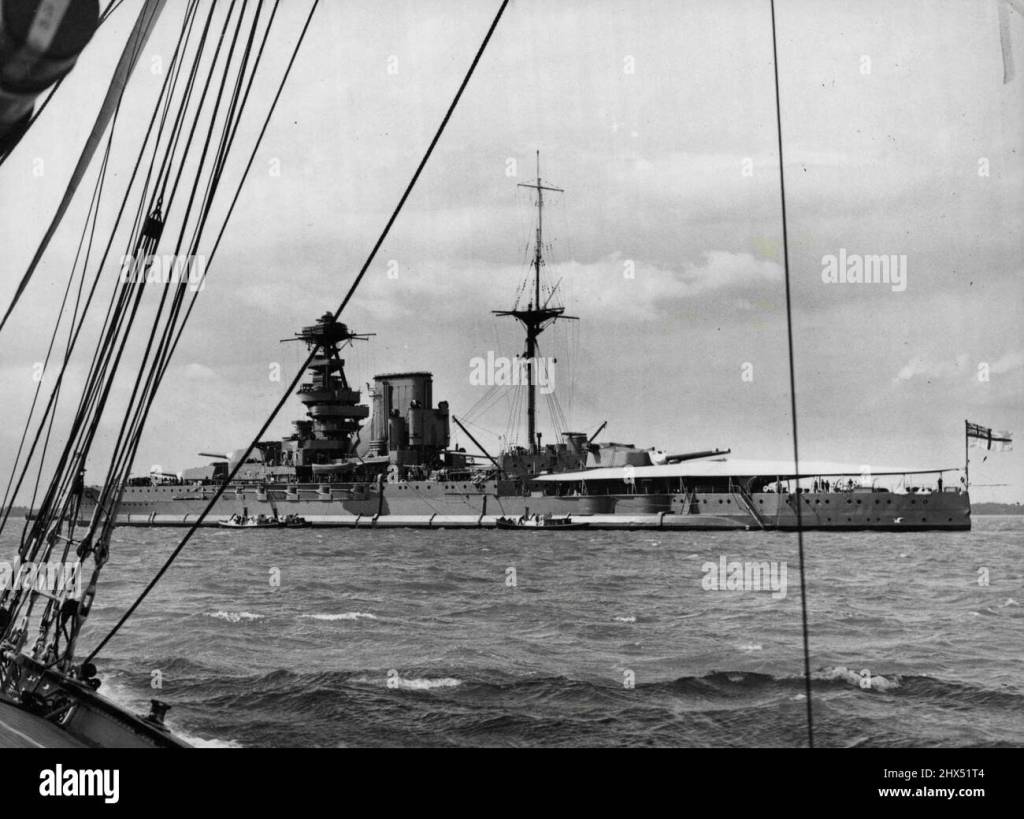
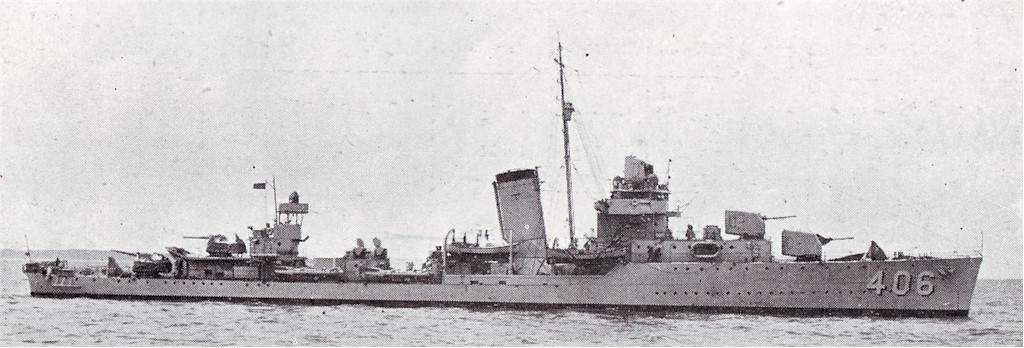
Following shakedown which lasted until 4 April 1940, including a cruise to the West Indies and Rio de Janeiro, Stack proceeded to the west coast and thence to Pearl Harbor where she operated with the Pacific Fleet until June 1941. She then returned to the east coast for an overhaul at the Philadelphia Navy Yard. Stack began patrolling off Bermuda late in November with the Neutrality Patrol. After the United States entered World War II, Stack continued to patrol in the Caribbean until 22 December when she was assigned to escort Wasp from Bermuda to Norfolk, Virginia.
She moved with Wasp to the Pacific in June 1942 and spent the rest of the war in that theater. She participated in the Guadalcanal landings, Vella Guf, Tarawa, Roi-Namur, Leyte, Luzon, and Okinawa, among other Pacific battles.
Stack received 12 battle stars for World War II service.
Damaged in the atomic bomb test at Bikini Atoll in July 1946. Decommissioned 28 August 1946. Sunk as target off Kwajalein 24 April 1948. Stricken 28 May 1948.
https://www.hazegray.org/danfs//destroy/dd406txt.htm
 History Diaries