An official German communique announced that barricades had been erected around the Warsaw Ghetto and that Jewish districts would be placed under strict control.
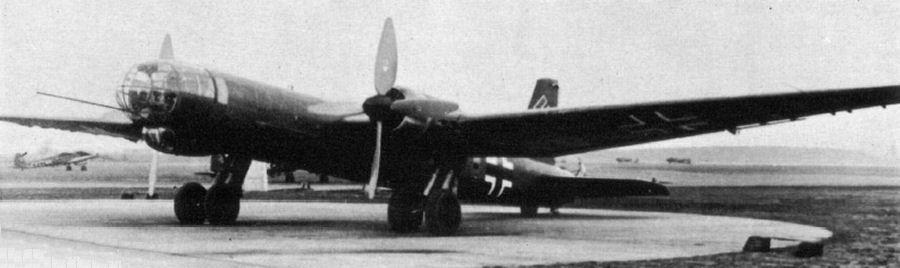
The first flight of the Heinkel He-177 heavy bomber is made. The flight must be cut short because of overheating engines. This is the only German heavy bomber to become operational during WWII, but the aircraft’s structural, handling and engine problems are never cured.
The Balkan strategy revives the Axis link. Fitful Rome-Berlin cooperation is hinted on common ground in press dispatches.
Czechs abandon protest strikes as Nazis threaten more executions. In Occupied Czechoslovakia, some 50,000 people are reportedly under arrest. Nazi authorities execute 3 more dissidents. Rumors are running wild about the actions taken against the students in Prague. Up to 120 Czech students and teachers are claimed to be killed, with another 50,000 people arrested. It is all just rumor and conjecture, there are no hard facts being reported by any media sources.
The Germans launch some scattered attacks on the French lines, throwing grenades.
The Dutch and Belgians protest at incursions of their airspace by the Luftwaffe. It was officially announced that a German Heinkel plane had fired at a Netherland patrol plane this afternoon above the Netherland coast 100 yards off Schiermonnikoog. The German plane sped away to the northeast.
Flights of Luftwaffe planes are spotted both in the southeast of Britain and near the Firth of Forth.
First Lord of the Admiralty, Winston Churchill, proposes mining the Rhine, between Strasbourg and the Lauter River, using mine-laying aircraft. He wishes to make the former mines time-activated so they will float downstream and then blow up in the busiest section of the Rhine.
The British steam merchant Bowling was torpedoed and sunk by the U-13, commanded by Heinz Scheringer, approximately 6 miles north-northeast of Longstone, Outer Farne Islands in the North Sea. All of the ship’s complement of 13 died. At 23.28 hours, U-13 hit the foreship of a vessel with one G7a torpedo about 6 miles north-northeast of Longstone, Outer Farne Islands. There was a massive explosion that broke the ship in two and caused her to sink within 40 seconds. The target was reported as darkened tanker of about 2,000 tons with a full cargo, this must have been the Bowling, which had her machinery aft. The 793-ton Bowling was carrying general cargo and was bound for Antwerp, Belgium.
The unescorted British steam merchant Darino was torpedoed and sunk by the U-41, commanded by Kapitänleutnant Gustav-Adolf Mugler, west of Cape Ortegal, Spain in the eastern Atlantic Ocean. At 17.06 hours on 18 Nov 1939, U-41 spotted the unescorted Darino (Master William James Ethelbert Colgan) west of Cape Ortegal and fired a torpedo on the surface at 19.02 hours, but missed. The U-boat dived after the attack, but accidentially went down to 123 metres before surfacing again and then chased the vessel for four hours. At 00.43 and 01.15 hours on 19 November, a second bow torpedo and a stern torpedo missed. At 01.50 hours, the ship was hit by the fourth torpedo and sank almost immediately. The master and 15 crew members were lost. Eleven crew members were picked up by the Germans, transferred to the Italian steam merchant Caterina Gerolimich the same day and landed at Dover. The 1,351-ton Darino was carrying general cargo, including port wine, sardines and tin ore and was bound for London, England.
The unescorted British steam merchant Pensilva was torpedoed and sunk by the U-49, commanded by Kapitänleutnant Kurt von Gossler, northwest of Cape Ortegal, Spain in the eastern Atlantic Ocean. At 12.19 hours the unescorted Pensilva (Master Alfred Montague Brockwell) was hit by one torpedo from U-49 northwest of Cape Ortegal and sank slowly by the stern. The ship had been sighted at 09.35 hours and missed with a bow torpedo at 11.15 hours and a stern torpedo at 11.24 hours. The master and the crew were picked up by HMS Echo (H 23) (Cdr S.H.K. Spurgeon, RAN), transferred to HMS Wanderer (D 74) (Cdr R.F. Morice, RN) and landed at Plymouth. The 4,258-ton Pensilva was carrying maize and was bound for Dunkirk, France.
The unescorted British steam merchant Stanbrook was torpedoed and sunk by the U-57, commanded by Kapitänleutnant Claus Korth, northwest of Tyne, England in the North Sea. At 02.13 hours on 19 November 1939 the unescorted Stanbrook (Master Archibald Dickson) was hit on the port side in the stern by one G7a torpedo from U-57, broke in two and sank quickly west-northwest of the North Hinder Lightship. The master and 19 crew members were lost. The torpedo had been a tube runner and hit despite of being launched manually due to the short distance to the target. The 1,383-ton Stanbrook was carrying ballast and was bound for Blyth, England.
The Swedish cargo ship B O Borjesson struck a mine and sank in the North Sea 4.5 nautical miles (8.3 km) off Spurn Head, Yorkshire (53°46′N 0°13′E) with the loss of six crew. Survivors were rescued by the trawlers Frascati and HMT Rose of England.
The British cargo ship Torchbearer struck a magnetic mine and sank in the North Sea 2 nautical miles (3.7 km) north-northeast of the Shipwash Lightship (United Kingdom) with the loss of four of her 12 crew. Survivors were rescued by HMS Greyhound.
The French cargo ship Rhuys struck a mine and sank in the North Sea 2.5 nautical miles (4.6 km) south of the Humber Lightship ( United Kingdom) with the loss of 16 of her 33 crew.
Kriegsmarine minesweeper M-132 is accidentally damaged by depth charges and, after being beached, is a total loss.
The Italian cargo ship Grazia struck a mine and sank in the North Sea 5 nautical miles (9.3 km) north of North Foreland, Kent with the loss of six of her 30 crew. Survivors were rescued by HMS Gipsy and HMS Griffin.
Convoy HG.9 leaves Port Said for Liverpool.
The War at Sea, Sunday, 19 November 1939 (naval-history.net)
Destroyers FURY and MASHONA departed Loch Ewe to hunt for a U-boat, and were joined by destroyers PUNJABI and ASHANTI which also departed Loch Ewe later.
On Northern Patrol were two cruisers between the Orkneys and the Faroes, three cruisers and three AMCs between the Faroes and Iceland, and one cruiser and one AMC in the Denmark Strait.
Destroyer BOADICEA departed Harwich to investigate a Belgian steamer in the North Sea reported to have “cylindrical objects” on her after deck.
Destroyer KEITH and one other destroyer from convoy HG.7A dropped depth charges on a submarine contact.
Convoy BC.14 of eleven steamers, including ADJUTANT, BATNA, BELLEROPHON (Commodore), BRIARWOOD, HARMATTAN, JADE, LOCHEE, OUSEL and PEMBROKE COAST departed the Loire, escorted by destroyer VESPER, and safely arrived in the Bristol Channel on the 21st.
Convoy FN.39 departed Southend, escorted by destroyers WALLACE, WHITLEY and sloop STORK. The convoy was met off Cromer Knoll by destroyer JERSEY on the 20th, and arrived at Methil on the 21st.
Convoy FS.39 departed Methil, escorted by destroyer WOOLSTON and sloops HASTINGS and PELICAN, and was met off Flamborough by destroyer JUPITER on the 20th. The convoy arrived at Southend on the 21st.
After a submarine was reported four miles north of St Abb’s Head, destroyer VIVIEN was sent to search.
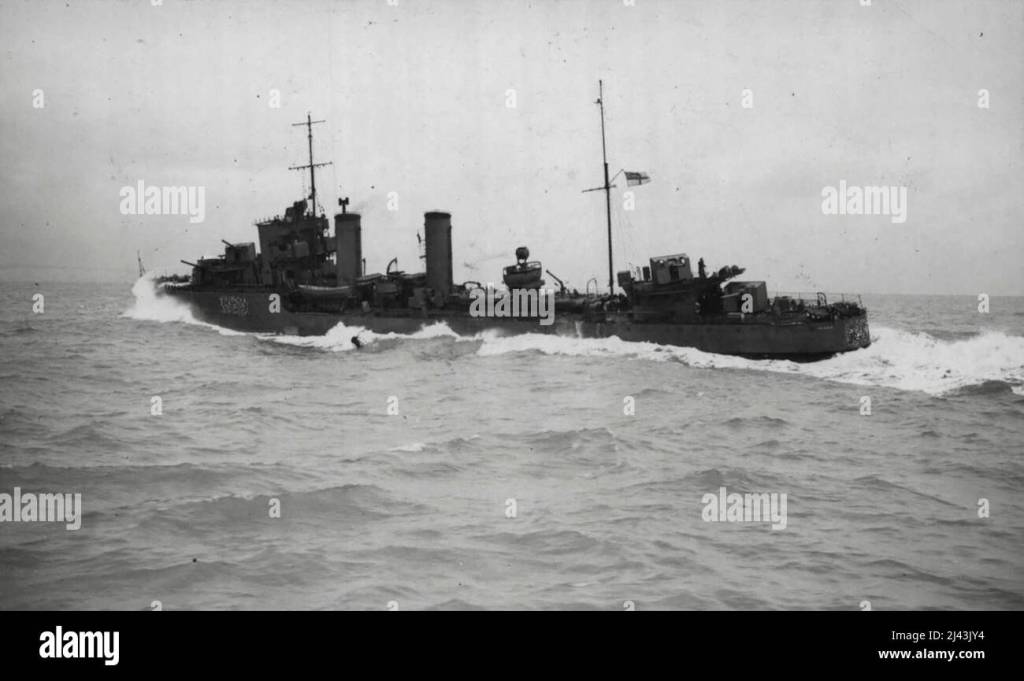
A submarine was reported off Wicca Cove near St Ives. Destroyers ESCAPADE and ENCOUNTER were ordered to search the area, but ENCOUNTER suffered damage to her forecastle in heavy seas.
Patrol sloops KINGFISHER and WIDGEON arrived at Ardrossan.
U-57 sank steamer STANBROOK (1383grt) in the North Sea between Antwerp and the Tyne.
Finnish steamer TORAS (1016grt) was captured by a German warship in the Baltic, taken in prize, and renamed FIDUCIA for German service.
U-41 sank steamer DARINO (1351grt) west of Biscay in 44 12N, 11 07W. Sixteen crew were lost, but U-41 picked up the survivors and later transferred them to Italian steamer CATERINA GEROLINICH (5430grt).
U-43 sank steamer PENSILVA (4258grt), a straggler from convoy OG.7, west of Biscay in 46 51N, 11 36W. Destroyer ECHO attacked U-49 which was nearby, badly damaged her, and made two more attacks before picking up the survivors from PENSILVA. Destroyer WANDERER joined ECHO at 1530. U-49 arrived back in Germany on the 29th and was under repair until 8 March 1940.
Convoy HG.7 was escorted by French large destroyers TARTU and VAUQUELIN when a U-boat was reported shadowing the convoy.
French large destroyers CHACAL and MISTRAL were investigating a contact 120 miles 315° from Cape Finisterre, and destroyers GALLANT, WALKER, VANOC, WOLVERINE, VERITY were ordered to join them.
Steamer ROTHESAY CASTLE (7016grt) was attacked 300 miles WSW of Ushant. Destroyers ECHO and WANDERER were hunting in the area and were joined by destroyers WOLVERINE and VERITY detached from convoy OA.36G.
Light cruiser EFFINGHAM departed Halifax and arrived at Bermuda on the 21st.
Light cruiser DAUNTLESS departed Singapore on patrol, and arrived back on the 28th.
Steamer CLAN BUCHANAN (7266grt)) was approached by a French auxiliary cruiser 250 miles west of Portugal. Both, unsure of each other’s identity, regarded the other as an enemy. The auxiliary attempted to stop, then chased the British ship for some time. CLAN BUCHANAN finally outdistanced her and later discovered what had actually happened.
French destroyer BORDELAIS and submarines LA PSYCHÉ, MÉDUSE and LE GLORIEUX which had departed Casablanca, passed Gibraltar. They arrived at Oran on the 20th, where LE GLORIEUX started repairing.
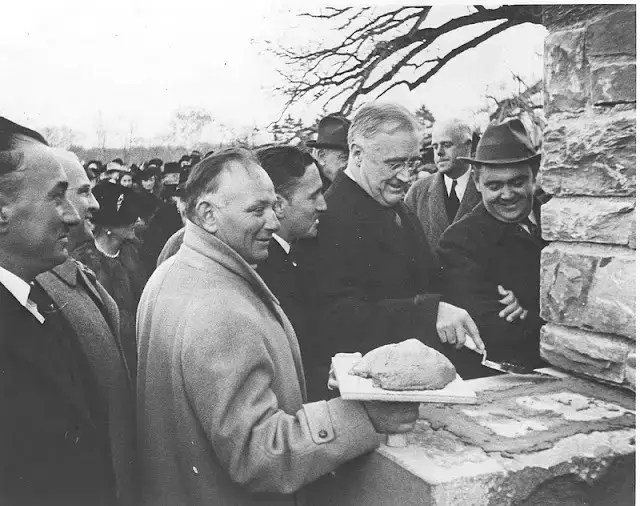
The cornerstone ceremony is held for the FDR Library in Hyde Park, New York. It is the first Presidential Library. He places a “time capsule” inside. Despite his physical condition, FDR stands for the ceremony. Surrounded by friends and neighbors and more than a few political allies, President Roosevelt today laid the cornerstone of the building that is to house the private papers of his public life and dedicated the structure to “the spirit of peace” with the expressed hope that this tranquility of order might soon again become universal.
As the principal speaker on the occasion, Mr. Roosevelt recalled the joys of his boyhood days in the same familiar surroundings of his mother’s estate and told of his longstanding desire that the library might become an integral part of the country scene that the hand of man had not greatly changed since the days of the Indians who dwelt there 300 years ago. Then he said: “This is a peaceful countryside and it seems appropriate that in this time of strife we should dedicate the library to the spirit of peace — peace for the United States, and soon, we hope, peace for the world.”
Near the end of his prepared remarks the President digressed briefly to let it be known to reporters accompanying him that he had not overlooked today’s stories speculating on his attitude toward the third-term question which were prompted by his announcement yesterday that his complete correspondence as President would become available to students and research workers in the Summer of 1941.
It had seemed unlikely to some observers that Mr. Roosevelt would not place his letters before and since entering the White House at the disposal of hostile and friendly students alike if he contemplated running for a third term. Today in his address he said he hoped the library would be turned over to the government next Summer, and added: “During the following year the manuscripts, letters, books, pictures and models will be placed in their appropriate settings and the collections will be ready for public inspection and use, we hope, by the Spring of 1941.”
Then the President looked up from his manuscript and, smiling, said: “And may I add, in order that my good friends of the press will have something to write about tomorrow, that I hope they will give due interpretation to the expression of my hope that when we open the building to the public it will be a fine day.”
A wave of laughter swept the crowd at his good-natured chiding of reporters. From the temporary White House offices the President had authorized a similar statement after he had read the newspapers earlier in the day. He showed neither irritation nor pleasure at the interpretations of his intention to turn over his private correspondence so soon after ending his second term in the Executive Mansion.
Labor union practices which have “no reasonable connection with such legitimate objectives as wages, hours, safety, health, undue speeding up or the right of collective bargaining” are punishable under the antitrust laws, Thurman Arnold, Assistant Attorney General, asserted in a letter to the secretary of the Central Labor Union of Indianapolis which the Department of Justice made public today. Mr. Arnold outlined five types of union activity which he classified as “unquestionable violations of the Sherman Act.” Prosecutions which are now proceeding or which may be undertaken, he stated, will be based on such such violations, and “unions stand to gain” by the government’s efforts to “prevent the use of legal rights of an association in an illegal way.”
Negotiations between the Chrysler Corporation and the C.I.O. United Automobile Workers of America were deadlocked today on the wage issue, and an adjournment was taken until 10 o’clock tomorrow morning.
Steel producers, on the whole, have made little or no progress in reducing total steel backlogs in the last few weeks. Incoming specifications, which include releases against previous commitments as well as fresh orders, have, in most cases, been equal to or in excess of actual shipments leaving the mills.
Black federal workers ask for $1 billion to be given to WPA for relief of the unemployed.
The corn supply is held to be ample for 1939–1940, with 800,000,000 more bushels available than what is needed.
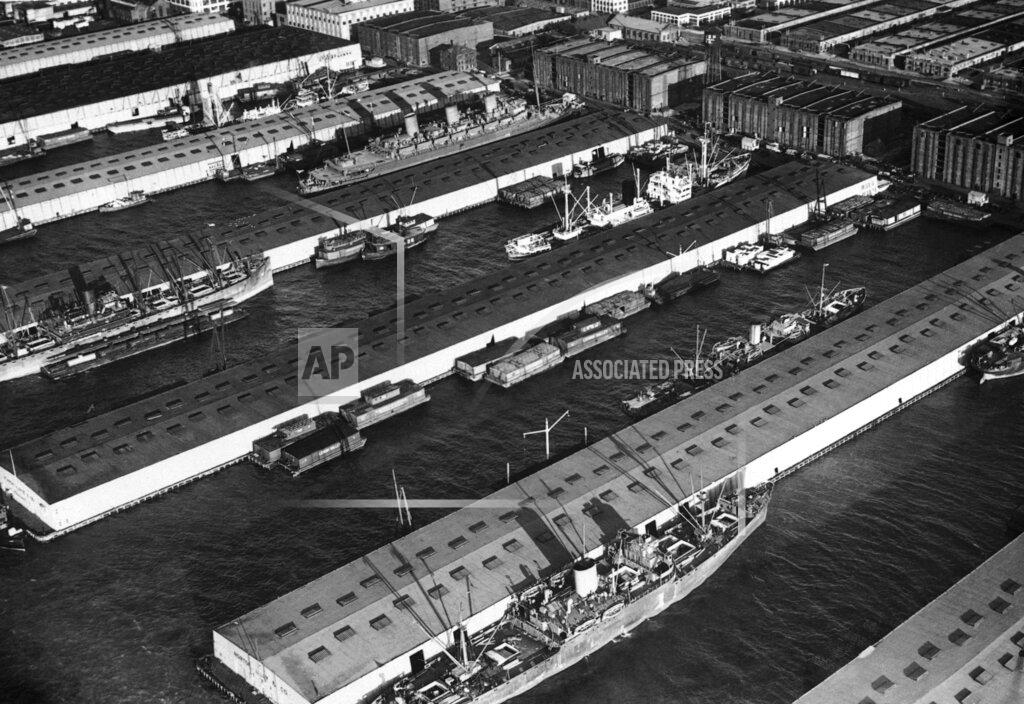
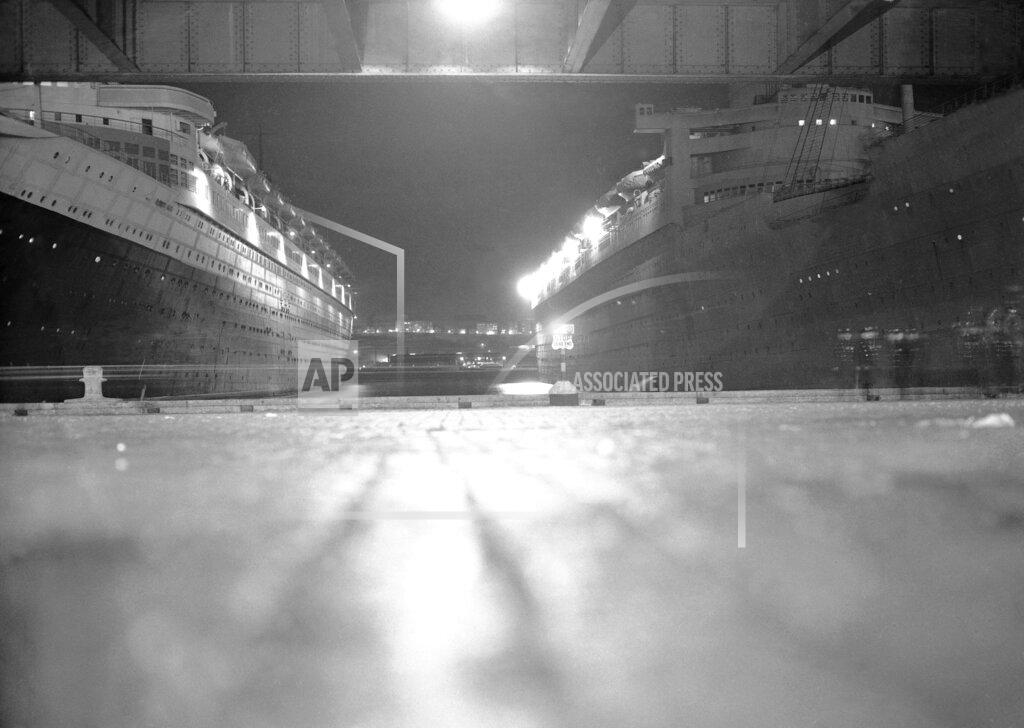
An explosion in an empty tank of the 11,147-ton oil tanker J. A. Mowinckel at a Standard Oil Company dock at Constable Hook, Bayonne, at 9:45 AM today ripped up 100 feet of deck, sprung plates below the water line, shattered windows in Staten Island, several hundred yards away, and attracted a crowd to lower Bayonne. There was no fire. Although officials of the Standard Oil Company of New Jersey, which has the tanker under lease from the Panama Transport Corporation, a subsidiary, denied any evidence of sabotage, it was known that one and perhaps two Federal agencies had begun investigations to deter mine the cause of the blast.
Most of the college men joining the U.S. Army prefer air service.
The National Professional Indoor Baseball League, headed by league president Tris Speaker, begins play. The league has 10 clubs, one in each then Major League city except Washington, with teams managed by Bill Wambsganss, Gabby Street, Brick Owens, Moose McCormick, Harry Davis, Joe Dugan, Freddy Maguire, and Otto Miller. The game is similar to softball, with 60-foot distances between the bases, and a 12-inch-circumference ball thrown underhand from 40 feet away. About 2,000 turned out for Opening Day in New York to watch Brooklyn and New York split a doubleheader. Alas, the league will disappear in a month.
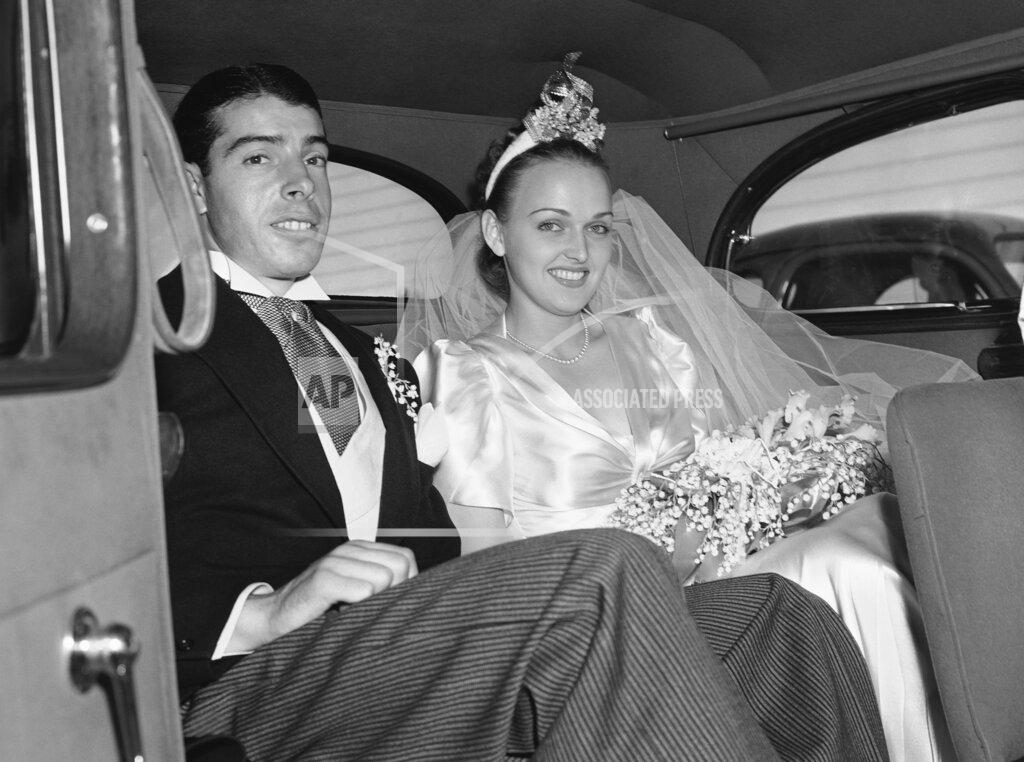
Baseball star Joe DiMaggio (24) married actress Dorothy Arnold (21) in St. Peter and Paul Church, North Beach, San Francisco.
Comic superheroes Flash (as Jay Garrick) and Hawkman (Carter Hall) first appear in “Flash Comics No. 1” published by DC.
Don Lash wins 6th straight AAU cross-country 10K championship.
Political parties opposing the present Cuban (Batista) Administration elected forty-one delegates to the Constituent Assembly, the government parties only thirty-five in the vote last Wednesday, thus giving the opposition control of the Assembly, the Superior Electoral Tribunal announced today.
Molotov signs an agreement with the Japanese ambassador to establish a commission to fix the border of Manchukuo, where the two nations recently clashed at Khalkin Gol.
Russia and Japan have also reportedly reached a common viewpoint on fundamental principles for a Russo-Japanese trade agreement, it was announced tonight. The tentative accord followed diplomatic exchanges in Moscow and Tokyo and was an outgrowth of the “cease fighting” agreement reached between the two powers after their warfare on the borders between Japan’s Manchukuoan dependency and Russia’s Outer Mongolian protectorate.
It was understood that Russia was prepared to push forward rapidly with the trade negotiations. The “common viewpoint,” it was said, first was reached in conversations here between Japanese Ambassador Shigenori Togo and Premier and Foreign Commissar Vyacheslav M. Molotov. Subsequently there were exchanges in Tokyo between the Soviet Ambassador, Constantin Smetanin, and the Imperial Foreign Office.
In China, the Nationalist government at Chungking orders a winter offensive against the Japanese. Chiang Kai-Shek renews his quest for a Winter Offensive against the Japanese despite recent setbacks along the coast.
Born:
Garrick Utley, American newscaster (“1st Tuesday”, “NBC Weekend”), in Chicago, Illinois.
Thomas Harkin, American politician (Senator-D-Iowa, 1985-2015), in Cumming, Iowa.
Warren “Pete” Moore, American singer (Miracles – “Tears of a Clown”), brn in Detroit, Michigan.

 History Diaries